Cultivation and Biochemicals
 Call Kai
 Learn
Learn Practice Test
 Spaced Repetition
 Match
Match Flashcards
 Knowt Play
1/42

There's no tags or description
Looks like no tags are added yet.
Name | Mastery | Learn | Test | Matching | Spaced | Call with Kai | Chat |
|---|
No analytics yet
Send a link to your students to track their progress
43 Terms
What 3 tests are used to biochemically ID Staphylococcus?
1) Catalase
2) Coagulase
3) Novobiocin
What is the purpose of the Catalase test? What what does it differentiate?
Purpose: to differentiate Staphylococcus and Streptococcus
Catalase-pos: Staphylococcus
Catalase-neg: Streptococcus
What is the procedure for the Catalase test?
Reagent: 3% Hydrogen Peroxide (H2O2) added to sample of colony on a slide. catalase breaks down H2O2 into water and oxygen, in a positive test oxygen is observed as bubbles
Procedure: innoculate plate with organism and add a drop of Hydrogen peroxide, watch for bubbles. put against a white background.

What would a ‘weakly’ positive catalase test look like and what is an example organism?
-appears slightly bubbly/ not clear like the negative test is
-Enterococcus is ‘weakly’ positive because it produces perixidase (pseudocatalase)
What is the purpose of the Coagulase test, and what does it differentiate (whats the medium)?
purpose: differentiate staphylococcus aureus and other staphylococcus species
medium: rabbit plasma
coagulase-pos: Staphyloccus aureus
coagulase-neg: staphylococcus species
What is the procedure for the coagulase test? (slide test)
Slide test: detects bound coagulase (clumping factor, CF)
-adhesion protein on bacterial cell
-converts fibrinogen to fibrin (fibrin precipitates bacterial cell —> agglutination)
Procedure: on a slide innoculate saline with organism and add drop to slide. Add drop of plasma and check for agglutination.

What are some cautions related to coagulase testing (slide test)?
-some non-staph aureus bacteria produce clumping factor (CF)
-5% of Staph aureus do NOT produce CF
What is the procedure for the coagulase test? (tube test)
Tube test: detects free coagulase (stphylocoagulase)
-extracellular enzyme
-reacts with thrombin-like molecule in plasma
-converts fibrinogen to fibrin
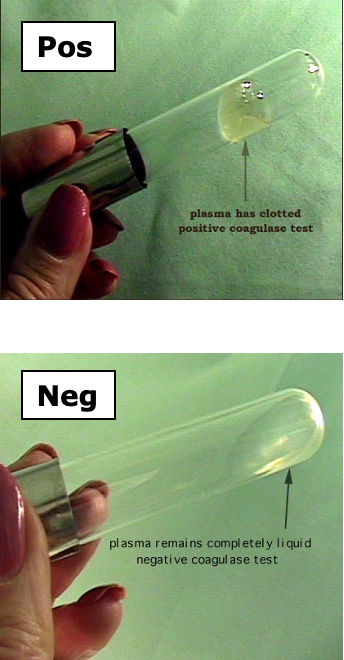
What are some cautions related to the coagulase test (tube test)?
-some non-staph aureus bacteria produce staphylocoagulase
-some staph aureus: produce fibrinolysins; autolyse own clot and cause false-negatives. Check for initial clot formation at 4 hours
What is the purpose/procedure of the Novobiocin Disk test and its specimen type?
purpose: differentiate staphylococcus saprophyticus from other coagulase-neg staphylococcus—>normal urogenital/skin flora
specimen: Urine ONLY
Procedure: create a lawn of growth on a plate and add novobiocin disk, then incubate. Check for zone of inhibition afterwards.
How does the Novobiocin disk differentiate organisms?
The zone of inhibition around the disk
Zone of inhibition ≤16 mm is staphylococcus saprophyticus
Zone of inhibition ≥ 16mm is another coag-neg staph
Staphylococcus saprophyticus is RESISTANT, so it will grow right up to the disk with no zone of inhibition. The disk itself is 6mm, so no zone of inhibition is read as 6mm.
What tests are used in the Biochemical ID of Streptococcus?
-Bacitracin
-CAMP test
-Hippurate hydrolysis
-Optochin disk
-Bile solubility
What is the purpose/procedure of the Bacitracin (A) disk test?
purpose: presumptive ID of Beta-hemolytic Group A Strep
-some strains of Beta-hemolytic Group C, F, and G can be suseptible (therefore it isn’t a definitive test)
procedure: create lawn of growth on plate, add bacitracin (a) disk then incubate.
How does the Bacitracin (A) Disk differentiate organisms and ID them?
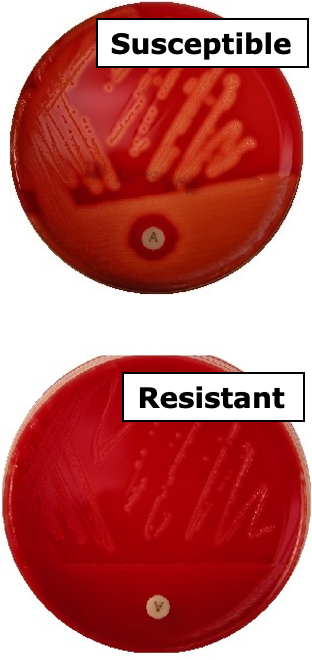
An agar containing Streptococcus, in order to ID if it is Group A, a disk containing bacitracin is added. It inhibits the growth of Group A therefore any zone of inhibition is ‘suseptible’ and is presumptive for Group A
Susceptible: Streptococcus pyogenes (Group A Strep) —> any zone of inhibition >6mm
Resistant: Streptococcus agalactiae (Group B Strep)—> no zone of inhibition: 6mm
Note the disk itself is 6mm, so a resistant test is read as 6mm despite the bacterial growth being right up to the disk
What is the purpose and procedure of the CAMP test?
Purpose: presumptive ID of Beta-hemolytic Group B Strep
Procedure: Staph aureus streakdown center of BAP, test isolate streaked perpendicular to Staph aureus. then incubate.
-Diffusible extracellular protein, CAMP factor of Group B acts synergistically with beta-lysin of Staph aureus and forms arrowhead, which is the enhanced lysis of RBCs

What is the purpose/procedure and principle of the Hippurate Hydrolysis test?
Purpose: presumptive ID of Beta-hemolytic Group B strep (Streptococcus agalactiae) and Campylobacter
Principle: Detects production of hippuricase. Hippuric acid hydrolysis- forms glycine and benzoic acid. Glycine detected by adding ninhydrin reagent (purple color forms)
Procedure: innoculate hippurate broth with organism and incubate. After incubation ad ninhydrine reagent

What is the purpose and procedure for the Optochin (P) disk?
Purpose: presumptive ID of Streptococcus pneumoniae
Procedure: create a lawn of growth for the organism then place optochin disk. Optochin is the chemical ethylhydrocupreine hydrochloride. After incubation check for a zone of inhibition around the disk.
Suseptible: Streptococcus pneumoniae—> zone > 14 mm
Resistant: Viridans Streptococcus—> Zone < 14 mm

What is the purpose, principle and procedure of the Bile Solubility test (tube)?
Purpose: Presumptive ID of Streptococcus pneumoniae (differentiate from Viridans Streptococcus)
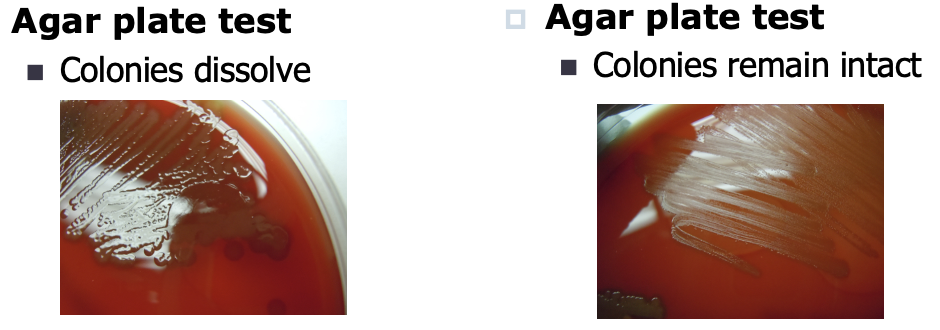
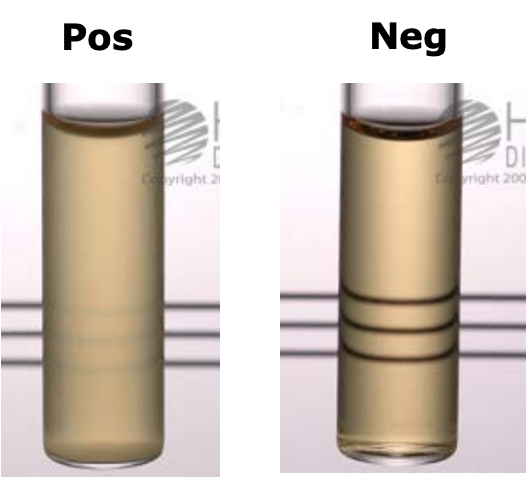
Principle: the bile solution (sodium deoxycholate) is in a test tube which is innoculated with the organism. If it is Strep pneumoniae, the bile solution will activate the intracellular autolytic enzymes of Strep pneuoniae causing the lysis of penumococcal colonies (turning tube solution clear).
Positive: Streptococcus pneumoniae
Negative: Viridans Streptococcus

How is the procedure different if running Bile solubility test on a agar plate?
the principle is the same, the difference is that the plate will contain organism growth and a drop of bile solution (sodium deoxycholate) is added over a colony. If strep pneumoniae, the colonies will disintegrate.
What tests are used in the Biochemical ID of Enterococcus?
-bile esculin
-growth in 6.5% salt
-PYR disk
What is the purpose and procedure of the Bile Esculin Agar test?
Purpose: Differentiate Enterococcus and Streptococcus bovis from Viridans Streptococcus
Procedure: inoculate your bile esculin slant or plate with organism and incubate
What do the results of the Bile Esculin test look like on plate vs. tube?
Positive: Enterococcus or Streptococcus bovis
-growth in 40% bile, hydrolysis of esculin to esculetin and glucose. Esculetin reacts with ferric citrate to form black complex.
Negative: Viridans Streptococcus
-no growth, bile inhibits most strains of Streptococcus

What is the purpose and principle of the 6.5% Sodium Chloride test?
Purpose: differentiate Enterococcus from Streptococcus bovis and Viridans Streptococcus (6.5% salt agar or broth)
Positive: growth, turbidity in broth or growth on agar plate
Negative: no growth
What is the purpose and procedure for the PYR disk test?
Purpose; presumptive ID of Enterococcus or Group A Streptococcus (pyogenes)
Procedure: place PYR disk in tube or slide, moisten disk with DIwater and inoculate with organism, allow reaction to occur then add chromogenic reagent and look for a red color.

Describe the PYR test chemically:
Filter paper discs contain PYR substrate (PYR = L-pyrrolidonyl-b-naphthylamide)
PYRase (pyrrolidonyl arylamidase) hydrolyzes PYR to produce b-naphthylamine. When chromagenic reagent is added to this it produced a red color
What tests are used for the Biochemical ID of Neisseria and Haemophilus?
-Butyrate esterase
-CTA sugars
-X and V factors (QUAD plate)
-oxidase
What is the purpose, principle and procedure of the Butyrate Esterate Disk (catarrhalis disk) test?
Purpose: presumptive ID of Moraxella catarrhalis (differentiates Moraxella from Neisseria)
Positive: Morazella catarralis (Blue)
Nagative: Neisseria species (no color)
Principle: filter paper discs contain bromo-chloro-indoyl butyrate, butyrate esterase hydrolyzes butyrate (tributyrin) to produce indoxyl butyrate- which forms a blue/indigo compound
Procedure: add a disc to a slide or tube, inoculate with organism and add reagent. look for blue color.

Describe the purpose, procedure and principle of the CTA sugars (Carbohydrate Assimilation) test?
Purpose: presumptive ID of Neisseria species
Procedure: add organism to sterile inoculating needle and stab straight down to the butt of the agar tube.
Carbohydrate-supplemented cystine trypticase agar (1% glucose (dextrose), maltose, lactose or sucrose). bacteria which utilize carbohydrate produce acid (phenol red pH indicator turns yellow in acid). So a fermenter of that sugar type agar turns it yellow.
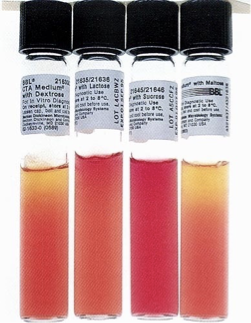
Based on the 4 sugar types used in CTA sugars test, what species of Neisseria correlate to each fermentation type?
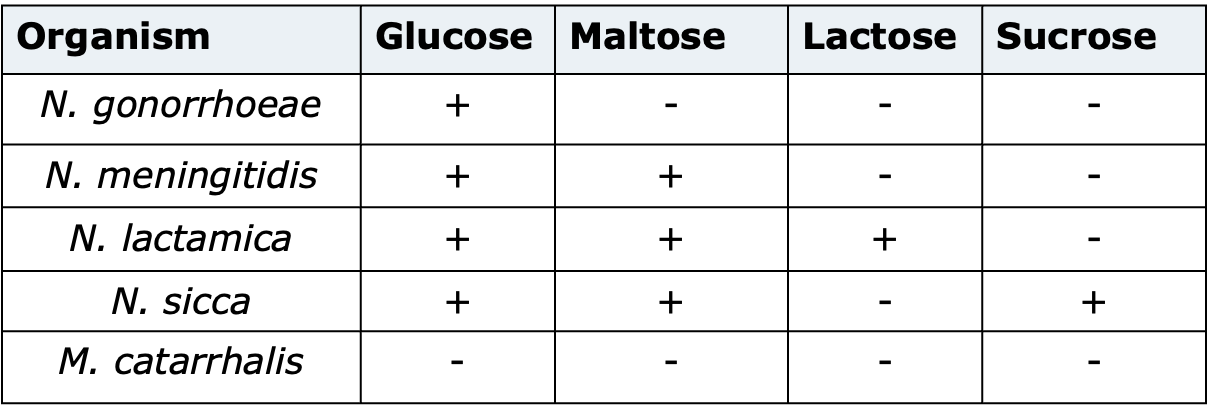
What is the purpose of the QUAD plate test, and what factors are present in each quadrent?
Purpose: speciation of Haemophilus genus
The growth factor requirements are demonstrated by means of “growth” or “no growth” in each of the four quadrants. Hemolysis is evaluated by examining growth in Quadrant IV.

What are the reactions and interpretations of the QUAD plate for each species of Haemophilus?

What is the purpose, principle procedure for the Oxidase test?
Purpose: presumptive ID of certain Gram- bacteria such as Neisseria, Pasturella, Pseudomonas, Aeromonas and Campylobacter
Principle: Cytochrome oxidase- oxidizes test reagent to indophenol, creating a dark purple product.
Reagent: tetra-methyl-p-phenylenediamine dihydrochloride
Procedure: pickup some organism on a sterile swab, then add reagent. Observe for purple color change

What is the purpose, principle and procedure of the Indole test?
Purpose: used to evaluate Gram- bacilli (must perform on bacteria grown on tryptohan-containing media such as BAP)
Principle: detects tryptophanase, which breaks down tryptophan (amino acid) to release indole. Indole combines with Kovac’s reagent (acid pH) to create red compound.
Kovac’s reagent: para-dimethylamino-benzaldehyde
Procedure: inoculate tryptophan containing broth with organism and incubate. Add Kovac’s reagent and observe for red ring at the top of broth. Or inoculate a sterile swab with organism and add a drop of Kovac’s reagent.
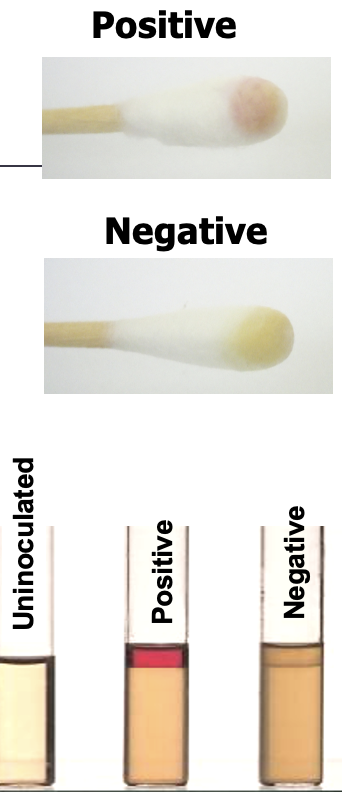
What test are used for the Biochemical ID of Gram- bacilli?
-Oxidase
-Indole
-Kligler iron agar (KIA)/Triple sugar iron agar (TSI)
-Lysine iron agar (LIA)
-Urea
-Citrate
-Motility agar
-Amino acid utilization (Arginine dihydrolase, lysine decarboxylase, ornithine decarboxylase, Tryptophane deaminase, phenylalanine deaminase)
-b-galactosidase (ONPG test)
-Vogues-Proskauer
-Gelatinase
-Nitrate reduction
-Oxidative-fermentative (OF) media