quizlet.com/599023177/water-properties-properties-of-water-flash-cards/?funnelUUID=4602df07-9249-4da0-8a2b-baf2e225cf67
 Call Kai
 Learn
Learn Practice Test
 Spaced Repetition
 Match
Match Flashcards
 Knowt Play
1/15

There's no tags or description
Looks like no tags are added yet.
Name | Mastery | Learn | Test | Matching | Spaced | Call with Kai | Chat |
|---|
No analytics yet
Send a link to your students to track their progress
16 Terms
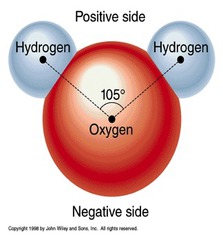
Polarity
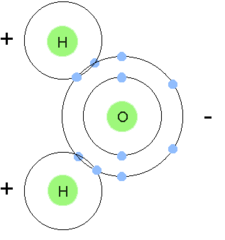
water is a polar molecule with one oxygen atom negatively charged and two hydrogen atoms positively charged.
Universal solvent
Water - due to its polarity and ability to dissolve other polar molecules
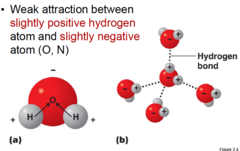
Hydrogen bonds
The weak intermolecular bonds that form between the hydrogen atom of one water molecule and the oxygen atom of another water molecule.
Solvent
Does the dissolving
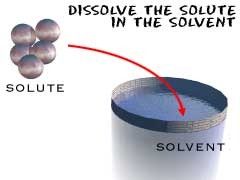
Solute
Substance being dissolved
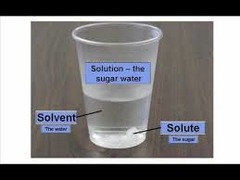
Solution
Solvent +Solute=Solution
Ex. Jello, Koolaid, and salt water

density
the ratio of the mass of a substance to the volume of the substance (The density of water is 1.0 g/cm3)
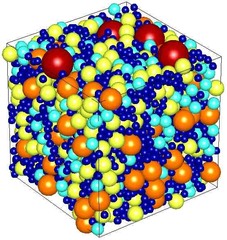
Polar Molecule
a molecule in which one side of the molecule is slightly negative and the opposite side is slightly positive
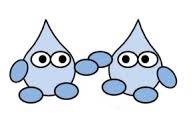
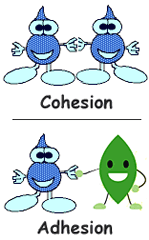
Cohesion
Attraction between molecules of the same substance
Adhesion
An attraction between molecules of different substances (water and another substance)
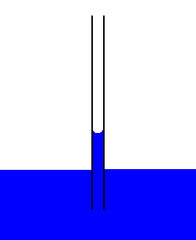
capillary action
tendency of water to rise in a thin tube against the force of gravity, and due of the cohesion and adhesion forces of attraction.
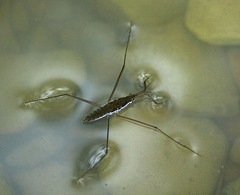
Surface Tension
An invisible film at the surface of water that allows objects to walk. This is caused by the cohesive forces.
high specific heat
Water can absorb or release a tremendous amount of energy with little change in actual temperature. The ability of water to resist changes in temperature. 1 gram of water will need to absorb 4.18 Joules (amount of heat) in order to increase its temperature by 1 degree Celsius.
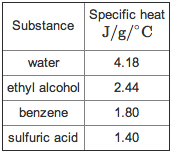
Hydrophilic
A substance that likes water. Having an affinity (love) for water; usually polar molecules.
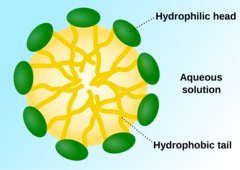
Hydrophobic
A substance that water hates water (it is repealed by water); usually non-polar molecules, like oil.
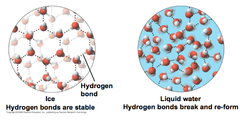
Expansion upon freezing
hydrogen bonds in ice are more "ordered and spaced out" making ice larger and LESS DENSE