Clinical Genetics and Basic Inheritance Practice
 Call Kai
 Learn
Learn Practice Test
 Spaced Repetition
 Match
Match Flashcards
 Knowt Play
1/59

Earn XP
Description and Tags
Flashcards covering clinical genetics terminology, inheritance patterns, detection methods, and specific genetic disorders based on lecture notes.
Name | Mastery | Learn | Test | Matching | Spaced | Call with Kai | Chat |
|---|
No analytics yet
Send a link to your students to track their progress
60 Terms
Chromosomes g
Long strings of DNA which are wrapped around proteins and are numbered according to their size 1-23. Out of the 23 chromosomes 22 are not sex chromosomes (X and Y are the last pair), aka the autosomes are chromosome pairs 1-22
Autosomes
Chromosome pairs 1-22 that are not sex chromosomes.
Interphase
The phase where a cell spends most of its time synthesizing DNA, RNA, and proteins.
Diplod Cells
Mature somatic cells containing 23 pairs of chromosomes, totaling 46 chromosomes. Reproduce by MITOSIS
Haploid Cells
Sex cells containing 23 total chromosomes. Reproduced by MEIOSIS
Mitosis
Process of cell division producing two identical diploid daughter cells.
Meiosis I
Phase of division where one diploid cell gives rise to two haploid cells.
Meiosis II
Phase of division where two haploid cells give rise to four haploid cells.
Chromatin
DNA packaged in the cell during all phases except mitosis and meiosis.
Crossing Over
The random exchange of genetic material between nonsister chromatids of homologous chromosomes that guarantees unique combinations.
Spermatogenesis
Gametogenesis in males that produces four spermatids containing 23 single-stranded chromosomes.
Oogenesis
Gametogenesis in females that results in one functional ovum and three polar bodies.
Nucleotides
Building blocks of DNA linked from one phosphate to the next sugar, containing a phosphate, deoxyribose sugar, and a nitrogenous base.
Base Pairing Rule
Guanine makes 3 H-bonds with cytosine, and Adenine makes 2 H-bonds with thymine.
Locus
The specific physical location of a gene on a chromosome.
Alleles
Different versions or forms of genes that have different DNA codes.
DNA Replication
The process in interphase where molecules "unzip" and nucleotides fill in the other half in a 5' to 3' direction.
Transcription
The process where RNA polymerase reads a template DNA strand to build an RNA molecule.
Translation
The process occurring in ribosomes where mRNA is used to build chains of amino acids with the help of tRNA.
Expressivity
The degree or intensity to which a phenotype is expressed.
Polymorphisms
Regions in the genome in which the same DNA sequence is repeated over and over in tandem
VNTRs (Variable Number of Tandem Repeats)
VNTRs: Larger repeat units, usually 10-100 base pairs
STRs: Smaller repeat units, usually 2-9 base pairs
Single Nucleotide Polymorphisms
Substitution of a single nucleotide at a specific location on the DNA sequence
Mendelian Traits
Inherited single-gene traits that segregate in families following Mendel's principles of monogenic inheritance and complete penetrance.
Autosomal Dominant
Inheritance pattern affecting both sexes equally where an affected child must have at least one affected parent, and the risk to offspring is 50% .
Autosomal Recessive
Inheritance pattern requiring at least one unaffected carrier parent, with a risk of 25% for offspring of two carriers.
Genomic Imprinting
Mechanism where certain genes are expressed from only one parental allele while the other is silenced.
Penetrance
The probability that a person carrying a pathogenic variant will express the associated phenotype.
Prader-Willi Syndrome
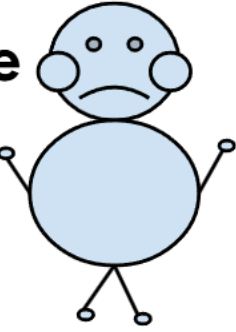
Condition caused by deletion or mutation of PARENTAL genes from chromosome 15, characterized by obesity, short stature, and hyperphagia.
Angelman Syndrome
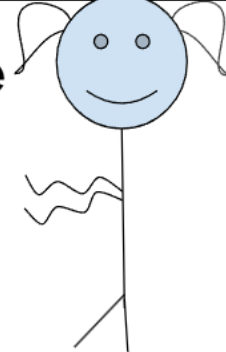
Condition caused by mutation or deletion of MATERNAL AS gene from chromosome 15, characterized by a happy demeanor and seizures.
Beckwith-Wiedemann Syndrome
Condition on chromosome 11 often caused by uniparental disomy or genomic imprinting, characterized by macroglossia and omphalocele.
Proband
The person who first came to the investigator's attention and begins the pedigree.
Consanguinity
A relationship between biological relatives who are second cousins or closer.
Gain of Function Mutation
A mutation resulting in a new product, over-expression, or inappropriate expression, often seen in dominant disorders.
Loss of Function Mutation
A mutation resulting in the loss of a gene product, often seen in recessive disorders.
Mosaicism
The existence of two or more genetically different cell lines in one individual originating from a single zygote.
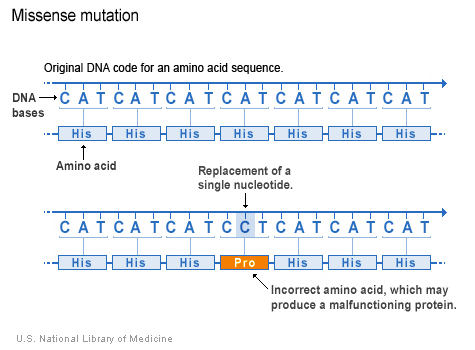
Missense Mutation
A base pair substitution that changes the codon to encode for a different amino acid.
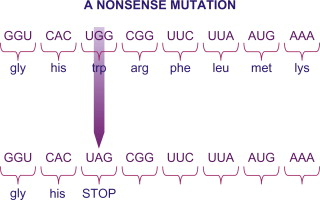
Nonsense Mutation
A base pair substitution that changes an amino acid codon into a stop codon.
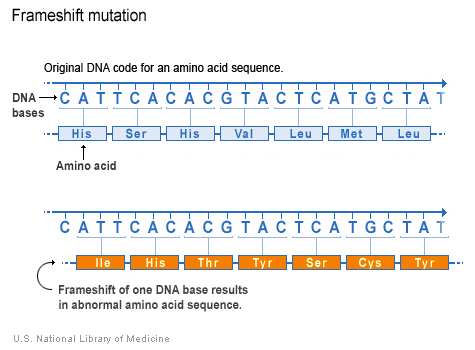
Frame-shift Mutation
When the number of deleted or inserted base pairs is not a multiple of three, altering all following amino acids.
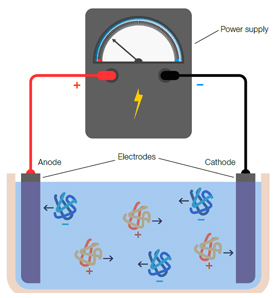
Protein Electrophoresis
Method that measures the presence of specific proteins by separating them based on size and electrical charge.
Fluorescent In Situ Hybridization (FISH)
Cytogenetic study used to detect DNA sequence deletions, translocations, or excessive chromosome material using fluorescent probes.
Aneuploidy
The condition of missing or having an additional singular chromosome.
Myotonic Dystrophy (MD)
Autosomal dominant disorder involving expansion of a CTG repeat on chromosome 19, characterized by muscle wasting and myotonia.
Marfan Syndrome
Connective tissue disorder caused by mutation of the FBN1 gene on chromosome 15, characterized by tall stature and arachnodactyly.
Achondroplasia
Most common form of dwarfism caused by a gain-of-function mutation in the FGFR3 gene.
Cystic Fibrosis
Autosomal recessive disease caused by a ΔF508 mutation in the CFTR protein, resulting in thick secretions in lungs and pancreas.
Meconium Ileus
The earliest clinical sign of Cystic Fibrosis in newborns, characterized by an intestinal obstruction of the first bowel movement.
Tay Sachs Disease
Lysosomal storage disorder caused by HEX A gene mutation, leading to accumulation of GM2 ganglioside and a cherry red spot on the macula.
Gaucher Disease
Disorder characterized by a deficiency in beta-glucocerebrosidase leading to the accumulation of glucocerebroside in macrophages.
Phenylketonuria (PKU)
Metabolic disorder caused by a PAH enzyme deficiency, requiring a diet restricted in phenylalanine and avoidance of aspartame.
Maple Syrup Urine Disease (MSUD)
Disorder involving a deficiency in the BCKAD complex, specifically affecting the breakdown of leucine, isoleucine, and valine.
Wilson Disease
Disorder of copper metabolism involving the WND gene on chromosome 13, leading to liver failure and Kayser-Fleischer rings.
Sickle Cell Anemia
Condition caused by a single missense mutation in the beta globin chain resulting in Hemoglobin S (ss genotype).
Alpha Thalassemia
Condition involving the deletion of one or more of the four alpha globin genes on chromosome 16.
Duchenne Muscular Dystrophy (DMD)
X-linked recessive disorder involving deletions or frame-shift mutations leading to an absolute lack of the dystrophin protein.
Fragile X Syndrome
X-linked dominant condition involving an expansion of CGG trinucleotide repeats (200−1000 repeats) in the FMR1 gene.
SRY Gene
The "master gene" on the Y chromosome that specifies male sex characteristics.
Pharmacogenetics
The study of how people respond differently to drugs based on their genetics.
Somatic Gene Editing
Gene editing targeting body cells where alterations are contained to the individual and not passed to offspring.
Ex Vivo Therapy
Gene therapy where cells are extracted from the body, manipulated, and then re-infused into the patient.