Chapter 22 - Personality Disorders
 Call Kai
 Learn
Learn Practice Test
 Spaced Repetition
 Match
Match Flashcards
 Knowt Play
1/30

There's no tags or description
Looks like no tags are added yet.
Name | Mastery | Learn | Test | Matching | Spaced | Call with Kai | Chat |
|---|
No analytics yet
Send a link to your students to track their progress
31 Terms
Maladaptive
Behaviour that causes distress to oneself or others, impairs day-to-day functioning, or increases the risk of injury of harm to oneself or others
Personality Disorders
particularly unusually patterns of behaviour (relative to one’s cultural context), that are maladaptive, distressing to oneself, or others, and resistant to change
difficult to change
Schizotypy
unusually way of expressing one’s self
Classifying Personality Disorders
Class A - Odd/eccentric behaviour
Paranoid, Shizoid, Schizotypal\
Class B - Dramatic/erratic behaiour
Antisocial, Borderline, Histronic, and Narcissistic
Class C - Anxious/fearful behaviour
Avoidant, Depdendent, Obsessive-Compulsive
Cluster A Personality Disorders
Hippocampal Hypoactivity (less activity) may trigger branching by the amygdala in Cluster A Personality Disorders
Paranoid Personality Disorder
pattern of distrust and suspiciousness that others’ motives are interpreted as malevolent/aggressive
beliefs are immune to disconfirming evidence
difficult to treat due to suspicion of the therapist
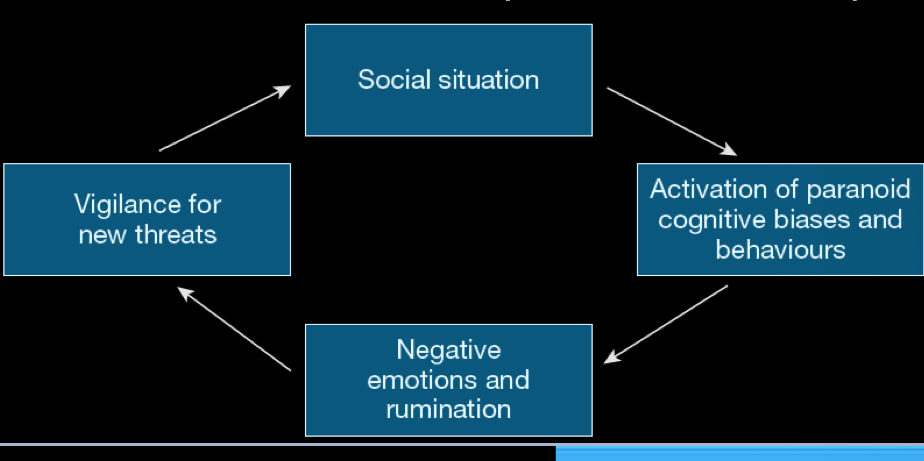
get stuck in a loop of:
a social situation
activation of paranoid cognitive biases and behaviour
negative emotions and rumination
vigilance for new threats
Cluster A
Schizoid Personality Disorder
pattern of detachment from social relationships and a restricted range of emotional expression
completely detached from others and don’t really care about others
very solitary kind of lifestyle
Cluster A
Schizotypal Personality Disorder
pattern of acute discomfort in social relationships, cognitive, or perceptual distortions
don’t really enjoy social interactions
eccentric beliefs and unusual speech patterns
reduced gray matter volume in the superior temporal gyrus
Cluster A
Schizotypy Screening Items
I often feel uneasy in social situations and prefer to be alone
I occasionally have strange or magical thoughts that don’t align with reality
My speech patterns can sometimes be difficult for other people to follow
Borderline Personality Disorder
characterized by intense extremes between positive and negaive emotions, an unstable sense of self, impulsivity, and difficult social relationships
Cluster B
PRAISE
P - Paranoid Ideas
R - Relationship instability
A - Angry outbursts, affective instability, abandonment fears
I - Impulsive behaviour identity distrubance
S - Suicidal behaviour
E - Emptiness
Borderline Screening Itmes
Have any of your closest relationships been troubled by a lot of arguments or repeated breakups?
made desperate efforts to avoid feeling abandoned or being abandoned
had at least two problems with impusivity?
Causes of BPD
genetics
abusive or neglectful parenting
brain abnormalities (hyperactive amygdala and hypoactive PFC) related to aggression and emotional regulation
sometimes treated with dialectical behavioural therapy
Dialectical Behavioural Therapy
involves individual cognitive therapy
also involves group therapy dedicated to emotional regulation, distress tolerance, and social skills
Narcissistic Personality Disorder
characterized by an inflated sense of self-importance and an excessive need for attention and admiration, as well as intense self-doubt and fear of abandonment
turns everything about themselves
have a sense of entitlement and little empathy for others
Cluster B
Histrionic Personality Disorder
Cluster B
characterized by excessive attention seeking and dramatic behaviour
engage in indulgent and risky behaviours
difficult to treat
I CRAVE SIN
Inappropriate behaviour - seductive or provocative
Center of Attention
Relationships are seen as closer than they really are
Appearance is most important
Vulnerable to others’ suggestions
Emotional expression is exaggerated
Shifting emotions, Shallow
Impressionistic manner of speaking (lacks details)
Novelty is craved
Antisocial Personality Disorder (Psychopathy)
Cluster B
characterized by:
profound lack of empathy or emotional connection with others
disregard for others’ rights or preferences
tendency toward inserting their own desires, often violently, onto others regardless of the consequences for others
occurs in 3% of all males and 1% of all females
slow to develop startle responses
slower to develop classically conditioned responses to emotional stimuli
these responses indicate normal anxiety
APD and brain activity
no brakes in frontal lobe, so when they get emotional, they can’t stop
Psychopath vs. nonpsychopaths
Psychopaths - greater activity frontal lobe areas related to attention and outcome monitoring
more attentive to the rules and the outcome of the activity
Nonpsychopaths - showed activity in mirror neurons system
DSM criteria for APD
Must have 3 of these criteria
repeatedly break the law
deceitful, using aliases and lies to con others
impulsive and unable to plan ahead
repeatedly get into physical fights or assaults
show reckless disregard for their own safety or that of others
are irresponsible, failing to meet obligations to others
lack remorse for actions that harm others
Treatment of APD
extremely difficult
since patients tend to not take medication, not trust therapists, and tend to manipulate situation during therapy
Acquired Sociopathy
damage to the VMPFC leads to psychopathic-type behaviour
VMPFC might be involved with social behaviour, but not the cognitive appreciation of rules
impulsive
know what they should do, but still act badly
Avoidant Personality Disorder
Cluster C
pattern of social inhibition, feelings of inadequacy, and very sensitive to being negatively evaluated
hereditability = 0.64
associated with a fearful attachment style (and sometimes adverse childhood experiences)
symptoms:
poor self image
sensitive to criticism
fear of being embarrased
would rather be alone
Dependent Personality Disorder
Cluster C
pattern of submissive and clinging behaviour related to an excessive need to be taken care of
symptoms:
intensive anxiety
great fear of being alone
don’t disagree with others in fear of being abandoned
Obsessive-Compulsive Personality Disorder
Cluster C
pattern of preoccupation with orderliness, perfectionism, and control
symptoms:
excessive doubt and indecisiveness
unwilling to compromise
unwilling to throw out broken or worthless obkects
perfectionism interferes with completing tasks
overly fixated on a single idea, task, or belief
difficulty coping with criticism
Dissociative disorder
category of mental disorders characterized by a split between a person’s conscious awareness and their feelings, cognitions, memory, and identity
Dissociative Identity Disorder (DID)
when a person experiences a split in identity such that they feel different aspects of themselves as though they were separated from each other
can be severe enough that the person constructs entirely separate personalities, only one will be in control at a time
formerly known as Multiple Personality Disorder (MPD)
DID as a coping mechanism
some therapists believe that DID is common and under-diagnosed
traumatized personality gives birth to other personalities to deal with the emotional horror of abuse
defence mechanism
Sybil Case Study
Shirly Ardell Mason = Sybil Isabel Dorsett
started having blackouts and breakdowns
16 personalities were distinguished, presumably as a result of severe child abuse
diagnosed with DID but was able to integrate these personalities into 1
Doctor’s tapes showed that she called different feelings by different names
Is DID caused by therapy?
clinicians may generate DID in their patients, knowingly or unknowingly
some have use intense interview techniques or hypnotism to cause the patient to believe their personality is split
How to test DID claims
neuroimaging study that puts clients in brainscanner to see brain activity when patients claim they switch to a particular personality
however this may just show that the person is thinking about and experiencing things differently in the two states of mind
DID treatment
involves (at least) 3 stages
stabilize the patient’s symptoms in a compassionate and non-judging manner
make the patient feel safe
help the patient gain more control over their mood and understanding their trauma
help the patient integrate their various identities into one