A&P-tissues
 Call Kai
 Learn
Learn Practice Test
 Spaced Repetition
 Match
Match Flashcards
 Knowt Play
1/75

There's no tags or description
Looks like no tags are added yet.
Name | Mastery | Learn | Test | Matching | Spaced | Call with Kai | Chat |
|---|
No analytics yet
Send a link to your students to track their progress
76 Terms
Histology
the study of tissues and how they are arranged in organs
What is the matrix also termed?
ground subtance
Tissue
a group of similar cells and cell products working together to perform a specific role in an organ
What is the matrix composed of?
fibrous proteins and ground substance
What do the tissue types differ from each other in?
1. types and functions of cells
2. matrix features
3. space occupied by cells versus matrix
What are the main characteristics of epithelial tissue?
closely packed cells (few matrix)
avascular (not own blood supply)
presence of basement membrane
high rate of regeneration and cell division
covers body surfaces and cavities
upper surface exposed to environment
What are the two main types of epithelial tissue?
simple (one layer)
stratified (multiple layers)
Goblet cells
wineglass shaped mucus secreting cells located in simple columnar and pseudostratified epithelium
Simple squamous epithelium
single row of flat cells
secretes serous fluid
very thin tissue
function: permits rapid diffusion of substances
location: alveoli (lungs), blood vessels, capillaries
Simple cuboidal epithelium
single layer of square cells
function: absorption and secretion, mucus production, and movement
location: liver and glands
Simple columnar epithelium
single row of tall and narrow cells
brush border of microvilli (also goblet cells)
function: absorption and secretion (nutrients)
location: digestive tract
Pseudostratified epithelium
looks multilayered yet all cells touch basement membrane
cilia (goblet cells)
function: secretes and propels mucus
location: respiratory tract
Keratinized stratified epithelium
cells become flat and scaly toward surface
dead cells
function: resists abrasion and retards water loss
location: epidermis of skin, palms and soles
Non-keratinized stratified epithelium
lacks surface layer of dead cells
function: resists abrasion
location: oral mucosa, esophagus, vagina
Stratified squamous epithelium
most widespread and deepest tissue that functions for protection
ex. two kinds (keratinized and non-keratinized)
Stratified cuboidal epithelium
multiple layers with square cells
secretes sweat, produces sperm
function: protection
locations: glands and ducts
Urothelium (transitional epithelium)
surface cells change from round to flat (when stretched)
contains cuboidal and squamous cells
surface cells form “umbrellas” to protect from acidity of urine
function: stretches to fill urinary tract
location: ureter and bladder
Connective tissue characteristics
abundant type of tissue
cells occupy less space than matrix
vascular
cells far apart
Connective tissue fibers
collagen
most abundant type that is tough and resists stretching
function: binds
reticular
thin fibers coated with glycoprotein layer
function: forms shape of organs
elastic
very thin fibers made of protein elastin
function: allows for stretch and recoil
What are the two types of fibrous connective tissue?
loose fibrous (few fibers)
dense fibrous (many fibers)
Areolar connective tissue
loose tissue
all three fibers
function: allows diffusion of blood vessels and nerve supply
location: beneath epithelial tissue and within empty spaces
Reticular connective tissue
loose tissue
reticular fibers
function: forms framework for lymphatic organs
location: found in organs needing shape i.e. spleen
Dense regular connective tissue
dense tissue
wavy and regular pattern
collagen fibers
function: used for binding purposes
location: ligaments (bone to bone) and tendons (muscle to bone)
Dense irregular connective tissue
dense tissue
random pattern
collagen fibers
function: protection
location: dermis, capsules around organs
Adipose tissue
fatty tissue in which adipocytes are the dominant cell type
ex. nonliving substance is surrounded by areolar connective tissue
What are the two types of fat and their functions?
white fat
fat found in adults
serves to cushion organs such as the eyeballs and kidneys
brown fat
fat found in children
functions as a heat generation tissue and is filled with mitochondria
Do we all have the same number of adipocyte cells?
yes, some people just have increased sizes
What are the functions of fat?
provides protection
keeps homeostasis of temperature
Cartilage
stiff avascular connective tissue with flexible matrix
three types: hyaline, elastic, and fibrocartilage
location: gives shape to ear, tip of nose, and larynx
What are the cells of cartilage?
chondroblasts
immature cells that produce matrix
chondrocytes
mature cells that get trapped in lacunae
ex. chondroblasts become chondrocytes
Perichondrium
sheath of dense irregular connective tissue that surrounds membranes, providing them with nutrients from blood vessels
Why does cartilage have a slow healing rate?
because it is an avascular tissue
Hyaline cartilage
glassy appearance with a tough layer
fibers: thin collagen fibers
location: trachea, larynx, and fetal skeleton

Elastic cartilage
stretchy cartilage covered with perichondrium
fibers: elastic
location: external ear

Fibrocartilage
fibers: large collagen fibers
location: intervertebral discs
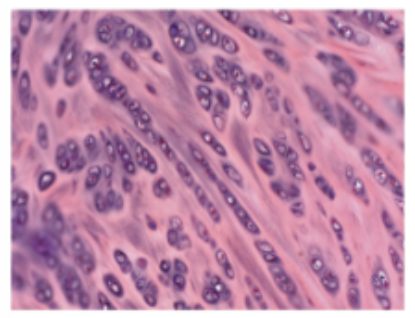
What is the matrix or nonliving substance of cartilage abundant in?
GAGs
function: make tissue resistant to heavy pressure
Blood
fluid connective tissue that transports cells and matter from various places
Plasma
blood’s ground substance
What is blood composed of?
formed elements and ground substance
What are the formed elements of blood?
erythrocytes (RBCs)
transport gases (oxygen and carbon dioxide)
leukocytes (WBCs)
neutrophils, eosinophils, basophils, lymphocytes, monocytes
fight infection and disease
platelets (thrombocytes)
fragments of big cells that form blood clots
Nervous tissue
tissue specialized for communication via electrical and chemical signals
What are the two cell types of nervous tissue?
neurons
detect, transmit, and respond to stimuli
glial cells
protect and assist the neurons

What are the neuron parts?
neurosoma (cell body)
integrates data
dendrites
receive and transmit data
axon (nerve fiber)
sends outgoing signals
What are the two excitable tissues?
muscular and nervous tissue
Excitability
the ability to sense and respond to stimulation
Muscular tissue
tissue specialized for contraction in response to stimulation
function: helps with body movement and provides a source of heat
Skeletal muscle tissue
made of muscle fibers (long thin cells)
striated
voluntary
multinucleated
location: attached to bone

Cardiac muscle tissue
contains cardiomyocyte cells
mononucleated
striated (intercalated discs)
involuntary
location: attached to heart wall
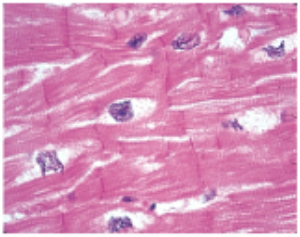
Smooth muscle tissue
made of fusiform (spindle-shaped) cells
lacks striations
involuntary
location: walls of viscera (hollow organs)

Tight junctions
interlocking linkage of cell membrane between two cells that is securely attached and prevents leakage of substances
ex. mechanical junction
location: digestive tract
Desmosomes
strong glue-like connection that hold cells together
ex. mechanical junction
location: skin and heart
Gap junctions
a communicating junction that allows passage of ions, nutrients, and cytoplasm
ex. electrical junction
location: cardiac muscle, and eye features
Glands
cells or organs that secrete or release substances in the body
Secretion vs. Excretion
secretion uses useful substances while excretion uses waste products
Endocrine gland
no ducts
infiltrate with blood vessels
secrete hormones
Exocrine glands
contain ducts
secretes to surface
secretes enzymes + specific names
Serous glands
produce watery secretion (tears)
Mucous glands
secrete mucus (goblet cells)
Mixed glands
secrete both serous and mucous substances
Eccrine (merocrine) secretion
uses vesicles
secretes ONLY SECRETION
ex. tear glands
Apocrine secretion
secretes secretion and part of cytoplasm/membrane
ex. milk fat from mammary glands
Holocrine secretion
secretes secretion and whole cell
ex. oil glands
Mucous membrane
lines passages open to external environment
consists of pseudostratified columnar epithelium based on areolar connective tissue
ex. located in digestive and respiratory tract
Serous membrane
secretes watery fluid within internal membranes
consists of simple squamous epithelium based on areolar connective tissue
ex. covers organs and lines walls of body cavities
Hyperplasia
tissue growth through cell multiplication
Hypertrophy
tissue growth through enlargement of preexisting cells
ex. muscle growth through exercise
Neoplasia
development of a tumor
Differentiation
the development of a more specialized form and function by unspecialized tissue
Metaplasia
a change from one type of mature tissue to another
Regeneration
replacement of dead or damaged cells by the same type as before
ex. repair of minor skin or liver injuries
Fibrosis
replacement of damaged cells with scar tissue
does not restore normal function
ex. repair of severe cuts and burns
Atrophy
shrinkage of tissue through loss in cell size or number
Necrosis
pathological tissue death due to trauma, toxins, or infections
types: infarction and gangrene
Apoptosis
programmed cell death
ex. normal cell death
What are the different epithelial cell types?
four types
simple squamous
thin, scaly cells
simple cuboidal
square or round cells
simple columnar
tall, narrow cells
pseudostratified columnar
some cells taller than other
goblet cells