Food Micro Exam 1
 Call Kai
 Learn
Learn Practice Test
 Spaced Repetition
 Match
Match Flashcards
 Knowt Play
1/121

There's no tags or description
Looks like no tags are added yet.
Name | Mastery | Learn | Test | Matching | Spaced | Call with Kai | Chat |
|---|
No analytics yet
Send a link to your students to track their progress
122 Terms
What are the three main families of aerobic spore forming bacteria
alicyclobacillus, bacillus, geobacillus
what is the main anaerobic spore forming bacteria family
clostridium
how are spore forming bacteria cells and spores similar and different
they are the same species, different pheotype,bacteria cells are active (metabolizing, multiplying) spores are dormant
how can we see spores under microscope (three methods)
malachite green stains stains spores green, clear under gram staining, phase contrast microscope-no staining required
basic characteristics of bacterial spores
Dormancy and longevity, resistance to deleterious factors (heat, freezing, lack of water, air/no air, antimicrobial agents
what type of transformation is sporulation
preservation process (one cell = one spore)
what triggers sporulation
sublethal stress ( an exposeure that damages or alters cell but does not kill it
what does a bacterial cell start as in sporulation
chromosome, peptidoglycan, cytoplasmic membrane
what are the steps of sporulation
DNA replicates, formation of septum, dividing into mother and small compartment (both with chromosome), cytoplasmic membrane invaginates to form spore septum, forespore is engulfed, forespore forms, cortex forms, coat layers form and mature, spore either releases or doesn’t (both are mature spores)
how long does sporulation take and how many genes does it require
6-7 hours, requires regulation of more than 50 unique genes to manage spore formulation
structure of spores
core, inner membrane, core wall, cortex, inner coat, outer coat, (optional exosporium)
what is the spore core made out of and why is it so important
DNA, ribosomes, enzymes, dipicolinic acid, cations, small acid soluble proteins, so important because if the core is damaged the spore will die
what is spore inner membrane made of
forespore-derived membranewh
what is spore core wall and cortex made of
peptidogylcan
what is important about the formation of the spore cortex
when it forms, it squeezes water out of core to contribute to heat resistance, and it keeps water out of the core
what are the spore inner and outer coat made of
inner: thinner protein
outer: thick layer, cysteine-rich
what are the steps in germinating a spore
activation, germination, outgrowth
what happens in the activation step of germination and what are the characteristics at this stage
either sublethal heat, low pH, or chemical or enzyme treatment, still reversible, spore retains its dormancy and resistance mostly
what happens in the germination step of germination and what are the characteristics at this stage
once germination receptors sense right germinants, they become active and initiate germination, irreversible, goes from phase bright to phase dark, loss of heat resistance (core hydration, release dipicolinic acid
what happens in the outgrowth step of germination
emergence from the spore coats and cortex, elongation of the emergent cell
what is the importance of exogenous nutrients during the outgrowth of germination and after
not required to support outgrowth, required later for development and multiplication of bacterial cells
what are the factors of resistance in spores
cell characteristics (ie optimum growth temp), sporulation conditions
review role of spore structures in resistance to processing table
yes
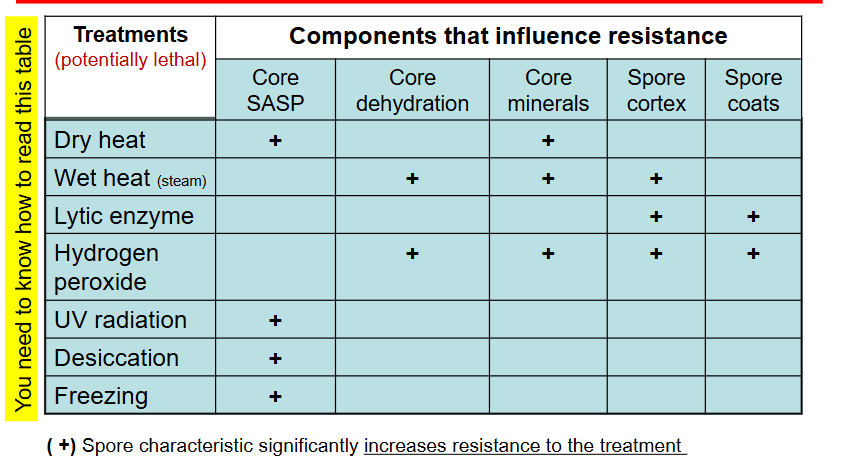
difference between wet and dry heat
dry heat is applied at the highest possible temp with no steam-damages proteins, dna and other core components
wet heat is milder, damages enzymes and other proteins(proteins need water to be denatured)
how do radiation,mutations, and lytic enzymes do damage to spores
radiation damages dna, le degrades peptidoglycan of the cortex, can do mutations to weaken the components
relationship between vegetative and spore resistances to heat
higher resistance to heat as vegetative correlates to higher resistance as spore
what are the two types of controls for spores in food
inactivation
-severe heat (retort or autoclave)
-gamma radiation (dry ingredients
-hydrogen peroxide high [ ] +heat (packaging)
-ethylene gas, chlorine, ozone, hurdles
Inhibition
-of germination or outgrowth(sporostatic)
-bacteriocin-nisin
-nitrite (Meat)
what are the five important aerobic spore formers and their importance in food
alicyclobacillus spp. (acidophile) spoilage
-flat sour in food package
-fruit juices and iced tea
bacillus cereus (facultative anaerobe) intoxication
-cooked rice, pasta, meats, soups, salads, puddings
bacillus coagulans (facultative anaerobe) spoilage
-flat sour
-canned tomato juice and other acidic foods
bacillus subtilis (obligate aerobe) spoilage
-“ropy” bakery product
-softening of pickles
geobacillus stearothermophilus (facultative anaerobe) spoilage
-flat sour
-low acid canned vegetables
what are the 4 most important anaerobic spore formers and their importance in food
clostridium sporogenes (strict anaerobe)
-swelling and putrid odor
-canned food
clostridium botulinum (strict anaerobe neurotoxins) intoxication
-home-canned foods
-faulty processed canned food
-temp abused, vacuum-packed low-acid food
clostridium perfringens (air tolerant anaerobe) infection
-meat and poultry product
clostridium tyrobutyricum (abundant gas) spoilage
-gas formation at late stage of cheese ripening
what define firmicutes
strong skin- cells with strong wall= gram positive
what is the main difference between firmicutes and proteobacteria
gram neg. (proteo) has lipopolysaccharidewh
what are the main components of the cell envelope of firmicutes
cytoplasmic membrane with protein, peptidoglycan, membrane lipoteichoic acid, cell wall with teichoic acid, cell wall specific polysaccharide
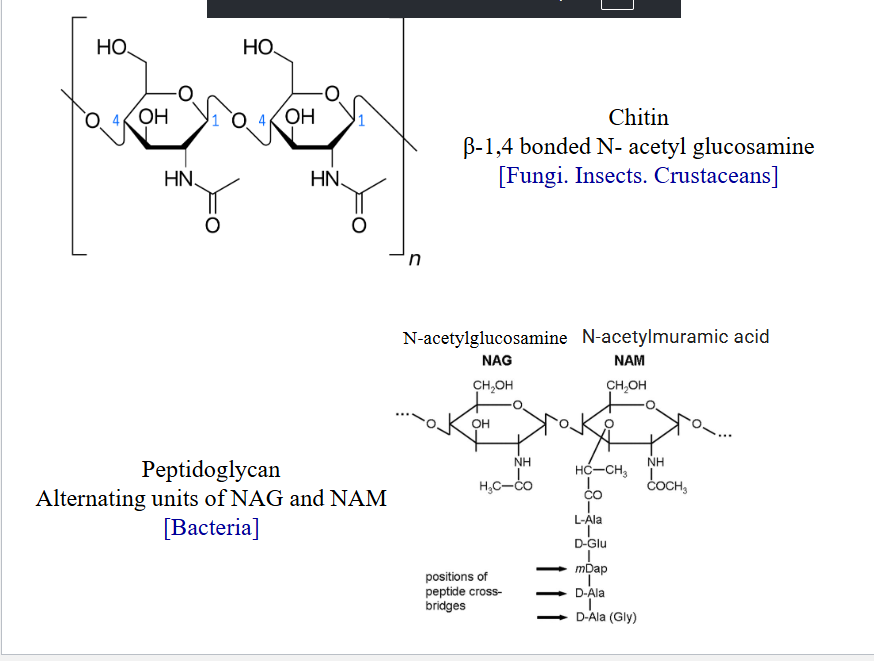
what is peptidoglycan made out of
amino acids and glucose-based carbohydrates
how is wall teichoic acid different from lipoteichoic acid
WTAs are covalently bound to PG by a phosphodiester linkage
LTAs are anchored to the cytoplasmic membrane by a glycolipid
what are the 6 genus of firmicutes
enterococcus, lactobacillus, pediococcus, leuconostoc, lactococcus, streptococcus
what are the main characteristics of lactic acid bacteria
gram positive, non-spore forming, catalase negative, acid tolerant, nutritionally fastidious (cannot digest everything), anaerobic but most are air tolerant, fermentative metabolism
difference between homolactic and heterolactic
fermentation process only produces lactic acid vs produces lactic acid AND ethanol and CO2eq
equation of homolactic fermentation of glucose
glucose——> 2 lactic acid + 2 ATP
which genus do homolactic fermentation
lactococcus, streptococcus, pediococcus, some lactobacillus
which genus do heterolactic fermentation
leuconostoc
some lactobacillus
difference between anaerobic vs aerobic heterolactic conditions
ana: glucose—→ 1 co2 + 1 lactic acid + 1 ethanol + 1 atp
aer: glucose + O2 —→ 1 co2 + 1 lactic acid + 1 acetic + 2 atp
difference between L and D lactic acid
L: human body
D : body doesn’t do well with
memorize the table of genera of lactic acid bacteria
enterococcus is a lactic acid bacteria

lactic acid bacteria in fermented foods

what are some health benefits of lactic acid bacteria
probiotics-ingested living microorganisms to improve intestinal ecosystem (lactobacillus reuteri, lactobacillus acidophilus)
antimicrobials used as protective cultures
health hazards of lactic acid bacteria
human and animal diseases
differentiated with how they induce immune response and the way they breakdown blood cells
what are the three types hemolysis results
ɑ (alpha): breaks down red blood cells but not hemoglobin
฿ (beta) breaks down red blood cell AND hemoglobin
ʏ (gamma) does not break down either way
how did the lancefield grouping improve grouping of hemolytic streptococcus spp.
combines immune response and hemolysis
serologic grouping of carbs in cell envelope was usedwh
what is serology
diagnostic examination of blood serum with regard to the response of the immune system to pathogens or introduced foreign substances
when the animal/human is infected with a microorganism . . .

how can two species have the same typical hemolysis but in different lancefield groups
react to different antibiotics
different immune responsed
diseases caused by streptococcus spp.
m

other disease caused by streptococcus spp.
GAS group A streptococci skin and throat infections
what defines bacteria
single cell microorganism
every expression of life has to be expressed by that single cell
no nucleus
no membrane bound organelles
what defines fungi
single cell, multicellular filamentous or macroscopic
contains membrane bound organelles and nucleus
heterotrophic nutrition
what is included in phenotyping for bacteria
morphology (visual and microscopic)
biochemical characteristics
physiology (anaerobe vs aerobe)
what is included in genotyping of bacteria
genetic relatedness or dna homology
is there a correlation between cell morphology and colony morphology
no
difference between dna and rna
rna has uracil instead of thymine
rna is single strand, instead of double
dna has deoxyribose sugar instead of ribosedi
difference between bacteria and eukaryotic cell gene expression
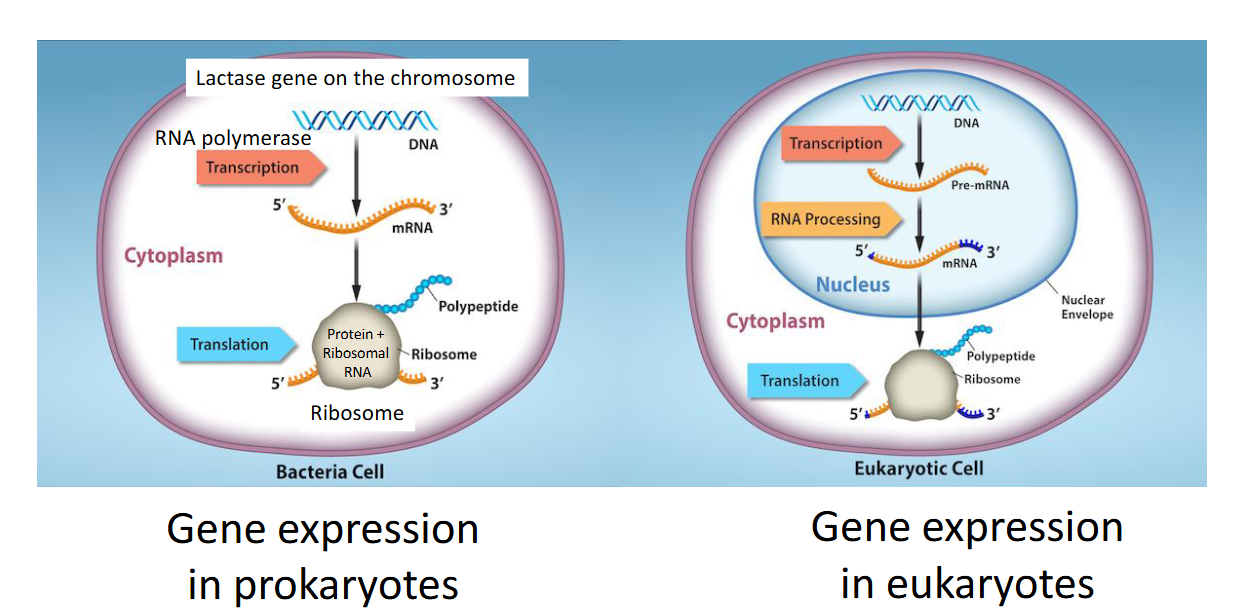
importance of ribosomal RNA in genetic relatedness
is called a molecular clock because it can be used to estimate when evolutionary changes transitions took place in living organisms
what is the most useful gene in bacterial identifiication
16S rDNA (gene that encodes 16S rRNA)
characteristics of prokaryotic ribosome
made of ribosomal rna and proteins
size: 70 S (sedimentation coefficient)
contains large subunit (50S) and small subunit (30S)
16S rRNA is apart of small subunit
what is the cell envelope of gram negatives made of
lipid A
core oligosaccharide
o antigen

domain, family and family of most gram negatives
Bacteria, proteobacteria, enterobacteriaceae (intensines, rod)
characteristics of enterobacteriaceae
gram neg
rod shaped
motile by peritrichous flagella
mesophiles (opt temp 22-35 C)
facultative anaerobes
respiratory and fermentative metabolism (reduce nitrate to nitrite)
carbohydrate metabolism by aerobic respiration in bacteria

what is the oxygen alternative in the tca cycle
NO3 as the final electron acceptor for anaerobic respiration
what does it mean to be a facultative anaerobe
will use oxygen to produce energy when it is present, but can als switch to fermentation in the absence of oxygen
match the type of organism to its type of CHO metabolism
aerobic- aerobic respiration
anaerobic- fermentation
facultative anaerobic- anaerobic respiration
what is the big difference between fermentation and aerobic respiration in terms of carbohydrate use
fermentation cannot be lazy and must use/consume a lot of carbohydrates to continue to produce energy
aerobic respiration can be lazy and slower with its carb intake
know the type, final electron acceptor, end product and relative energy produced for aerobic respiration, fermentation, anaerobic respiration

catalase, oxidase and ecology and host range of enterobacteriaceae
catalase pos
oxidase neg (cytochrome C oxidase, HAVE quinol oxidases)
soil, water, vegetation, common in intestinal tracts, human animal and plant pathogens
what are the 8 need to know enterobacteriaceae genera of significance in food
citrobacter, enterobacter, erwinia, escherichia, klebsiella, salmonella, shigella, yersinia
what are coliforms
coli-like organism
what is the domain phylum and species that means false unit
bacteria, proteobacteria, psuedomonasw
what is the main characteristic of psuedomonas spp
polar flagella
other characteristics of psuedomonas spp.
gram neg, rod shaped, motile by polar flagella,
catalase pos, usually oxidase neg
respiratory metabolism
many species are obligate anerobes
catabolic diversity
what type of pigments may psuedomonas secrete
pyoverdine- yellow-green
pyocyanin-blue (detection of food spoilage)
prevalence of psuedomonas spp
freeliving in soils, fresh water and marine environments
associated with plants and animals as normal biota or as disease causing agents
bioforming capabilities
steps in biofilm formation
initial reversible attachment
permanent attachment by anchoring and adhesions
bacteria multiply and form microcolonies
growth and maturation through quorum sensing
dispersion and detachment back to free floating

significance of biofilm formation
equipment contamination-control is difficult
continuous source of spoilage
difficult to remove by washing and sanitation
problematic pseudomonas spp to remember for spoilage and pathogenic
spoilage- pseudomonas fluorescens
pathogenic-pseudomonas aeruginosa
foods spoiled by pseudomonas spp
meat and poultry-odor, color, slime
raw milk-lipases that degrade milk fat, proteases that degrade milk proteins, bitterness, ropiness
pasteurized milk-will kill pseudomonas but not the products created
spoilage lingers past cooking/processes
butter-surface taint, rancidity, odor, black discolor
vegetables-slime from pectin
fish and ground meat- sulfide-like odor from cysteinem
morphology of yeast
on agar looks like bacteria
microscopically much larger than bacteria
three types of fungi
yeast, mold, mushrooms
example of good bad and ugly yeasts
good
dough leavening
saccharomyces spp
bad
skin rash cutaneous candidiasis
candida spp
ugly
pickle spoilage
zygosaccharomyces
morpholgy of mold
large and fuzzy mycelium on agar, many colors
microscopic- filamentous, thread like strands called hyphae
three types of hyphae and are they septate or nonseptate
p- septate
r-non
a-septate
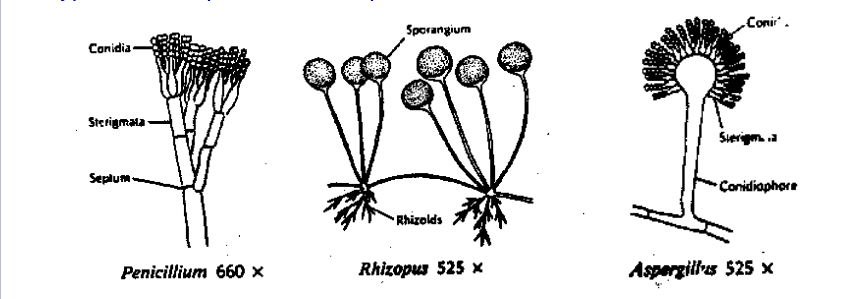
example of beneficial spoilage and pathogenic filamentous fungi (molds)
mold ripened cheese
penicillium spp
moldy bread
rhizopus spp
ringworm
microsporum
morpholofy of mushrooms

example of an edible mushroom and poisonous
-agaricus spp
-amanita spp
where do fungi fit into domains of life
under eukaryota
phylogenetically distant
how are bacteria and fungi different in cell structure
fungi is eukaryotic, has membrane bound nucleus, has complex internal organelles
bacteria is prokaryotic, no nucleus, no mem bound organelles
general characteristics of fungi
eukaryotic- multi-chromosome nucleus
heterotrophic or hypotrophic, rare autotrophic
majority obligate aerobes
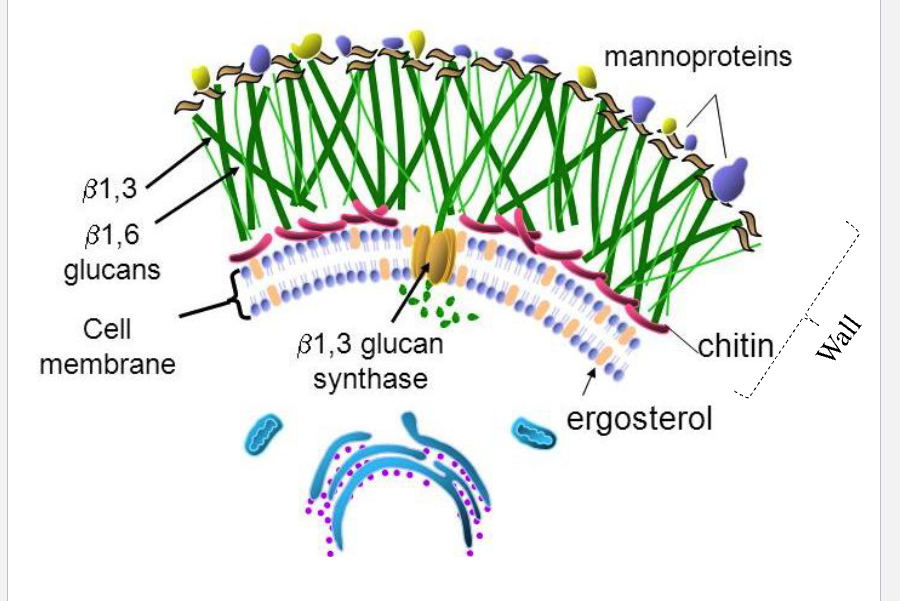
cell wall structure of fungi
chitin, glucans and/or mannans, glycoproteins
all cross-linked
structure of chitin vs peptidogylcan
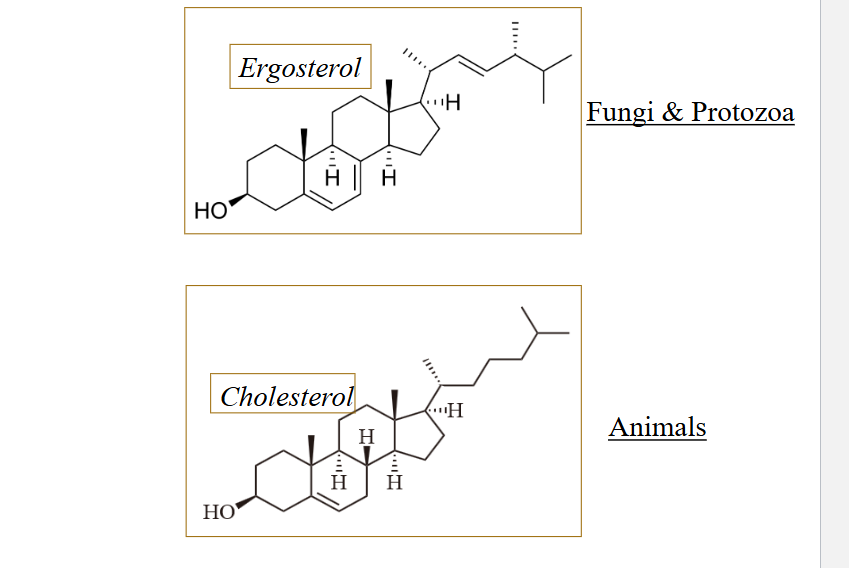
structure of ergosterol vs chloesterol
propogation of fungi
binary fission (rare)
budding
elongation of hyphae
fragmentation of hyphae
formation of spores
asexual
sexual
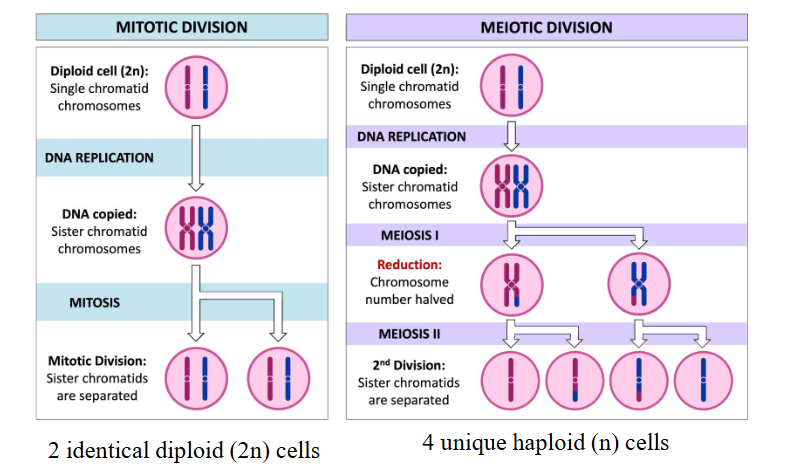
sexual vs asexual reproduction process
starting vs ending chrom
mitotic- two—> two per
meiotic two—> one per