🔉 Waves & Optics
 Call Kai
 Learn
Learn Practice Test
 Spaced Repetition
 Match
Match Flashcards
 Knowt Play
1/92

There's no tags or description
Looks like no tags are added yet.
Name | Mastery | Learn | Test | Matching | Spaced | Call with Kai | Chat |
|---|
No analytics yet
Send a link to your students to track their progress
93 Terms
What is amplitude?
The maximum displacement from the equilibrium (centre of displacement)
What is frequency?
The number of completed cycle per unit time (Hz - the number of cycle per second)
What is the frequency related to time?
F=T1
What is wavelength?
The minimum distance between two points on a wave that are in phase
What does in phase mean?
There is a whole number of wavelengths between two points
What is Speed related to waves?
The distance travelled by the wave per unit time
Equation that relates speed, frequency and wavelength?
C=fλ
What is the phase of wave?
The fraction of a cycle covered up to that point. (Measured in degrees/radians)
What is phase difference?
How far out of sync two point on a wave(or two points on separate waves) are in degrees/radians
How to calculate Phase Difference from displacement/distance graph?
Phase.Difference=λd×2π
λ = wavelength
How to calculate Phase Difference from displacement/time graph?
Phase.Difference=Tt×2π
T = time period
What is a transverse wave?
Transverse wave: The oscillations are perpendicular to the direction of energy transfer
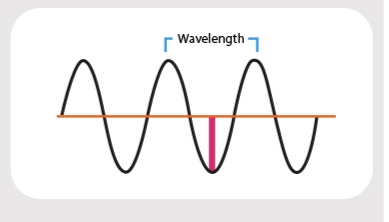
What are Longitudinal waves?
Longitudinal wave: The oscillations are parallel to the direction of energy transfer
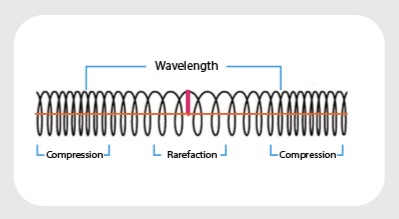
What occurs in longitudinal wave?
Compression
Rarefraction
What are the examples of transverse waves?
Electromagnetic Waves
Waves on a string
What speed do EM waves travel in a vacuum?
At speed of light (C)
3×10⁸
What are examples of longitudinal waves?
Sound Waves
What does polarisation mean?
Oscillating of a particle or field that only travel in one single plane
What types of waves can be polarised and why?
Only transverse waves can be polarised as oscillations are perpendicular to energy transfer
What are different types of polarisation?

What is an example of a non polarised wave?
Unreflected Sunlight
What are application of polarisation?
Polarised sunglasses
Alignment of aerials for transmission and reception
How do properties of sunlight change when reflected on reflective material?
Before: Non polarised wave
After: Mostly polarised horizontally
How do vertically polarising sunglasses work to reduce glare/reflections?
When sun light is reflected on reflective surface (water) it becomes mostly horizontal polarised
The vertical polarised absorb this horizontally polarised light and only the minimal vertically polarised light is let through- reducing glare
When light hit other objects it remains unpolarised so only 50% of light will pass through Polaroids
How to are polarised waves used for alignment of aerials for transmission and reception?
The receptor can be rotated vertically- if maximum signal then transmitter waves are polarised in vertical plane
The receptor can be rotated horizontally - if maximum signal then transmitter waves are polarised in horizontal plane
How is a stationary wave formed?
Wave travelling same frequency opposite direction at resonant frequencies
An incident wave is reflected off a boundary/fixed point.
The waves the superpose/interfere forming nodes and antibodies?
What type of superposition forms nodes?
Destructive interference (0 amplitude)
What type of superposition form antinodes?
Constructive interference (maximum amplitude)
What are two differences between progressive and stationary wave?
A progressive waves transfers energy in direction of travel while stationary doesn’t.
The amplitude across progressive wave is the same everywhere while in stationary wave it isn’t

Why isn’t amplitude the same across every point on a stationary wave?
Because as wave only constructively and destructively interfere not move. Each point on a wave has a different amplitude with the antinode being the maximum.

What is phase difference in stationary waves?
Particles between adjacent to nodes (between two nodes) are in phase
Particles in opposite sides of the same node are in antiphase

Only specifics frequency generate stationary waves what are they called?
Harmonics
What can create vibrations for stationary waves?
Signal generators
What is the 1st harmonic?
Half the wavelength
L=2λ
What is frequency a multiple in a stationary waves?
The harmonies
What is the equation for first harmonics?
f=2L1MT
T= Tension, force acting on string
M= Mass per unit length
How to calculate M (mass per unit length) of density of cable is given?
m=ρA
A= Cross sectional area
Definition of superposition?
When waves interact the resultant displacement is the vector sum of individual displacements.
What is path difference?
The difference in path length (distance travelled to receiver) by waves emitted from different sources
What is the path difference if the distance between the two points and receiver is the same?
The path difference is 0
What is coherence?
Constant phase difference between two waves (e,g always phase difference of π rads)
Same frequency/same time period
What is Youngs double slit experiment?
It is the use of two coherent sources of or the use of a single source with double slits to form an interference pattern
What is monochromatic light and an example?
Laser- Source of light with only wavelength of light
What happens in youngs double slit experiment?
The monochromatic source of light diffracts, these waves then interfere/superpose.
Places of constructive inference are when wave (in phase) is at maximum/in phase
Places of destructive inference are when wave is at minima/antiphase
What are conditions for interference?
Waves superpose
Maximum is maximum constructive interference- In Phase, path difference =nλ
Minima is maximum destructive interference- Antiphase, path difference = 21nλ
What is going double slit equation?
W=sλD
W= Fringe separation
D= From slit to screen
s= Slit spacing
How to reduce percentage error in young double slit experiment?
Measure multiple fringe spaces and the divide by the number there are
What slit spacing measured with?
Travelling microscope
What happens if white light light is used in double slit experiment?
The colours will split on screen.
Because as wavelength for each colour increases so will fringe spacing.
W=sλD
Centre fringe will be white then next will maximum blue then green then red and so on increase in order of wavelength
What is diffraction?
The spreading of light as it passes through light or obstacle.
But gap has to be approximately size of wavelength
What is a condition for diffraction?
The gap wave is diffracting through has to be approximately size of wavelength
At least same order of magnitude
What happens when waves diffract around obstacle?
The diffract around it and cause a ‘shadow’ where there is no refraction
What is the diffraction from a single slit with monochromatic light?
A wide central maximum with narrower side fringes.

What is intensity?
Power per unit area
What is the diffraction from a single slit with white light?
There will be a wide white central maximum as all wavelengths arrive together.
All other orders of maximum they will be a rainbow and colour will spread with a different diffraction angle in order of ROYGBIV (Red being the furthest)

For single slit experiment how W affected by wavelength and slit separation?
As slit separation increases then W decreases, and Intensity increases
As wavelength increases, W increases, and Intensity decreases
Assuming D is constant
What is diffraction grating?
It has many small openings that can be seen to the human which cause light to diffract
What does n=0
Order = 0, which means it is central fringe
What is the diffraction grating equation?
dsinθ=nλ
d=line separation
d=N1 N= number of lines per m
How to derive Young’s double slit formula?

For a maximum number of fringes with a diffraction grating what is θ?
θ is 90 degrees for a maximum number of fringes
What is something that needs to remembered when calculating total number of fringes?
When n is calculated remember it must be doubled (to account for both sides of symmetric pattern) and add 1 (accounting for central maximum)
What is derivation of diffraction grating equation?

What safety measures need to be considered when using laser?
Don’t shine at people (eyes)
Don’t shine towards reflective surfaces (will reflect)
Warn people when laser is being used
What are 2 applications of different grating?
Used in atomic spectra to identify elements in stars in astronomy
X-ray a diffraction is used to study the structure of crystals in X-ray crystallography - the x-ray wavelength is of similar order to the spacing between atom so the atomic lattice acts like a diffraction grating.
What is the refractive index?
The ratio of speed of light in a vacuum to the speed of light in a substance
What is refractive index equation?
n=csc
n= refractive index (no unit)
c= speed of light in a vacuum
Cs= speed of light in substance
What is the maximum value n (refractive index) can be?
n≥1 as nothing can travel faster than light
So speed of light always divided by same or smaller number c≥cs
What is refractive index of air?
1
As n for air ~ n in a vacuum = 1
During refraction changes and what stays constant?
The frequency of wave stays constant
The speed and wavelength of wave change
How does light refract when going from a lower to higher refractive index?
(Air to anything)
The beam will reflect towards the normal
Angle of incidence > angle of refraction
How does light refract when going from a higher to lower refractive index?
(Anything to air)
The beam will reflect away from the normal
Angle of incidence < angle of refraction
When a ray of light enters and object and leaves other side other they parallel?
Yes
What is Snells Law?
n1sinθ=n2sinθ
What is total internal refaction?
When a ray of light reflects inside of object it enters inside refracting out the object

What is the angle at which total internal reflection begins to occur?
Critical angle

Does total internal reflection continue when angle of incidence is smaller or bigger than critical angle?
Bigger

How to derive critical angle?

When does total internal reflection work?
n1>n2
E,g Glass to air (air to anything wont work)
What is a step index fibre optics use for?
To transport information using light by total internal reflection
What are the two things that make up a step index fibre optic?
Core and cladding

Does core propagate light with total internal reflection?
Yes as it has a higher refractive index than the cladding
What property does the core have in addition to high refractive index?
It has a low absorption/attenuation- to ensure maximum transmission of information
What is the function of cladding in a fibre optic?
Protects fibre from damage
Provide a boundary for total internal reflection as it has lower refractive index than core

What are problems in step index fibre optics?
Material dispersion- different waves have different relative refractive indices in core
Modal dispersion- different paths have different lengths so time along fibre during travel differs
How to fix material dispersion?
Use a monochromatic light (same wavelength so relative refractive indices)
How to fix modal dispersion?
By using a single mode fibre optic with smaller core and difference in refractive index of core and cladding which makes critical angle bigger (so less variation in paths)
What happens if core has high absorption?
It decreases amplitude of signal
What is pulse broadening?
This happens because lights rays enter fibre optic and different angles (therefore take different paths which take different amount of times)
How to increase transmission?
Decrease model dispersion : reducing diameter of core so there is a smaller range of path lengths
How to measure the speed of sound in air?
Use a loud speaker with signal generator
Place 2 microphones apart at a set distance
Play a sound and record the time between first and second sound
Use speed=distance\time
How to measure wave speed in water?
Set up ripple tank dipper in water with flashing strobe light
Turn on ripple tank dipper at set frequency and adjust strobe light frequency until waves appear still (when frequency is the same)
Then use ruler to measure wavelength of 10 waves then devise by 10 (reduce percentage error)
The use C=fλ
Repeat for range of depths- deeper water travel faster