Di Exam 3 pt 5 ( regional osteoporosis)
 Call Kai
 Learn
Learn Practice Test
 Spaced Repetition
 Match
Match Flashcards
 Knowt Play
1/21

There's no tags or description
Looks like no tags are added yet.
Name | Mastery | Learn | Test | Matching | Spaced | Call with Kai | Chat |
|---|
No analytics yet
Send a link to your students to track their progress
22 Terms
• Disuse osteoporosis
• Complex Regional Pain Syndrome (CRPS)
• Transient Osteoporosis of the Hip
What are the regional osteoporosis conditions?
Disuse osteoporosis
What regional MSK movement stimulates osteoblastic activity
And Immobilization (injury, paralysis, joint diseases)
Extremity findings of disuse osteoporosis
o Diffuse osteopenia of that region
o Lucent bands of osteopenia proximal to the physeal line
o Subchondral lucency
o Uniform or spotty demineralization
Are all common findings of what?
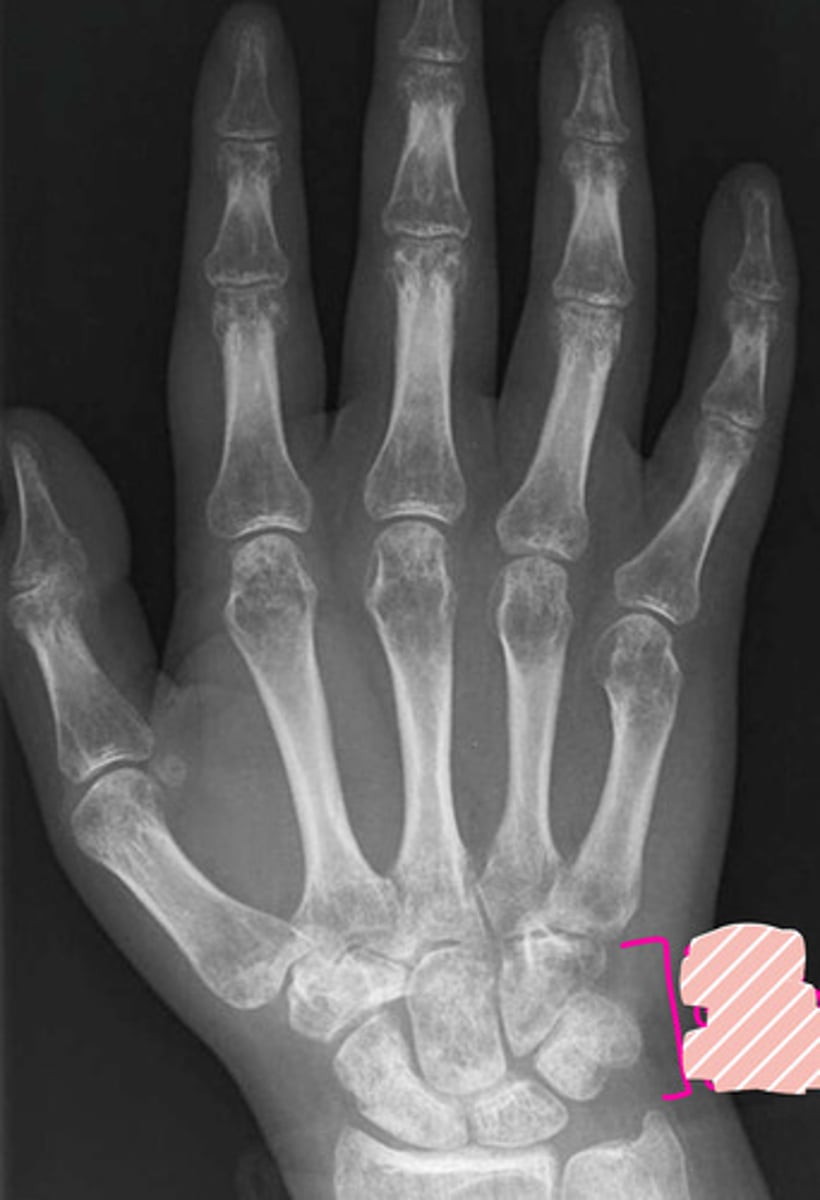
Spotty carpal demineralization (disuse osteoporosis)
What does this show?
Complex regional pain syndrome (CRPS)
What does CRPS osteoporosis stand for?
CRPS osteoporosis
What is a neuropathic pain disorder defined by the presence
of distinct clinical features, including allodynia, hyperalgesia, sudomotor and vasomotor abnormalities, and trophic changes?
T
T/f: The pain experienced is disproportionate to the degree of
tissue injury and persists beyond the normal expected time for tissue healing when talking about CRPS.
Type 1
Type 2
What are the two subtypes of CRPS osteoporosis?
2
causalgia is what type of subtype of CRPS?
Type 1
reflex sympathetic dystrophy described what type of CRPS?
Type 1
Type 2
What subtype of CRPS osteoporosis occurs in the absence of nerve trauma ?
What type occurs in the setting of known nerve trauma?
CRPS osteoporosis
• Soft tissue swelling
• Regional osteoporosis
• Rapid, early mottled/patchy appearance, later generalized, could
become bilateral
• Aggressive and severe destruction of bone
• Significant juxta-articular osteoporosis
•Could involve the entireextremity
• Radionuclide imaging (bone scan)
Are all common finding in what condition?
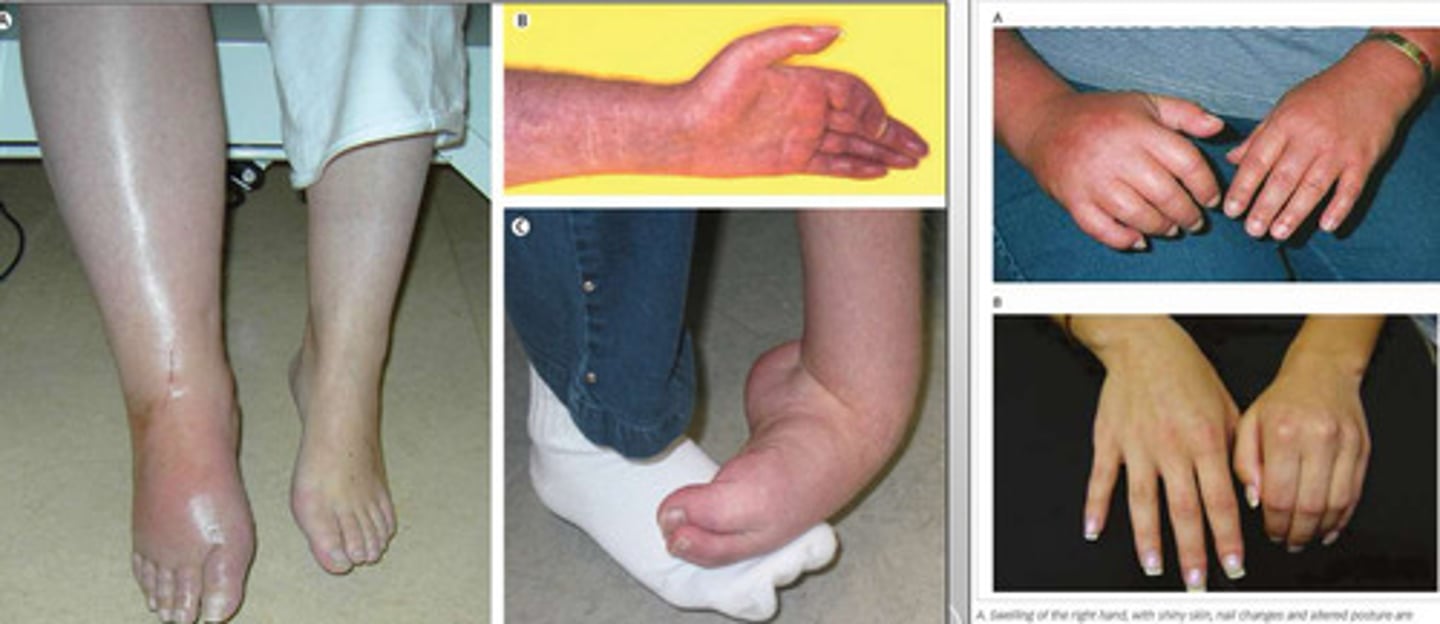
CRPS osteoporosis:
Soft tissue swelling
Bilateral
Patchy appearance
What does this image show?
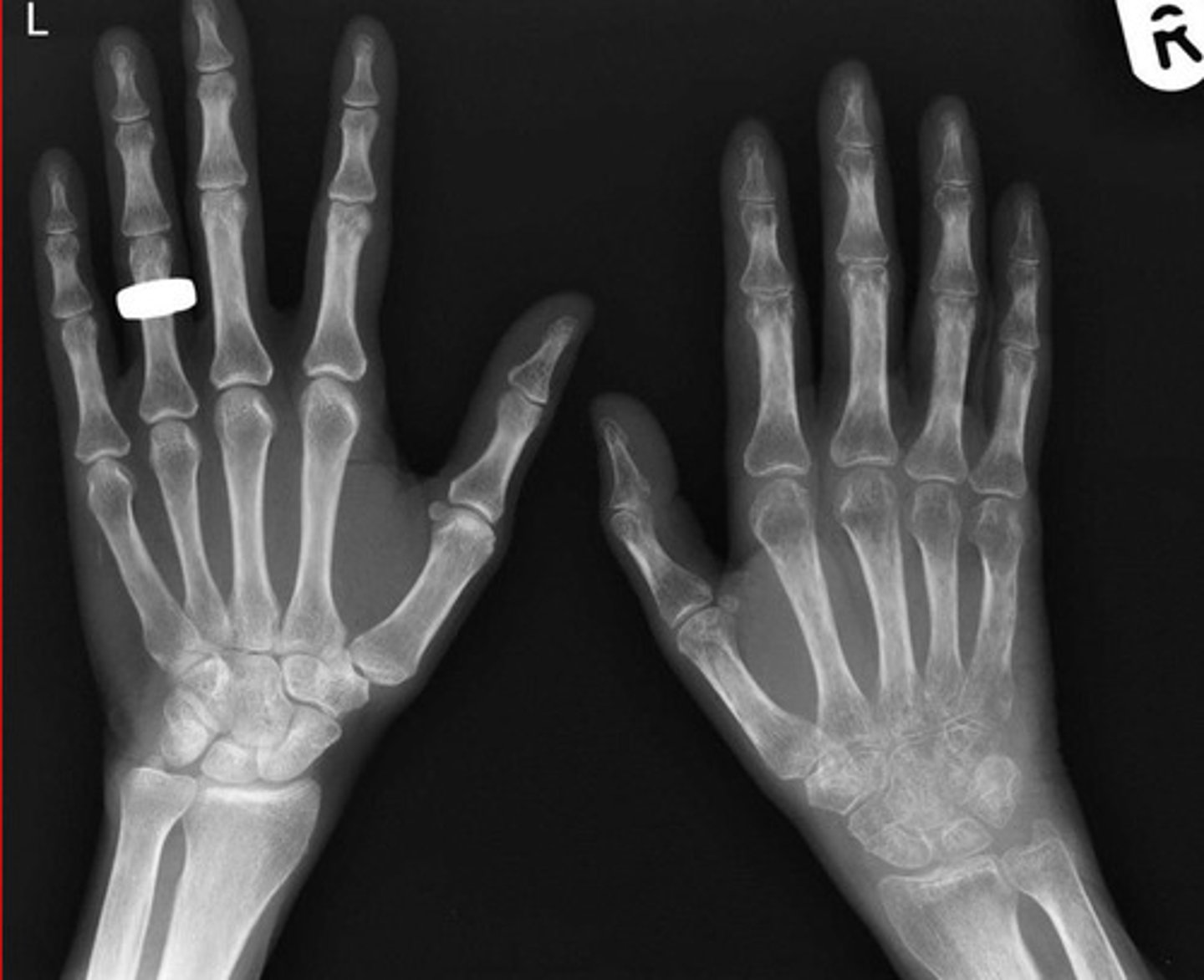
Transient osteoporosis of the hip (TOH)
What regional osteoporosis is More common in young adults (20-40) and has a higher association with pregnancy?
Men
Men
TOH is more common in what gender?
What gender is more commonly effected bilaterally?
Left
What hip more commonly affected in women with TOH?
T
T/f: The osteopenia is real; risk of fracture is higher than those without
TOH
Hot spots
Bone scan will demonstrate increased uptake of the radiotracer in TOH are called what?
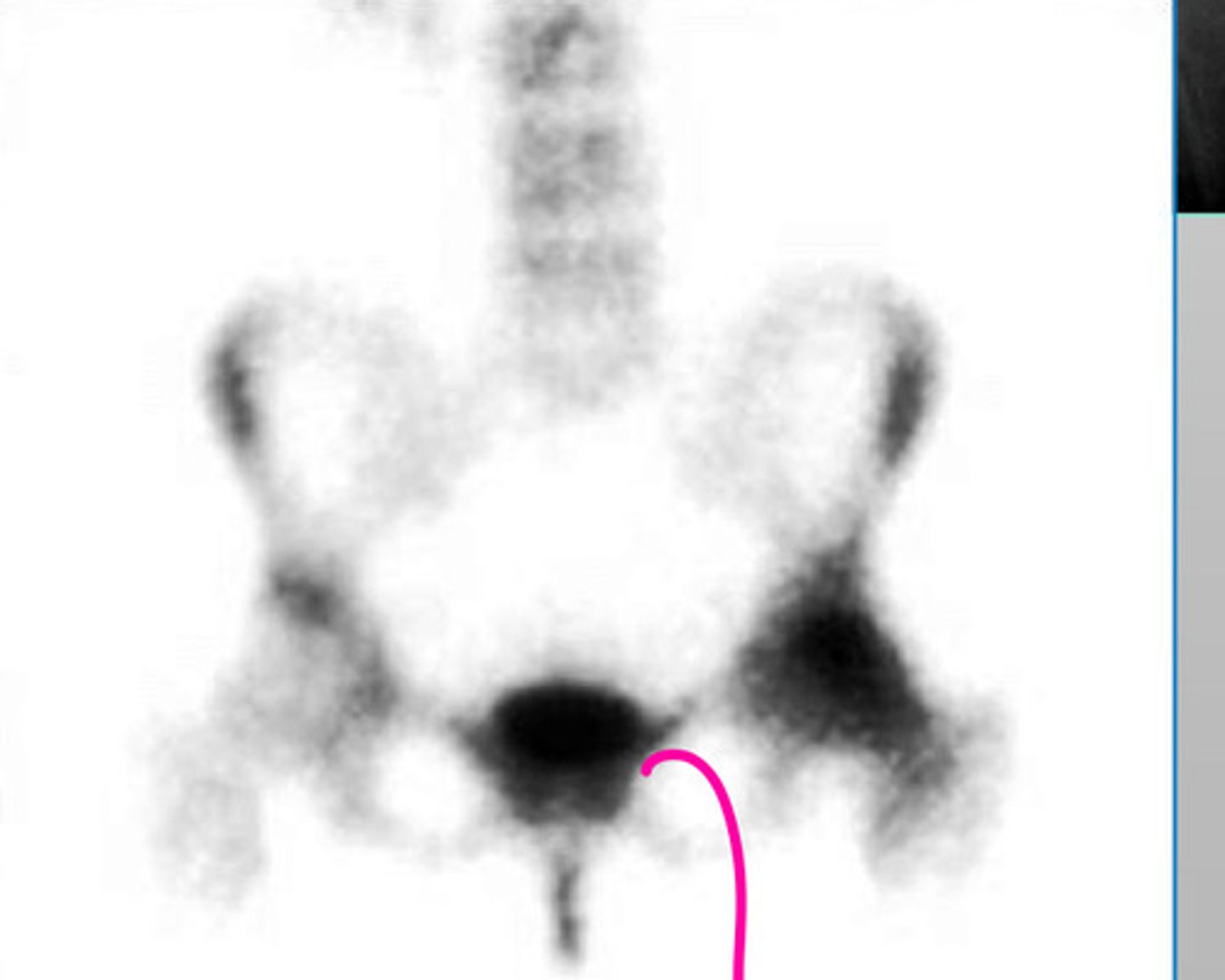
Technitium pools in bladder
What cause the bladder to glow in a Bone scan?
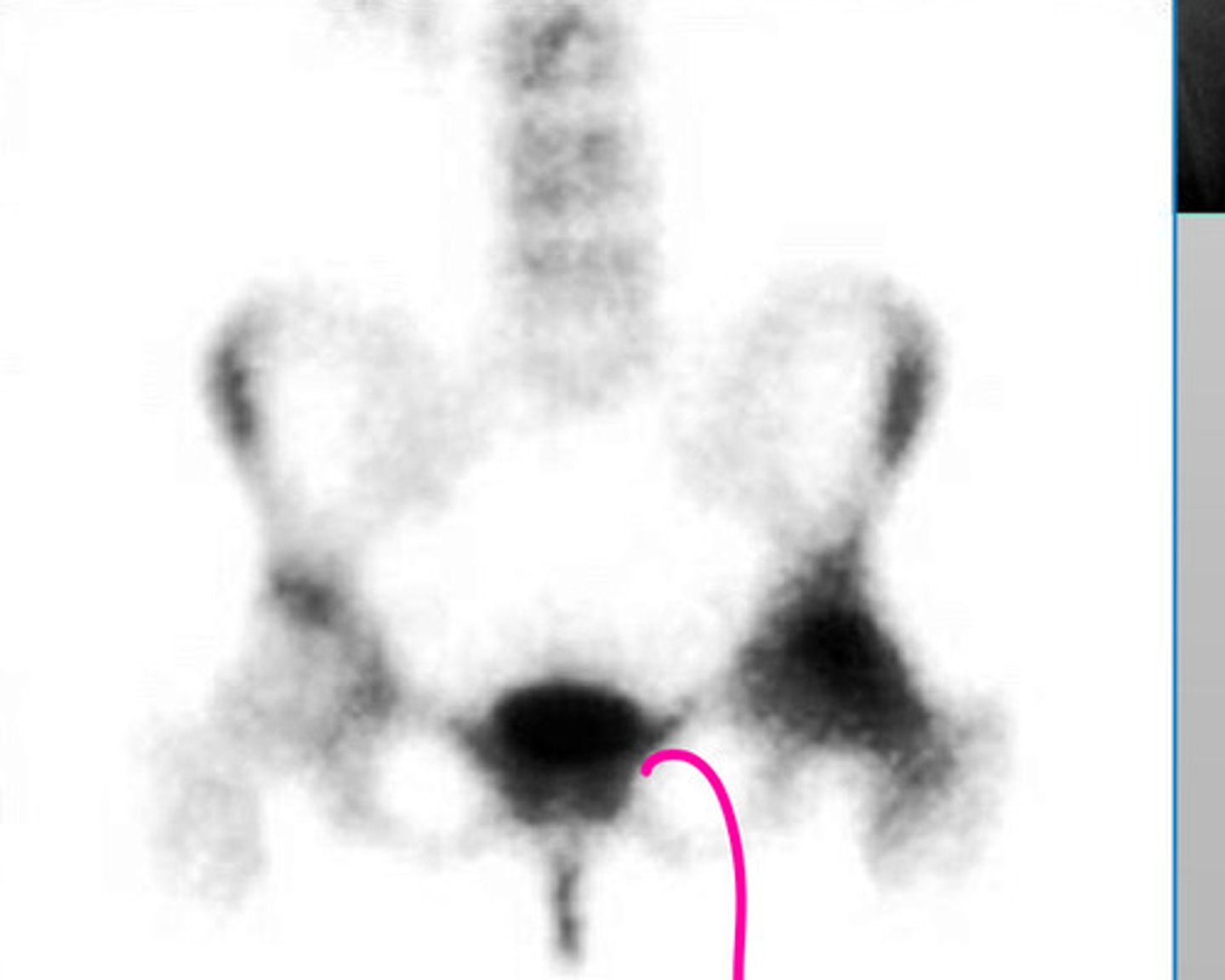
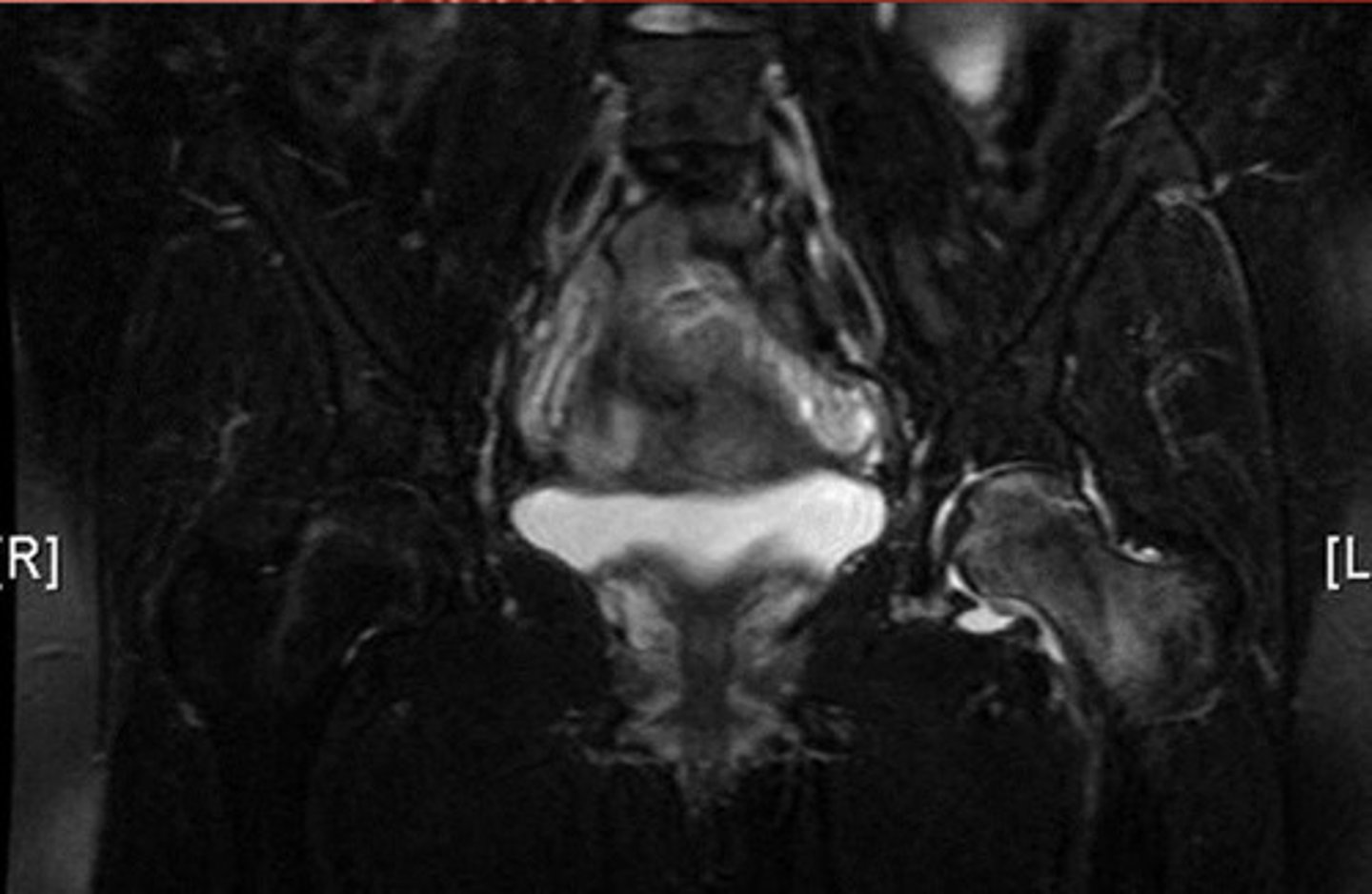
Bone scan and MRI (T2, edema)
What are good imaging for TOH?
TOH
What cause a radiolucent femur head/hip region on the left?
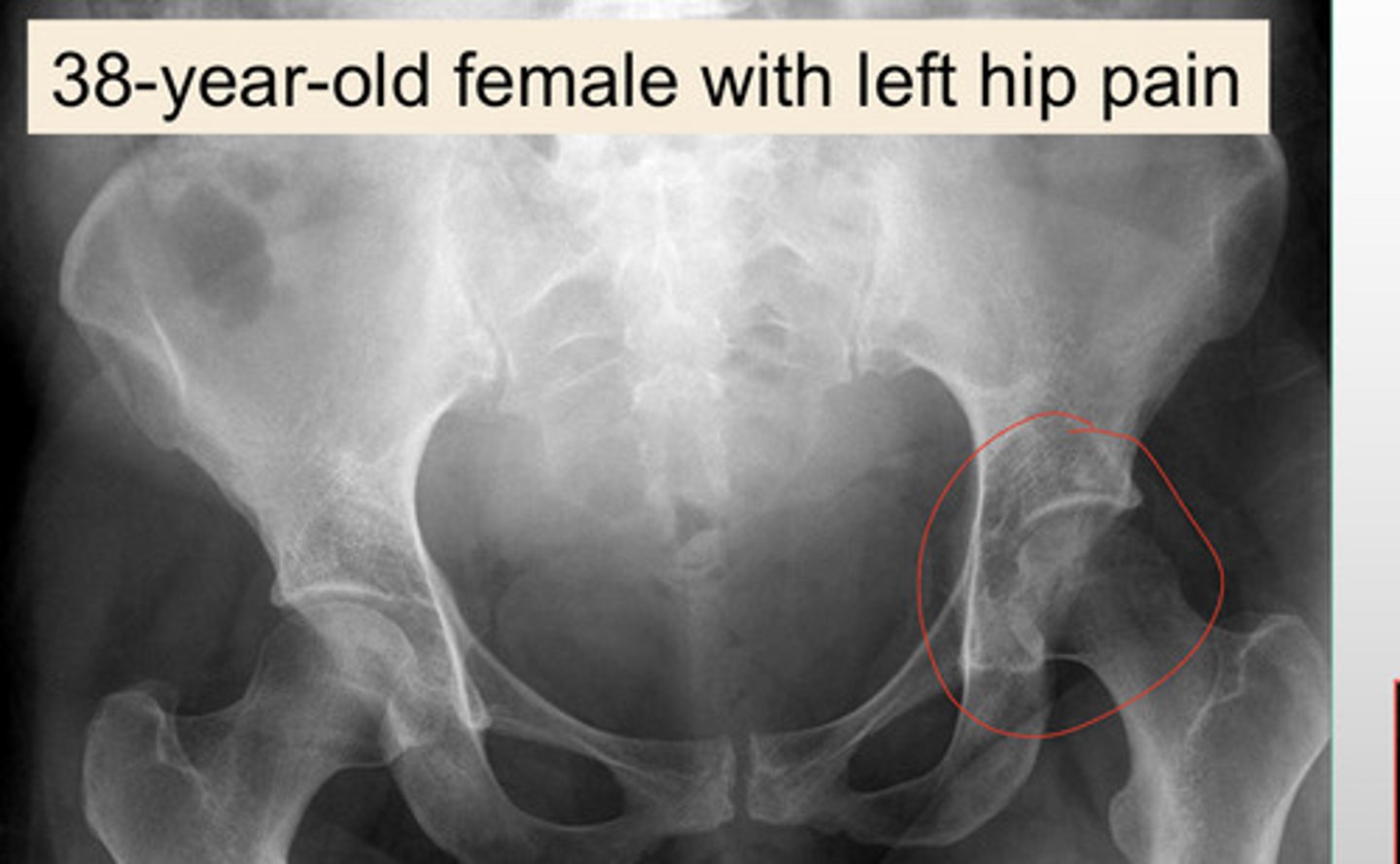
MRI type 2
TOH
What is this imaging?
What condition?