Sex and Childbirth
 Call Kai
 Learn
Learn Practice Test
 Spaced Repetition
 Match
Match Flashcards
 Knowt Play
1/25

There's no tags or description
Looks like no tags are added yet.
Name | Mastery | Learn | Test | Matching | Spaced | Call with Kai | Chat |
|---|
No analytics yet
Send a link to your students to track their progress
26 Terms
4 phases of sexual intercourse
Excitement
engorgement of blood vessels and cardiovascular changes
Plateau
sexual flush to face and chest
Orgasm (climax)
rhythmical muscular contractions and pleasure
sympathetic nervous system causes ejaculation
Resolution
profound relaxation and return to normal
male refractory period where 2nd ejaculation is impossible
Pregnancy and Childbirth
Gestation (pregnancy) lasts an average of 266 days from conception to childbirth
Birth is predicted to occur 280 days from LMP
Changes during Pregnancy
Cardiovascular → Rise in cardiac output of 20-30%, HR 15% blood volume 30-50%
Respiratory → Increase in tidal volume and MV by 40%
Urinary → Water retention, GFR increases by 50%, frequent urination
Integumentary → Linea nigra and chloasma, stretch marks
Reproductive system → uterus increases in size from 80g to 1200g
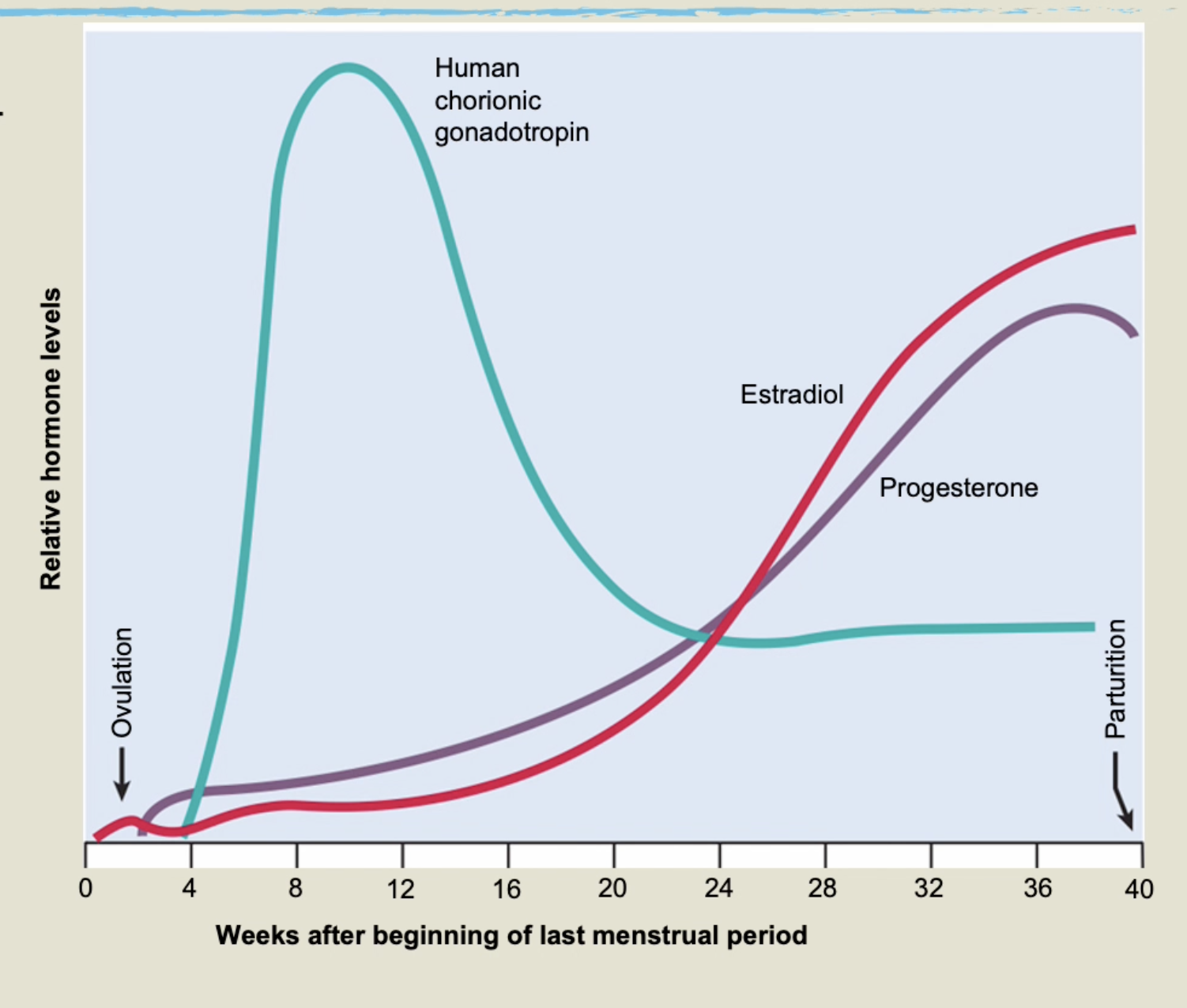
Human chorionic gonadotropin (Hcg)
secreted by the early embryo can be detected 8-10 days after fertilization
protects corpus luteum (if it degrades lining will shed)
Estrogens produced by fetus and placenta
greatly increase during pregnancy
stimulates tissue growth
relaxes pelvis, public symphysis, sacroiliac joint
Progesterone produced by fetus and placenta
with estrogen, inhibits FSH and LH release (prevents ovulation during pregnancy)
suppresses uterine contractions
protects uterine lining
No progesterone will cause spiral arteries to constrict and lining will shed to begin menstruation.
Human chorionic somatomammotropin
shifts maternal metabolism to glucose-sparing (saving it for embryo)
mother runs off of fatty acids to preserve glucose for fetus
ACTH
needed for lung maturation
allows baby’s lungs to produce surfactant
Parturition
Process of giving birth by means of contraction of mother’s uterine and abdominal muscles
Progesterone inhibits uterine contractions
Estrogen stimulates contractions
Near full term
Increased oxytocin
Uterus produces more oxytocin receptors
directly stimulates myometrial contractions
stimulates fetal membranes to produce prostaglandins which are synergists of oxytocins
Fetus secretes cortisol, enhancing estrogen secretion and oxytocin stimulating prostaglandin secretion
True vs False Labor
True labor begins when contractions occur at regular intervals
produces pain
back pain increases with walking
dilation of cervix with discharge of mucus in cervical canal
False labor produces pain at irregular intervals but there is no cervical dilation
Labor Contractions
contractions begin 30 minutes apart and eventually occur every 1-3 minutes
periodically relax to increase blood flow to placenta (fetus)
contractions strongest in the fundus and body pushing fetus to cervix
Self-amplifying cycle of stretch and contraction (reflex)
postive feedback cycle increasing contractions
cervical stretching → oxytocin secretion → uterine contraction → cervical stretching
2nd reflex arc is from uterus → spinal cord → abdominal sk muscles producing contractions that help expel fetus
Pain of labor is ischemia of myometrium, stretching of cervix, vagina and perineum (episiotomy prevent tearing)
Stages of Labor
Early Dilation:
widening of cervical canal by thinning of the cervix to reach 10cm— deameter of fetal head
rupture of fetal membrane and loss of amniotic fluid
Late Dilation:
Dilation reaches 10cm in 24 hours or less in first baby and in as little as a few minutes with multiple children
Expulsion:
Time from when baby’s head reaches vagina and until delivery
Valsalva maneuver helps to expel fetus
Crowning:
Head reaching the vulva
Emergence:
Baby’s head exits canal
Placental Stage:
Uterine contractions continue causing placental separation
350mL blood loss
Afterbirth passing
Dystocia
Difficult labor due to fetal position or size
breech presentation is butt of feet first
Puerperium
First 6 weeks after delivery
Mothers anatomy and physiology return to normal
uterus shrinks called involution
breastfeeding promotes involution
Development of mammary glands
Lactation = synthesis and ejection of milk from mammary glands
High estrogen levels in pregnancy cause ducts to grow and branch
Progesterone stimulates budding and development of the acini at the ends of ducts
→ e2 and p4 build the machinery for milk synthesis and ejection but inhibit the actual production of milk
Colostrum and Milk Synthesis
colostrum → nutrition for first 1-3 days after birth, contains immune antibodies, and 1/3 less fat
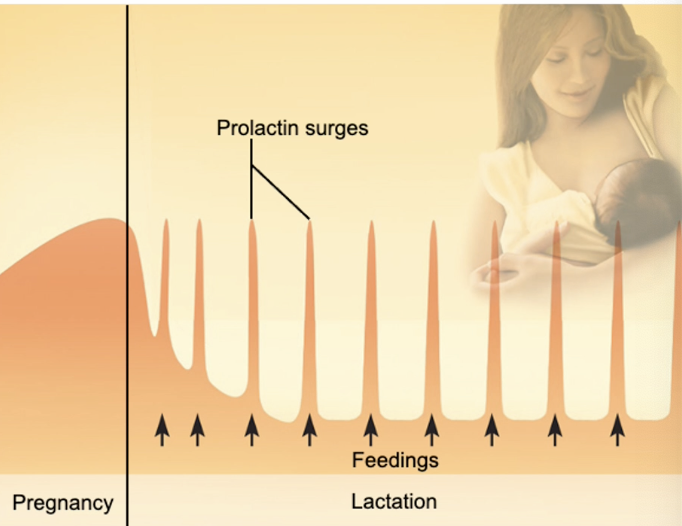
synthesis is promoted by prolactin (from pituitary)
at birth, prolactin secretion drops to non-pregnant levels but increases with nursing events
prolactin inhibits GnRH
Milk Ejection
controlled by neuroendocrine reflex
infant’s suckling stimulates sensory receptors in nipple, signaling hypothalamus and posterior pituitary to release oxytocin
oxytocin stimulates myoepithelial cells that squeeze glands and pushes milk out
oxytocin released by baby crying
Endometriosis
Endometrial tissue grows outside uterus and is unable to shed via normal pathway → painful and can cause infertility
Adenomyosis
endrometrial tissues appear inside the myometrium
cervical cancer
starts as cervical dysplasia (change in shape, growth, and number of cells)
may progress to cervical cancer
detected in pap smear
linked to genital warts, herpes, large number of sexual partners at early age