Chapter 27: Population Growth and Regulation
 Studied by 0 people
 Call Kai
 Learn
Learn Practice Test
 Spaced Repetition
 Match
Match Flashcards
 Knowt Play
1/20

There's no tags or description
Looks like no tags are added yet.
Name | Mastery | Learn | Test | Matching | Spaced |
|---|
No study sessions yet.
21 Terms
ecosystem
all the organisms in an area along with their non living environment
ecology
the study of how these organisms interact with one another and their environment
population
consists of all the members of a particular species that live in a specific area
natural increase
net migration
changes in population size result from:
1.
2.
net migration
the difference between immigration (migration into population) and emigration (migration out)
positive, negative
the natural increase is ______ if births exceed deaths, or _______ if deaths exceed births
growth rate
the change in the population size per unit time
b (birth rate) - d (death rate) = r
population growth per unit time
multiply growth rate by population size to find this
biotic potential
maximum rate at which population can increase
boom and bust cycles
when rapid population growth is followed by a sudden, massive die off
logistic growth
occurs when populations stabilize
density independent factors
limit populations regardless of density; prevent from exceeding carrying capacity
density dependent factors
have larger effects as population density increases
parasite
an organism that lives in or on a larger organisms, called its host, feeding on it and harming it
interspecific competition
intraspecific competition
two major forms of competition:
1.
2.
interspecific competition
individuals of different species compete
intraspecific competition
competition between individuals of the same species
roughly triangular
if adults are having more children than are needed to replace themselves, the population is above RLF and is rapidly expanding; the age diagram will be _______ ________
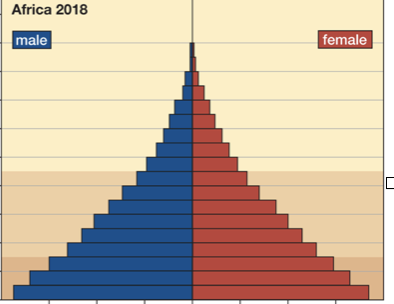
straight sides
if the adults have just the number of children needed to replace themselves, the population is at RLF; the age diagram will have ______ ______

narrowed at the base
in a shrinking population, the reproducing adults have fewer children than are required to replace themselves; the age diagram will be ______ __ ____ ____
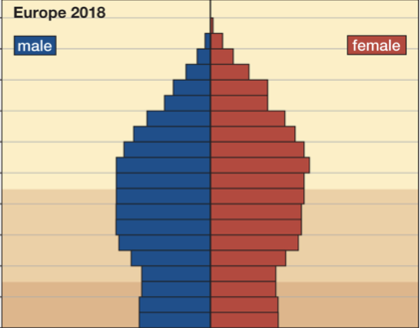
replacement level fertility (RLF)
if parents produce just the number of children required to replace themselves, this number is ________ _____ _________