Pregnancy and Lactation Nutrition
 Call Kai
 Learn
Learn Practice Test
 Spaced Repetition
 Match
Match Flashcards
 Knowt Play
1/10

There's no tags or description
Looks like no tags are added yet.
Name | Mastery | Learn | Test | Matching | Spaced | Call with Kai | Chat |
|---|
No analytics yet
Send a link to your students to track their progress
11 Terms
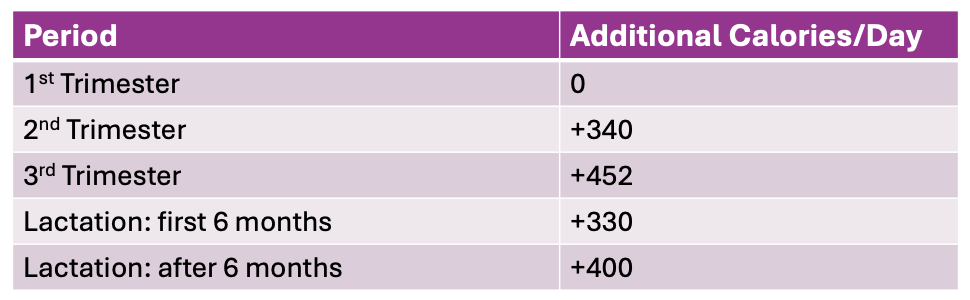
Caloric Needs
Information in image
Protein Needs
>1.1 g/kg/day
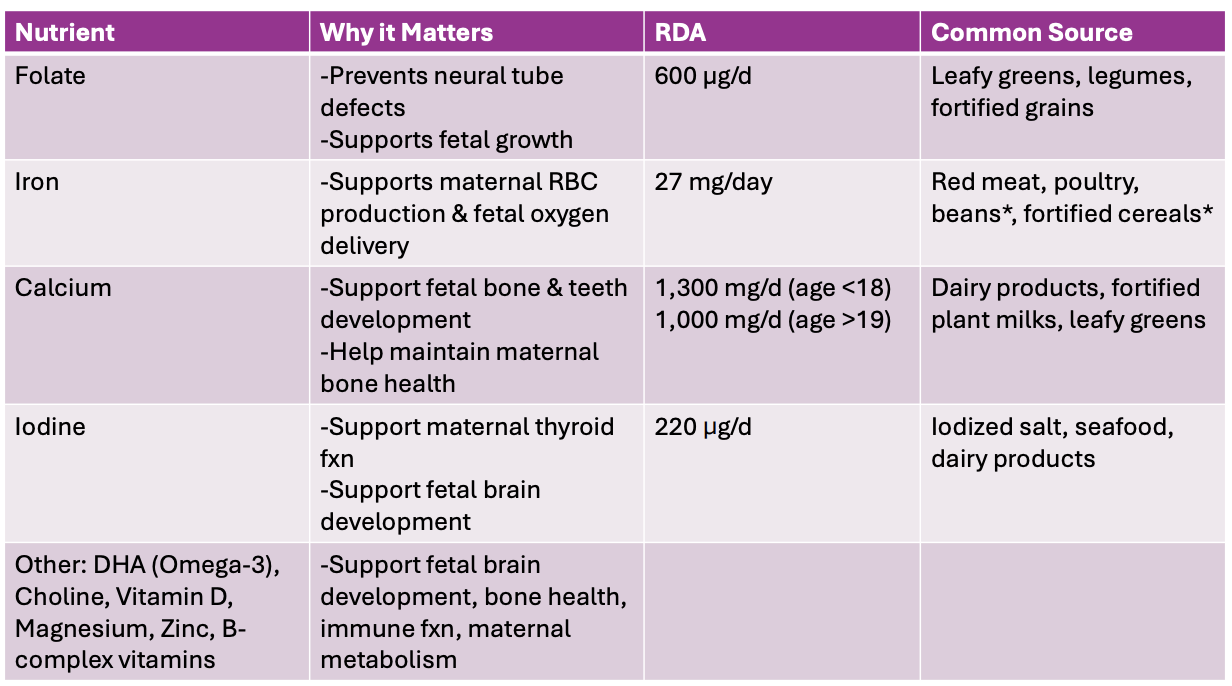
Folate
Supports: Neural tube development & fetal growth
RDA: 600 µg/d • Sources: leafy greens, legumes, fortified grains, prenatal vitamins
ACOG recommends supplementation: 400 µg before conception through 1 st trimester
Iron
Supports: Maternal blood volume & fetal oxygen deliver
RDA: 27 mg/d
Source: Red meat, poultry, beans, fortified cereals
Calcium
Supports: fetal bone & teeth development; maintain maternal bone health
RDA: 1,300 mg/d (<18yo); 1,000 mg/d (>19yo)
Sources: dairy products, fortified plant milks, leafy greens
Iodine
Supports: maternal thyroid function during pregnancy; fetal brain development
RDA: 220 μg/d • Source: Iodized salt, seafood, dairy products
At risk of deficiency: vegan diets, smokers, severe nausea/vomiting
Other Key Micronutrient
Omega-3 (DHA), Chlorine, B-complex vitamins, Vit D, Magnesum and Zinc
Chart of the micronutrients:
Information in chart
Additional dietary consideration
Alcohol intake
Avoid throughout pregnancy
No definitive data to establish safe limits
Heavy Alcohol Consumption increases risk of:
Fetal alcohol spectrum disorder (FASD)
Growth restrictions
Neurodevelopmental impairment
Caffeine intake
Limit to <200 mg/day (≈ 1–2 cups of coffee)
Caffeine metabolized more slowly during pregnancy and metabolites can cross the placenta
High intake-> placental and uterine vasoconstriction, ↑ fetal heart rate
Vitamin A
Avoid high-dose supplementations
Excessive doses can accumulate and are teratogenic
UL: 3,000 μg/day (10,000 IU/day)
Methylmercury
Avoid seafood high in methylmercury
shark, king mackerel, tilefish, swordfish, marlin, orange roughy, bigeye tuna
Can cross the placenta
High consumption -> impaired fetal brain development
Given the health benefits of fish, pregnant women are advised to consume 8–12 oz of seafood low in mercury per week
Listeria-> Listeriosis
Can result in miscarriage, neonatal sepsis, meningitis
Sources: unpasteurized milk, soft cheeses, deli meats*, hot dogs
If consumed, it should be heated to 165°F to kill Listeria
Toxoplasma gondii->Toxoplasmosis
Can result in: miscarriage or severe birth defects
Source: undercooked meat or poultry or contact with cat feces
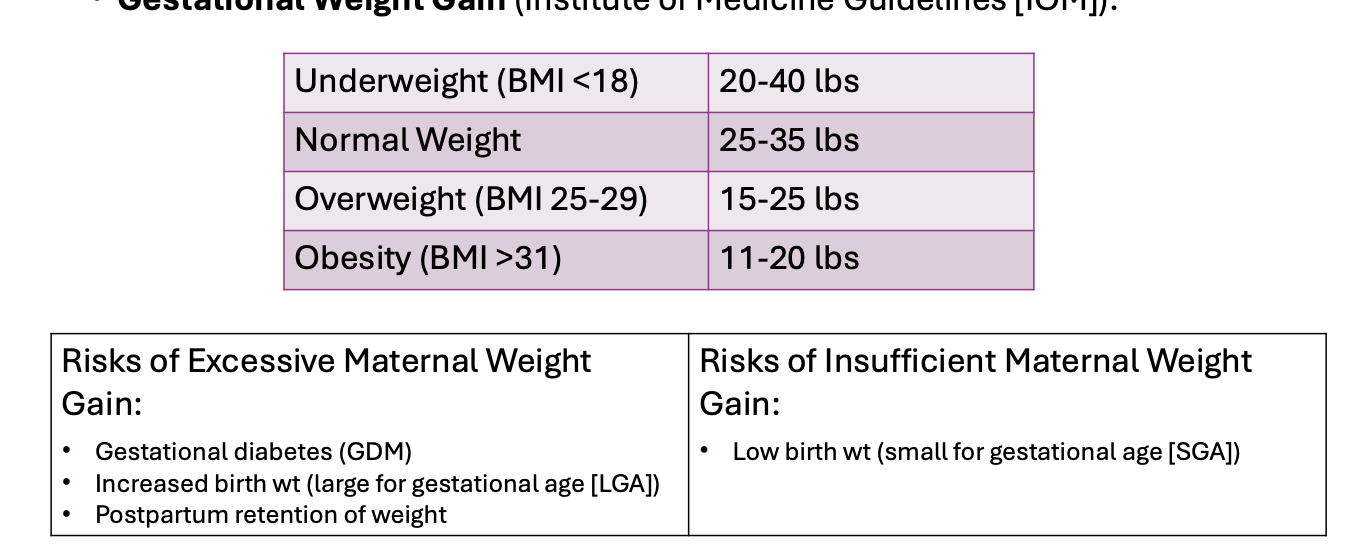
Gestational Weight Gain
Info in chart
Mediterranean Diet
Suggests Mediterranean Diet may be associated with a reduction in adverse outcome of pregnancy, such as gestational diabetes, overweight or obesity, sleep quality, complications of childbirth, UTIs, and alteration in fetal growth