Renal Disorders Practice Flashcards
 Call Kai
 Learn
Learn Practice Test
 Spaced Repetition
 Match
Match Flashcards
 Knowt Play
1/95

Earn XP
Description and Tags
A set of vocabulary-style flashcards covering infectious, obstructive, glomerular, congenital, and chronic renal disorders based on Unit 6 lecture notes.
Name | Mastery | Learn | Test | Matching | Spaced | Call with Kai | Chat |
|---|
No analytics yet
Send a link to your students to track their progress
96 Terms
Intrarenal Disorders
A category of disorders occurring primarily within the kidney including infectious, obstructive, glomerular, and congenital types that can result in renal insufficiency or failure.
Acute Pyelonephritis
An infection caused by obstruction or ureteral reflux allowing contaminated urine to enter the kidney, characterized by sudden onset of fever, nausea, vomiting, chills, and classic flank pain (CVA tenderness).
Risk Factors of Acute Pyelonephritis
-pregnancy
-DM
-anatomic abnormalities of the urinary tract
-obstructions (ex. renal calculi/ kidney stones)
Abscesses, sepsis (e.coli), ARDS, recurrent/ chronic pyelonephritis, and CKD are complications of what disorder?
Acute pyelonephritis
Chronic Pyelonephritis
A condition resulting from chronic reflux of infected urine into the renal pelvis causing urine stasis
etiology of chronic pyelonephritis
Backflow of infected urine; obstruction, causing growth of bacteria
What disorder often leads to kidney atrophy and scarring as seen on renal ultrasound
Chronic pyelonephritis
Risk factors for chronic pyelonephritis
-renal calculi
-neurogenic bladder
-vesicoureteral reflux
-underlying intrarenal disease
Signs and symptoms of chronic pyelonephritis
Vague and inconsistent
Flank or abdominal pain
Fever
Malaise
Anorexia
Hydronephrosis
The swelling of a kidney due to a build-up of urine, which is classified in Grades 1, 2, 3, and 4.
Nephrolithiasis
The formation of stones specifically within the kidneys.
Urolithiasis
The formation of stones anywhere within the urinary tract.
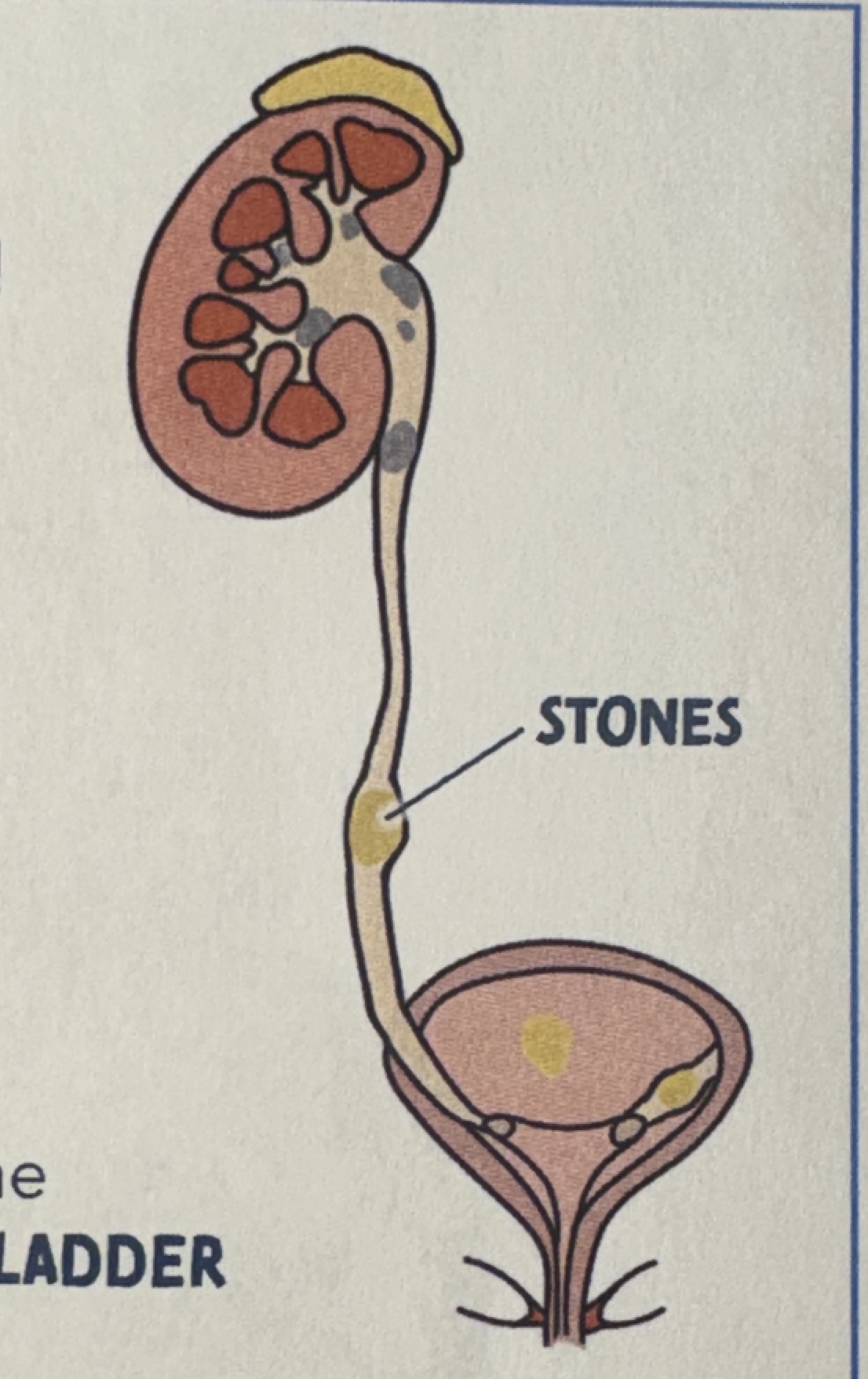
Renal Colic
Spasmodic, intermittent sharp pain typically Localize flank pain radiating to the groin, associated with kidney stones. (Ex. Nephrolithiasis, and urolithiasis)
What is the definitive diagnosis for kidney stones?
CT scan
Clinical manifestations of glomerular diseases
-Persistent proteinuria
-with or without hematuria
-⬇GFR
-in generalized edema
-hypertension
Acute Glomerulonephritis
An inflammatory process triggered by infections in other parts of the body that causes the immune system to attack glomeruli walls, leading to smoky or coffee-colored urine.
Production of antibodies in response to a virus
Acute glomerulonephritis
smoky, coffee colored urine, hypertension, and edema
Signs and symptoms of acute glomerulonephritis
Azotemia
A clinical manifestation of acute glomerulonephritis characterized by elevated levels of blood urea nitrogen (BUN) and creatinine.
Risk factor of acute glomerulonephritis
Group A Strep/ Strep throat/ impetigo or infectious organism stimulate the production of antibodies, and the initiation of inflammatory process triggered by virus or bacteria
Glomerular diseases that assume a progressive course ultimately develop into
Chronic kidney disease
In chronic glomerulonephritis, what happens to the kidneys and nephrons
Nephrons= atrophy,
kidneys= small, scarred and nonfunctional
Chronic glomerulonephritis
Caused by hypertension, umbrella term for many causes, chronic kidney disease, kidneys become atrophy, progressive to ESRD
Primary glomerulopathy
Kidneys is the only or The predominant organ involved
Secondary glomerulopathies
Involves systemic disorders (ex. good pasture syndrome, Systemic lupus erythematosus, diabetic neuropathy)
Goodpasture syndrome
An autoimmune disease that alters the lungs and kidneys, leading to bleeding in the lungs and kidney failure.
Diabetic nephropathy
Kidney damage caused by increased blood sugars where damaged glomeruli become leaky and allow protein into the urine.
Systemic lupus erythematosus
Autoimmune disease, where the body attacks his own tissues (Kidneys, joints, heart, brain, skin, etc.)
Nephrotic Syndrome
A glomerulopathy characterized by the urinary elimination of >3 to 3.5 grams of protein per day due to increased glomerular permeability (glomerular leakiness)
Causes: elimination of protein (serum albumin) in urine; causes a decrease in osmotic pressure
Nephrotic syndrome
Most common risk factors for nephrotic syndrome
Diabetes mellitus
Risk factors for nephrotic syndrome
Systemic lupus erythematosus, infections, malignancies, vasculitis, DM (all Systematic diseases)
S/s of Nephrotic syndrome
-hypoalbuminemia ⬇albumin
-hyperlipidemia
-generalized edema
-Propensity for thrombus formation
Nephrotic Syndrome Triad
1) proteinuria= hypoalbuminemia
2) fluid retention= edema
3)hyperlipidemia
Autosomal Recessive Polycystic Kidney Disease (ARPKD)
A genetic disorder identified in the neonatal period involving enlarged kidneys and dilated collecting ducts, often accompanied by pulmonary hypoplasia.
neonatal; Can be fatal; Dramatic effects on liver function; Cyst on kidney lining, also present in the liver tissue- Caused tissue remodeling
Autosomal recessive polycystic kidney disease
Autosomal Dominant Polycystic Kidney Disease (ADPKD)
The most common hereditary cystic kidney disease where cysts multiply and expand, increasing kidney size and eventually resulting in end-stage kidney disease.
In what disease does cysts move to other organs, most commonly the liver
Autosomal dominant polycystic kidney disease
Signs and symptoms of autosomal dominant polycystic kidney disease
Hypertension and back pain can result from cyst expansion in the kidneys
Patho of Autosomal dominant polycystic kidney disease
Cyst on kidney lining, as they increase-Cause a decrease in GFR (Need to have their GFR monitored); Most patient experiences spread to liver
Another term used for Acute kidney injury
Acute renal failure
Acute kidney injury comorbidities
Cardiovascular disease, peripheral vascular disease, hypertension, diabetes, benign prostatic hypertrophy
RIFLE Classification System
A criteria used to categorize Acute Kidney Injury severity and outcomes: Risk of injury, Injury, Failure, Loss of function, and End-stage kidney disease.
What does the R stand for in RIFLE
Risk for injury
What does the I stand for in RIFLE
Injury
What does the F stand for in RIFLE
Failure
What does the L stand for in RIFLE
Loss of function
What does the E stand for in RIFLE
End stage kidney disease
Prerenal Kidney Injury
Acute kidney injury due to conditions that diminish perfusion of the kidneys, which activates the Renin-Angiotensin-Aldosterone System (RAAS).
Risk factors for Prerenal Kidney Injury
Vomiting, diarrhea, edema, fever, overuse of diuretics, myocardial infarction, heart failure
BEFORE the kidney, inadequate perfusion (MI, bleeding)- RAAS will try to compensate, can progress to intrarenal if not fix
Prerenal kidney injury
Intrinsic/Intrarenal Kidney Injury
Kidney injury caused by primary dysfunction of the nephrons and IN THE KIDNEYS itself, often following exposure to NSAIDs or radiographic contrast media.
Risk factors for Intrinsic/ intrarenal kidney injury
Glomerulonephritis, NSAIDs, radiographic contrast media
Postrenal Kidney Injury
Kidney injury due to obstruction of the normal outflow of urine, such as BPH, renal calculi, or urethral strictures.
Risk factors for postrenal kidney injury
BPH, renal calculi, urethral strictures, intraabdominal tumors, prolapse
Both prerenal and postrenal kidneys injuries
Can progress to intrinsic/ intrarenal kidney injury
-Increase in serum creatinine by 0.3mg/dL within 48
Hours
-increase in serum creatinine to 1.5 times baseline, which is known or presumed to have occurred within the prior 7 days
-urine volume is less than 0.5mL/kg/hr for 6 hour
Diagnostic test for acute kidney injury
Chronic Kidney Disease (CKD)
The progressive and irrevocable loss of functional nephrons, defined as decreased kidney function or damage lasting 3 months or more.
remaining nephrons try compensating by enlarging and increasing their clearance capacity. But in the end, this continued enlargement causes them to become dysfunctional too.
Chronic kidney disease
Primary risk factors for chronic kidney disease
Diabetes, hypertension, smoking
What signs and symptoms associated with anemia due to decrease ability to produce erythrocyte, Increase potassium, Hyperthyroid, Hypocalcemia, Low vitamin D (Which increased risk for fractures), And elevated BUN
Chronic kidney disease
What happens when chronic kidney disease is left untreated
Metabolic Acidosis, Increased BUN, Hyperkalemia, Dysrhythmia, Rapid breathing
Uremic frost
A sign of uremic syndrome involving the deposition of uremic crystals on the skin.
Example of an acute-on-chronic kidney disease
Someone with CKD who received contrast medium and now having AKI
Arteriovenous (AV) fistula
The preferred surgical access for hemodialysis, typically created in the arm to connect an artery and a vein.
Continuous Renal Replacement Therapy (CRRT)
A dialysis modality used for in-hospital AKI patients who are not hemodynamically stable enough to tolerate standard hemodialysis.
Peritonitis
A potentially serious complication associated with Peritoneal Dialysis.
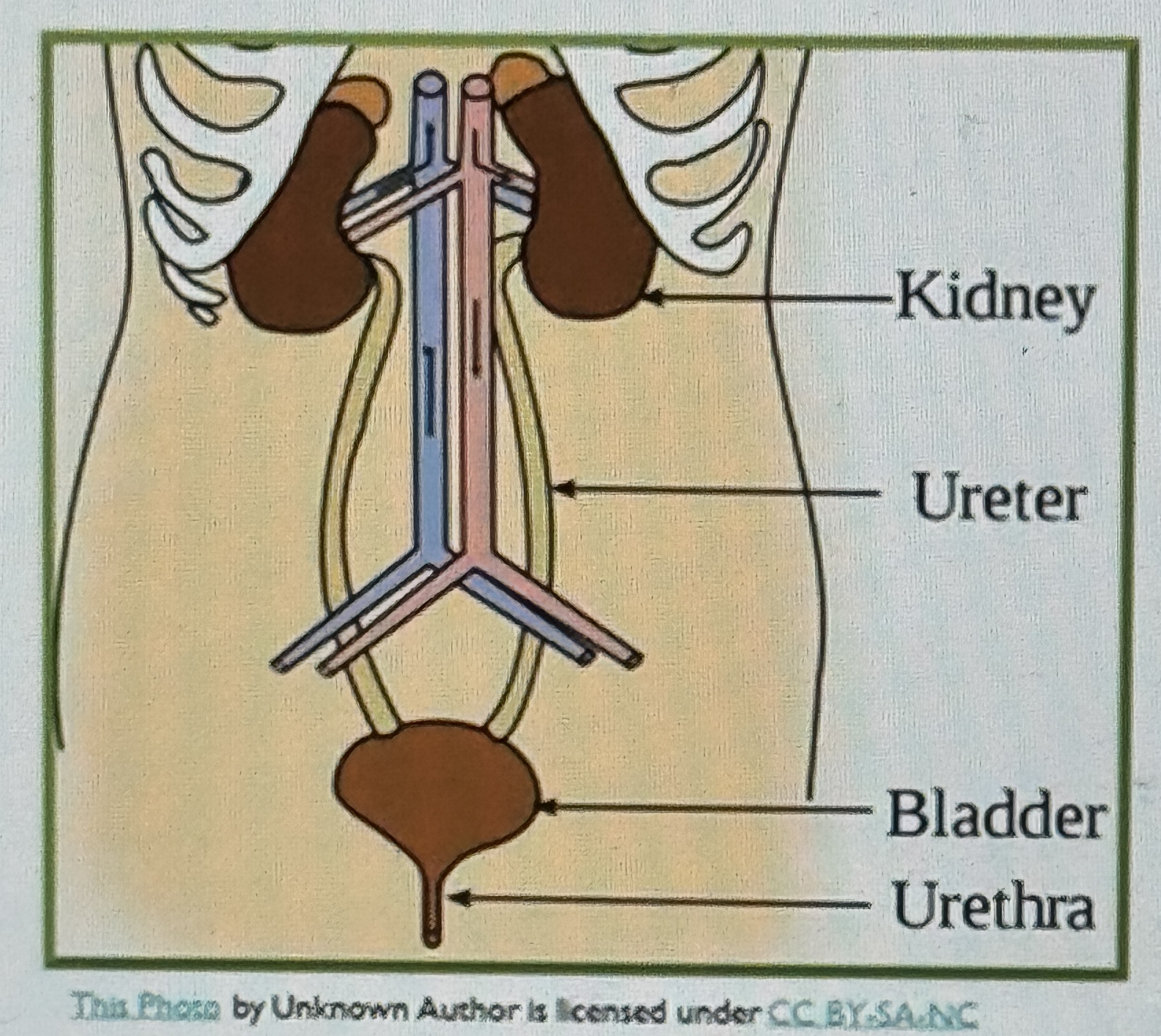
Ureters
Collect urine and transport to bladder

Bladder
Stores and expels urine to urethra
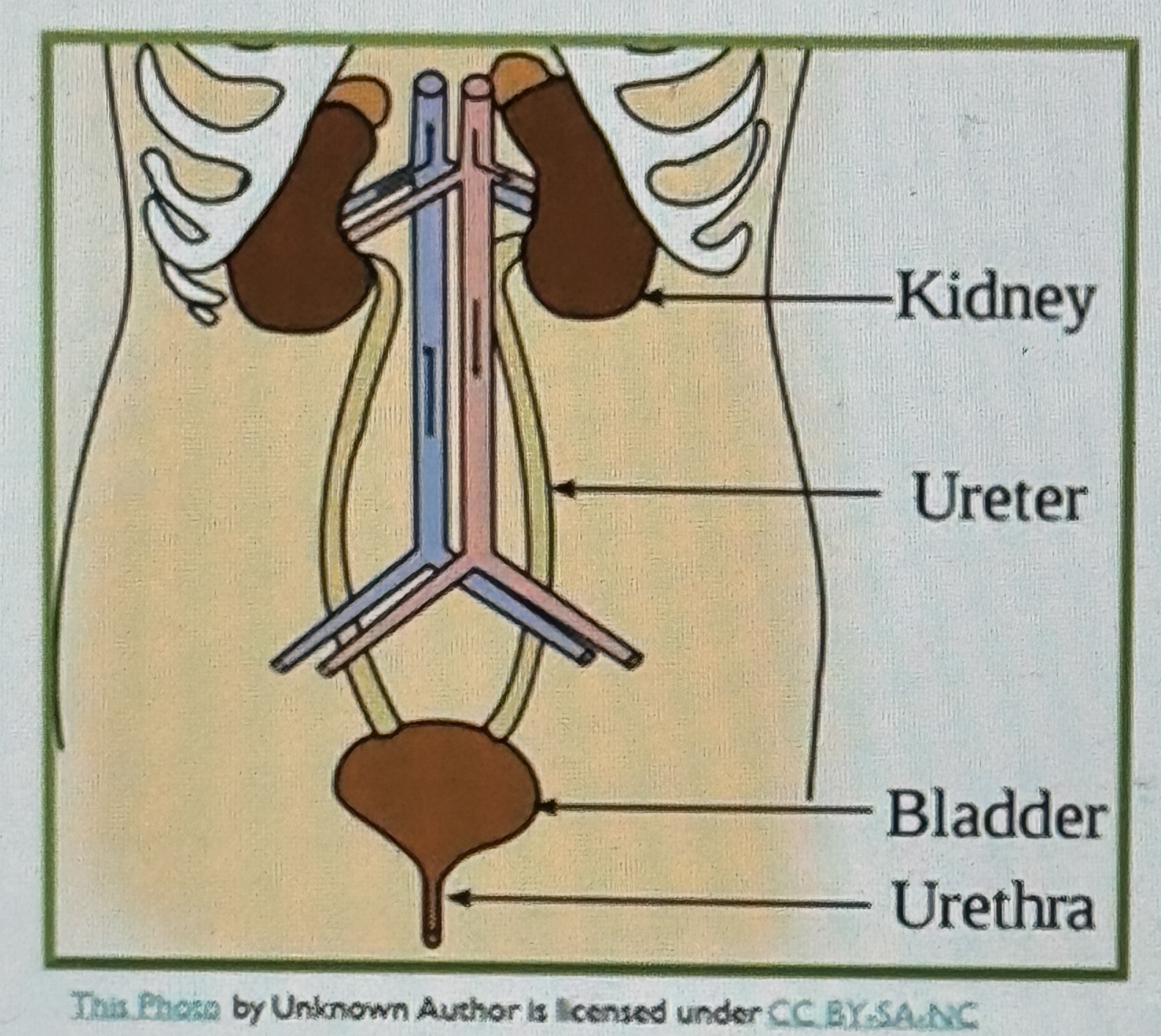
Urethra
Urine exits the body
Associated urinary sphincters
Relaxation aids voiding
Mechanisms of micturition (Peeing)
Internal and external sphincter
Internal sphincter
Bladder is prevented from emptying until the pressure in the body of the bladder rises above a specific threshold
External sphincter
Allows voluntary emptying of the bladder or the prevention of urination
What is the cause of incontinence?
Involuntary, Neuron demyelination (damage to the myelin sheath that causes a loss of message or inhibits nerve communication to bladder)
reversible causes of incontinence
UTI, Drugs that caused urgency (Lasix), Fecal impaction
Clinical manifestation of incontinence
Leakage of urine
What are some of the changes that adults go through dealing with the bladder?
Bladder capacity decreases, Nocturia, Urinate more frequently- But they should maintain control.
Stress urinary incontinence SUI
Due to the weakening of pelvic muscle muscles or intrinsic urethral sphincter deficiency
Examples of Times where stress urinary incontinence Occur
Effort or exertion examples coughing, Laughing, Lifting heavy objects, Sneezing, Or bending
Occurs when urine is involuntarily lost with increases in intra-abdominal pressure
Stretch urinary incontinence SUI
Urgency urinary incontinence UUI
Involuntary sudden leakage of urine along with or immediately following the sensation of a need to urinate
Due to an overactive detrusor muscle
Urgency urinary incontinence UUI
Overflow urinary incontinence
The bladder become so full that it leaks urine due to urethral obstructions such as enlarged prostate gland
Functional incontinence
Physical or environmental limitations, resulting in an inability to Access a toilet in time; In accessibility toilets, mobility disorders, cognitive dysfunction, or mental disabilities, prevent normal or timely toilet usage
Transit incontinence
Sudden onset and it’s due to potentially reversible conditions,
examples UTI, constipation, fecal impaction
transit bladder
Neurogenic bladder
Broad classification of voiding dysfunction in which the specific cause is a Pathology that produces a disruption of nervous system communication to the bladder
What are protective measures to prevent urinary tract infections?
Bacteria is normally cleared from the bladder by the flushing and dilution effects of voiding. The high urea with high osmolarity along with the low pH of urine (epithelial cells), act as a natural barrier to pathogens (acidic environment, Unidirectional flow)
Risk factors of UTIs
Poor hygiene after bowel movement can Introduce E. coli to the urinary tract. Less common in men, but can be caused by an STI or immunosuppression.
Clinical Manifestations of UTI
Acute sudden onset urgency, Suprapubic pain
Atypical symptoms of UTIs
Delirium and incontinent, but no change to vital signs
Uncomplicated UTI
Infections not associated with abnormalities of lower tract, anatomy or function, urinary catheterization, pregnancy or diseases this such as diabetes
Complicated UTI
Infections involving multi drug resistant bacteria, or where the host is immunocompromise or has abnormalities of the genitourinary tract
Recurrent UTI
Repeated infections within a short period of verified resolution of the earlier infection