Lifetime Fitness & Wellness Pursuits PISD CBE Review: Semester 2 Exam | Quizlet
 Call Kai
 Learn
Learn Practice Test
 Spaced Repetition
 Match
Match Flashcards
 Knowt Play
1/66

There's no tags or description
Looks like no tags are added yet.
Name | Mastery | Learn | Test | Matching | Spaced | Call with Kai | Chat |
|---|
No analytics yet
Send a link to your students to track their progress
67 Terms
components of fitness
health related and skill related

how can you remember the health related fitness components?
CMMFB

health related fitness components
cardiorespiratory endurance, muscular strength, muscular endurance, flexibility, body composition

cardiorespiratory endurance
your aerobic capacity, or how efficiently your cardiovascular system (lungs, heart, arteries) pump oxygen

exercises for cardiorespiratory endurance
aerobic
muscular endurance
how long your muscles can contract without tiring (increases with muscle strength)

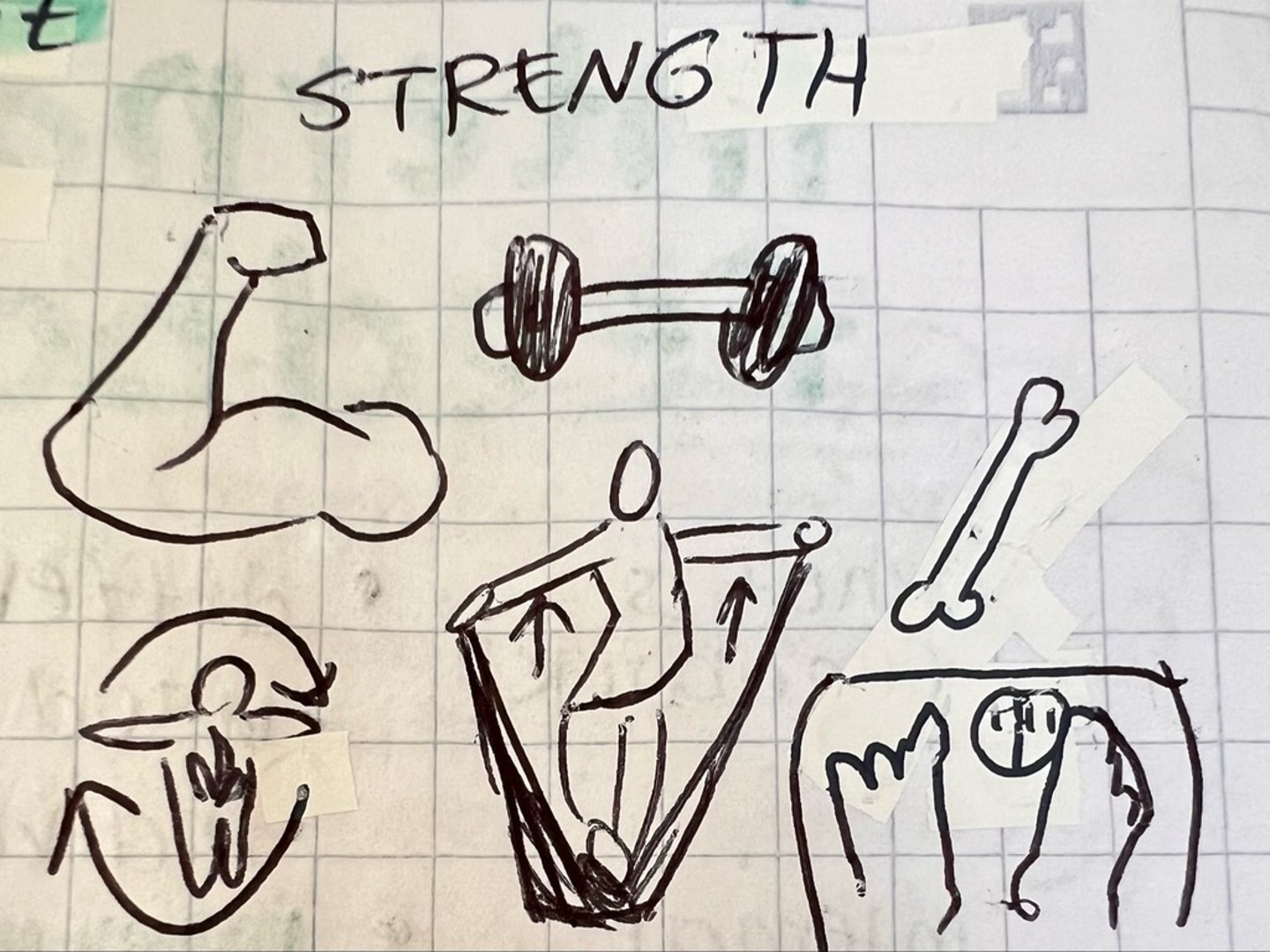
muscular strength
how much force can you exert in one muscle contraction

training type for muscular endurance and strength
strength training (weightlifting, calisthenics, resistance bands) and isometric contractions
flexibility
range of motion, can be increased with gymnastics, dance, pilates

body composition
ratio of bone, fat, and muscle
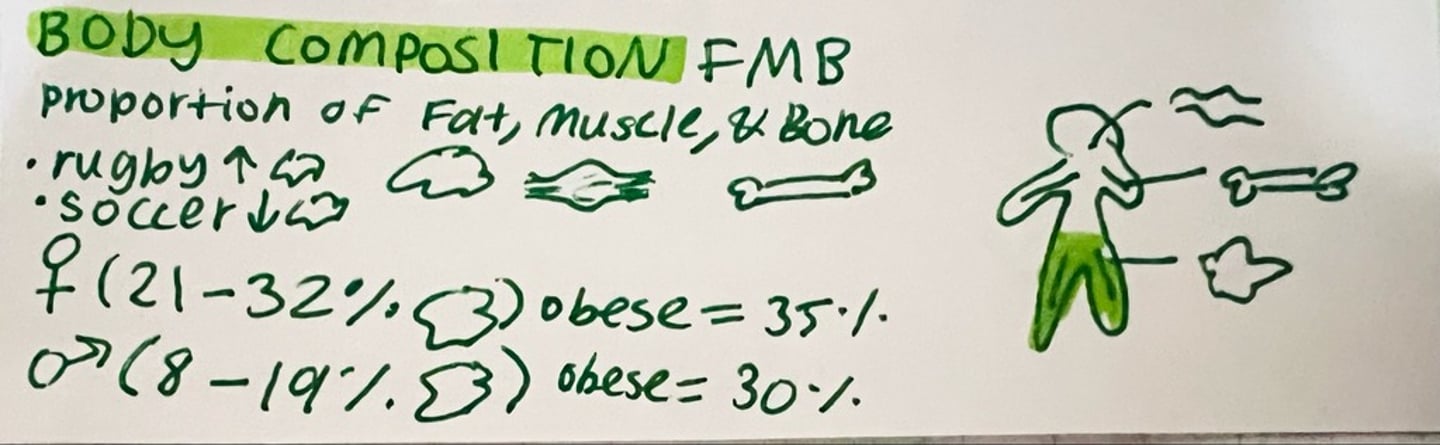
ideal body fat percentage for men and women
men: 8-19%
women: 21-32%
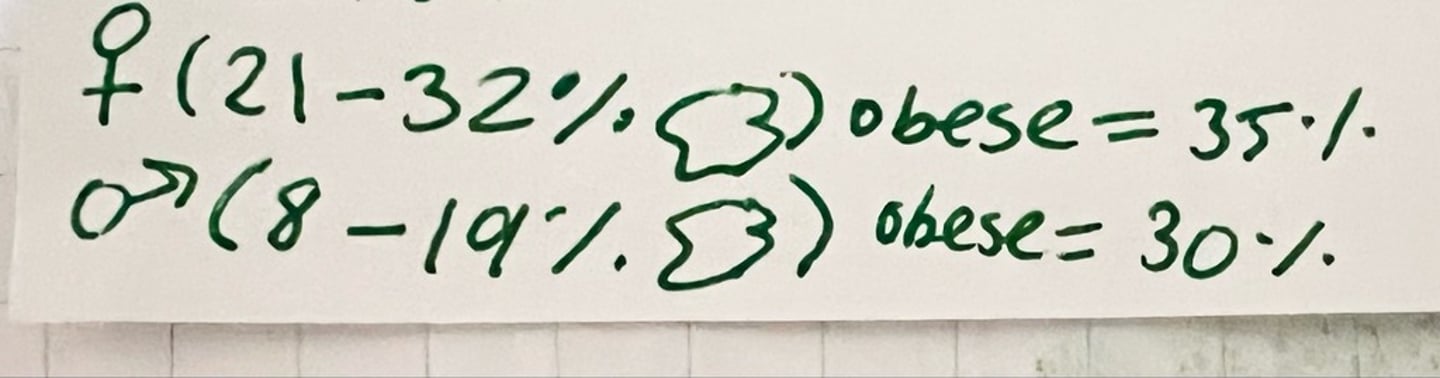
obese body fat percentage for men and women
men: 30%
women: 35%

if you are trying to increase muscular endurance and flexibility, your fitness plan could include what?
weightlifting and yoga
how can you remember the skill related components?
ABCRSP

skill-related components
agility, balance, coordination, power, reaction time, speed

agility
ability to move quickly and easily (a combination of speed, power, balance, reaction time, and coordination), tested with run-and-stop

balance
ability to control body position, tested with stork/flamingo test

coordination
ability to use two or more body parts together, can be tested by throwing a ball

what skill related component is demonstrated by throwing a ball against the wall?
hand-eye coordination
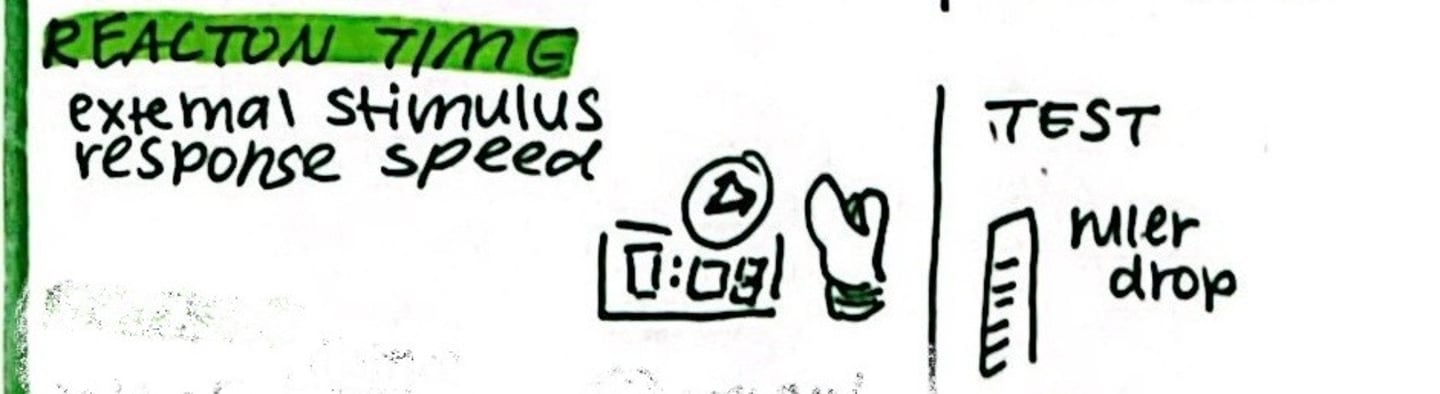
reaction time
how fast your body can react to a stimulus, tested with the ruler-drop test
speed
distance traveled per unit of time, tested with the sprint test

power
how much effort the body can exert in a certain timer period, tested with the long jump or seated throw

what's the difference between throwing a ball and doing a seated throw?
one tests hand-eye coordination, the other tests power
muscular strength vs endurance
strength refers to max force a muscle can exert, endurance is how many times a muscle can be effectively used without fail
VO2 max
maximal oxygen uptake, essentially same thing as aerobic capacity
When jogging, your foot strikes the ground with a force that is _____ times your body weight.
3-5
endurance sports
long distance swimming/running, cycling, soccer

cardiovascular conditioning
enhancing your cardiovascular fitness with aerobic exercise like jogging walking, running, swimming, cycling, or strength training
metabolism
all the chemical reactions your body must perform to survive, can be 1) at rest, 2) while moving, 3) while digesting food, and 4) while exercising
total daily expenditure (TDE)
aka metabolic rate, all the energy needed for your metabolism
physician scale
used in medical settings to measure weight, height, body mass index

BMI
a measure of body weight relative to height used to indicate high body fat, measured in weight (kg) / height (meters squared)
home scales
used for assessing weight at home, does not measure body fatness

body fat analyzer
estimates body fat percentage

❤️ rate monitor
a device (smart watch or elastic chest band) used to monitor the heart rate while exercising

how is a heart rate monitor useful while exercising??
you can use it to see if you're at your target heart rate 🎯❤️
pedometer
measures the distance covered on foot, step-counter

accelerometer
helps people (especially those with diabetes or cardiovascular diseases) increase physical activity by a moderate amount. calculates exercise frequency, duration, and intensity by measuring how much you move

which technology tool can help someone walk more during their day?
pedometer
social media impact on fitness
makes you self conscious

positive self concept
a growth mindset and developing idea that you are equal to other people

how can you develop a positive self-concept?
view mistakes as learning experiences to improve, positive self talk, positive affirmations
effects of a positive self concept
improved feelings about ourselves
inflated ego
belief that you are better than everyone else

stress
physical and emotional response to pressure in challenging situations

purpose of stress
make us feel alert and motivated, triggers fight or flight response, helps us make decisions and stay focused

how can you prevent too much stress?
by recognizing your personal warning signs of stress and developing coping skills such as breathing, talking with someone, exercising, being in nature, and getting enough sleep
what is the best way to manage stress?
exercise and active relaxation
active relaxation
engaging in relaxing activity that you enjoy that makes you feel present in the moment (ex: hiking, mediation, drawing, watching movies with family, NOT death-scrolling or binge-eating)
what are the two different kinds of stress?
eustress (positive excitement) and distress (negative fear)
how does exercise impact stress?
it elevates your mood by releasing endorphins to fight physical stress during exercise

what is a runner's high?
euphoric sensation, usually unexpected, of heightened well-being, an enhanced appreciation of nature, and transcendence of time and space (usually after 6-8 weeks of exercise)
How much should you exercise?
30 minutes of moderate aerobic exercise 5 times a week

how is sleep important for fitness?
important for muscle recovery and growth
what does lack of sleep cause?
prevents muscle growth, leads to poor performance, decreases focus and increases injury risk

How can you ensure high-quality sleep?
follow consistent schedule, avoid caffeine before bed, turn off blue light one hour before bed, try natural relaxation techniques, create a peaceful sleep environment

debunk 5 fitness myths
1) you don't need to work at a lower intensity to burn more fat
2) coffee does not make you pee
3) you don't have to stretch before a work out
4) muscle cannot become fat
5) a calorie deficit does not guarantee weight loss

debunk 7 nutritions myths
1) egg yolks are not bad for you
2) carrots do not help vision
3) sugar does not cause hyperactivity
4) artificial sweeteners are not always bad for you
5) you cannot eat all you want just because it's healthy
6) you can eat after a workout
7) diet is more important than exercise in fat loss

What's the mnemonic device you can use to remember the six nutrition groups?
Wanda voluntarily performs fitness marathons constantly

name the six nutrient groups
water, vitamins, proteins, fat, minerals, carbohydrates
how do you eat a balanced diet?
eat varied foods from all six nutrient groups
what is the best way to enhance your nutrition and maintain a healthy weight?
healthy food choices
what are the risks of overtraining?
muscle soreness, poor performance, longer recovery than normal, insomnia, irritability, begins immune system, increased risk of injuries and stress fractures (tiny cracks in the bone from repetitive force), chronic joint pain, burnout

signs of overtraining
dedication to exercise undermines health, unexplained decline in performance, longer recovering time than normal
how to prevent overtraining
Increase training intensity gradually,
Alternative intense training with rest (periodization)
Adequate sleep,
Eat properly,
Make adjustments to training when you feel pain

quackery (health fraud)
selling of useless medical treatments or products

6 signs of quackery
1) definitive statements
2) lack of references
3) references source other quacks
4) lack of relevant, true, or valuable credentials
5) they're trying to sell you something
