Trauma
 Call Kai
 Learn
Learn Practice Test
 Spaced Repetition
 Match
Match Flashcards
 Knowt Play
1/56

There's no tags or description
Looks like no tags are added yet.
Name | Mastery | Learn | Test | Matching | Spaced | Call with Kai | Chat |
|---|
No analytics yet
Send a link to your students to track their progress
57 Terms
Life threatening injuries:
Life threatening injuries:
DCAP-BTLS
no more than 90 seconds
DCAP-BTLS stand for
Deformities
Contusions
Abrasions
Punctures/Penetrations
Burns
Tenderness
Lacerations
Swelling
IC
Instability
Crepitus
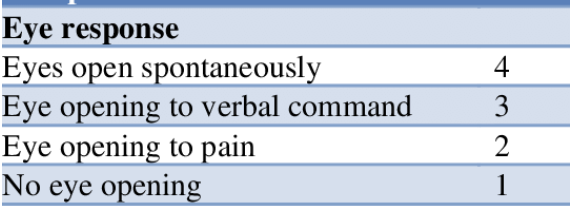
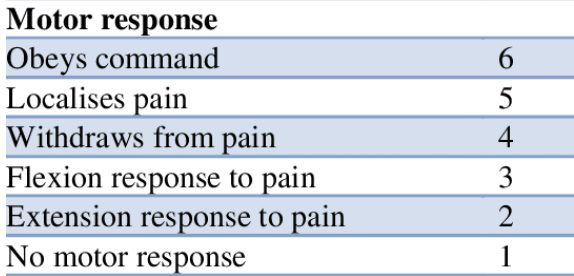
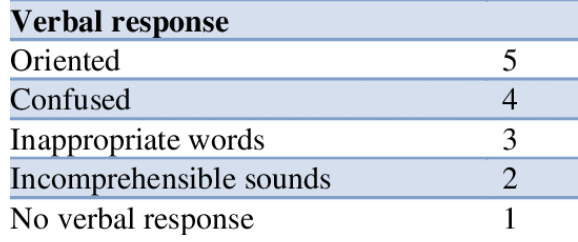
Glasgow scale
(higher is better)
a tool used to assess a patient's level of consciousness, especially after a brain injury.
Glasgow scale categories
motor response (6)
verbal response (5)
eye response (4)
eye response
motor response
verbal response
Rapid exam, when does it occur, what do you do
After scene size up
general impression, AVPU, ABCs
AVPU
A - Alert: The patient is fully awake, aware of their surroundings, and may open their eyes spontaneously.
V - Verbal: The patient responds to verbal stimuli (such as you calling their name or telling them to wake up) by opening their eyes, speaking, or moving.
P - Pain: The patient does not respond to a voice, but reacts to a painful stimulus (like pinching a fingernail bed or rubbing their sternum) by groaning or moving.
U - Unresponsive
ABC
Airway, Breathing, and Circulation
rapid exam body order
top down, ending on back
rapid body exam priorities, elevating extremeties yes or no
significant trauma with neck/spinal pain, paralysis, neurological deficit, priapism, altered mental status, or intoxication -> apply cervical collar
then proceed with assessment
If a patient is not breathing, your attention focuses on providing ventilatory assistance, even if there is major bleeding.
In cases of life-threatening bleeding, controlling bleeding takes priority over airway and breathing concerns.
Elevating extremity is controversial- only do if there are no impaled objects, un splinted fractures or risk to other wounds
Spinal Injury
Motion restriction of the neck is imperative for a suspected spinal injury; allowing the neck to remain unsecured or failing to provide a specific stabilization device may lead to further injury of the neck/spine.
If an appropriately sized cervical collar is unavailable, a rolled towel or sheet can be placed around the patient’s head and taped to the backboard. Continuous manual support should be provided.
The proper fit of a cervical collar is essential. It is inappropriate to use a cervical collar that does not fit.
whiplash injuries
Whiplash injuries occur when a patient’s body is propelled forward while their head and neck are left behind
this commonly occurs due to rear-end impacts, particularly when the head/neck is not restrained by an appropriately placed headrest.
Helmets:
should only be removed if
it covers full face,
allows excessive head movement,
makes airway management difficult,
prevents adequate spinal motion restriction,
patient in cardiac arrest
Shock:
if trauma with cool extremities and tachycardia, assume hemorrhage
Early: agitation, cool clammy extremities, tachycardia
Later: weak/absent peripheral pulses, hypotension
shock early signs
agitation, cool clammy extremities, tachycardia
shock late signs
weak/absent peripheral pulses, hypotension
Clinical shock
at least 25-30% blood volume loss, but large volumes may be lost before clinical manifestations of shock
Blood
Average blood volume: 6L for men, 5L for women
10% loss is well tolerated (tachycardia)
20-25% = failure of compensatory mechanisms (hypotension, orthostasis, decreased cardiac output)
40% = marked hypotension, decreased cardiac output, lactic acidemia
ICP Increase
Increased intracranial pressure
unilaterally fixed and dilated pupil
abnormal respirations
bradycardia
widening pulse pressure
decreased pulse rate
Ataxic Respirations, highly irregular, unpredictable breathing pattern characterized by random, shallow breaths alternating with periods of apnea
Heat exhaustion
is the most common heat emergency.
Hypovolemia, as a result of loss of water and electrolytes from heavy sweating, is a common cause.
Typical signs and symptoms include dizziness, weakness, altered mental status/syncope, nausea/vomiting, headaches, muscle/abdominal cramping, dry tongue, and thirst. -flush skin with water 15-20 minutes
Hematoma
Hematoma
blood collected within damaged tissue or body cavity
Abrasion
wound in superficial skin
Fractures Symptoms
crepitus (grinding), shortened, deformity, false motion
Epidural Hematoma
Bleeding below skull but above dura mater
arterial bleeding
increased intracranial pressure
sudden LOC
brief LOC, wakes up, then LOC
Subdural Hematoma:
rupture of bridging veins between dura mater and arachnoid membrane
gradual onset, sudden LOC is rare
vomiting, pupillary changes, weakness, paralysis, headache, dizziness, nausea, seizures
after fall/strong deceleration force injury, head trauma in elderly, anticoagulation therapy
acute symptoms usually develop gradually over 1-2 days after initial
flail chest
ribs are fractured in two or more places
causing a section of the chest wall to move independently of the rest of the chest
extreme chest pain, difficulty breathing, and potentially shortness of breat
High altitude
HAPE, HACE
high-altitude pulmonary edema, a serious condition where fluid builds up in the lungs at high elevations
High-Altitude Cerebral Edema, a severe and life-threatening condition where fluid builds up in the brain at high elevations.
Scuba:
AGE, decompression sickness (bends), descent pains (squeeze)
Arterial Gas Embolism
Pelvic Fracture (most serious)
Hypotension
shock, death
several liters of blood may drain into pelvic space
retroperitoneal space
may not be visible bleeding until severe blood loss
pain at fracture site (iliac crest)
pelvic binder, backboard, scoop stretcher
partial <15%
superficial <50%
partial 15-30%
superficial over 50%
full thickness over 10%
partial over 30%
respiratory injury or fractures
for under 5 or over 55 classified moderate = severe
Femoral Shaft Fracture (also serious)
500 to 1000mL blood loss
hypovolemic shock
Traction splints
limb supported
hand in position of function
wrist slightly bent down,
finger joints moderately flexed
place soft roller bandage on the palm
immobilizes shoulder and upper arm
shoulder dislocation, acromioclavicular joint separations, clavicle, scapula, humeral fractures
retina pulled away from choroid
painless
increase in floaters
flashes of light (photopsia)
curtain, veil across visual field
blurred vision
clouding of lenses
decreased tear production, difficulty distinguishing colors
irreversible central vision loss in elderly
smoking, obesity, sun exposure, diet low in omega 3 fatty acids/dark green leafy vegetables
within 6-8 hours
a painful condition caused by increased pressure within a muscle compartment, restricting blood flow and potentially damaging tissue
Adults: over 20 feet
Children: Over 10 feet
Basilar Skull Fracture:
high energy trauma to head -general head injury signs: altered mental widening pulse pressure, unreactive pupil, amnesia, seizure, bradycardia, numb tingling extremities, nausea vomiting
Specific signs: CSF draining from ears, raccoon eyes (ecchymosis under eyes), Battle sign (ecchymosis behind one ear)
Concussion
gradually improving mental status, headache, amnesia
Nausea, loss of coordination, weakness
Burns types
Radiation
Thermal
Chemical
Acidic
Trauma lethal triad:
Hypothermia
Coagulopathy
acidosis
Hypothermia:
Early: shivering, rapid breathing, redness, cyanosis, tachypnea
Later signs: loss of coordination, muscle stiffness, slowed pulses, confusion/lethargy, coma/unresponsiveness, weak pulse, dysrhythmias, very slow respirations, and cardiac arrest can occur, bradycardia, bradypnea