3.1.5.1 HOW MARKETS AND PRICES ALLOCATE RESOURCES
 Call Kai
 Learn
Learn Practice Test
 Spaced Repetition
 Match
Match Flashcards
 Knowt Play
1/47

There's no tags or description
Looks like no tags are added yet.
Name | Mastery | Learn | Test | Matching | Spaced | Call with Kai |
|---|
No analytics yet
Send a link to your students to track their progress
48 Terms
Define price mechanism
How prices are deteemined in a market through the interaction of demand and supply, and how their prices allocate resources efficiency
Examples of a price mechanism?
poor harvest of wheat
supply falls
prices rise
consumers buy less (rationing)
farmers are encouraged to grow more in the future (incentive)
What did Adam Smith call this theory?
The invisible hand theory
Give an example of an app that involves price mechanism?
Vinted
What are the 4 aspects to price mechanism?
allocate
rationing
signaling
incentive
What does rationing function of the price mechanism mean?
How prices allocate scarce goods and services among consumers
Example of rationing function in terms of concert tickets?
Shortage of concert tickets
demand is high
supply is limited
prices increase
only people willing and able to pay back the higher price will get the tickets
What does the rationing function of price mechanism ensure?
ensures scarce resources aren't over consumed
allocates goods without needing government intervention
What type of good is oil?
A commodity
Where are commodities sold?
On the global market
What is the most stable commodity?
Gold
What does signaling function of the price mechanism mean?
Refers to how price changes convey information to both consumers and producers about what is happening in the market
How do consumers and producers respond to prices rising?
consumes respond by buying less when prices rise
producers respond by increasing supply when prices rise
What does rising prices signal?
Raising prices signals that a good is becoming more scarce, or demand has increased
Who are “agents?
Consumers and producers
Give example of how increasing oil prices, affects consumers and producers?
Oil prices increase
signals that oil is scarce
many cut down on usage
firms may increase supply (signals it is more profitable)
Why may cause cocoa prices to decrease?
increase in supply/production
less demand
What are 5 conditions of market demsnd for cocoa?
incomes
relative prices of cocoa substitutes
changing consumer tastes and preferences
derived demand
speculative demsnd
Why does cocoa have derived demand?
It depends on the demand for chocolate
Why do cocoa prices fluctuate?
Could be due to natural disasters (linking to scarcity of resources)
What are the 6 conditions of market supply for cocoa?
weather conditions
climate change
rate of capital investment in cocoa farming
productivity of cocoa plantations
impact of innovation in cocoa growing to improve yields
prices/potential profits from growing alternative crops
What economic agents do cocoa prices send signals to?
cocoa farmers/growers
export company
cocoa bean grading company
shipping business
cocoa processor
manufacturer - such as a confectioner
retailer of cocoa based products
Cocoa prices volatility
What are global demsnd fluctuations?
Demand for chocolate changes based on consumer tastes, economic conditions and trends
sudden increases or decreases in demand can cause cocoa prices to rise and fall quickly
Cocoa prices
What are speculative factors?
Some investors may buy cocoa contracts hoping prices will rise
this extra buying can push prices up, and when they sell, it can cause prices to fall, adding to volatility
What does price volatility mean?
How much and how quickly prices rise and fall over time
Why are price volatile in markets? And examples
changes in supply (global harvests)
changes in demand (trends, income changes)
speculation (investors)
external shocks (weather, conflicts)
Are commodity prices volitate?
Yes they fluctuate
What are emerging markets?
Countries that are starting to specialize in something (NICS/BRIC nation)
Give Exmaples of supply side shocks?
Droughts, tsunamis, portage famine (Ireland)
What does the price volatility depend on?
The elasticity (steepness of the curve)
What are inter-related markets?
Many goods are linked either in production or consumption, so s change in one market, often spills over onto others through price mechanism
So what happens to demsnd when supply increases, in an inter-related market?
Supply increases in one market, which reduces demand in the subsitutes market
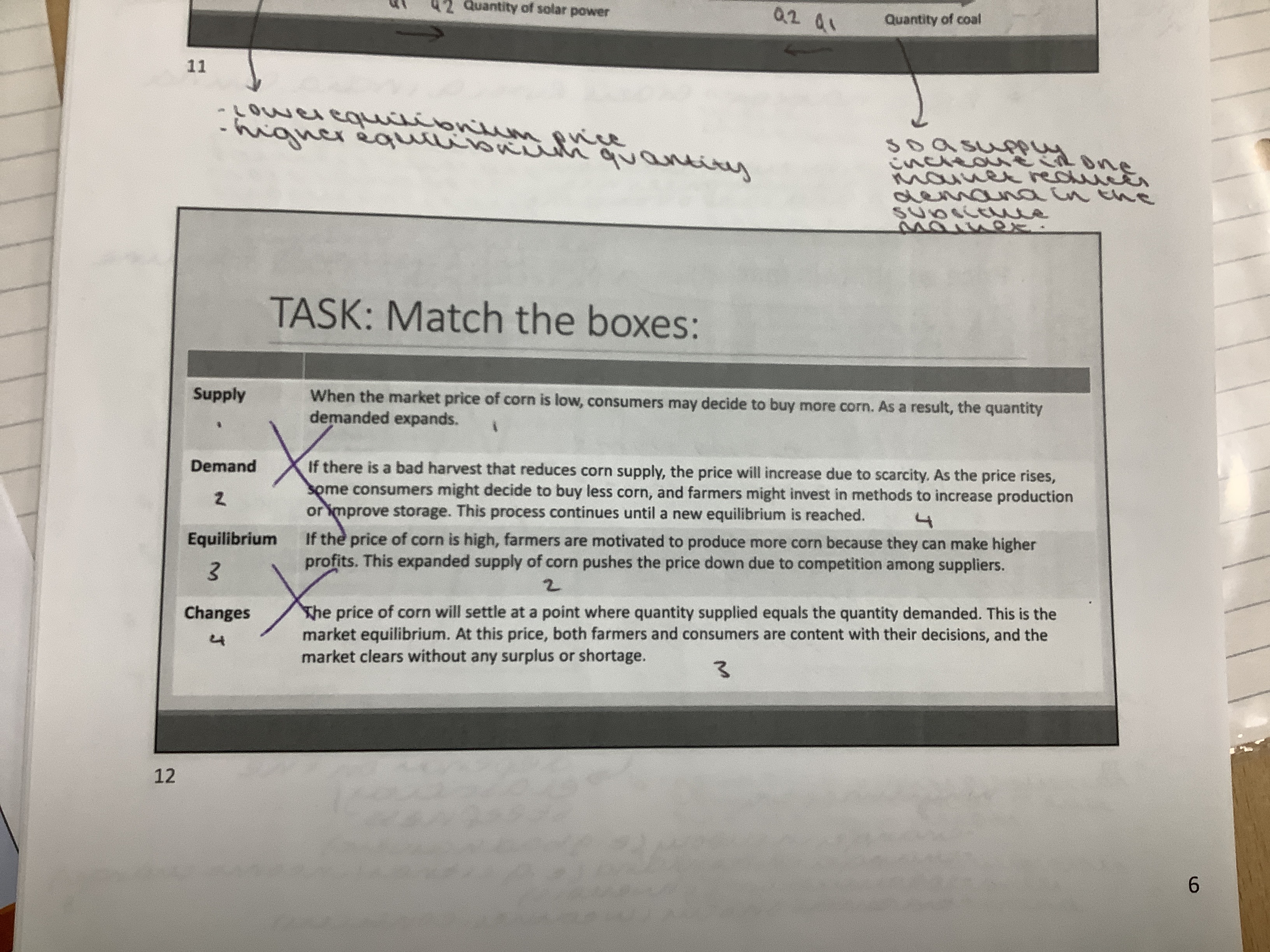
When does a marker reach equilibrium?
When demand = supply
So if the price is £9, and the market is in equilibrium, what does it mean for all other prices?
Market disequilibrium
If the price is lower than equilibrium, what happens to demand?
Demsnd is greater than supply
excess demsnd
If the price is higher than equilibrium, what happens to supply?
Supply is greater than demsnd
excess supply
Define allocate
Allocating scare resources among competing users
Define rationing
Prices serve to ration scare resources when market demsnd outstrips supply
Define signaling
Prices adjust to demonstrate where resources are required, and where they are not
Define incentives
When the prices of a product rises, quantity supplied increases as businesses respond
As wagu beef becomes more popular, what happens to price, demsnd and supply?
demsnd increases
supply increases
creates an incentive for farmers to increase production (as it is more profitable)
movement along the supply curve
new equilibrium
When there is a supply side shock and prices decrease, how does the rationing function of prices help solve this problem?
prices begin to rise
reduces demsnd
new equilibrium (limited supply)
What do high prices signal? What do low prices signal?
High prices signal that a good is not in short supply, encouraging producers to enter the market
Low prices suggest resources should be moved elsewhere
What is producers and consumers incentives when prices rise?
A producer - rising prices, increases potential profit, so they expand production
A consumer - seek substitutes, which reduces demsnd
What is the basic economic problem?
Unlimited needs and wants but limited resources - creates an opportunity cost
SO, what is the main function of price mechanism?
Protects scare resources
What does the rationing function mean when prices rise?
when resources are scarce, its prices rise
only those willing and able to pay the higher prices, consume the good