BLOCK 1 lecture 2
 Call Kai
 Learn
Learn Practice Test
 Spaced Repetition
 Match
Match Flashcards
 Knowt Play
1/13

There's no tags or description
Looks like no tags are added yet.
Name | Mastery | Learn | Test | Matching | Spaced | Call with Kai | Chat |
|---|
No analytics yet
Send a link to your students to track their progress
14 Terms
drinking like a fish
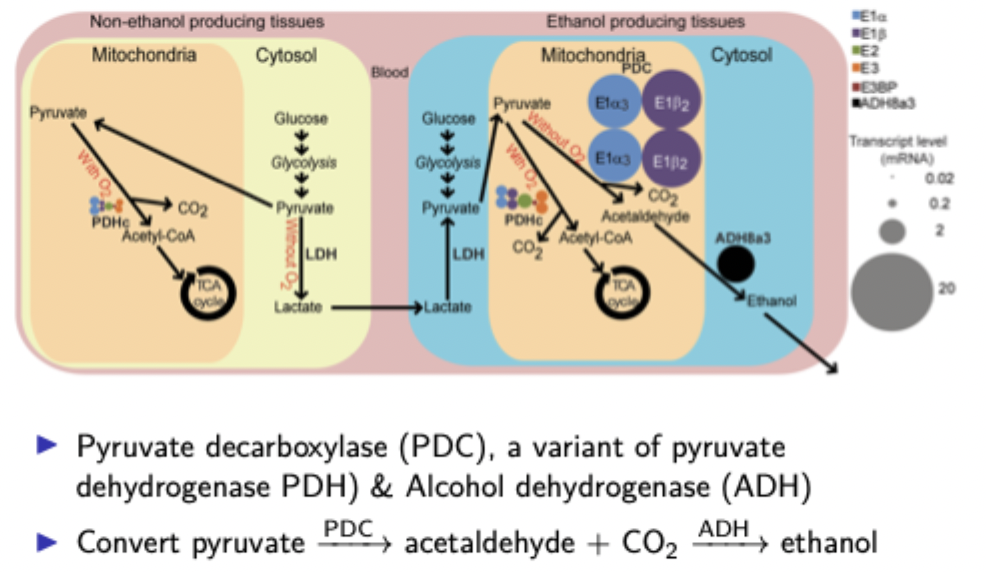
Goldfish can turn on a variant of an enzyme which converts pyruvate to acetadelyde and then to ethanol
Do this so that if the surface of the water freezes they can survive with little oxygen - there are also less plants producing oxugen because less light
So fish use the ability to make ethanol to export carbons that they are using (in glycolysis) to make ATP to generate NAD
Don’t make that much ethanol and it gets excreted thriugh gills so not too much of a problem with the by-products
overview of digestion
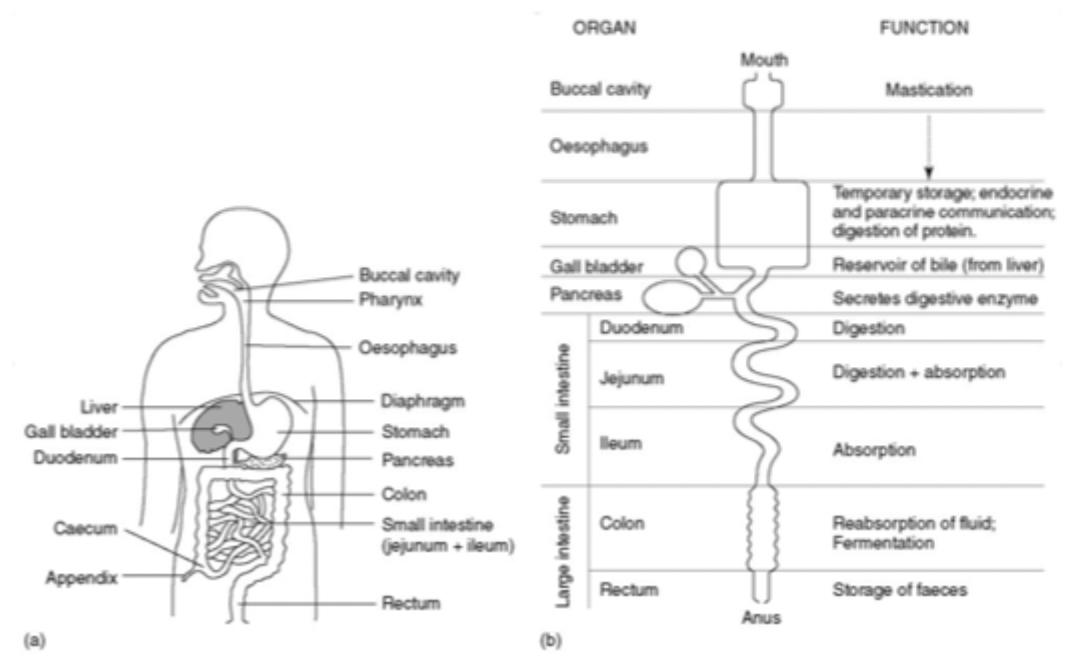
Stomach has some enzymes and the filling of the stomach sends things to the brain to activate the rest of the gut and the regulation of how much we need to eat (but this is poorly understood)
Gut flora - plays a role in digestion
absorption paths from the gut
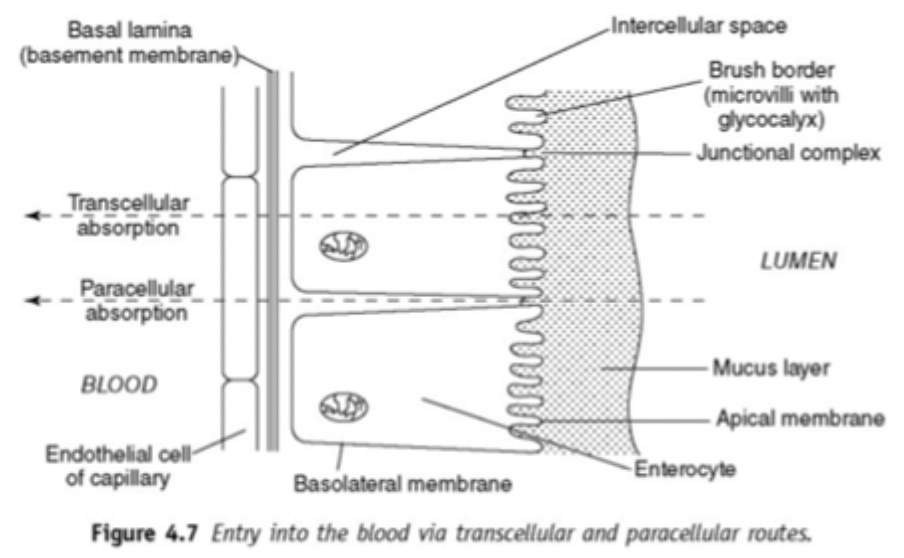
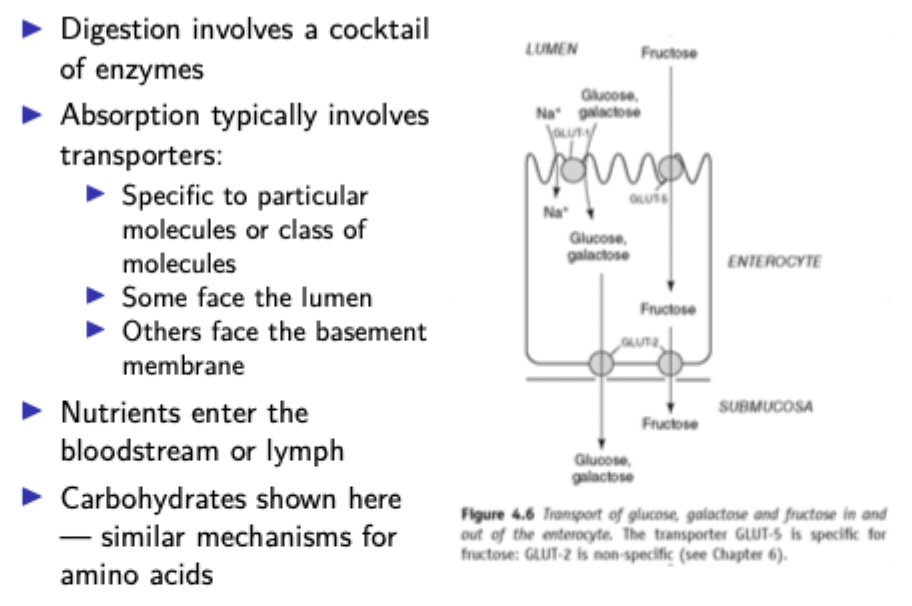
transporters and nutrient absorption
fat absorption
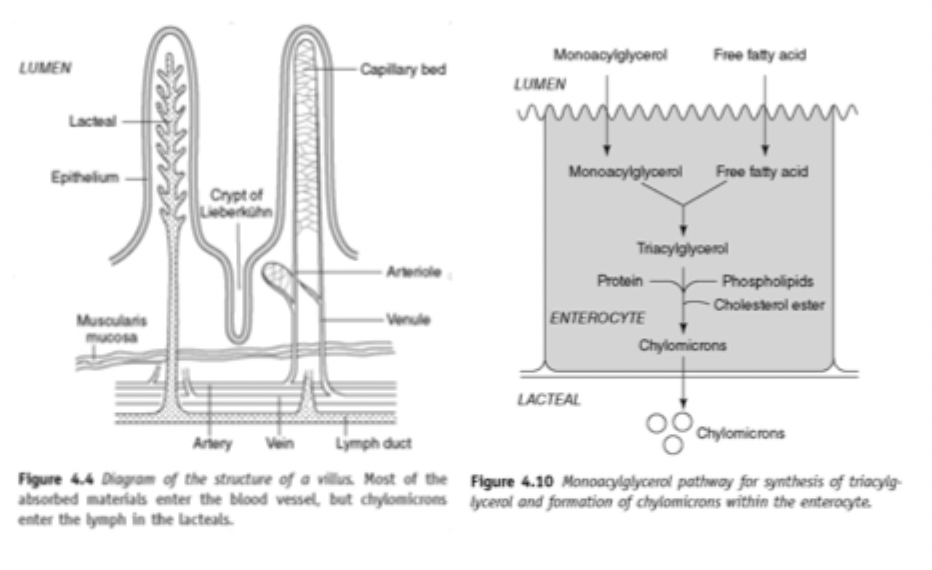
Most villi have capillaries but some are modified to have a lacteal which is associated with lymph production
the fed state and macronutrient management
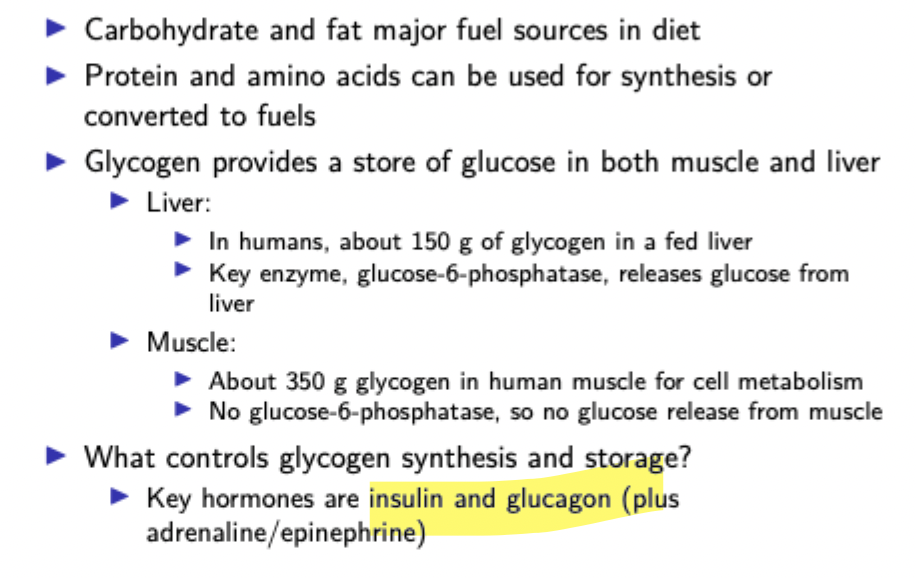
Glucose and fatty acids are our primary fuels
Proteins can be converted to fuels but not major - most used for synthesising proteins etc but any excess gets converted to wither glucose or acetyl coA(which is stored as fatty acids)
So wither way excess protein will probably be stored as fat
At rest muscles mainly use fatty acids, but when doing high intensity exercise hard to get enough energy from this, so starts to use glucose as well as fatty acids
But muscle glycogen is unable to maintain blood glucose levels
what can you do with glucose
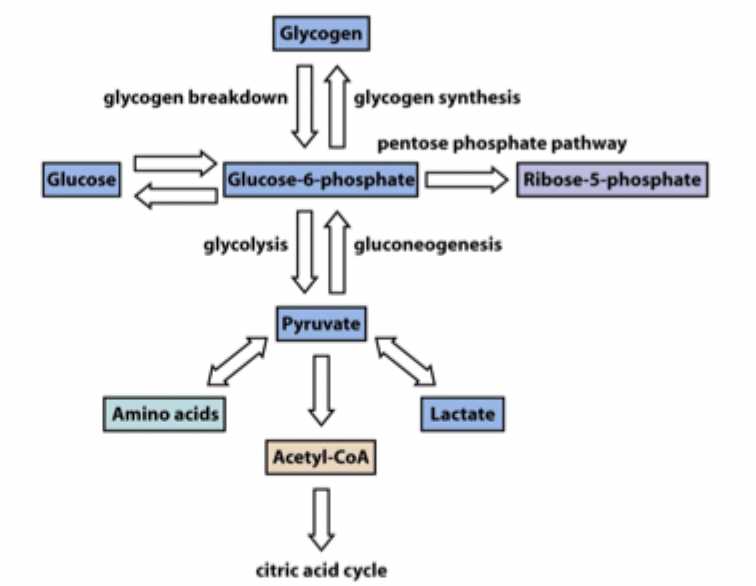
glycogen synthesis
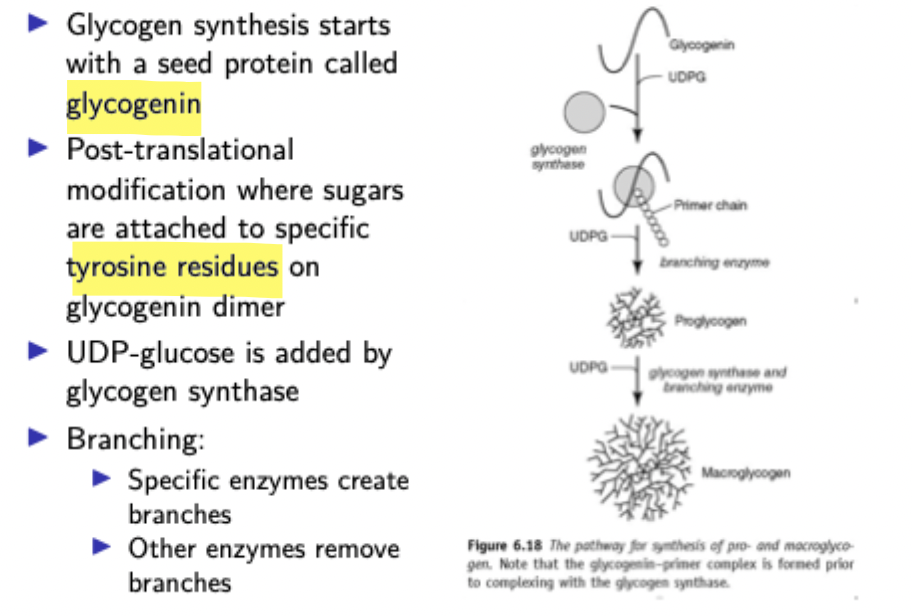
Glycogen is kind of just a PTM to a protein
Then can subsequently add other carbohydrates to that carbohydrate
Glycogen synthase adds glucose
branching
We thin we have branching because it increases the number of ends of the molecule - it is the ends that grow and shrink
glycogen synthase and phosphorylase
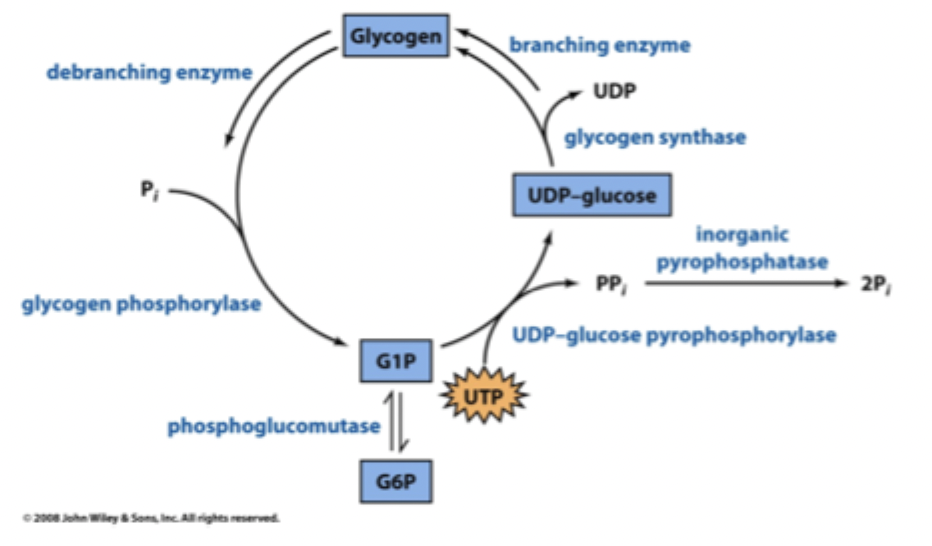
UDP-glucose
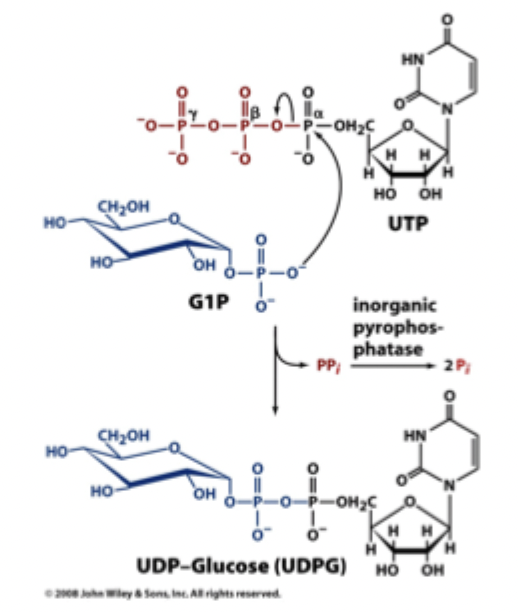
Don’t know why this is what we do but it is
glycogen synthesis - branching enzyme
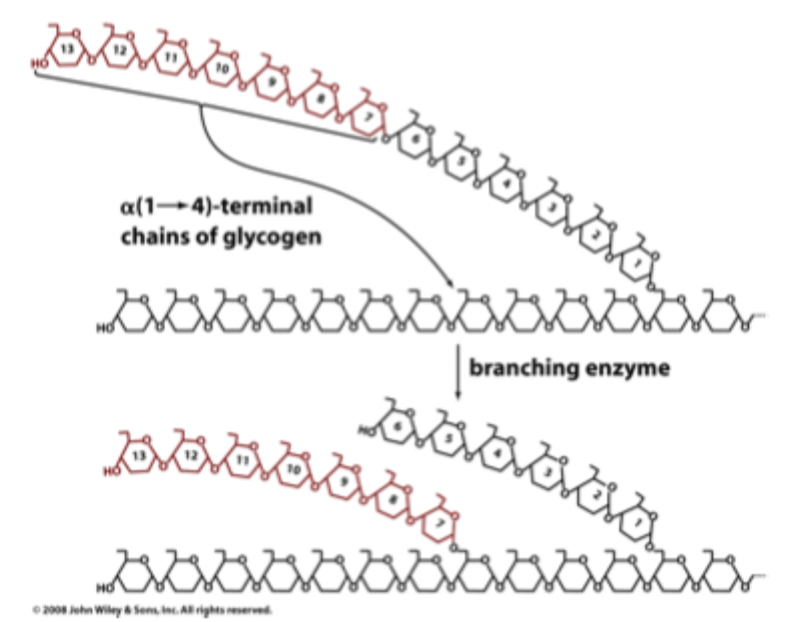
Branching enzyme recognises 6-8 glucose monomers that are attached in a chain
Breaks a1-6 bond and makes an a1-4 bond
glycogen synthesis - debranching enzyme
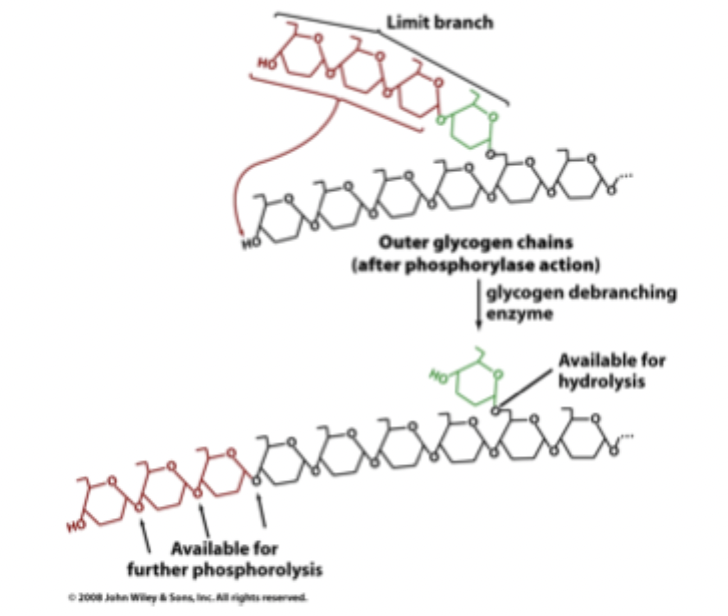
Enzyme removes the end 3 monomers and breaks the a1-4 linkage of the branch and converts it to an alpha1-6 linkage on the main chain of the glycogen
The remaining (green) monomer is hydrolysed seperately
branching complexity
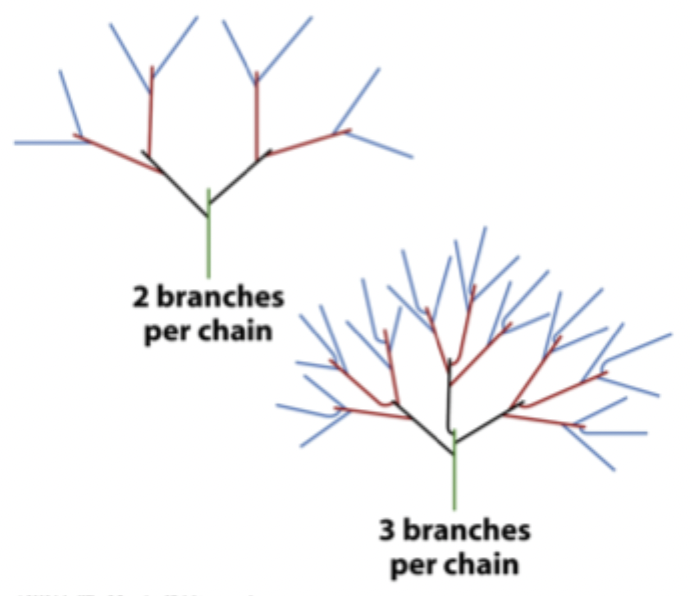
Each glycogen is unique and grows differently when used up
why is glycogen so branched
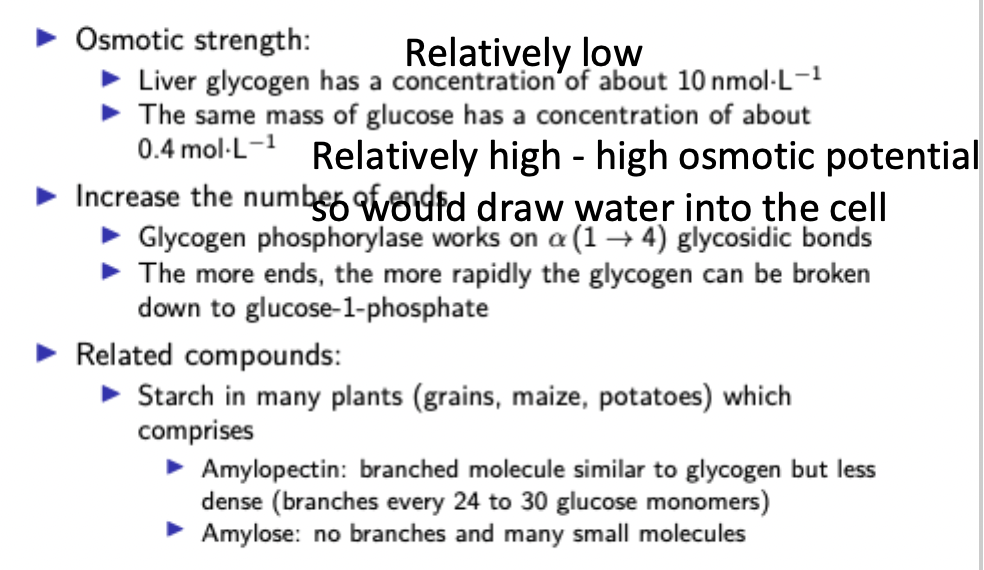
Formation of glycogen is costly - why? Seems to mostly be about osmotic stress
So it is stored as glycogen because of osmotic strength but because of this it is hard to access so that is why we have so many ends