Chapter 8 — “How You Move” - THE SENSORIMOTOR SYSTEM
 Call Kai
 Learn
Learn Practice Test
 Spaced Repetition
 Match
Match Flashcards
 Knowt Play
1/23

There's no tags or description
Looks like no tags are added yet.
Name | Mastery | Learn | Test | Matching | Spaced | Call with Kai | Chat |
|---|
No analytics yet
Send a link to your students to track their progress
24 Terms
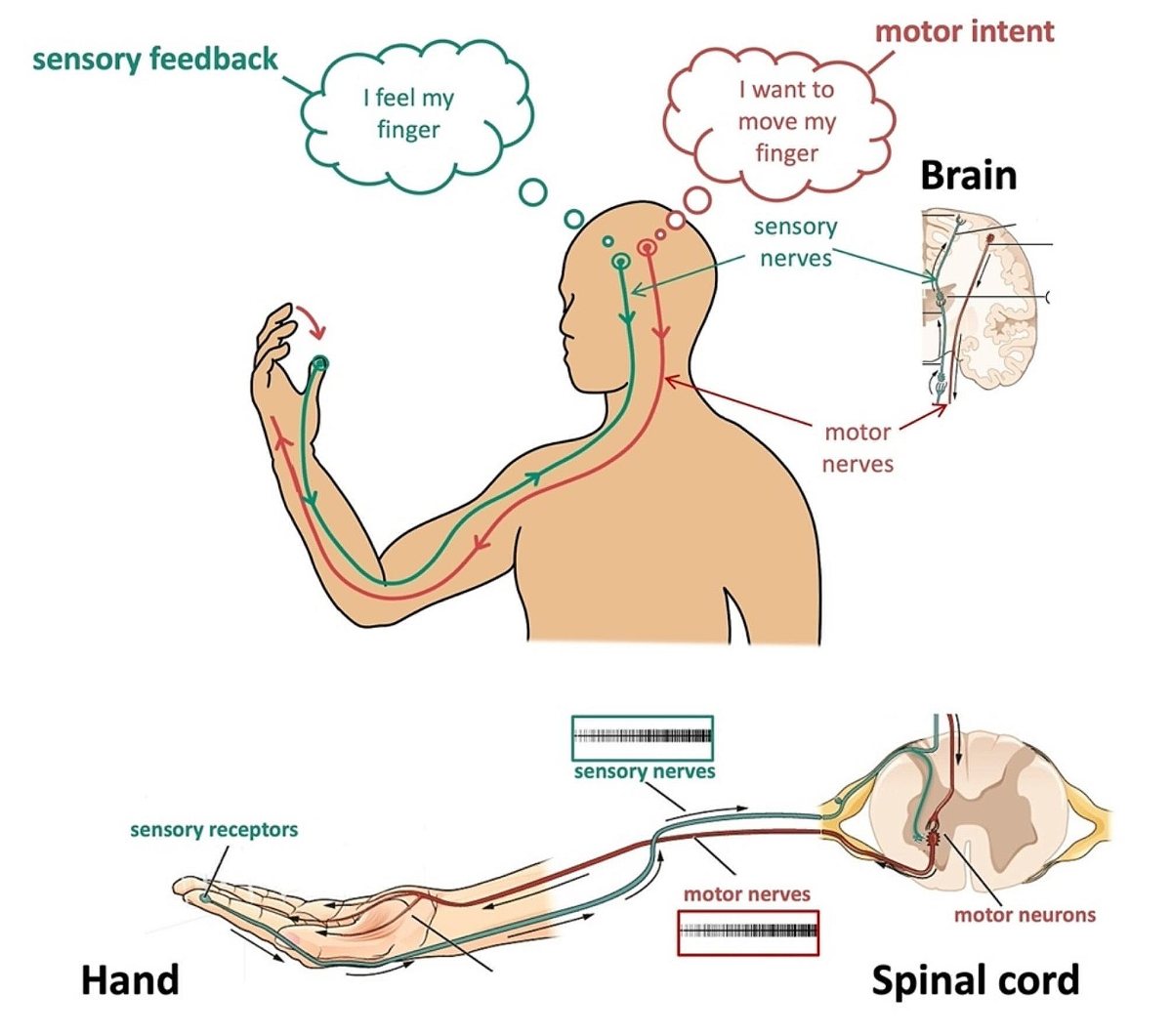
sensorimotor system
controls movement through constant interaction between sensory information and motor output.

Hierarchical organization
- The sensorimotor system is organized in levels.
- Higher levels issue general commands while lower levels carry out specific actions.

Motor output is guided by sensory input
Movement is continuously adjusted according to sensory feedback.

Learning changes sensorimotor control
Practice changes how movements are controlled and where control occurs in the nervous system.

Sensory feedback
- Information about the current condition of the body and environment that helps guide movement.
Example:
When carrying a bag, your muscles continuously receive information about its weight and your arm position. Your nervous system adjusts your muscle activity accordingly.
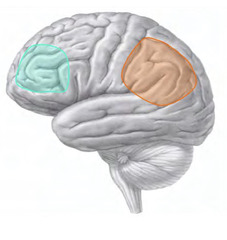
Posterior parietal association cortex
Important for using sensory information to guide movement.
Frontal eye field
Involved in the control of eye movements.

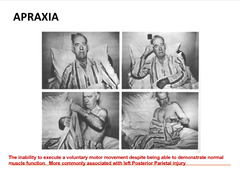
Apraxia
Difficulty performing learned purposeful movements despite adequate strength and understanding.
Contralateral neglect
Failure to respond to or be aware of stimuli on the side of space opposite a brain lesion.
Dorsolateral prefrontal association cortex
Important for planning and controlling complex behavior.
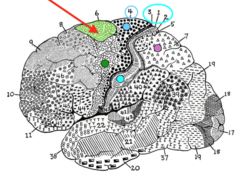
Premotor cortex
- Particularly involved when movements are guided by sensory stimuli.
- is especially involved in movements guided by sensory information, while the supplementary motor area becomes more prominent for well-practiced sequences.

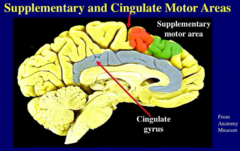
Supplementary motor area
Important for internally generated and well-practiced sequences.
Cingulate motor areas
Motor-related areas associated with motivation and action.
Mirror neurons
Neurons that respond both when an individual performs an action and when the individual observes a similar action.
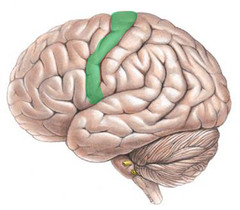
Primary motor cortex
- A major cortical area involved in controlling voluntary movement.
- May encode the intended endpoint of a movement rather than simply the movement itself.
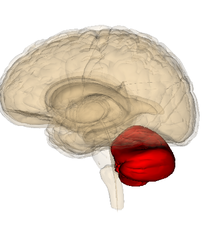
Cerebellum
is involved in:
- coordination
- motor learning
- fine-tuning movement
- timing of movement
was more active during newly learned finger-movement sequences than well-practiced sequences, supporting its role in motor learning.
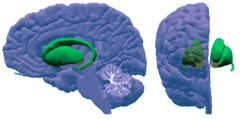
Basal Ganglia
are a collection of interconnected nuclei involved in:
- movement modulation
- motor learning
- reward-related response learning
- some cognitive functions
They form loops between the cortex and thalamus.
Muscle spindle
A receptor that detects muscle length.
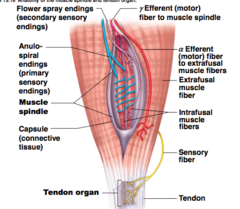
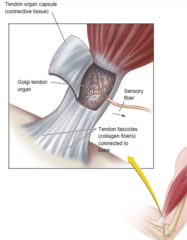
Golgi tendon organ
A receptor that provides information about muscle tension.
Stretch reflex
A reflex response to the stretching of a muscle.

Patellar reflex
Tap knee tendon → thigh muscle stretches → muscle spindle fires → motor neurons activate → thigh muscle contracts

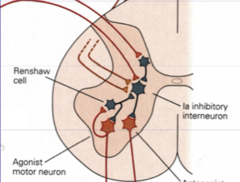
Recurrent collateral inhibition
A mechanism in which a motor neuron activates an inhibitory interneuron that inhibits the same motor neuron.
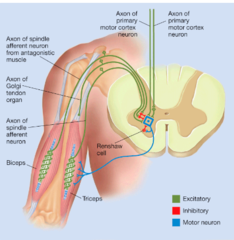
Renshaw cells
The inhibitory interneurons responsible for recurrent collateral inhibition.
Motor equivalence
The ability to perform essentially the same action in different ways using different muscles or movements.
Example:
A person can write their name using their hand or even their toe, and the basic characteristics of the signature can remain recognizable.
