HP Systems Drug Use Process
 Studied by 0 people
 Call Kai
 Learn
Learn Practice Test
 Spaced Repetition
 Match
Match Flashcards
 Knowt Play
1/35

There's no tags or description
Looks like no tags are added yet.
Name | Mastery | Learn | Test | Matching | Spaced |
|---|
No study sessions yet.
36 Terms
drug
Substances that produce a change in cellular or physiologic functioning
remedy
Alleviate symptoms or eliminate disease
poisons
Alleviate symptoms or eliminate disease
magic pill
Not knowing how a drug works lends itself to a sense of magic
Medicalization
a way to name common conditions in medically diagnosable terms. For example – feelings of sadness for a prolonged period of time – depression, eating too little leading to a very low bmi– anorexia. Everything works through ICD-10 codes that correspond to a diagnosis.
Medicalization
The process by which nonmedical problems become defined and treated as medical problems.
Society’s way of making a social, political or existential problem a medical one, so that it may be “treated
Prescriber external factors
Marketing, colleagues, regulations, patients, costs, formularies
Prescriber patient factors
Cost, patient needs and demands
Prescriber factors
Education, practice setting, workload, personal preferences
Dispenser role
Assure accuracy of dispensing
Apply clinical skills
Assist prescriber in therapy selection
Serve as patient’s advocate
OTC medication
Drugs that can be sold directly to people without a prescription.
ANDA (abbreviated new drug application)
To change a drug from Rx to OTC, what is submitted for an existing drug that is reviewed by the FDA?
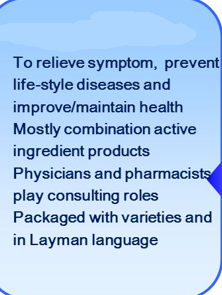
Non-prescription drugs
The photo describes?
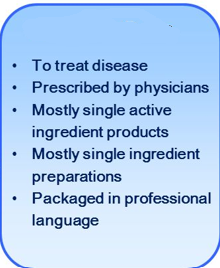
Prescription drugs
THe photo describes
BTC medication
Drugs dispensed under supervision of a pharmacist without a prescription.
To limit a drug’s use by those who might misuse it, while maintaining reasonable access for legitimate use by patients.
Combat Methamphetamine Epidemic Act of 2005
bans over-the-counter sales of cold medicines that contain the ingredient pseudoephedrine, which is commonly used to make methamphetamine.
Generic substitution
Substitution of a prescribed branded drug by a different form of the same active substance
Pharmaceutical Substitution
A pharmacist replaces a patient’s prescription drug with a similar drug that is expected to have the same clinical effect.
Therapeutic Substitution
Replacing a patient’s prescription drug with a chemically different drug that is expected to have the same clinical effect when administered in therapeutically equivalent doses.
FDA
protects the public health by overseeing the safety, efficacy and security of drugs, biological drugs and medical devices
Decides if drugs can be prescribed and sold, OTC, process new drug applications
FDA
there are no provisions in the law for ____ to "approve" dietary supplements for safety or effectiveness before they reach the consumer.
Discovery & Development
Identification of compounds followed by testing for ADME, side effects, and formulation. (1st Drug step)
Preclinical research
In vitro and animal testing for toxicity.
Must follow Good Laboratory Practices.
Leads to Investigational New Drug (IND) application.
(2nd drug step)
Clinical Trials
Using multiple phases to asses & evaluate the drug.
Phase I:
Safety, dosage, side effects (small number of subjects)
Phase II
Effectiveness, dosing range, continued safety.
Phase III
Large trials comparing to placebo; long-term effects.
FDA
Submission of NDA or BLA, including all preclinical and clinical data.
Review teams evaluate sections; FDA inspects clinical sites.
Approval granted if benefits outweigh risks.
Post-marketing (Phase IV)
Tracks long-term effects in broader populations.
Ensures detection of rare adverse events.
Example: Vioxx withdrawal due to increased MI/stroke risk
Patents
Granted by the U.S. Patent and Trademark Office.
Last 20 years from the filing date.
Prevent others from making/selling the invention.
Can be filed any time during drug development.
Market exclusivity
Granted by the FDA; blocks generic approval for a defined period.
May overlap or differ from patents.
Purpose: Balance innovation incentives with generic competition.
New Chemical Entity (NCE)
5 years
New clinical investigations of existing drug
3 years.
Orphan drug
7 years.
Pediatric exclusivity
additional 6 months.
Generic 180-day exclusivity
first generic applicant receives 6-month marketing advantage.