Chemistry unit 2: Atoms, molecules, and Ions
 Call Kai
 Learn
Learn Practice Test
 Spaced Repetition
 Match
Match Flashcards
 Knowt Play
1/36

There's no tags or description
Looks like no tags are added yet.
Name | Mastery | Learn | Test | Matching | Spaced | Call with Kai | Chat |
|---|
No analytics yet
Send a link to your students to track their progress
37 Terms
Atom is…
The smallest part of an element
Atoms contain…
Protons(+), Electrons(-), Neutrons(0)
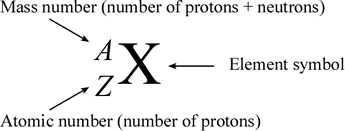
Format for element
All atoms of the same element have…
the same # of protons
Format for element symbol notation
Atomic # = Z (Bottom), Mass # = A (Top) = Protons + Neutrons
Isotopes
Atoms of the same element with different masses & have different numbers of Neutrons

Ions
Elements that gain or lose an e-.
Metals lose e- = Gain a positive charge
Nonmentals gain e- (become anions) = gain a negative charge
Ionic Compounds
Form bonds by transfer of e- + the overall electrical charge of the compound is zero, because the positive charges of the metal ions balance out the negative charges of the non-metal ions
Naming Metal + Nonmetal(Ionic Compounds)
Cross method for name to symbol. + Metal name stays the same. nonmental drops ending for -ide.

Ionic Compounds (Metal + Polyatomic)
Nonmetal + Polyatomics (still use Criss cross method)
Polyatomic ion: NH4+
Ammonium
Polyatomic ion: CO32−
Carbonate
Polyatomic ion: OH−
Hydroxide
Polyatomic ion: NO3−
Nitrate
Polyatomic ion: NO2−
Nitrite
Polyatomic ion: CN−
Cyanide
Polyatomic ion: SO42−
Sulfate
Polyatomic ion: SO32−
Sulfite
Polyatomic ion: PO43−
Phosphate
Polyatomic ion: C2H3O2−
Acetate
Polyatomic ion: NH4+
Ammonium
Polyatomic ion: CO32−
Carbonate
Polyatomic ion: OH−
Hydroxide
Polyatomic ion: PO43−
Phosphate
Polyatomic ion: NO3−
Nitrate
Polyatomic ion: SO32−
Sulfite
Polyatomic ion: NO2−
Nitrite
Polyatomic ion: C2H3O2−
Acetate
Polyatomic ion: HCO3−
Hydrogen carbonate
Polyatomic ion: CN−
Cyanide
Polyatomic ion: SO42−
Sulfate
Polyatomic ion: HSO4−
Hydrogen sulfate
Transition Metal
Charges not set(can change)
when naming, must use roman numerals to tell charge

Transition metal formula to name
Quantity of Transition metal x element charge(unknown) times Element 2 quantity times the charge = 0
Covalent Compounds
2 or more nonmetals
Share e-
Use prefixes
Nonmetal is still -ide
Mono not used for first element
Prefixes
Mono - 1
di - 2
tri - 3
tetra - 4
penta - 5
hexa - 6
hepta - 7
octa - 8
mona - 9
deca - 10