Part 1: Bookkeeping Basics
 Call Kai
 Learn
Learn Practice Test
 Spaced Repetition
 Match
Match Flashcards
 Knowt Play
1/41

There's no tags or description
Looks like no tags are added yet.
Name | Mastery | Learn | Test | Matching | Spaced | Call with Kai | Chat |
|---|
No analytics yet
Send a link to your students to track their progress
42 Terms
Role of a Bookkeeper
Tracking and Recording the financial transactions of a business
Accounts Payable
Money a business owes to others for goods or services
Accounts Receivable
Money owed to a business for goods or services
Responsibilities of bookkeeper
-Record Financial Transactions
-Reconcile Bank Accounts (Compare and match transactions in business's accounting records w those in the bank statement
-Manage Accounts Receivable & Payable
-Work with tax preparers & assist with tax compliance
-Generate Financial Statements
4 Components of Ethics
Honesty, Objectivity, Professionalism, and Confidentiality
Accounting Equation
Assets=Liabilities+Equity
Assets
What the business owns
Example: Cash, Equipment, Accounts Receivable, Inventory, Investments in other businesses, Buildings
Anything of value that the business owns or has potential to turn into cash
Liabilities
What the business owes to others
Example: Loans, Unpaid bills, mortgage, payroll, sales tax owed to the government, credit cards
Equity
How much the owner/owners have invested into the business and the accumulated profits or losses overtime. Businesses net worth.
Value of the business if it were to liquidate all assets to pay all liabilities
Balance Sheet
-The accounting equation displayed as a financial statement
-Snapshot of business assets, equity, and liability at a specific time
Revenue
Income earned through business operations
Gross proceeds from sales of products, services, rentals, ect.
Expenses
the costs of operating a business
Example: Labor costs like salaries, employee benefits, utilities, rent, insurance, taxes, advertising
Income Statement
Document that summarizes a clients financial performance
Revenues - Expenses = Net Income or Net Loss
Question:
Client bills homeowner for mowing their lawn, which balances will change?
Assets (what the business owns, like cash!) and
Revenue (income earned through business)
Debit
Increase in Assets or Expenses OR
Decrease in Liabilities, Owners equity, or Revenue
Credit
Decrease in Assets or Expense OR
Increase in Liabilities, Owners equity, or Revenue
Question:
When recording the purchase of office supplies purchased on account, which side of ledger should the accounts payable be recorded on?
Credit the accounts payable (liability) to reflect the increase in the amount owed
Question:
When recording the payment of salaries to employees, which side of the salary expense ledger should the transaction be recorded?
Debit the salary expense (increase in expense means debit) and credit the cash (asset) when recording the payment of salaries to employees
Economic Entity Assumption
Financial activities must be kept separate from any personal finances
Reliability Assumption
information recorded in clients financial documents is verifiable and backed by proper documentation
If invoice, receipt, or bank statement can't be provided, it is not a reliable transaction and cannot be recorded
Full Disclosure Principle
Any information lenders or investors may need to make informed decisions should be disclosed in the financial statements
Conservatism Principle
Err on the side of caution, choose the option that shows less income or asset benefit. Potential losses can be recorded while potential gains should not be.
Materiality Principle
states that an amount can be ignored if its effect on the financial statements is unimportant to users' business decisions
Example: Numbers are often rounded to the nearest dollar
Consistency Principle
Once a business uses a specific accounting method, all similar items should be recorded the same
Monetary Unit Assumption
Use one currency throughout all accounting activities
Going Concern Assumption
The assumption that the business is stable enough to operate and meet its obligations
Question:
Your client is considering buying a second photobooth using their suppliers financing services. Would the booth be considered an asset?
The booth is an asset while the transaction will add a liability since they will be financing
Question:
-Four shareholders contributed $60,000 ($15k each) in exchange for the gyms common stock
-The gym purchases inventory for $10,000 and pays cash for the invoice
How does this effect the accounting equation?
Assets increase by $60,000 and shareholders equity also increase by $60,000
Assets= Liability + Equity
$60,000= _______ + $60,000
Question:
If the Gym purchases increase liabilities by $600, what also needs to happen for the accounting equation to be in balance?
Add $600 to assets
Question:
The gym borrows $150,000 from the bank and uses the loan to buy a warehouse. What effect does this have on the accounting equation?
The assets and liabilities both increase by $150,000
The accounting Cycle
from the beginning of transaction to it's inclusion in the financial statements
The accounting cycle order
1) Collect and Analyze transactions
2)Record and Post transactions
3)Prepare unadjusted Trial Balance
4)Prepare adjusting entries
5)Prepare adjusted Trial Balances
6)Prepare financial Statements
Step 1 of the Accounting Cycle
a. Collect and analyze events to see if there are transactions that impact the business
b. Gather source documents that back up transactions
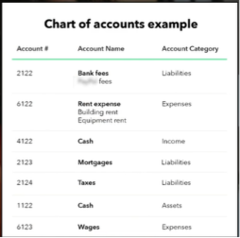
c. Review clients Chart of Accounts (list of accounts business uses for recording transactions)
Examples: Business purchases, paying off debts, or earning revenue from sales
Step 2 of the Accounting Cycle
a. Record and post all important information about each transaction by recording journal entries
b. Double Entry Accounting is done where every transaction is recorded as both a debit and credit in two or more subledger accounts
c. Once journal entries are entered and approved they are transferred as summary entries/"posted" to General Ledger (GL)
General Ledger (GL)
-Record of each financial transaction during life of the business
-Contains all accounts needed to prepare financial statements
Step 3 of the Accounting Cycle
Recorded transactions are combined into a trail balance (this is the unadjusted trial balance)
Step 4 of the Accounting Cycle
Prepare adjusting entries to ensure financial statements are accurate
Examples of adjusting entries:
Depreciation=spreads out the cost of an item over its useful life
Accrual Entries=records future payments or expenses to the current record
(usually provided to bookkeepers by CPA’s or Accountants)
Step 5 of Accounting Cycle
Prepare adjusted Trial Balance
-List of final balances in all accounts
-Shows that all changes and corrections have been accurately recorded and that accounts are in balance
Step 6 in Accounting Cycle
The adjusted trial balance is used to prepare financial statements
Statement of Equity
A report showing the difference between total assets and total liabilities resulting in overall value of owners equity
Statement of Cash Flows
Reports the cash generated and spent during a specific period of time (month, quarter, year)
Also acts as a bridge between the income statement and balance sheet by showing how cash is moved in and out of the business