Central Nervous Sys - Exam 5!
 Call Kai
 Learn
Learn Practice Test
 Spaced Repetition
 Match
Match Flashcards
 Knowt Play
1/80

There's no tags or description
Looks like no tags are added yet.
Name | Mastery | Learn | Test | Matching | Spaced | Call with Kai | Chat |
|---|
No analytics yet
Send a link to your students to track their progress
81 Terms
why is central nervous system known as CNS
organs in it sit in the centre of the body - includes brain and spinal cord
brain + spinal cord protected by what
brain is protected by skull bones
spinal cord protected by vertebrae
name of protective coverings/membranes that sit around brain + spinal cord **
where is it located?**
meninges
they sit underneath skull and under vertebrae
4 parts of adult brain (most inferior to up) and subparts **
brainstem
—> medulla oblongata, pons, midbrain
cerebellum
cerebrum - biggest part of brain
diencephalon
—> epithalamus, thalamus, hypothalamus
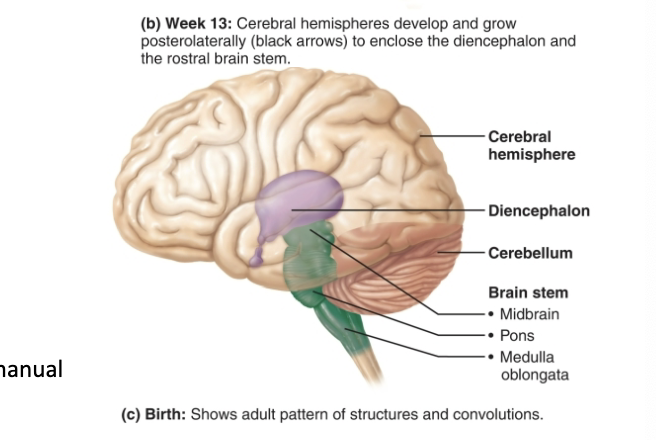
what part of brain continues down as spinal cord **
medulla oblongata of the brainstem!
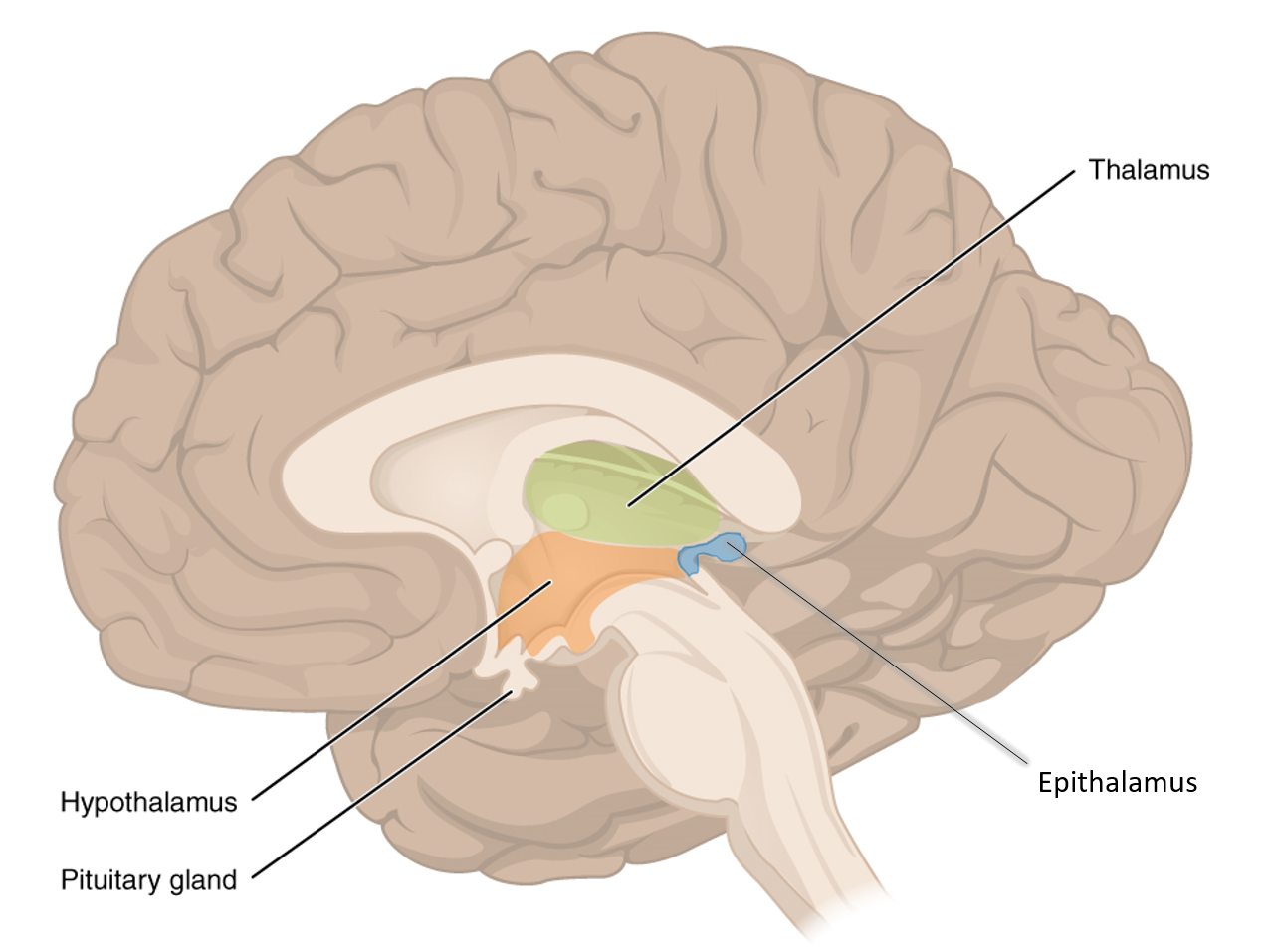
diencephalon diagram
gray matter (in brain) **
whr unmyelinated dendrite and cell bodies
white matter(in brain) **
whr myelinated axons
most outer region of brain is made of what
gray matter - only has cell bodies + dendrites
middle area of brain is made of what
white matter - only has myelinated axons
deepest area of brain is made of what
gray matter - only has cell bodies + dendrites!
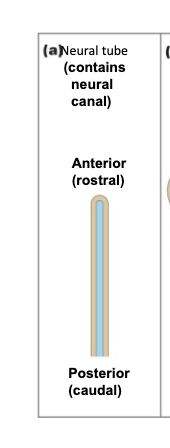
brain development started from what
a straight neural tube
anterior (rostral) part
posterior (caudal) part
blue is the hollow space - called neural cavity/cavity of the brain/tube
—> will be later filled with fluids of brain
primary brain vesicles (bumps) derived from neural tube (/anterior to posterior)
prosencephalon - made into forebrain (prosefor)
mesencephalon - made into midbrain (mesmid)
rhombencephalon - made into hindbrain (rhombhind)
secondary brain vesicles (bumps) derived from primary brain vesicles anterior to posterior
prim: prosencaphalon (which makes forebrain) = telencephalon + diencephalon
prim: mesencephalon (midbrain) = mesencephalon
prim: rhombencephalon (hindbrain) = metencephalon + myelencephalon
what forms from telencephalon
cerebrum / cerebral hemispheres
what forms from diencephalon
diencephalon (epithalmus, thalmus, hypothalmus) +(retina)
what forms from mesencephalon
midbrain of brainstem
what forms from metencephalon
pons of brain stem
cerebellum
what forms from myelencephalon
medulla oblongata of brain stem
what cells makes brain and spinal cord
neurons
3rd ventricle connected to 4th ventricle via **
cerebral aqueduct
where is 4th ventricle located
brainstem
each of 2 lateral ventricle connected to third ventricle via **
interventricular foramen
where is 3rd ventricle present
diencephalon
outer region of spinal cord is made of what
white matter
deeper region of spinal cord is made of what
gray matter
cavities of brain called what and they are what
ventricles - are CSF filled spaces in the brain that are continuous with each other
what are ventricles
cerebrospinal fluid filled spaces that are continuous with one another in the brain
what makes CSF ***
ependymal cells
what are ventricles lined with
ependymal cells that make CSF for ventricles
1st and 2nd ventricles of brain called
2 lateral ventricles
they are like ram horns - c shaped
they are present in the cerebrum / cerebral hemispheres
filled with CSF
1ST AND 2ND LATERAL VENTRICLE SEPARATED BY A MEMBRANE CALLED SEPTUM PELLUCIDUM
all ventricles in brain
filled with CSF made by ependymal cells
hindbrain AKA
brainstem
how many ventricles in brain
4
central canal
cavity in the spinal cord filled with CSF
what is biggest part of brain
cerebrum
3 markings of the cerebrum
gyri
sulci
fissures
sulci + fissures = depressions
gyri + func **
ridges/bumps of cerebrum
func: increase surface area of cerebrum
sulci
shallow grooves of cerebrum
fissures
deep grooves of cerebrum
longitudinal fissure
is deep groove in middle of brain that separates cerebrum into right + left cerebral hemispheres
transverse cerebral fissure
separates cerebrum and cerebellum
right side of brain controls
left side of body
left cerebral hemisphere controls
right side of body
central sulcus **
separates frontal lobe and parietal lobe
lateral sulcus
outlines temporal lobes
parieto-occipital sulcus
separates occipital and parietal lobes
what things divide cerebrum into lobes **
sulci - shallow grooves
what thing divides cerebrum into hemispheres **
(longitudinal) fissure
most outer region of cerebrum is called **
cerebral cortex - made of gray matter - cell bodies and dendrites
middle region of cerebrum is callled
white matter - no name
deepest region of cerebrum is called
is made of gray matter - cell bodies and dendrites
-is called basal ganglia / basal nuclei
cerebral cortex
most outer region of brain - made of thin superficial layer of gray matter - cell bodies and dendrites
is executive suite of brain
is responsible for most activities of the body
controls awareness, resp for receiving any type of sensations (pressure, pain etc.), voluntary movements, memory storage, understanding, communication
also has BVs + no axons
func of left hemisphere
is dominating hemisphere
controls speech, language, reading, planning, writing. math, analysis, logic (all IQ funcs)
func of right hemisphere
is chill will hemisphere
is creative/artistic hemisphere
controls emotions, artistic behavior, imagination, musical skills, visual + spatial skills (hands on skills?)
corpus callosum
fibers responsible for taking info between cerebral hemispheres
2 areas of cerebrum/cerebral cortex
sensory areas
motor areas
sensory area of cerebral cortex
part of brain receives info from body
motor area of cerebral cortex
send info from brain back to body
sensory
info from body to brain
motor
info from brain to body
lobes of brain
frontal
parietal
occipital
temporal
frontal lobe func
controls behavior + emotions
resp for problem solving
resp for thinking + concentrating
controls body movements
Broca’s area in frontal lobe controls expressive speech (when u listen to somoene + express your thoughts into words)
Broca’s area **
in frontal lobe
func": resp for expressive speech
-if broca’s area is damaged, you can understand what someone is saying but you cant express yourself
parietal lobe
resp for senses like pain, temp, touch, pressure, vibration
resp for processing, vision, hearing
occipital lobe func
controls vision / eyesight
temporal lobe
controls speech, hearing, memory, understanding, language
controls balance, equilibrium
has wernicke’s area
WERNICKE’S area **
in temporal lobe
controls comprehension of speech
if area is damaged, you cant comprehend your thoughts into your words
basal nuclei/ganglia of cerebrum **
deepest area of brain - made of gray matter
adjusts + refines (smoothens0 voluntary movements
controls subconscious skeletal muscle tone
provides a basic pattern / rhythm to skeletal muscles
HELP COORDINATE LEARNED MOVEMENT PATTERNS (E.g. walking)
cells of basal nuclei/ganglia do what
release neurotransmitter called dopamine
resp for giving slight tone in skeletal muscles
diencephalon is made of what
gray matter - only has (unmyelinated) cell bodies + dendrites - we call it nuclei in CNS
assoc with (enclose) third ventricle
3 parts: epithalamus, thalamus, hypothalamus
epithalamus **
is most dorsal part of diencephalon
FORMS ROOF OF 3RD VENTRICLE
HAS PINEAL GLAND/PINEAL BODY IN IT
PINEAL GLAND PRODUCES MELATONIN THAT HELPS YOU SLEEP (sleep / wake cycle)
thalamus **
is egg shaped part, biggest part of diencephalon
makes the upper and lateral walls of the 3rd ventricle!
we have many cell bodies/nucleis here
most imp func: IS RELAY STATION / correction centre/ rest area for all info
—> THIS AREA RECEIVES INFO + sorts info + editing info then processing it to the next part of the brain
any info coming from brainstem, cerebellum, cerebrum will stop in the thalamus, edited, sorted, then moved to wherever it needs to go!
info comes from body, goes up to cerebrum, or comes from cerebrum and goes towards the body!
hypothalamus **
func: FORMING CAP OVER BRAINSTEM + MAINTAIN HOMEOSTASIS + CONTROL AUTONOMIC/AUTOMATIC ACTIVITIES e.g. BREATHING, DIGESTION
IMPORTANT NUCLEI: HERE
has mamillary bodies/mamillary nuclei:
—> func: all info relating to smell will stop + be sorted in the mamiillary bodies!
may control pleasure, fear, anger, sex drive, body temp by shivering/ sweating
may regulate hunger + satiety
control water balance
maybe control sleep
mamillary bodies
collection of cell bodies in hypothalamus resp for processing + sorting smell info
nuclei
cell bodies in CNS
brain stem is made of
gray matter
cell bodies + dendrite of neuron
cell bodies + dendrite of neurons in CNS = *
nuclei
what part of brainstem continues down as spinal cord
medulla oblongata
midbrain **
is 1st part of brainstem
SITS BETWEEN DIENCEPHALON + PONS