4. Border molding and final impression ✅
 Call Kai
 Learn
Learn Practice Test
 Spaced Repetition
 Match
Match Flashcards
 Knowt Play
1/20

There's no tags or description
Looks like no tags are added yet.
Name | Mastery | Learn | Test | Matching | Spaced | Call with Kai | Chat |
|---|
No analytics yet
Send a link to your students to track their progress
21 Terms
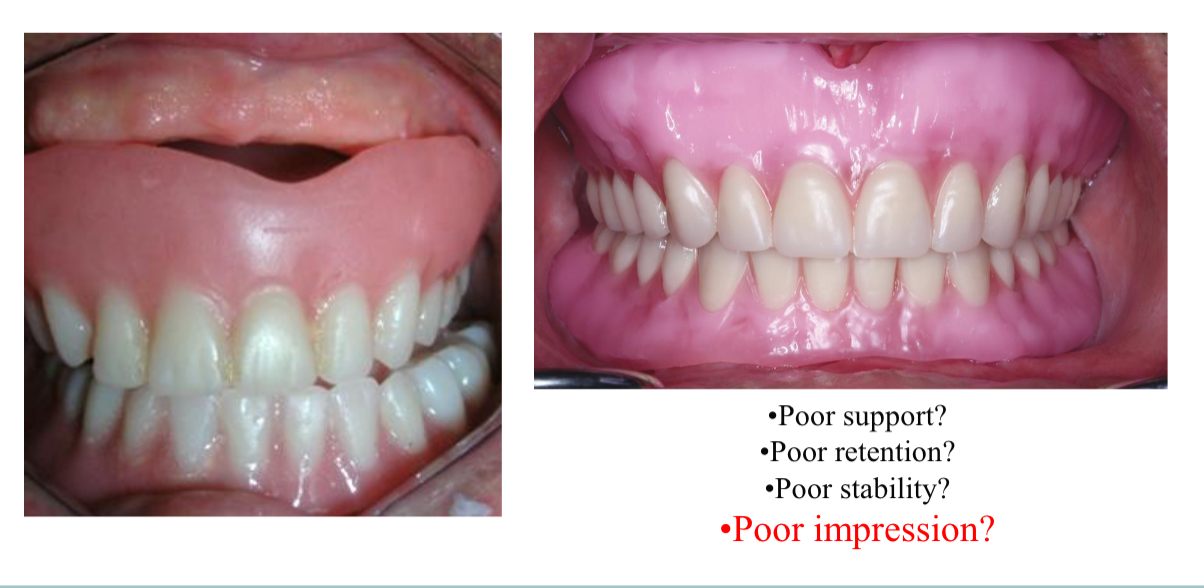
Why Dentures fails?
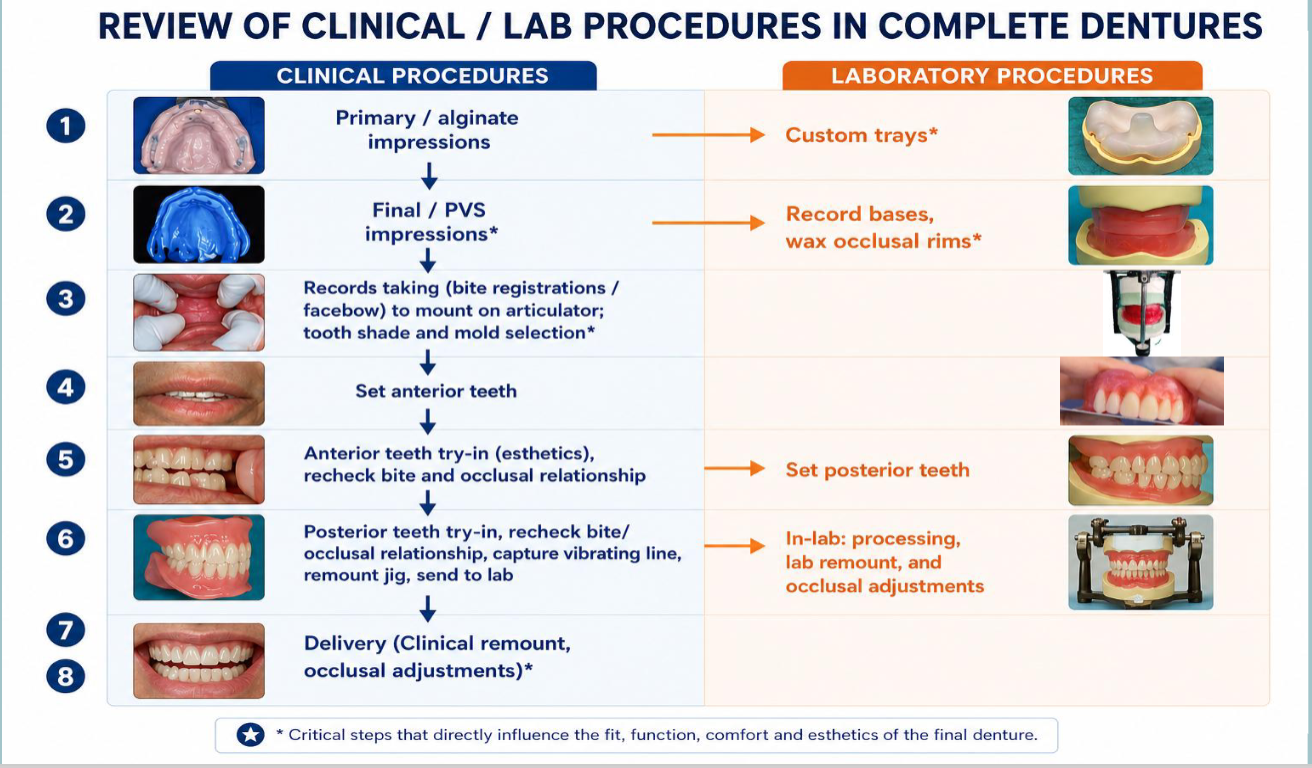
CD steps overview
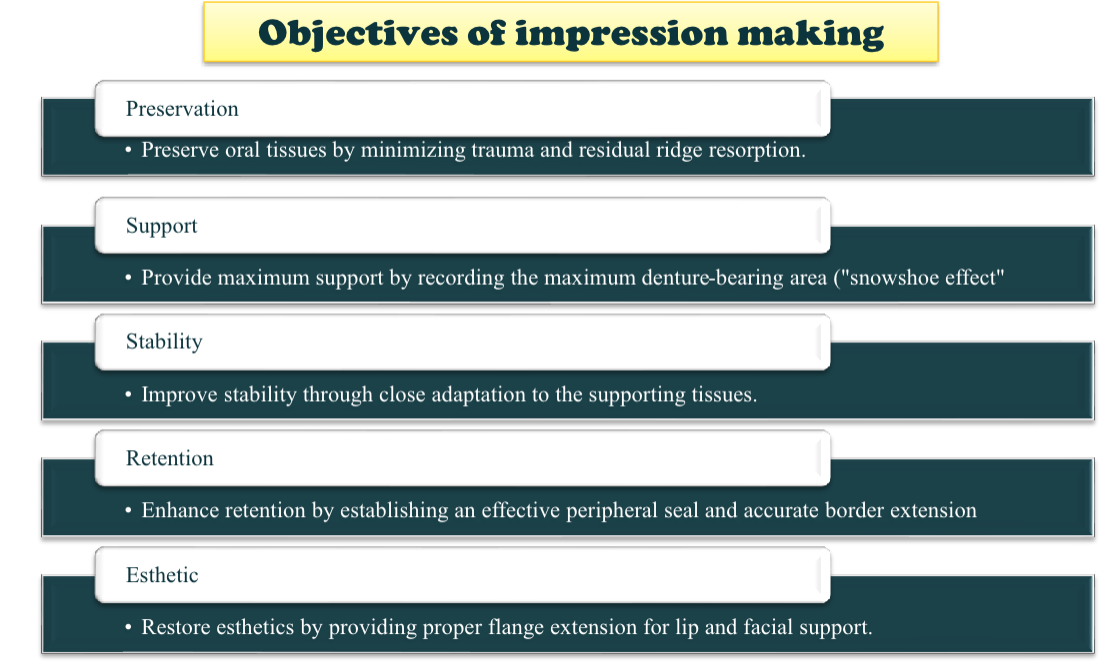
Objectives of impression making
is denture limited by bone or muscle
muscle
maxilla anatomical landmarks

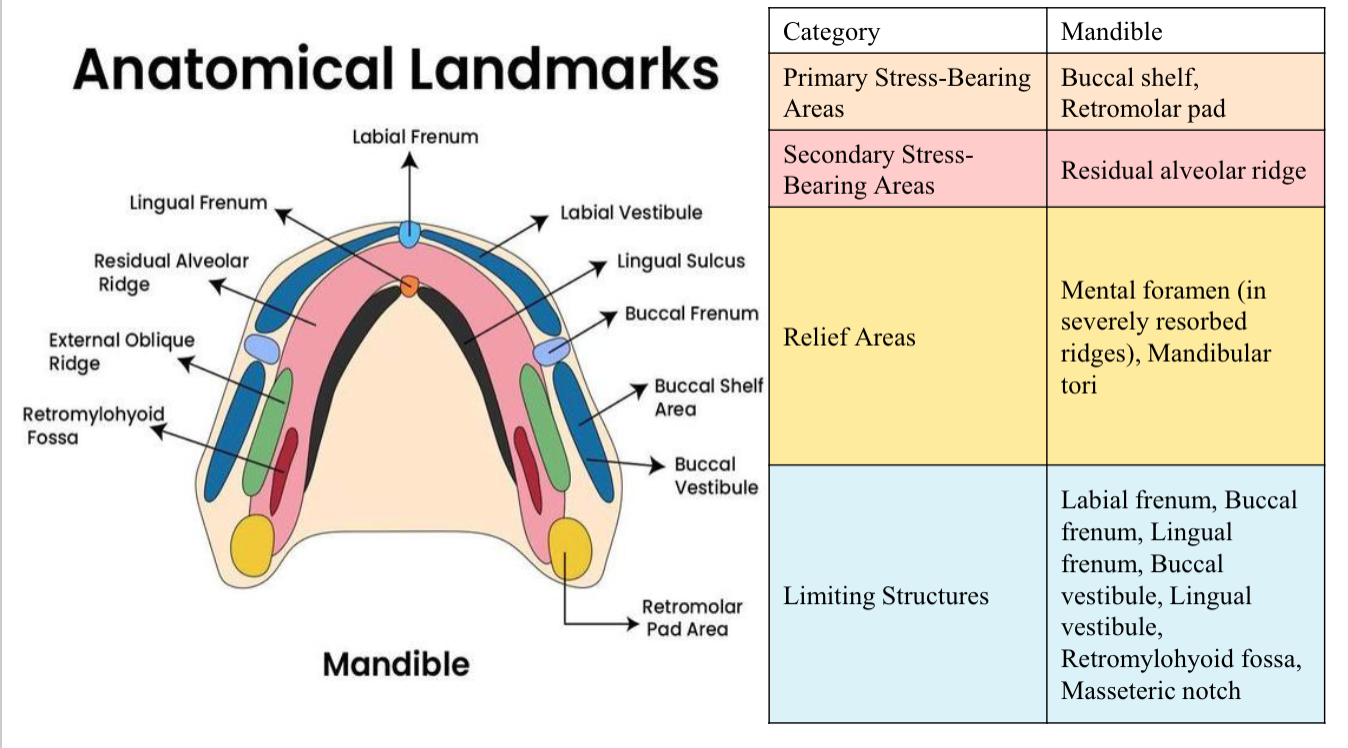
mandible anatomical landmarks
Steps for final impression

Evaluation of the Custom Tray
The vestibule, frenal attachments, vibrating line, and hamular notches border limits of the maxillary denture.
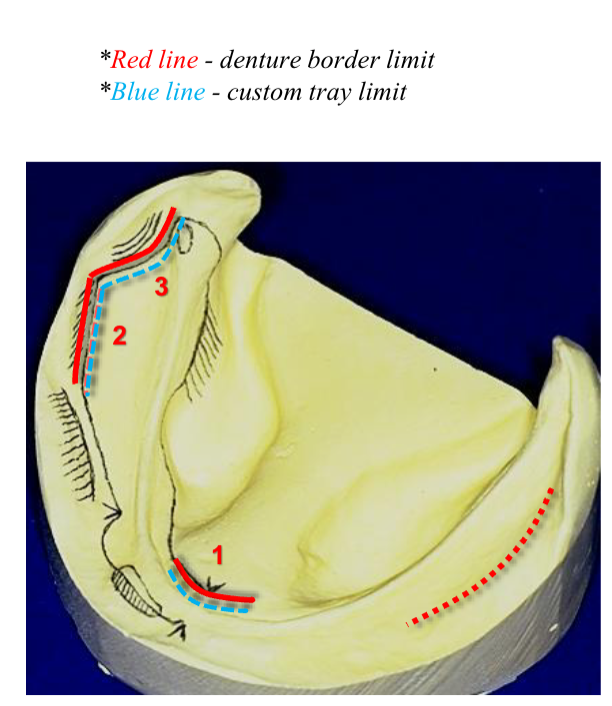
Custom tray borders should exhibit a 2–3 mm clearance from depth of the vestibule.
Adequate frenum clearance.
No overextension or underextension
For the mandibular denture, the following landmarks determine border limits
in addition to the buccal vestibule and the mylohyoid muscle:
1. Lingual frenum
2. External oblique ridge
- attachment of the lower fibers of the buccinator muscle
3. Masseteric notch/groove
- junction of the retromolar pad and buccal fat pad
- action of the masseter is exerted on this area imprinting the masseteric notch on the denture
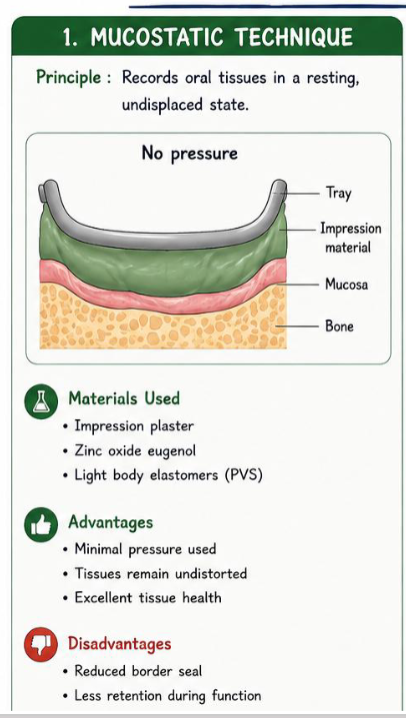
types of final impression techniques for CD: mucostatic
types of final impression techniques for CD: mucocompressive

types of final impression techniques for CD: selective pressure

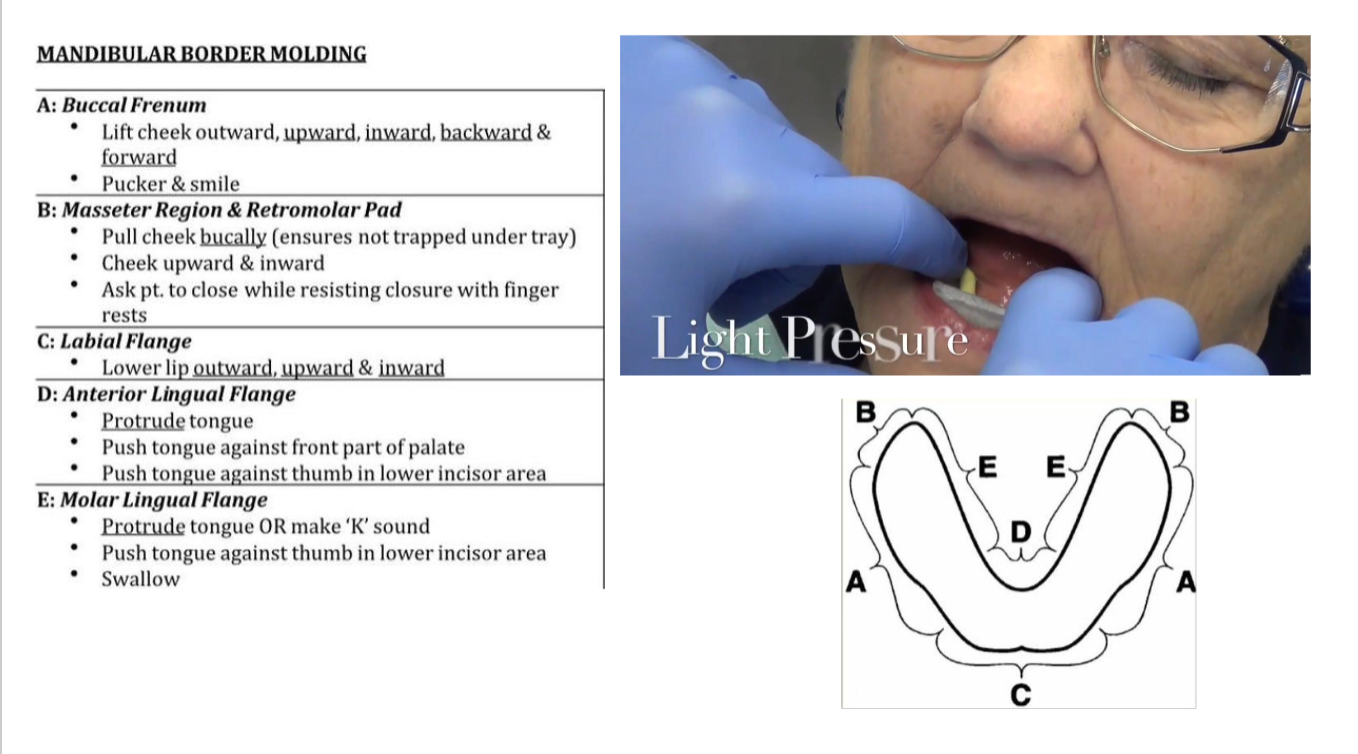
For border molding and final impressions, there are two techniques you may employ

maxillary boarder molding

mandibular border molding
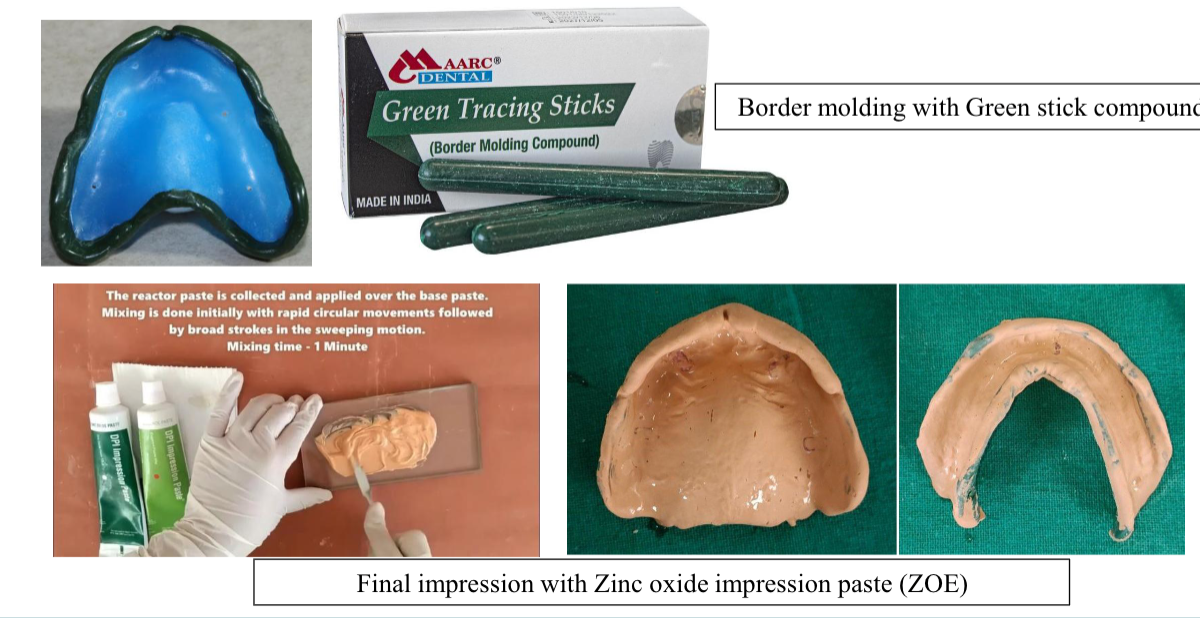
advantages and disadvantages of ZOE

two step impressions with medium and light

two step impressions advantages and disadvantages

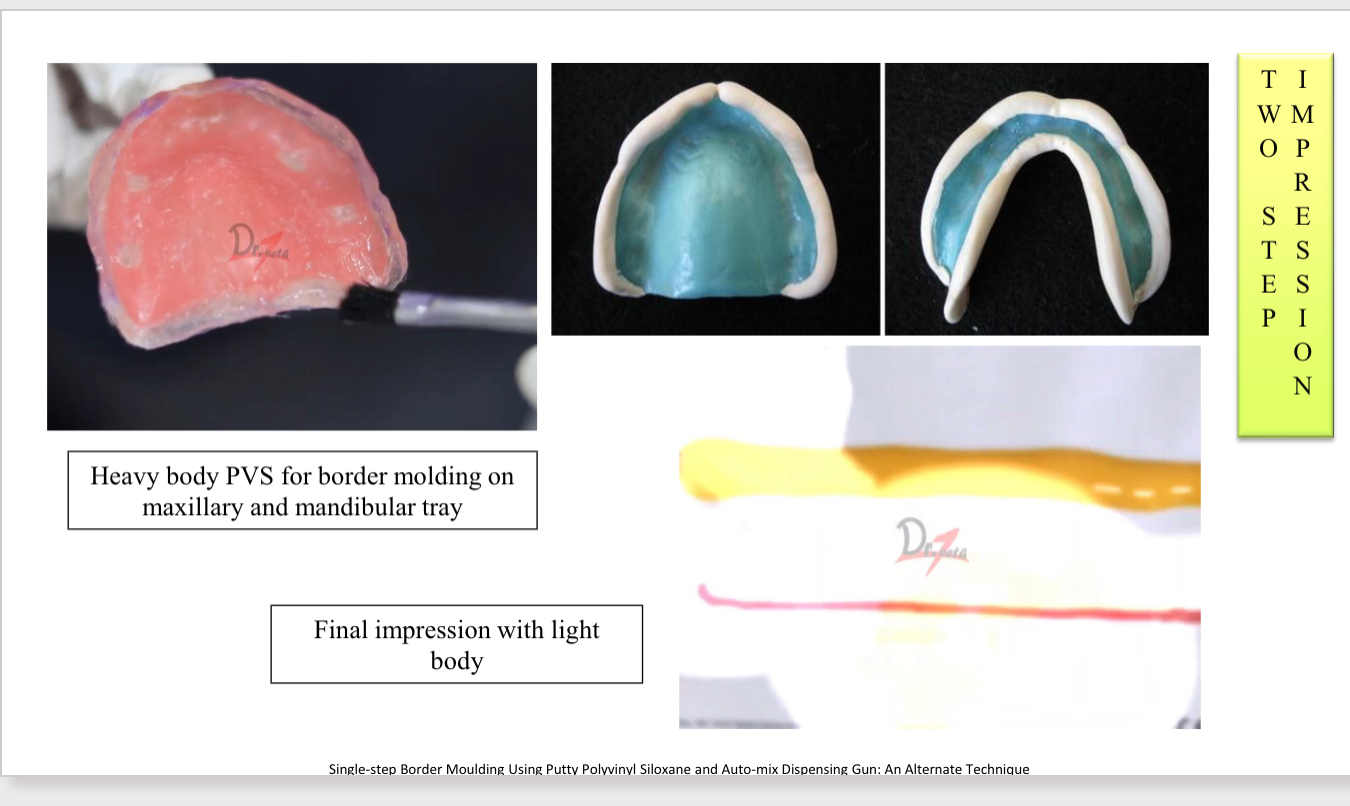
two step impressions with heavy and light
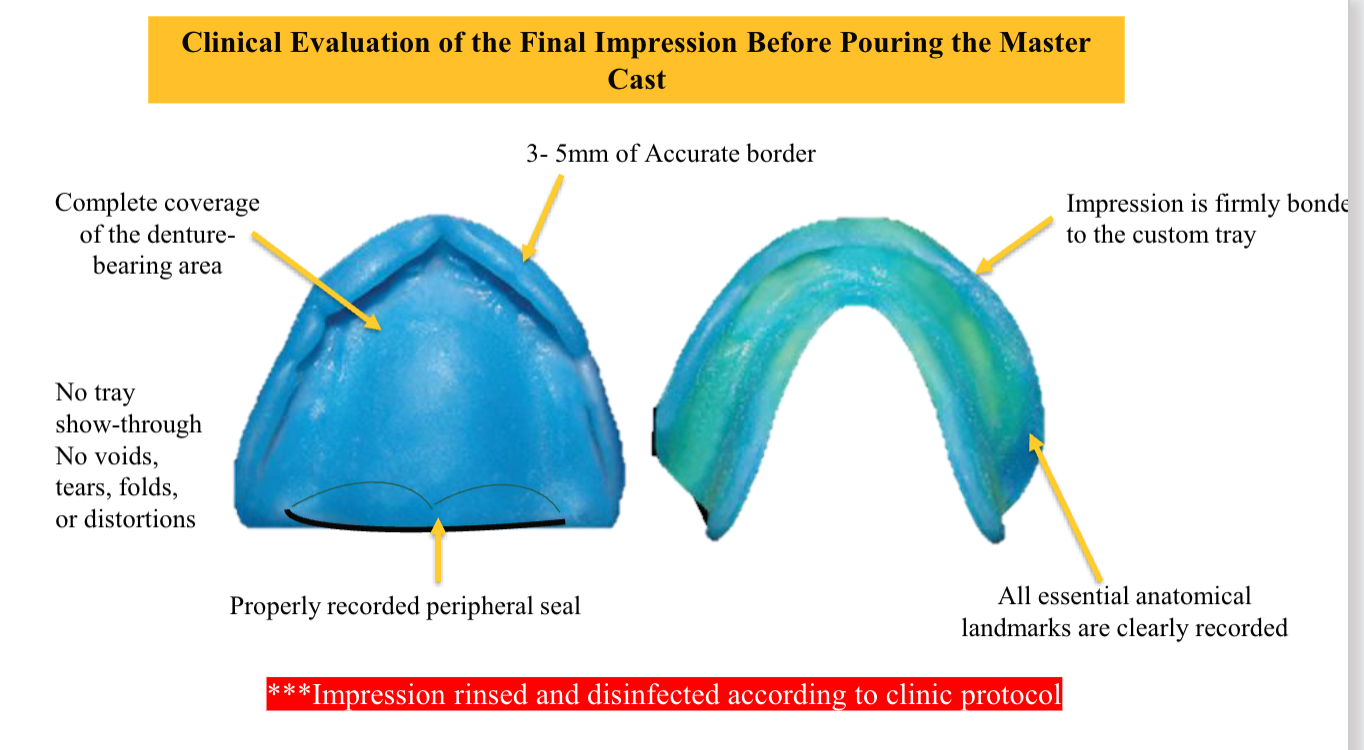
Clinical Evaluation of the Final Impression Before Pouring the Master
Cast
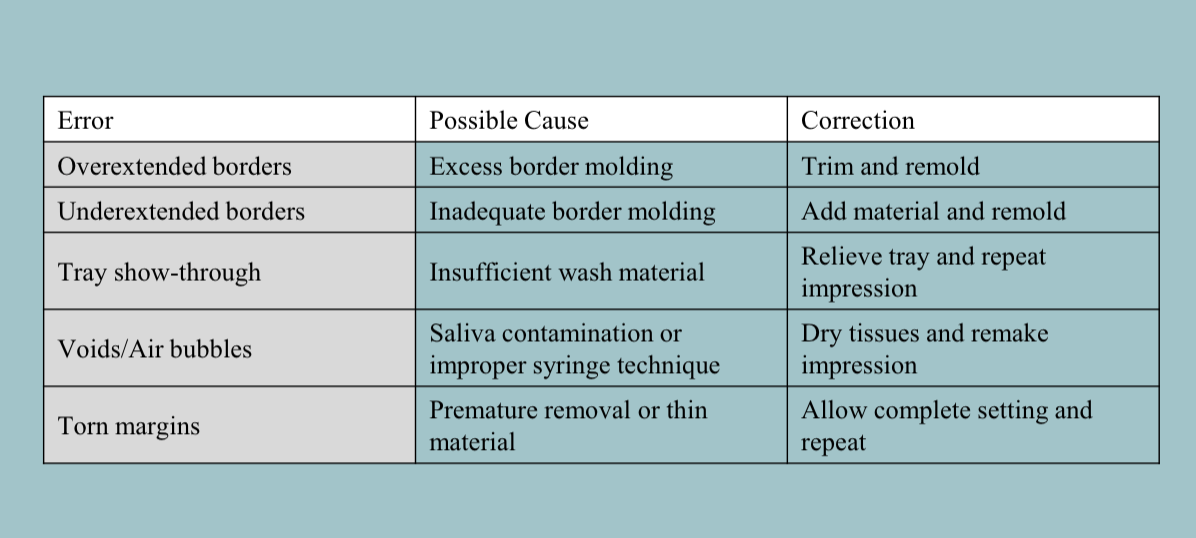
error + how to correct