A Level Chemistry RP 2-Measuring enthalpy change
 Call Kai
 Learn
Learn Practice Test
 Spaced Repetition
 Match
Match Flashcards
 Knowt Play
1/8

There's no tags or description
Looks like no tags are added yet.
Name | Mastery | Learn | Test | Matching | Spaced | Call with Kai | Chat |
|---|
No analytics yet
Send a link to your students to track their progress
9 Terms
How can you reduce the uncertainty in the mass measurement?
-Use a balance with a greater resolution.
-Use a larger mass
What is percentage uncertainty and how do you calculate it?
Percentage uncertainty in a measurement=
100 x absolute uncertainty/ calculate value
How do you calculate enthalpy change of a reaction?
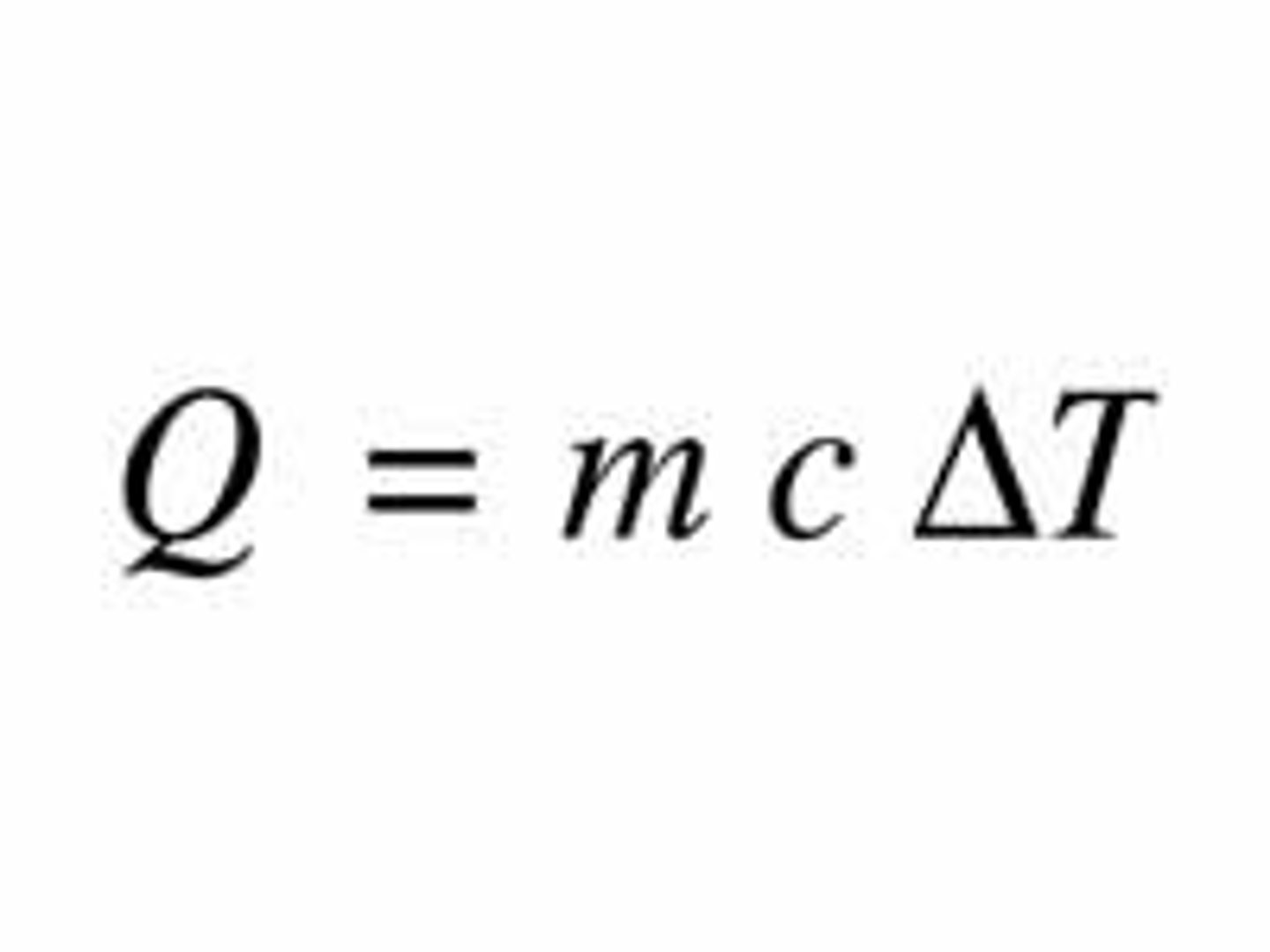
Why may an experimental value for enthalpy change be different to the theoretical value?
1. Heat loss to apparatus/surroundings.
2. Incomplete combustion.
3. Non-standard conditions.
4. Evaporation of alcohol or water.
How do you prevent heat loss to surroundings/apparatus?
-Insulate the beaker by placing it in a polystyrene cup with a lid.
-Avoid large temperature differences between surroundings and calorimeter.
-Use a bomb calorimeter
What are 2 ways in which this experiment can be improved?
-Read the thermometer at eye level to avoid parallax errors.
-Stir the solution so the temperature is evenly distributed.
What are 2 more ways the accuracy of this experiment can be improved?
-Use a digital thermometer for more accurate and faster readings.
-Use greater concentrations and masses, leading to a greater temperature change and thus smaller uncertainty.
What is accuracy?
The more accurate the data, the closer it is to the actual value.
How do you determine the enthalpy of combustion for unknown alcohols? (5)
Weigh the spirit burner (alcohol) before and after combustion M1
Water in a calorimeter / beaker M2
Measure volume of water (or mass) M3
Burn the alcohol to heat the water M4
Measure temperature rise in water M5