Chemical Reactions
 Call Kai
 Learn
Learn Practice Test
 Spaced Repetition
 Match
Match Flashcards
 Knowt Play
1/12

There's no tags or description
Looks like no tags are added yet.
Name | Mastery | Learn | Test | Matching | Spaced | Call with Kai | Chat |
|---|
No analytics yet
Send a link to your students to track their progress
13 Terms
What is a valence electron? What is it involved in? What does it determine?
An electron in the outermost shell of an atom; involved in bonding; determines reactivity

The starting substances (on the left side of a chemical equation)

What are products?
The substances formed (on the right side of a chemical equation)
A unit equal to 6.022 × 10²³ particles of a substance (Avogadro's number; also the atomic/molecular mass in grams)

What is an ionic bond? (what type of substances are involved (2); what does the bond create?)
A bond formed when electrons are transferred between a metal and a nonmetal, creates oppositely charged ions that attract each other
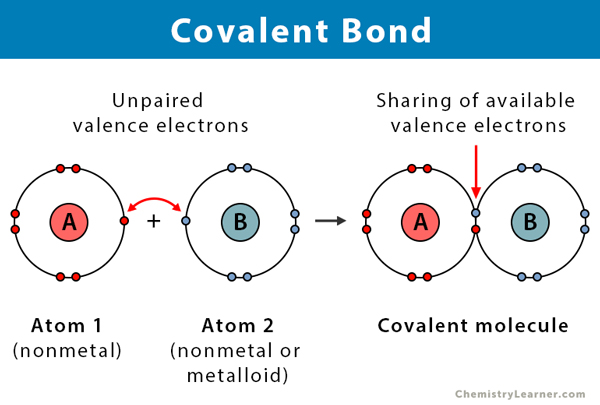
What is a covalent bond? (type of substances involved)
What is a cation? How does it form?
A positively charged ion formed when an atom loses one or more electrons (Mg2+)
What is an anion? How does it form
A negatively charged ion formed when an atom gains one or more electrons (Cl-)


6.022 × 10²³ (the number of particles in one mole of a substance)
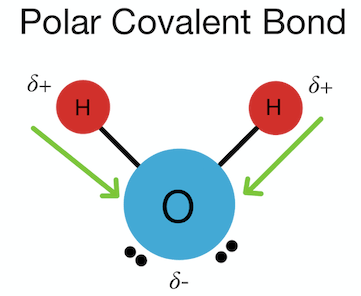
What is a polar covalent bond? (e.g. H2O)
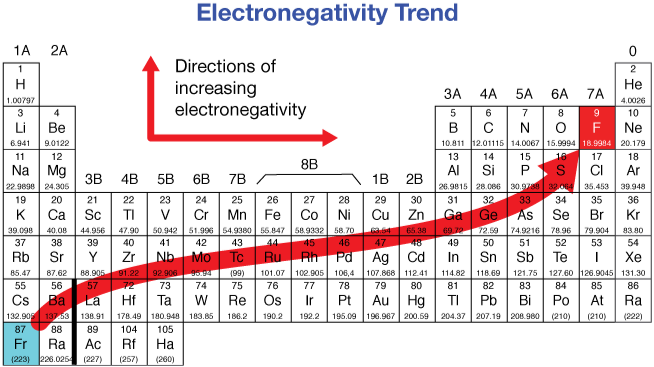
Does the element Fluorine have more or less electronegativity than Sodium?
has more electronegativity (F can attract more electrons towards itself in a chemical bond)