6.4 Technology, Competitors and Suppliers, International Trade & Impact of Multinationals
 Call Kai
 Learn
Learn Practice Test
 Spaced Repetition
 Match
Match Flashcards
 Knowt Play
1/33

There's no tags or description
Looks like no tags are added yet.
Name | Mastery | Learn | Test | Matching | Spaced | Call with Kai | Chat |
|---|
No analytics yet
Send a link to your students to track their progress
34 Terms
Information Technology (IT) definition
the use of electronic technology to gather, store and processs and communicate information
How has technology transformed business ?
The product consumer demand
The ways products are made
The ways business communicate
The ways business collect, store and use information
Why are digital technology important for businesses?
Keeps firms competitive
rivals that adopt new tech can cut prices, deliver fast & win customers
Widens market
an online store is open 24/7 and can reach buyers worldwide
Turns data into decisions
software sports patterns human miss, guiding price decisions & determine stock level
What are some ways technology are used in businesses?
Automation (robots/AI)
Handles repetitive or risky jobs accurately + fast (eg. robots used for packing to cut labour cost & speed up delivery)
E-commerce platforms
Providing virtual shop with secure payments & parcel tracks
Big data & data mining
Analysing millions of transaction to reveal trends (eg. offering personalised discounts to shoppers who often buy sportswear)
Opportunities to business of technological change
Reduced cost - automated warehouse & AI scheduling reduce waste & staffing bills.
New processes/ Faster Service - Next-day delivery builds customer loyalty.
Better communication/ Global reach for small firms
Access to more information/ Flexible, data-driven pricing - software raises or lowers prices in mins. to match demand.
Threats to business of technological change
High set up cost
Robots, servers, recruiting specialist staff or training need large upfront spending
Technical failures
System breakdowns halt production or crash websites —> affecting customer service
Cybersecurity risks/ Data Protection
Hackers may steal customer data or stop operations
Job losses and morale issues
Staff may fear redundancy
Training is essential but may be resented if jobs change significantly
How can providing data help with business decisions?
Allows quick & easy analysis as managers can access up to date data about bus. which supports control across all departments & divisions
Computer can analyse & summarise data much more efficiently allowing for managers to make faster decisions with accuracy
Communication & final decisions are informed with others much more frequently & efficiently cross the firm
What are the potential limitations of IT
Information overload
Reduced job enrichment & motivation levels as there is lesser authority & empowerment given to work teams as managers have more information
Job enrichment
aims to use the full capabilities of workers by giving them the opportunity to do more challenging & fulfilling wok
Environmental Audit
assessing the impact of activities & decisions of a business on the environment —> many stakeholders are demanding that these audits become a legal requirements
What is the process of Environmental Audit?
Audits are checked carried out + verified by an independent person/ company —> results are shared & published telling the world the environmental record of the company
How competitors affect business costs
Higher marketing spend - increase in rivals usually requires more promotional activities such as advertising and loyalty schemes
Need for product innovation
Price wars force cost-cutting - Both grocers squeeze suppliers for lower prices and continuously look for ways to reduce overheads
How competitors affect demand
Price elasticity of demand - when demand of a product changes as price changes
Customer choice - many rival businesses to choose from, buyers can switch for convenience, features or ethics
Brand loyalty matters in crowded markets - eg. Nike retains demand despite many trainers in the market by investing in image & sponsorships
How suppliers influence business decisions
Price of inputs
Quality of materials
Supplier reliability
Lead time
The role of Technology in International Trade
Improved communication via the internet between businesses, suppliers and customers have driven growth in international trade
Technology removes many barriers, such as distance, paperwork and payment difficulties, that once limited international trade
Examples of how technology play a role in international trade
Mobile payment systems - customers in different countries can pay instantly in their local currency
Digital sales platforms - even the smallest firm gains a virtual shop window open 24/7 to millions of overseas buyers
AI applications - better forecasts mean leaner inventories and fewer stockout (when business runs out of a product & cannot supply customers immediately)
International trade
International trade is the exchange of goods and services across national borders
What are the trends in international trade?
Global supply chain - many products being made in several countries before reaching customer
Emerging economies and trade blocs
Improved transport & online platforms
Rising trade uncertainty - exchange rates, tariffs & political tensions changing more often
Environmental checks & new trade policies - customers & governments examine carbon footprints, working conditions and data security before buying or approving goods.
Trade Blocs
When a group of countries that agree to reduce or remove trade barriers between them to increase business & cooperation eg. EU lower tariffs for members
Benefits of increased international trade
Larger customer base - selling in many countries boosts potential sales & spread revenue sources beyond home markets
Economies of scale - higher global output lets factories run more efficiently, lowering the unit cost
Lower inout cost - importing cheaper or high quality materials reduces overall production costs & improve product quality
Risk spreading - if demand falls in one country but rises in another, total revenue stays more stable overtime
Access to new ideas and tech - working with overseas partners bring innovative designs & processes that can improve product & operations
Free Trade Agreements
a treaty between two or more countries to lower or remove import and export barriers like tariffs and quotas
Tariff-free sales encourage firms to export or set up factories inside the free trade area
Managers adjust prices and forecast demand knowing that tariffs are low or zero
What is Global trade rules ?
When more than 160 countries agree maximum tariff levels and fair-trade rules
—> Firms can have confidence that costs will not jump suddenly —> If a partner country breaks the rules, their government can take the dispute to the WTO (World Trade Organisation)
Multinational Business
a business organisation that has its headquarters in one country, but with operating branches, factories and assembly plants in other countries
Reasons to become a multinational
1. Economies of scale
As they operate globally, they are able to increase their output and benefit from lowered costs created by economies of scale
Create employment
New jobs are created in host countries each time a new facility is setup and this raises income, which helps to improve the standard of living in that country
New markets
MNCs can identify potential markets & begin to sell there
They can set up facilities close to their customers, reducing transportation costs
Risk is spread
By selling in many national markets, the risk of failureis reduced
E.g. a recession in one country can be offset by sales in a growing market elsewhere
Avoid import restrictions by producing in the local country
Risk of becoming multinational business
Communication may be difficult (regional branches with headquarters)
Language, legal and cultural differences could make communications difficult
Co-ordination with other plants in the multinational group will become more difficult
The skill level of local employees may be low, meaning increased training cost
Advantages and disadvantages of MNCs for local businesses
Advantages:
MNCs can boost the local economy, If workers receives higher wages, they may spend more on local products
Opportunities for joint ventures & partnerships with MNCs who seek to gain knowledge of the local market —> local firms may learn new skills and production methods to improve efficiency
Disadvantages:
MNCs reduce the supply of workers available to local businesses if they offer better pay and working conditions
If MNCs are able to produce at a lower cost and compete with local businesses, they may lose local customers —> may cause unemployment for workers of local bus.
Advantages and disadvantages of MNCs for local communities and the environment
Advantages:
Local residents may benefit from job opportunities and growth in the local economy
MNCs often invest to improve infrastructure —> Better roads, transportation and access to water and electricity help local communities
MNCs may have to pay taxes and business rates to local councils/ authorities. —> funds nay be reinvested back into local communities
Disadvantages:
MNCs may cause damage to local habitats and the environment
MNC's may leave unsightly production facilities behind once they have extracted useful resources and left the country
Impact of MNCs on the National Economy
FD Flows
Consumers
Balance of payments
Business culture
Tax revenue and transfer pricing
Technology and skills transfer
Foreign direct investment (FDI)
The net transfer of funds of funds to purchase physical capital eg. machinery & factories
Advantages and disadvantages of FDI flows from MNCs
Advantages:
There is an initial lump sum of money that enters the country to pay for the investment
If this money is reinvested back into the local economy, it may help to generate new jobs and boost economic growth
Disadvantage:
Assets from the home country are now owned (or partly owned) by foreign businesses
Local firms or individuals who have sold the asset may not reinvest the money into the local economy but may move it offshore
How can consumers benefit from MNCs
wider choice of goods and services
lower price if MNCS pass their cost advantages on in form of lower prices
Better quality of goods and services
Improved living standards, bcs higher income due to job creation → low unemployment
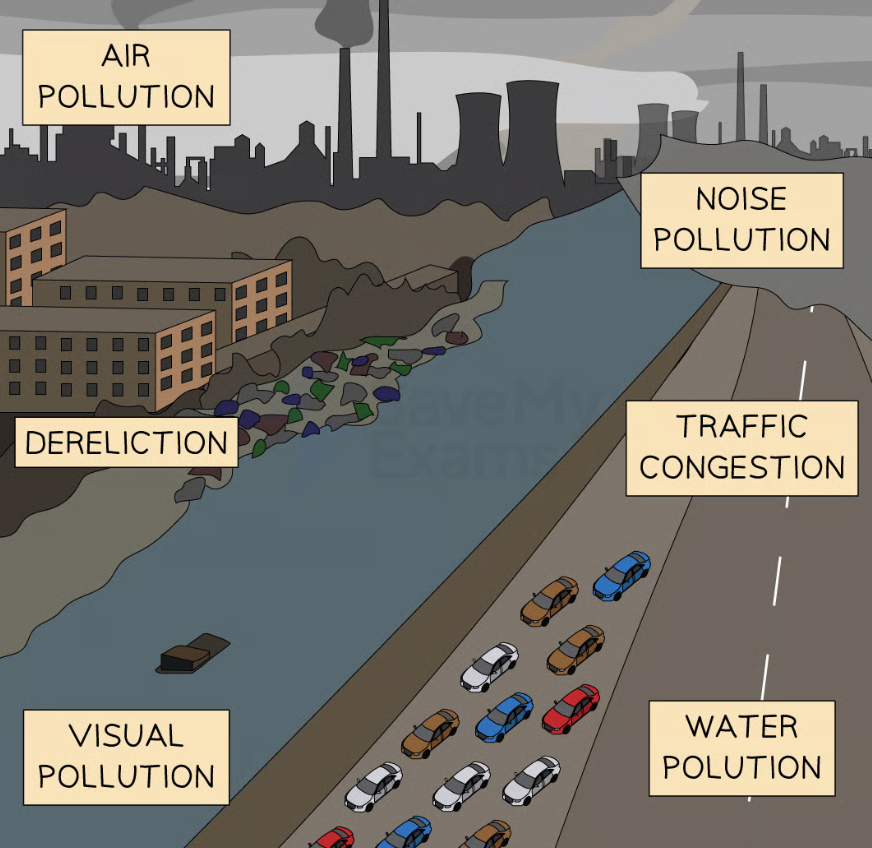
What are some business impact on the environment
Air pollution - caused by industrial processes that release harmful gases into the air or harmful substances into the ground
Noise pollutioin
Water pollution
Traffic congestion - caused by vehicles delivering materials to and from businesses, as well as by commuting employees.
Visual pollution - caused by unattractive buildings or business works that worsen inhabitants' views of their surroundings.
Dereliction
Ways businesses reduce their environmental impact
Switching to electric vehicles for staff
Encouraging employees to use public transport or walk/cycle to work
Responding to climate change - IKEA owns wind farms and solar parks that now generate more electricity than its stores use each year
How can a business improve sustainability
Implementing recycling
Using renewable energy
Avoiding the use of toxic substances
Using green transportation
Reduce water use
Using renewable in production