Chapter 10 - ENZYMES, PHOTOSYNTHESIS AND RESPIRATION
 Call Kai
 Learn
Learn Practice Test
 Spaced Repetition
 Match
Match Flashcards
 Knowt Play
1/42

There's no tags or description
Looks like no tags are added yet.
Name | Mastery | Learn | Test | Matching | Spaced | Call with Kai | Chat |
|---|
No analytics yet
Send a link to your students to track their progress
43 Terms
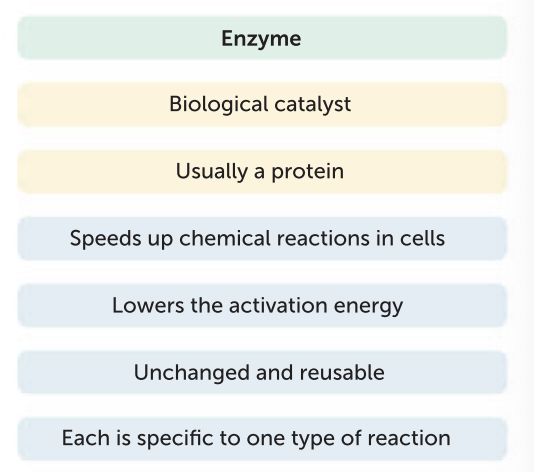
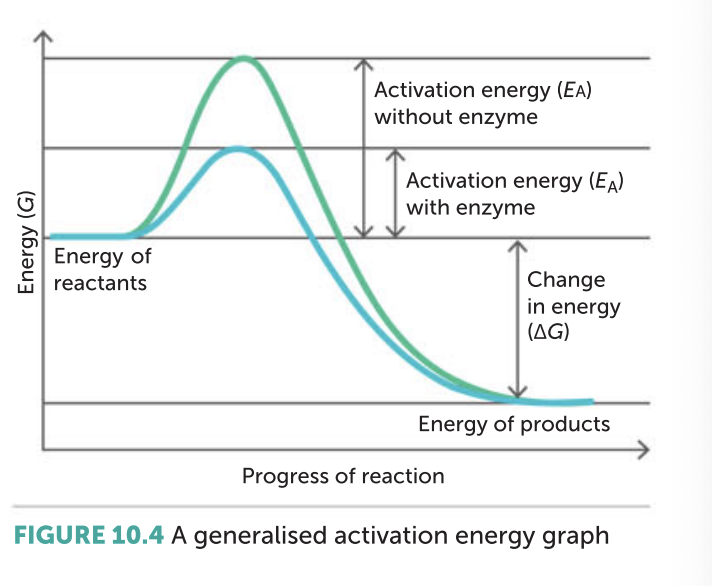
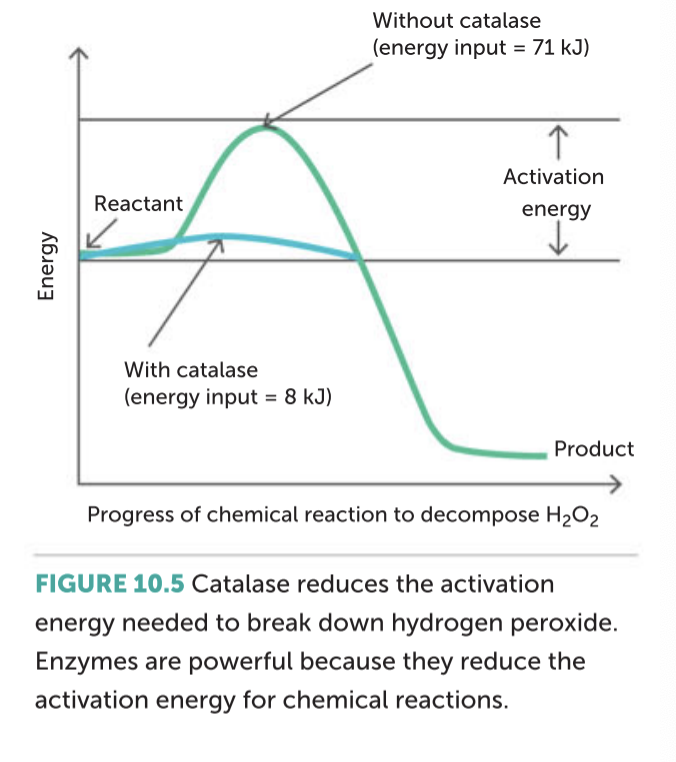
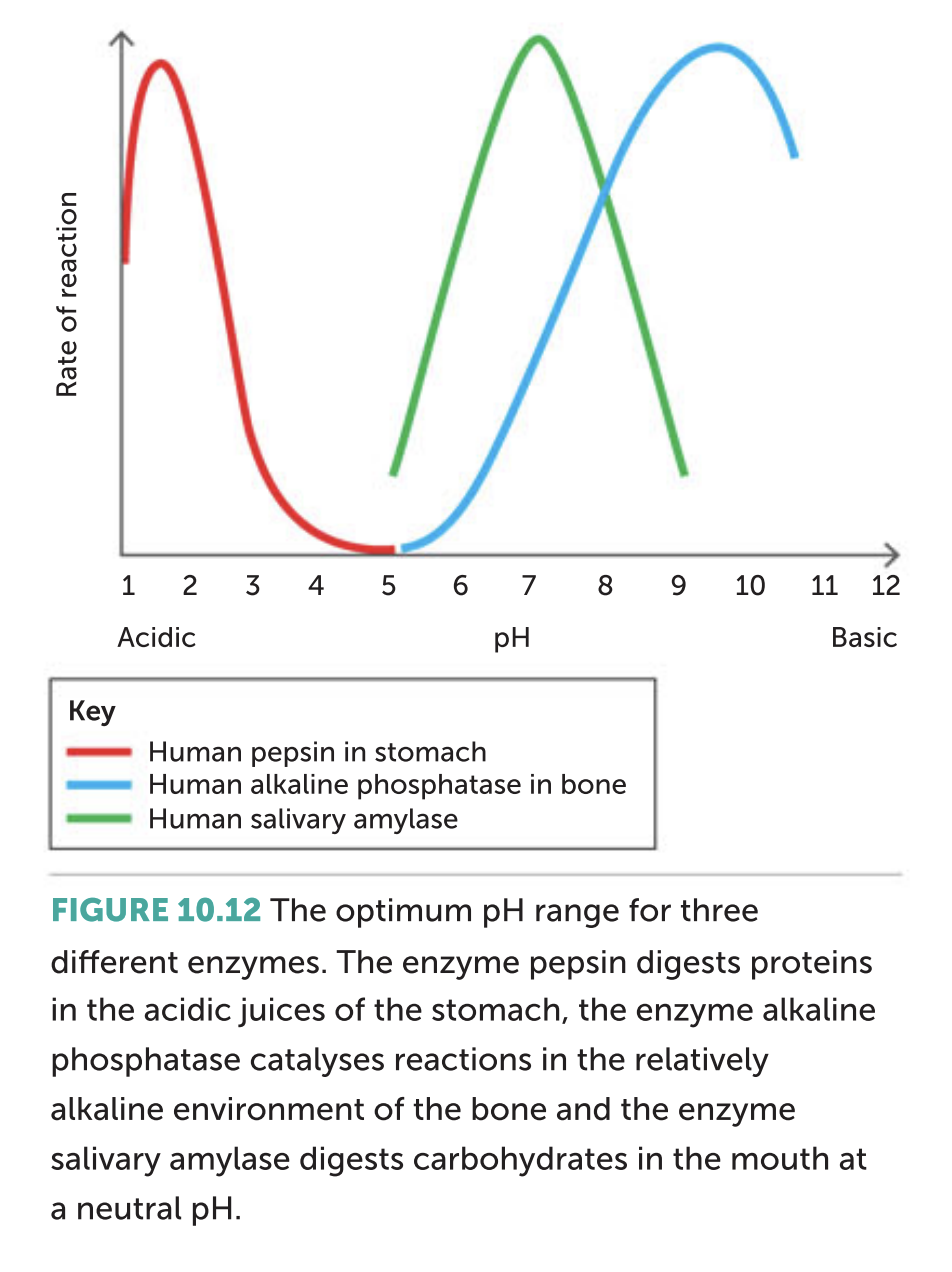
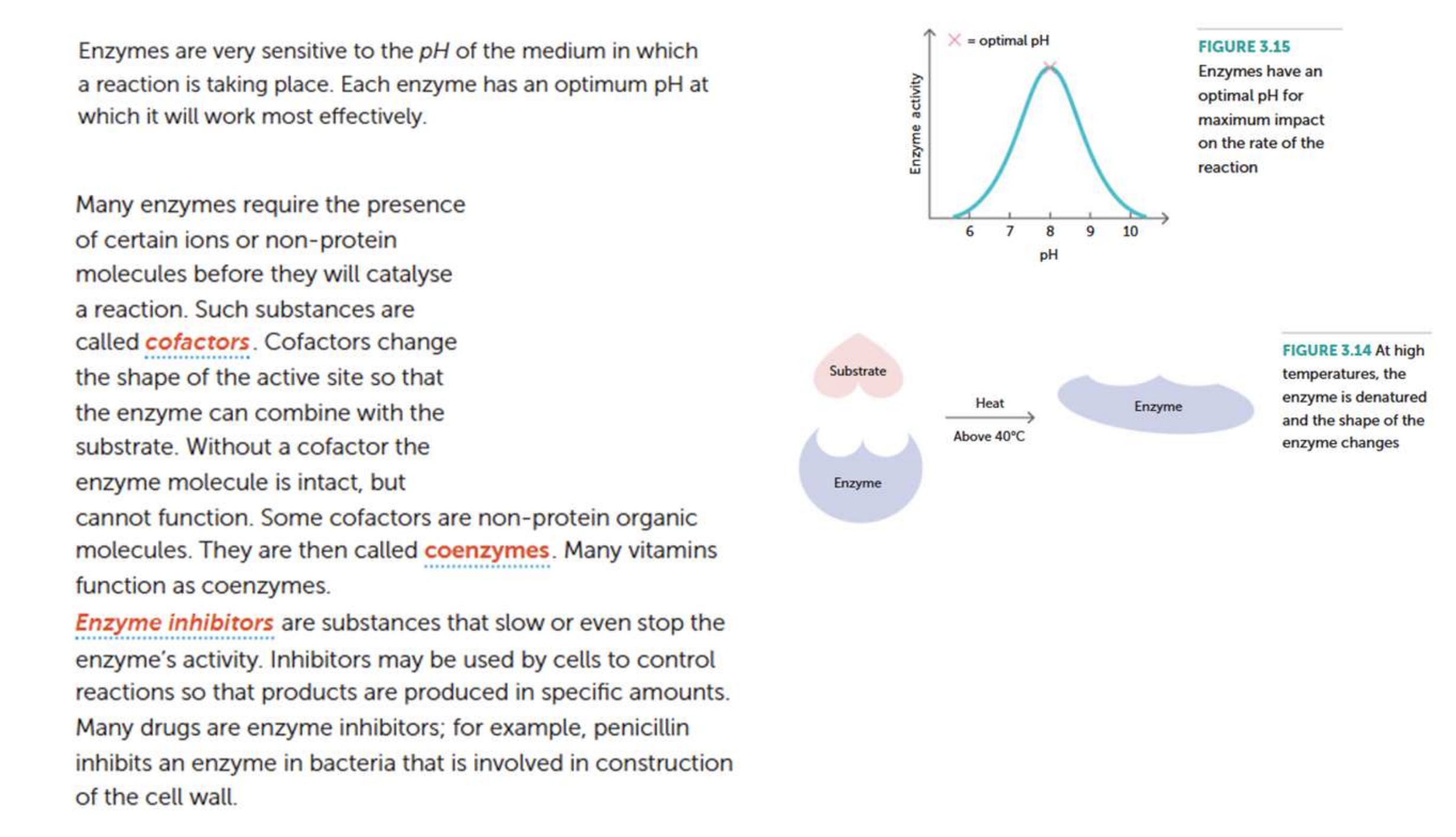
Enzyme
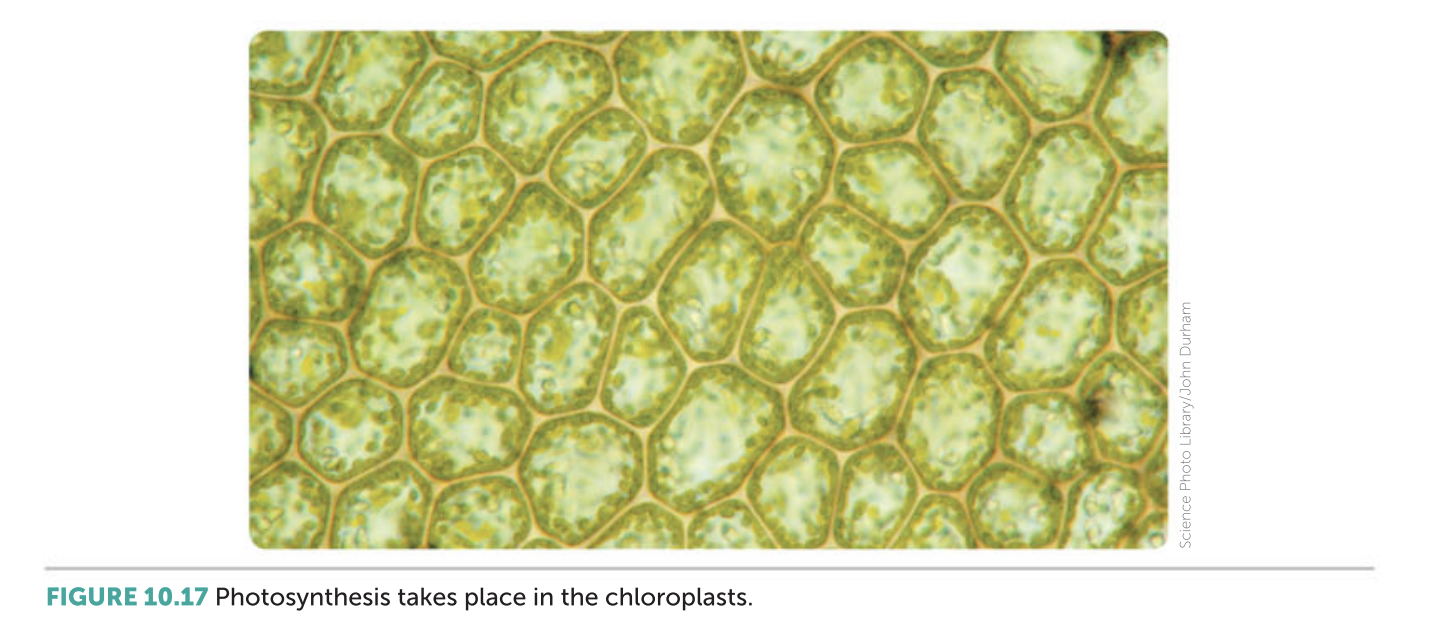
Light energy is absorbed by different pigments within the thylakoid membranes. These pigments include chlorophylls (green), carotenoids (orange) and xanthophylls (yellow). Chlorophylls absorb the wavelengths of blue and red light, and they reflect the green wavelengths, which is why plant parts having an abundance of chlorophyll molecules appear green to us. All green algae and plants have types of chlorophyll as their major photosynthetic pigments
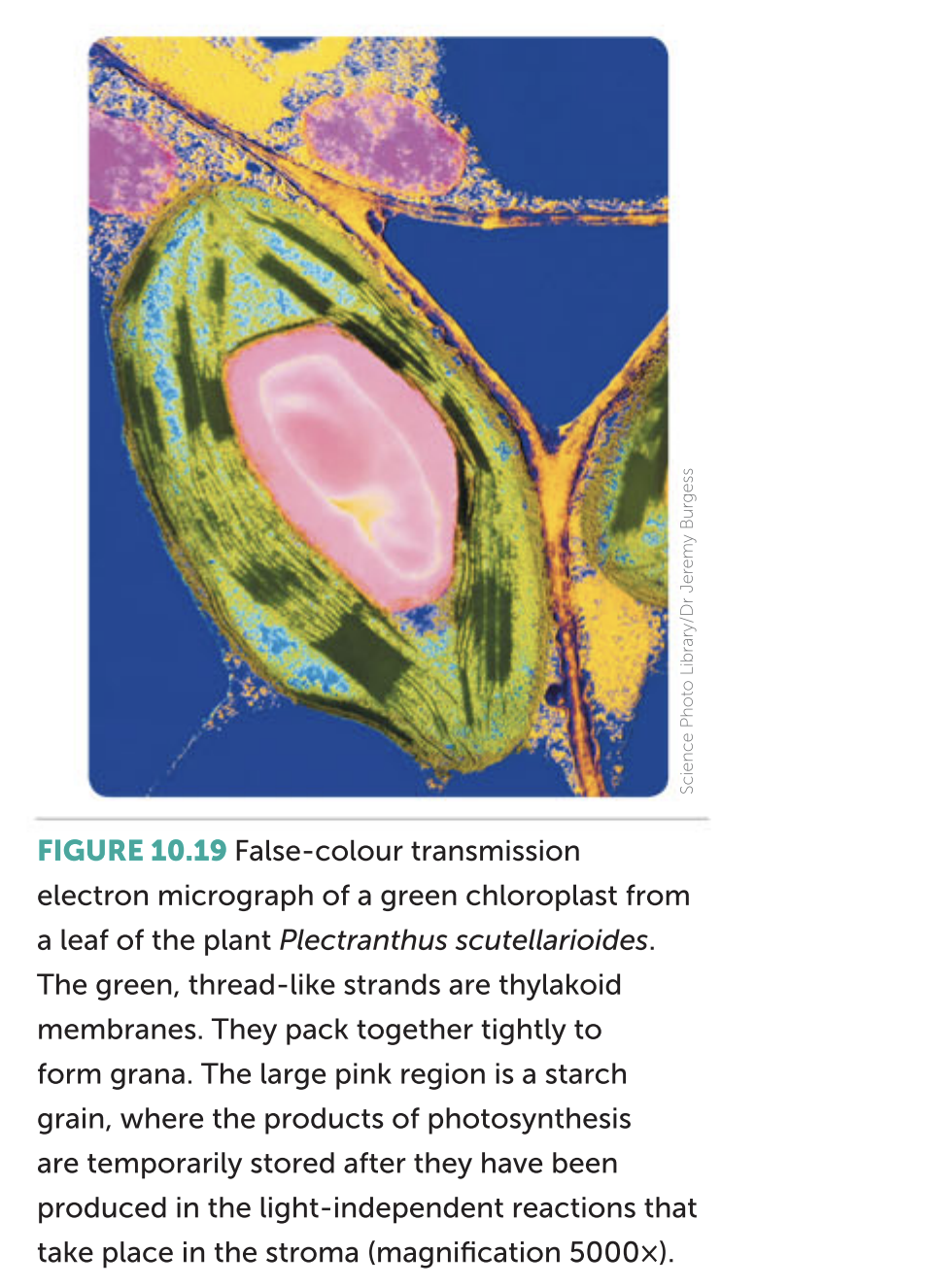
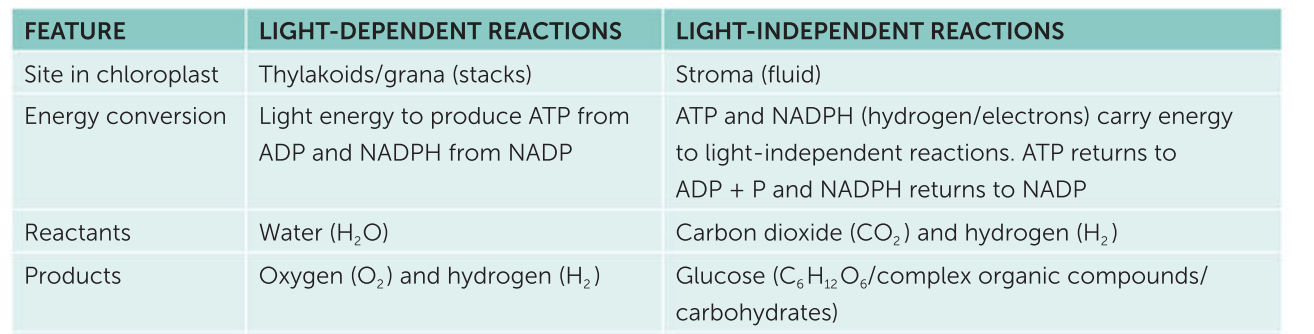
A comparison of the light-dependent reactions and light-independent reactions of photosynthesis
Factors that affect the rate of photosynthesis Light intensity
Light intensity:
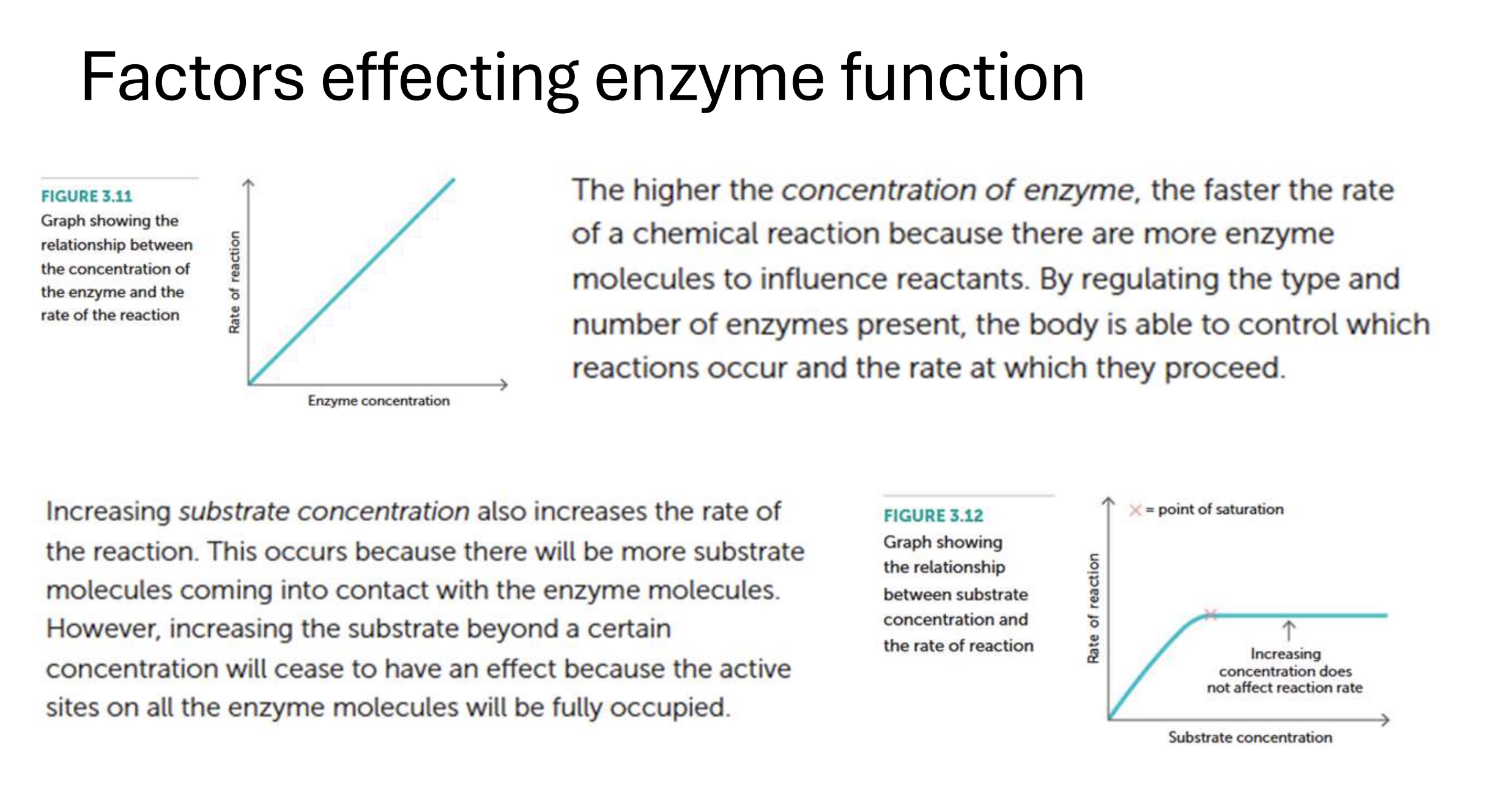
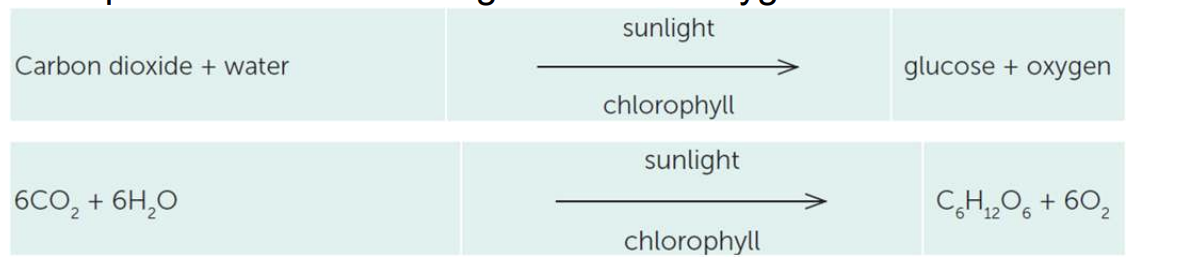
Plants use chlorophyll to absorb sunlight and convert it into chemical energy. The light energy from the Sun is what fuels the reactions that transform carbon dioxide and water into glucose and oxygen. Without light energy, photosynthesis cannot proceed. As the availability of sunlight increases and more light energy hits more of the chlorophyll molecules, the rate of photosynthesis increases. At a certain light level, the rate tends to stop increasing due to a different limiting factor, or because all of the chlorophyll is saturated with light. At this maximum point the photosynthetic rate will plateau.
Factors that affect the rate of photosynthesis Carbon dioxide concentration
Carbon dioxide availability can limit the rate of photosynthesis. Carbon dioxide and water are the reactants that are converted into glucose. Regardless of the availability of the other reactant, water, if there is limited availability of carbon dioxide then the rate of the reaction slows. As the availability of carbon dioxide increases, the rate of photosynthesis increases until the process reaches saturation, at which point the plant has reached its maximum rate of photosynthesis. With excess carbon dioxide, the rate plateaus because the reaction cannot produce glucose molecules at a faster rate.
Factors that affect the rate of photosynthesis Temperature
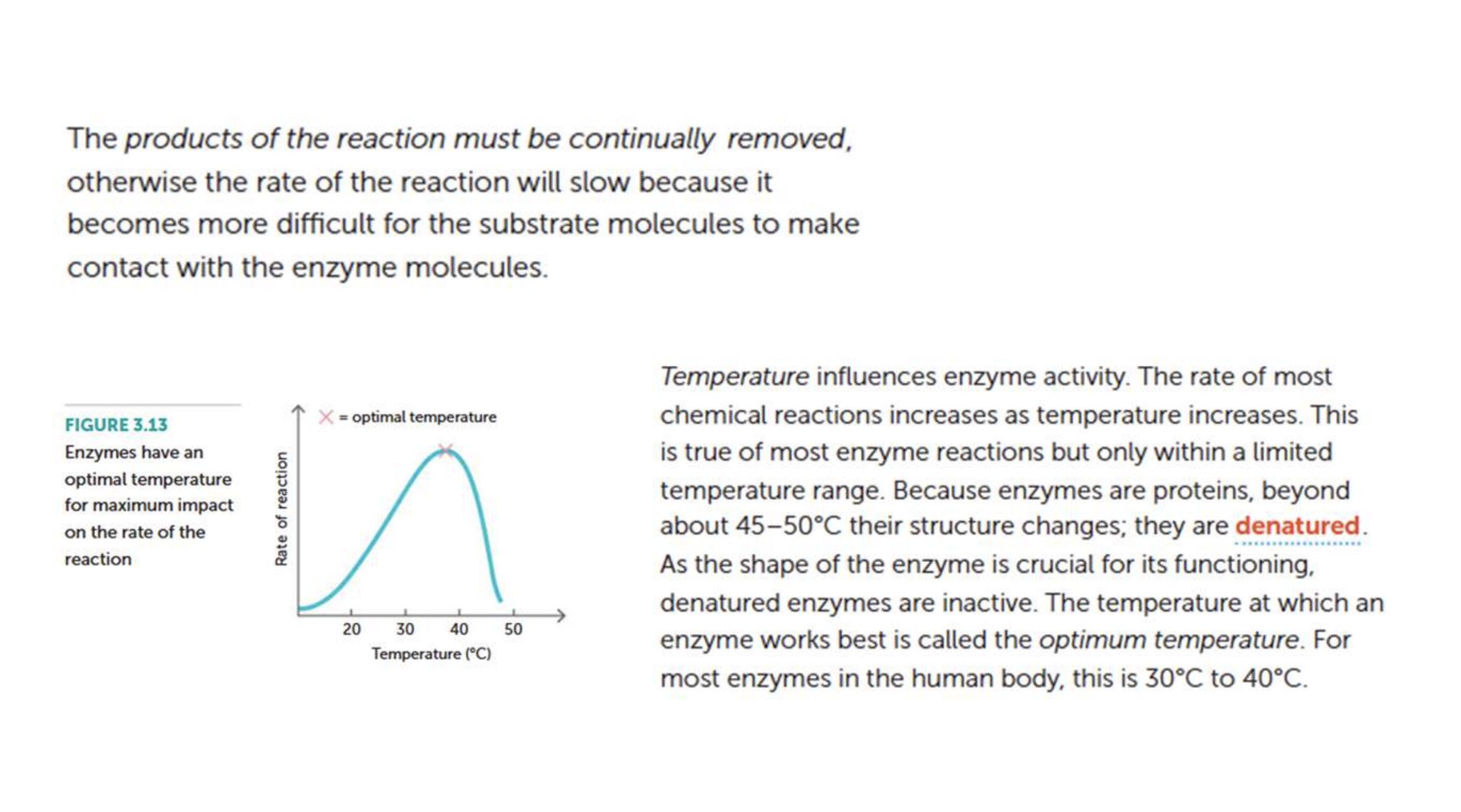
The optimal temperature is the temperature that causes enzyme activity to be at a maximum, which in turn leads to a maximum rate of photosynthesis. This can be understood by considering the collision theory. Higher temperatures lead to greater kinetic energy and more collisions between substrate particles and enzyme particles. At very low temperatures, particles move much less, and fewer collisions occur, so that the rate of photosynthesis decreases.
When temperature extends beyond optimal, the enzyme becomes unstable as hydrogen bonds are disrupted, decreasing enzyme activity rate. Eventually, when the temperature has reached a certain point, the enzyme denatures by changing shape at the active site. This results in a complete loss of activity. A loss of enzyme activity will result in a sharp decline in the rate of photosynthesis
aerobic cellular respiration

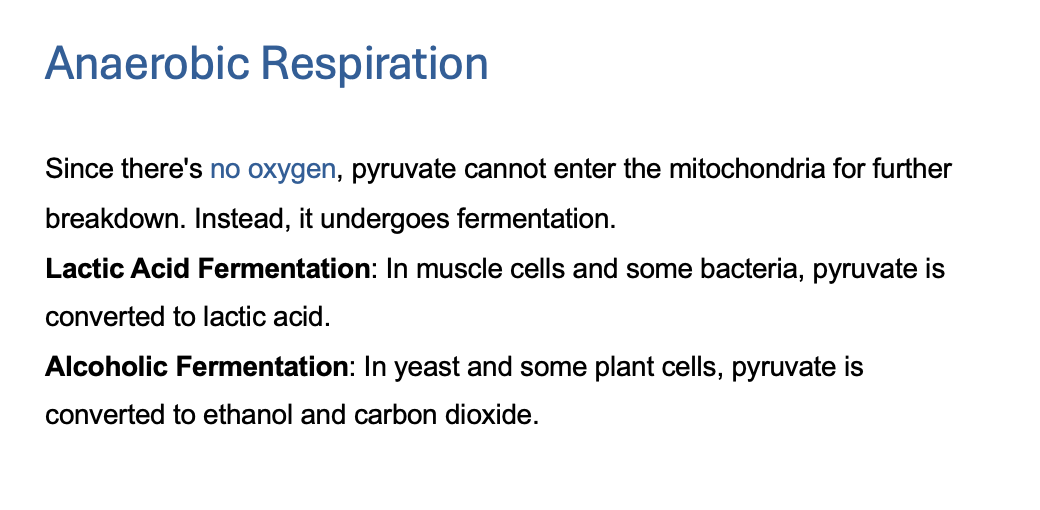
alcohol fermentation
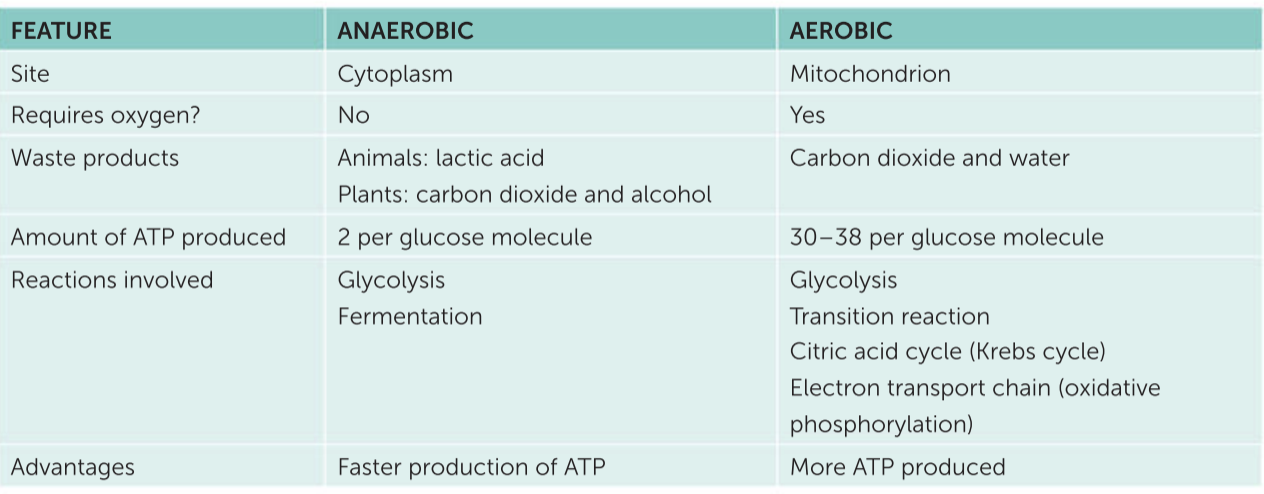
Glucose → ethanol + carbon dioxide + 2 ATP
Lactic acid fermentation (in animals):
Glucose → lactic acid + 2 ATP
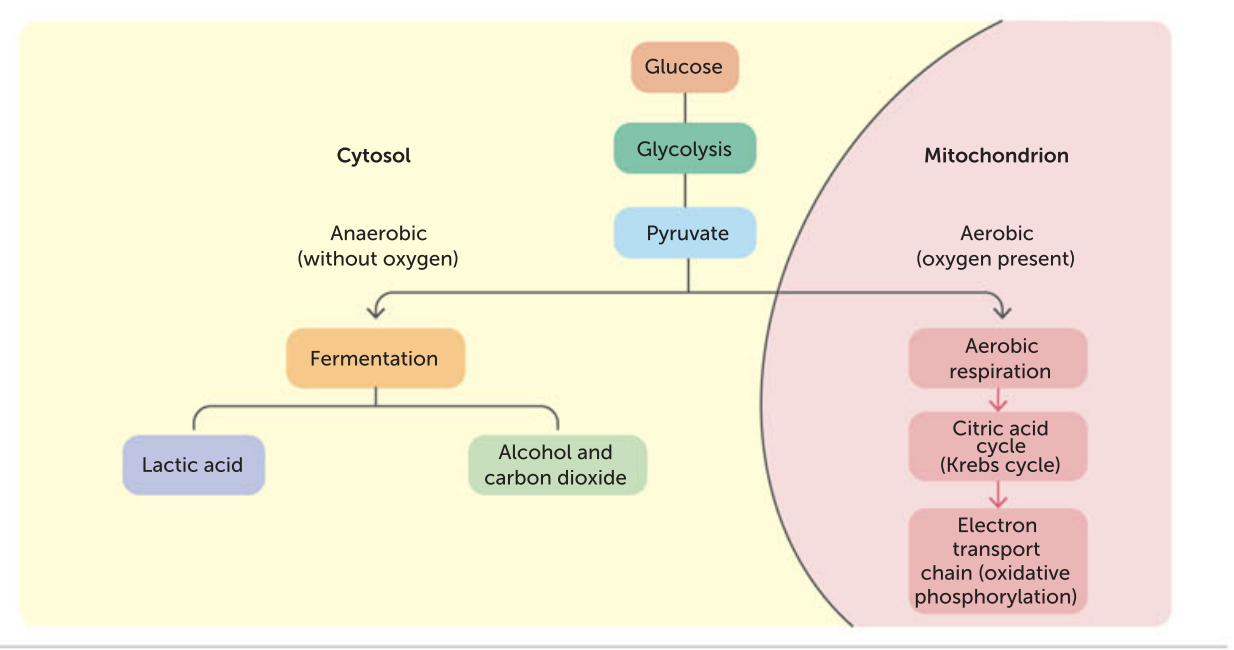
A comparison of aerobic and anaerobic respiration
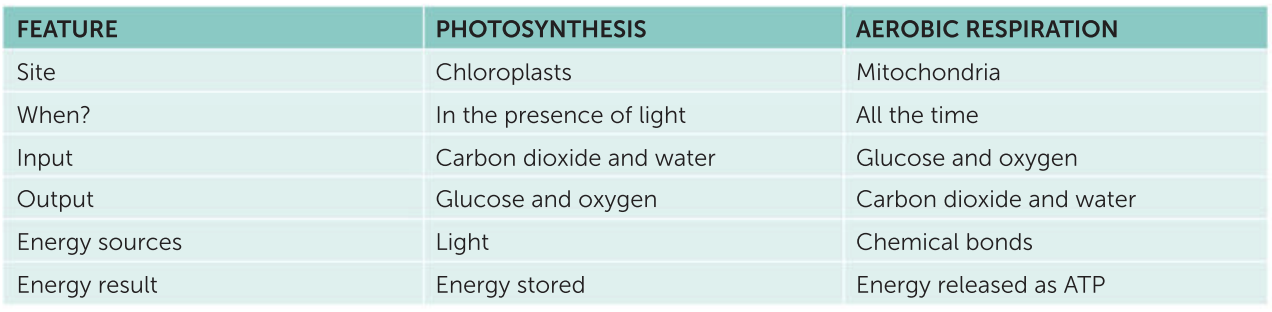
A comparison of aerobic respiration and photosynthesis
Energy
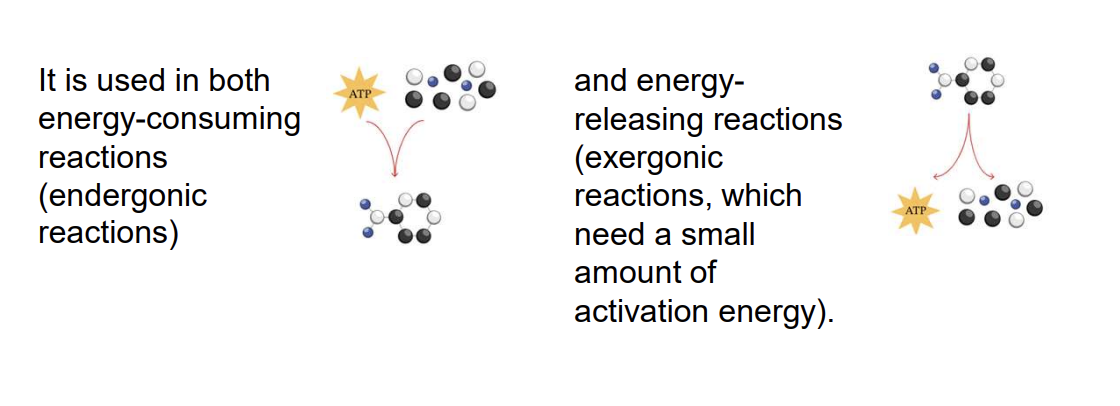
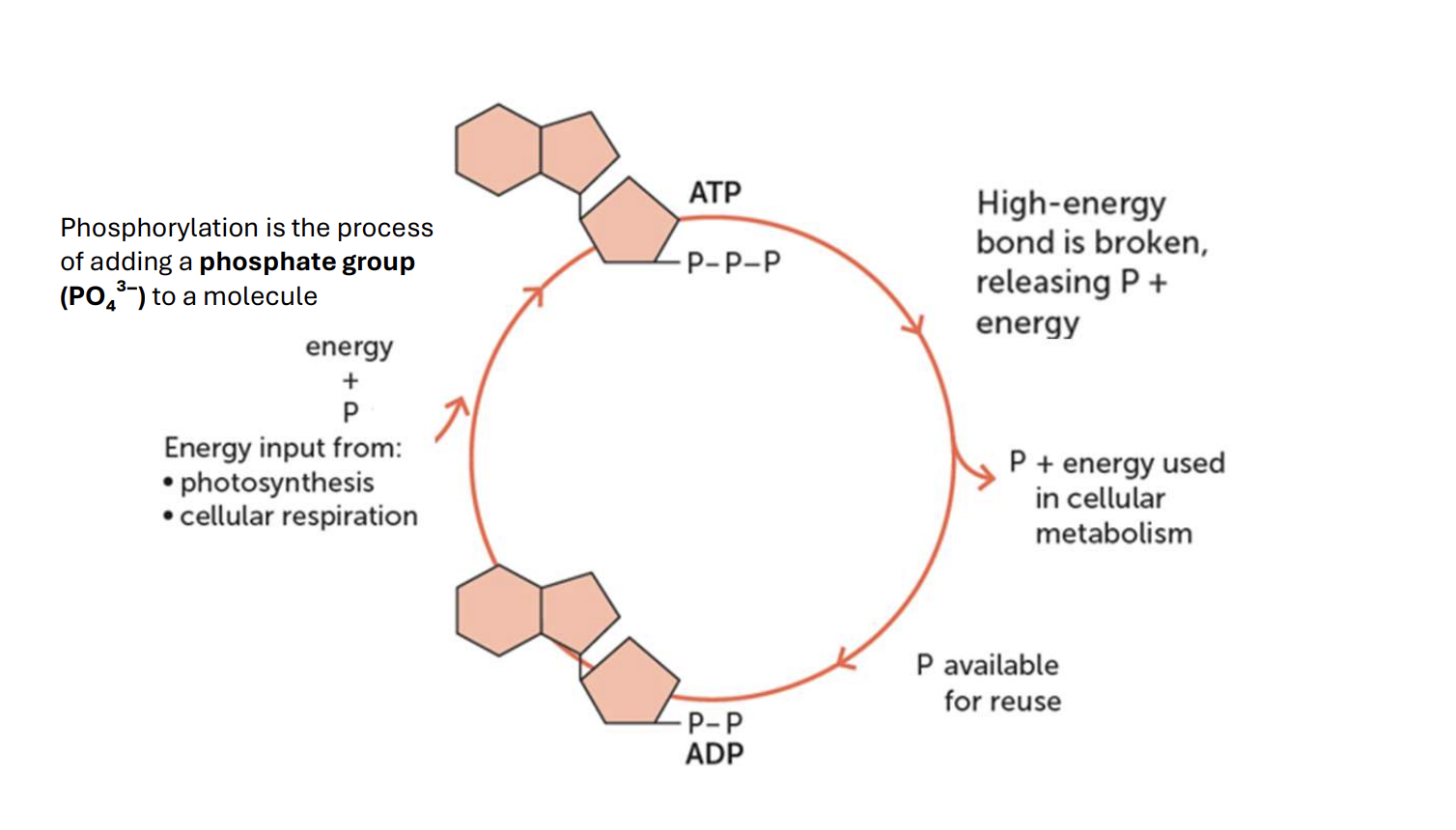
Living cells require energy to do their work. ATP (adenosine triphosphate) is the main energy-carrying molecule used in metabolism.
Endergonic and Exergonic
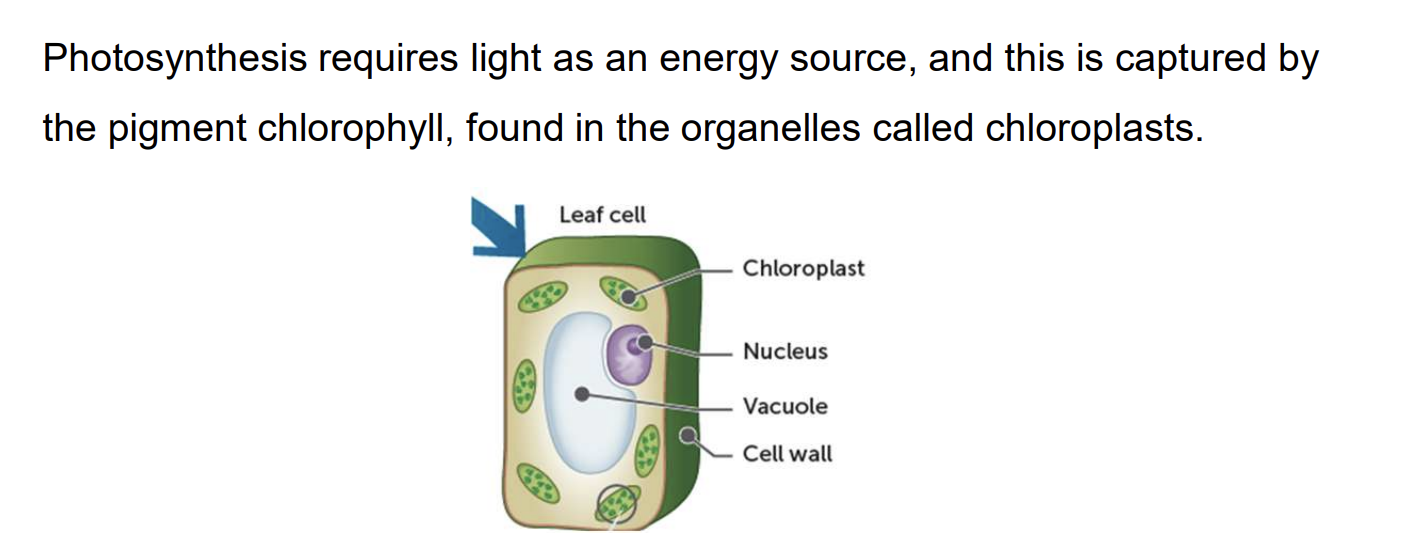
Producers convert light energy into chemical energy by building organic molecules and storing energy in their bonds. This process is called photosynthesis.
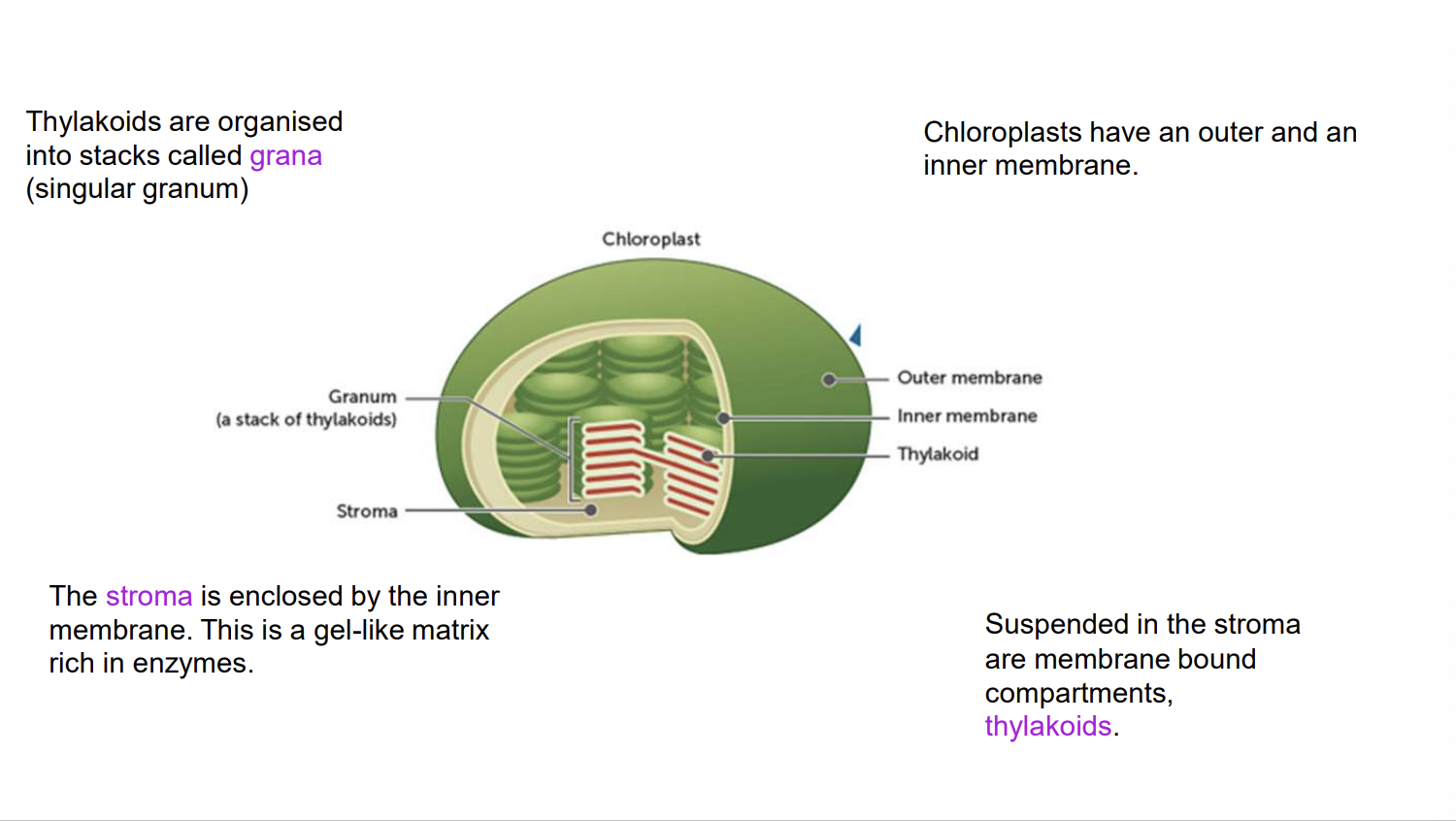
Chloroplasts
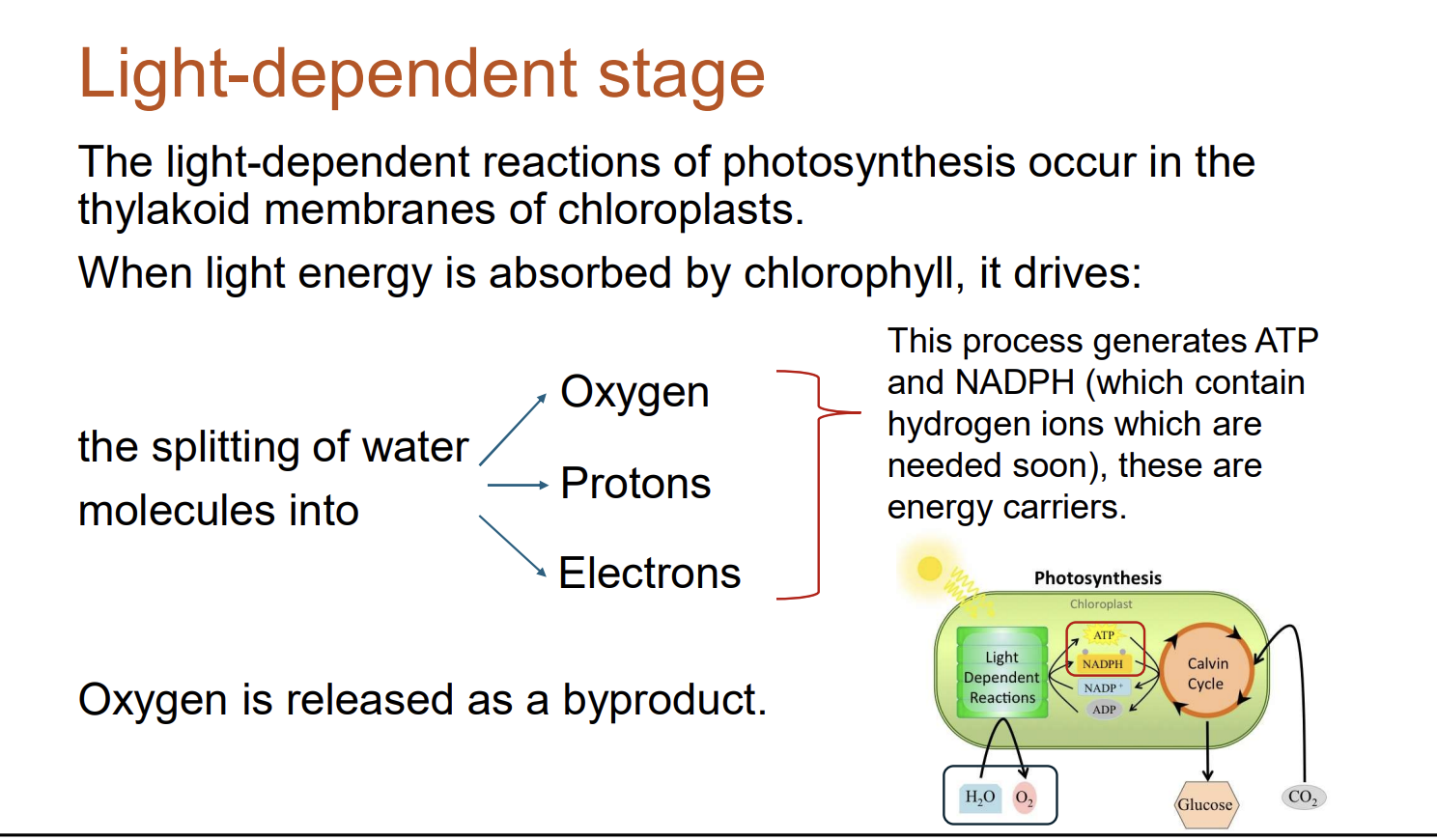
Light-dependent stage
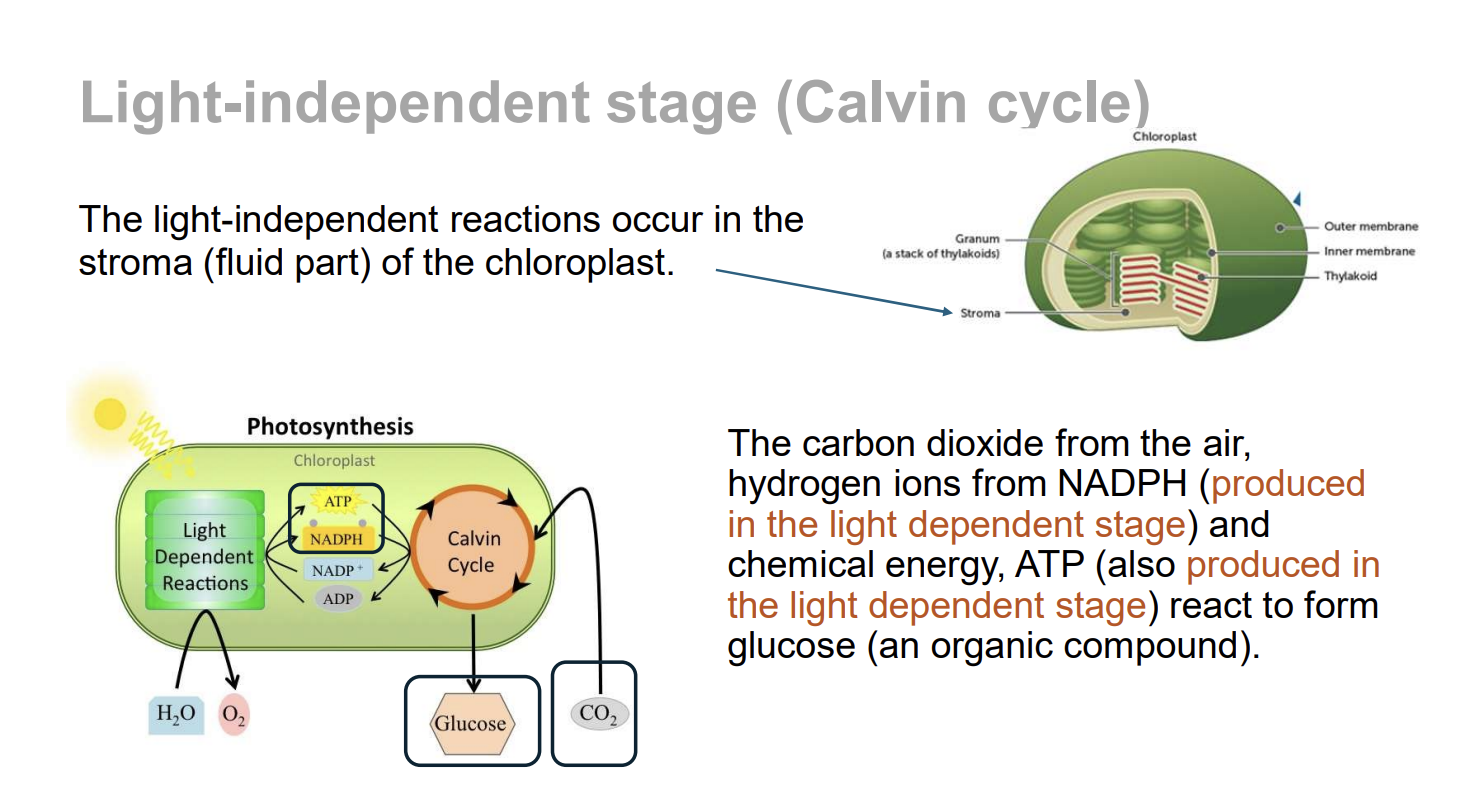
Light-independent stage (Calvin cycle)
Factors that affect the rate of photosynthesis
The rate of photosynthesis is affected by abiotic factors such as light intensity, carbon dioxide availability and temperature. The term ‘limiting factor’ is used to describe a factor that restricts the rate of a reaction, regardless of the level of other factors; these factors are all limiting factors for photosynthesis.
RESPIRATION
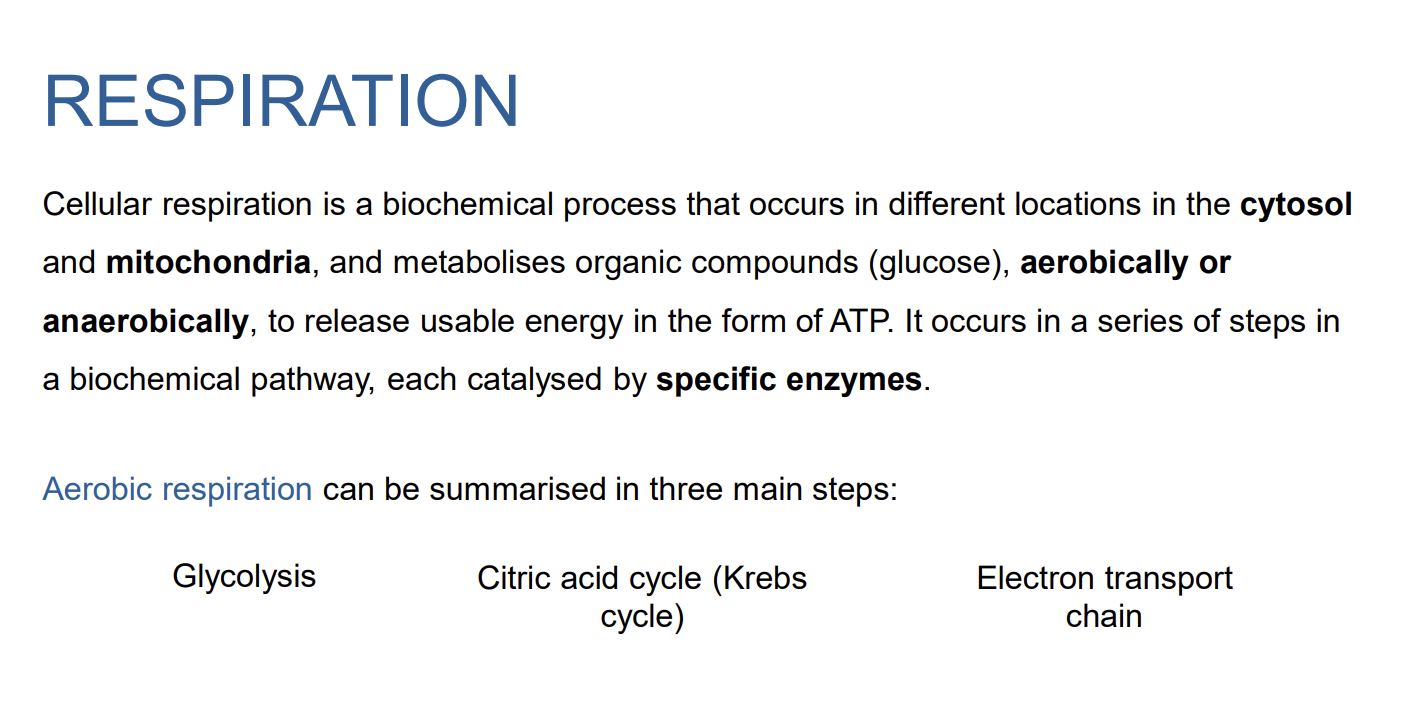
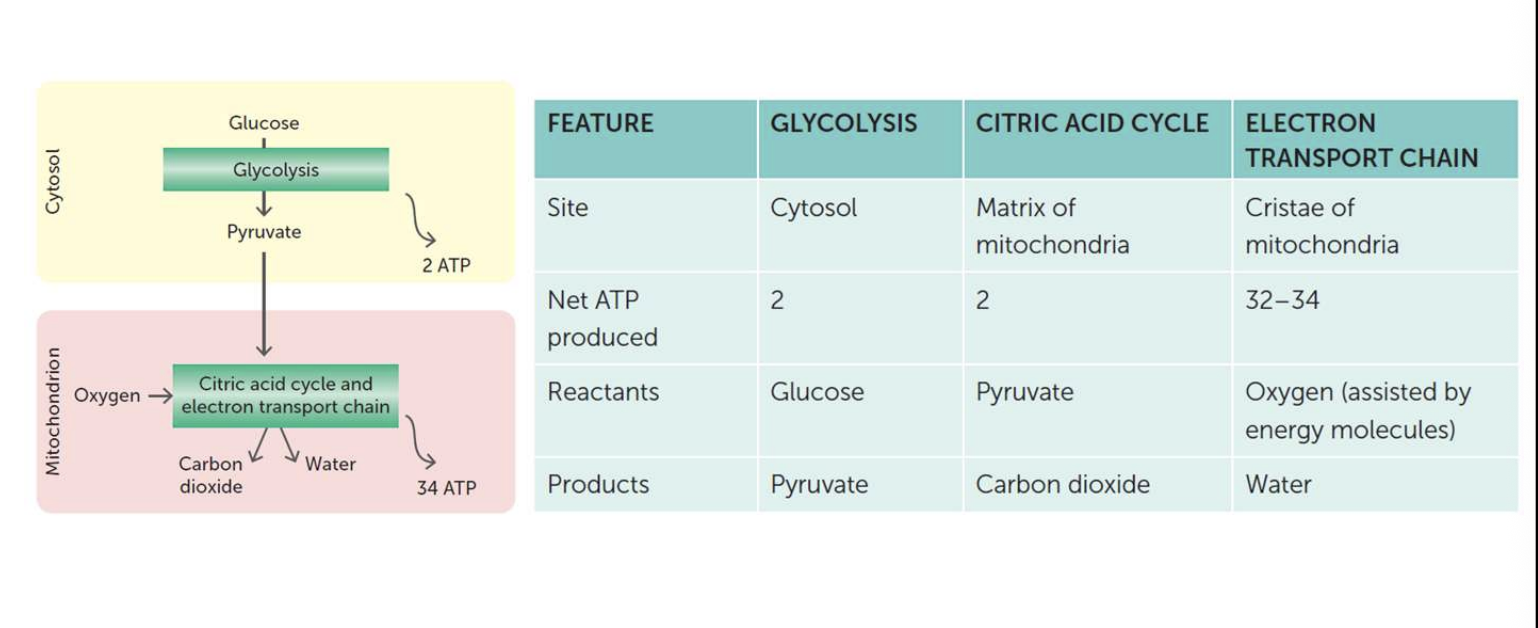
Glycolysis
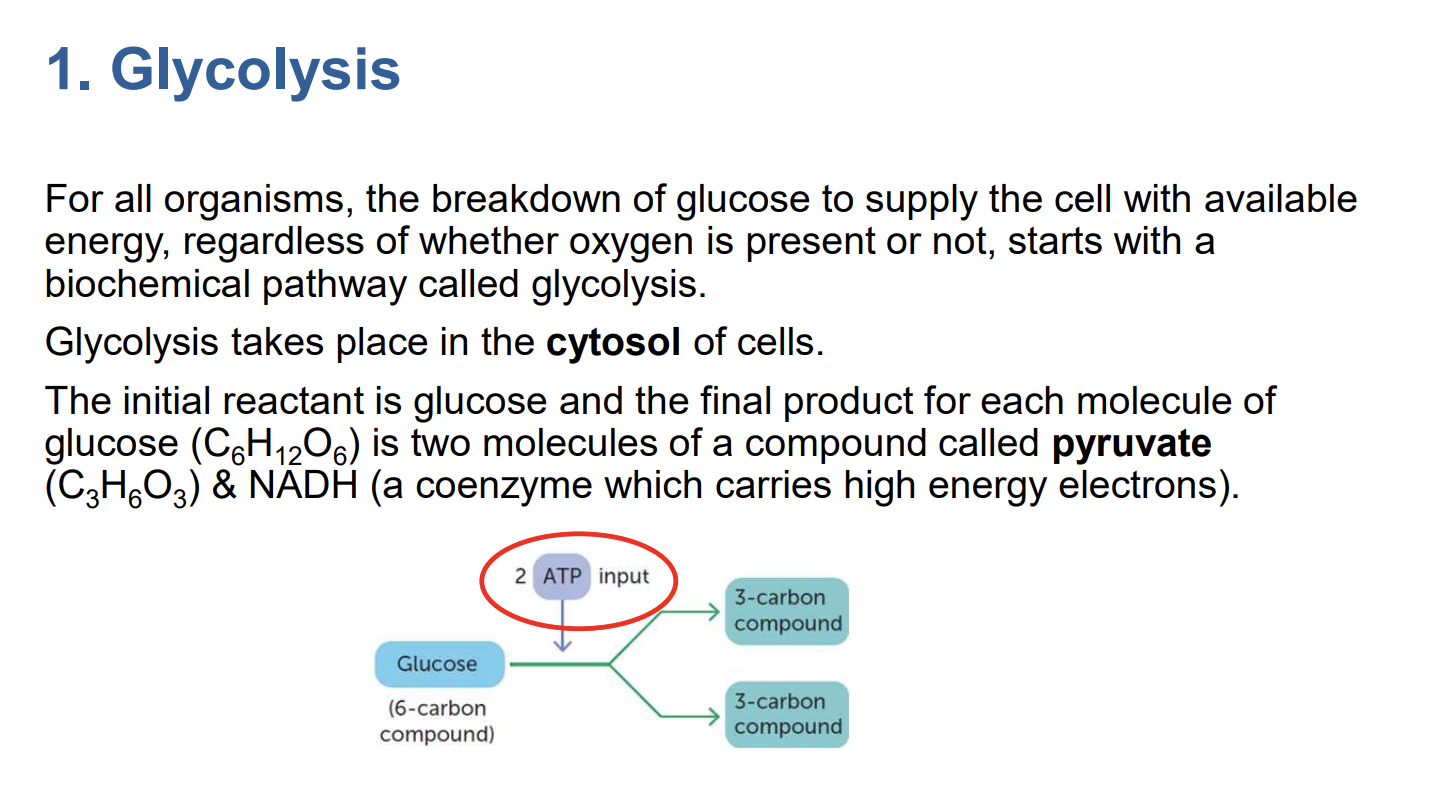
Aerobic Respiration
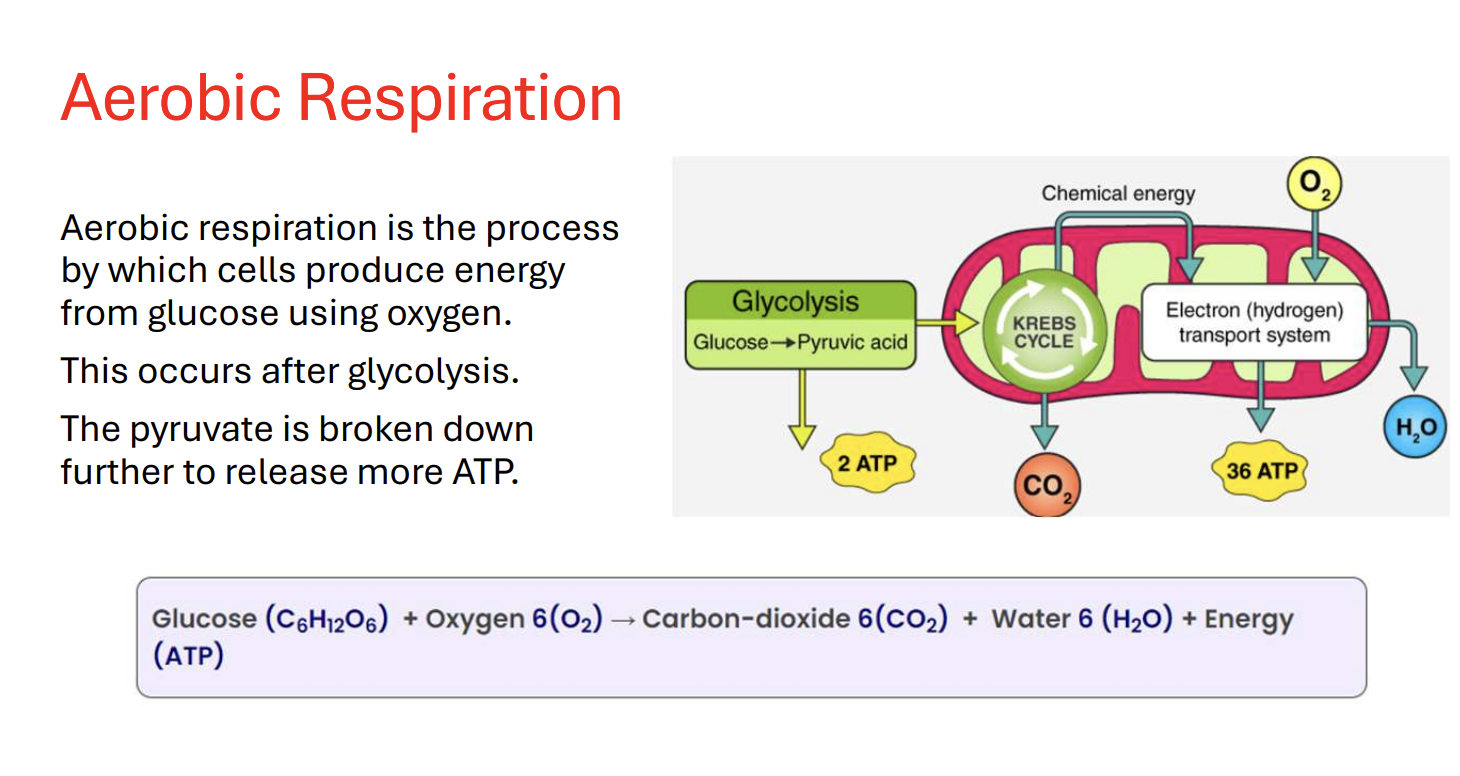
Citric Acid Cycle
For each pyruvate molecule, the citric acid cycle produces 3 NADH and 1 FADH2 and releases 2 CO2.
For each glucose molecule, the total yield from the citric acid cycle is 2 ATP, 6 NADH, 2 FADH2 and 4 CO2.
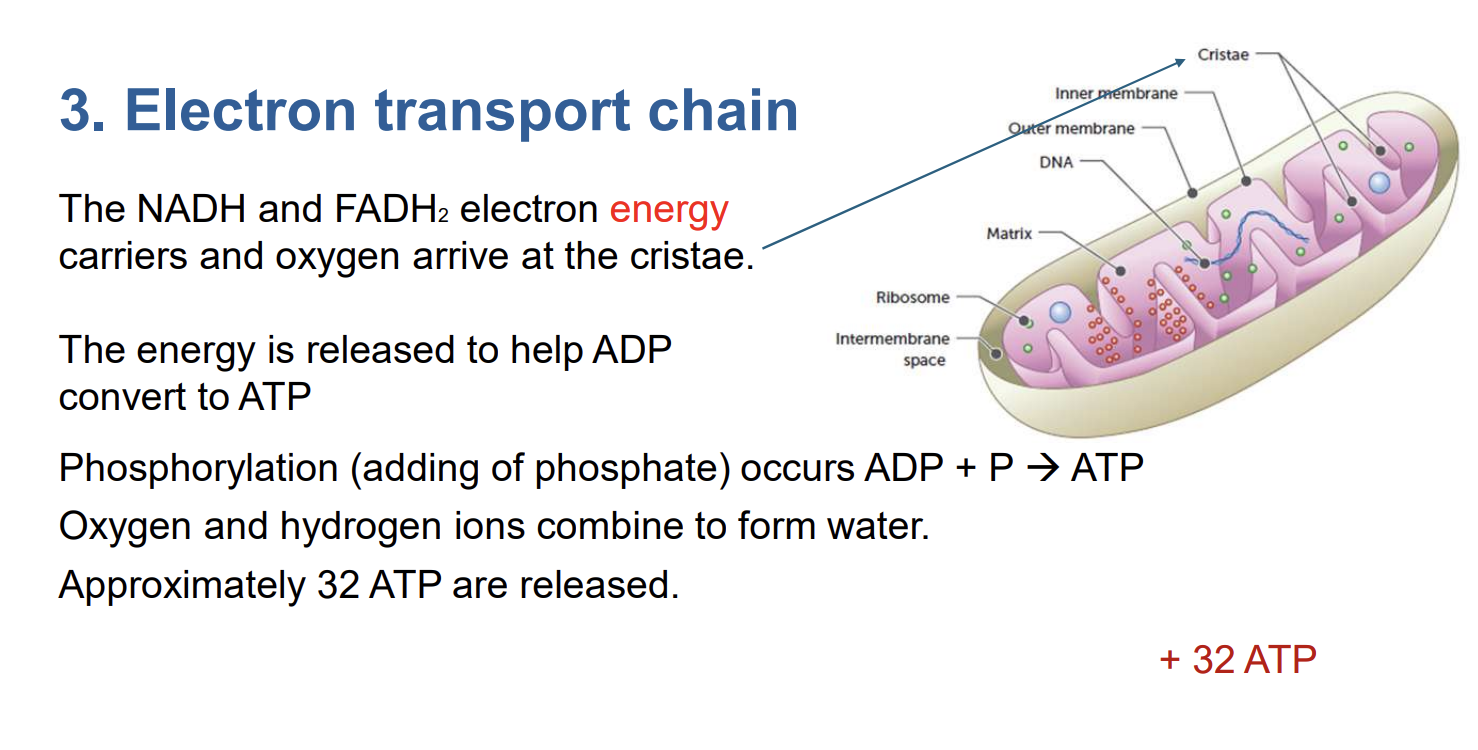
NADH and FADH2 are high-energy electron carriers where it donates electrons to help drive the production of ATP.
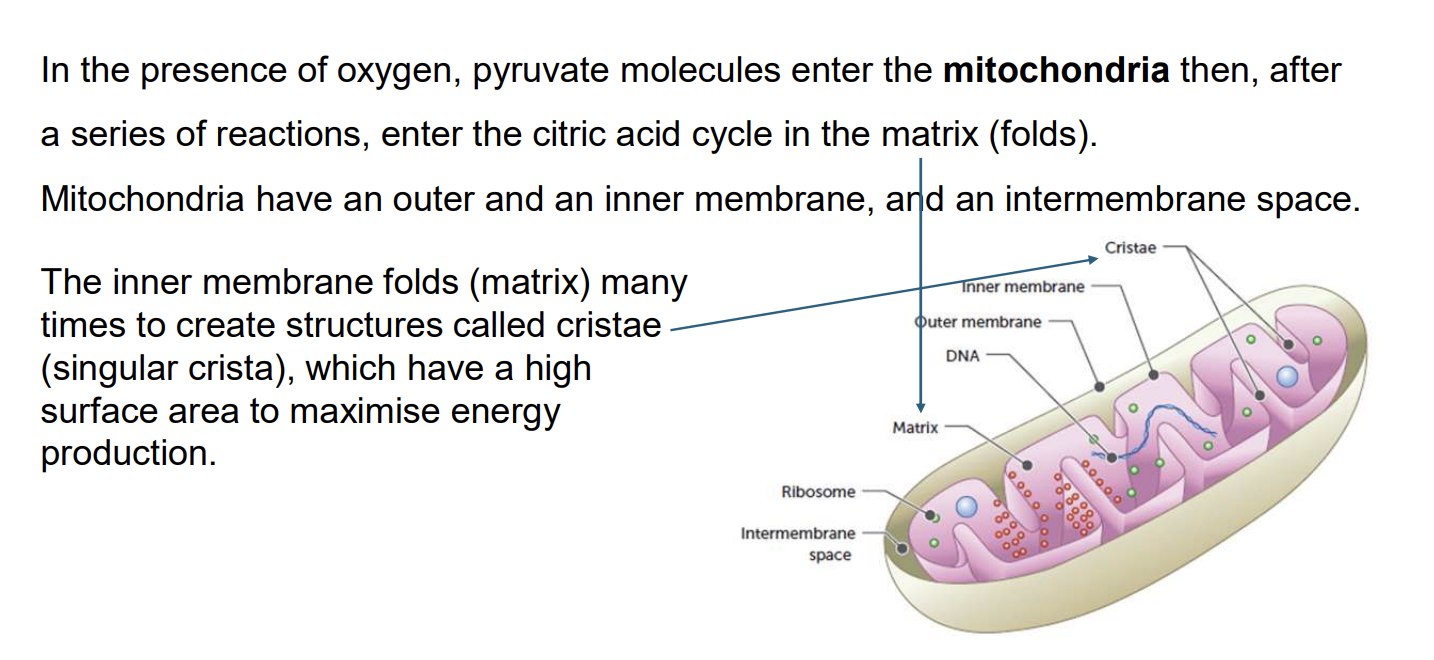
Electron transport chain
Factors that affect the rate of respiration
As temperature increases, respiration rate increases, until (as temperature gets too high) it begins to drop again. Above a certain temperature the enzymes involved denature. As the level of glucose available to the cell increases, respiration rate increases, until a maximum level is reached. Similarly, as oxygen levels increase, respiration rate increases, until a maximum level is reached.
Anaerobic respiration
three factors which affect the rate of aerobic respiration:
Temperature
Glucose availability
Oxygen concentration.
what is electron transport chain
The electron transport chain is a series of protein complexes and small molecules embedded in a cell membrane that pass electrons from one molecule to another to release energy and make cellular energy
