Intro to Psychology Areas and Applications - Chapter 16: Treatment of psychological disorders
 Call Kai
 Learn
Learn Practice Test
 Spaced Repetition
 Match
Match Flashcards
 Knowt Play
1/143

There's no tags or description
Looks like no tags are added yet.
Name | Mastery | Learn | Test | Matching | Spaced | Call with Kai | Chat |
|---|
No analytics yet
Send a link to your students to track their progress
144 Terms
Insight therapies (talk therapy)
A group of therapies where the goal is to discover and solve unresolved unconscious conflicts or restructure self-concept.
Insight therapies (talk therapy) [con’t]
Involves verbal interactions intended to enhance clients’ self-knowledge and thus promote healthy changes in personality and behaviour
Behaviour therapies
Therapies based on the principles of learning, aimed at changing overt maladaptive behaviours without any focus on insight into unconscious factors
e.g. Classical and operant conditioning
Behaviour therapies (con’t)
It’s assumed behaviour is a product of learning and said behaviour can be unlearned
For what reasons do people seek therapy?
They seek therapy for maladaptive issues
e.g. Depression and anxiety disorders
How many people seek therapy?
While statistics show that about one in five Canadians suffers from a psychological disorder, only 30 percent of those seek professional treatment; females are more likely to seek therapy
How many people need therapy?
17.8% of Canadians over 12 years of age reported experiencing a need for mental health services in the previous year
Why might people not seek therapy?
Lack of funds and stigma surrounding therapy
How many people have their therapy needs unmet?
2.3 million Canadians who perceived a mental health need reported that those needs were either unmet or only partially met
Psychotherapy
Professional treatment by someone with special training
Clinical psychologist
A professional with a Ph.D. or Psy.D. degree (5−7 years of education beyond a bachelor's) who performs psychological testing, diagnosis, and treatment of disorders
Counseling psychologist
A professional with a Ph.D., Psy.D., or Ed.D. who focuses on work, career, treatment, and adjustment problems similar to a clinical psychologist.
How many registered psychologists are in Canada?
18,794 registered psychologists in Canada, or 50.8 per 100 000 population
Psychiatrist
A medical doctor (M.D.) with 8 years of post-bachelor education who specializes in the diagnosis and treatment of disorders, primarily using biomedical therapies.
Clinical social worker
A professional with an M.S.W. or D.S.W. degree (2−5 years of post-bachelor education) who provides insight and behaviour therapy, often helping inpatients return to the community.
Psychiatric nurse
A professional with an R.N.,M.A., or Ph.D. degree (0−5 years of post-bachelor education) who provides inpatient care and therapy in hospitals
Counsellors
A professional who specializes in particular types of problems; typically has a master’s degree
e.g. Vocational counselling, marital counselling, rehabilitation counselling, and drug counselling
Psychoanalysis (Psychodynamic Therapy)
An insight therapy developed by Sigmund Freud that emphasizes the recovery of unconscious conflicts, motives, and defences through techniques like free association and transference.
Biomedical therapies
Physiological interventions involving biological functioning to treat psychological disorders.
e.g. Drug therapy or electroconvulsive therapy
Biomedical therapies (con’t)
They’re intended to reduce symptoms associated with psychological disorders
Interpretation
The therapist's attempts to explain the inner significance of the client's thoughts, feelings, memories, and behaviours.
Resistance
Largely unconscious defensive manoeuvres intended to hinder the progress of therapy.
Transference
The phenomenon where clients unconsciously start relating to their therapist in ways that mimic critical relationships in their lives.
Genuineness
A condition in client-centred therapy where the therapist is honest and spontaneous with the client, rather than being defensive or role-playing.
Unconditional positive regard
The nonjudgmental acceptance of the client as a person, provided by the therapist in client-centred therapy.
Empathy
The therapist's ability to understand the world from the client's point of view.
Systematic desensitization
A behaviour therapy developed by Joseph Wolpe used to reduce phobic responses by weakening the association between the conditioned stimulus and the conditioned response of fear.
The steps of systematic desensitization
Anxiety hierarchy
Deep muscle relaxation training
Working through the established hierarchy of stimuli while remaining relaxed
Anxiety hierarchy
A list of feared situations of increasing intensity of Systematic desensitization (ranked from 0 to 100) used in systematic desensitization.
Exposure therapies
When clients are gradually confronted in controlled settings with situations they fear so they learn that these situations are really harmless
Aversion therapy
A behaviour therapy in which an aversive stimulus is paired with a stimulus that elicits an undesirable response,
e.g. Alcoholics have had an emetic drug (one that causes nausea and vomiting) paired with their favourite drinks during therapy sessions
Social skills training (SST)
A behaviour therapy designed to improve interpersonal skills that emphasizes modelling, behavioural rehearsal, and shaping.
Behavioural rehearsal
When the client tries to practise social techniques in structured role-playing exercises
Shaping
When clients are gradually asked to handle more complicated and delicate social situations
e.g. A nonassertive client may begin by working on making requests of friends before being asked to tackle standing up to the boss at work.
Cognitive-behavioural treatments
Uses varied combinations of verbal interventions and behaviour modification techniques to help clients change maladaptive patterns of thinking
Cognitive therapy
A treatment developed by Aaron Beck that uses specific strategies to correct habitual thinking errors and change negative thoughts that underlie various types of disorders.
Cognitive therapy (con’t)
Uses a variety of behavioural techniques
e.g. Modelling, systematic monitoring of one’s behaviour, and behavioural rehearsal
Cognitive therapy process
Clients are taught to detect their automatic negative thoughts and subject these automatic thoughts to reality testing so the therapist can help them see how unrealistically negative the thoughts are.
Cognitive bias modification
Varied procedures that attempt to directly change automatic biases in thinking that are known to contribute to various disorders
e.g. People with anxiety disorders tend to selectively attend to threatening information and to interpret information in overly threatening ways
Self-instructional training
Clients are taught to develop and use verbal statements that help them cope with difficult contexts
Rational-emotive therapy
A form of cognitive therapy developed by Albert Ellis that aims to change the way clients think.
Mindfulness-based cognitive-behavioural therapy (MBCT)
An approach developed by Zindel Segal that emphasizes:
Increased awareness
The present moment
Self-compassion
Accepting things as they are
Mindfulness-based cognitive-behavioural therapy (MBCT) [con’t]
Clients are taught to focus on troubling thoughts or emotions and to accept them without judging or elaborating on them
Effectiveness of behaviour therapies
There’s ample evidence attesting to the effectiveness of behaviour therapy
Psychopharmacotherapy
The treatment of mental disorders with medication.
Antianxiety drugs
Psychopharmaceutical drugs that relieve tension, apprehension, and nervousness.
e.g. Valium, Xanax, Buspar, and other drugs in the benzodiazepine family
Side effects of antianxiety drugs
Drowsiness, depression, nausea, withdrawl, and confusion.
Tranquilizers
Drugs exert their effects almost immediately and can be fairly effective in alleviating feelings of anxiety, but their impact is relatively short-lived
Antipsychotic drugs
Drugs used to gradually reduce psychotic symptoms, including hyperactivity, mental confusion, hallucinations, and delusions
e.g. Thorazine, Mellaril, and Haldol.
Antipsychotic drugs (con’t)
Appear to decrease activity at dopamine synapses, although the exact relationship between their neurochemical effects and their clinical effects remains obscure
Antipsychotic drugs side effects
Drowsiness, constipation,cottonmouth, tremors, muscular rigidity, and impaired coordination
Effectiveness of antipsychotic drugs
70% of patients respond positively to treatment
Antidepressant drugs
Medications that gradually elevate mood and help bring people out of depression by increase activity at serotonin synapses
e.g. Tricyclics, MAO Inhibitors, and SSRIs.
Tardive dyskinesia
An incurable, neurological disorder marked by involuntary writhing and tic-like movements of the mouth, tongue, face, hands, or feet, which can be a side effect of antipsychotic drugs.
Second-generation antipsychotic drugs
Similar to the first-generation antipsychotics in therapeutic effectiveness, but they offer several advantages
e.g. Helping treatment-resistant patients who do not respond to traditional antipsychotics
Drawbacks of second-generation antipsychotic drugs
Increase patients’ vulnerability to diabetes and cardiovascular problems
Selective serotonin reuptake inhibitors (SSRIs)
Antidepressants that slow the reuptake at serotonin synapses, increasing activity specifically at those sites.
e.g. Prozac, Paxil (paroxetine), and Zoloft (sertraline)
Drawbacks of selective serotonin reuptake inhibitors (SSRIs)
Nausea
Dry mouth
Drowsiness
Sexual difficulties
Weight gain
Feeling emotionally numb
Agitation
Increased suicidal thinking
Mood stabilizing drugs
Drugs used to control mood swings in patients with bipolar mood disorders
e.g. Lithium and Valproic acid.
Drawbacks of mood stabilizing drugs
High concentrations can be toxic and even fatal.
Kidney and thyroid gland complications are the other major problems associated with lithium therapy.
Criticsims of drug therapies
Effects are only temporary, with relapse occurring after discontinuation
Overprescription and medication
Damaging side effects of therapeutic drugs are underestimated by psychiatrists, and these side effects are often worse than the illnesses the drugs are supposed to cure
Electroconvulsive therapy (ECT)
A biomedical treatment in which brief electric shocks are introduced to produce a cortical seizure, typically used for major or intractable depression with relative success
Risks of electroconvulsive therapy (ECT)
Memory losses, impaired attention, and other cognitive deficits are common short-term side effects of ECT
Transcranial magnetic stimulation (TMS)
A technique that permits scientists to temporarily enhance or depress activity in a specific area of the brain, such as the prefrontal cortex (PFC).
Transcranial magnetic stimulation (TMS) process
A magnetic coil mounted on a small paddle is held over specific areas of the head to increase or decrease activity in discrete regions of the cortex
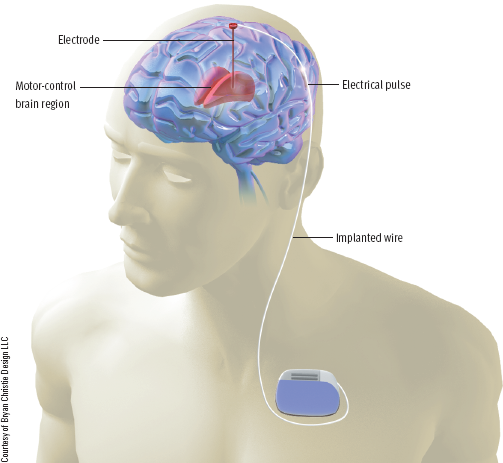
Deep brain stimulation (DBS)
A procedure where a thin electrode is surgically implanted into the brain and connected to a pulse generator to treat motor disturbances or depression.
Cultural barriers
When some cultural groups are reluctant to turn to formal, professional sources of assistance during times of stress due to their customers
Language barriers
Communication problems that make it awkward and difficult for many ethnic group members to explain their problems and to obtain the type of help that they need
Institutional barriers
When therapists aren’t familiar with the cultural backgrounds and unique characteristics of various ethnic groups which leads to misunderstandings, ill-advised treatment strategies, and reduced rapport.
How can we improve mental health services for ethnic and cultural minority groups
Provide adequate training
Hire professionals from diverse backgrounds
Develop behaviours that reflect an understanding of how cultural factors shape individuals’ worldviews and health behaviours (Cultural competence)
Have an accurate view of one’s limitations and be other-oriented rather than self-centred with an air of superiority (cultural humility)
Technology and the delivery of clinical services
Using methods such as the internet, over-the-phone and videoconferencing to deliver services as a means of alleviating availability and other similar restrictions
Success of technology and the delivery of clinical services
Has similar results and satisfaction to that of in-person services
Deinstitutionalization
A trend in institutional treatment that involves transferring the treatment of mental illness from inpatient institutions to community-based facilities.
Deinstitutionalization (con’t)
Enables patients to return to society quickly, avoid unnecessary hospitalization and receive mental health services
How was deinstitutionalization made possible
The emergence of effective drug therapies for severe disorders
The deployment of community mental health centres to coordinate local care
Drawbacks of deinstitutionalization
Patients sometimes ad no families, friends, or homes to return to, nor skills
Disenchantment with mental hospitals
When hospitals were causing pathology instead of curing it due to reasons such as:
Underfunding
Inadequate training of staff
Patients were isolated from their community
Community mental health movement
A movement which emphasized:
Local, community-based care
Reduced dependence on hospitalization
The prevention of psychological disorders
Revolving door problem
The phenomenon where patients are briefly hospitalized, released into communities that lack adequate support, and then quickly re-hospitalized.
Common indicators of mental disorders
Irritability
Lack of motivation
Low energy levels
Mood swings
Negative thought patterns
Persistent negative thought patterns
Prolonged sadness
Common indicators of mental disorders (con’t)
Increased substance use
Self-harm
Suicidal ideations
Withdrawal from social contact
Extreme distress
Changes in eating habits (overeating or undereating)
Changes in sleeping habits (insomnia or oversleeping)
Psychotherapy (talk therapy)
A collaborative partnership between a trained mental health professional and a client aimed at improving emotional well-being and mental health.
Initial assessment
The therapist gathers information about the client's mental health, personal history, current issues, and goals
Diagnosis
When a formal mental health diagnosis is given.
Goal setting
When the therapist and client agree on the goals of therapy
e.g. Reducing anxiety, improving relationships, processing trauma
Cognitive Behavioral Therapy (CBT)
A therapeutic approach that focuses on changing unhelpful thought patterns and behaviours by addressing the present via techniques such as thought tracking and cognitive restructuring.
Humanistic Therapy
A therapy focused on self-awareness, self-acceptance, and personal growth, utilizing techniques such as empathic listening and unconditional positive regard.
Dialectical Behavior Therapy (DBT)
A treatment designed for managing intense emotions and emotion dysregulation; is commonly used for borderline personality disorder.
Dialectical Behavior Therapy (DBT) [con’t]
Is done through mindfulness, distress tolerance, emotion regulation.
EMDR (Eye Movement Desensitization and Reprocessing)
A therapy for processing trauma that involves recalling memories while engaging in bilateral stimulation, such as eye movements.
EMDR (Eye Movement Desensitization and Reprocessing) [con’t]
Is done through guided eye movements while recalling traumatic memories
Trust and Confidentiality
A strong, trusting relationship is key. Sessions are confidential (within legal limits)
Empathy and Non-judgment
Therapists offer a safe, supportive space to explore difficult feelings and experiences
Short-Term or Long-Term
Therapy might last a few sessions or continue for years
Regular Sessions
Often weekly, typically 45–60 minutes
Monitoring Progress
Regular check-ins to review progress toward goals, with adjustments to approach if needed.
Randomized Control Trial (RCT)
A study where participants are randomly assigned to different groups to test a treatment’s effect, intended to reduce bias and ensure evidence-based conclusions.
Meta-analysis
A statistical technique that combines results from multiple studies on the same topic to identify overall trends and increase statistical power.
Umbrella Review (review of reviews)
A systematic review that synthesizes findings from other systematic reviews and meta-analyses
Effect Size
A quantitative estimate of the magnitude or strength of a relationship or difference between variables; in psychotherapy research, small is 0.2, medium is 0.5, and large is 0.8.