C3.1 Integration of Body Systems
 Call Kai
 Learn
Learn Practice Test
 Spaced Repetition
 Match
Match Flashcards
 Knowt Play
1/28

There's no tags or description
Looks like no tags are added yet.
Name | Mastery | Learn | Test | Matching | Spaced | Call with Kai | Chat |
|---|
No analytics yet
Send a link to your students to track their progress
29 Terms
list 3 organs in the nervous system
brain
spinal cord
nerve cell
list 3 organs in the endocrine system
thyroid gland
adrenal gland
pancreas
ovaries
Outline the pain refelx arc
free nerve ending sensory neuron —> interneuron/ relay neuron —> motor neuron —> effector
is an involuntary response
synapses fo the neurons are withint he grey matter of the spinal cord
intensity of the stimulation is proportional to the intensity of the reflex response
brain is not involved, only the spinal cord involved
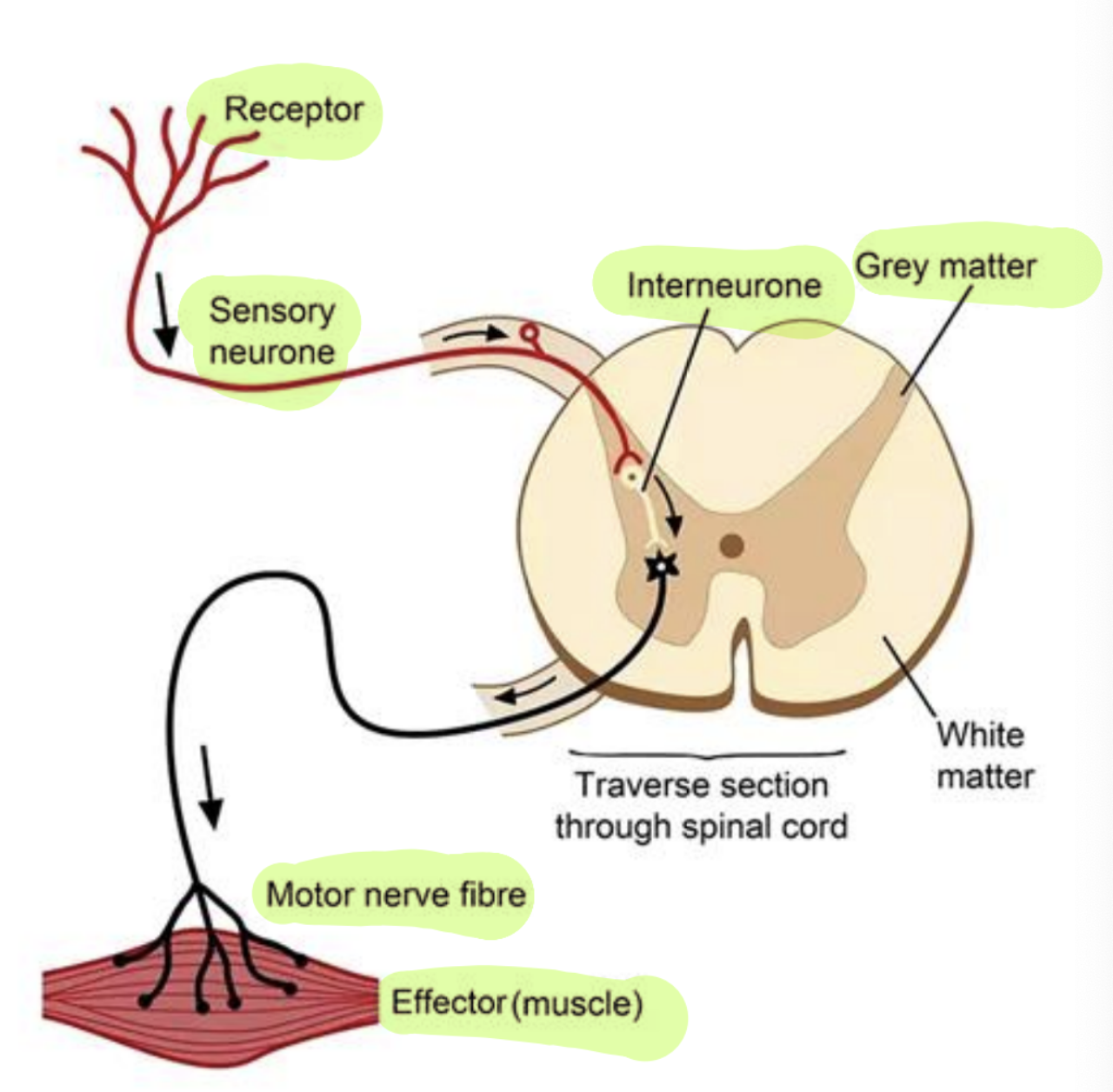
Outline an example of the pain reflex arc
patella tendon arc
when that nerve is physically stimulated, the leg extends
innat ereaction
a nerve in between L2 to L4
list the overview arc of the nervous system
stimuli at the recpetors
sensory neurons (PNS)
spinal and/or brain (CNS)
directly to brain (e.g. taste, smell)
through spinal cord, then brain (eg. motor)
motor neuron (PNS)
effectors give a response (e.g.s muslces, organs)
Describe what sensory recpetors are.
numerous types of stimuli (e.g. light, sound, touch)
send signals via sensory neurons to the CNS
List the 3 types of neurons
snesory neuron
interneuron
motor neuron
they are structurally differnet to adapt to their function
describe what the spinal cord is
coordinates unconscious responses (e.g. reflexes), and conveys signlas to and from the brain.
Outline 5 roles of the brain
central coordinator of information
unconscious and conscious processes
receives complex sensory inputs
learns: formation of new synapses & strengthening of synaptic connections
memory: storage of learning
What is the function fo motor neurons
bring signals from CNS to effectors
Explain how the brain involved in motor control
L and R cerebral hemispheres control muscle via motor neurson
cause muscle contractions (e.g. peristalsis, blood vessesl)
L cerebral hemisphere controls the R side
R cerebral hemisphere controls the L side
Explain the functions fo the cerebellum
“little brain”
coordinates contraction of skeletal muscles, but is unable to initiate it
overall control of body movement with precision and timing (e.g. balance, posture, walking)
receives input from cerebral hemispheres
involved in motor learning (e.g. learning a sport)
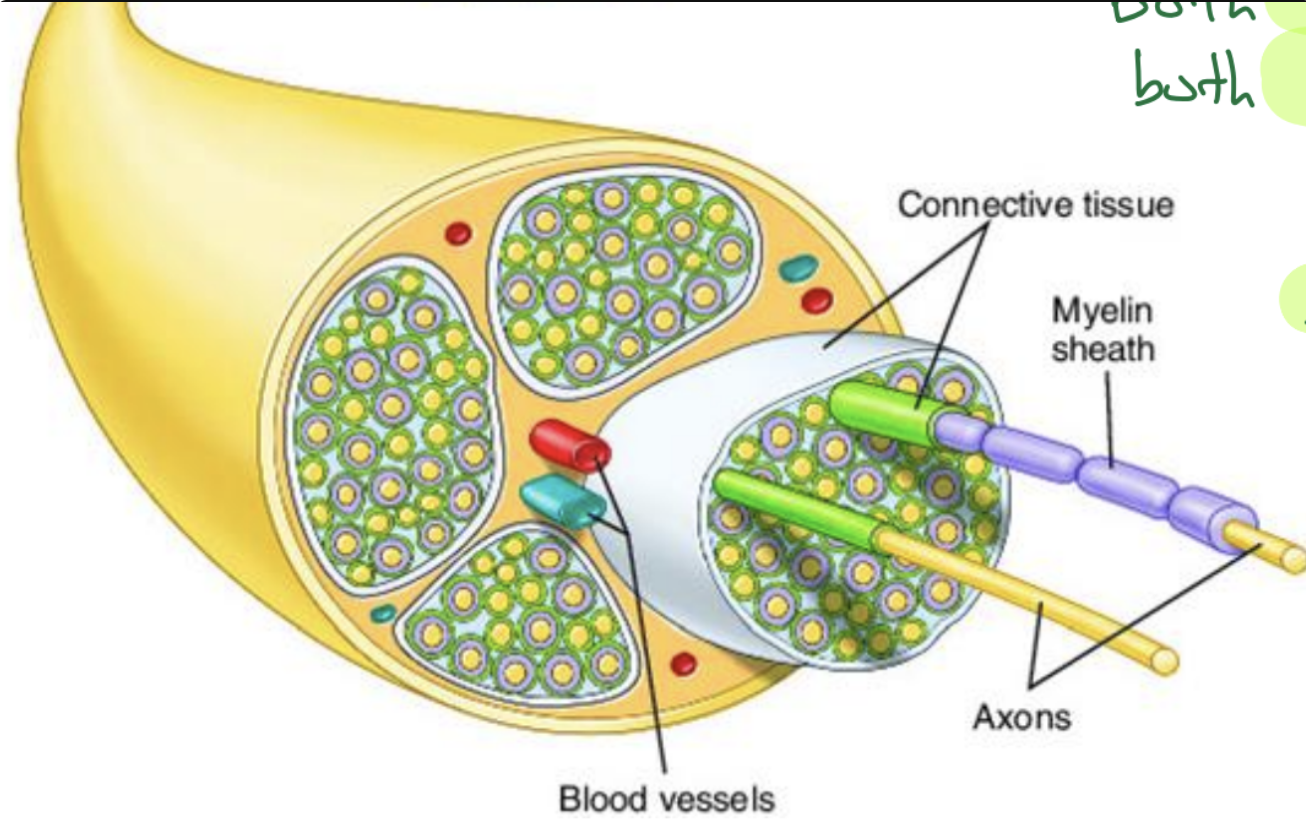
Describe what nerves are.
bundles of axons of neurons
contains both
sensory and motor neurons
myelinated and unmyelinated
nerve fibers are bundled together inside protective sheath of connective tissue
what are feedback loops?
an output is measured to provide input to the system
Compare and contrast negative VS positive feedback
negative feedback
if output inc, system dec
negative means in the opposite direction
for homeostasis
e.g. if blood O2 dec, the brain detets is and reacts by inc the breathing rate to inc O2
positive feedback
if output inc, system inc even greater
positive means in the same direction
not for homeostasis
e.g. uterine contractions during brith cause an increase in contractions
Outline the funciton of the medulla oblongata.
primative center of the bran
regulates cardiovascular and respratory systems via nerve impulse, some being from chemoreceptors and baroreceptors
increase or decrease
heart rate: bpm
stroke volume: volume fo blood pumped by th eleft ventricle in one contraction
ventilation rate:
inhale: contract ext intercostal muscles and diaphragm
exhale: contract int intercostal muscles and diaphragm
How does the medulla oblongata use chemorecpetors to increase or decrease rates?
located in the aorta (vessel leaving the LV) and carotid artery (neck)
monitor blood pH, O2, CO2 conc
inc cell resp: inc CO2 conc, dec O2 conc and pH
signals the heart —> inc heart rate, inc ventilation rate (by contractions of diaphragm and ext. intercostal muscles)
dec cell resp: dec CO2 conc, inc O2 conc and pH
signals the heart —> dec heart rate, dec ventilation rate (by contractions of abdominla and int. intercostal muscles)
How does the medulla oblongata use barorecpetors to increase or decrease rates?
located in the aorta (vessel leaving the LV) and carotid artery (neck)
detect changes in the circumference of arteries (the degree that they stretch due to bp)
high bp: signals the medulla —> decrease heart rate, stroke volume and dilates blood vessels
low bp: signals the medulla —> increase heart rate, stroke volume and constricts blood vessels
Does the CNS or ENS control peristalsis? Where?
swallowing: CNS - voluntary motion
peristalsis (esophagus —> rectum): ENS - involuntary motion
egestion of feces: CNS - voluntary
How is the hypothalamus part of the endocrine system
hypothalamus is in the brain CNS
connected to the endocrine system by the pituitary gland, a gland that secretes hormones and control other endocrine glands
allows the hypothalamus to control the endocrine system
allows close interaction of the two systems
Explain functions fo the adrenal glands and 5 rates that it controls
releases epinephrine/ adrenaline in response to stress (Fight of flight)
arc: adrenaline in the blood, hitting different target cells, affecting different organs
the secretion prepare for rigorous activity via intense muscle contraction
inc heart rate and bp —> faster blood flow
inc ventilation rate —> more O2 input
inc blood glucose and fatty acid conc
inc blood flow by
dilate blood vessels supplying skeletal muslces
while contracting other inner/ “core” blood vessels
so that greater proportion of blood goes to muscles
alert brain and other sense organs
Outline how the circadian Rhythm works in light versus dark
awake:
light detected by photoreceptors
stimulates the optic nerve
stimulates the pineal gland
dec melatonin
asleep
no light detected by photoreceptors
stimulates the optic nerve
stimulates the pineal gland
inc melatonin
Draw the graph of diurnal pattern of melatonin
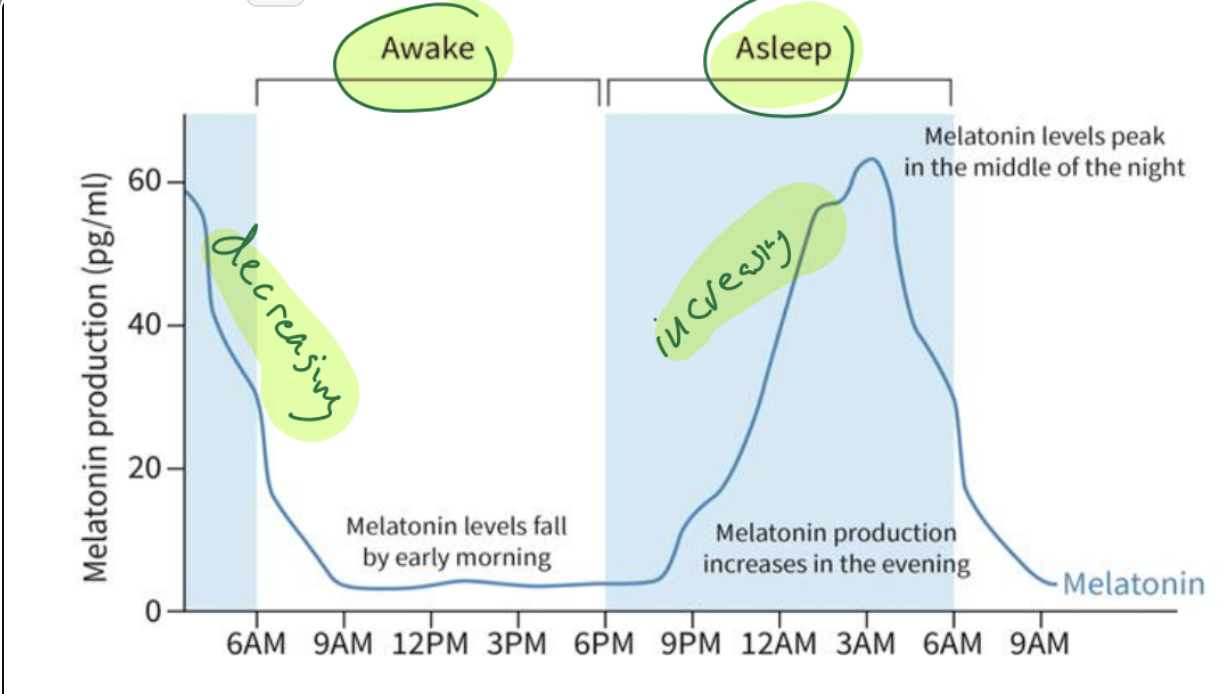
describe how inc of melatonin causes sleep
dec body temp
dec brain activity
inc/ dec other hormones (e.g. cortisol)
interaction and interdependence requires ___.
the ___ or ___ systems coordiantes ___ ___.
interaction and interdependence requires coordination.
the nervous or endocrine systems coordiantes body systems
Outline an example of emergent properties
systems integration and emergent properties of a cheetah
long, strong leg bones
flexible spine
large heart and arteries
large lungs
large adrenal glands
camouflage fur
large eyes
all results in it being an effective predator (arguable)
Compare and contrast nervous and endocrine control
Nervous system uses neurons, while endocrine system use secretory cells
Nervous system uses electrical signals, while endocrine system uses chemical signals
Duration of nervous system is short, but for endocrine system is sustained
Nervous system is immediate in stimulating a response, while endocrine system is slower
List 5 functions fo the cardiovascular system
Overall: carrier materials and energy
hormones from glands to targets
chemical energy in nutriets (e.g. glucose)
O2 from lungs to tissues
waste products (e.g. CO2) from tissues to lungs
distribute heat energy aroudn the body
list the hierachy of subsystems
cell
tissue
organs
body systems
orgnaism
each level is a subsystem of the next level