Bones
 Call Kai
 Learn
Learn Practice Test
 Spaced Repetition
 Match
Match Flashcards
 Knowt Play
1/67

There's no tags or description
Looks like no tags are added yet.
Name | Mastery | Learn | Test | Matching | Spaced | Call with Kai | Chat |
|---|
No analytics yet
Send a link to your students to track their progress
68 Terms
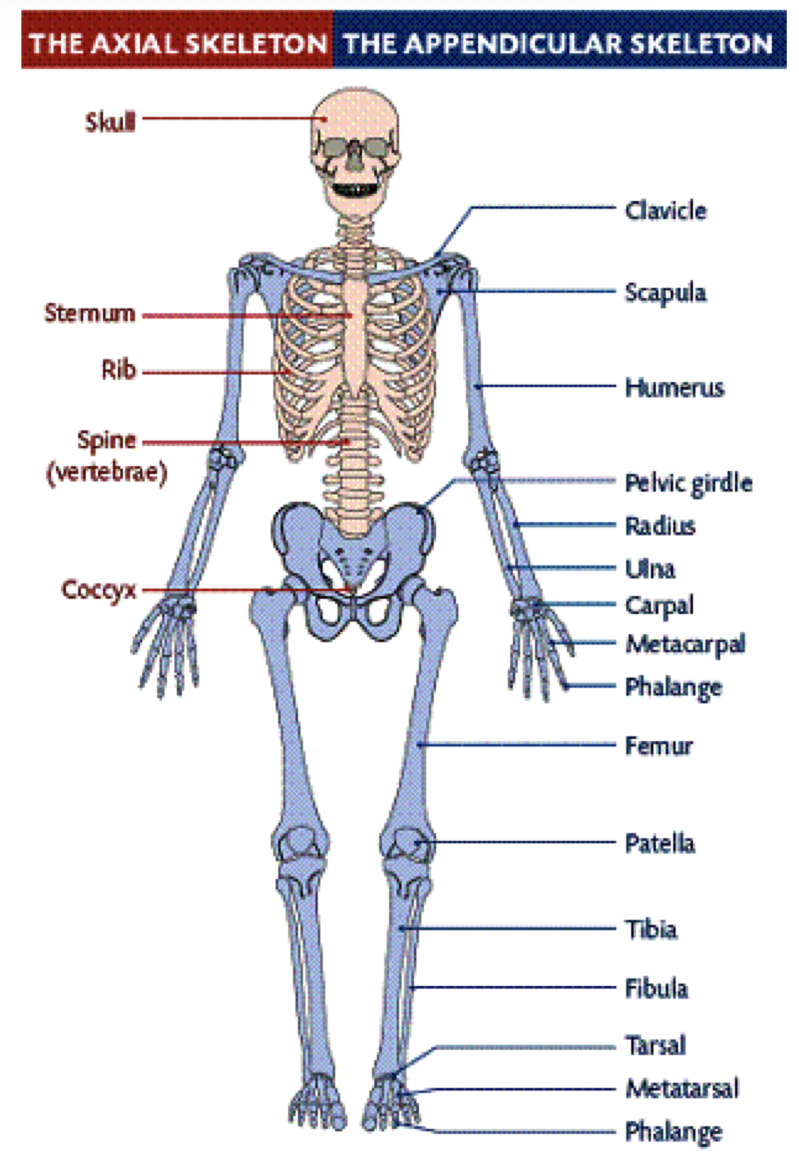
Axial Skeleton
Bones along the long axis of the body: skull, hyoid, vertebral column, sternum, ribs.
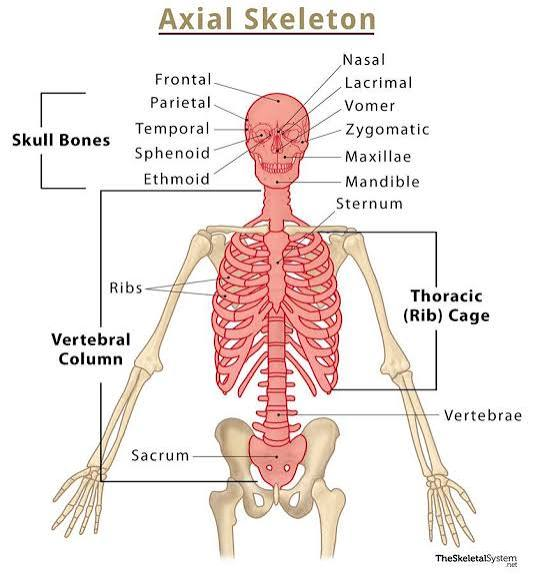
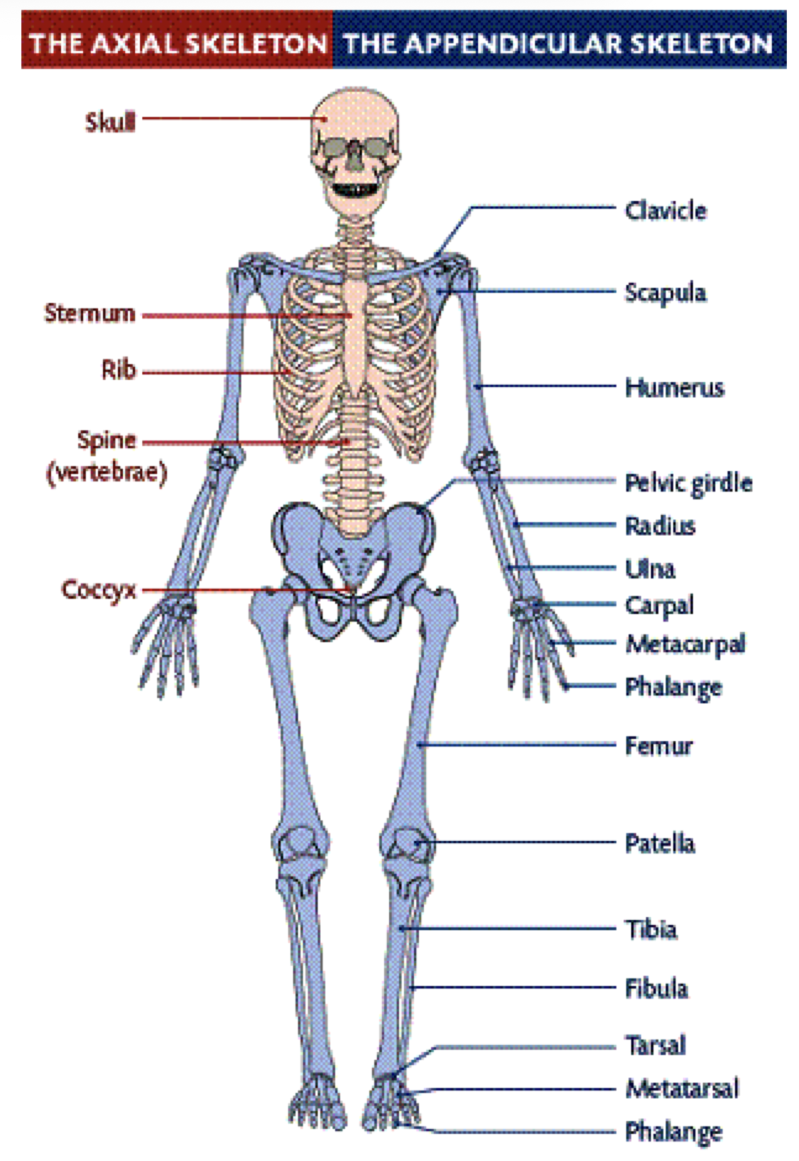
Appendicular Skeleton
Bones of the appendages: shoulders, arms, hands, pelvis, legs, and feet.
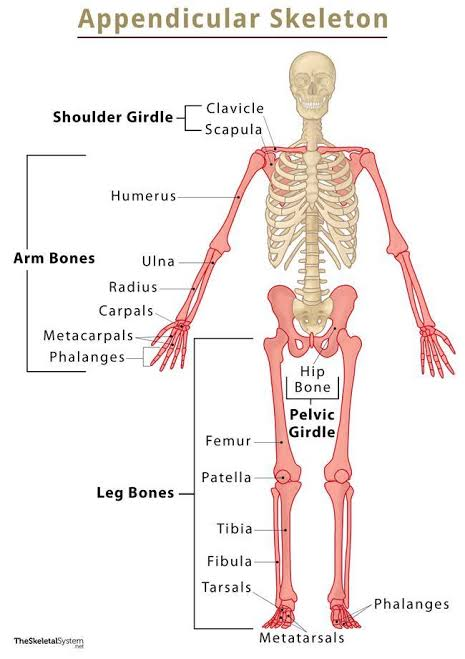
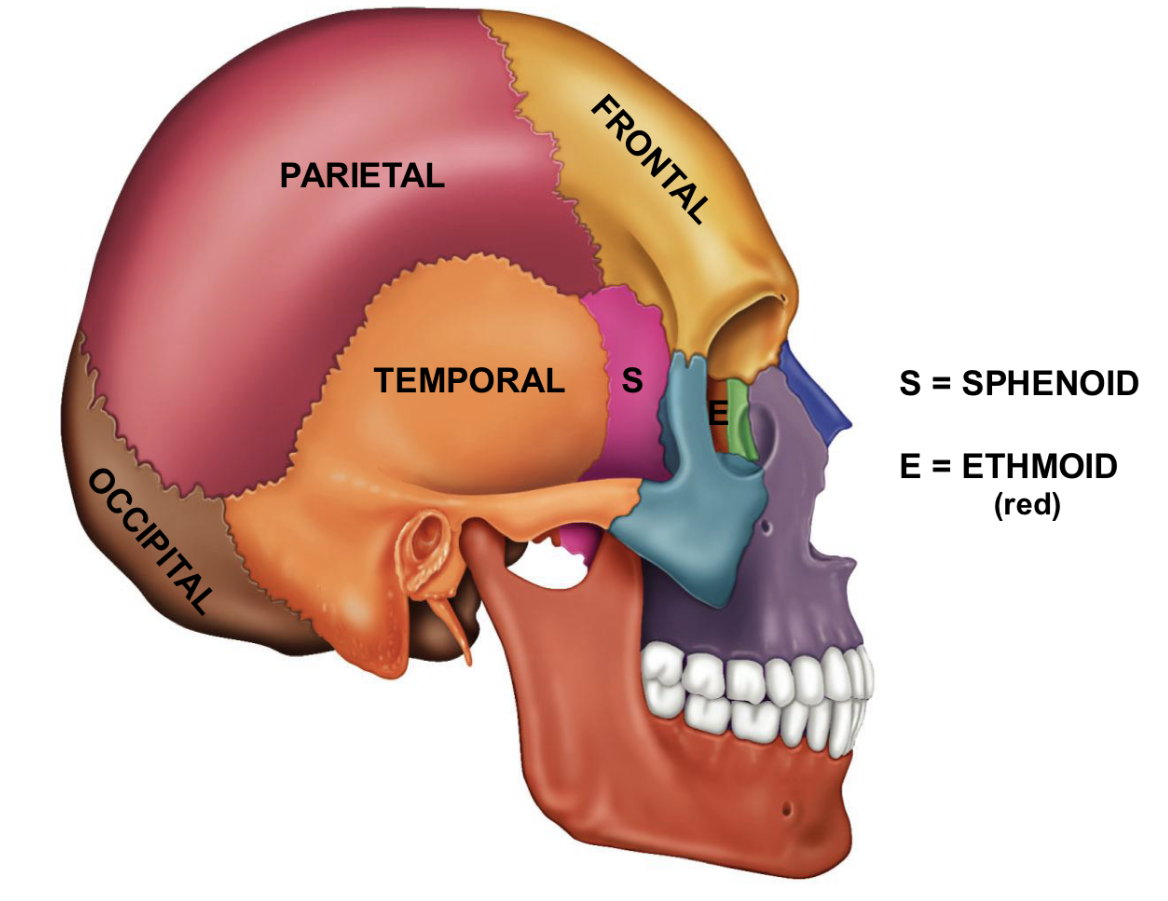
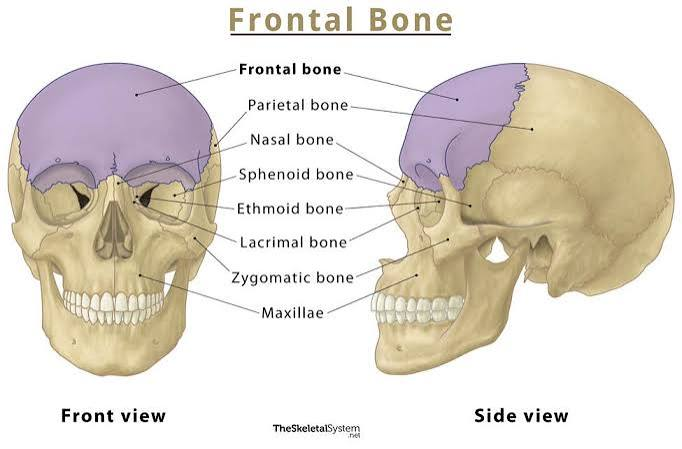
Frontal Bone Cranial Bones around Brain
1 bone. Forms the forehead.
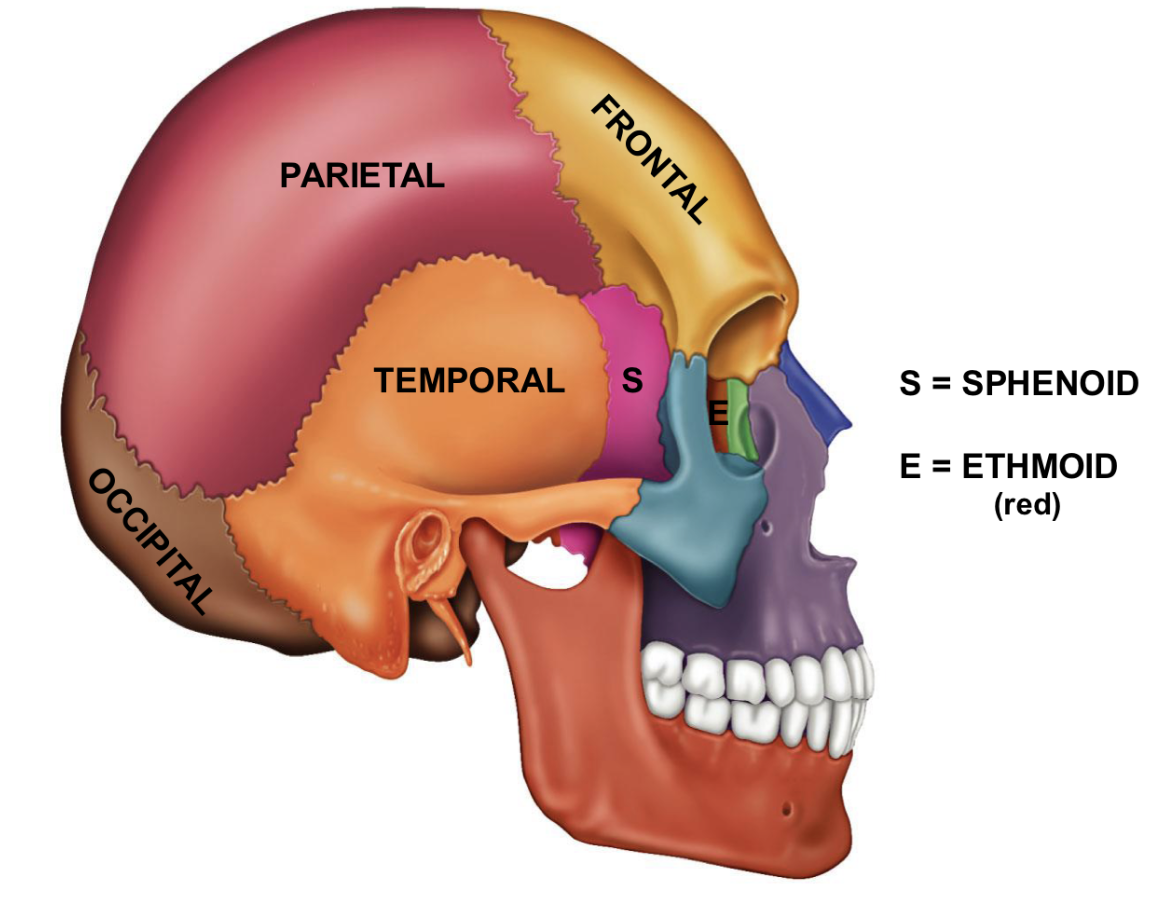
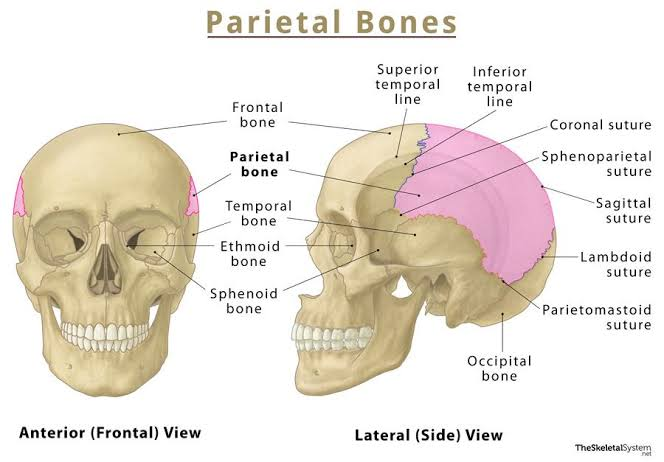
Parietal Bones Cranial Bones around Brain
2 bones. Superior skull behind the frontal bone. Superior bones posterior to frontal
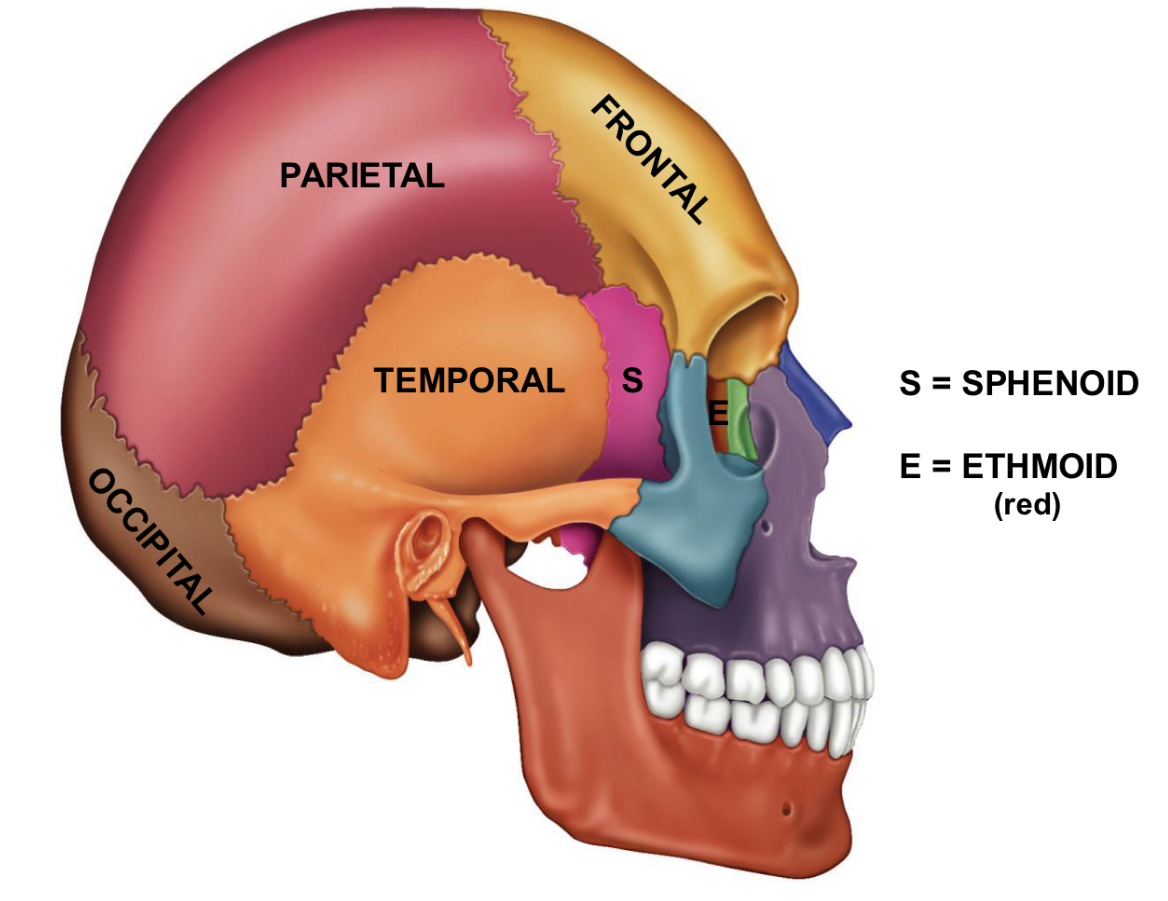
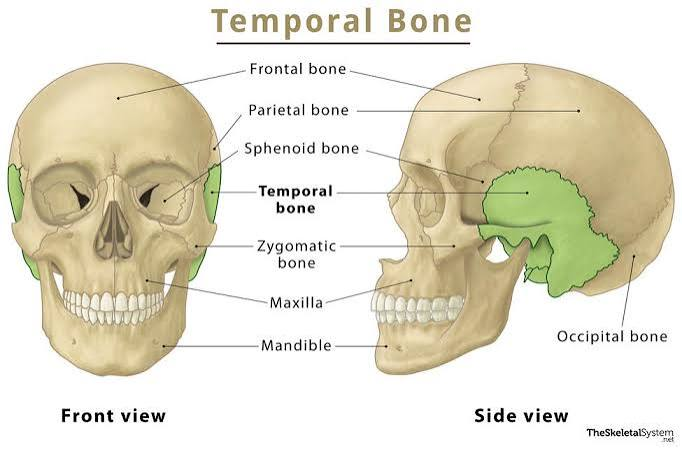
Temporal Bones Cranial Bones around Brain
2 bones. Lateral skull near the ears.
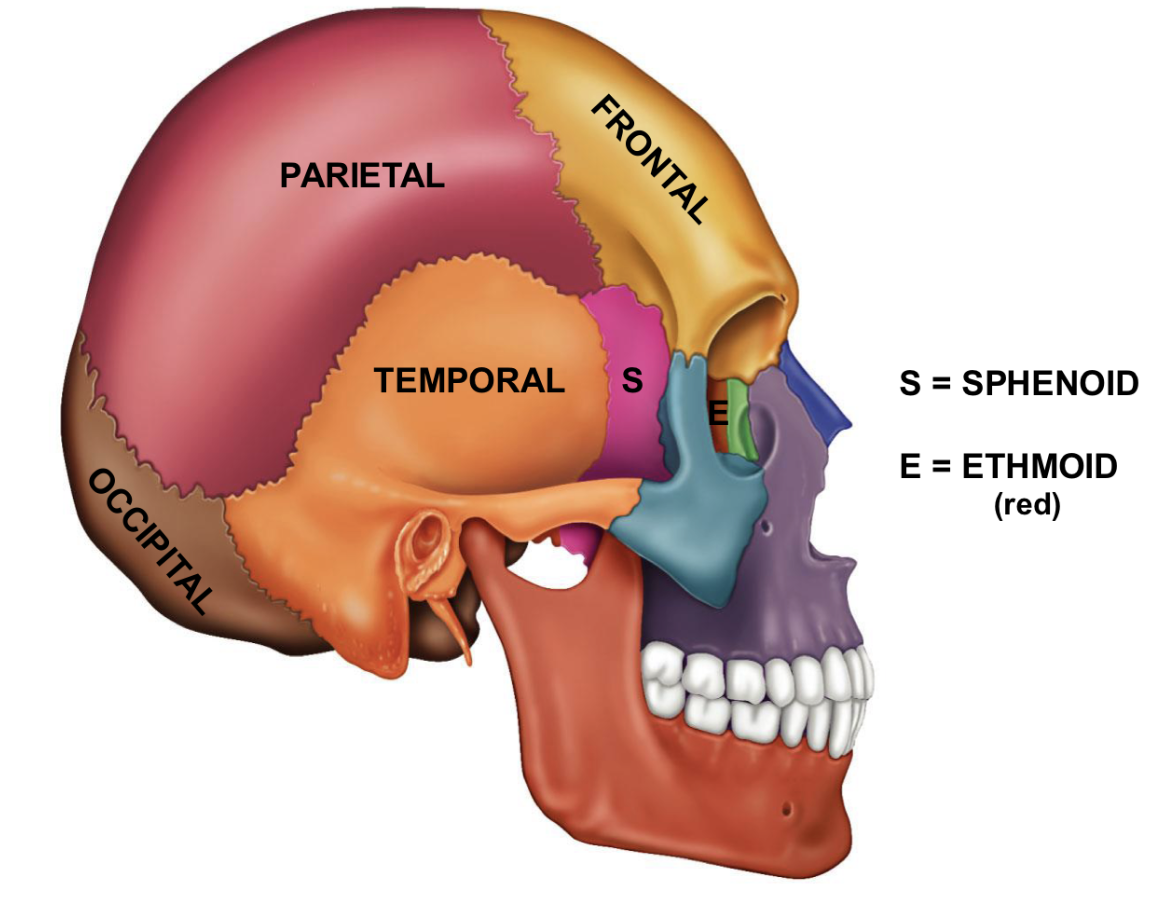
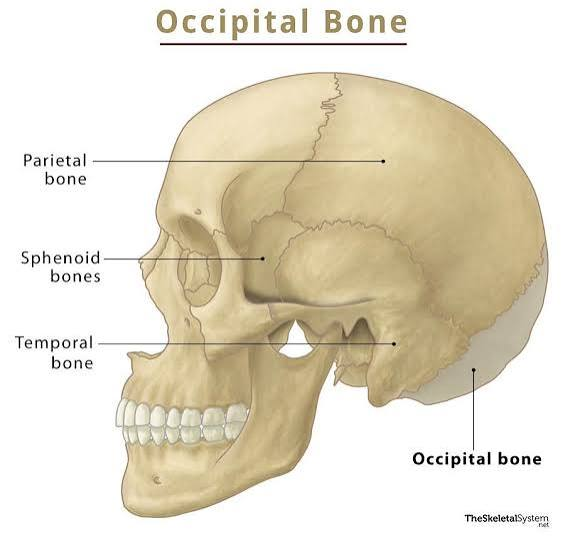
Occipital Bone Cranial Bones around Brain
1 bone. Back/base of skull. Posterior bones
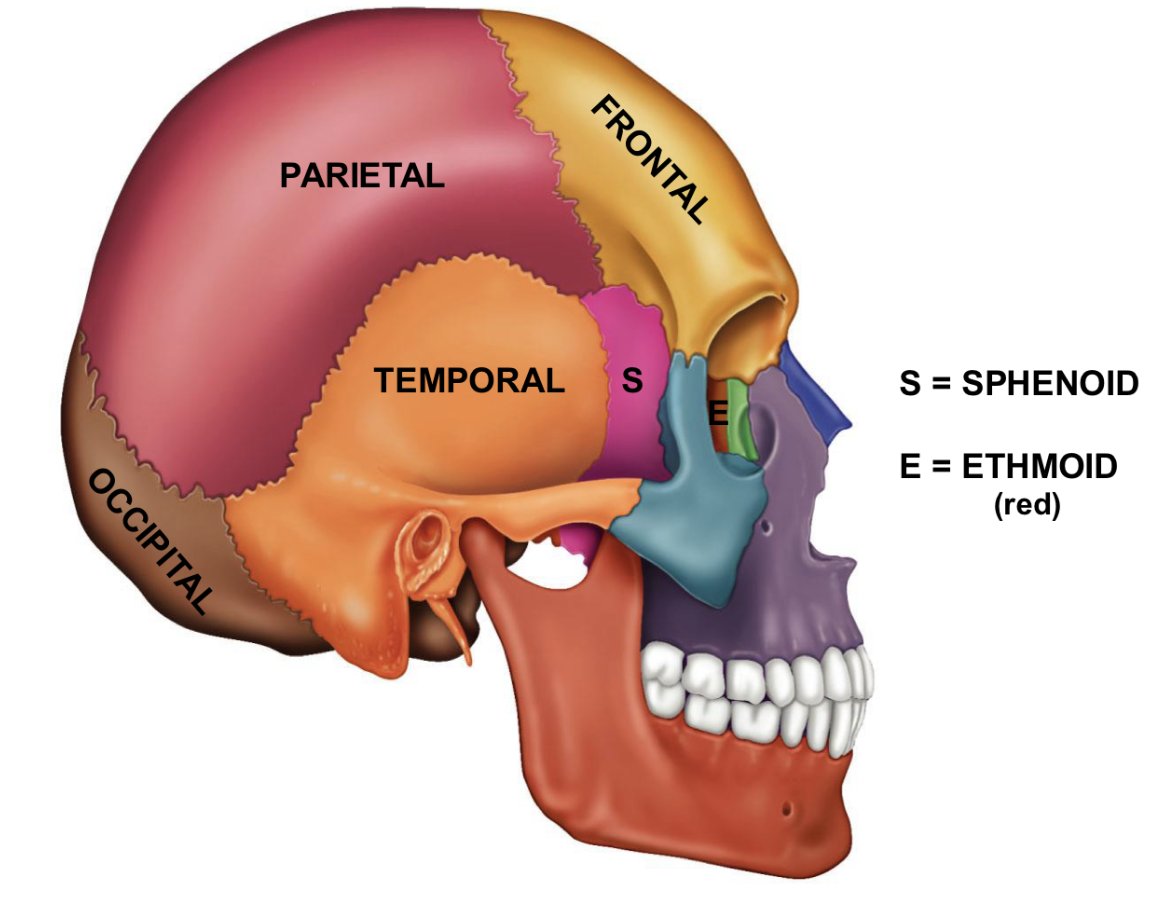
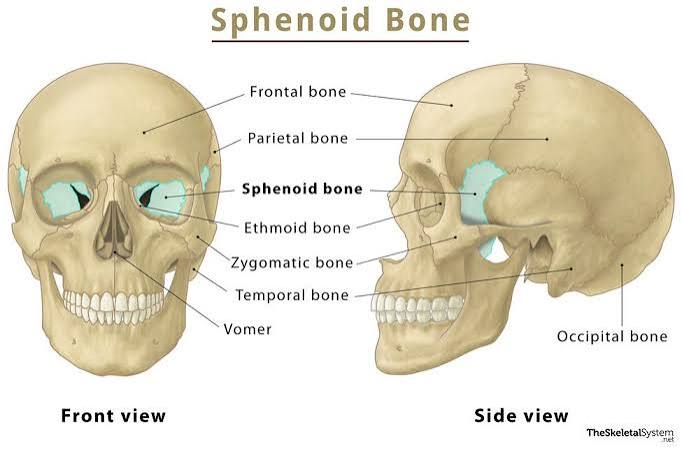
Sphenoid Bone Cranial Bones around Brain
Butterfly-shaped bone in the center of the skull.
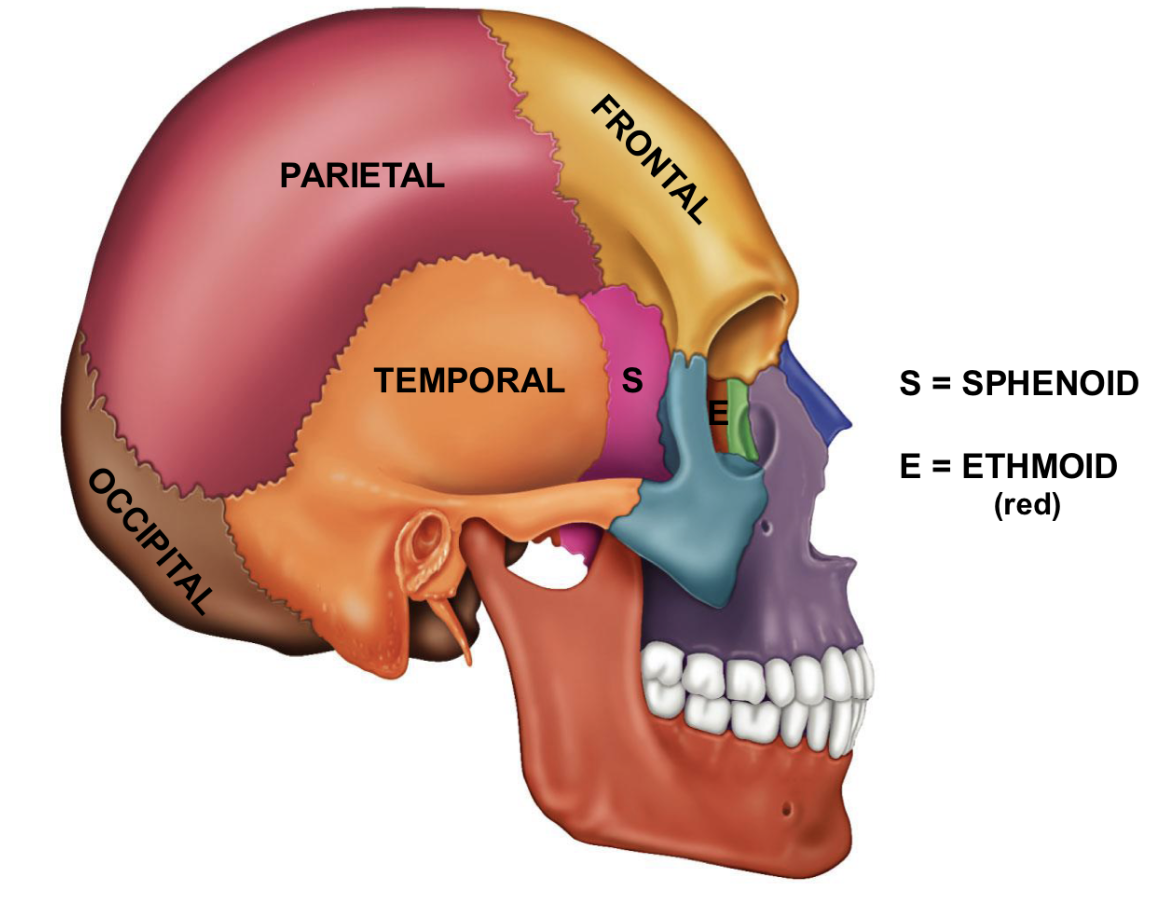
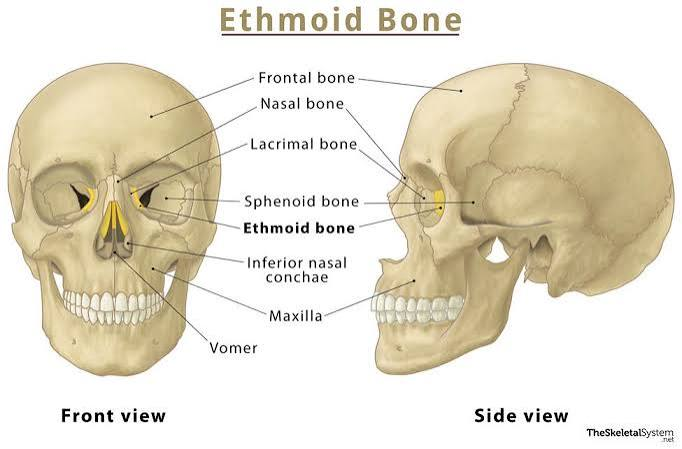
Ethmoid Bone Cranial Bones around Brain
Between the eyes; behind the nasal cavity. posterior to nasal area but anterior to sphenoid
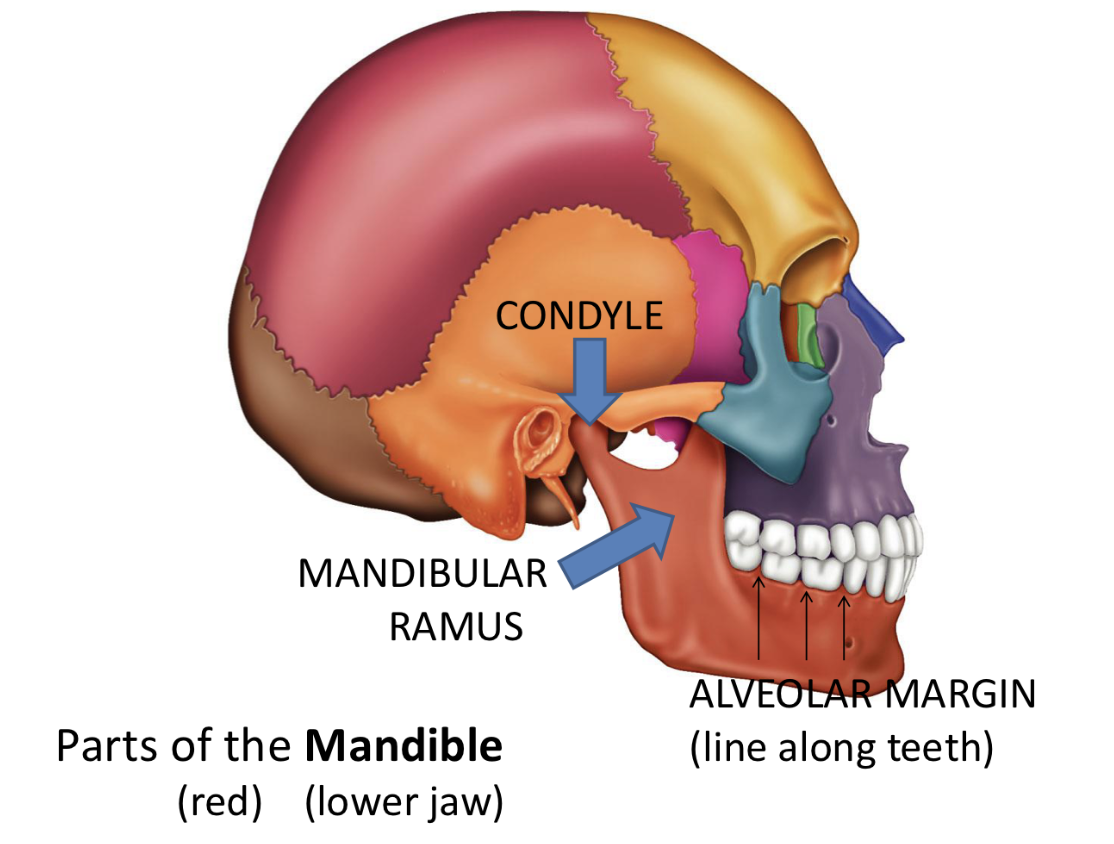
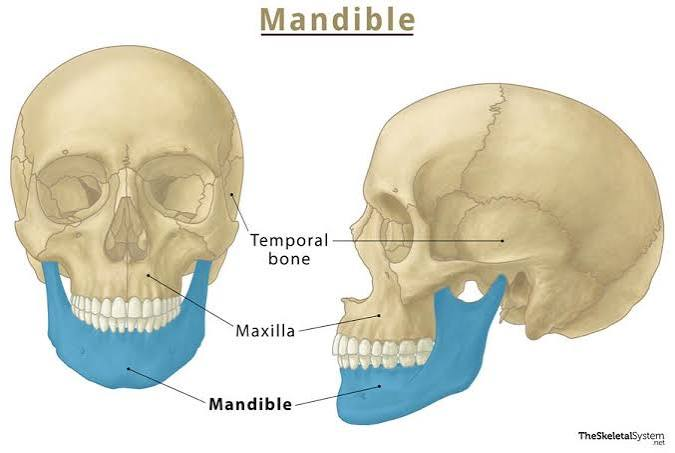
Mandible Facial bones = bones of face but NOT around brain
Lower jaw; only movable skull bone.
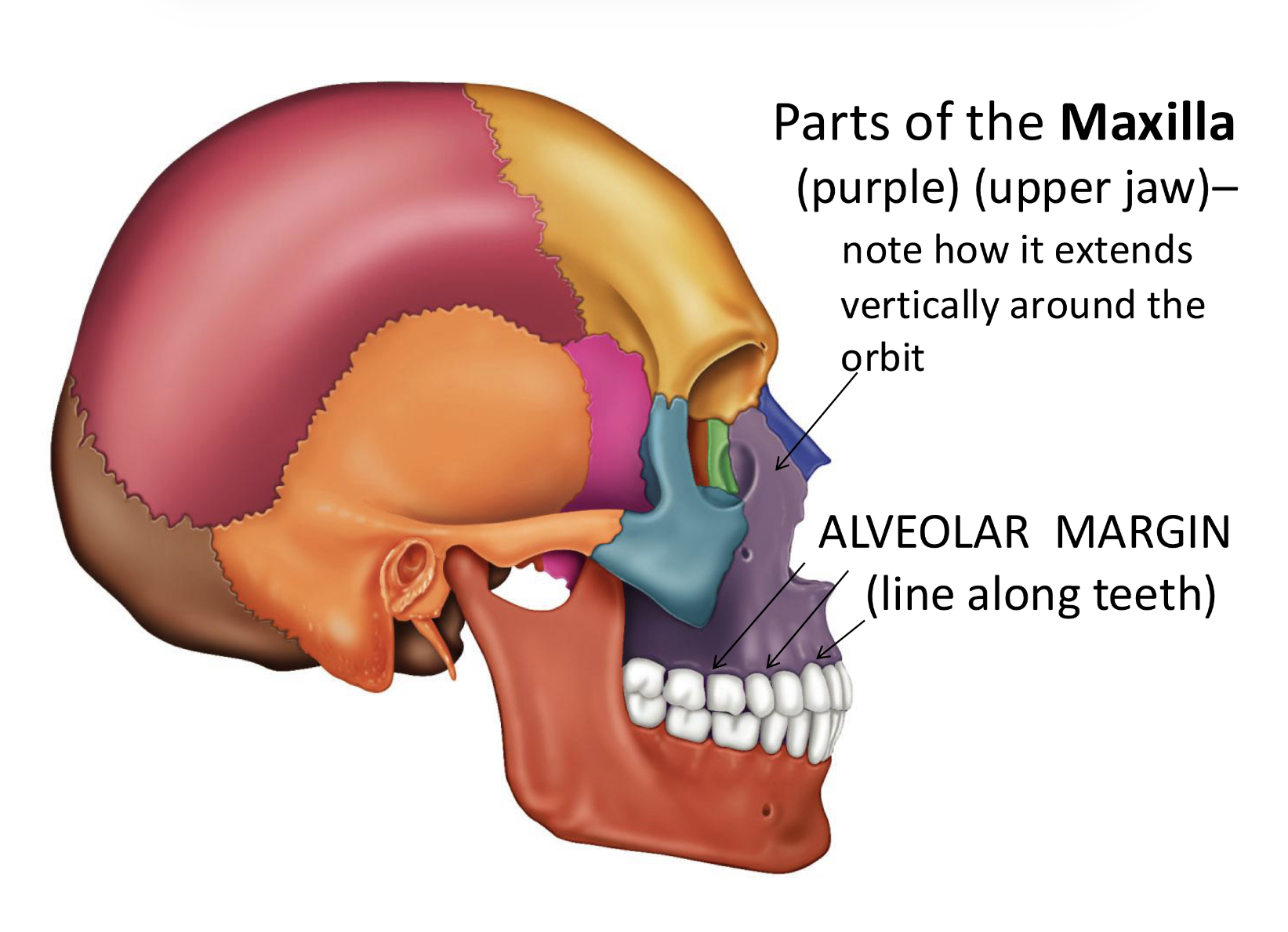
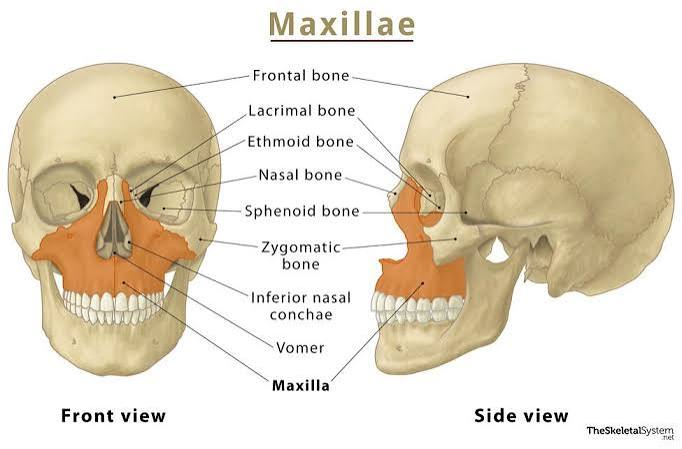
Maxilla Facial bones = bones of face but NOT around brain
Upper jaw.
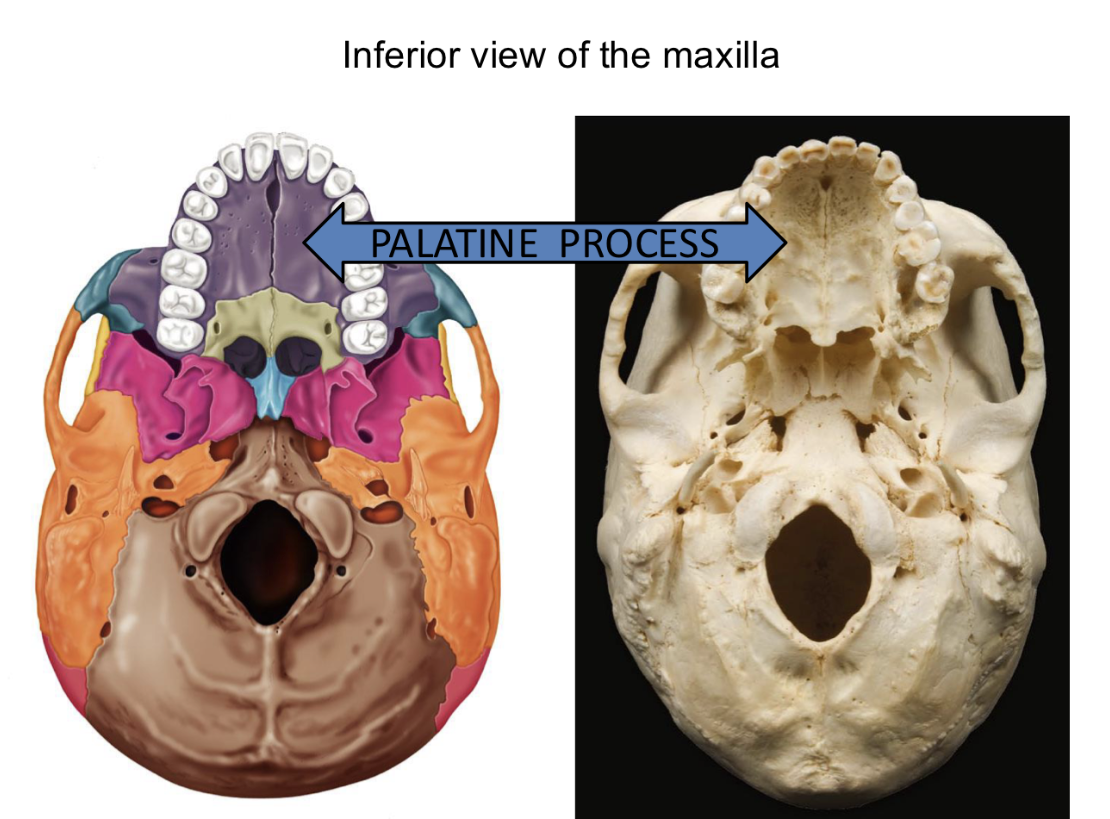
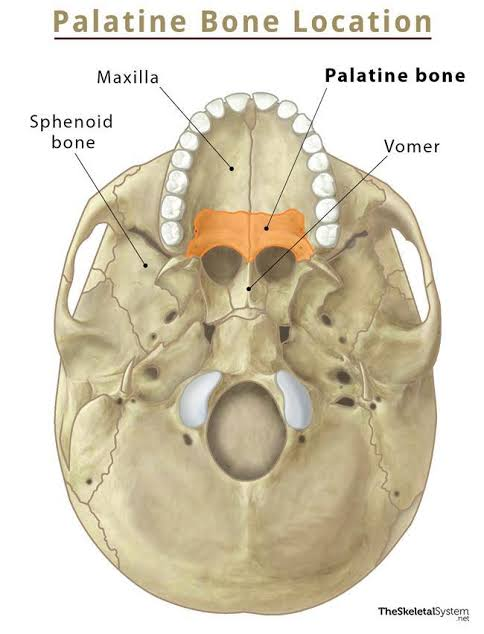
Palatine Bone Facial bones = bones of face but NOT around brain
Posterior one-third of the hard palate.
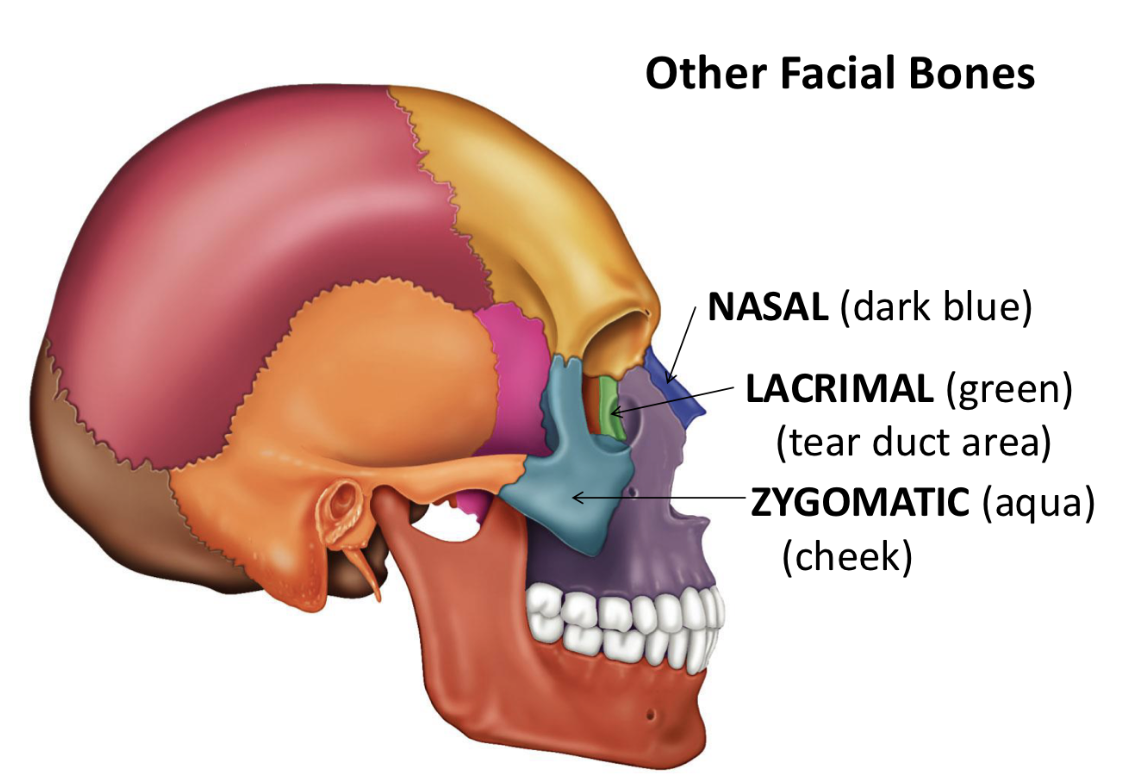
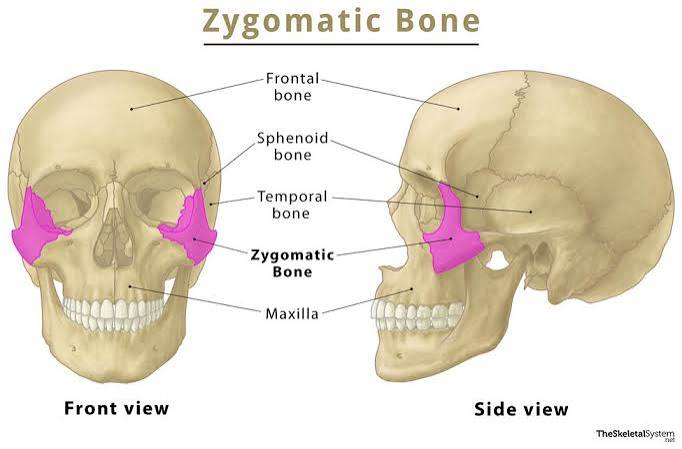
Zygomatic Bone Facial bones = bones of face but NOT around brain
Cheek bone.
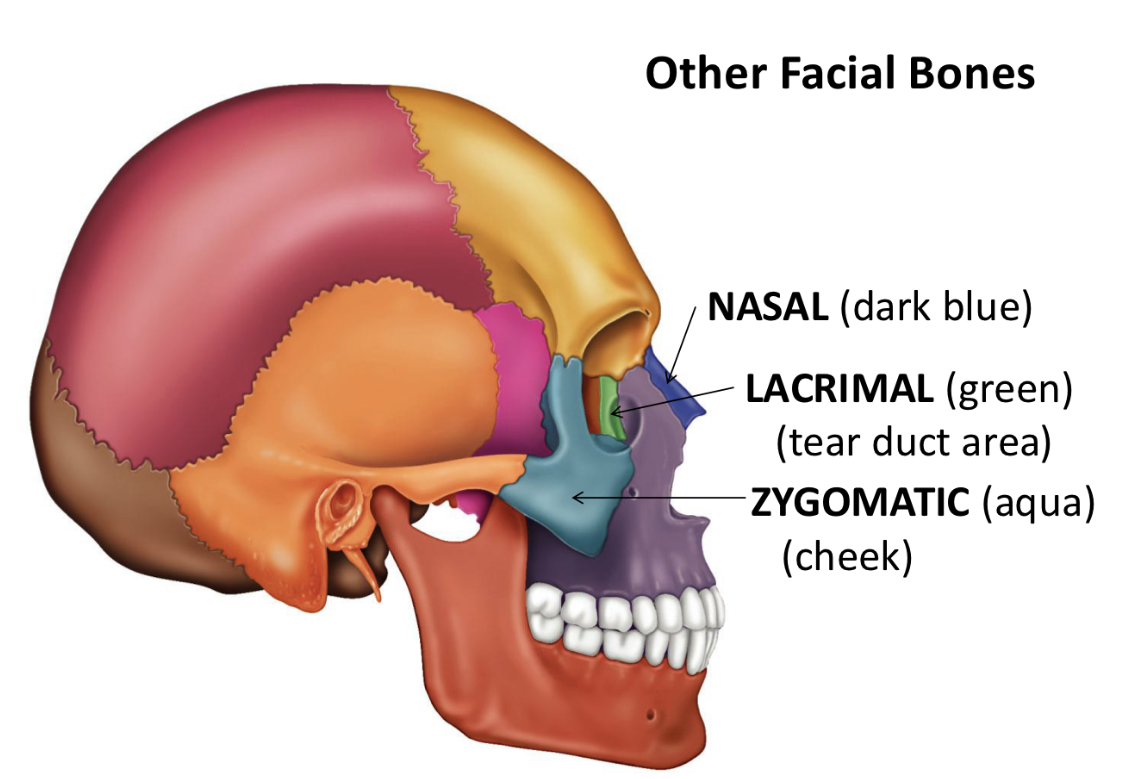
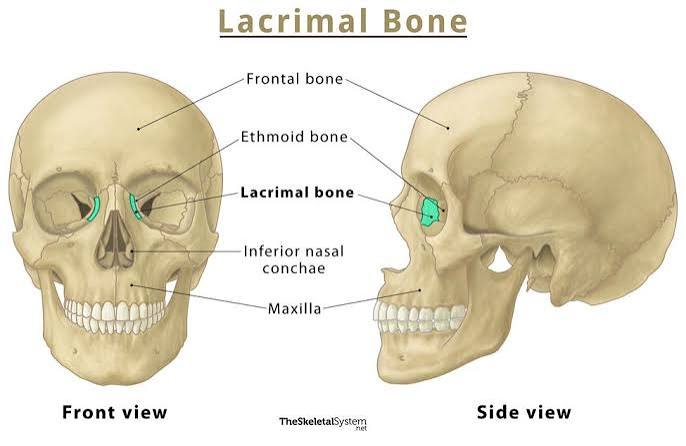
Lacrimal Bone Facial bones = bones of face but NOT around brain
Contains tear drainage groove.
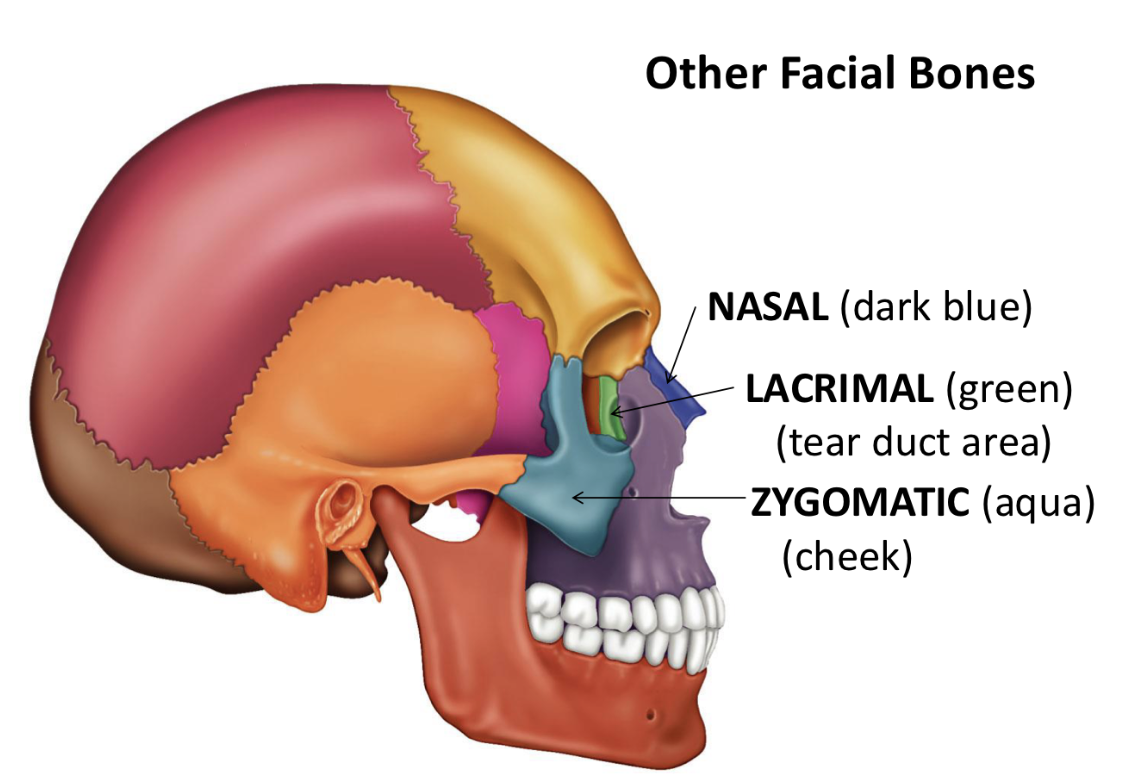
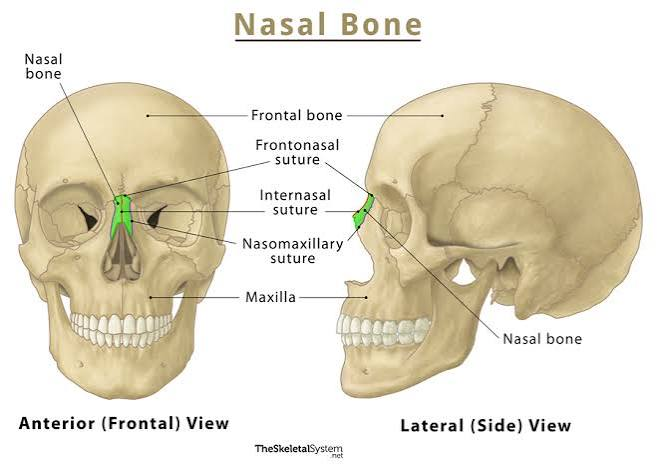
Nasal Bone Facial bones = bones of face but NOT around brain
Forms bridge of nose.
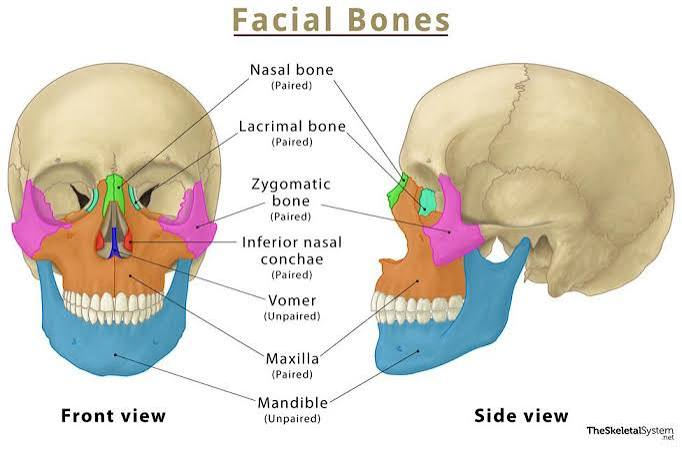
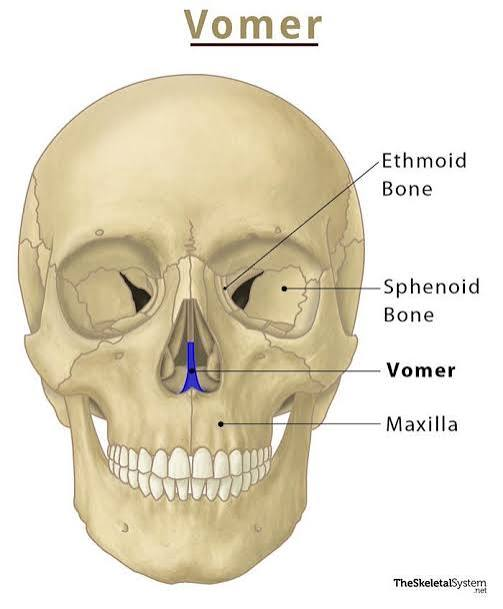
Vomer Bone Facial bones = bones of face but NOT around brain
Inferior part of nasal septum. Base
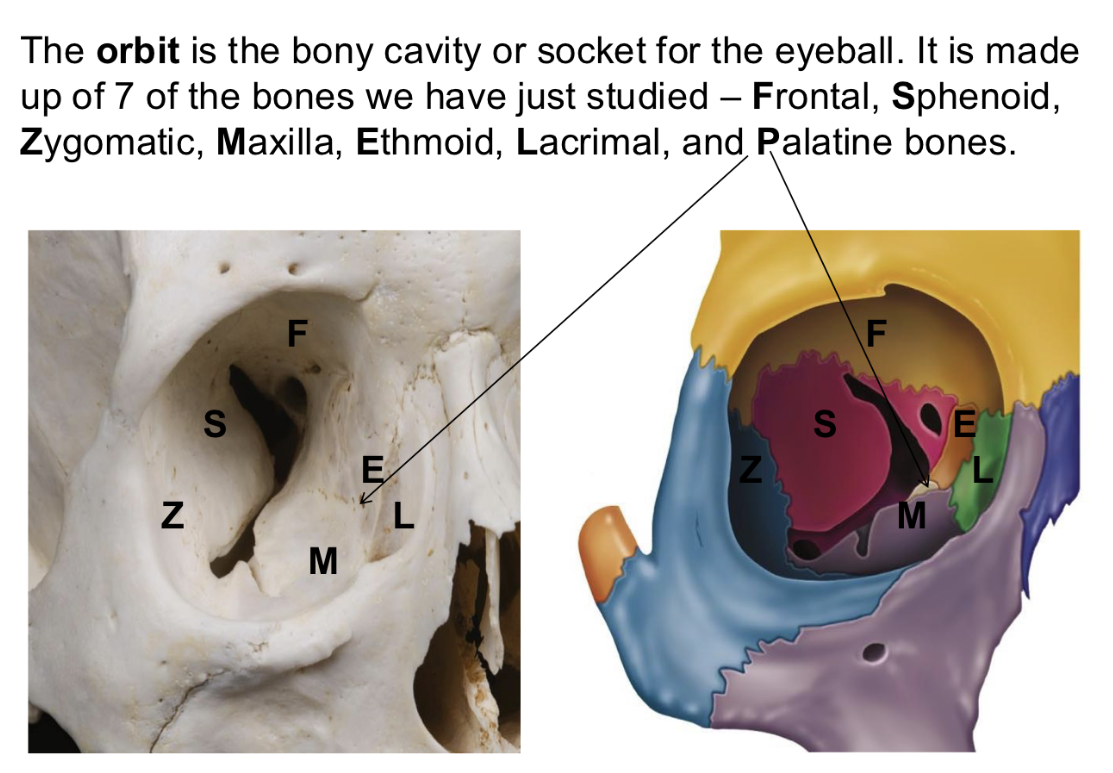
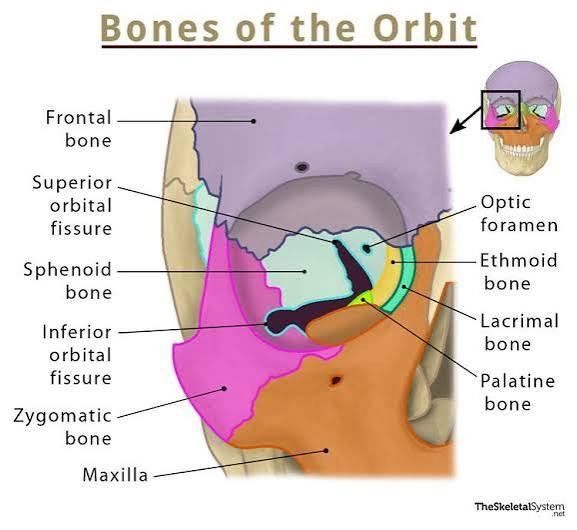
Orbit
Bony cavity around eyeball, 8 bones
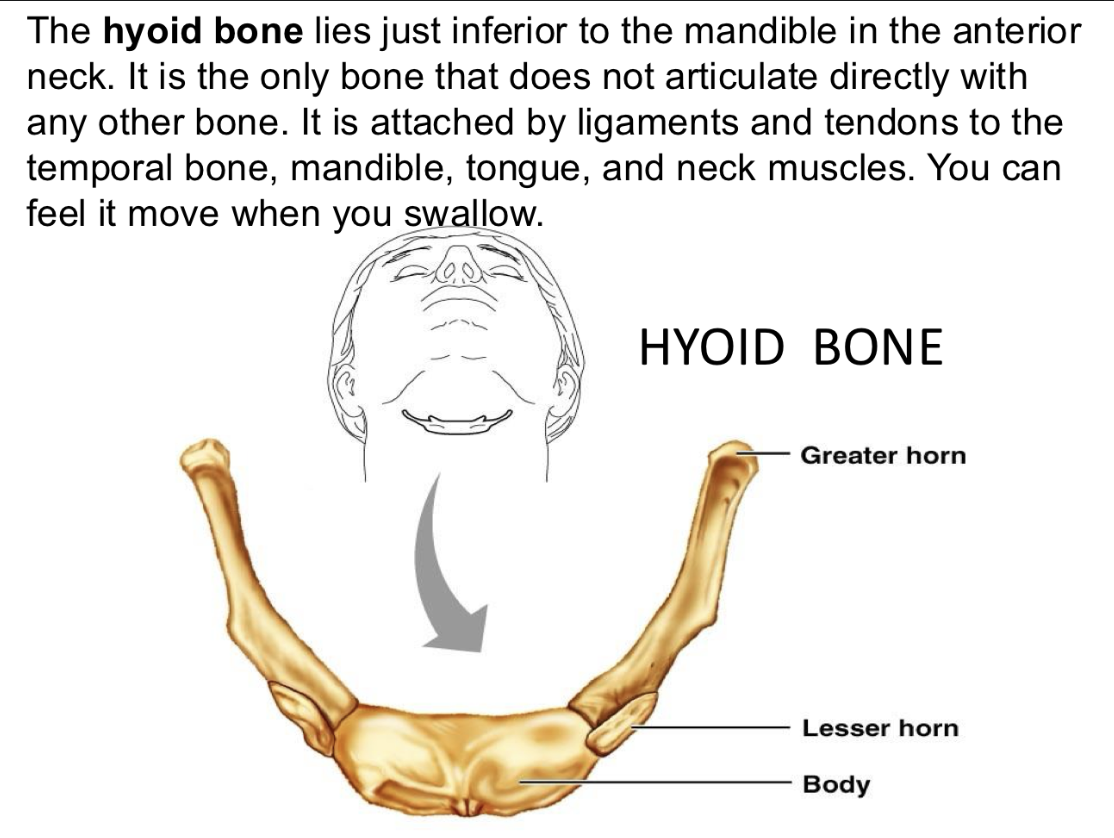
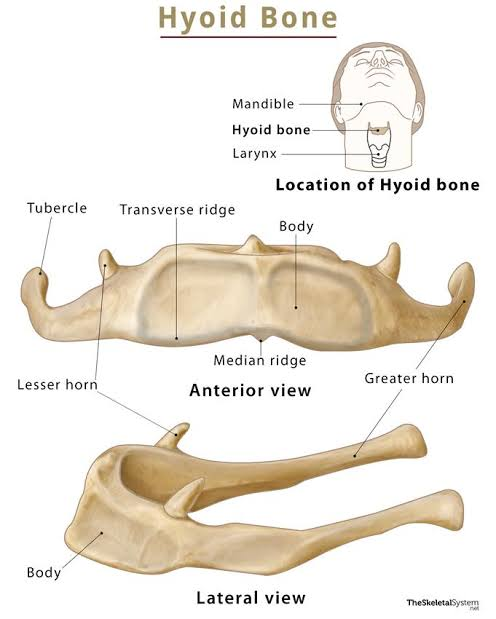
Hyoid Bone
U-shaped bone in the neck; supports tongue; does not articulate with other bones.
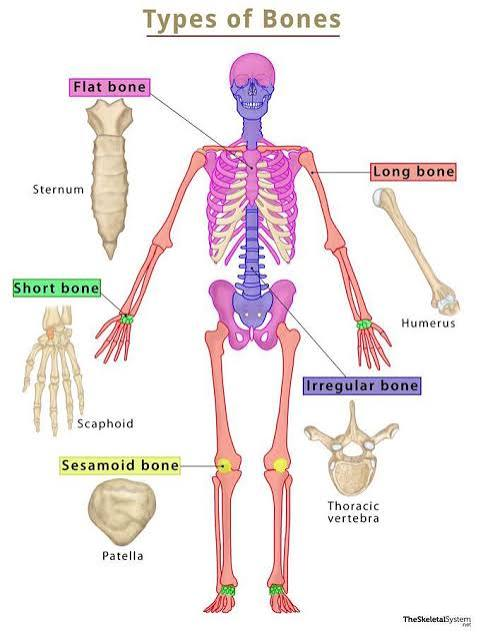
Body Typical vertebra parts
Large round part
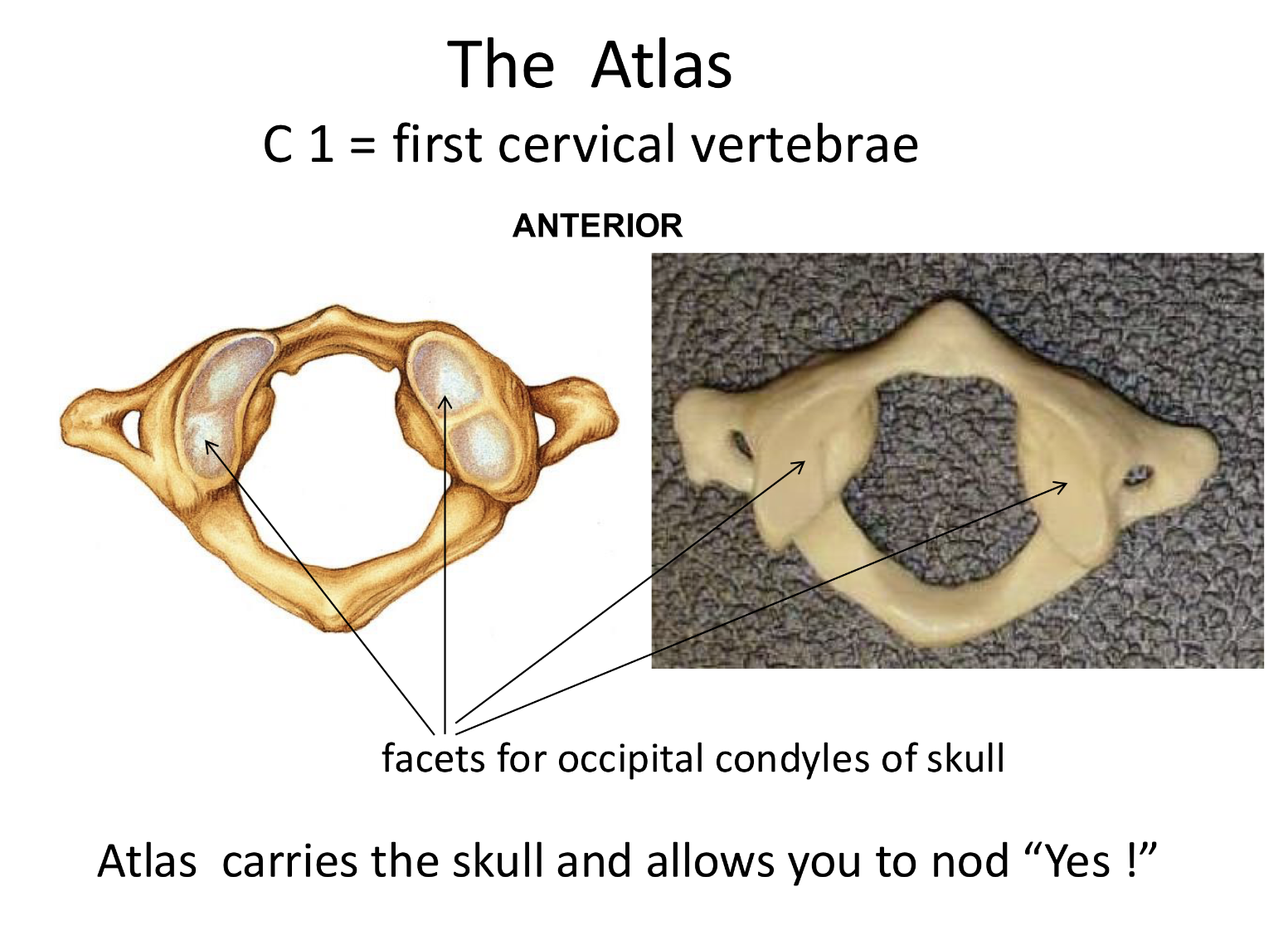
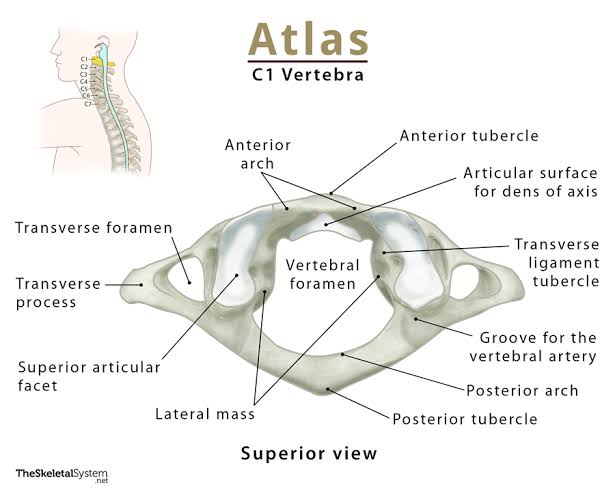
Atlas (C1) Types of vertebrae
First cervical vertebra; ring-shaped; nod "YES."
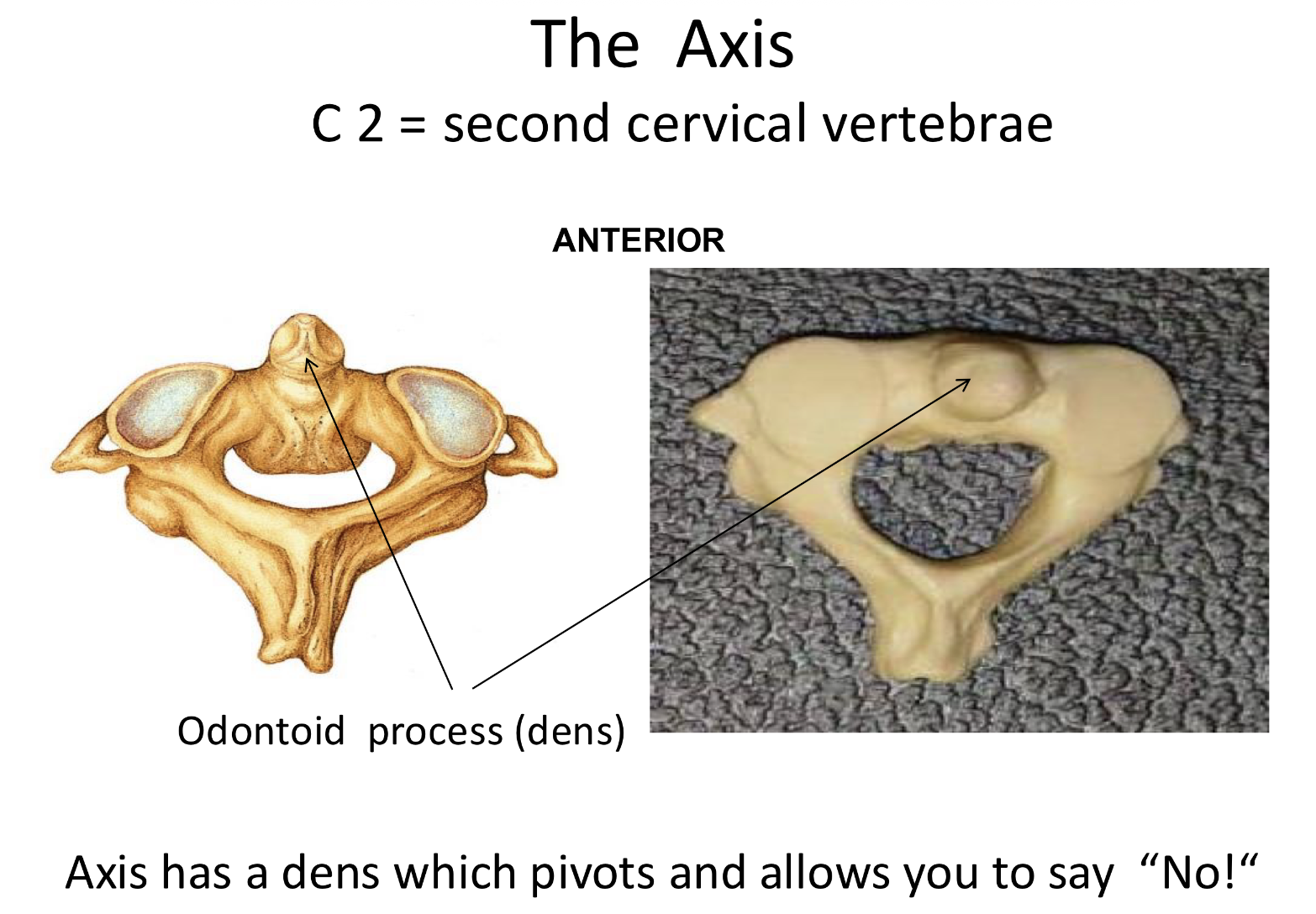
Axis (C2) Types of vertebrae
Second cervical vertebra; has dens; shake "NO."
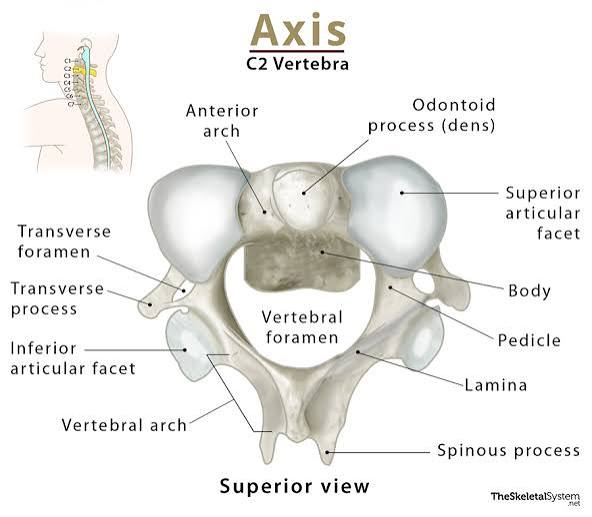
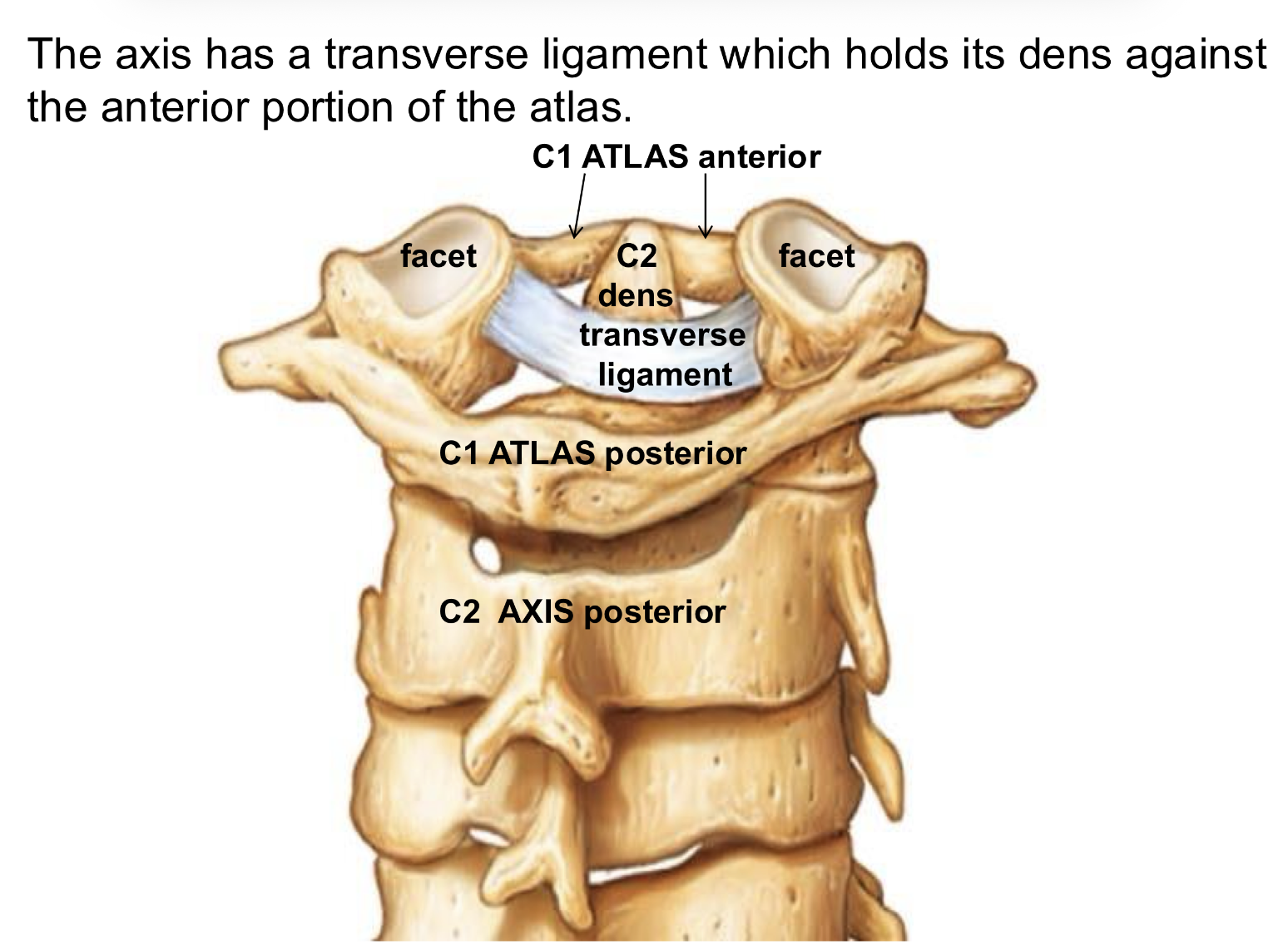
Dens
Tooth-like projection on C2.
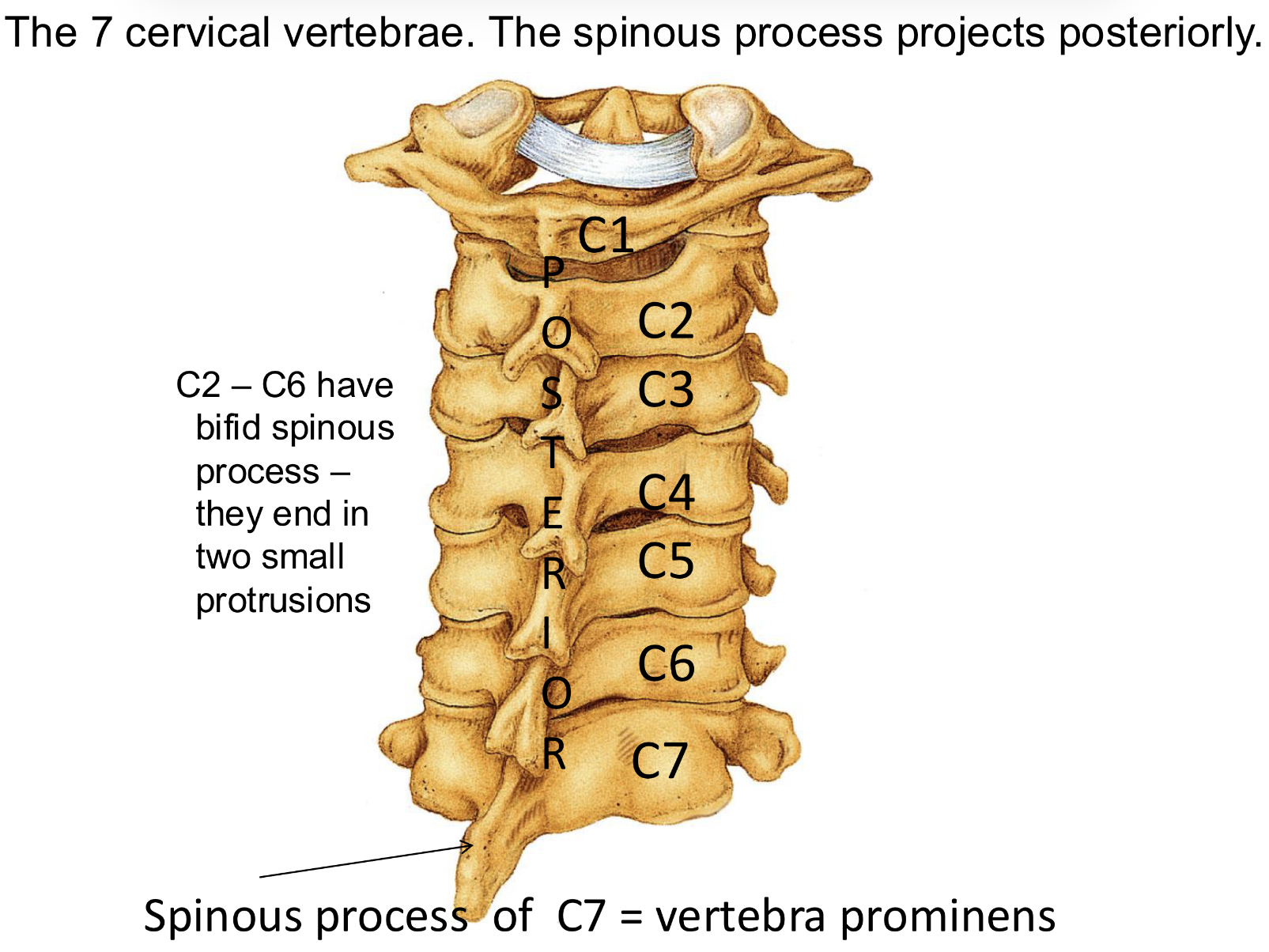
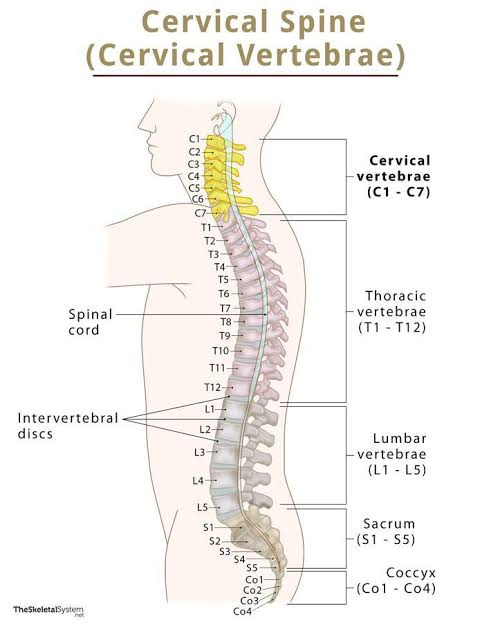
Cervical Vertebrae Types of vertebrae
C1-C7;
a) Small body
b) Bifurcated small spinous process (except for C7)
c) *Key feature = Transverse foramen (holes) in transverse process
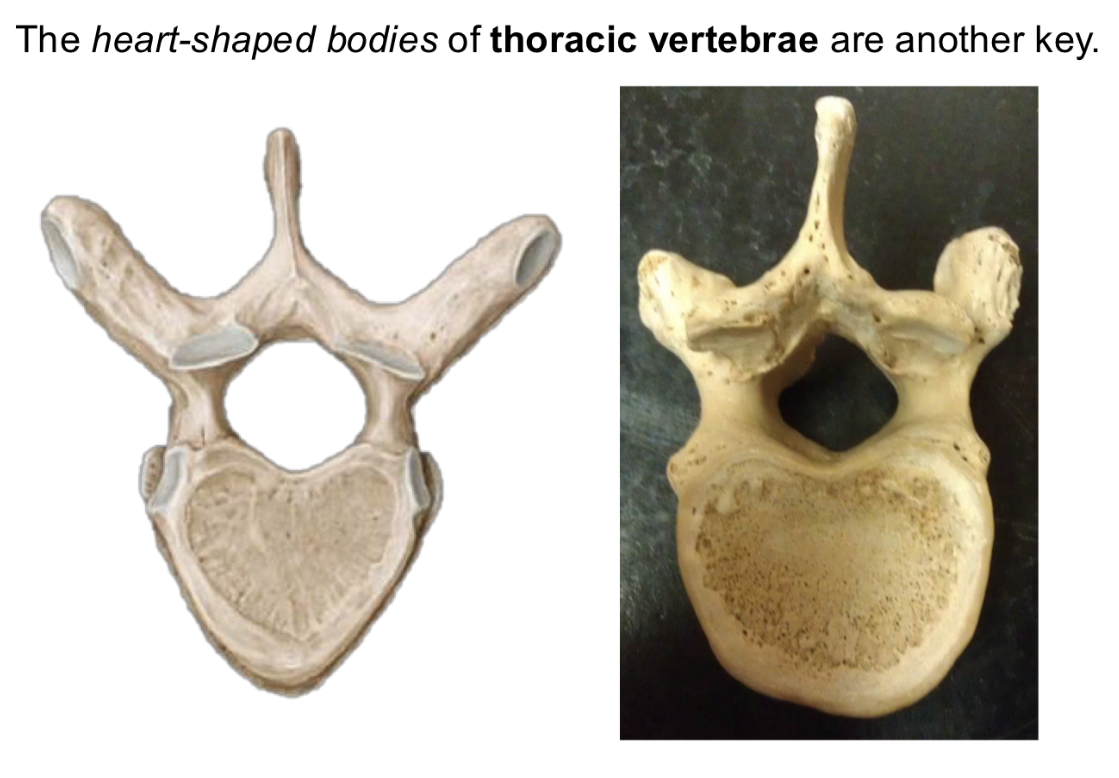
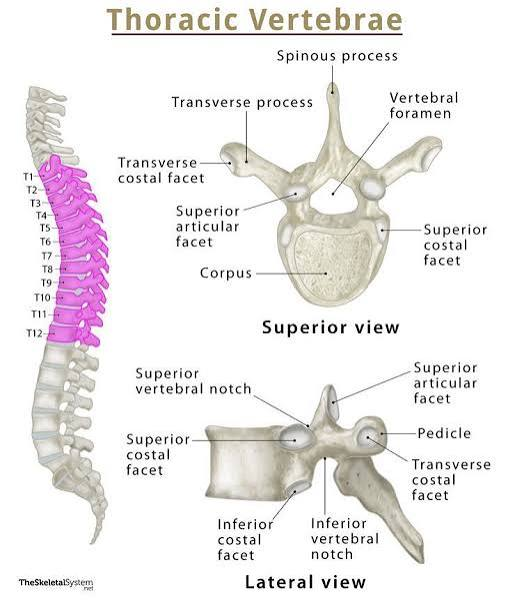
Thoracic Vertebrae Types of vertebrae
T1-T12;
a) Medium heart-shaped body
b) Long spinous process
c) *Key feature = Costal facet (smooth area) on transverse process
for rib attachments
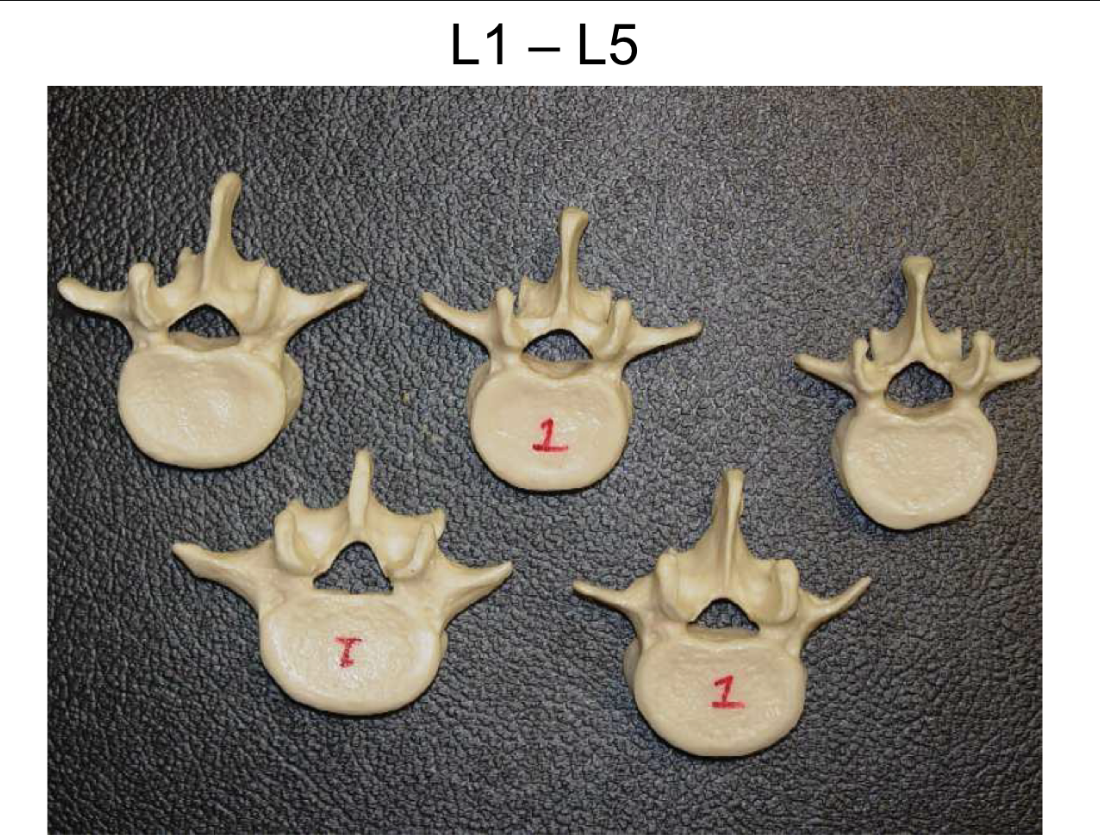
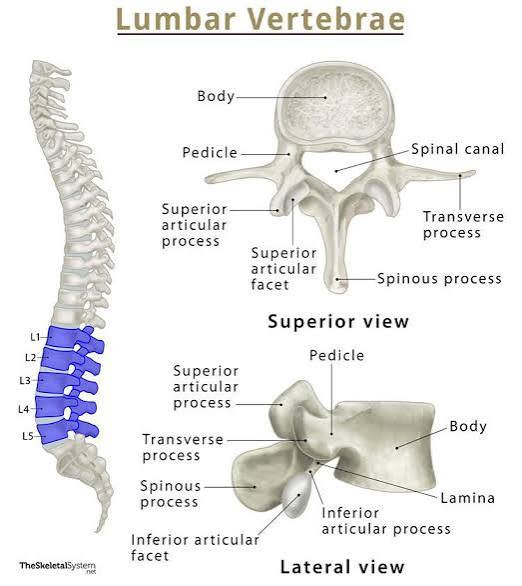
Lumbar Vertebrae Types of vertebrae
L1-L5; largest vertebrae; support body weight.
a) Large body
b) Short thick spinous process
c) *Key feature = Transverse process also short and thick
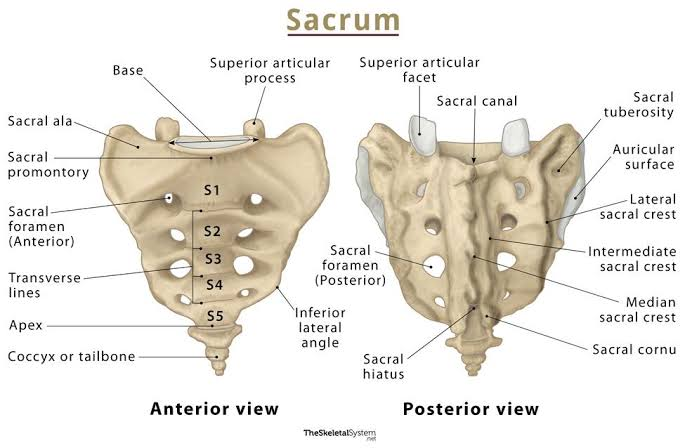
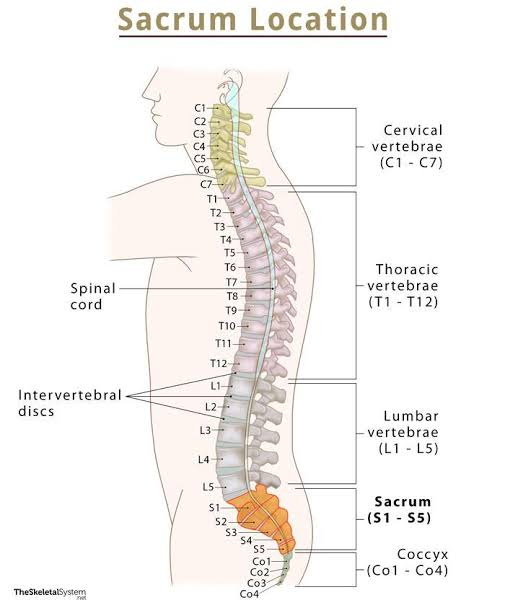
Sacrum Types of vertebrae
5 fused vertebrae.
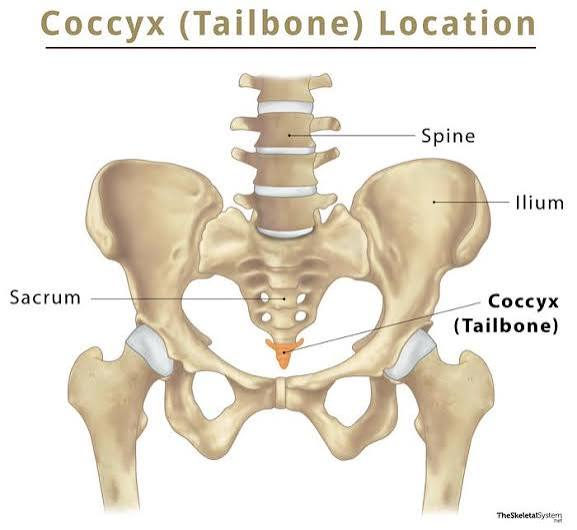
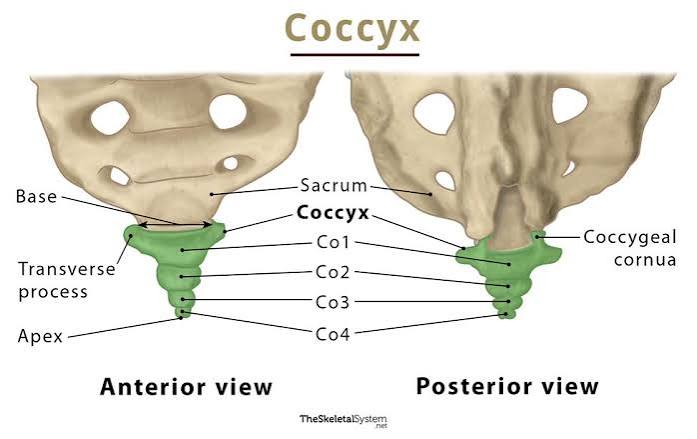
Coccyx Types of vertebrae
Tailbone.
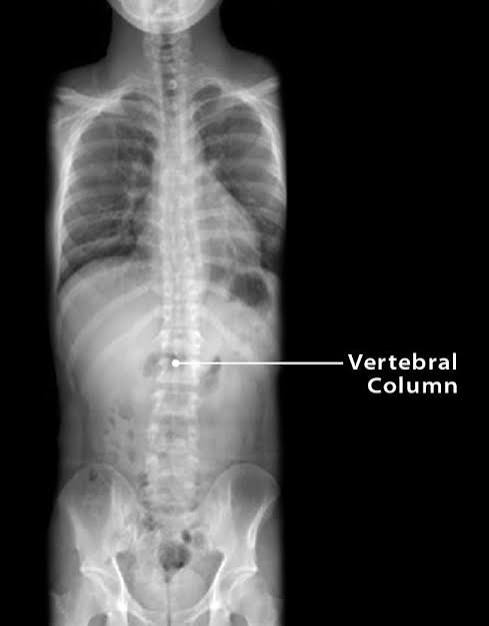
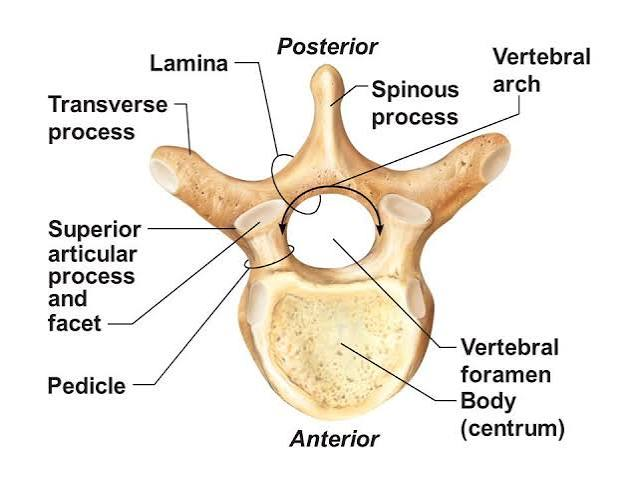
Vertebral Body
Large anterior weight-bearing portion.
Spinous Process Typical vertebra parts
Posterior projection. dorsal extension
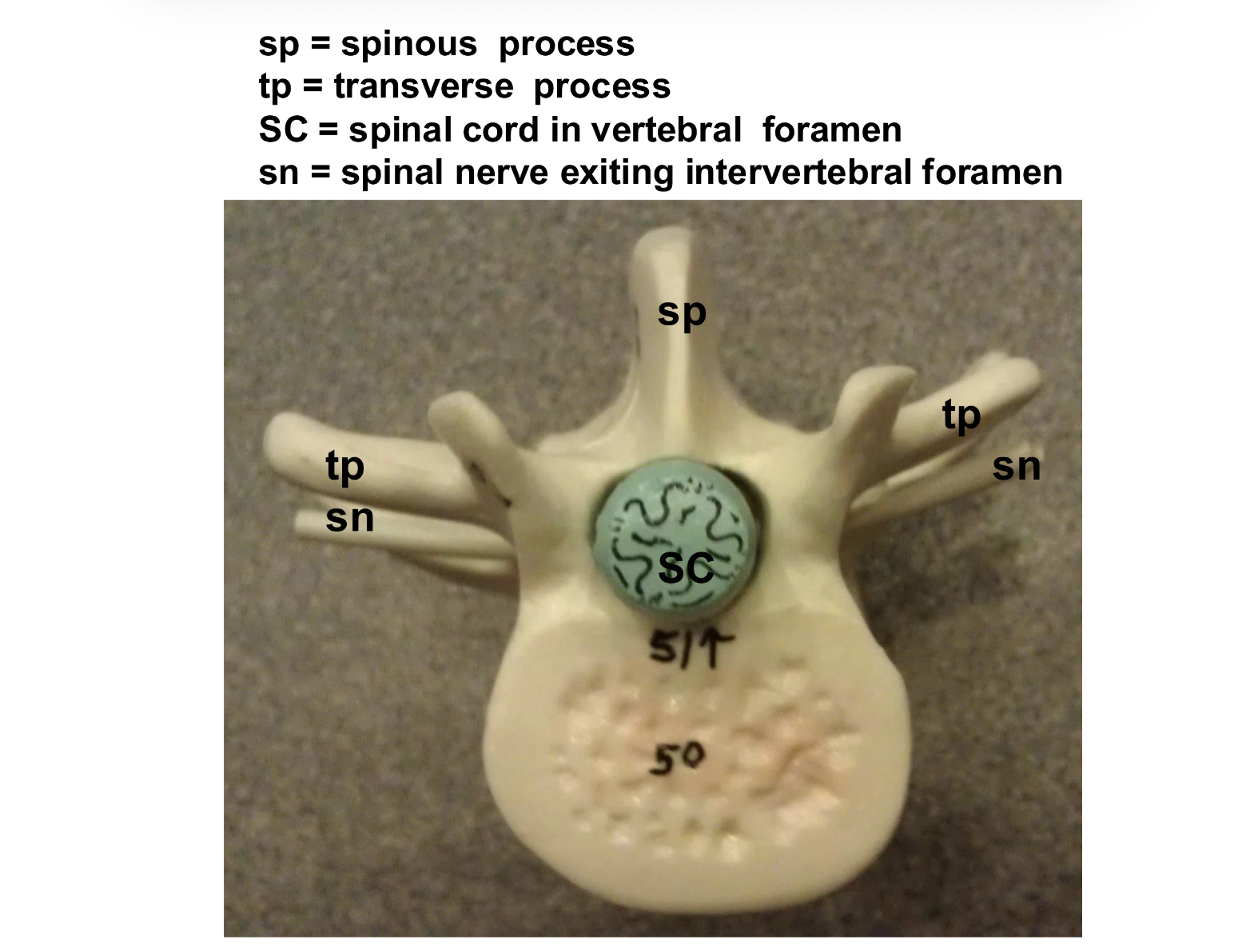
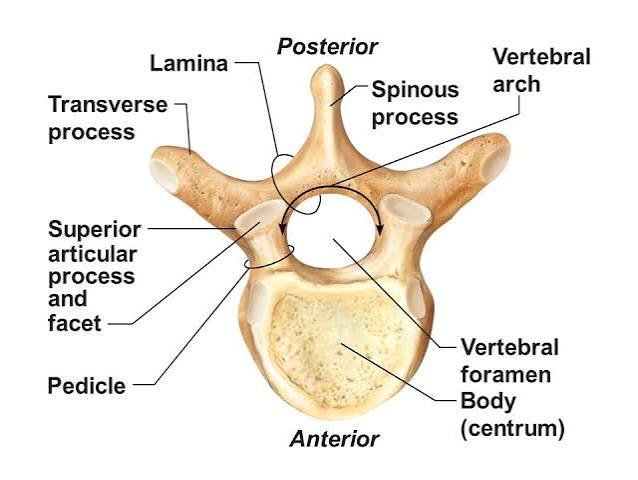
Transverse Process x 2 Typical vertebra parts
Lateral projection.
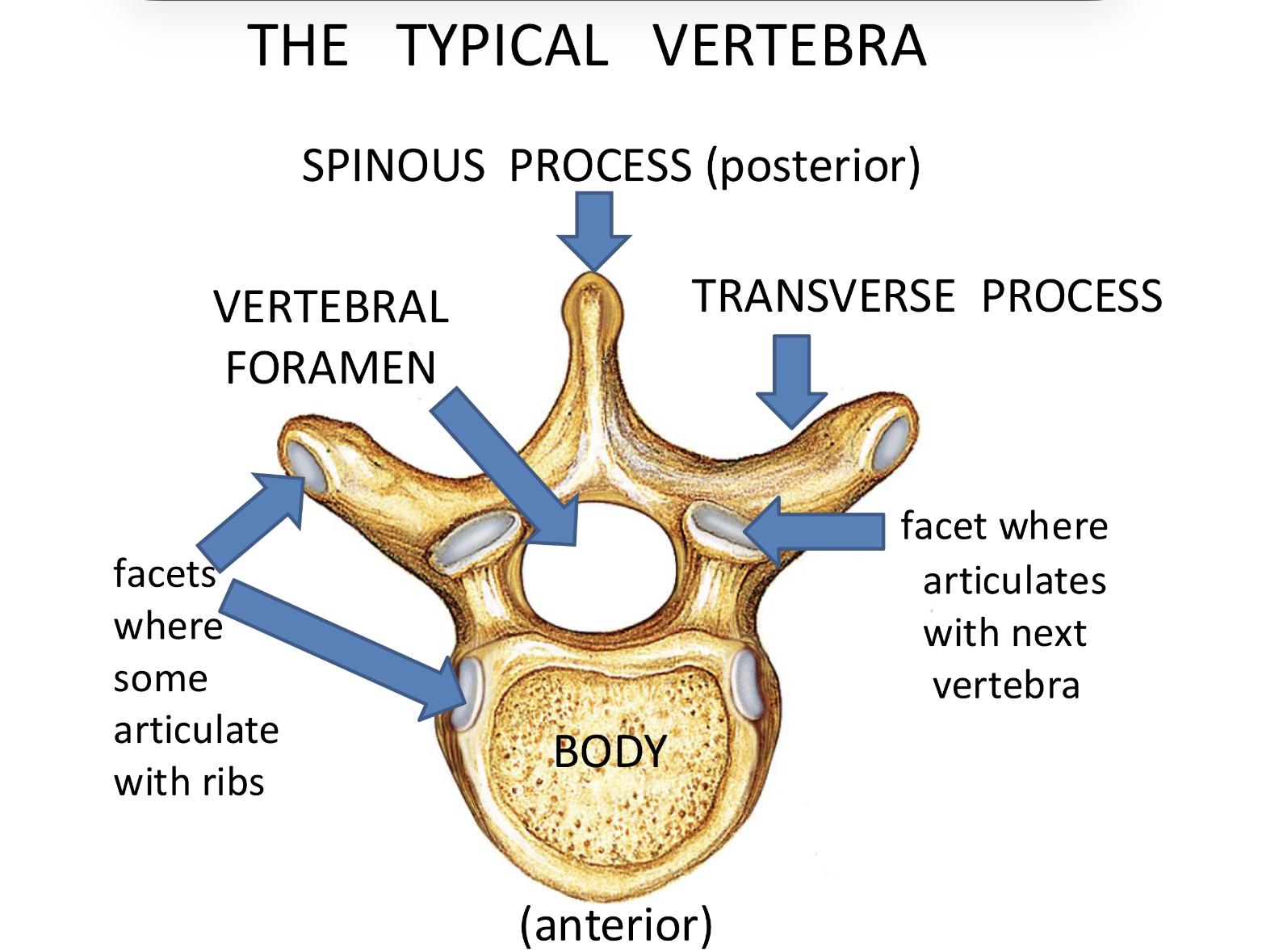
Vertebral Foramen Typical vertebra parts
Hole for spinal cord between body and spinous process
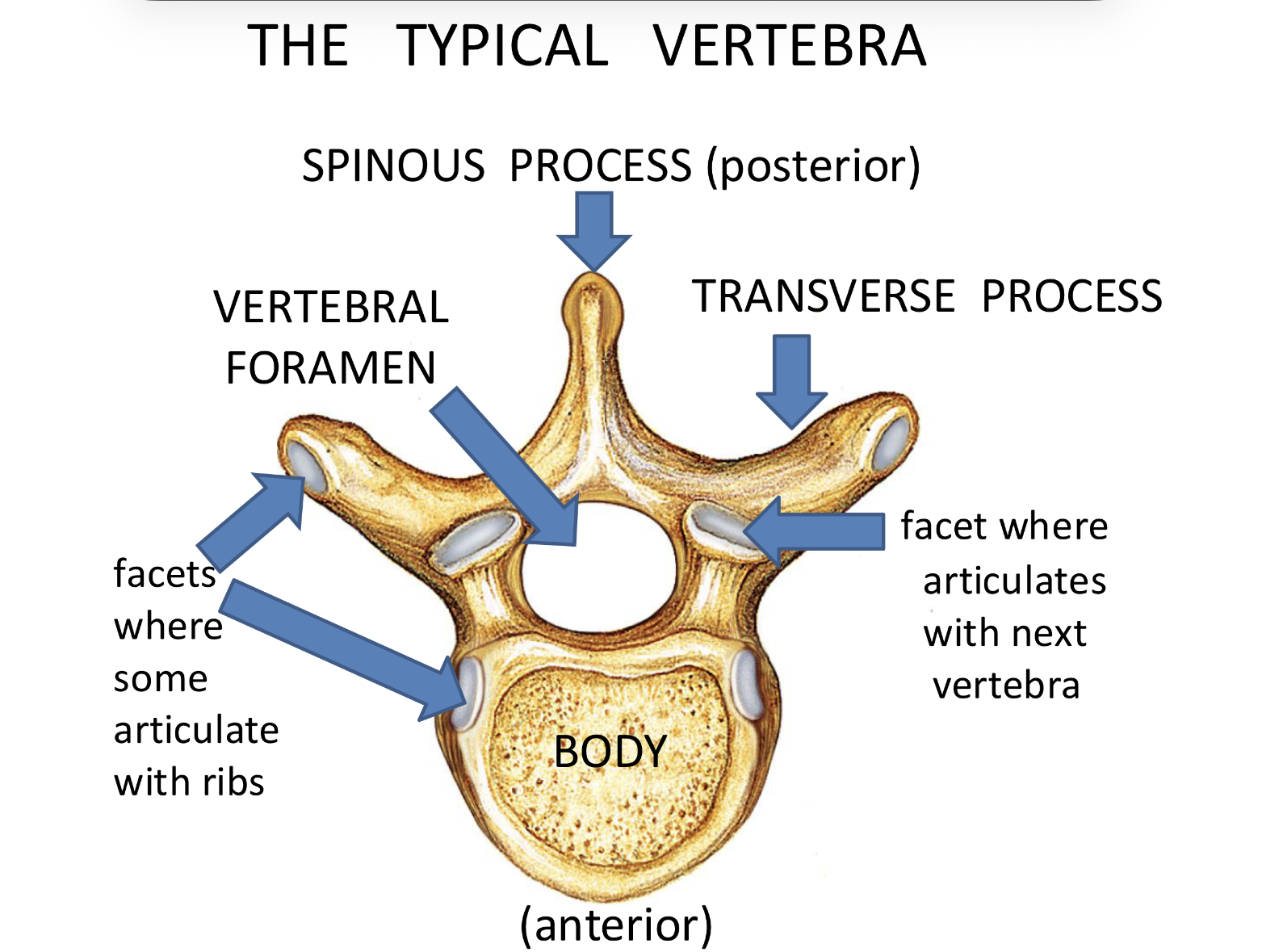
Facet Typical vertebra parts
Smooth areas where other bones meet the vertebrae
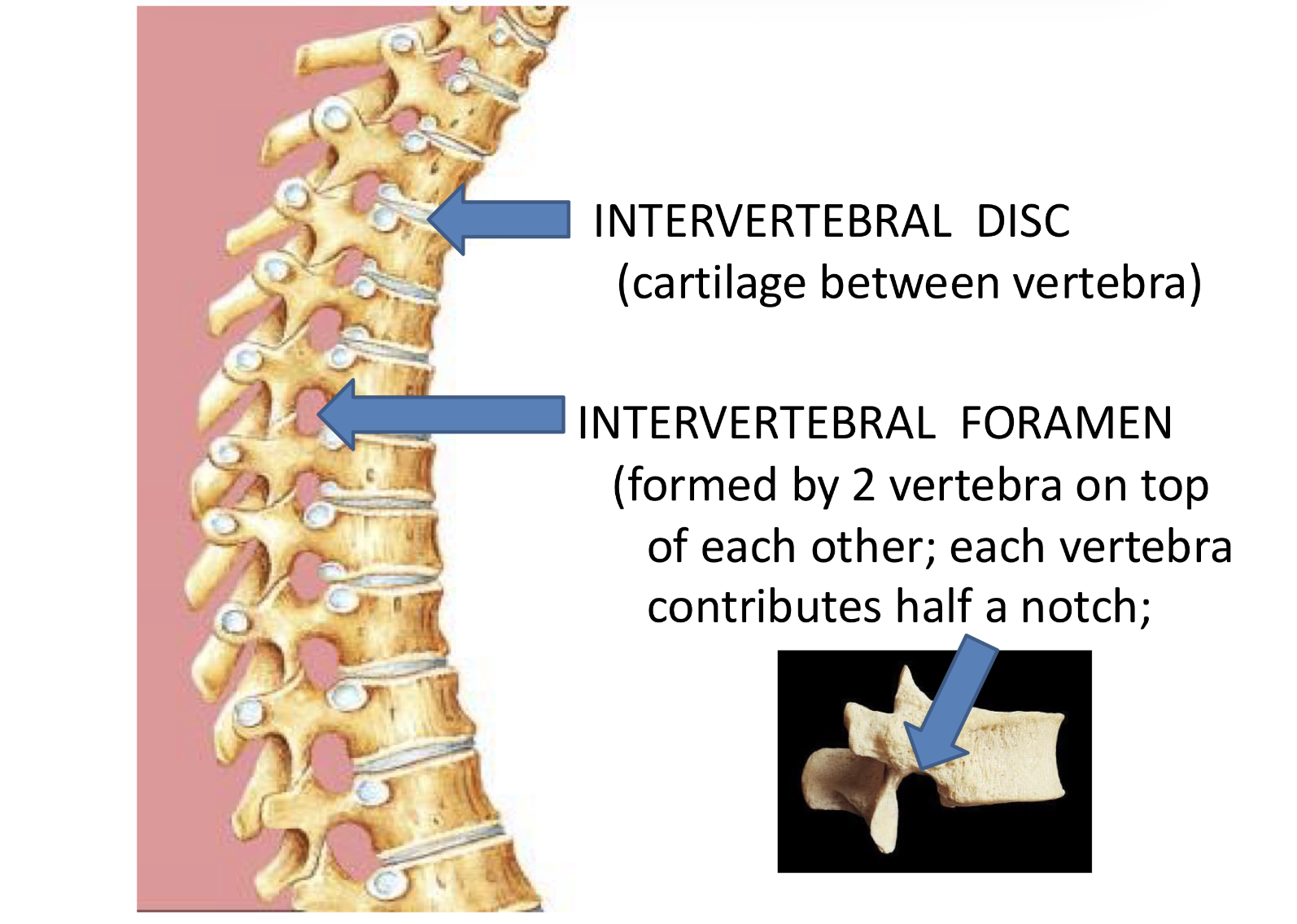
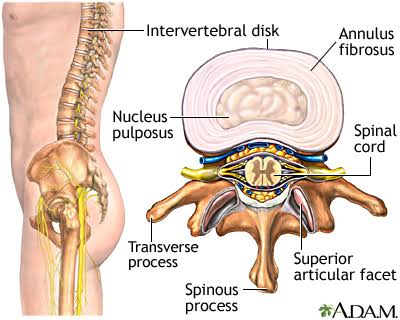
Intervertebral Disc Typical vertebra parts
Fibrocartilage cushion between vertebrae.
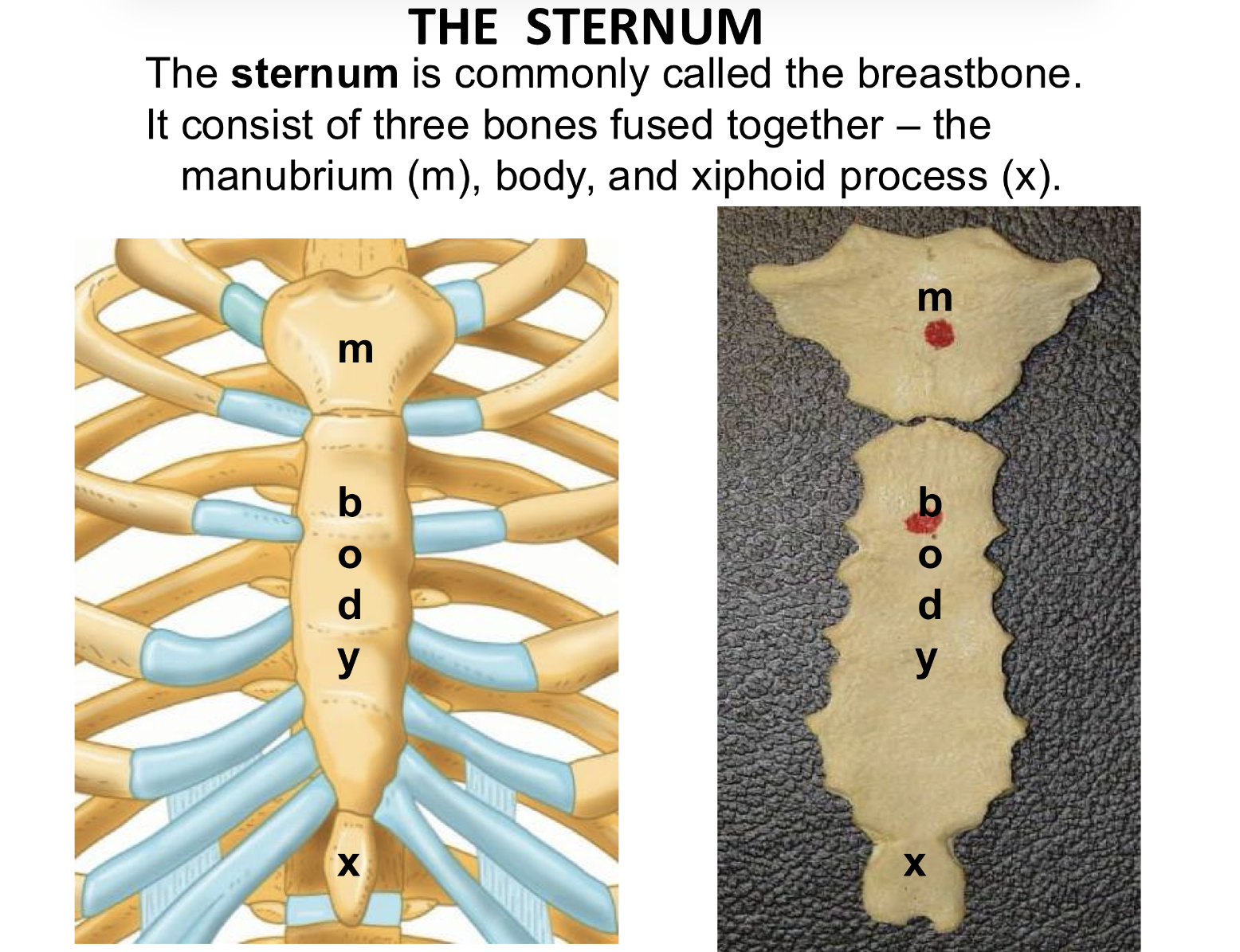
Sternum
Breastbone in center of chest. Note Xiphoid process (flexible inferior extension) which is a landmark for CPR
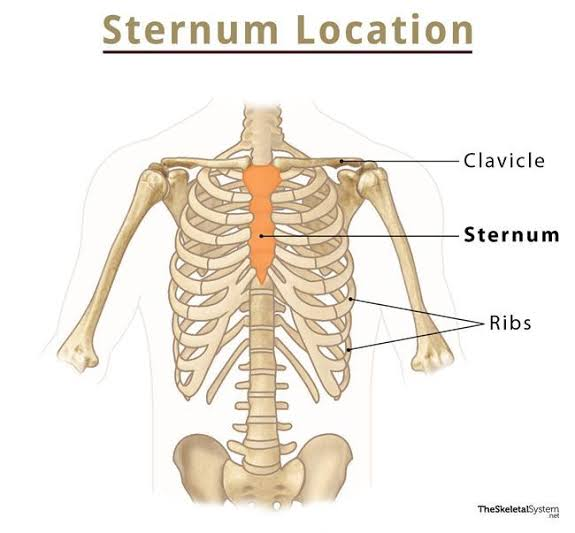
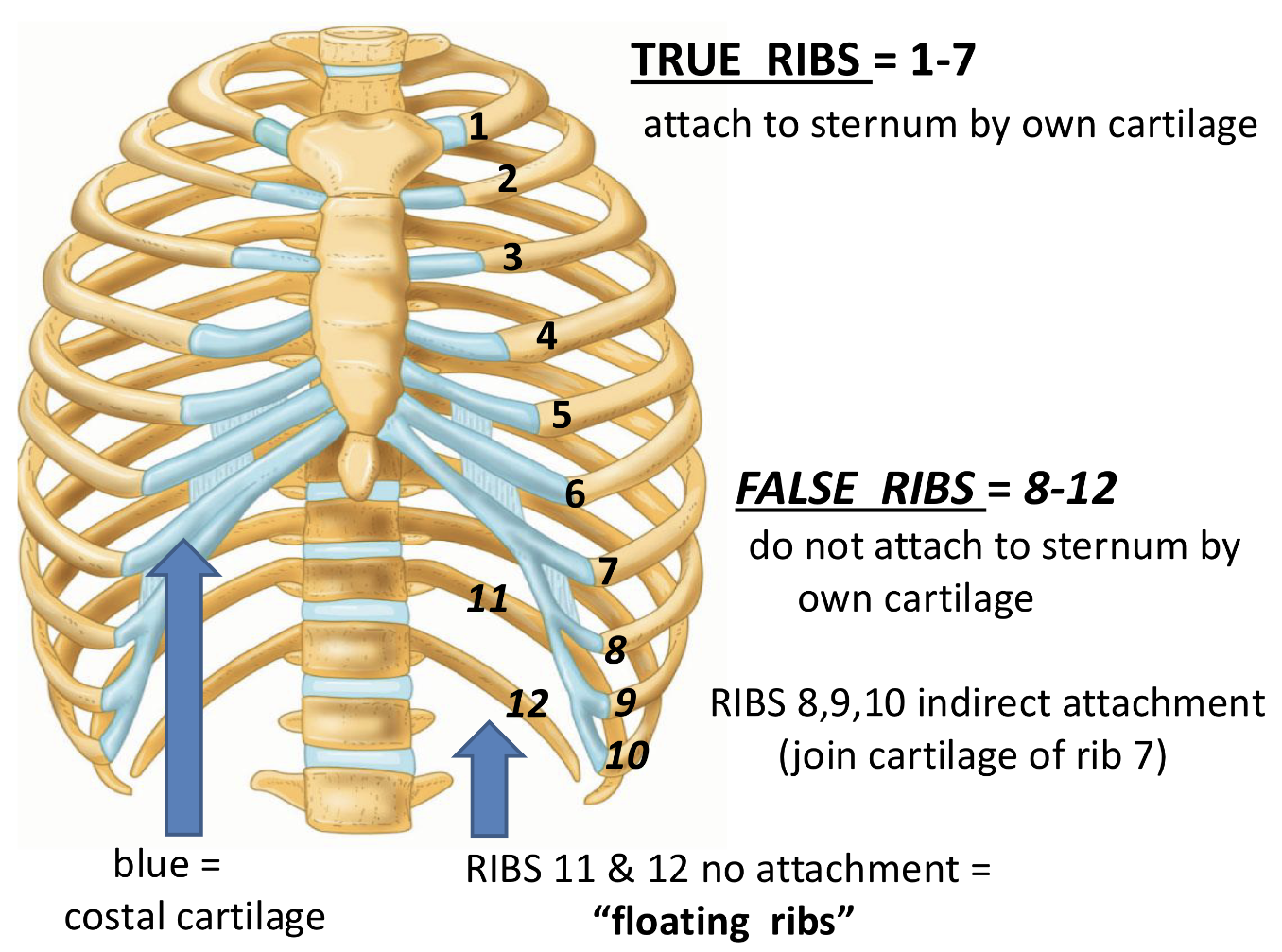
Ribs 1 – 12 (know there are 12 pairs and that superior ones are quite short)
12 pairs.
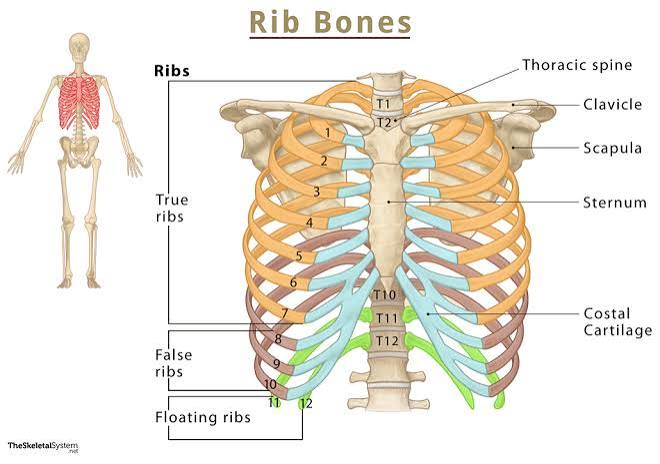
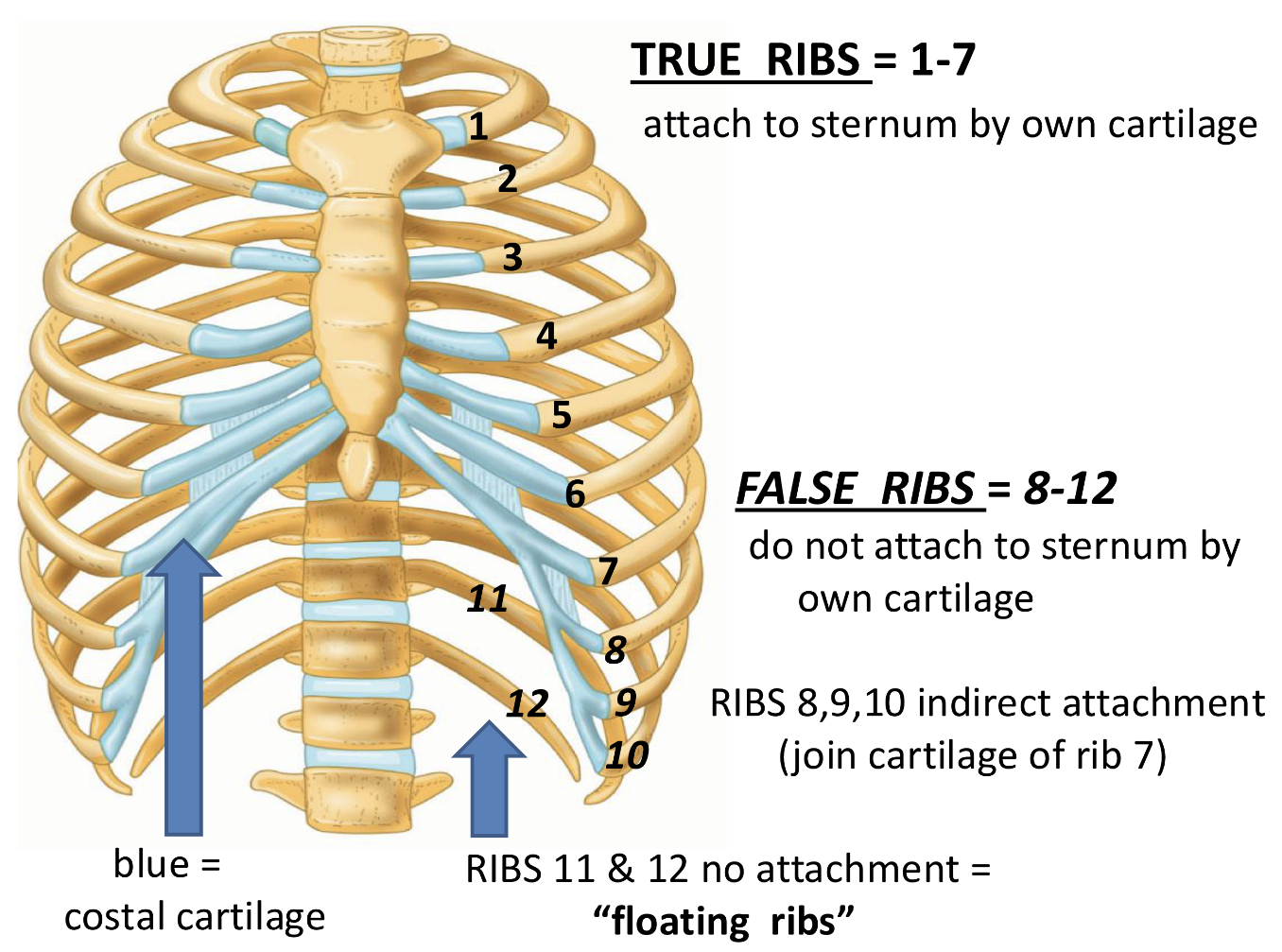
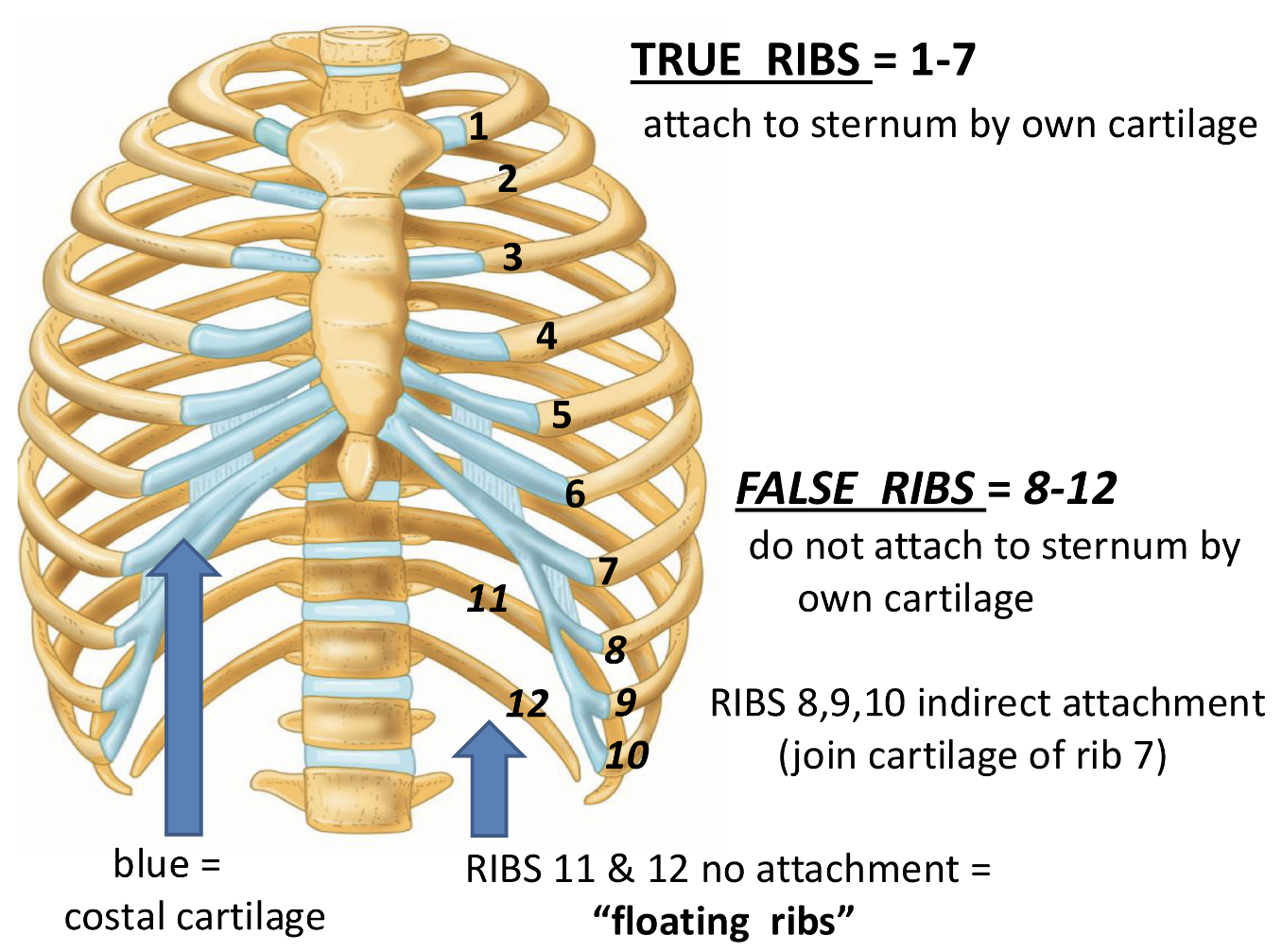
Ribs 1-10 Ribs
Connect anteriorly to sternum and posteriorly to vertebra
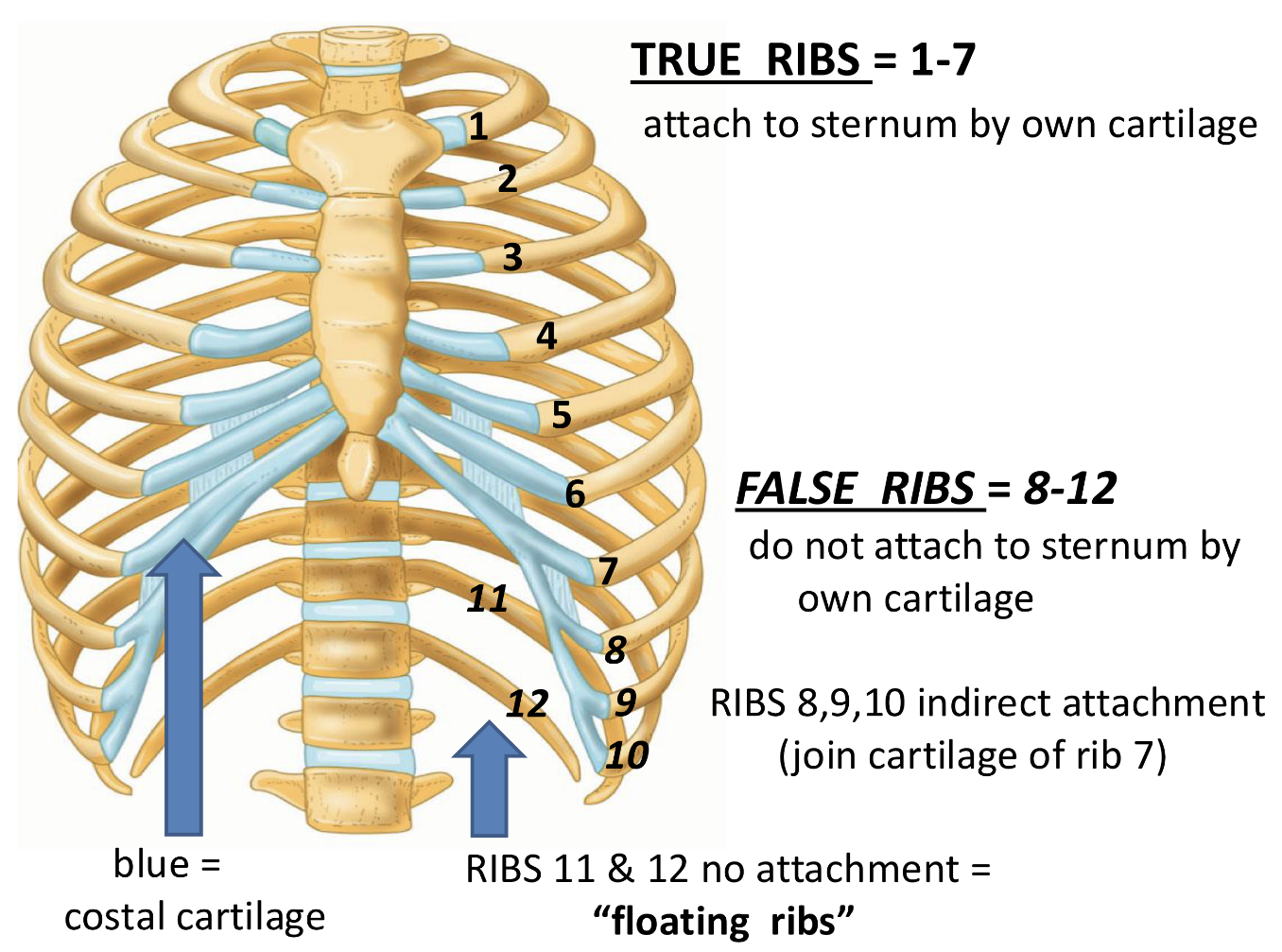
Floating Ribs Ribs
Ribs 11-12; no attachment to sternum.
Costal Cartilage Ribs
Where ribs 1-10 connect to sternum
Scapula The Shoulder
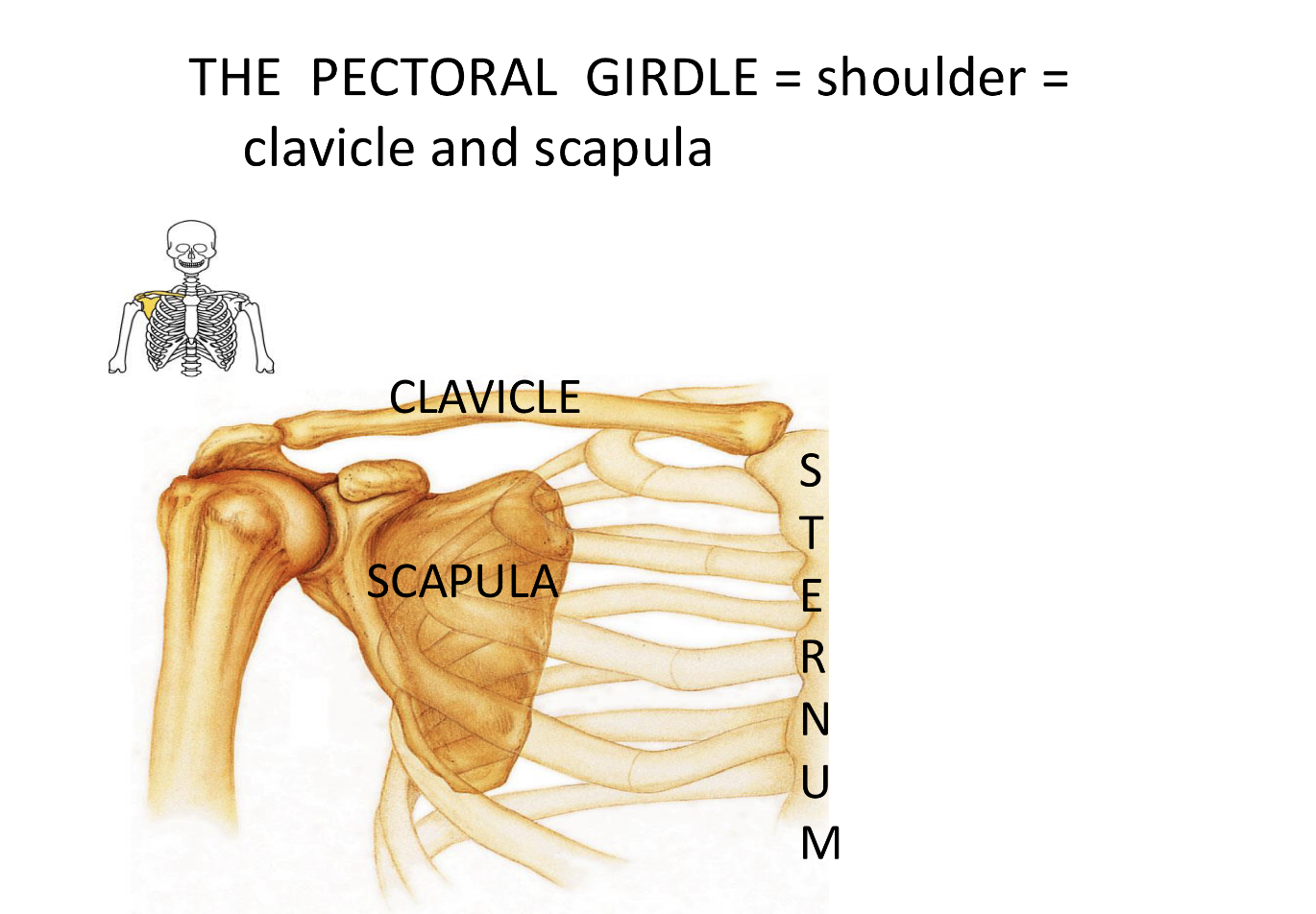
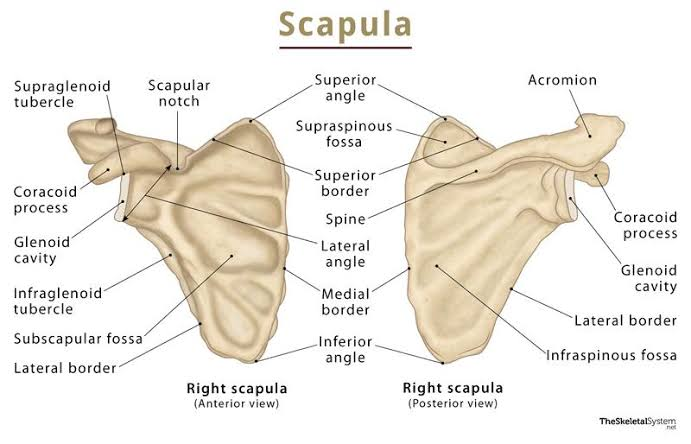
Shoulder blade.
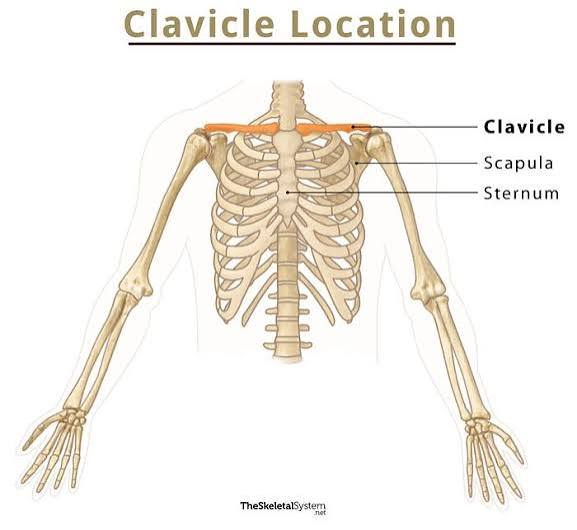
Clavicle The Shoulder
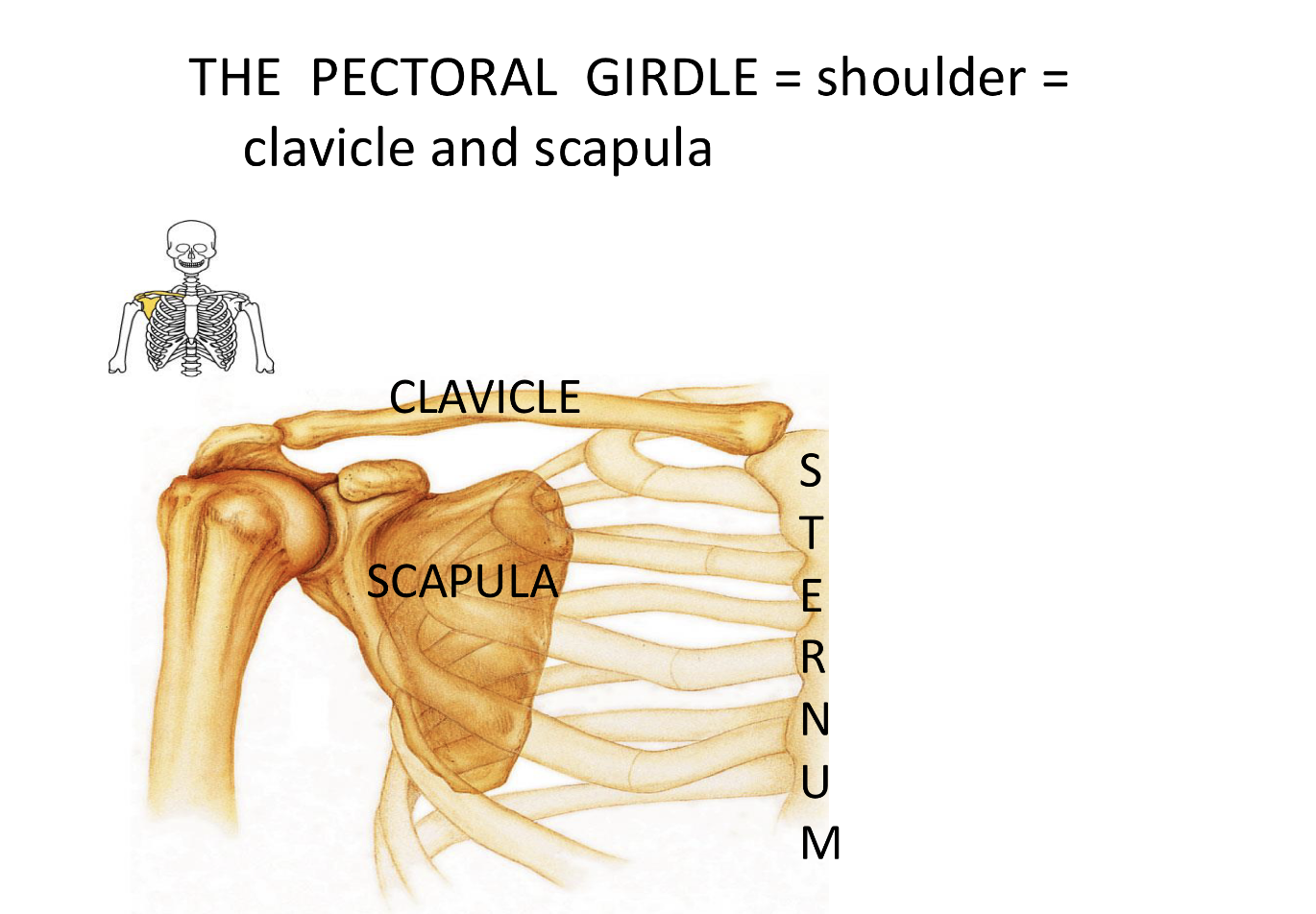
Collarbone.
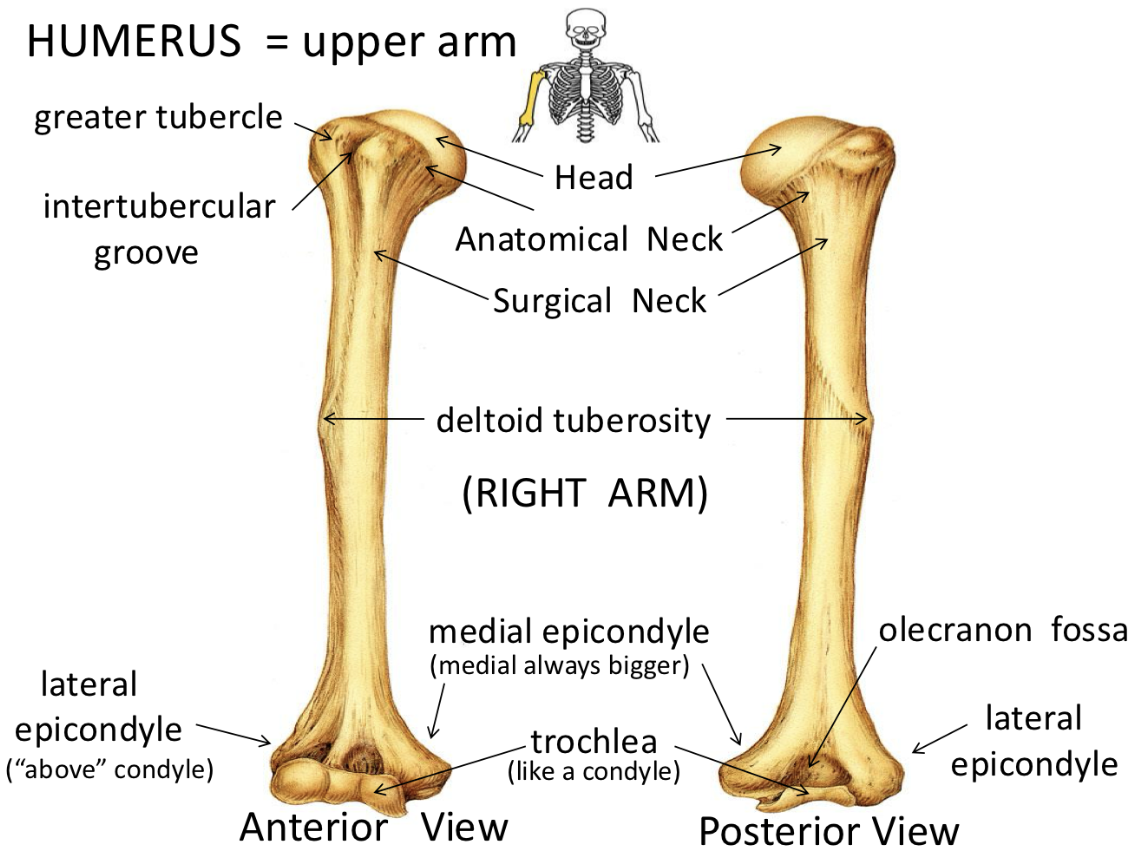
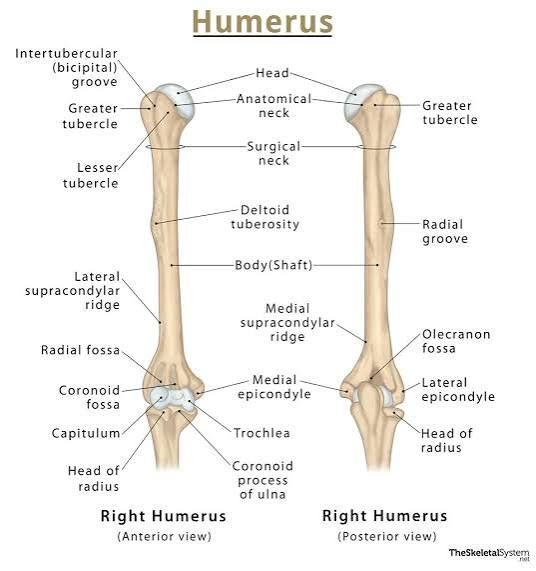
Humerus The Arm
Upper arm bone.
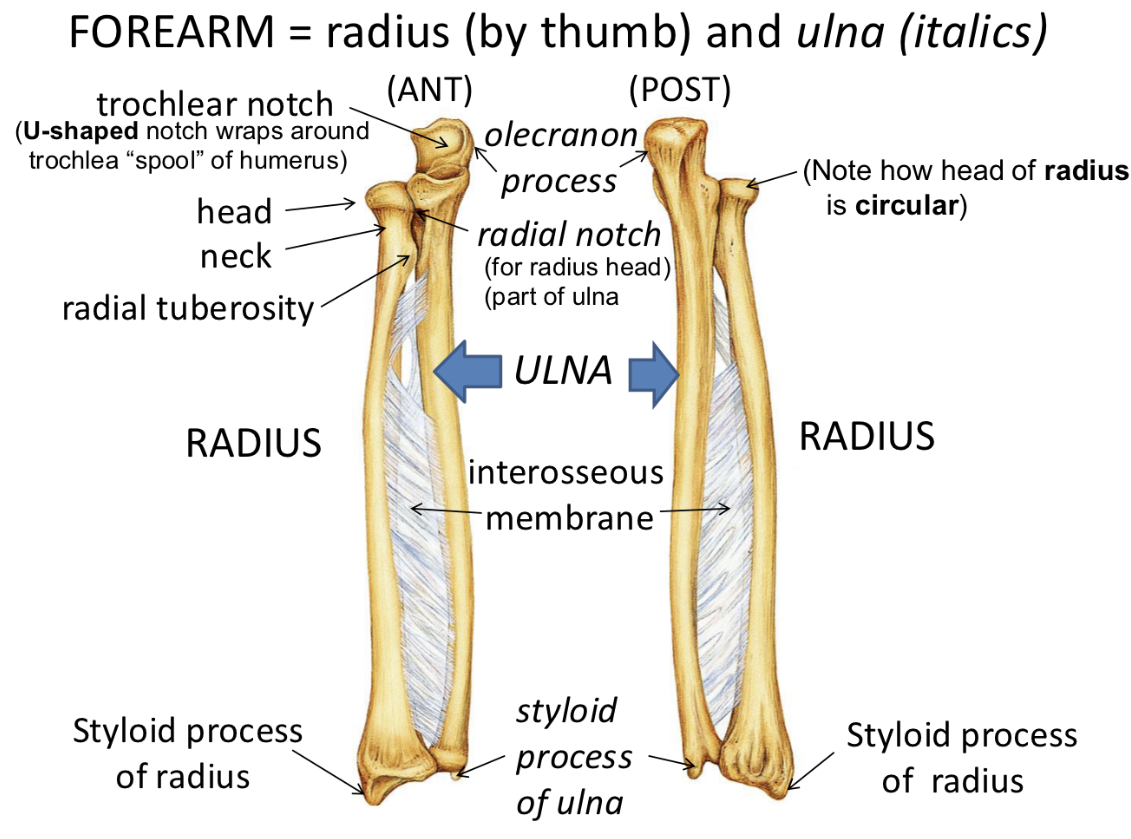
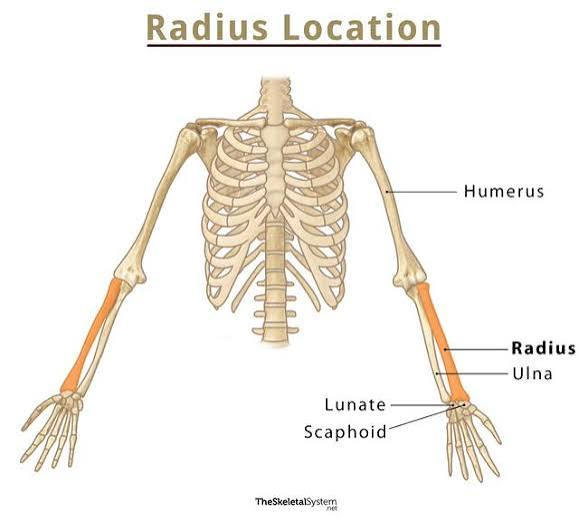
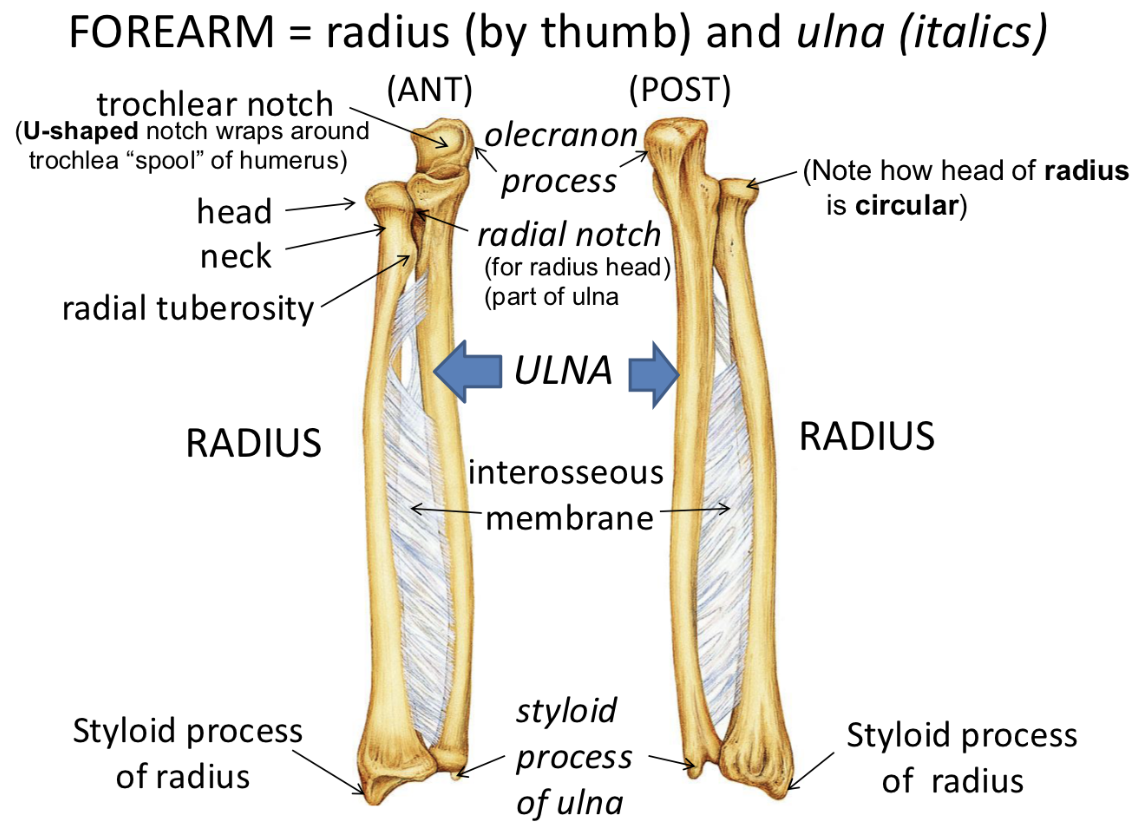
Radius The Shoulder
Thumb side of forearm.
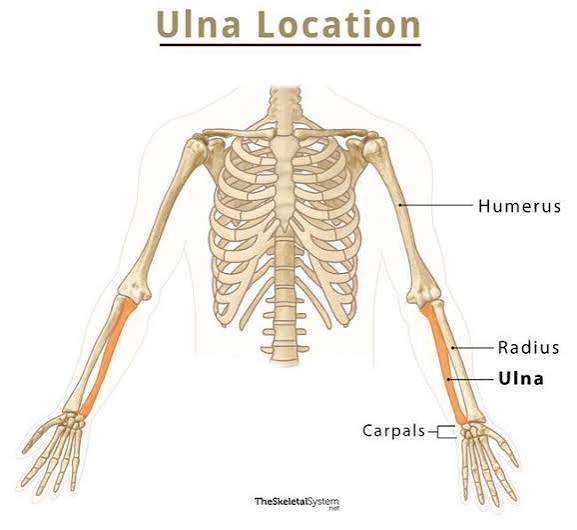
Ulna The Shoulder
Pinky side of forearm.
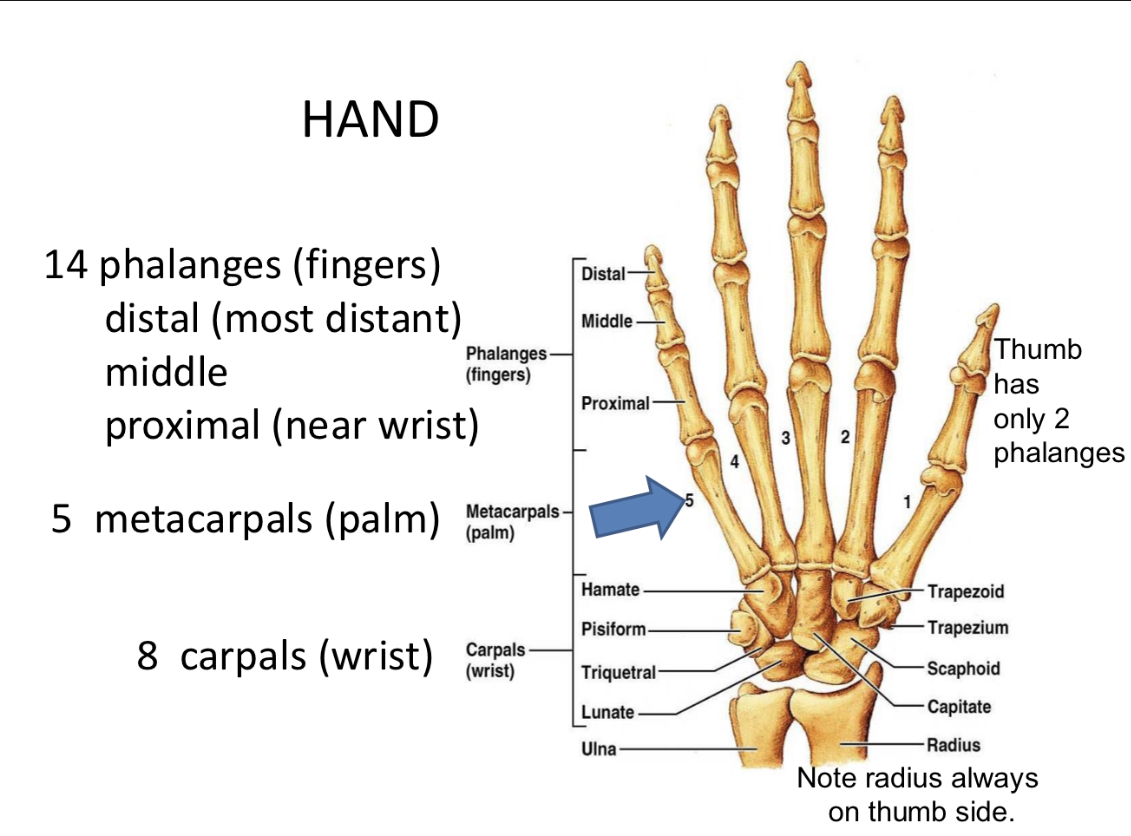
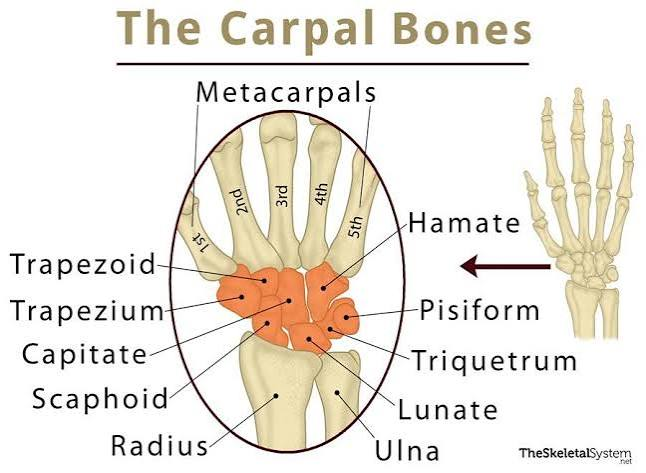
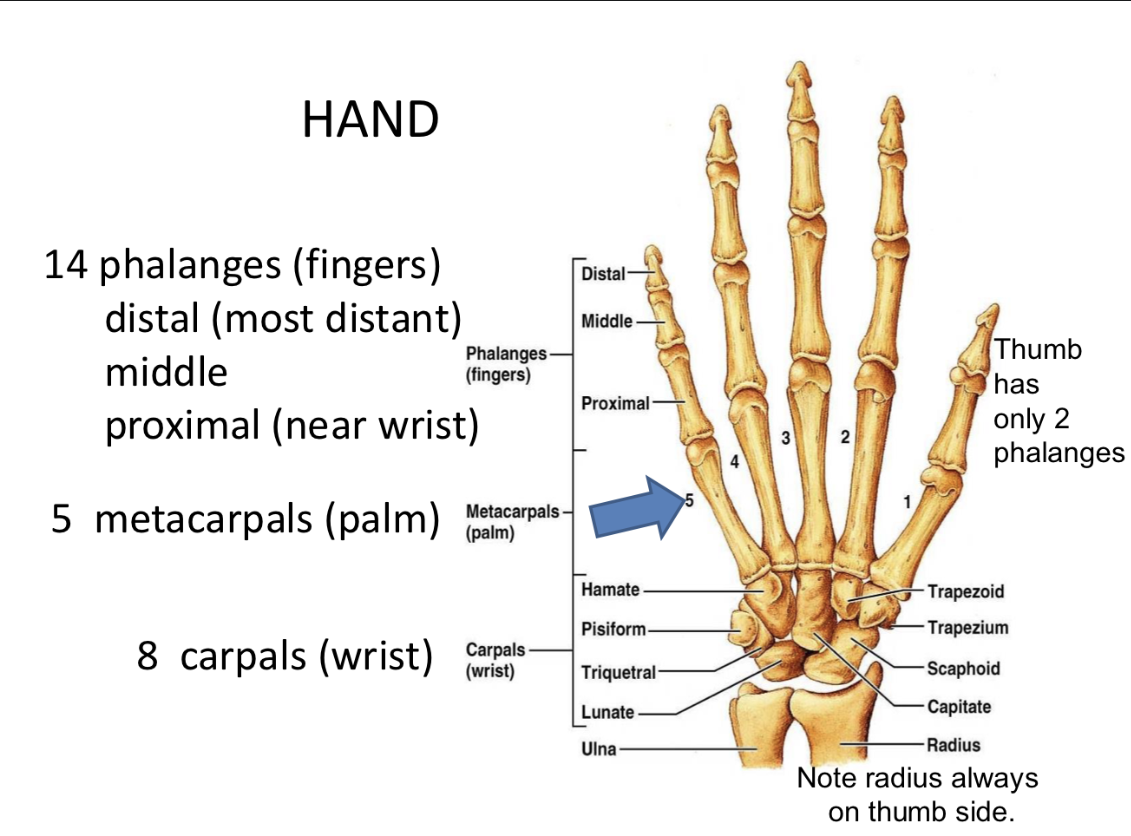
Carpals=Wrist The Hand
8 cubodial bones.
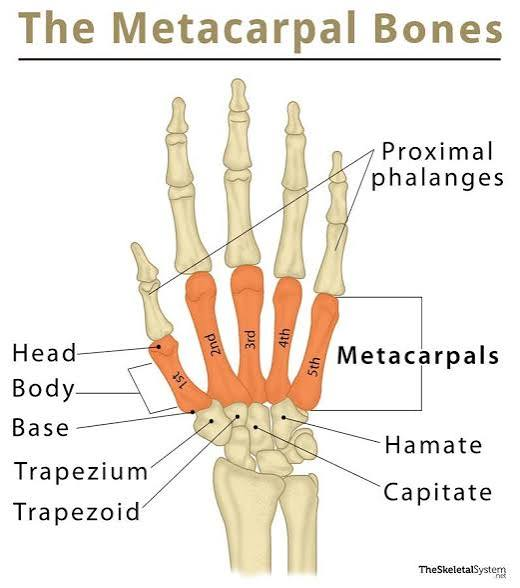
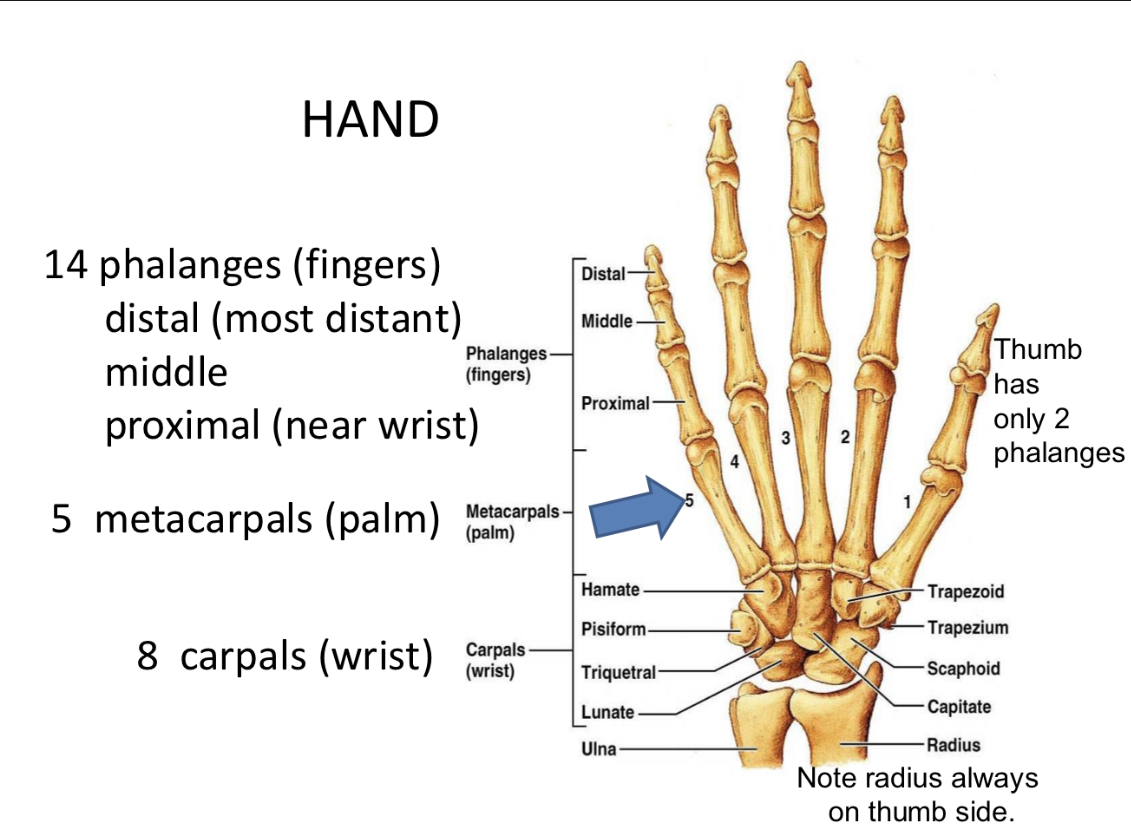
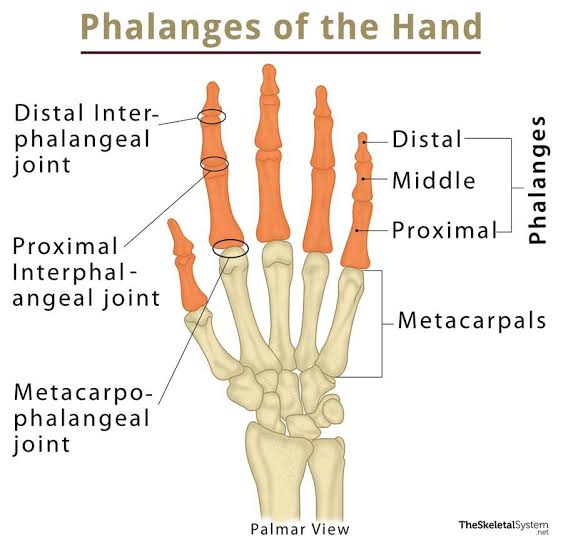
Metacarpals=Palm The Hand
5 long bones.
Phalanges=Fingers The Hand
14 long bones.
1) Proximal x 5 (closest to palm)
(2) Middle x 4
(3) Distal x 5 (most distant from palm)
(All fingers have 3 phalanges except thumb which has only 2 – proximal and distal)
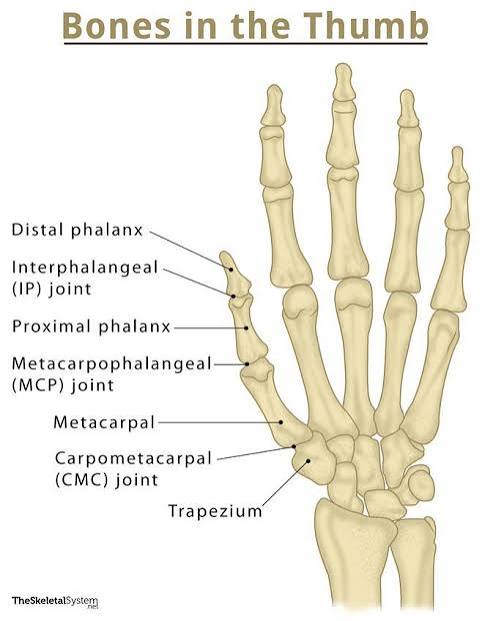
Thumb
Only 2 phalanges.
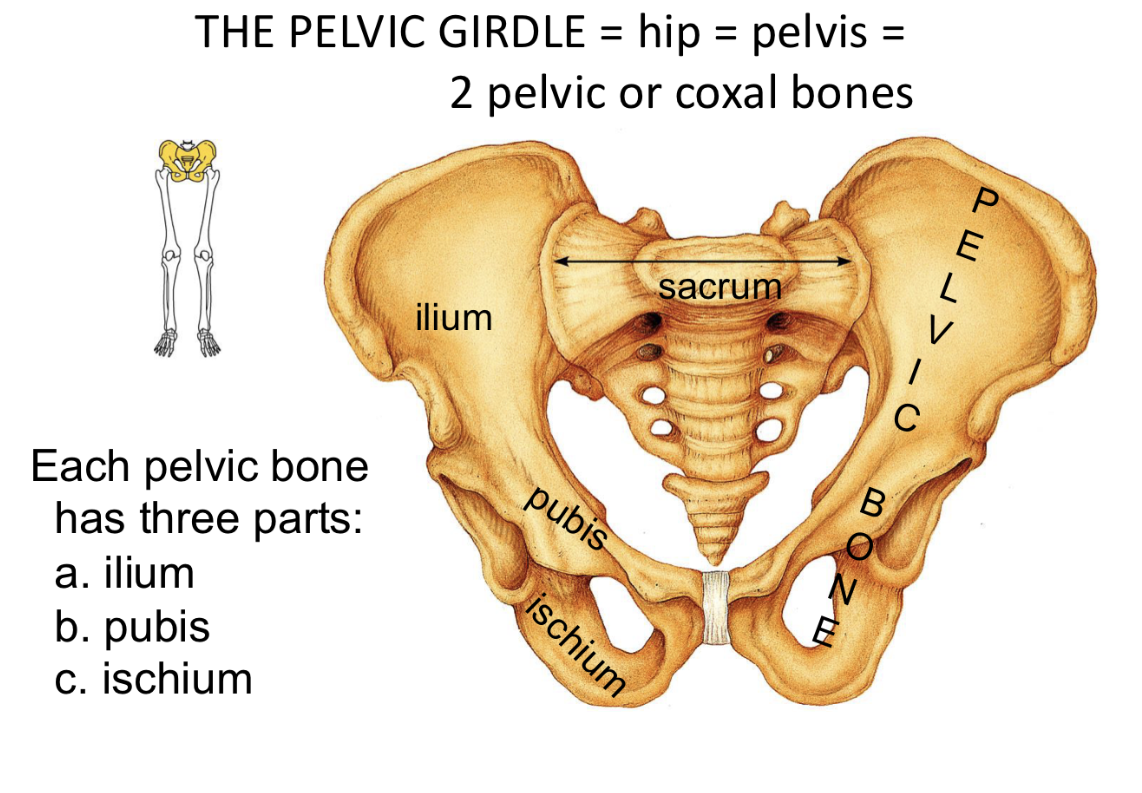
Pelvic Bone=Pelvis The Hip
Composed of ilium, ischium, and pubis.
(1) Ilium (large superior and lateral fanned out area)
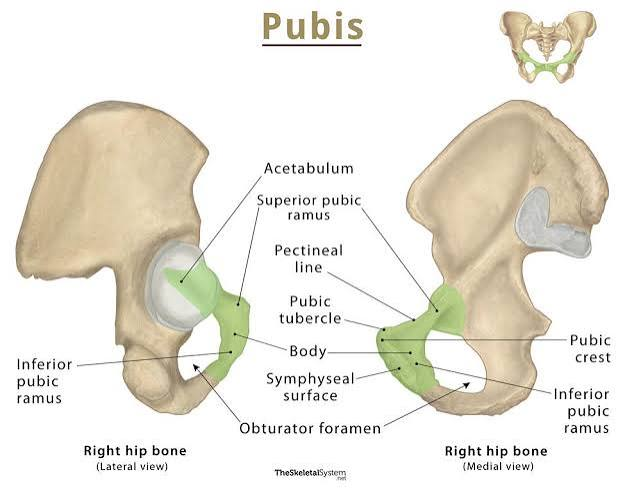
(2) Pubis (medial and anterior area)
(3) Ischium (inferior and posterior area)
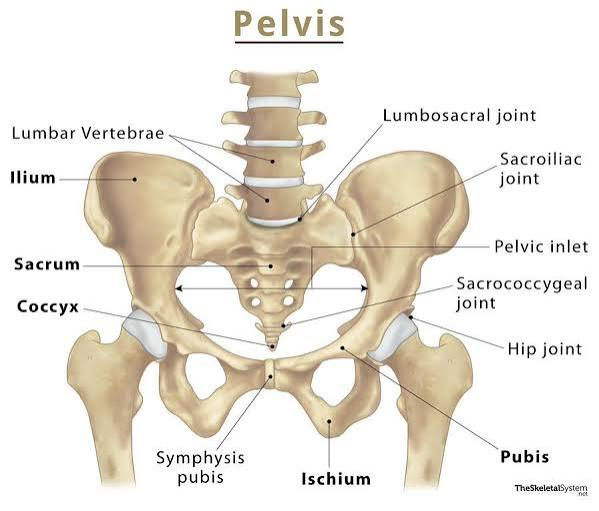
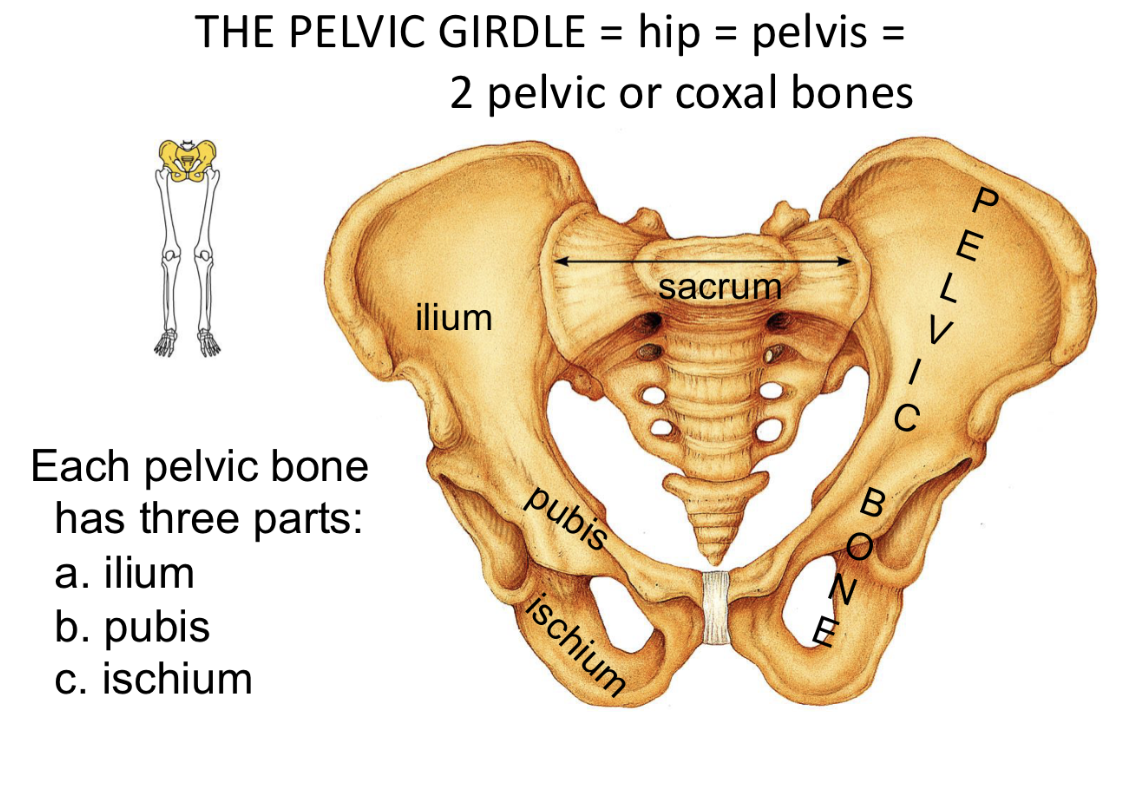
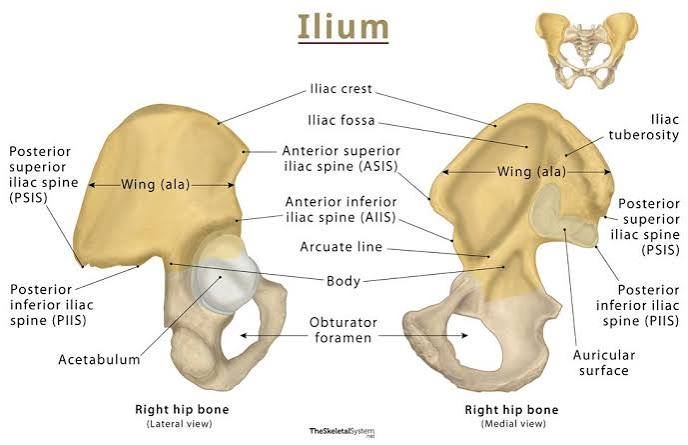
Ilium The Hip
Superior flared part.
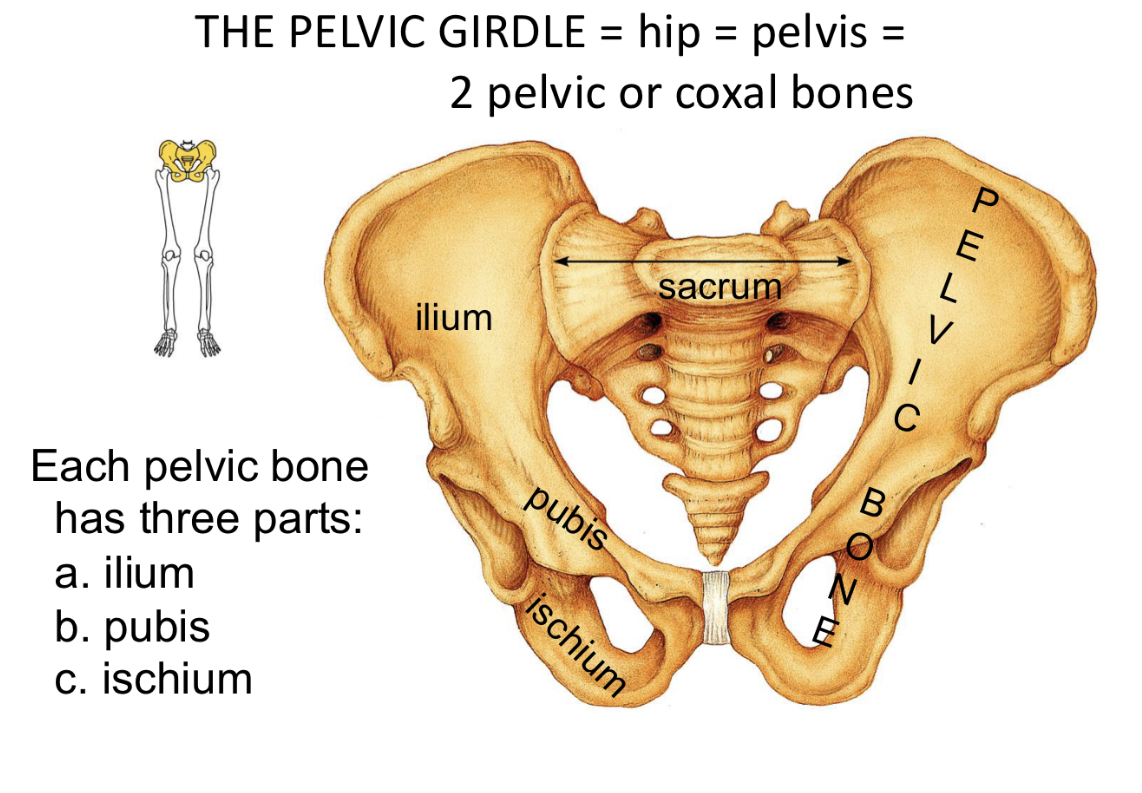
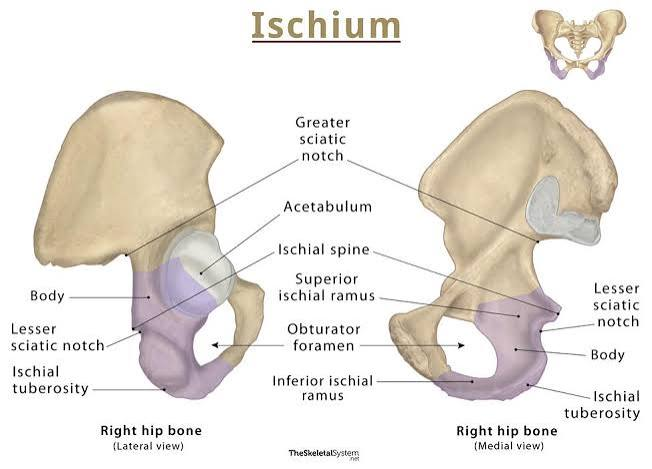
Ischium The Hip
Sit bone.
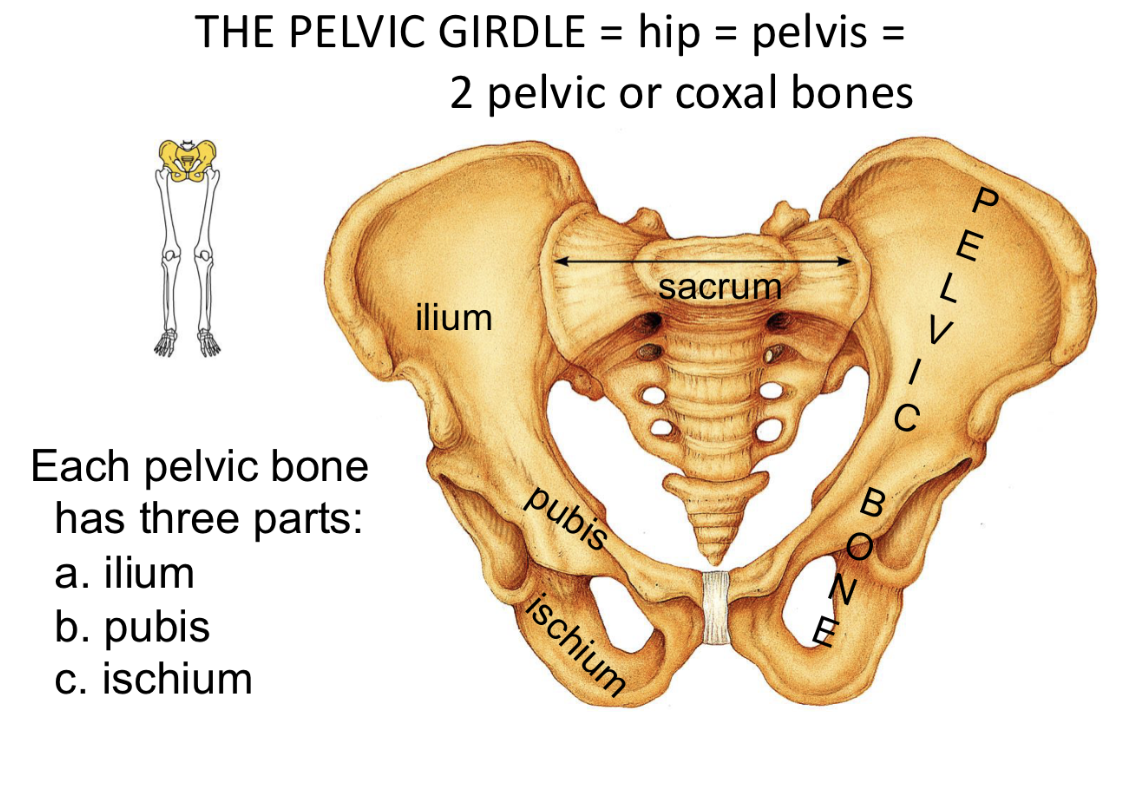
Pubis The Hip
Anterior/medial pelvis.
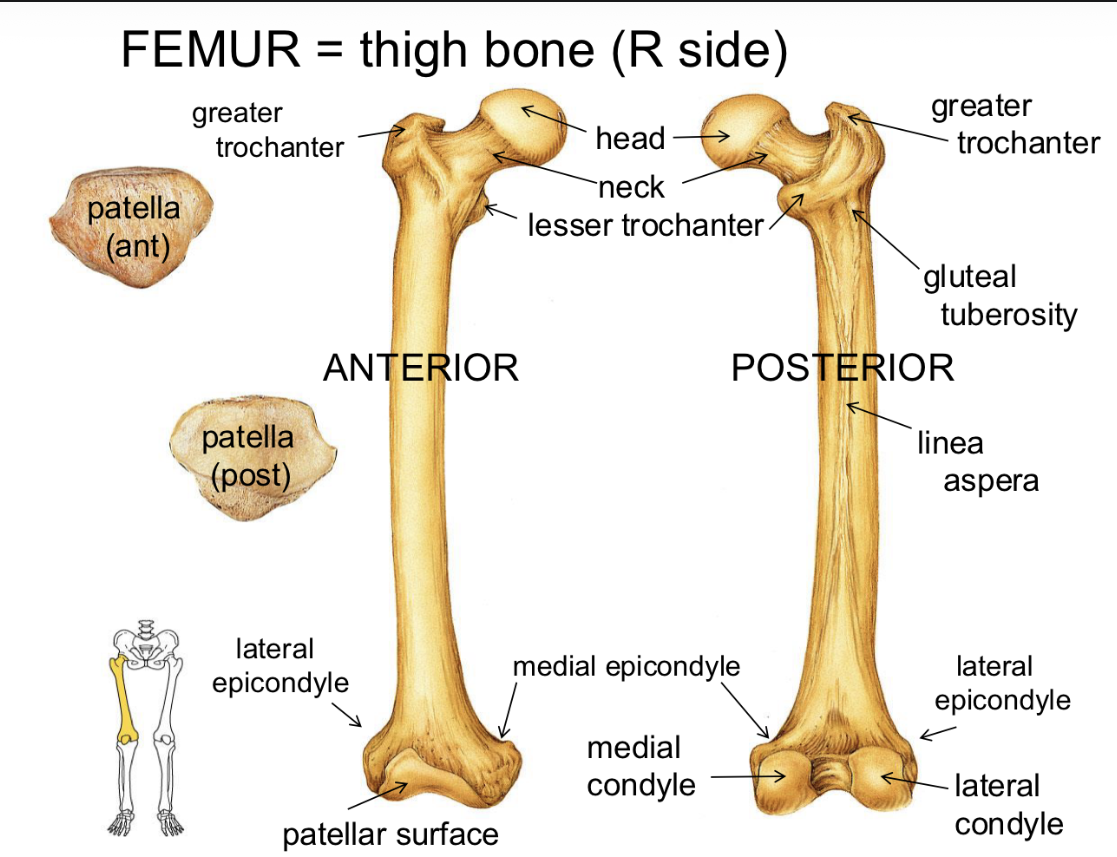
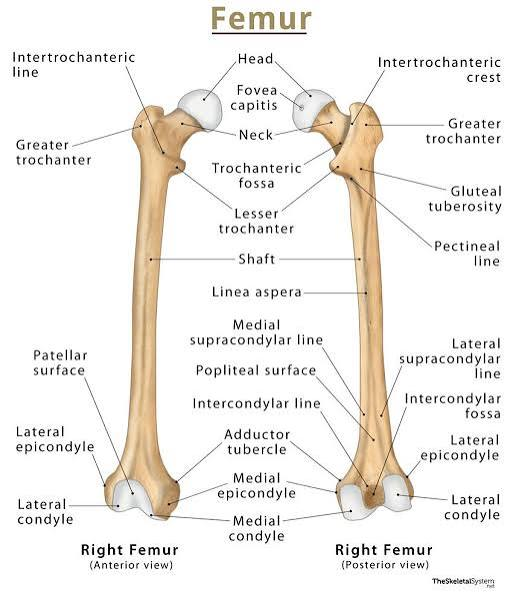
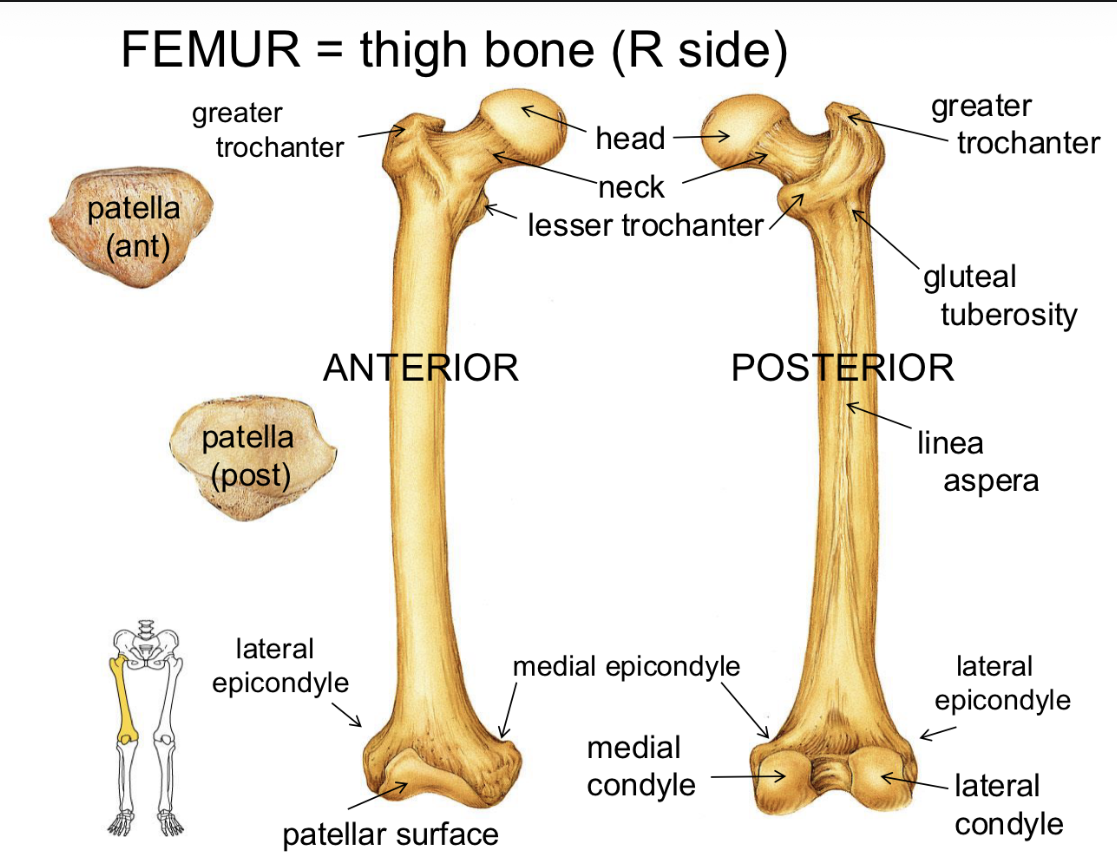
Femur The Leg
Thigh bone; longest bone.
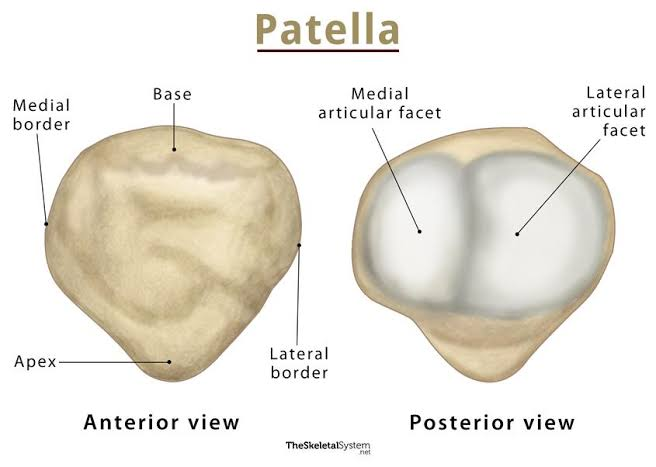
Patella The Leg
Kneecap.
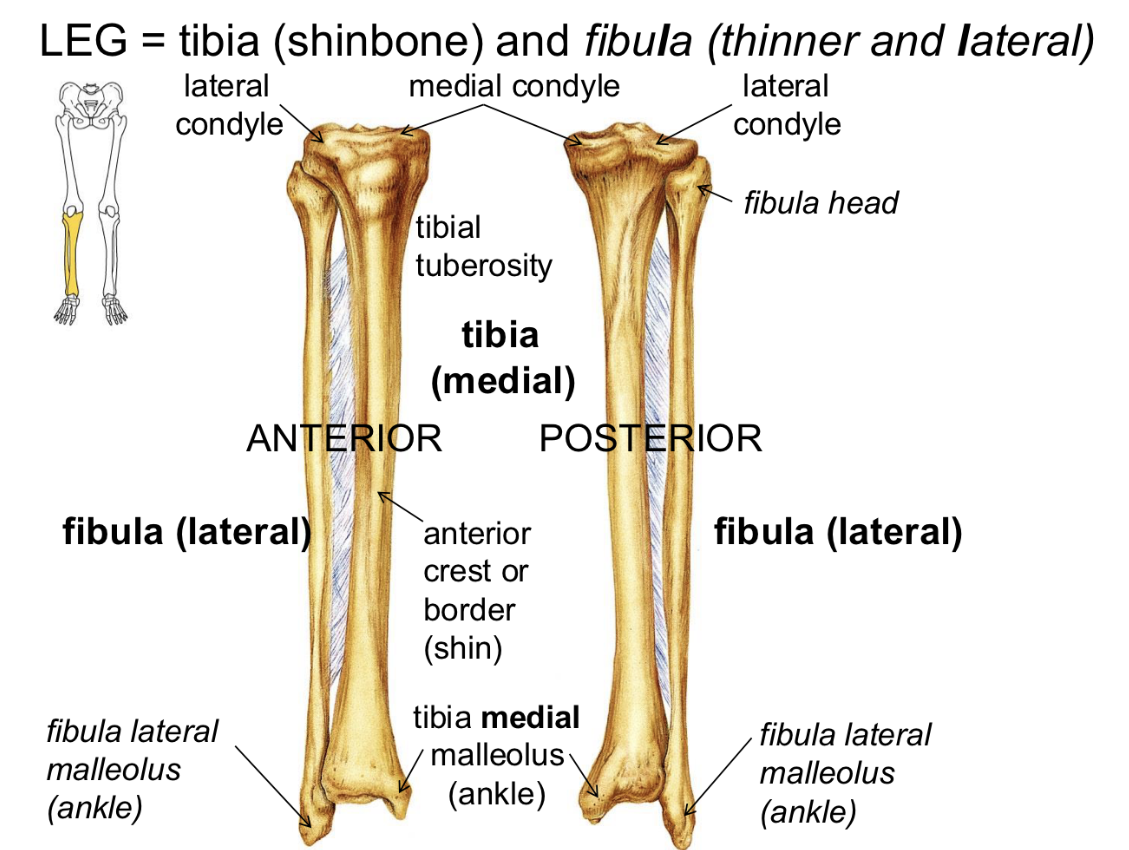
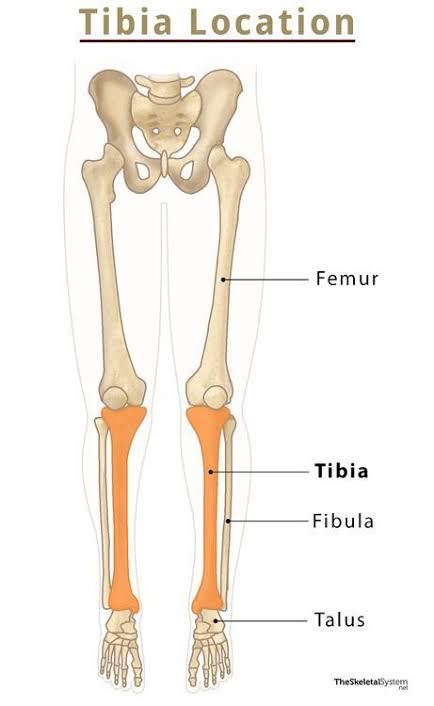
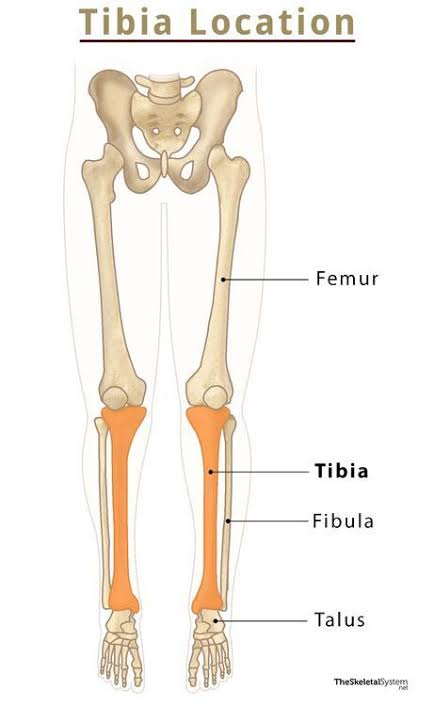
Tibia The Leg
Thicker medial shin bone; weight-bearing.
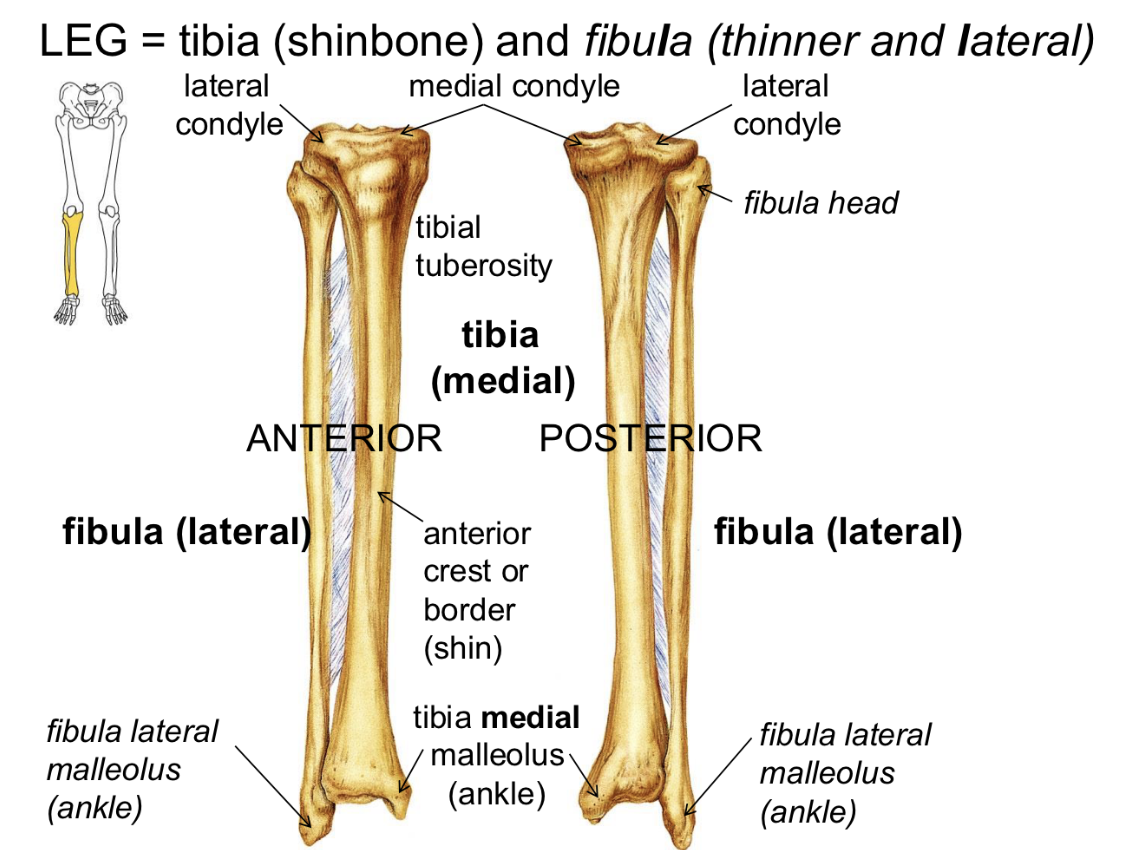
Fibula The Leg
Thinner and lateral lower leg bone.
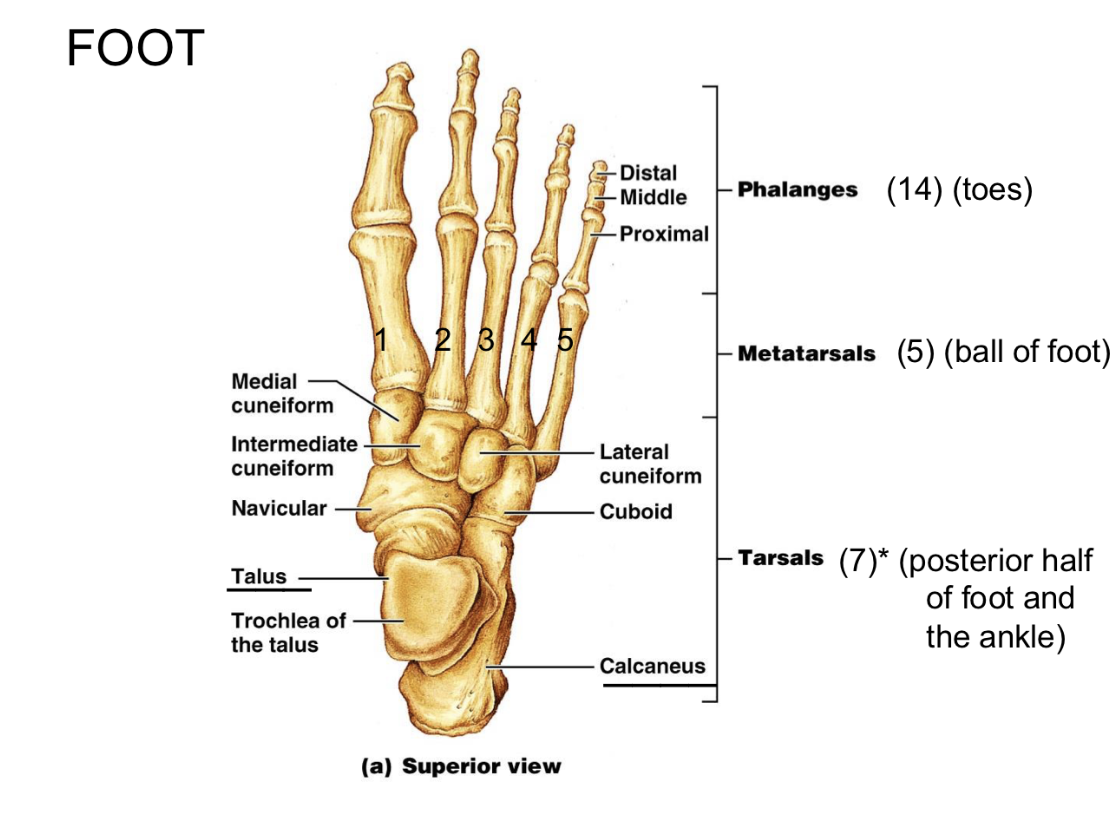
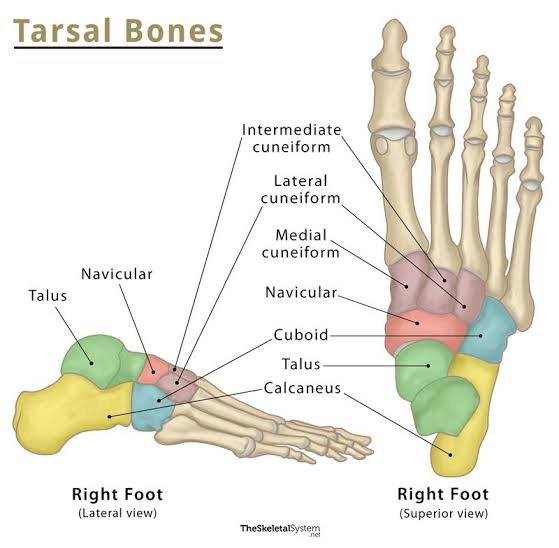
Tarsals=Ankle The Foot
7 ankle bones.
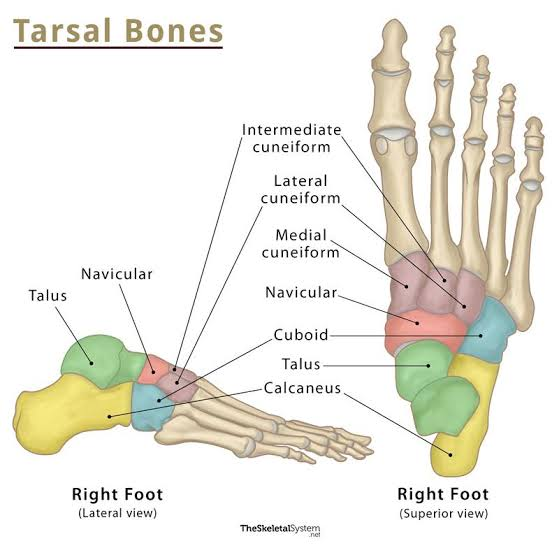
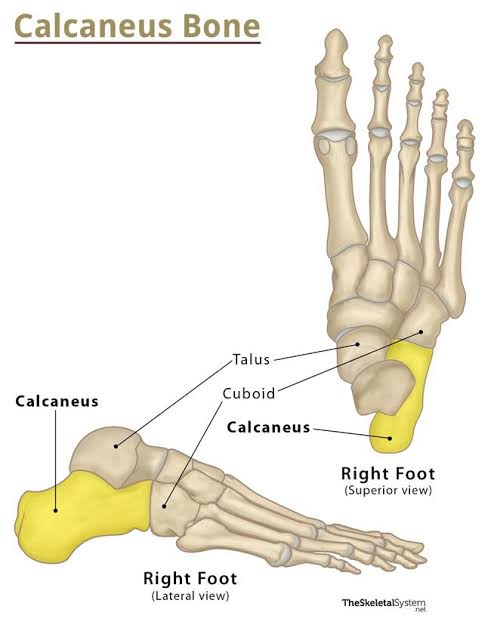
Calcaneus The Foot
Heel bone.
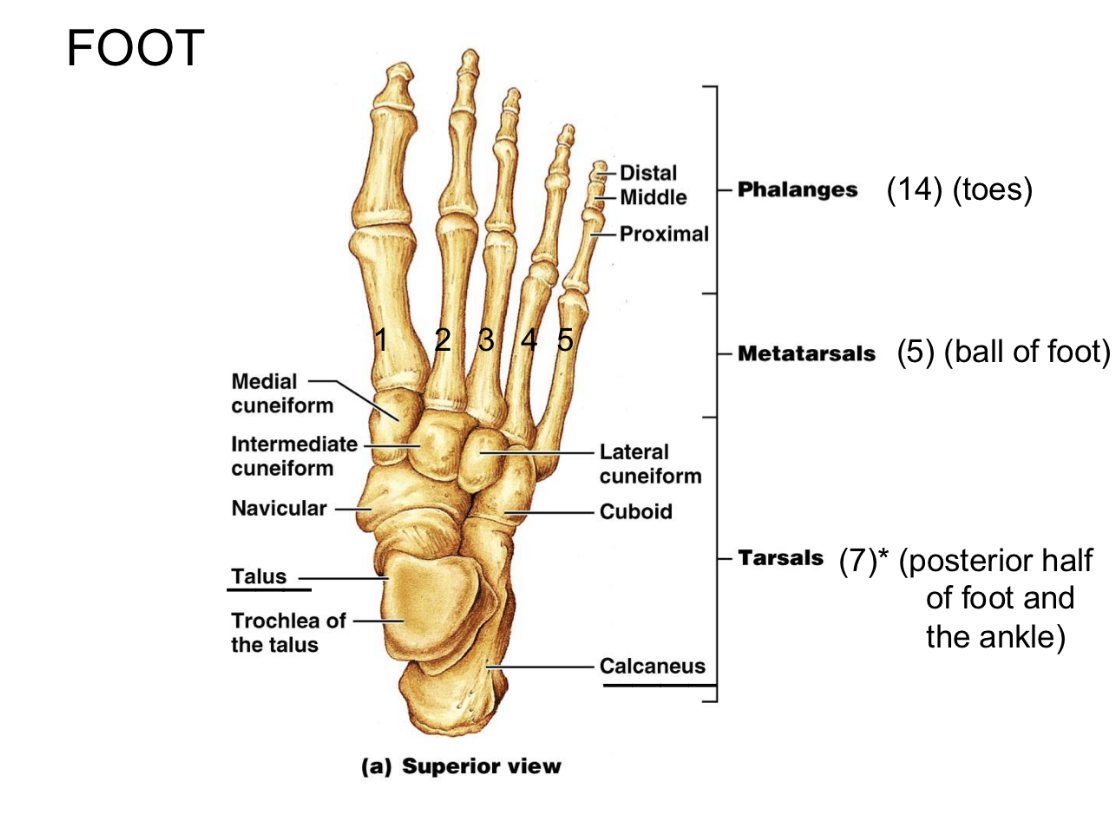
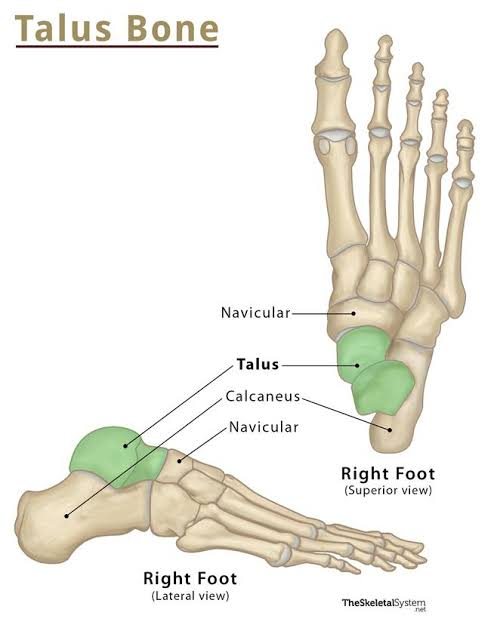
Talus The Foot
Articulates with tibia/fibula to form ankle. protrudes superiorly between the lateral and medial malleolus’s
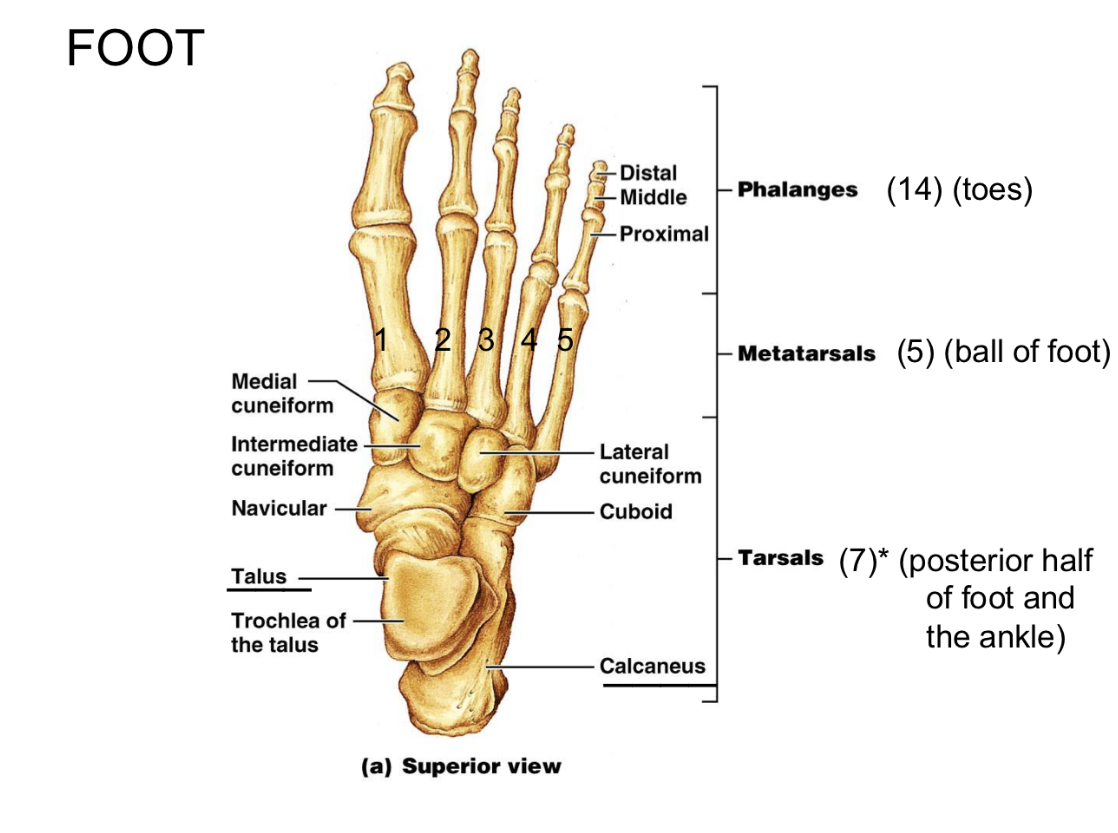
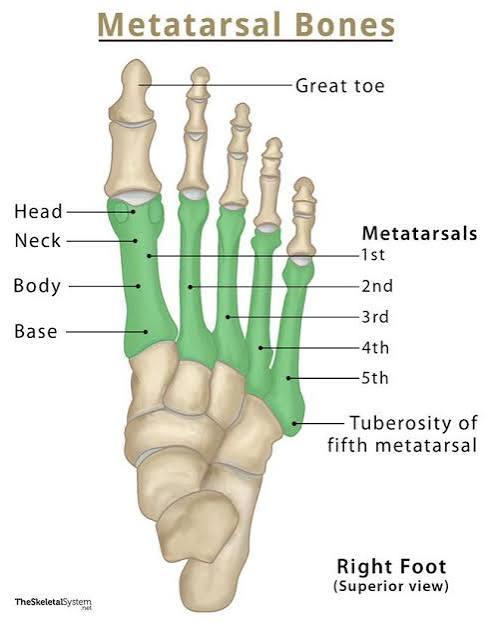
Metatarsals=ball of foot= 5 bones The Foot
5 foot bones.
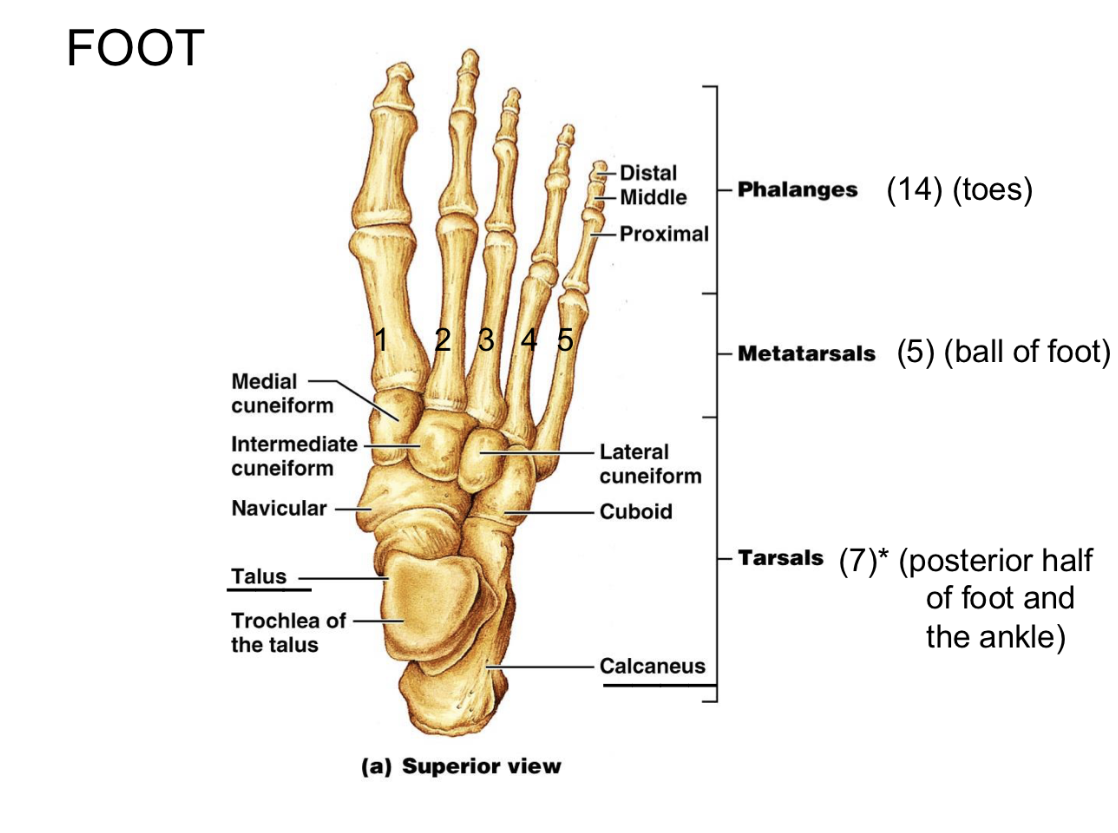
Phalanges=Toes=14bones The Foot
14 toe bones. (5 proximal, 4 middle, 5 distal. All toes have 3 phalanges except big toe which has only 2 – proximal and distal)
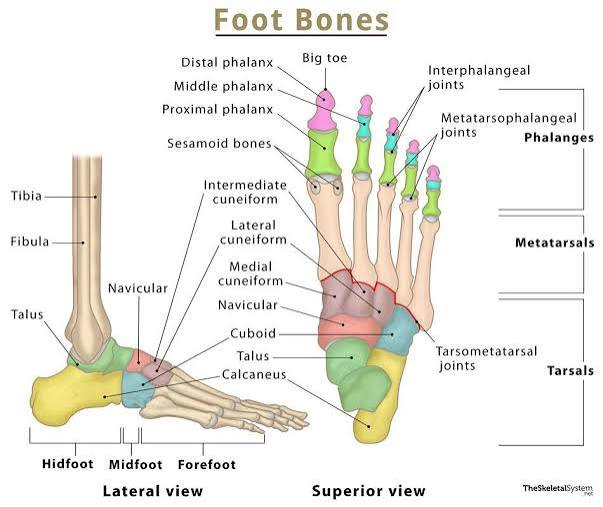
Big Toe
Only 2 phalanges.
Radius Memory Trick
Radius = Thumb side.
Fibula Memory Trick
FibuLA = LAteral.
Atlas Memory Trick
Atlas holds up the world → holds up the skull.
Axis Memory Trick
Axis lets your head rotate "NO."
Cervical Key Feature
Transverse foramina.
Thoracic Key Feature
Costal facets.
Lumbar Key Feature
Large body.
Orbit
Bony eye socket made of 8 bones.