Chemical equilibrium
 Call Kai
 Learn
Learn Practice Test
 Spaced Repetition
 Match
Match Flashcards
 Knowt Play
1/27

There's no tags or description
Looks like no tags are added yet.
Name | Mastery | Learn | Test | Matching | Spaced | Call with Kai | Chat |
|---|
No analytics yet
Send a link to your students to track their progress
28 Terms
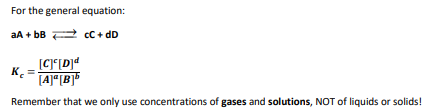
How to define Kc (Generally)
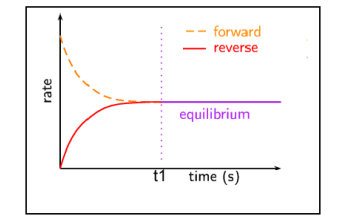
How does dynamic equilibrium look on a graph in terms of rate?
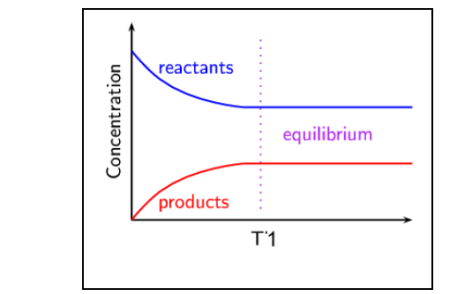
How does dynamic equilibrium look on a graph in terms of concentration / amount of mol?
FACTORS AFFECTING THE EQUILIBRIUM POSITION
1. Concentration (Reactants or products)
2. Temperature
3. Pressure
4. The common ion effect
How does the following affect the equilibrium position: Concentration (Reactants or products)
The reaction that favours counteracting the change will be favoured. Take note: [] of a solid or liquid is given by its density, meaning that if a solid or liquid is added there is no change in the equilibrium position.
How does the following affect the equilibrium position: Temperature
An increase in temperature always favours the endothermic reaction. A decrease in temperature always favours the exothermic reaction.
How does the following affect the equilibrium position: Pressure
An increase in pressure favours the reaction that proceeds towards the least number of moles of gas. A decrease in pressure favours the reaction towards the most number of moles of gas.
How does the following affect the equilibrium position: A catalyst
Does not affect the equilibrium position. If a catalyst is added to a system that is not yet in equilibrium, the equilibrium would be reached sooner with a catalyst, compared to a system without a catalyst.
How does the following affect the equilibrium position: The common ion effect
If a compound is added to a system in an aqueous solution in equilibrium and that compound contains an ion that is already present in the system, then the reaction that uses up that ion will be favoured.
What are the 3 examinable industrial processes which are affected by equillibrium?
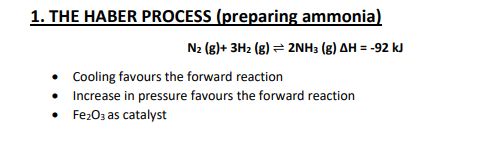
THE HABER PROCESS (preparing ammonia)
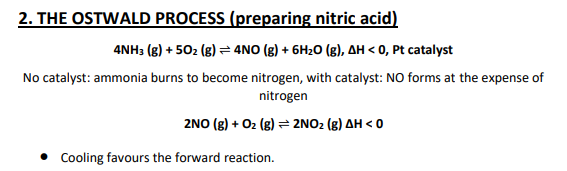
THE OSTWALD PROCESS (preparing nitric acid)
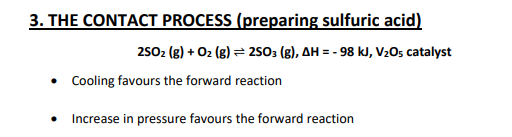
THE CONTACT PROCESS (preparing sulfuric acid)
THE HABER PROCESS
THE OSTWALD PROCESS
THE CONTACT PROCESS
What factors can affect the Kc constant value

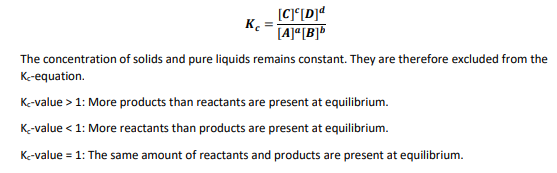
What do the different Kc values indicate?
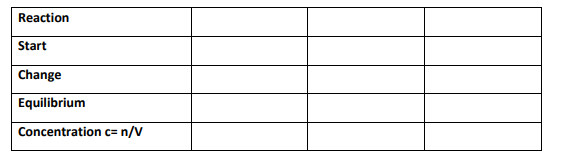
What format should be used to calculate questions about changes in mol amounts in equilibrium questions.
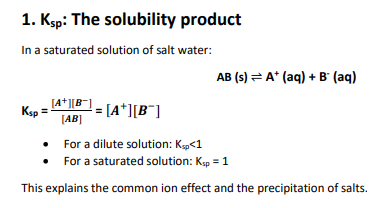
What is Ksp?
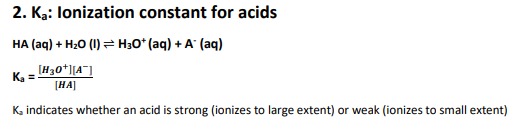
What is Ka?
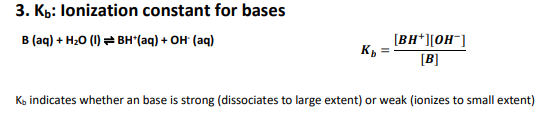
What is Kb?
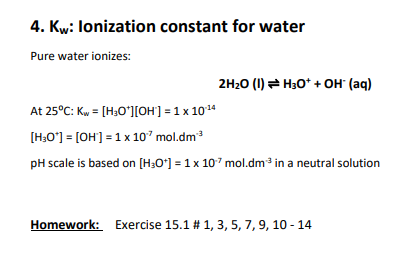
What is Kw?
How to answer questions with Le Châtelier's principle
S — Stress: State exactly what changed.
"The [pressure/temperature/concentration of X] is [increased/decreased]."R — Response: Apply Le Châtelier's principle — state that the system will shift to counteract that stress.
"By Le Châtelier's principle, the equilibrium will shift to oppose this change, i.e. to [decrease/increase] the [pressure/temperature/concentration]."F — Favoured reaction: State which direction (forward or reverse) is favoured as a result.
"This favours the [forward/reverse] reaction, i.e. the reaction that [produces more moles of gas / absorbs heat / consumes X], because..."E — Effect: State the actual outcome — on concentrations/moles of reactants and products, and (if asked) on Kc. MENTION IF IT SHIFTS TO THE LEFT OR TO THE RIGHT