Chem unit 2 quiz 1
 Call Kai
 Learn
Learn Practice Test
 Spaced Repetition
 Match
Match Flashcards
 Knowt Play
1/17

Name | Mastery | Learn | Test | Matching | Spaced | Call with Kai | Chat |
|---|
No analytics yet
Send a link to your students to track their progress
18 Terms
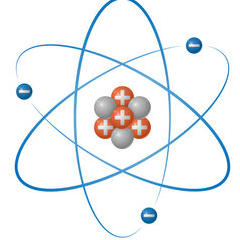
Protons
positive subatomic particles in the nucleus. The # of protons identifies the atom, and is equal to the atomic number and the nuclear charge
Symbol: P⁺ Mass: 1 Charge: 1⁺

Electrons
negative subatomic particles in the orbitals. The number of electrons is equal to the number of protons in an atom only
Symbol: e⁻ Mass: 1/1837th Charge: 1⁻

Neutrons
neutral subatomic particles in the nucleus. The number of neutrons identifies the isotopes
Symbol: n⁰ Mass: 1 Charge: 0

Subatomic particles
protons, electrons & neutrons
Atomic number
the number of protons and the nuclear charge of an atom, identifies the atom
Atomic mass
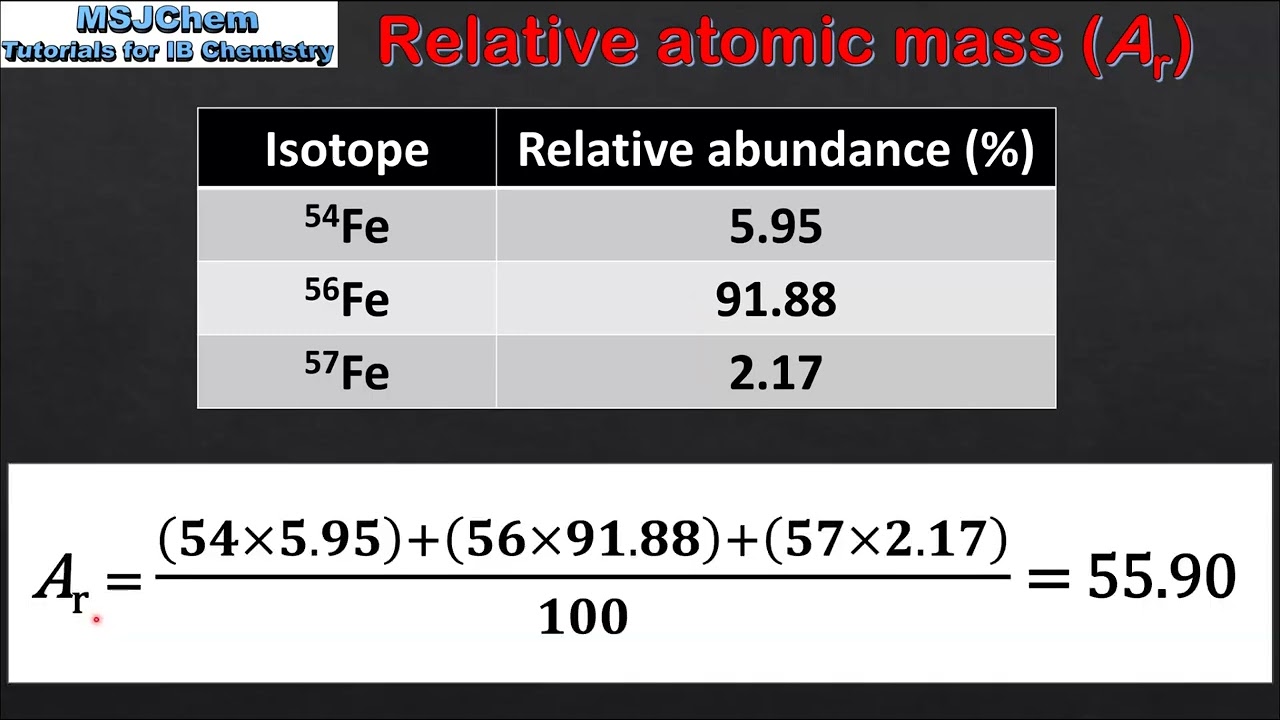
the weighted averaged of all the naturally occurring isotopes of an atom, always a decimal
Calculating Atomic Mass
atomic masses are weighted averages that take into account the natural abundances of each isotope
Mass number
the protons and neutrons in the nucleus. Equal to the number of nucleons. Identifies an isotope, always a whole number
Isotope
atoms of the same elements with a different number of neutrons. Mass number and number of nucleons will be different as well. Same atomic #, different mass # or same # of protons, different # of neutrons
Most common isotope
the isotope that exists in the greatest abundance. Round the atomic mass and you will get MCI
Atomic mass unit (amu)
the unit of measure for a subatomic particles, 1/12th the mass of Carbon
Ion
a charged particle formed by the loss of gain of an atom’s electrons
Dalton
atom is a solid indivisible sphere
Thompson (cathode ray tube)
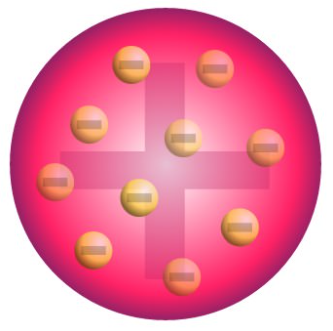
discovered the electron. Electrons are randomly embedded in positive atom, also called the plum pudding model
Rutherford (gold foil experiment)
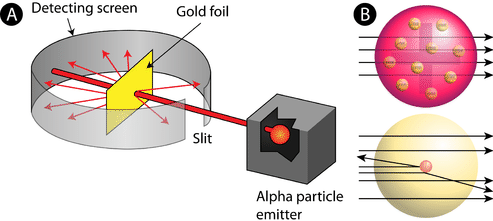
shot alpha particles at gold foil and most went through the foil. Concluded that atom is mostly empty space with a dense, positive nucleus
Bohr (planetary model)
used bright line spectra to determine the electrons are in orbits (specific, circular path around the nucleus)
Electron cloud/ wave mechanical model/ modern model
electrons are in orbitals
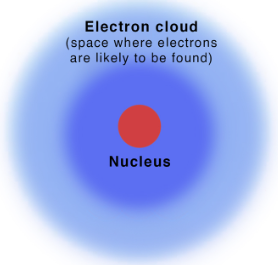
Orbitals
region where you are likely to find an electron