PHLT 301 EXAM TWO GRIFFITH
 Studied by 0 people
 Call Kai
 Learn
Learn Practice Test
 Spaced Repetition
 Match
Match Flashcards
 Knowt Play
1/35

There's no tags or description
Looks like no tags are added yet.
Name | Mastery | Learn | Test | Matching | Spaced | Call with Kai |
|---|
No study sessions yet.
36 Terms
Stages to inductive reasoning
observation-> pattern->hypothesis->theory
Stages of Deductive Reasoning
theory-> hypothesis-> observation-> confirmation
The two major types of data
qualitative and quantitative
qualitative data
-gender
-ethnicity
education level
- descriptive
-observable characteristics
Quantitative
- numerical
-measure or counts
-age
-income
-date of birth
categorical data
binomial data: two categories: true/false, yes/no
nominal data: categories that do not have an implicit rank/order: eye color, city name
ordinal data: categories that have an implicit rank/order: educational level, level of agreement
Numeric data
discrete: specific value, count or tally
whole numbers
-number of students
-count of attendees
Continuous: value within a range
- do not have to be whole numbers
-grades, weight, height
Accuracy
how close a measurement is to the true value

precision
how close measurements are to each other
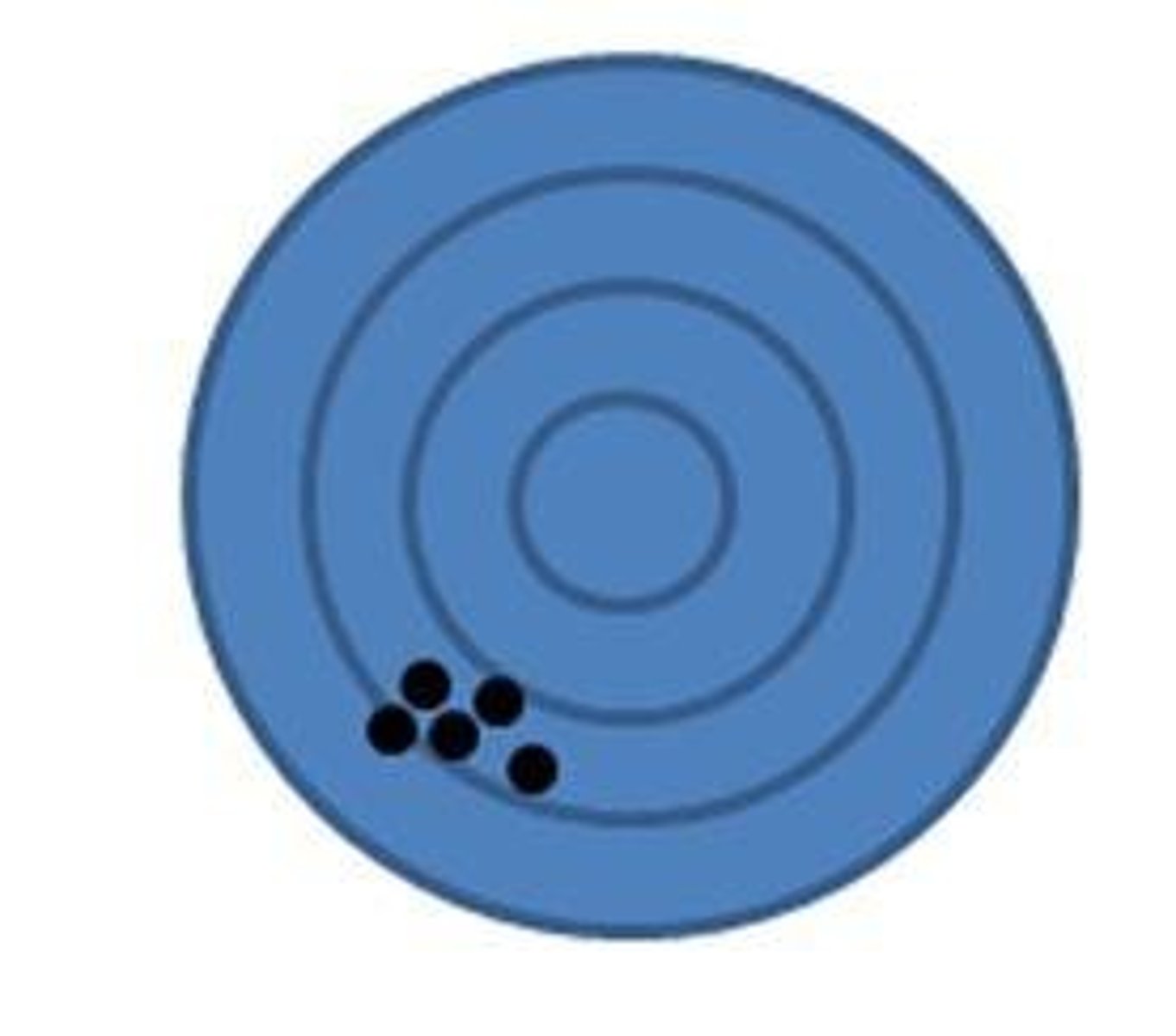
Reliability
repeatable: getting the same outcome when the same operator measures the same part multiple times
reproducibility: getting same outcome when different operators measure the same part
"the ________ and ___________ of the ________________ and ___________ of health relates states and the _____________ of this study to the control of diseases
study, analysis, distribution, determinants, application- world health organization
types of epi
descriptive: look at patterns, focus on person, place, time- who, what, where, when= condition, person, place, time
analytical: hypothesis testing, specialized knowledge - why/how- risk factors, modes of transmission
GIS is a ____________________________ tools used to store, ______________, analyze, and __________ geographic data
computer-based, visualize, interpret,- CDC
Social Vulnerability
refers to the resilience of communities when confronted by external stresses on human health ,stresses such as natural or human-caused disasters, or disease outbreaks. Reducing social vulnerability can decrease both human suffering and economic loss.• CDC•
A health ______________ is an act performed for _______________ or on behalf of a population whose purpose is to assess, improve,_________________, promote, _______
intervention, with, maintain, or modify health- WHO
cultural competence
the ability to interact effectively with people of different cultures
social network analysis
maps and measures relationships: people, groups, orgs
node
person, object, group
link
relationship
"fulfilling __________ interest in ___________ _________ in which people can healthy
societies assuring conditions- institute of medicine
"public health __________ are principles and _________ that guide actions to ___________ health and ________ injury and __________ among the ___________
ethics, values, promote, prevent, disease, population
- LO Gostin
Field of study in public health ethics
Understand and clarify principles and values that guide public health actions and are used to justify decision making
field of practice in public health
application of relevant principles and values to public health decision making
- Identify and clarify the ethical dilemma posed
- analyze it in terms of alternative courses of action and their consequences
-resolving the dilemma by deciding which course of action best incorporates and balances the guiding principles and values
public health law is found in
- constitutions
-treaties
-statutes
-regulations
-common law
the sides of the see-saw
-public goods
-individual liberties
what type of data would be needed to find a dog
-color (qualitative)
-breed (qual and cat.)
-collar (binomial: if it is present or absent)
where you live (discrete)
-last seen (continuous)
Numerical data is either
discrete- whole numbers
continuous- value in a range
does nominal data have order?
no
Epidemiology
study and analysis of distinct or determinants of health-related states or events and the application of this study to the control diseases an other health problems
a pie chart is what type of data?
Categorical, numerical
two basic elements of GIS are:
data and location
cultural competence
some interventions in one community may not fit in another community
social network analysis
interconnected, people to people, how to fit together
Six Degrees of Separation
You are just six introductions away from any other person on the planet. Evidences founded by Stanley Milgram by sending letters out to people in Nebraska asking them to send a letter to a Stockbroker in Boston or to someone that might know the Stockbroker.
cons of SNA
time-consuming, just a snapshot, not most accurate if people do not remember who they have been in contact with
typhoid mary
A cook who carried typhoid fever and passed it on to many people in and around New York City in the early 20th century. The term is often applied to the carrier of a contagious disease, or, more generally, to anyone who brings bad luck.