bio II lab protosomes; ecysozoa
 Call Kai
 Learn
Learn Practice Test
 Spaced Repetition
 Match
Match Flashcards
 Knowt Play
1/69

There's no tags or description
Looks like no tags are added yet.
Name | Mastery | Learn | Test | Matching | Spaced | Call with Kai | Chat |
|---|
No analytics yet
Send a link to your students to track their progress
70 Terms
2 clades of ecdysozoa
arthropodia and nematoda
ecdysozoa have ____________ symmetry
bilateral
ecdysozoas are ______blastic
triplo
classes of anthropodia
Class chelicerata, class myriapoda, class crustacea, and class hexapoda
subclasses of class chelicerata
class merstomata and class arachnida
subclasses of myriapoda
class chilopodia and class diplopoda
process to molt
ecdysis
example of phylum nematoda
roundworms
most abundant animal on earth (include phylum)
roundworms; nematoda
nematodes are ______coelomates
pseudo
nematodes have a _________ digestive system
compete
nematodes are common ___________ and are ____-________
parasites; free-living
nematodes lack a _____________ _______
circulatory system
nematodes use _________ or gas exchange
diffusion
nematodes are un___________
segmented
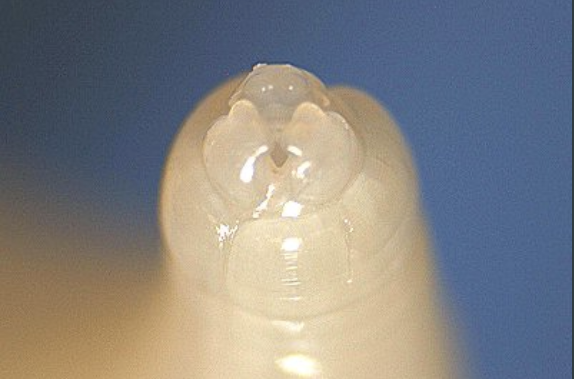
what phylum does this belong to?
phylum nematoda
nematodes have sexual ___________
dimorphism
phylum that were the first terrestrial animals
arthropodia
arthropods are true ___________
coelomates
arthropods have a _________ digestive system
complete
arthropods have a(n) ______ circulatory system
open
arthropods have a ____________ exoskeleton, and are __________
segmented; metameric
when some segments have repeated organs
metameric
arthropods have _____________; specialization of body regions
tagmatization
arthropods have ______ appendages
jointed
most arthropods have _________ respiratory organs
internal
many arthropods are capable of _______
flight
arthropods have highly modified __________ segments for __________
anterior; feeding
anterior appendages of class chelicerata, and can be _________ or _____
pinchers; fangs
secondary appendages of class chilicerata, and used for __________/_________; no mandible
pedipalps; locomotion/feeding
class chelicerata have ___ pairs of walking legs
4
class chelicerata have no __________
antennae
an example of subclass merostomata
horseshoe crabs
subclass merostomata have broad _________-shaped cephalothorax and a _____ abdomen
horseshoe; small
subclass merstomata have a _______ that helps them flip back over
telson
subclass merostomata have ____ _____ used for movement and respiration
book gills
subclass arachnida are composed of spiders, _____, _____, __________, etc
mites; ticks; scorpians
subclass arachnida have ____ _____ for respiration for spiders and most scorpians
book lungs
subclass arachnida have _________ for respiration for mites and ticks
tracheas
class ___________ have mandibles
myriapoda
class myriapoda have ___ pair of antennae
1
class myriapoda have ____ on most body segments
legs
subclass chilopoda are composed of _____________; 1 pair of ____ per segment
centipedes; legs
subclass __________ are predatory with fangs
chilopoda
subclass diplopoda are composed of _____________; 2 pairs of ____ per segment
milipedes; legs
subclass __________ are detritivores
diplopoda
class hexapoda are composed of __________
insects
class hexapoda have how many pairs of legs?
1
_____ are possible for class hexapoda
wings
class hexapoda have 3 ________; head, thorax and abdomen
tagmata
class hexapoda have a __________ system for respiratory
tracheal
class crustacea have paired __________
anntenae
class _________ have gills
crustacea
most crustacea have 2 _______
tagmata
class crustacea are composed of __________, crabs, crayfish, _________, ___________ and shrimp
lobsters; barnacles; isopods
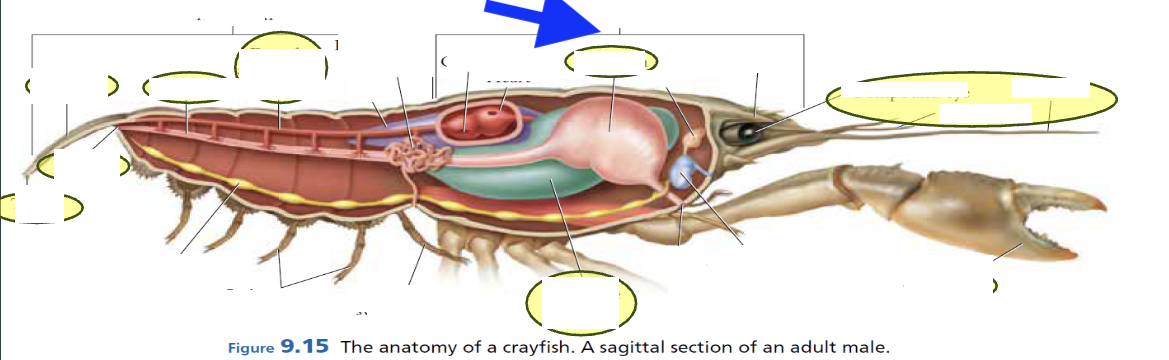
what is this whole structure?
cephalothorax
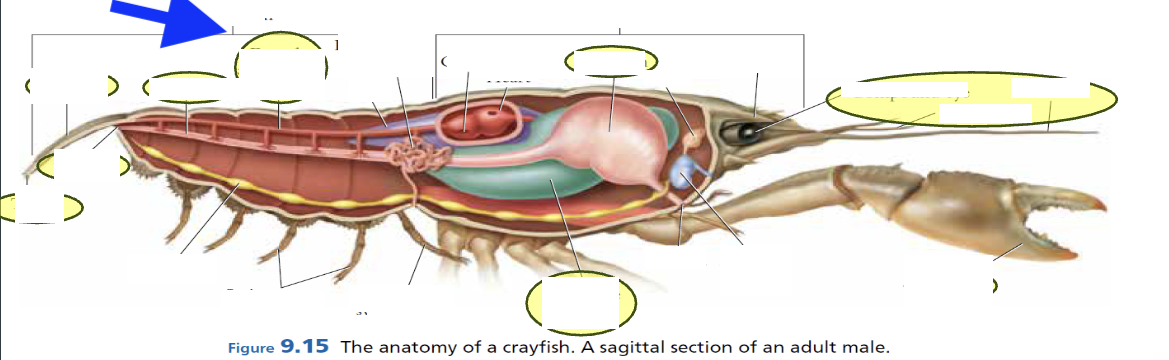
what is this whole structure?
abdomen
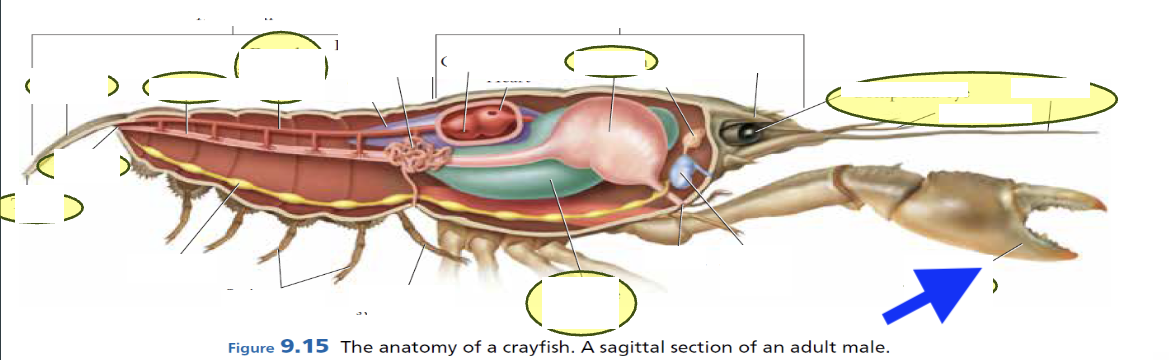
what is this?
cheliped
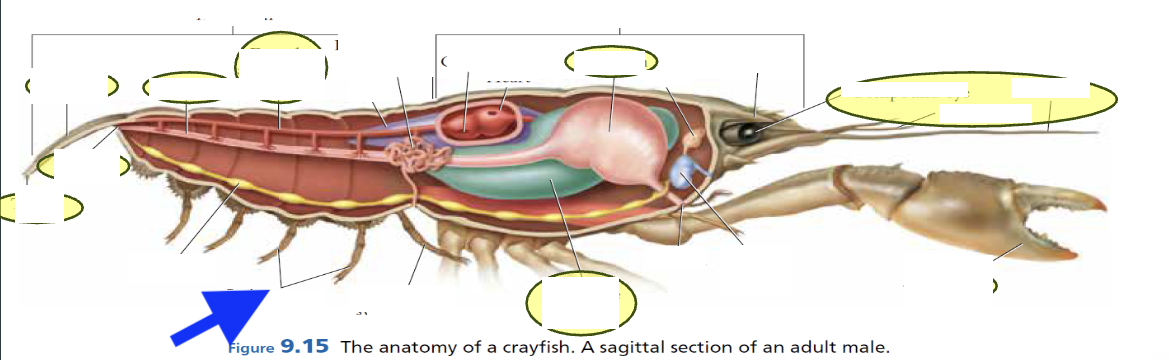
what are these?
swimmerets
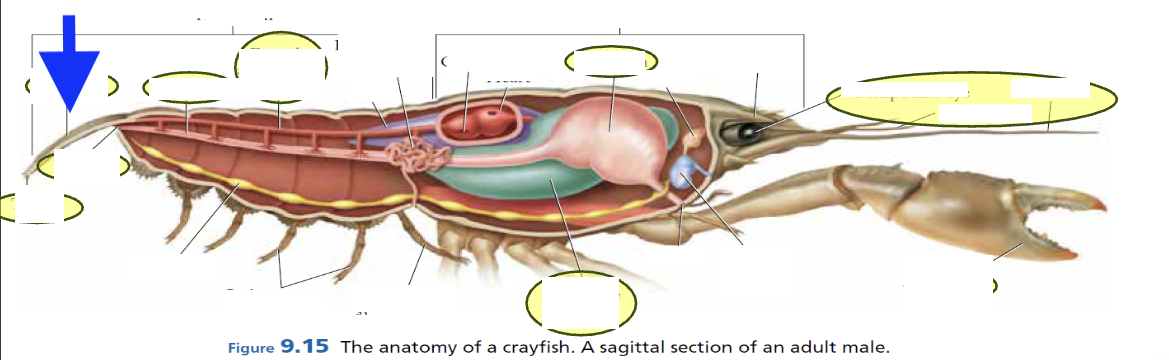
what is this?
uropod
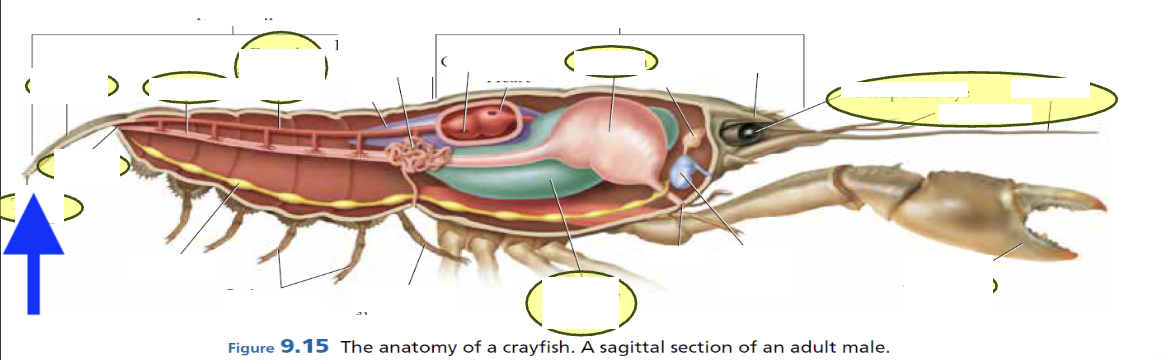
what is this?
telson
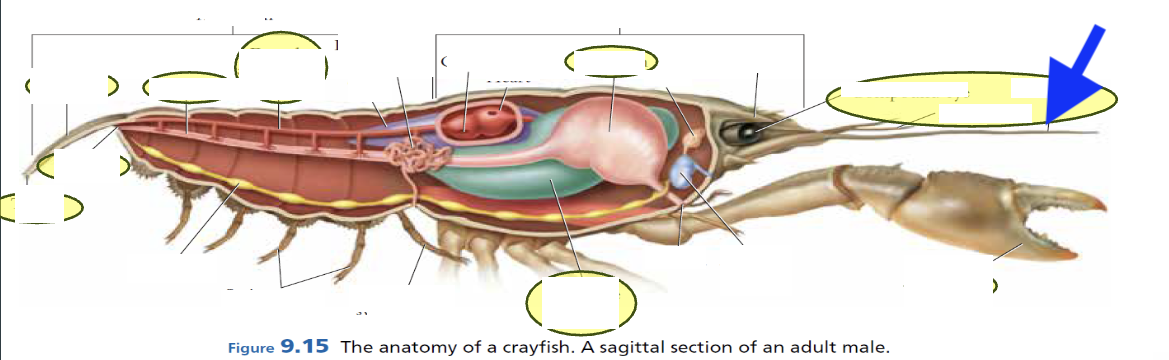
what is this?
antennae
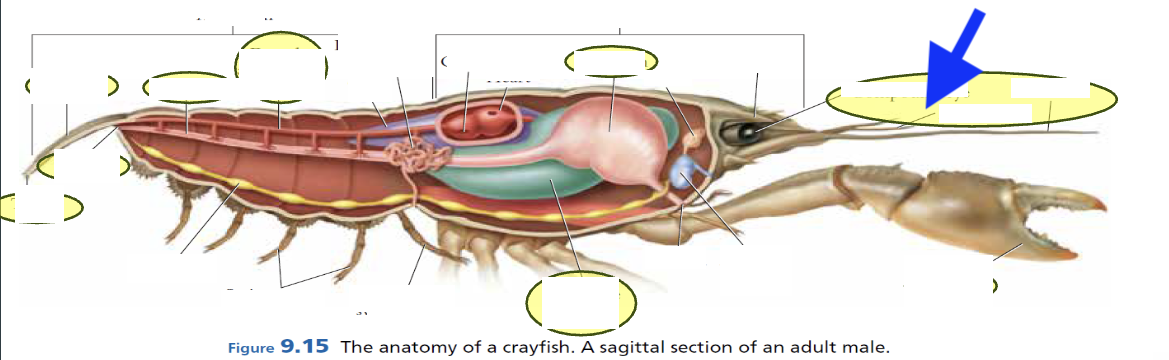
what is this?
antennule
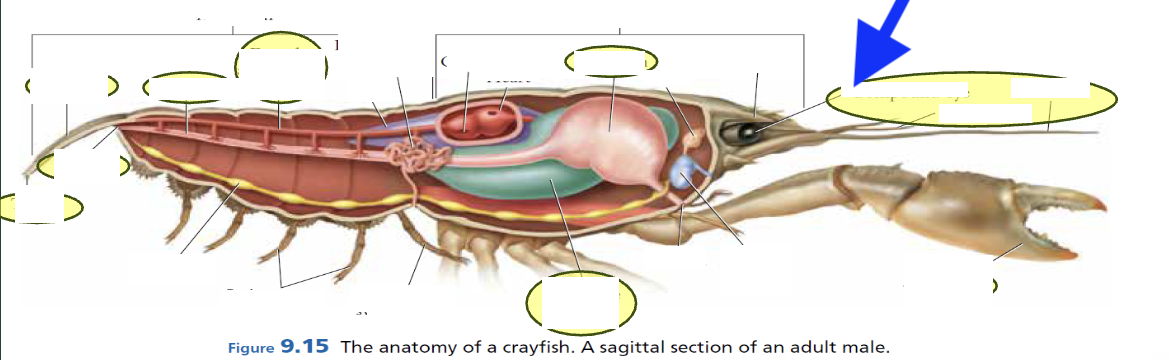
what is this?
compound eye
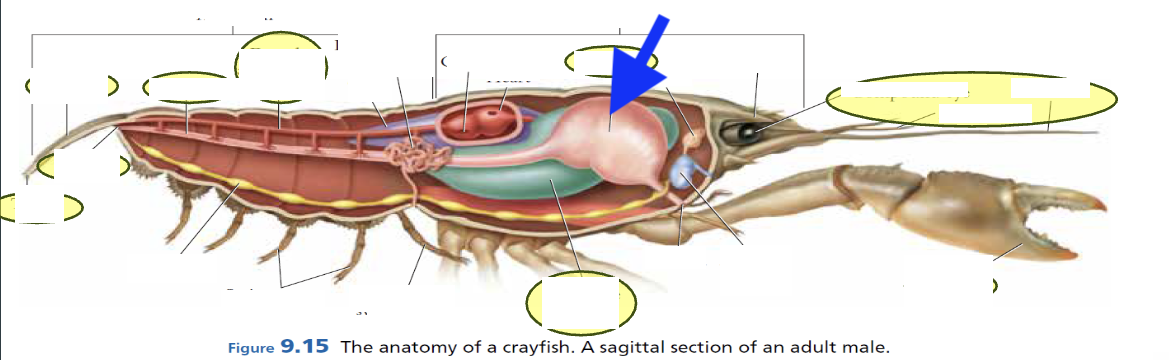
what is this?
stomach
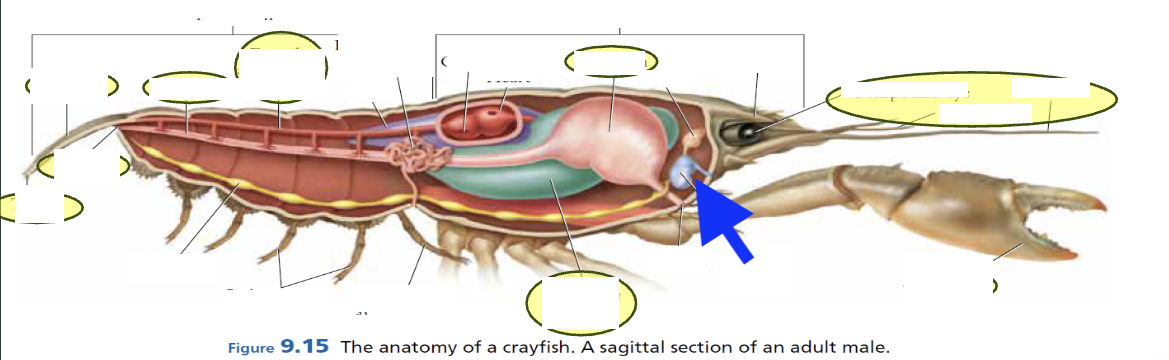
what is this
antennal gland
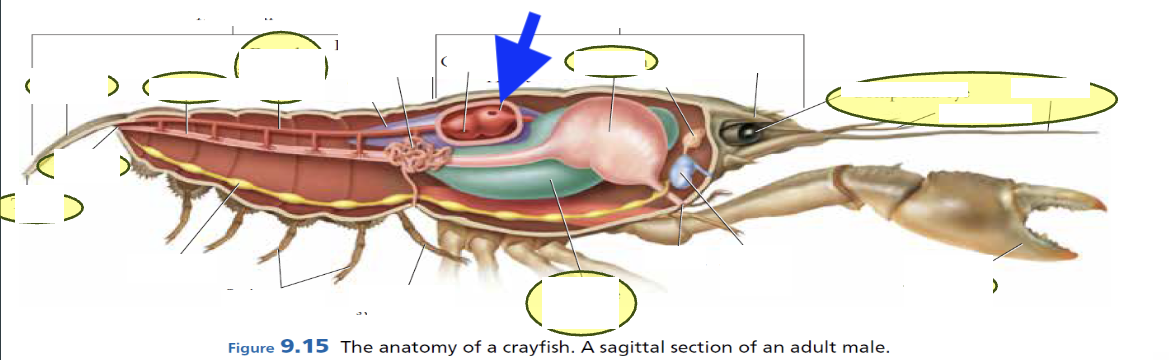
what is this?
heart
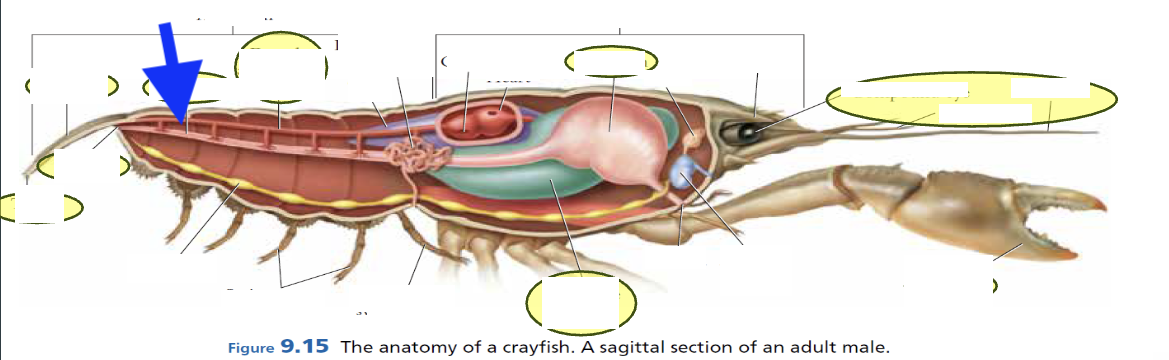
what is this
intestine
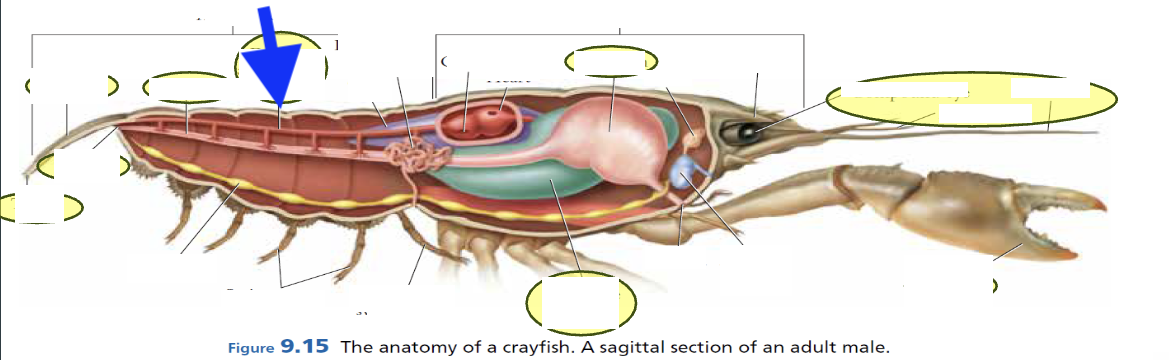
what is this
dorsal abdominal artery
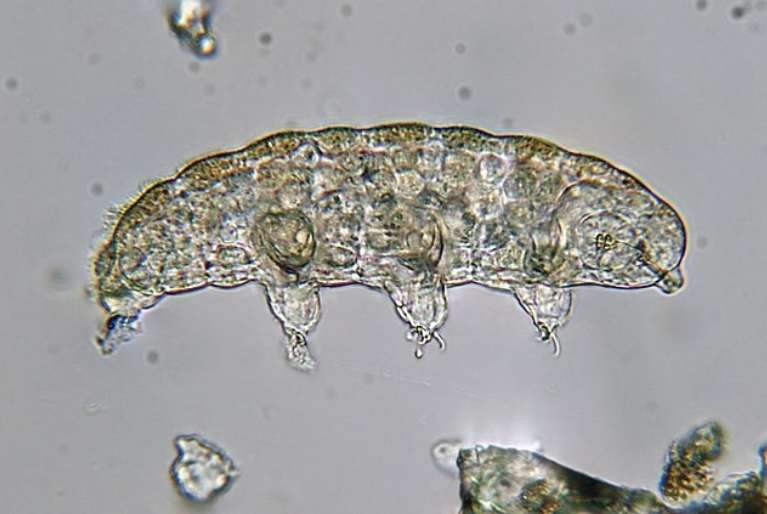
this is a part of what phylum
tardigrada