Prosthetics and Orthotics Gait Analysis Overview
 Call Kai
 Learn
Learn Practice Test
 Spaced Repetition
 Match
Match Flashcards
 Knowt Play
1/29

There's no tags or description
Looks like no tags are added yet.
Name | Mastery | Learn | Test | Matching | Spaced | Call with Kai | Chat |
|---|
No analytics yet
Send a link to your students to track their progress
30 Terms
Normal Gait
Standard walking pattern without deviations.
Gait Abnormalities
Deviations from normal walking patterns.
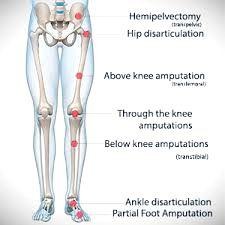
Below Knee Amputation (BKA)
Amputation below the knee joint.
Above Knee Amputation (AKA)
Amputation above the knee joint.
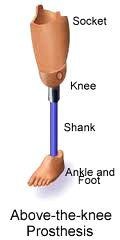
Hip Disarticulation
Amputation at the hip joint.
Hemipelvectomy
Removal of one side of the pelvis.
Center of Mass (COM)
Point where body mass is balanced.
Wound Care
Management of surgical or traumatic wounds.
Limb Shaping
Contouring residual limb for prosthetic fitting.
Gait Training
Re-education of walking patterns post-amputation.
Prosthetic Analysis
Assessment of prosthetic fit and function.
Prosthetic Deviation
Abnormal movement patterns due to prosthetics.
Lateral Bend
Trunk deviation towards the prosthetic side.
Abduction
Leg positioned away from midline during stance.
Lordosis
Exaggerated lumbar curve during stance phase.
Forward Flexion
Trunk bending forward during stance phase.
High Heel Rise
Excessive upward movement of heel during swing.
Terminal Impact
Sudden stop of the prosthetic limb at swing.
Heel Whip
Rotational movement of the foot during gait.
Foot Rotation
Twisting of the foot at heel contact.
Toe Drag
Inability to lift toes during swing phase.
Dorsiflexion Assist
Support for ankle upward movement.
Plantarflexion Stop
Restriction of ankle downward movement.
Pressure Tolerant Areas
Regions of limb that can bear weight.
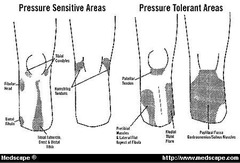
Pressure Sensitive Areas
Regions of limb that should avoid pressure.
Soft Dressing
Flexible covering for wound protection.
Neuroma
Nerve tissue growth causing pain post-amputation.
Exudate
Fluid emitted from a wound.
Positioning Program
Strategy to maintain joint range of motion.
Gait Analysis
Assessment of walking patterns for deviations.