MIDTERM 2 (CH 6-10 +MIDTERM ll)
 Call Kai
 Learn
Learn Practice Test
 Spaced Repetition
 Match
Match Flashcards
 Knowt Play
1/96

There's no tags or description
Looks like no tags are added yet.
Name | Mastery | Learn | Test | Matching | Spaced | Call with Kai | Chat |
|---|
No analytics yet
Send a link to your students to track their progress
97 Terms
How is the molecular mass of chloroform (CHCl₃) calculated?
A. By averaging the masses of carbon, hydrogen, and chlorine
B. By adding the masses of one carbon atom, one hydrogen atom, and three chlorine atoms
C. By multiplying the atomic masses of the elements
D. By using only the mass of the heaviest atom
B
Given the Molecule: Calcium carbonate (CaCO₃)
What is the molecular mass? (in amu and nearest 100th)
100.09 amu
Molecule: Magnesium chloride (MgCl2)
Magnesium chloride is an ionic compound composed of magnesium cations (Mg2+) and chloride anions (Cl-) in a 1:2 ratio. What is the formula mass of magnesium chloride? (nearest 100th in amu)
95.21 amu
Which statement about ionic compounds and their formula mass is correct?
A. The formula mass of an ionic compound is calculated by summing the average atomic masses of all atoms in its formula, similar to covalent compounds, even though it does not represent a discrete molecule.
B. Ionic compounds are composed of discrete molecules, so their molecular mass is always the same as their formula mass.
C. Ionic compounds cannot have a formula mass because they are not made of molecules.
D. The formula mass of an ionic compound must use the exact masses of the ions rather than the neutral atoms.
A
When a compound’s chemical formula is unknown, which experimental step is usually performed first to determine its formula?
A. Calculating the molecular mass from the crystal structure.
B. Counting the number of molecules using a microscope.
C. Measuring the volume of the compound at room temperature.
D. Measuring the mass of each element in the compound to calculate its percent composition.
D
Molecule: Ammonia (NH3)
What is the percent composition of nitrogen in ammonia?
nearest 100th decimal
82.24%
A gaseous compound contains 12.0 g of carbon and 32.0 g of oxygen. What is the empirical formula of the compound?
A. C₂O₄
B. C₂O
C. CO
D. CO₂
D
A compound contains 2.0 g of hydrogen and 16.0 g of oxygen. What is the empirical formula of this compound?
A. H₄O
B. H₂O
C. H₂O₂
D. HO
B
A hospital IV bag contains 0.150 mol of glucose (C₆H₁₂O₆) in 250. mL of solution. What is the molar concentration of glucose?
0.6 M
A laboratory solution contains 0.300 mol of CaCl₂ in 600. mL of solution. What is the molar concentration of CaCl₂?
0.5 M
How many grams of glucose, C₆H₁₂O₆ (molar mass = 180.2 g/mol), are present in 0.375 L of a 0.850 M glucose solution?
nearest 10th
57.4 g
What volume of a 2.50 M MgSO₄ solution contains 246 g of MgSO₄ (molar mass = 120.4 g/mol)?
0.82 L
What is the concentration of the solution that results from diluting 15.0 mL of a 3.50 M HCl solution to 100.0 mL?
0.525 M
According to EPA standards, the maximum contaminant level (MCL) for arsenic in drinking water is 10 ppb. What is this concentration in ppm?
0.010 ppm
solution for which water is the solvent
aqueous solution
process of adding solvent to a solution in order to lower the concentration of solutes
dilution
mass in grams of 1 mole of a substance
molar mass
sum of the average masses for all atoms represented in a chemical formula; for covalent compounds, this is also the molecular mass
formula mass
solution component present in a concentration that is higher relative to other components
solvent
Which chemical equation correctly represents the reaction of one methane (CH₄) molecule reacting with oxygen (O₂) to form carbon dioxide (CO₂) and water (H₂O)?
A. CH₄ + 2O₂ → CO₂ + 2H₂O
B. CH₄ + O₂ → CO₂ + H₂O
C. 2CH₄ + O₂ → 2CO₂ + H₂O
D. CH₄ + O₂ → CO₂ + 2H₂O
A
What do coefficients in a chemical equation show?
A. The names of the substances
B. The relative amounts of reactants and products
C. The charges of atoms
D.The color of the substances
B
Balance the equation
H₂ + O₂ ⟶ H₂O
A. H₂ + O₂ ⟶ H₂O
B. 2H₂ + O₂ ⟶ 2H₂O
C. H₂ + 2O₂ ⟶ 2H₂O
D. 2H₂ + 2O₂ ⟶ H₂O
B
Balance the equation
Al + O₂ ⟶ Al₂O₃
A. Al + O₂ ⟶ Al₂O₃
B. 2Al + O₂ ⟶ Al₂O₃
C. 4Al + 3O₂ ⟶ 2Al₂O₃
D. 2Al + 3O₂ ⟶ Al₂O₃
C
For the Combustion of propane
C₃H₈ + O₂ ⟶ CO₂ + H₂O
Which is the correctly balanced equation?
A. C₃H₈ + 4O₂ ⟶ 3CO₂ + 4H₂O
B. C₃H₈ + 5O₂ ⟶ 3CO₂ + 4H₂O
C. 2C₃H₈ + 5O₂ ⟶ 6CO₂ + 8H₂O
D. C₃H₈ + 3O₂ ⟶ 3CO₂ + 4H₂O
B
Which of the following correctly matches the physical state abbreviation to its meaning in a chemical equation?
A. (s) = gas, (l) = liquid, (g) = solid, (aq) = dissolved in water
B. (s) = solid, (l) = liquid, (g) = gas, (aq) = dissolved in water
C. (s) = solid, (l) = gas, (g) = liquid, (aq) = solid in water
D. (s) = solution, (l) = liquid, (g) = gas, (aq) = gas in water
B
Which of the following statements correctly explains why a precipitation reaction occurs when AgNO₃ and NaCl solutions are mixed?
A) All cations react with all anions to form insoluble compounds.
B) Only the pairing of Ag⁺ and Cl⁻ forms an insoluble salt, while the other combinations remain soluble.
C) Nitrate ions (NO₃⁻) form insoluble salts with sodium ions (Na⁺).
D) Sodium chloride is insoluble in water, causing it to precipitate.
B
Which solution could be used to precipitate the silver ion (Ag⁺) from a water sample, and what is the formula of the expected precipitate?
A. Sodium chloride, NaCl → AgCl (s)
B. Sodium nitrate, NaNO₃ → AgNO₃ (aq)
C. Sodium hydroxide, NaOH → AgOH (aq)
D. Sodium sulfate, Na₂SO₄ → Ag₂SO₄ (aq)
A
Which solution could be used to precipitate the calcium ion (Ca²⁺) from a water sample, and what is the formula of the expected precipitate?
A. Sodium carbonate, Na₂CO₃ → CaCO₃ (s)
B. Sodium hydroxide, NaOH → Ca(OH)₂ (aq)
C. Sodium sulfate, Na₂SO₄ → CaSO₄ (s)
D. Both A and C
D
In aqueous solutions, an acid is defined as a substance that:
A. Produces hydroxide ions (OH⁻) when dissolved in water
B. Produces hydrogen gas (H₂) when dissolved in water
C. Produces hydronium ions (H₃O⁺) when dissolved in water
D. Reacts only with metals
C
Why do we write a net ionic equation instead of the full molecular equation?
A. To include all ions present in solution
B. To balance charges only
C. To show only the species that actually change during the reaction
D. To predict the color of the solution
C
What is the net ionic equation for the reaction between H₂SO₄ (strong acid) and LiOH (strong base)?
A) H₂SO₄ + 2LiOH → Li₂SO₄ + 2H₂O
B) H⁺ + OH⁻ → H₂O
C) Li⁺ + SO₄²⁻ → Li₂SO₄
D) H₂SO₄ + LiOH → LiHSO₄ + H₂O
B
How many moles of NaOH are required to completely react with 0.75 mol of H₂SO₄ according to the equation:
H2SO4 + 2NaOH → Na2SO4 + 2H2O
1.50 mol
The reaction of hydrogen and chlorine is represented by the balanced equation:
H2 + Cl2 → 2HCl
If 3 moles of H₂ are combined with 2 moles of Cl₂, which statement is correct?
A. Hydrogen is in excess, chlorine is limiting, and all hydrogen reacts.
B. Hydrogen is the limiting reactant, chlorine is in excess, and 1 mol of Cl₂ remains unreacted.
C. Hydrogen and chlorine are present in the exact stoichiometric ratio, so none remains unreacted.
D. Chlorine is the limiting reactant, hydrogen is in excess, and 1 mol of H₂ remains unreacted.
D
ionic compound that can be formed by the reaction of an acid with a base that contains a cation and an anion other than hydroxide or
salt
substance added to the sample in a titration analysis to permit visual detection of the end point
indicator
number placed in front of symbols or formulas in a chemical equation to indicate their relative amount
coefficient
reaction involving the transfer of a hydrogen ion between reactant species
acid-base reaction
reactant present in an amount lower than required by the reaction stoichiometry, thus limiting the amount of product generated
limiting reactant
relationships between the amounts of reactants and products of a chemical reaction
stoichiometry
Pressure () is defined as the force () applied per unit area ():
P = F/A
Which of the following correctly describes how pressure can be increased?
A. Decrease the force applied or decrease the area over which the force is applied.
B. Increase the force applied or decrease the area over which the force is applied.
C. Increase the force applied or increase the area over which the force is applied.
D. Decrease the force applied or increase the area over which the force is applied.
B
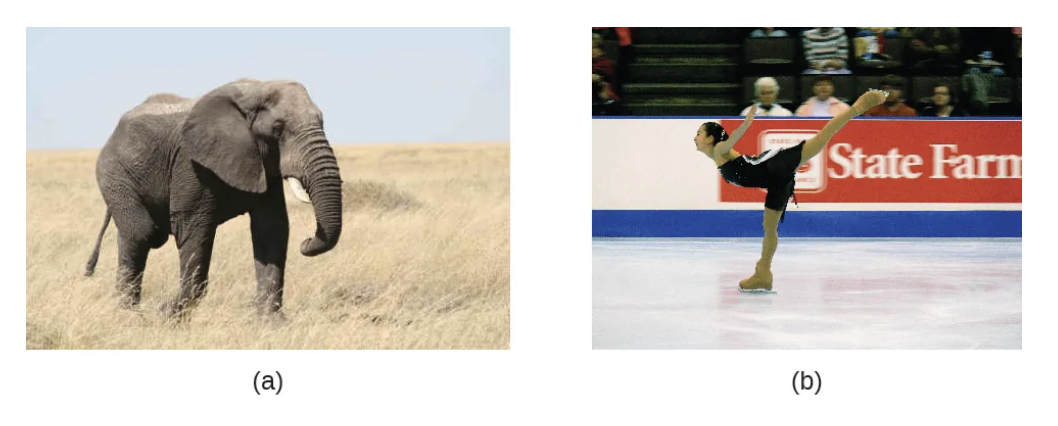
Why does a person wearing high-heeled shoes exert more pressure on the floor than the same person wearing flat shoes, even though their weight is the same?
A. Because flat shoes distribute the weight over a larger area, reducing force.
B. Because the person weighs more when wearing high heels.
C. Because the small area of the high heel concentrates the same force over a smaller surface.
D. Because the person pushes down harder when wearing high heels.
C
The atmospheric pressure is reported as 30.1 in. Hg. Convert this pressure to millibars (1 in. Hg = 33.8639 mb).
Nearest whole number
1019 mb
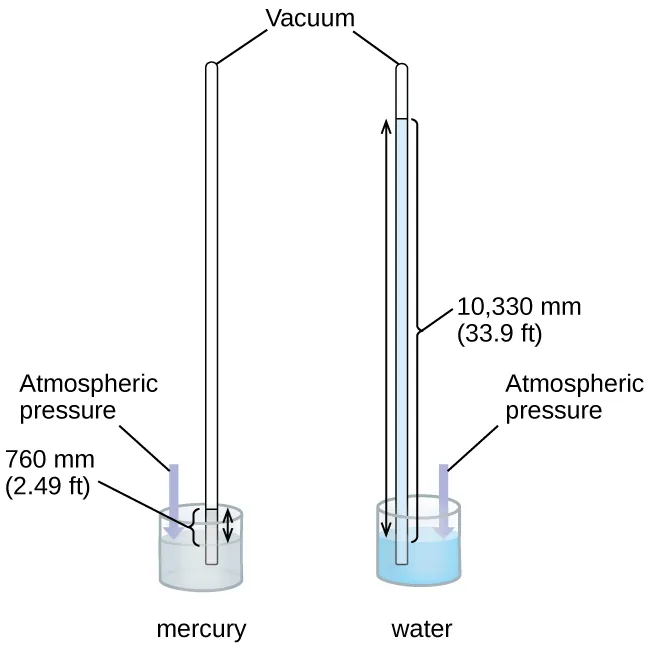
Why is mercury typically used in barometers instead of water?
A. Mercury is more dense than water, so a reasonably sized column can measure air pressure.
B. Mercury is less dense than water, so it produces a taller column for the same pressure
C. Mercury is lighter than water, making it safer to use.
D. Mercury is less dense than water, so the barometer needs to be over 30 feet tall.
A
A gas is measured with an open-end manometer. Mercury is 7.8 cm higher on the gas side. Atmospheric pressure = 76 cm Hg. What is the gas pressure in mm Hg?
682 mm Hg
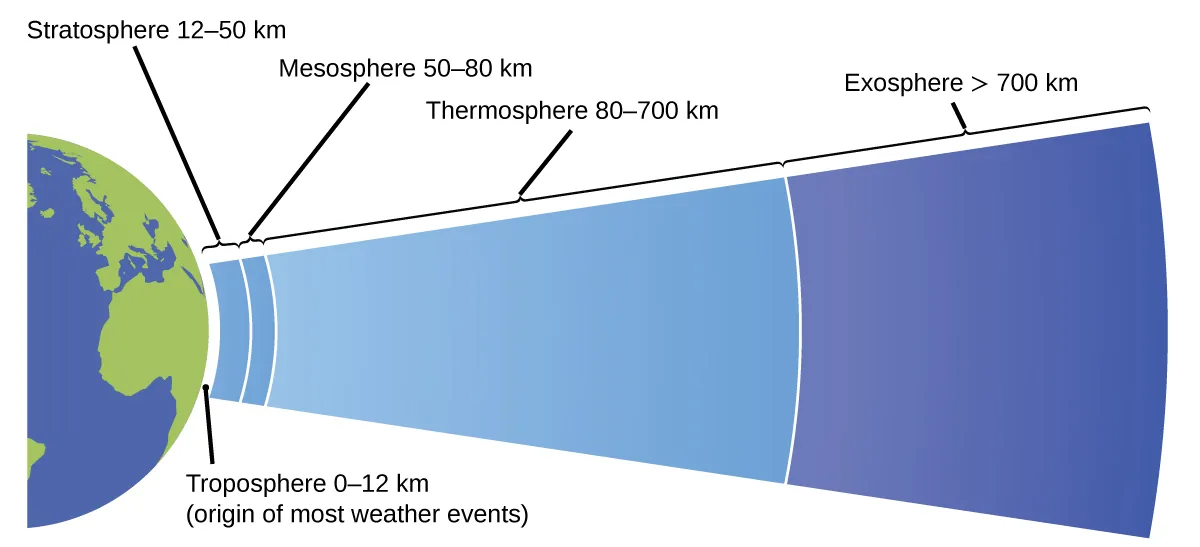
Which statement correctly describes Earth’s atmosphere according to the passage?
A. The stratosphere is the layer where most weather events occur.
B. The troposphere contains about 80% of Earth’s atmospheric mass and is where most weather occurs.
C. The troposphere is the highest layer of the atmosphere and contains most of the atmospheric mass.
D. Air density and temperature increase with altitude in the troposphere.
B
A sample of argon gas is sealed in a rigid container at 22 °C and 740 torr. What will the pressure be if the gas is heated to 122 °C, with the volume held constant?
990 torr
A gas occupies 850 mL at –10 °C. What will its volume be at 40 °C, assuming constant pressure?
1012 mL
If the number of moles and temperature of a gas remain constant, what happens to the pressure when the volume is decreased?
A. Pressure decreases
B. Pressure remains the same
C. Pressure increases
D. Pressure becomes zero
C
A gas occupies 3.50 L at a pressure of 2.50 atm and a temperature of 310 K. How many moles of gas are present?
0.34 mol
Marie-Anne Paulze Lavoisier contributed to chemistry by:
A. Performing all experiments independently of her husband.
B. Developing the law of conservation of matter on her own.
C. Creating detailed illustrations of lab equipment and translating foreign scientific texts.
D. Inventing chemical pressure measurement devices.
C
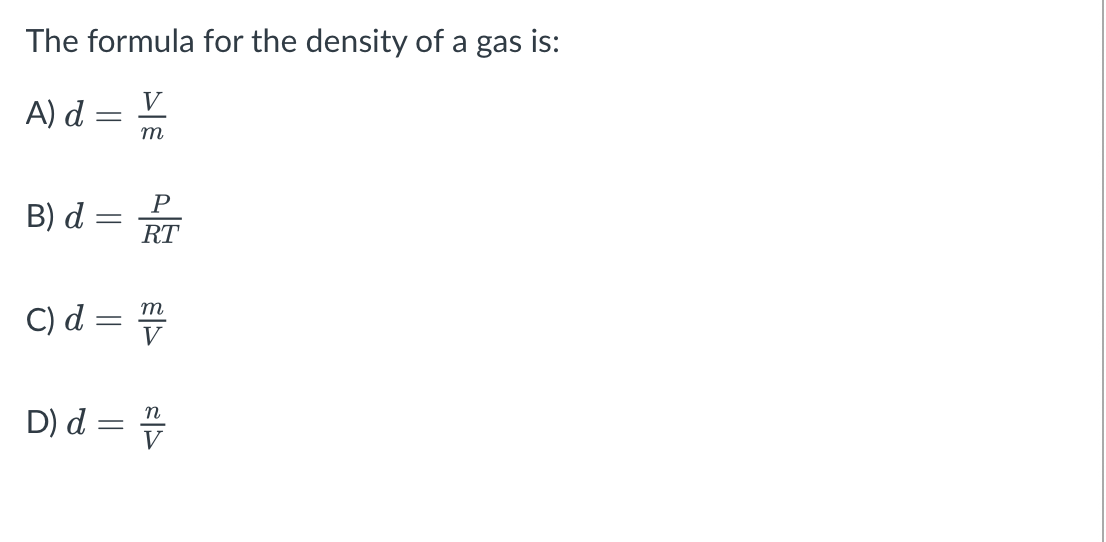
C
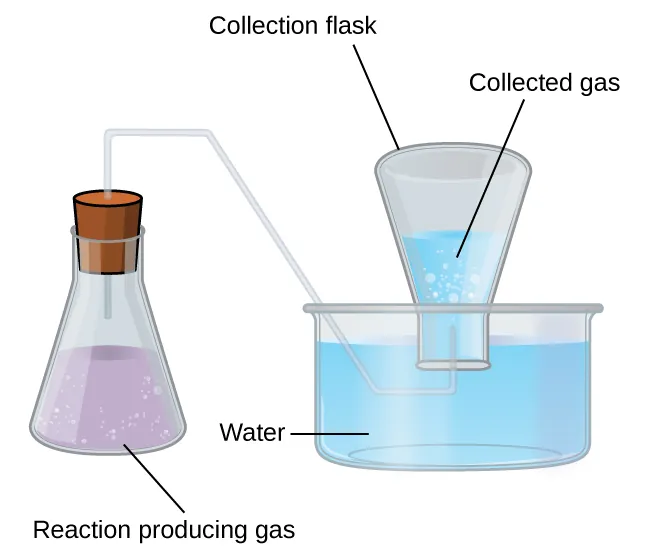
When a gas is collected over water, the gas trapped in the collection flask:
A. Has a pressure equal to only the pressure of the gas produced by the reaction.
B. Always has a pressure greater than atmospheric pressure.
C. Is a mixture of the gas produced and water vapor, and its total pressure equals the atmospheric pressure.
D. Does not contain any water vapor if the flask is sealed.
C
Methane, CH₄(g), is used as a fuel. What volume of O₂(g) measured at 25 °C and 1 atm is required to completely react with 3.0 L of methanemeasured under the same conditions?
6.0 L
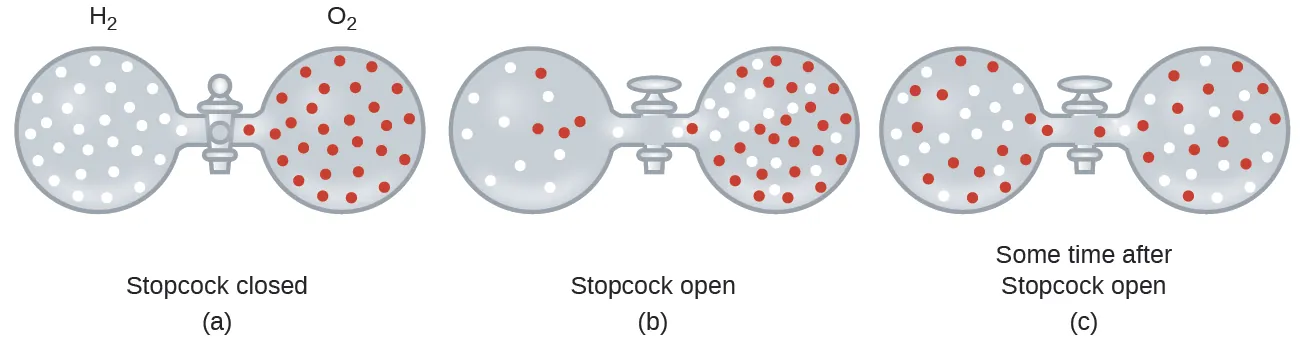
Two gases, H₂ and O₂, are initially separated in a container by a stopcock. When the stopcock is opened, which of the following best describes what happens?
A) H₂ moves faster through the opening than O₂, and eventually both gases become evenly distributed in the container.
B) O₂ moves faster through the opening than H₂, so O₂ dominates both sides of the container.
C) H₂ and O₂ move at the same rate, and no mixing occurs.
D) H₂ moves slower than O₂, so it remains mostly on its original side of the container.
A
According to the passage, which principle allows the enthalpy change of a chemical reaction to be estimated by analyzing the bonds broken and formed?
A. The total energy change of a reaction equals the difference between the energy required to break bonds and the energy released when new bonds form.
B. Bond enthalpy values depend on the amount of substance present rather than molecular structure.
C. Energy released in combustion reactions is always greater than energy absorbed in non-combustion reactions.
D. Chemical bonds store energy that can be created or destroyed during reactions.
A
Which statement best explains why coal and petroleum are considered indirect sources of solar energy?
A. They release energy through nuclear reactions initiated by solar radiation.
B. They store energy originally captured from the sun by ancient plants and microorganisms.
C. They are continuously replenished by current photosynthetic processes.
D. They convert solar energy directly into thermal energy during combustion.
B
Which statement correctly relates the calorie, the Calorie, and the joule as units of energy?
A. A calorie and a joule are defined identically, but the Calorie is a pressure-dependent unit.
B. A Calorie (food calorie) is equal to 1000 calories, and one calorie is defined as exactly 4.184 joules.
C. A joule is the energy required to raise 1 g of water by 1 K, while a calorie equals 1 N·m.
D. A kilojoule is defined based on water’s temperature change and varies with atmospheric pressure.
B
A sample of 250 g of water is heated from 18 °C to 42 °C. How much heat is absorbed by the water?
A. 25.1 kJ
B. 18.4 kJ
C. 12.6 kJ
D. 6.28 kJ
A
When an exothermic reaction occurs in solution inside a calorimeter, which of the following observations is expected?
A. Heat flows from the surroundings into the reaction, increasing the system’s energy
B.No temperature change occurs because the calorimeter isolates the system
C. The calorimeter absorbs heat released by the reaction, causing the solution temperature to rise
D. The temperature of the solution decreases because heat is absorbed by the reaction
C
A 500 g iron sample (c = 0.449 J/g·°C) initially at 175 °C is placed into 600 g of water at 25.0 °C. What is the final temperature of the system?
A. 29.6 °C
B. 37.3 °C
C. 38.4 °C
D. 44.1 °C
B
A 95.0 g piece of brass (c = 0.380 J/g·°C) at 110 °C is placed into 200 g of water at 25.0 °C. What is the final temperature of the mixture?
A. 27.8 °C
B. 30.5 °C
C. 28.5 °C
D. 36.4 °C
C
Which statement best describes what happens during the exothermic combustion of gasoline in an internal combustion engine?
A. The system loses energy both as heat and as work done on the surroundings, causing a decrease in its internal energy.
B. The surroundings lose energy while the system’s internal energy remains constant.
C. All energy released by the reaction is converted into heat, with no work done on the surroundings.
D. The system (gasoline + oxygen) gains internal energy as it heats the surroundings.
A
50.0 g of water is heated from 25.0 °C to 35.0 °C. How much heat was absorbed? (c_water = 4.184 J/g·°C)
Choices:
A. 209 J
B. 2090 J
C. 4180 J
D. 20,900 J
B
A 50.0 g piece of aluminum (c = 0.900 J/g·°C) is heated from 25.0 °C to 75.0 °C. How much heat does it absorb? (in KJ)
2.25 kJ
32g of methane (CH4) is burned. The heat of combustion of methane is -890 kJ/mol. How much heat is released?
A. 12.38 × 10³ kJ released
B. 1.78 × 10³ kJ released
C. 3.78 × 10³ kJ released
D. 1.99 × 10³ kJ released
b
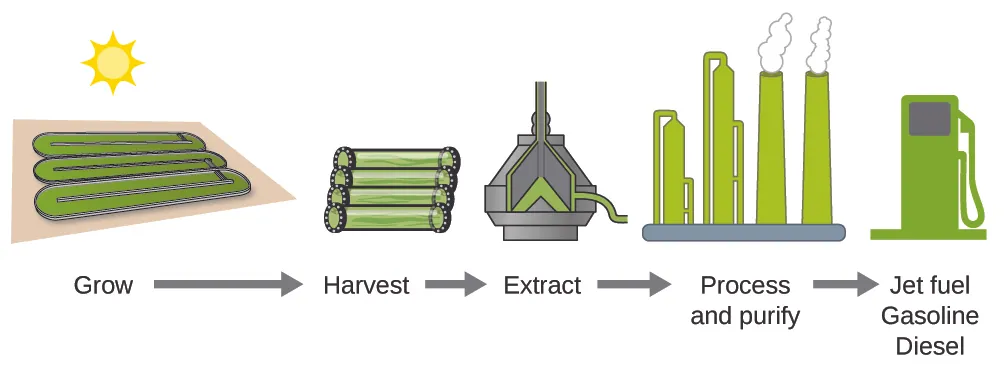
Which of the following correctly describes the process used to produce algal fuel?
A) Extract the fuel compounds from algae, grow the algae using sunlight and CO₂, purify, and then distribute.
B) Grow the algae using sunlight and CO₂, harvest the algae, extract fuel compounds, process as needed, purify, and distribute.
C) Grow algae in the dark, extract fuel compounds, perform transesterification, and then burn directly.
D) Harvest algae, distribute immediately, and then extract fuel compounds.
B
What does the strength of a covalent bond indicate?
A) How easily the atoms can move around each other
B) The amount of energy required to break the bond
C) The number of electrons in the atom
D) How quickly the molecule can react with water
b
(also, bond dissociation energy) energy required to break a covalent bong in gaseous substance
bond energy
unit of heat or other energy
calorie
chemical reaction or physical change that absorbs heat
endothermic process
chemical reaction or physical change that releases heat
exothermic process
compound composed only of hydrogen and carbon; major component of fossil fuels
hydrocarbon
study of measuring the amount of heat absorbed or released during a chemical reaction or a physical change
thermochemistry
Which statement correctly compares particle arrangement and motion in solids, liquids, and gases?
A. In solids, particles move independently; in liquids, particles are arranged in a regular pattern; in gases, particles vibrate in place.
B. In solids, particles are far apart and move freely; in liquids, particles vibrate in fixed positions; in gases, particles are tightly packed.
C. In solids, particles are tightly packed and vibrate in fixed positions; in liquids, particles remain close together and move past one another; in gases, particles are far apart and move independently.
D. In solids, liquids, and gases, particles have the same arrangement but different energies.
C
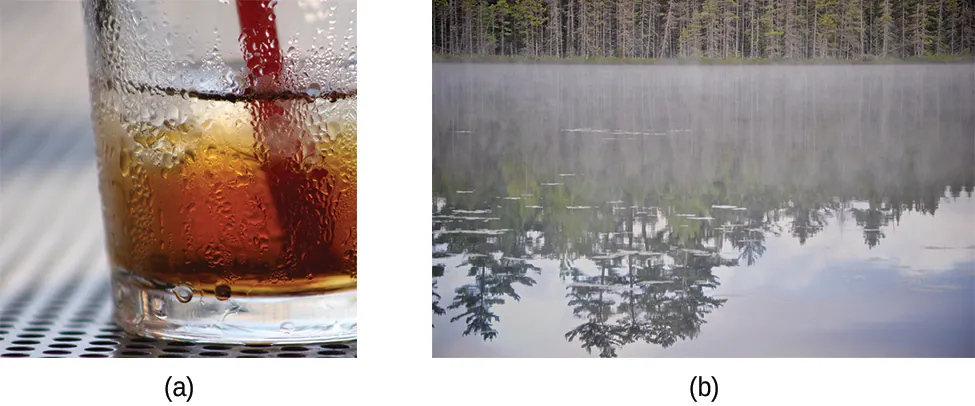
What causes condensation to form?
A. Liquid water gains enough energy to become water vapor
B. Solid ice melts directly into liquid water
C. Water vapor in the air is cooled and changes into liquid water
D. Liquid water absorbs heat and forms fog
C
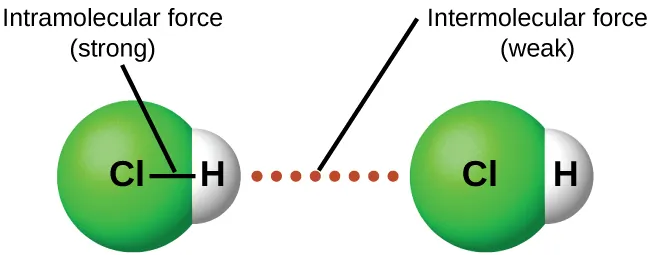
Which statement correctly distinguishes intermolecular forces from intramolecular forces?
A. Intermolecular forces hold atoms together within a molecule, while intramolecular forces act between molecules.
B. Intramolecular forces are weaker than intermolecular forces in most substances.
C. Intermolecular forces act between molecules and determine many physical properties, while intramolecular forces hold atoms together within a molecule.
D. Intermolecular forces are responsible for breaking covalent bonds during phase changes.
C
Arrange the following hydrocarbons in order of increasing boiling point:
C₂H₄, C₃H₆, C₄H₈
A. C₄H₈ < C₃H₆ < C₂H₄
B. C₂H₄ < C₃H₆ < C₄H₈
C. C₃H₆ < C₂H₄ < C₄H₈
D. C₂H₄ < C₄H₈ < C₃H₆
B
Which statement about hydrogen bonds is correct?
A. Hydrogen bonds are a type of covalent bond within a molecule.
B. Hydrogen bonds are stronger than covalent bonds.
C. Hydrogen bonds are intermolecular attractions, much weaker than covalent bonds but stronger than typical dipole-dipole forces.
D. Hydrogen bonds are weaker than most other dipole-dipole interactions.
C
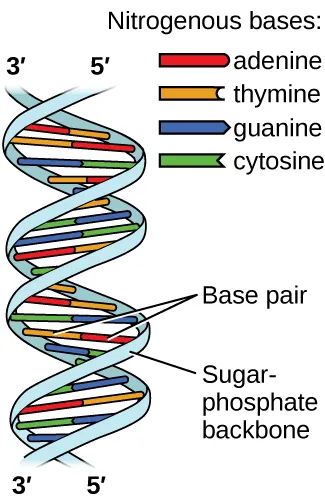
In the DNA double helix, the two strands are held together primarily by which type of interaction?
A. Covalent bonds between sugar and phosphate groups
B. Ionic bonds between nucleotides
C. Hydrogen bonds between complementary base pairs
D. London dispersion forces between nucleobases
c
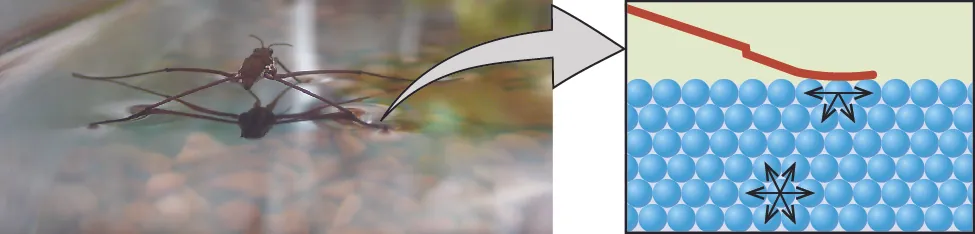
What effect does surface contamination (such as soapy or greasy films) have on water’s surface tension?
A. It increases surface tension.
B. It decreases surface tension.
C. It has no effect on surface tension.
D. It converts water into a solid.
b
Which of the following best explains why water wets glass but not polyethylene?
A. Water molecules are polar, glass is polar, and polyethylene is nonpolar, affecting adhesive forces.
B. Cohesive forces in water are weaker than in polyethylene.
C. Water forms covalent bonds with glass but not with polyethylene.
D. Glass has a lower surface tension than polyethylene.
a
Why do towels and paper towels soak up water effectively?
A. Water forms covalent bonds with the fibers.
B. Hydrogen bonds form between water molecules and the −OH groups in cellulose fibers.
C. Water is nonpolar and spreads easily on cellulose.
D. Cellulose fibers repel water, creating suction.
b
In a closed container, when the rate of condensation equals the rate of vaporization, the system is:
A. Static and no molecules move between phases
B. At dynamic equilibrium
C. Experiencing net vaporization
D. Experiencing net condensation
b
Which statement best explains why water has a lower vapor pressure than diethyl ether, even though water is smaller in size?
A. Water molecules can form extensive hydrogen bonds, which strongly hold the molecules together.
B. Water is nonpolar and has weaker London dispersion forces.
C. Water is larger than diethyl ether, so it experiences stronger London forces.
D. Water evaporates more quickly due to its small size.
a
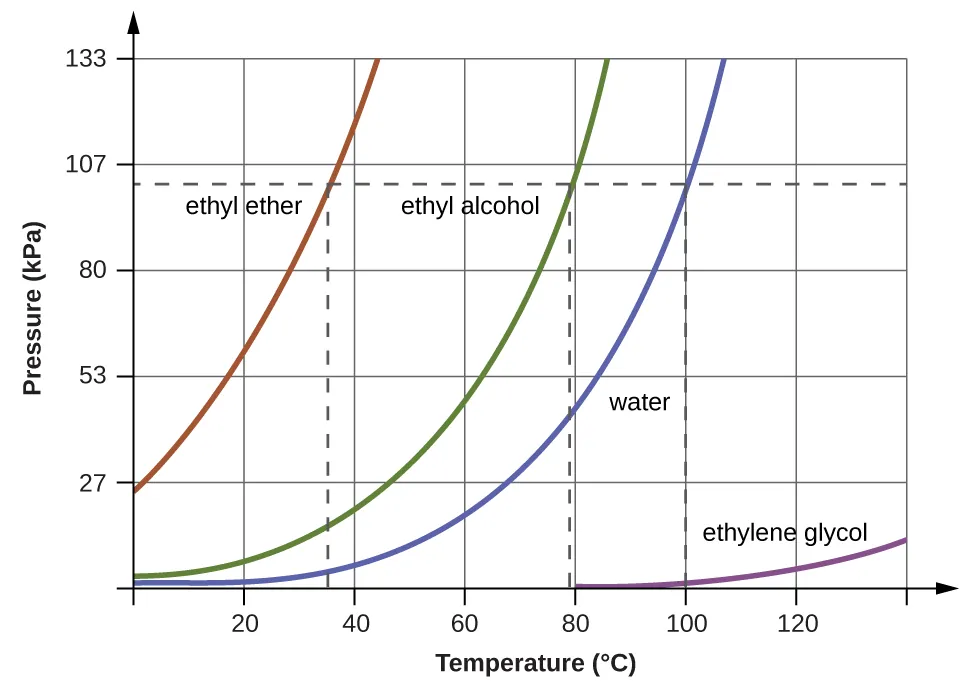
What happens when the vapor pressure of a liquid equals the external atmospheric pressure?
the liquid reaches its boiling point
How much heat is required to vaporize 200.0 g of water at 100 °C if its enthalpy of vaporization is 40.7 kJ/mol?
451.8 kJ
A mixture of solid and liquid is placed in a perfectly insulated container, and no heat is allowed to enter or escape. Which of the following statements is true about the system?
A. The solid and liquid phases remain in equilibrium, with melting and freezing occurring at equal rates.
B. The temperature of the mixture will keep rising as the solid melts.
C. The liquid will continue freezing until all of it becomes solid.
D. The solid will continue melting until all of it becomes liquid.
A
If a stove burner’s heat output is increased while water is already boiling, what happens?
A) The water temperature increases above 100°C.
B) The water boils more vigorously, but the temperature remains the same.
C) Boiling slows down because the water is already at the boiling point.
D) The water immediately evaporates without further boiling.
B
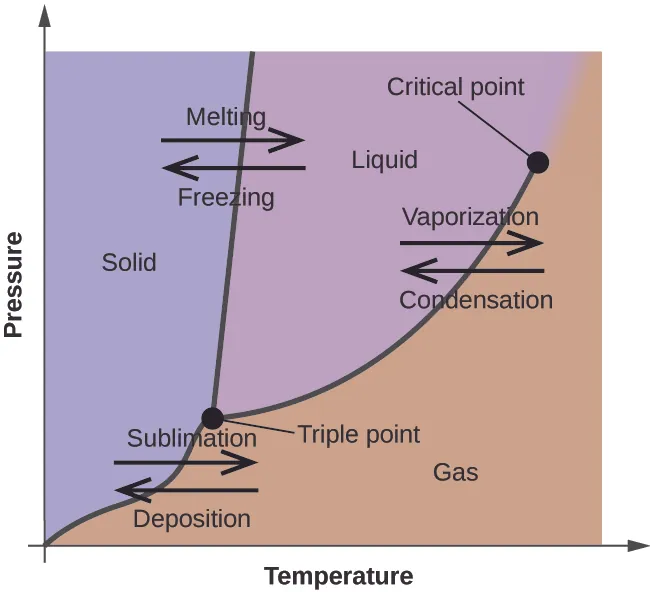
Which of the following statements about phase diagrams is correct?
A. Heating and cooling curves cannot provide any information for constructing phase diagrams.
B. A phase diagram shows only the boiling points of a substance at various temperatures.
C. Phase diagrams are unrelated to the equilibrium vapor pressure of a liquid.
D. A phase diagram combines the pressure–temperature relationships for solid-liquid, liquid-gas, and solid-gas equilibria.
D
Why does a crystalline solid have a precise melting point?
A) Its molecules are arranged randomly, so they melt gradually.
B) All the atoms or molecules are held in place by forces of equal strength, requiring the same energy to break.
C) Its intermolecular forces vary in strength, so melting occurs over a wide temperature range.
D) Crystalline solids do not actually melt; they sublimate directly.
B
Which factor determines whether a substance exists as a solid, liquid, or gas?
A. The total number of particles in the substance
B. The type of covalent bonds within the particles
C. The balance between intermolecular forces and the kinetic energy of the particles
D. Only the mass of the particles
C
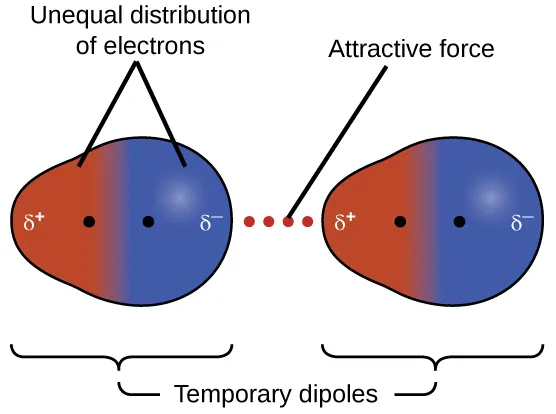
Why are London dispersion forces present in all atoms and molecules?
A. Because covalent bonds always produce strong intermolecular attractions
B. Because all atoms and molecules have permanent dipoles
C. Because London dispersion forces require charged ions
D. Because electrons are in constant motion, creating temporary dipoles
D
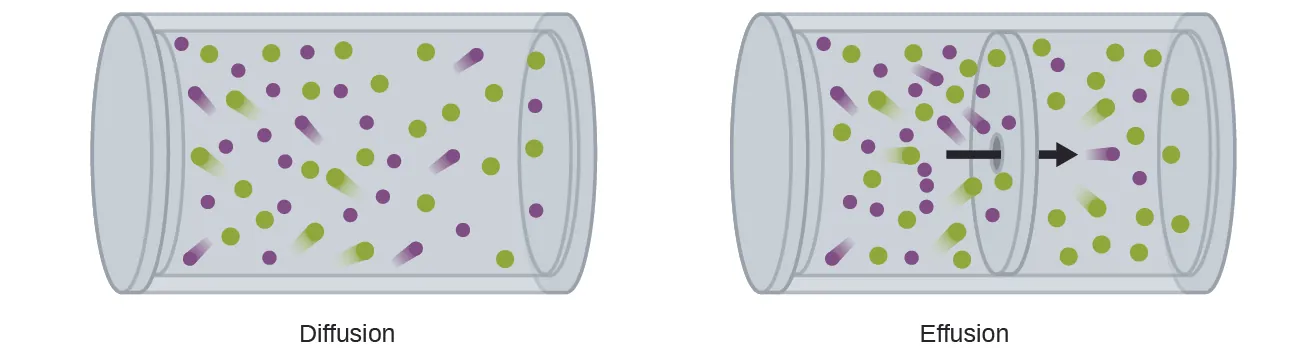
Which of the following correctly distinguishes diffusion from effusion?
A. Effusion only occurs in liquids, while diffusion occurs only in gases.
B. Diffusion is the movement of molecules through a tiny opening, while effusion is the unrestricted spreading of molecules.
C. Diffusion and effusion are identical processes and the terms can be used interchangeably.
D. Diffusion involves the unrestricted dispersal of molecules due to random motion, whereas effusion occurs when molecules pass through very small openings in a barrier.
D
Which of the following statements best describes Hess’s Law?
A) The enthalpy change of a reaction depends on the path taken to complete the reaction.
B) The enthalpy change of a reaction can be determined by adding the enthalpy changes of multiple stepwise reactions that lead to the same final result.
C) Enthalpy changes can only be measured experimentally, not calculated.
D) Hess’s Law only applies to reactions that release heat.
b
Why do stable molecules exist?
A) Because atoms never share electrons.
B) Because covalent bonds hold the atoms together, and energy is required to break these bonds.
C) Because atoms are constantly moving apart without resistance.
D) Because all bonds in a molecule are weak and easily broken.
b
What does it mean to say that the energy of electrons in an atom is quantized?
A. Electrons can have any energy they want.
B. Electron energy changes continuously like a ramp.
C. Electrons have no energy at all.
D. Electrons can only have certain specific energies.
D
What determines whether a covalent bond is polar or nonpolar?
A. The number of protons in each atom
B. The total number of valence electrons in the molecule
C. The bond length between the atoms
D. The difference in electronegativity between the two atoms
D