Med Term Chapter 3 Terms
 Call Kai
 Learn
Learn Practice Test
 Spaced Repetition
 Match
Match Flashcards
 Knowt Play
1/58

Earn XP
Description and Tags
Directional terms, Abdominopelvic regions, Anatomic planes, Body positions
Name | Mastery | Learn | Test | Matching | Spaced | Call with Kai | Chat |
|---|
No analytics yet
Send a link to your students to track their progress
59 Terms
lateral (lat)
pertaining to the side
medial (med)
pertaining to the middle
unilateral
pertaining to one side (only)
bilateral
pertaining to two sides
mediolateral
pertaining to the middle and to the side
distal
pertaining to away (from the point of attachment)
proximal
pertaining to near (to the point of attachment)
inferior (inf)
pertaining to below
superior (sup)
pertaining to above
caudal
pertaining to the tail (downwards when referring to human trunk)
cephalic
pertaining to the head
anterior (ant)
pertaining to the front
posterior
pertaining to the back
dorsal
pertaining to the back
ventral
pertaining to the belly (front)
anteroposterior (AP)
pertaining to the front and to the back
posteroanterior (PA)
pertaining to the back and to the front
umbilical region (1)
around the navel (umbilicus)
lumbar regions (2)
to the right and to the left of the umbilical region, near the waist
epigastric regions (2)
to the right and left of the umbilical region, near the waist
hypochondriac regions (2)
to the right and left of the epigastric region
hypogastric region (1)
inferior to the umbilical reagion
iliac regions (2)
to the right and left of the hypogastric region, near the groin (also called the ingional regions)
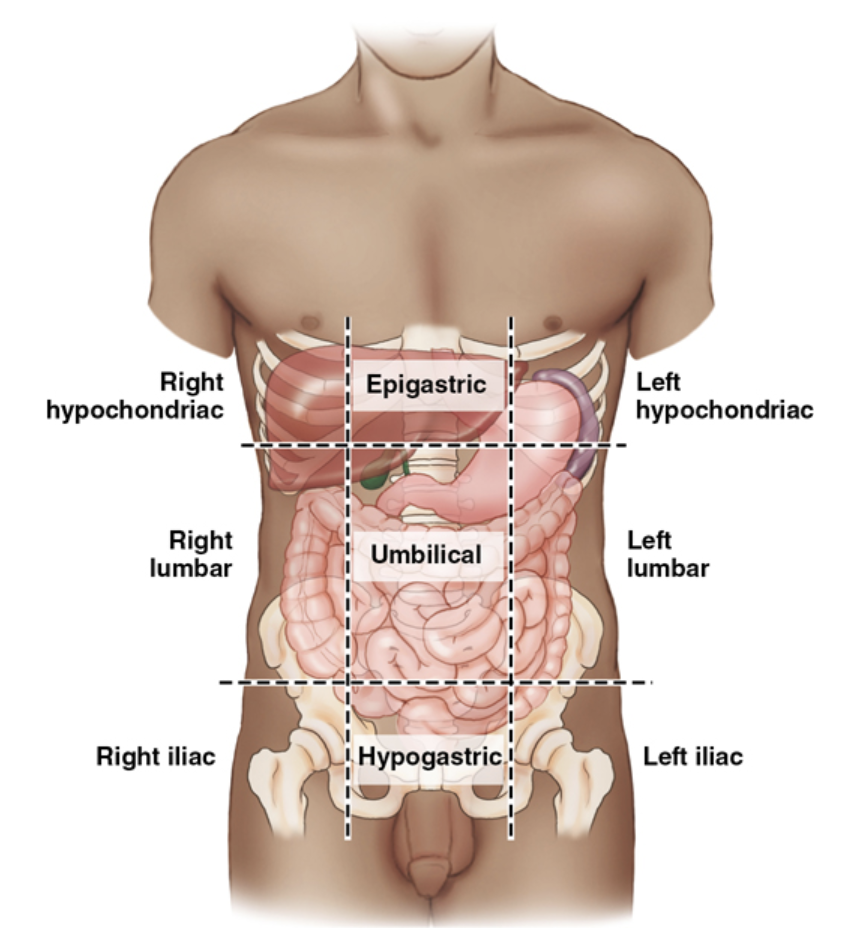
abdominopelvic regions
pertaining to the abdominal and pelvis regions
axial plane
horizontal plane dividing the body into superior and inferior portions (aka transverse plane and horizontal plane)
coronal plane
vertical plane passing through the body from side to side, dividing the body into anterior and posterior portions (aka frontal plane)
midsagittal plane
vertical plane passing through the body from front to back at the midline, dividing the body equally into right and left halves
oblique plane
diagonal plane passing through the body at an angle between the horizontal and vertical planes (any plane that is neither vertical nor horizontal)
parasagittal plane
vertical plane passing through the body from front to back, dividing the body into unequal left and right sides (any plane parallel to the midsaggital plane)
sagittal plane
vertical plane passing through the body from front to back, dividing the body into right and left sides (general term referring to the midsagittal plane and parasagittal planes)
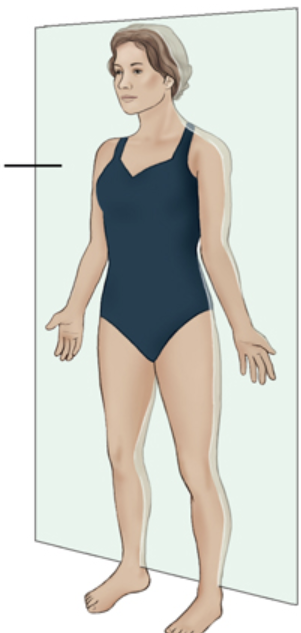
What plane?
coronal plane
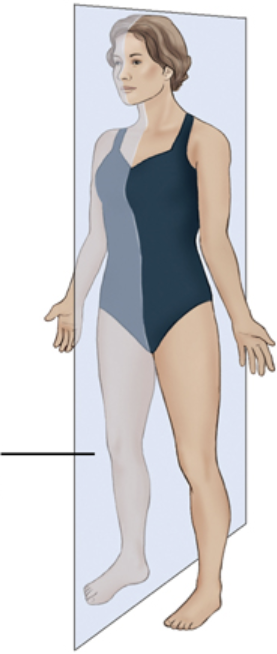
What plane?
midsagittal plane

What plane?
axial plane

What plane?
coronal plane
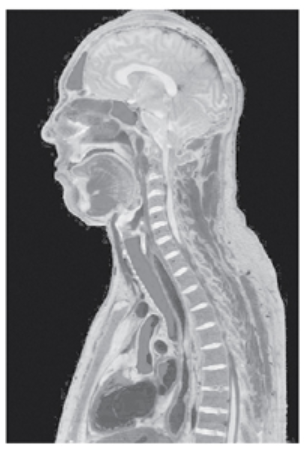
What plane?
midsagittal plane

What plane?
axial plane
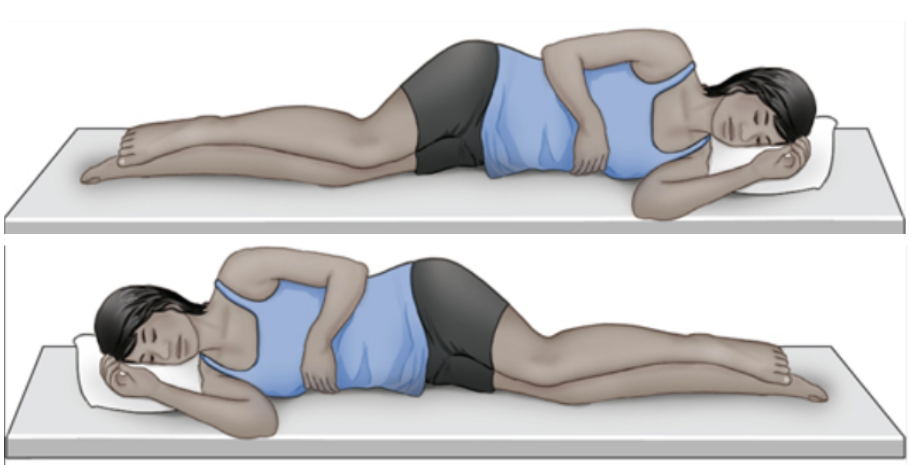
lateral position
lying on one side with knees bent; right and left precede the term to indicate the patient’s side (aka side-lying position and lateral recumbent position)
lithotomy position
lying on back with legs raised and feet in stirrups, hips and knees flexed, and thighs abducted (away from the body) and externally rotated
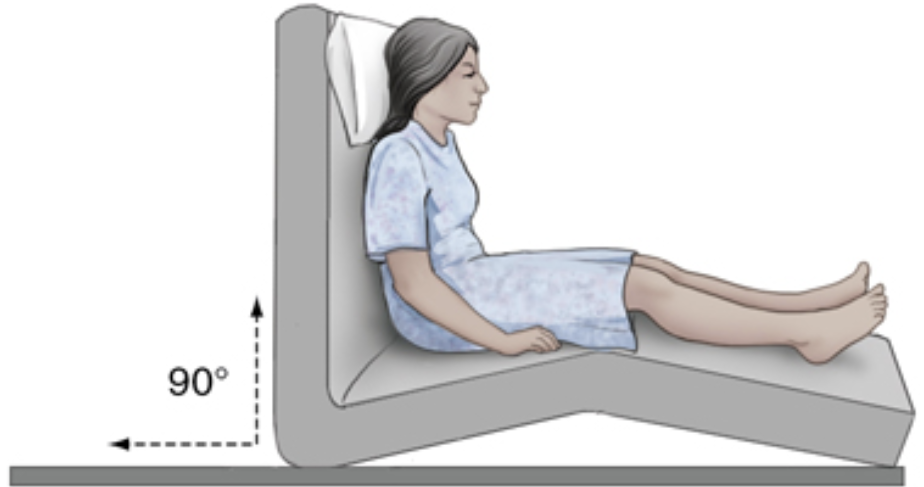
orthopnea position
sitting upright in a chair or in a bed supported by pillows behind the back. Sometimes the patient tilts forward, resting on a pillow supported by an overbed table. (aka orthopneic position)
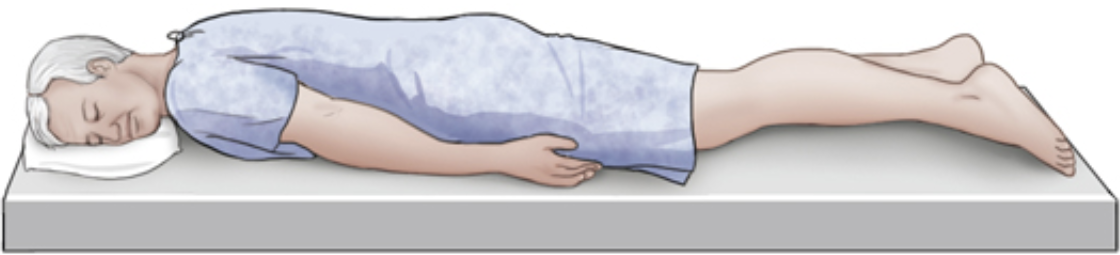
prone position
lying on abdomen, facing downward; head may be turned to one side; aka ventral recumbent position
recumbent position
lying down in any position (aka decubitus position)
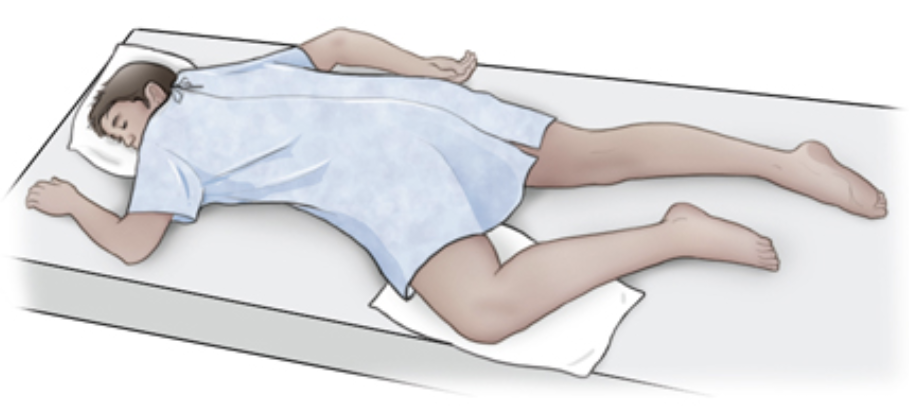
semiprone position
lying on one side between a lateral and prone position with the upper knee drawn up toward the chest and lower arm drawn parallel to the back. “Right” or “left” precede the term to indicate the patient’s right or left side.
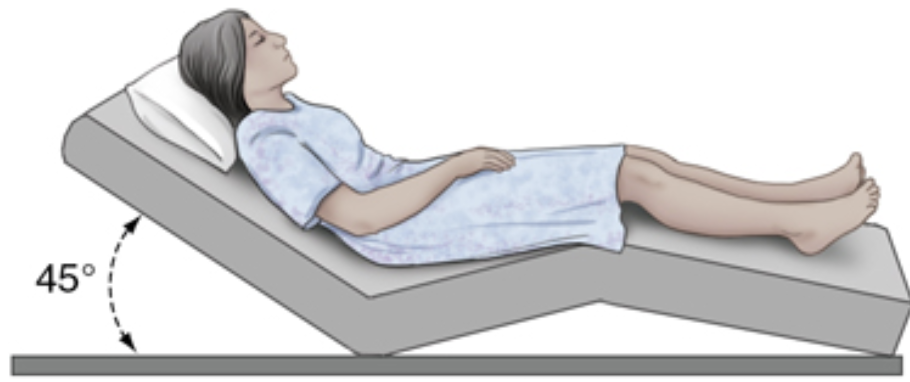
sitting position
bed position with head of the bed elevated at an angle between 15° and 90° and with slight elevation of the knees (aka Fowler position and semisitting position)
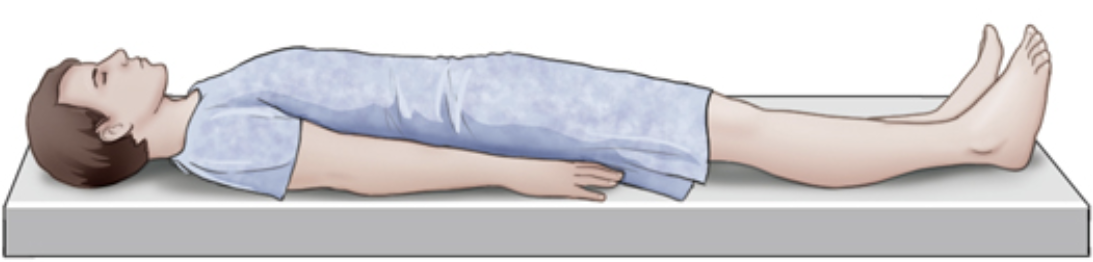
supine position
lying on back, facing upward (aka dorsal recumbent position)

Trendelenburg position
lying on back with body tilted so that the head is lower than the feet; used less often due to risks that include incrased pressure within the eyes (intraocular) and within the skull (intracranial)
radiograph
record of x-rays
radiography
process of recording x-rays
radiologist
physician who specializes in x-rays (specifically the diagnosis and treatment of disease using medical imaging such as x-rays, computed tomography [CT] magnetic resonance imaging [MRI], nuclear medicine [NM] and sonography)
radiology
study of x-rays (a branch of medicine concerned with the study and application of imaging technology, including x0rays computed tomography [CT], magnetic resonance imaging [MRI], nuclear medicine [NM], and sonography to diagnose and treat disease)
sonogram
record of sound
sonography
process of recording sound (aka ultrasonography [US]
tomography
process of recording slices (anatomical cross sections) [types of tomography: computed tomography (CT), positron emission tomography (PET) and single photon emission computed tomography (SPECT)]
computed tomography (CT)
imaging modality that combines x-rays with computer technology to produce detailed, cross-sectional images of the body, called “slices.” Oral or intravenous contrast materials may be given to highlight specific regions in the body.
fluoroscopy
imaging of moving body structures, like an x-ray movie. An x-ray beam is passed through the body part being studied, and then the image is transmitted to a monitor in real time so that the movement can be seen in detail. Contrast materials are used to help identify and assess the function of different structures.
nuclear medicine (NM)
imaging of internal structures using a Gamma camera to detect radiation from different parts of the body after a radioactive material (radioisotope) has been given to the patient
magnetic resonance imaging (MRI)
high-strength, computer-controlled magnetic fields producing a series of sectional images (slices) that visualize abnormalities such as swelling, infections, tumors, and herniated disks. Contrast materials may be administered.
scan
image obtained from diagnostic imaging procedures where data from several angles or sections have been combined; often scans are generated with the use of radioactive materials administered to the patient. Scans are generate by many diagnostic imaging procedures, including but not limited to nuclear medicine, computed tomography, and magnetic resonance imaging