OP Summer Psychology - Lecture 2, Chapter 3
 Call Kai
 Learn
Learn Practice Test
 Spaced Repetition
 Match
Match Flashcards
 Knowt Play
1/12

There's no tags or description
Looks like no tags are added yet.
Name | Mastery | Learn | Test | Matching | Spaced | Call with Kai | Chat |
|---|
No analytics yet
Send a link to your students to track their progress
13 Terms
Sensory neurons
receive information from the external world, receive signals for light, sound, touch, taste, and smell (five senses)
→ neurons coming in
Tip to remember: in sensory, out motor
Motor neurons
carry signals from the spinal cord to the muscles to produce movement
→ neurons coming out
Tip to remember: in sensory, out motor
Interneurons
small neurons in between sensory and motor neurons
Axon
carries information to other neurons, muscles, glandes
Neurons
cells in the nervous system that communicate with each other to perform information processing tasks (in the brain)
Myelin
some coverings on the axon, important for speed transformations
Terminal buttons
end of the neuron
Dendrite
starting point where the neuron receives information from other neurons and relays it to the cell body
Synapse
in order for neuron A to get to neuron B, they have to go through the synapse (gap)
Action Potential
change in voltage (mv) over Time (ms)
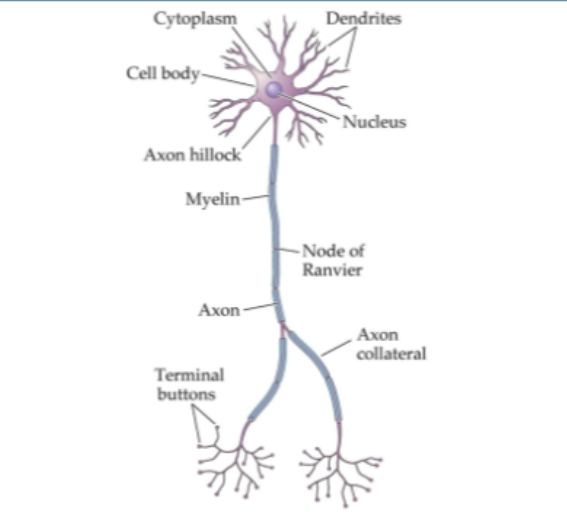
Process of Neurons (in steps; ~5 steps)
START: dendrite; post synaptic cleft (when they already receive the information from transmission from the end of another neuron)
processes in the cell body (nucleus)
goes to myelin, goes to myelin sheath (myelin sheath is to protect the chemical signal); Node of Ranvier: gap between the myelin
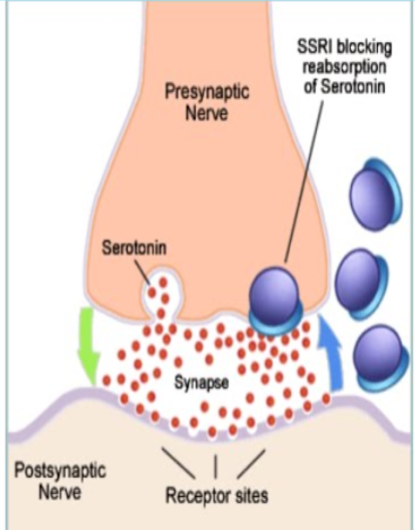
goes through the synapse (graph included)
END: presynaptic cleft, reaches the terminal buttons (imagine the terminal button is connected to the top of another neuron (aka dendrite)
Axon Collateral
ending parts of the neuron
Steps of Action Potential (~6 steps)
process of receiving information from the past neuron and giving this info to the next neuron and this is being communicated within the neuron
communication from the cell body to the terminal region (terminal buttons) is action potential
sodium and potassium ions are the key ions in action potential
saltatory conduction: action potential jumps from each node of ranvier and completes the process faster because it doesn’t go through the entire axon
the process happens or not, once it passes the threshold, it happens; if it doesn’t then it doesn’t happen (like a toilet, if you flush it, it all goes down)
actional potential needed for release of a neurotransmitter; push the whole process to the next neuron