neuron communication
 Call Kai
 Learn
Learn Practice Test
 Spaced Repetition
 Match
Match Flashcards
 Knowt Play
1/27

There's no tags or description
Looks like no tags are added yet.
Name | Mastery | Learn | Test | Matching | Spaced | Call with Kai | Chat |
|---|
No analytics yet
Send a link to your students to track their progress
28 Terms
describe neuron language
“yes-no”
excitatory
inhibitory
what are humans fluid balance?
seawater
water o2, electrolytes
mammals are 2/3 water
humans 45-70%
what electrolyte ions are do humans have
na+
cl-
K+
ca2+
mg2+
a- (organic negatively charged ions
breakdown of fluid balance compartments and how they differ
intracell = 2/3
extracell = 1/3
interstitial fluid (26%) — which is between cells
blood plasma (7%)
diff in location and composition
diffusion
passive process
high conc to low conc
electrostatic pressure — what does this mean?
opposite charged attract
same charges repulse
membrane potential — describe fluid
fluid inside cell is more negative than fluid outside of the cell
the membrane maintains a electrical gradient via polarization
some chemicals pass more easily and freely than others
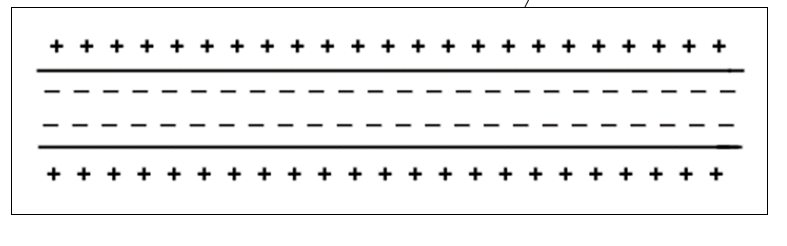
what chemicals pass more easily and freely than others
o2, co2, h20 always cross
describe various forces driving na+ and k+ at membrane
electrostatic and diffusion drives na+ in
electrostatic drives k+ in
diffusion drives k+ out

characteristics of lipid bilayer?
impermeable to Na+
kept out by a force
describe sodium-potassium transporter
na/k exchange
exchanges 3 sodium for 2 potassium
keeps conc of na+ low in cell
40& of neuron’s energy goes to pump
describe what occurs at resting membrane potential
little na+ can enter through gated channels
k+ moves out on its concentration gradient
k+ moves in on its electrostatic pressure

what is the mV of cell at rest? what occurs here?
-70 mV
messages constantly coming in
some are yes, some are no
when does cell fire?
-40 mV
what are ion channels?
small pore in the membrane channel made up of proteins
specific
only let certain ions in or out
voltage-gated
describe what occurs during depolarization
sodium channels open at -40 mV
threshold of excitation
potassium channels less sensitive
opens at ~-20 mV
K+ starts to leave
peaks at +40 mV
na+ channels close
reached in ~1 msec
describe what occurs during repolarization
once sodium channels close, k+ channels are still open
outflow of K+ brings cell back to rest
k+ channels start to close at -70 mV
describe refractory periods
k+ channels are slow
too much k+ has left so cell TOO negative
na/k pummp starts back up and gets cell back to resting
na+ channels reset
once cell back to -70, it can fire again
EPSP
Excitatory Post-Synaptic Potential = cell is more likely to fire
IPSP - what enters and exits?
Inhibitory Post-Synaptic Potential = cell is less likely to fire
Cl- enters, K+ leaves = cell hyperpolarizes
spatial summation vs temporal summation
spatial - more than one neuron fires at the same time
temporal - one neuron fires over and over again
what is propogation
transmission of AP down the axon
only goes in one direction
saltatory conduction
impulse of myelinated neurons jumps from one NoR to another
depol at one node brings about depol at the next node
all or none law
either occurs or doesn’t
strength same from start to finish
rate law
firing rate depends on the stimulus
strong stim = more APs
weak stim = less APs
____ is always the same, ___ can change
amplitude
firing rate
the ___ the axon the faster the rate of conduction
thicker
look into synaptic transmission tomorrow