History of Archaeology Pt. 2
 Studied by 0 people
 Call with Kai
 Learn
Learn Practice Test
 Spaced Repetition
 Match
Match Flashcards
 Knowt Play
1/15

There's no tags or description
Looks like no tags are added yet.
Name | Mastery | Learn | Test | Matching | Spaced | Call with Kai |
|---|
No study sessions yet.
16 Terms
James Hutton
James Hutton published an essay in 1785 entitled Theory of the Earth. In this work he outlined the theory of uniformitarianism He studied the stratigraphy of rocks and established that strata were laid down in an orderly manner Charthrough time.
Charles Lyell
Charles Lyell Published Principles of Geology 1830- 1833 in which he popularized the theory of uniformitarianism.
Uniformitarianism is the geological principal that past geologic events can be explained by current geologic phenomena.
In other words, the same things which occurred in the past are still occurring today : they are uniform
Why are Charles Lyell and James Hutton important to archaeology?
They demonstrated that we could learn about the non-historical past as we can infer what past environments were like based on what environments are like today.
Paradigms early scholars had to deal with
Garden of Eden
If people came from the Garden of Eden how did they get to the New World?
Biblical Framework for the past
Bishop Ussher – 4004 BC Creation of world:
Limited Duration for Antiquity
CJ Thomsen (1788-1865)
Danish Scholar
Systematically studied the museum collections at Copenhagen Museum and in doing so created the three age system.
Established that chronologies could be built using artifacts.
Three age system consists of:
Stone Age
Bronze Age
Iron Age
Thomsen VS Morgan
How is Thomsen’s Three age system different from Morgan’s?
How are they similar?
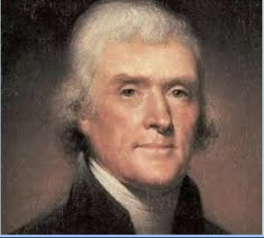
Thomas Jefferson: the First North American Archaeology
Thomas Jefferson was the first individual to do a systematic excavation within North America.
Excavated a burial mound on his property in an attempt to resolve the moundbuilders mystery.
Jefferson’s Lasting Legacy
Discussed linguistic diversity and archaeological evidence within “Notes on Virginia”
Was a key member in the American Philosophical Society.
Sent Lewis and Clark to investigate the west
Myth of the Moundbuilders
Thought that Native Americans were incapable of building such mounds and that another “race” of people must have built them.
Squier and Davis were believers in this the whole time they mapped the mounds of Eastern North America.
Squier and Davis
One of the first works supported by the Smithsonian Institute
Went from state to state mapping mound structures found in Eastern North America
Published their work entitled Ancient Monuments of the Mississippi Valley.
Remarkable description of mounds many of which no longer exist today.

Cyrus Thomas
Sent out by John Wesley Powell from the Smithsonian’s Bureau of Ethnology in 1879
Moved about the Midwest digging and destroying mounds in an effort to prove the mound builder myth
Through his work he ceased to believe in the myth and realized that the ancestors of Native Americans had constructed the mounds
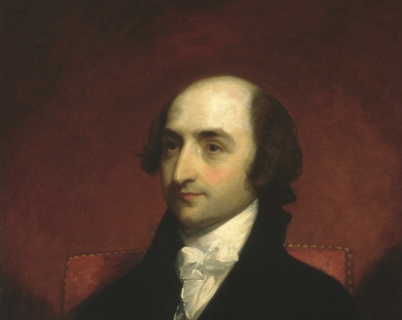
Albery Gallatin
Founded the American Ethnological Society in 1842. Set research agenda in North America
Assembled previous work of Bering and De Acosta and made a few theories about the prehistoric past of North America
Saw Linguistic affinities between Asians and Native Americans
Western Hemisphere was populated from North to South
Original occupants of the New World were Hunter-Gatherers who spread quickly
Myth of the Mound Builders: Racist Edition
This racist theory posited that anyone, and I mean anyone, but the Indigenous people of the New World (Native Americans) built the mounds that early European colonists found in Eastern North America. Possible options included, but are not limited to:
The Lost tribe of Isreal
A species of Giants
Europeans who landed
Peoples of Africa
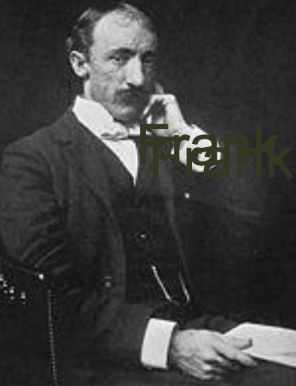
Frank Cushing
Worked with the Zuni Native Americans in the Southwest from 1879-1882.
Was not an archaeologist but built up a lot of ethnographic knowledge about the Southwest and firmly believed that archaeologists should work from the ethnographic present back toward the past.
William Henry Holmes