Hole's Anatomy & Physiology 1 Module 1 - Chapter 1 flashcards
 Call Kai
 Learn
Learn Practice Test
 Spaced Repetition
 Match
Match Flashcards
 Knowt Play
1/109

There's no tags or description
Looks like no tags are added yet.
Name | Mastery | Learn | Test | Matching | Spaced | Call with Kai | Chat |
|---|
No analytics yet
Send a link to your students to track their progress
110 Terms
Anatomy
examines structures of body parts - their forms and organization.
Physiology
considers the functions of body parts- what they do and how they do it.
Chemicals
What are all materials including those that comprise the human body composed of?
atoms; subatomic particles
Chemicals consist of tiny particles called? Which are composed of even smaller ————?
Molecules
atoms join to form ——————?
Macromolecules
small molecules may combine to form larger ________? (BIGMAC)
Cell
In humans and other organisms the basic unit of structure and function is a _______?
Tissue
What are specialized cells that assemble into layers or masses that have specific functions?
Organs
Groups of different tissues form ________?
Organ systems
Complex structures with specialized functions-and groups of organs that function closely together comprise__________?
Organism
Interacting organ systems make up an _________?
(a complete unit of life)
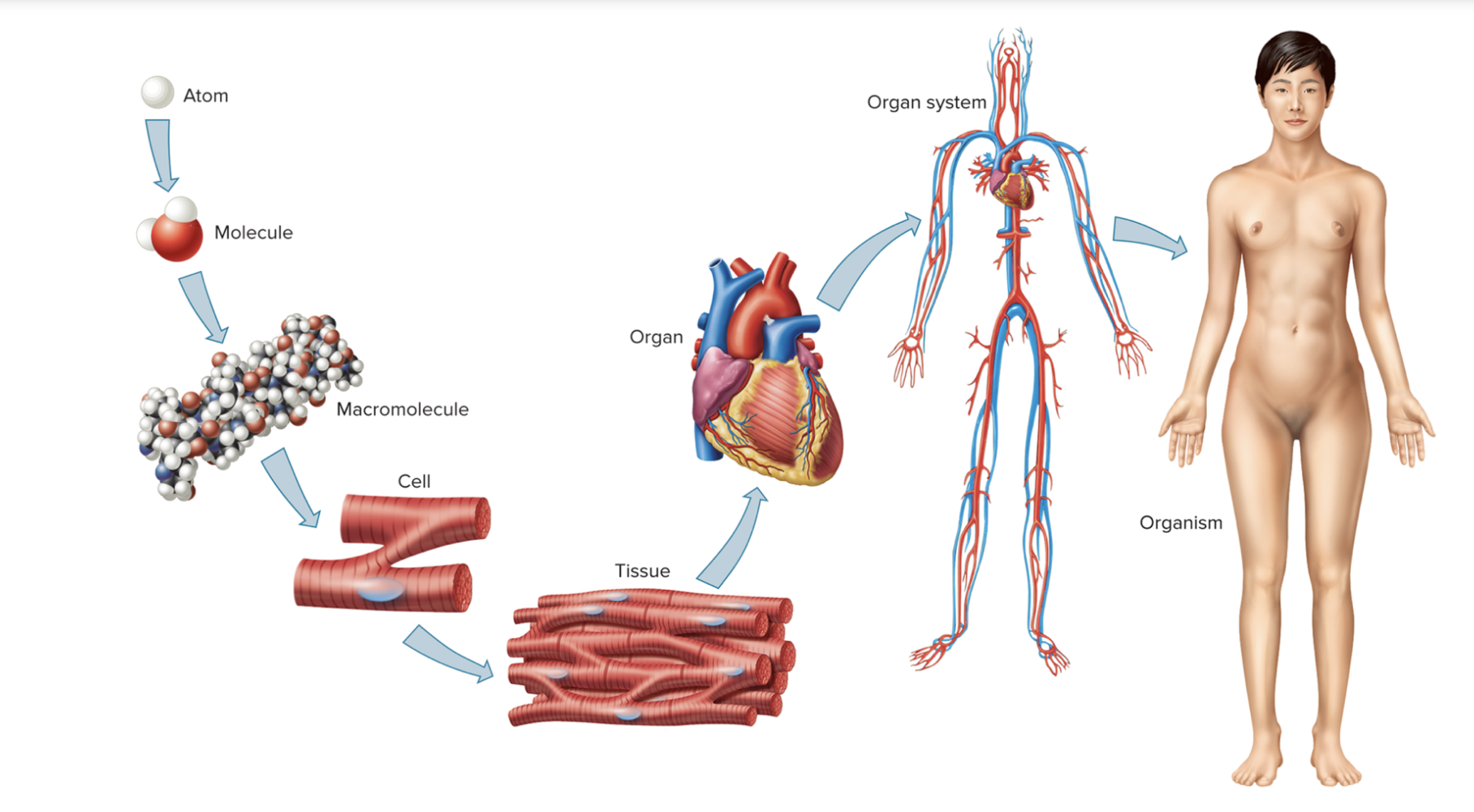
Atom → Molecules → Macromolecules → Cell → Tissue → Organ → Organ System → Organism
The order of a Human Organism : __________?
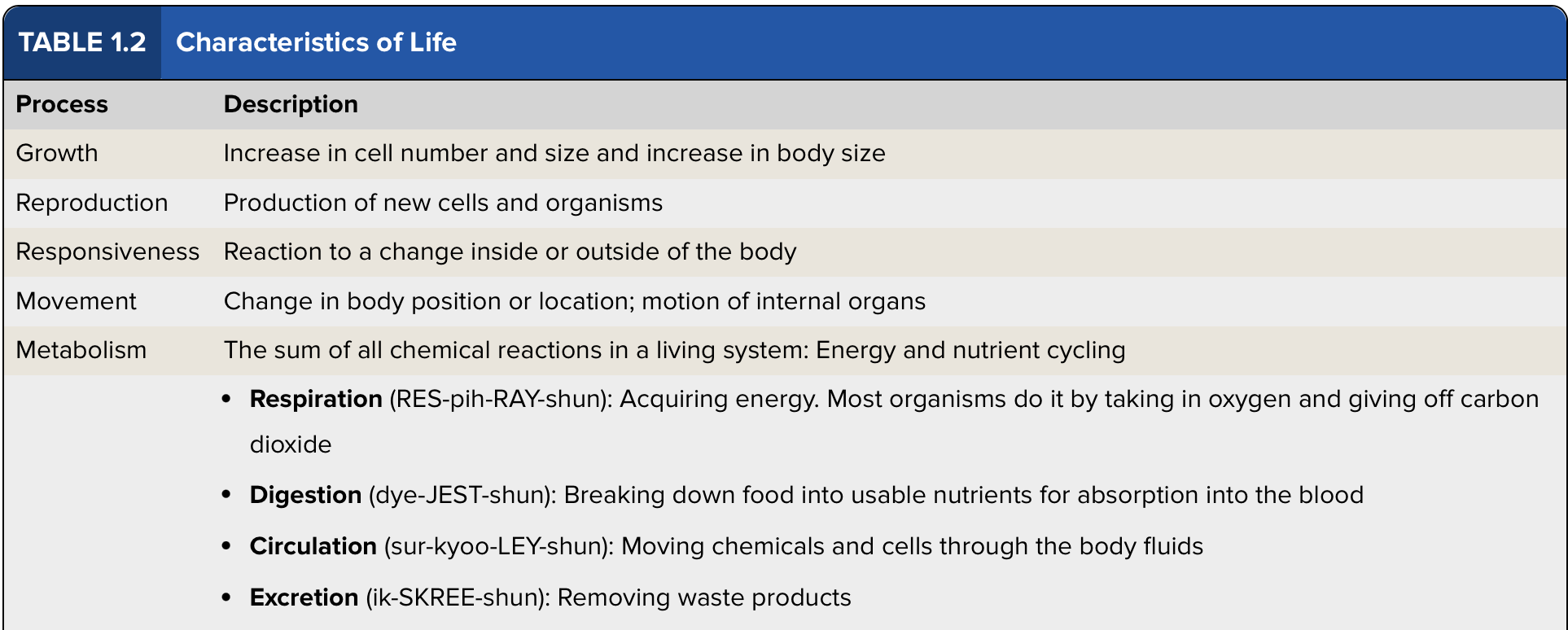
Growth
Reproduction
Responsiveness
Movement
Matabolism
respiration
Digestion
Circulation
Excretion
What are the Characteristics of life?
Metabolism
Taken together, the physiological events that obtain, release, and use energy are a major part of __________?
Chemicals
Heat
Pressure
Human life depends upon what following environmental factors?:
Water
What is the most abundant chemical in all living systems?
Heat
The degree of ________ present partly determines the rate at which metabolic reactions occur?
Homeostasis
the body’s ability to keeps its internal conditions stable is __________?
Homeostatic Mechanisms
The body maintains homeostasis through a number of self-regulating control systems called ______________?
receptors
control center
effectors
Homeostatic Mechanisms share what three components?
Receptors
What component of the homeostatic mechanisms provide information about specific conditions (stimuli) in the internal environment?
Control Center
What component of the homeostatic mechanisms is a decision maker that includes a set point?
Effectors
What component of the homeostatic mechanisms such as muscles or glands take action, and cause appropriate responses?
Negative Feedback
What effector response is activated in which the correction reduces the response of the effectors
Positive Feedback
What homeostatic mechanism operation is occurring in which a change is not reversed but intensified and the effector activity is initially increased rather than turned off?
Axial Portion
Appendicular Portion
What two portions can the human body be divided into?
Cranial Cavity
vertebral Canal
thoracic cavity
abdominopelvic cavity
Within the axial portion are the:
The Brain
What is housed inside the cranial cavity?

Oral
Nasal
Orbital
Tympanic
Smaller Cavities in the head include what following? :
The middle ear bone
What do the tympanic cavities contain?
the eyes and associated skeletal muscles and nerves
what do the Orbital Cavities contain?
Connecting with several air-filled sinuses
What does the nasal cavity consist of?
Teeth and Tongue
what does the oral cavity contain?
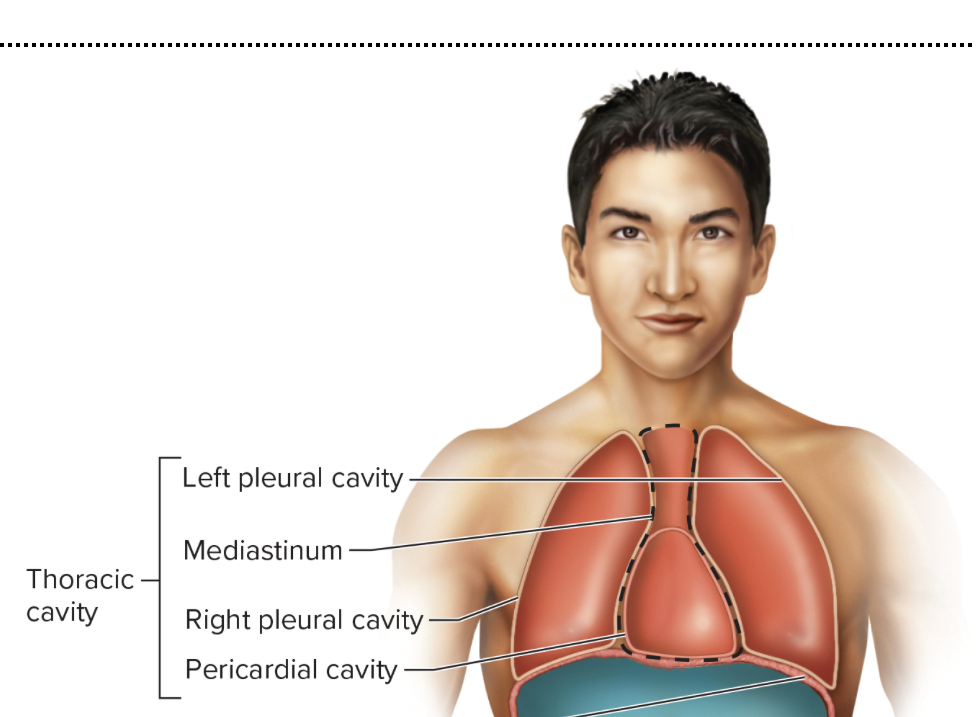
Thoracic Cavity
What houses the right and left pleural cavities, mediastinum, and the pericardial cavity?
The Mediastinum
What compartment extends forward to the sternum and backward to the vertebral column? Forms a boundary between the right and left sides of the thoracic cavity?
Most of the thoracic cavity viscera: (heart, esophagus, trachea, and thymus) except for the lungs.
What does the Mediastinum contain?
The Diaphragm
What structure/organ separates the Thoracic and abdominopelvic cavity?
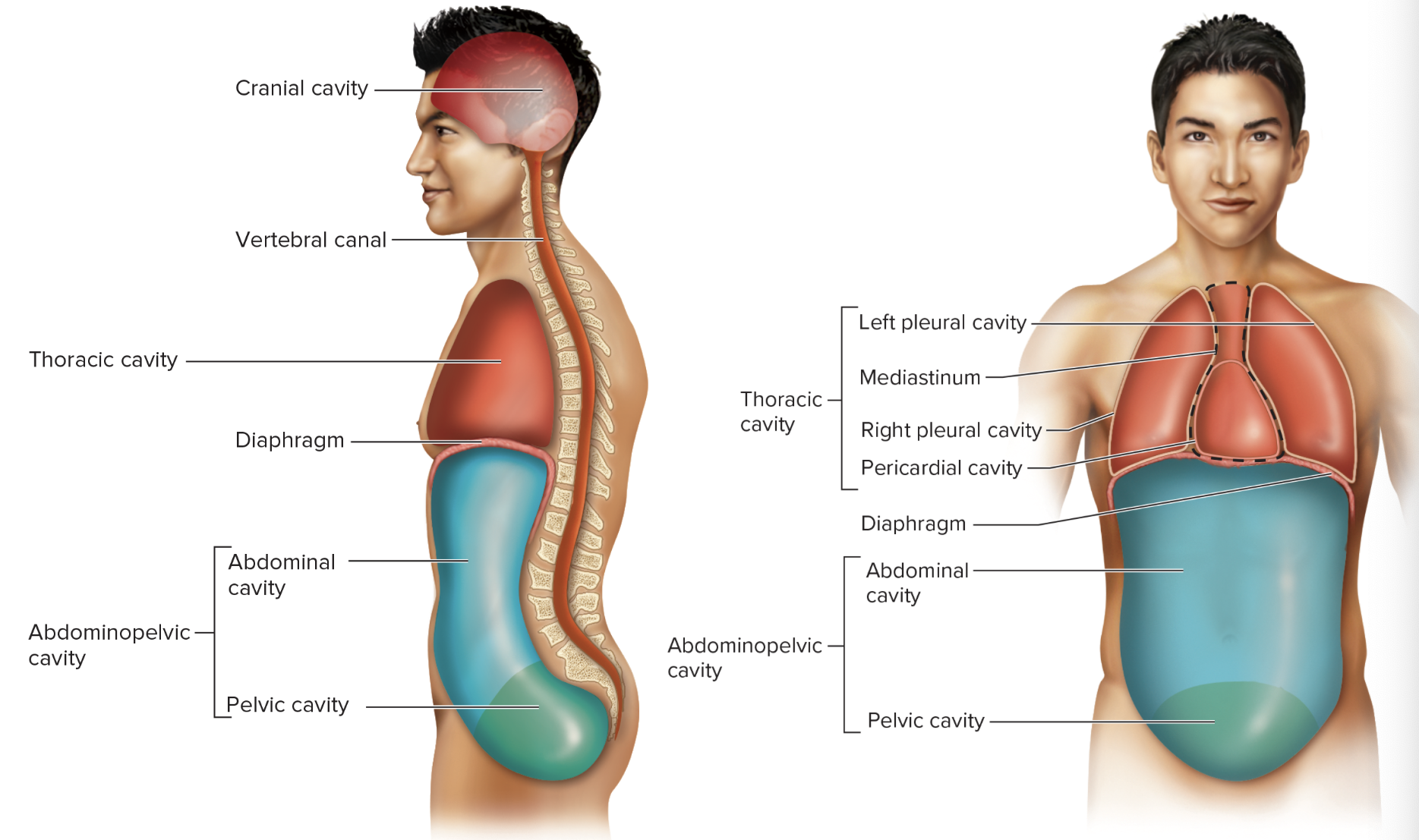
Abdominal Cavity
Pelvic Cavity
What 2 cavities consist of the Abdominopelvic cavity?
Serous Membranes
What thin membrane lines the walls of the thoracic and abdominopelvic cavities and fold back to cover the organs within these cavities?
Parietal Layer
What is the layer of serous membrane that lines the wall of the cavities?
Visceral Layer
What is the layer of Serous Membrane that covers an organ?
Organ Systems
What includes a set of interrelated organs that work together to provide specialized functions?
Integumentary system
What Organ System include the skin and accessory organs such as hair, nails, sweat glands, and sebaceous glands?
Integumentary System
What organ system, helps regulate body temperature, protect underlying tissues, house a variety of sensory receptors, and synthesize certain products?
Support and Move body parts
What do the organs of skeletal and muscular systems do?
Skeletal System
What organ system consists of the bones as well as the ligaments and cartilages that bind bones together at joints?
Muscular System
What organ system consists of muscles that contract and pull their ends closer together?
Nervous System & Endocrine System
what two organ systems must be integrated and coordinated for the body to function or act as a unit?
Nervous System
what organ system consists of the brain, spinal cord, nerves, and sense organs?
Endocrine system
What organ system includes all the glands that secrete chemical messengers, called hormones?
Cardiovascular System
What organ system includes the heart, arteries, capillaries, veins, and blood?
Lymphatic System
What Organ System is composed of the lymphatic vessels, lymph fluid, lymph nodes, thymus, and spleen?
Digestive System
What Organ System receives foods and the breaks down food molecules into simpler forms that can be absorbed into the internal environment?
Mouth, tongue, teeth, salivary glands, pharynx, esophagus, stomach, liver, gallbladder, pancreas, small intestine, and large intestines.
The digestive system consists of the:
Respiratory System
What organ system moves air in and out of the body and exchanges gases between blood and air?
The Urinary System
What organ system removes wastes from the blood and assist in maintaining the body’s water and electrolyte concentrations?
Reproductive System
What organ system is the process of producing offspring?
Anterior
What body orientation is this?
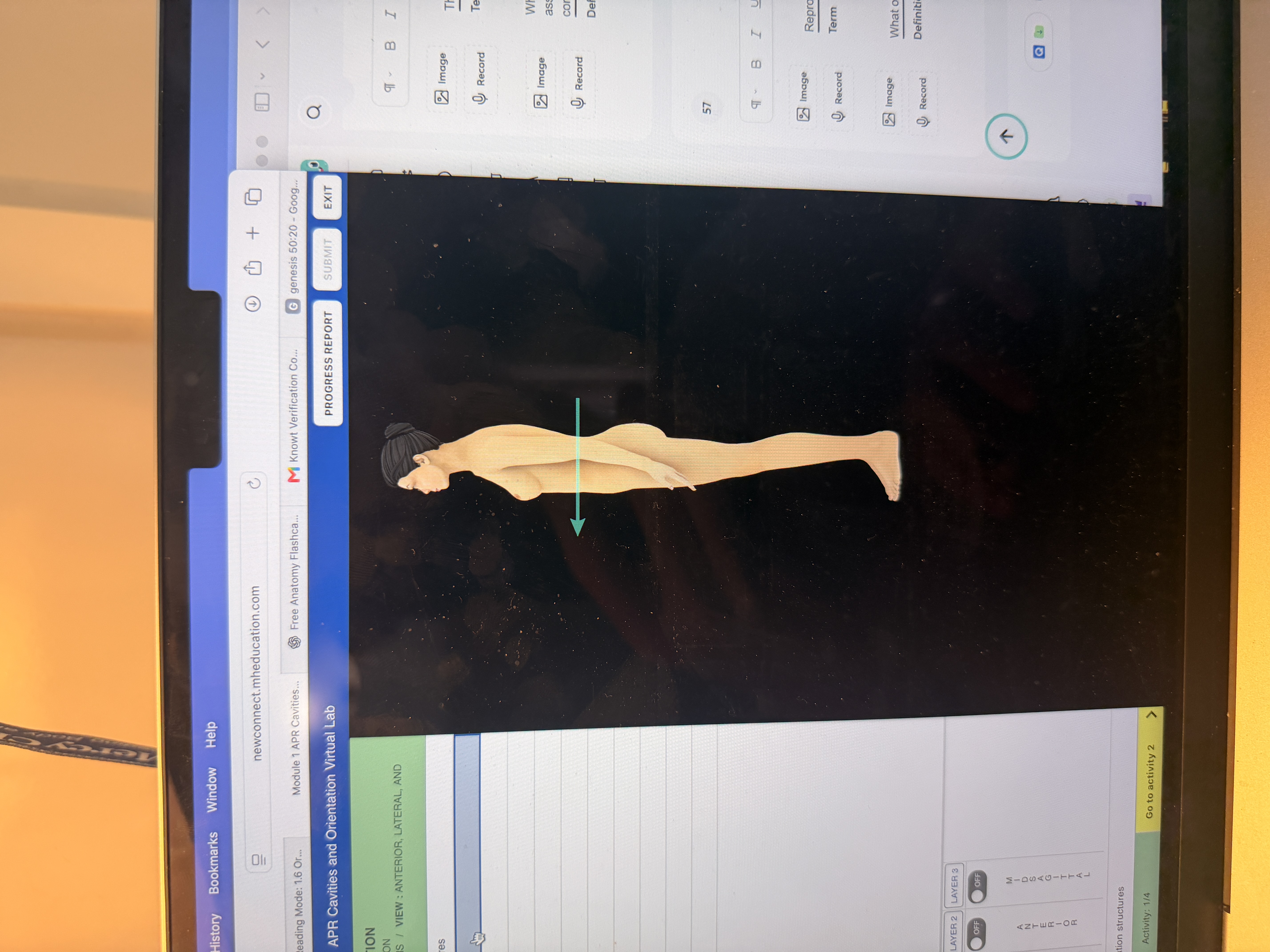
Deep
What body orientation is this?
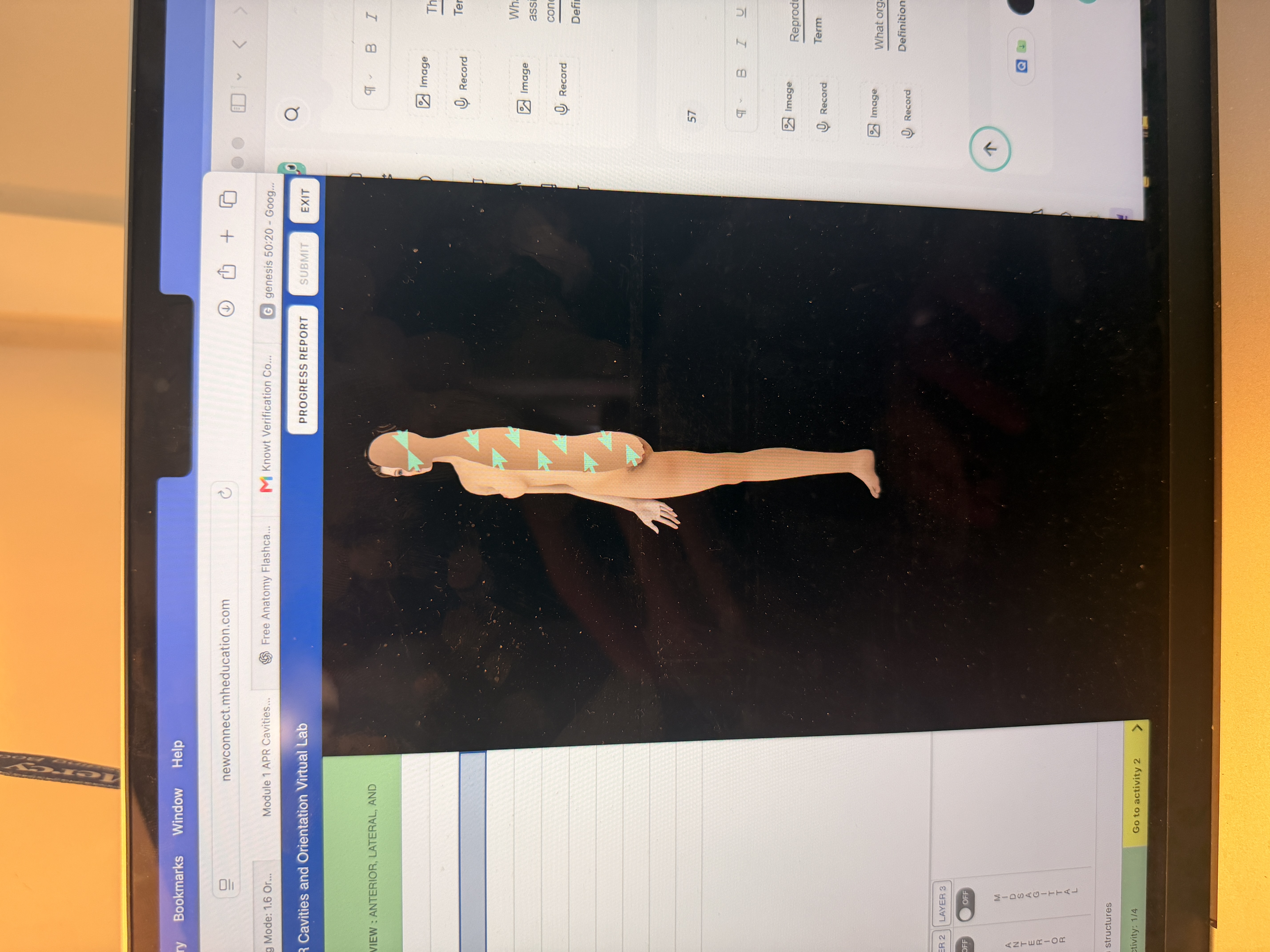
Distal
What body orientation is this?

Inferior
What body orientation is this?
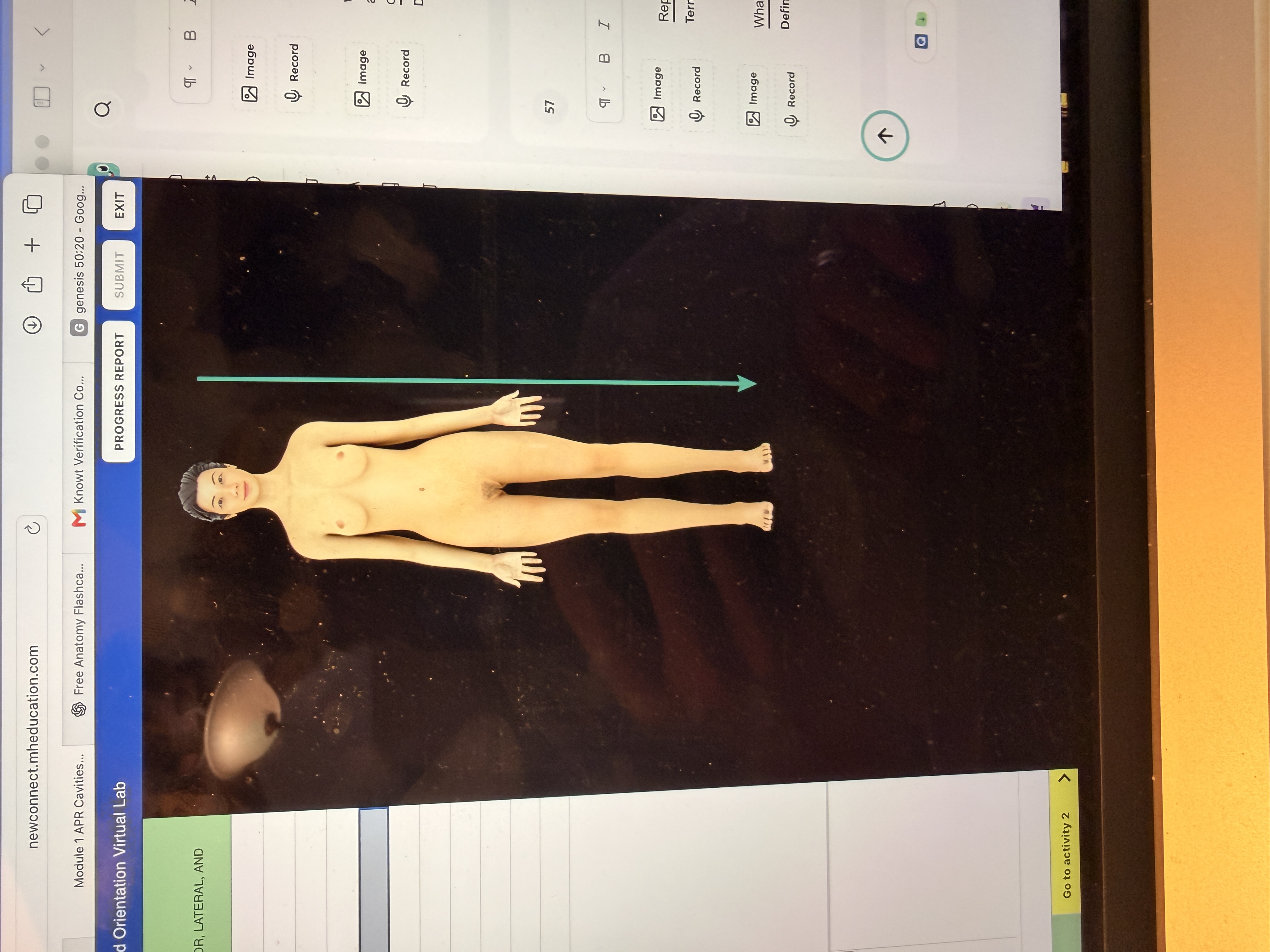
Lateral
What body orientation is this?
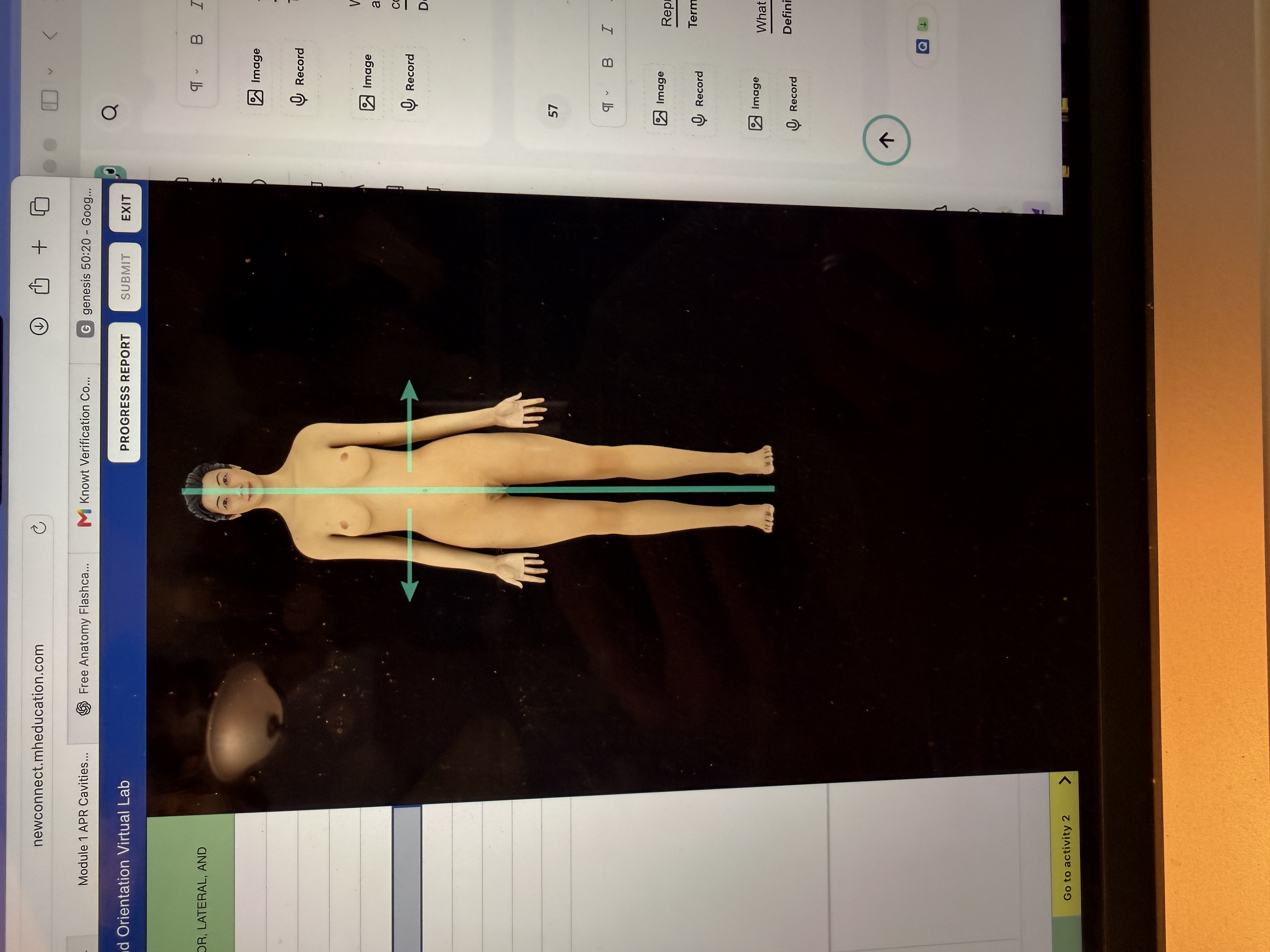
Medial
What body orientation is this?
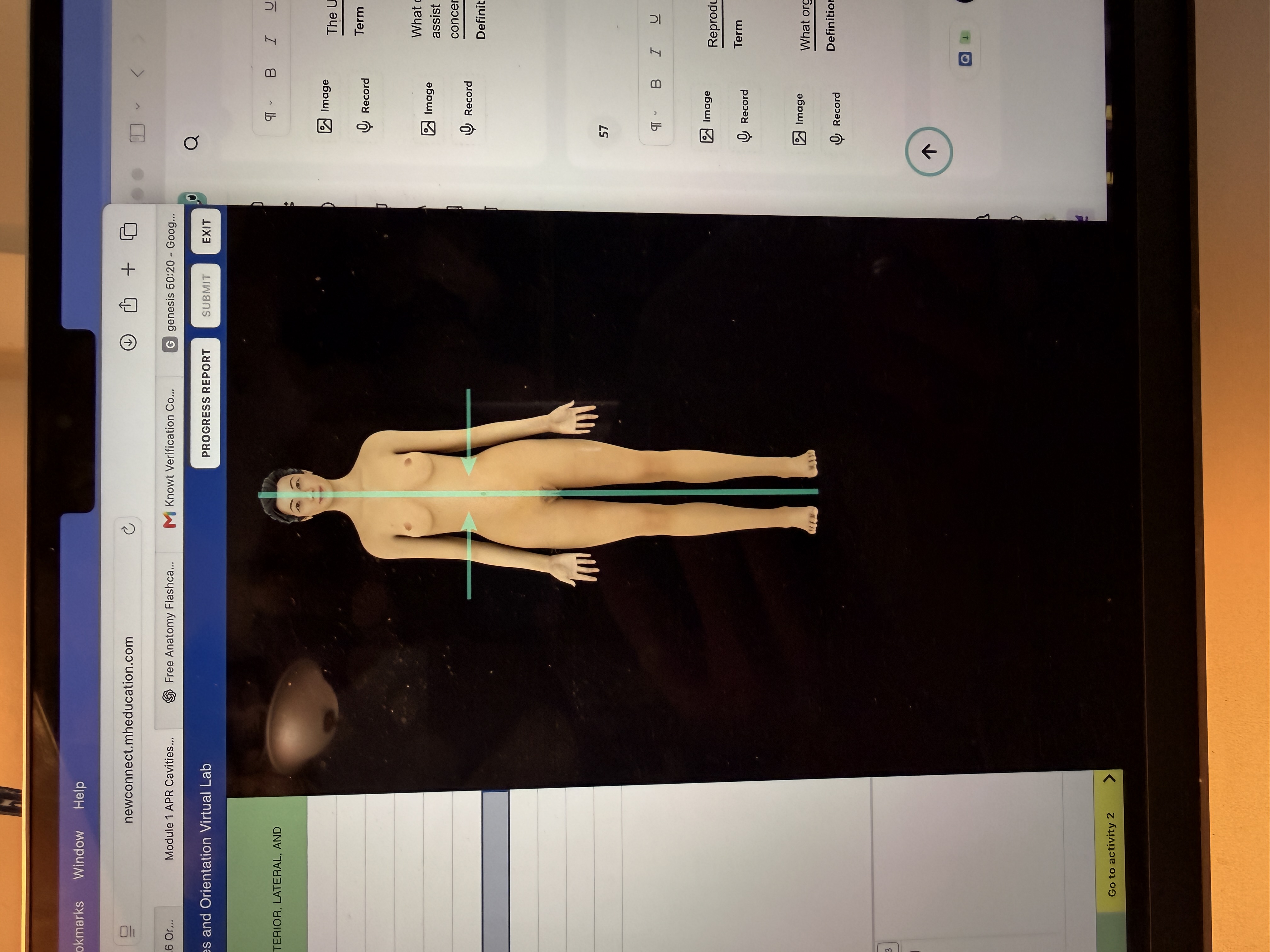
Posterior
What body orientation is this?
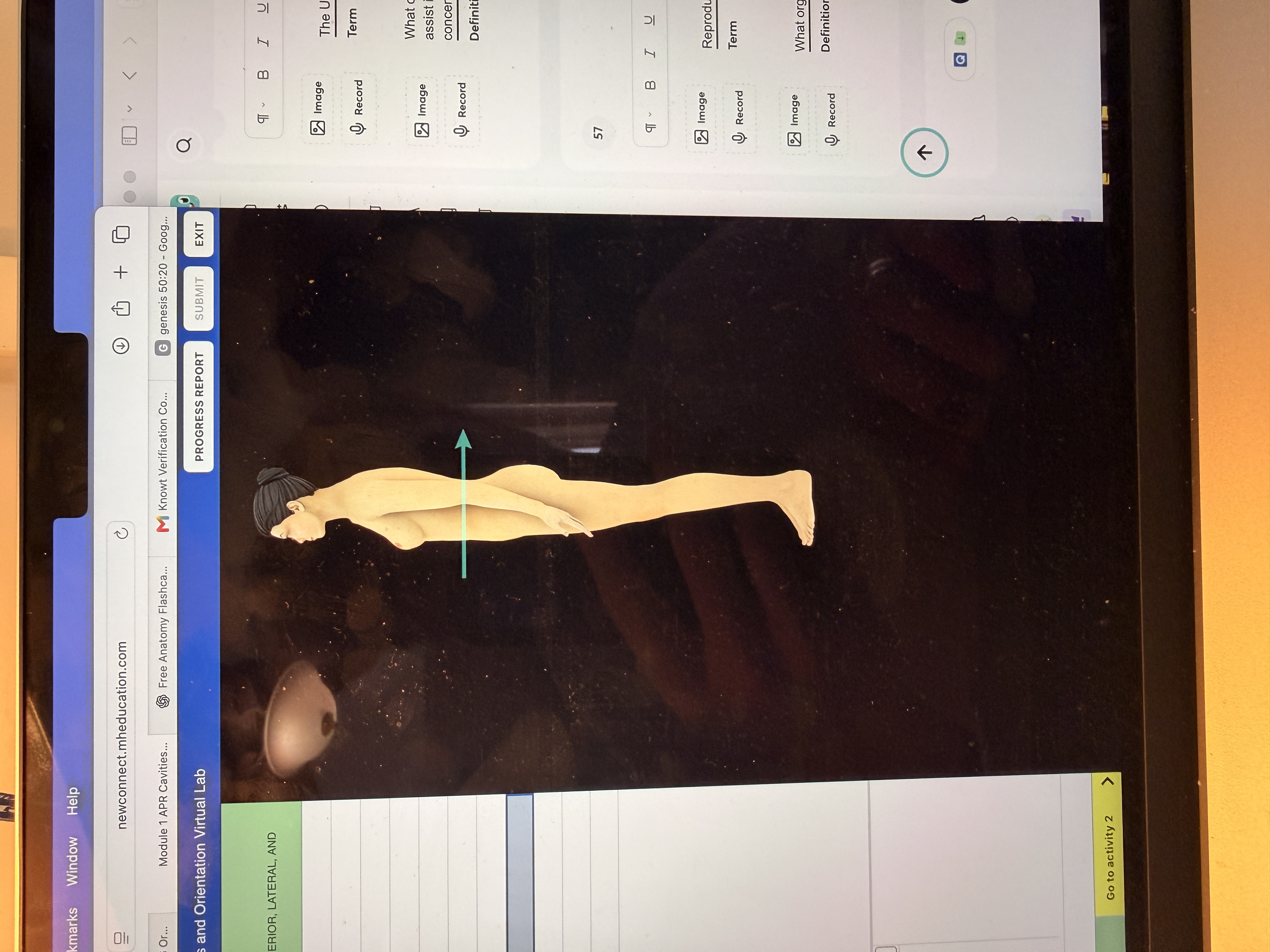
Proximal
What body orientation is this?
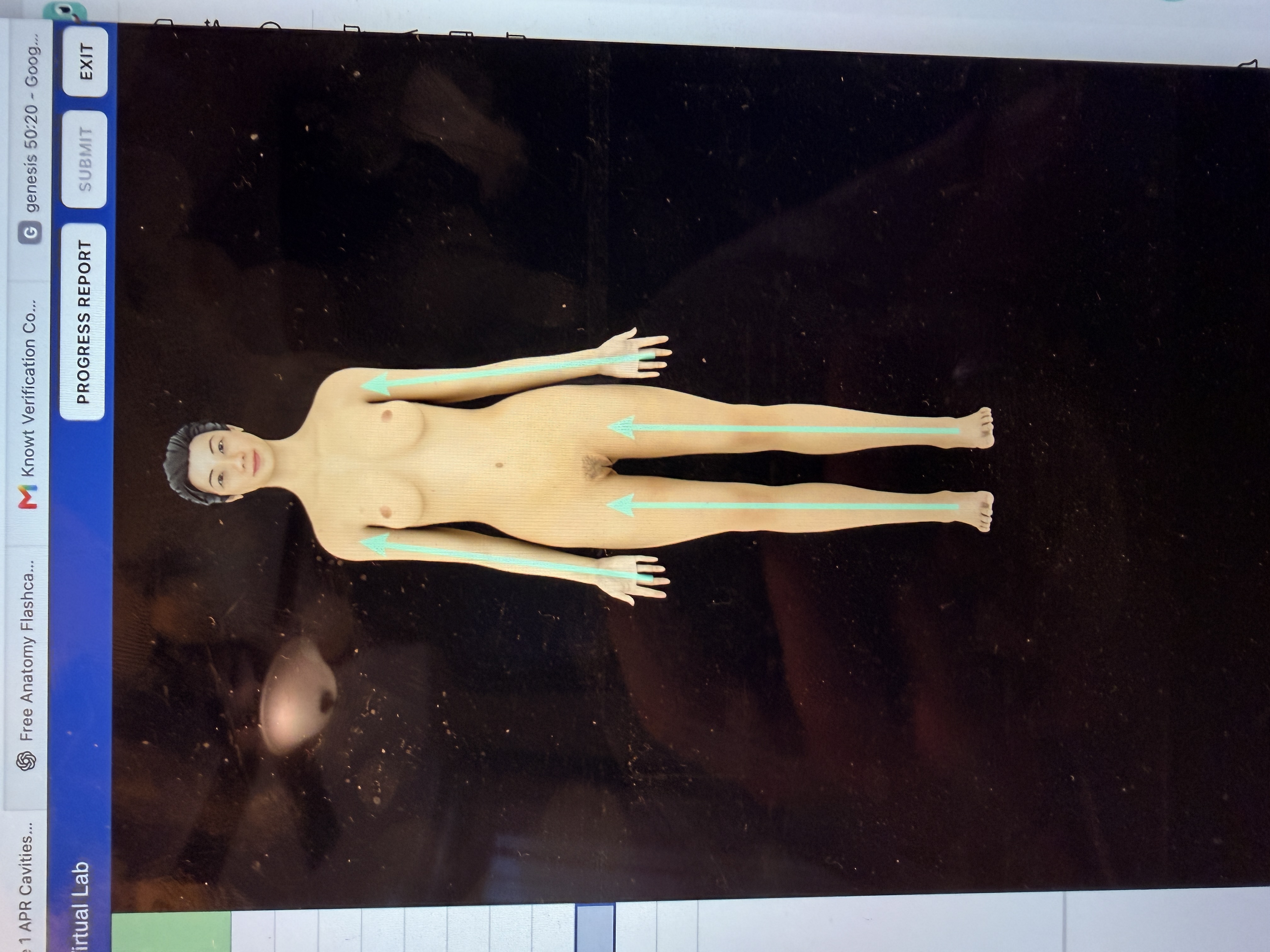
Superficial
What body orientation is this?
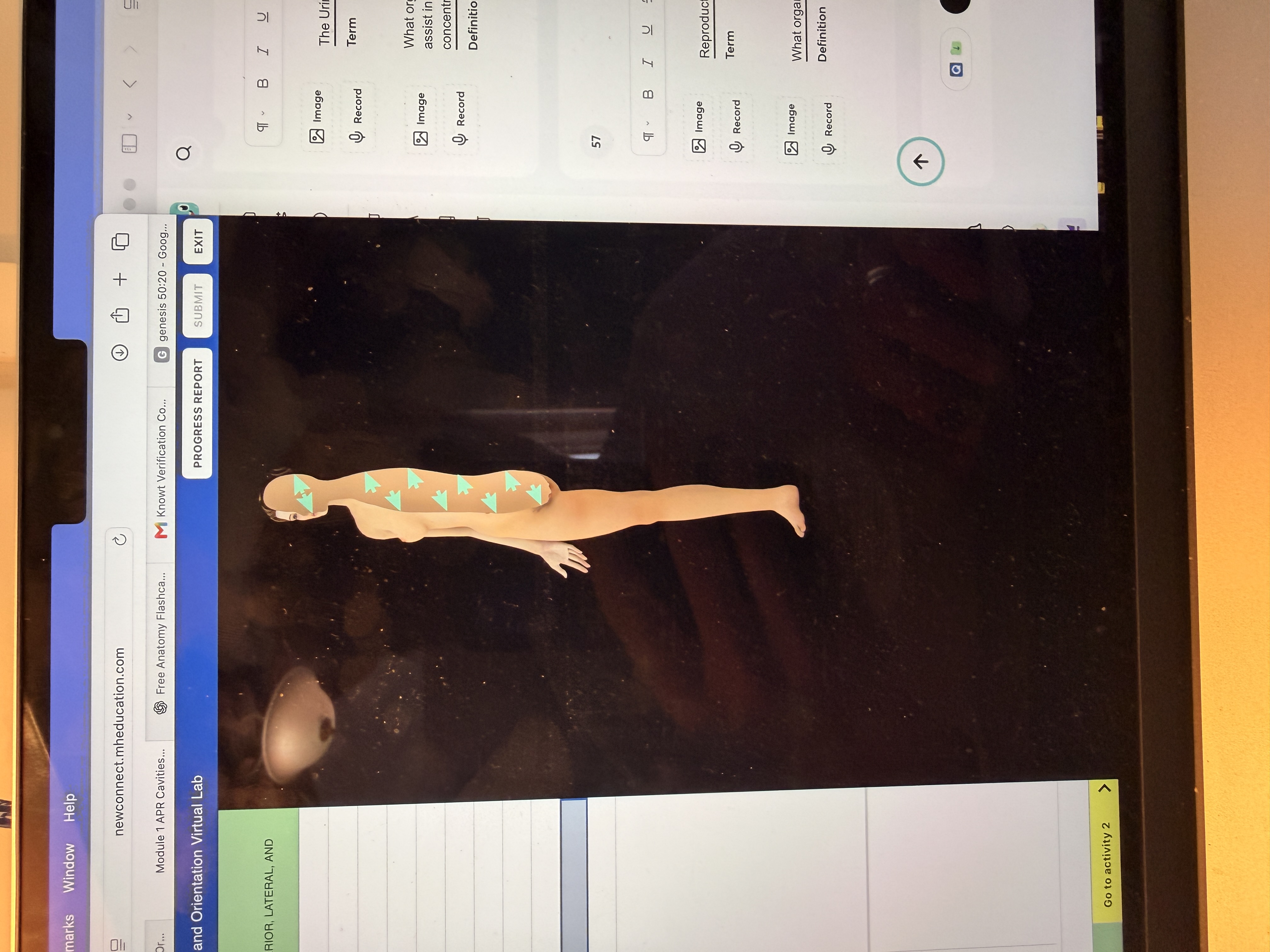
Superior
What body orientation is this?

Abdominopelvic Region

Antebrachial Region
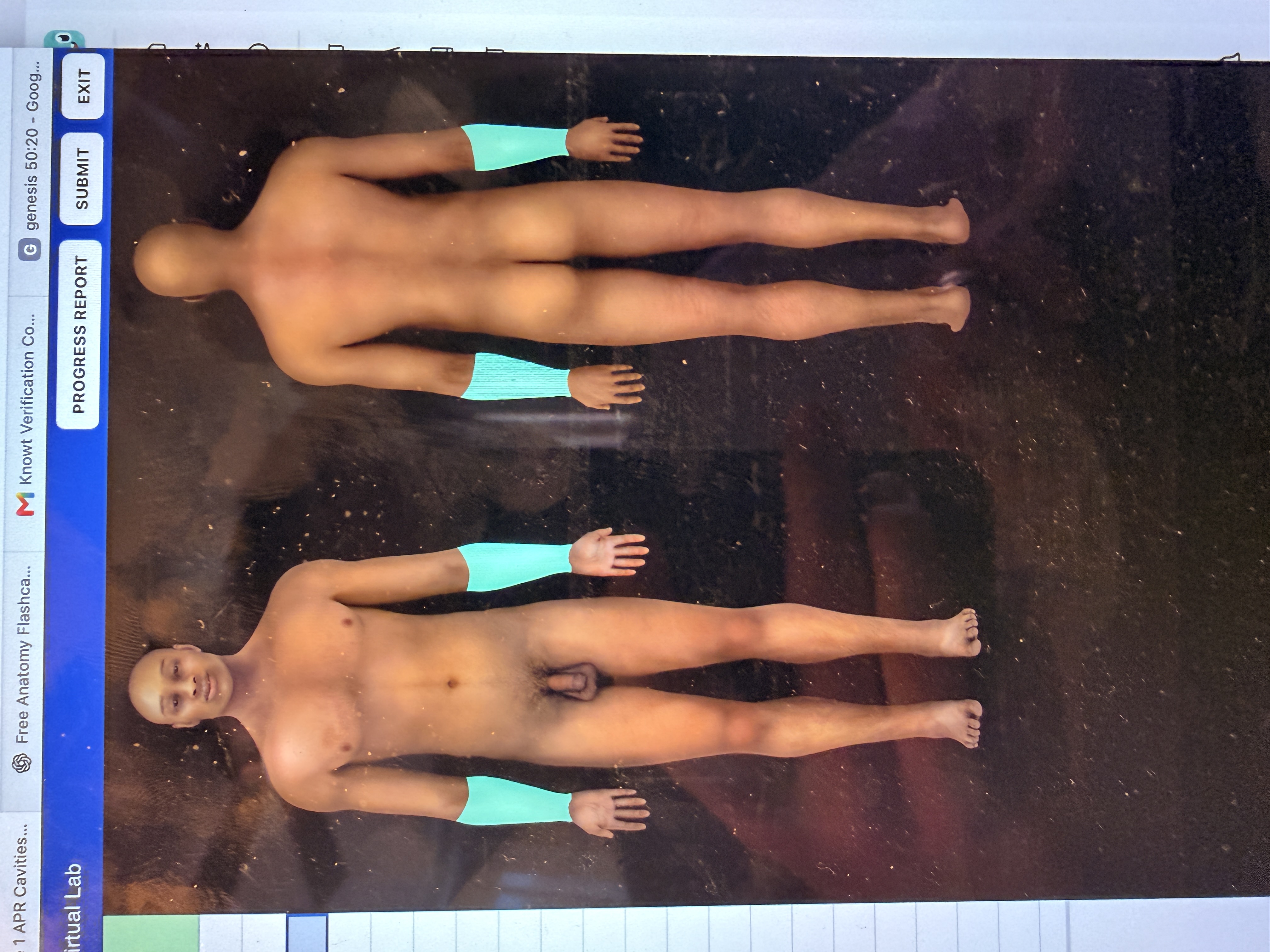
Axillary Region

Brachial Region
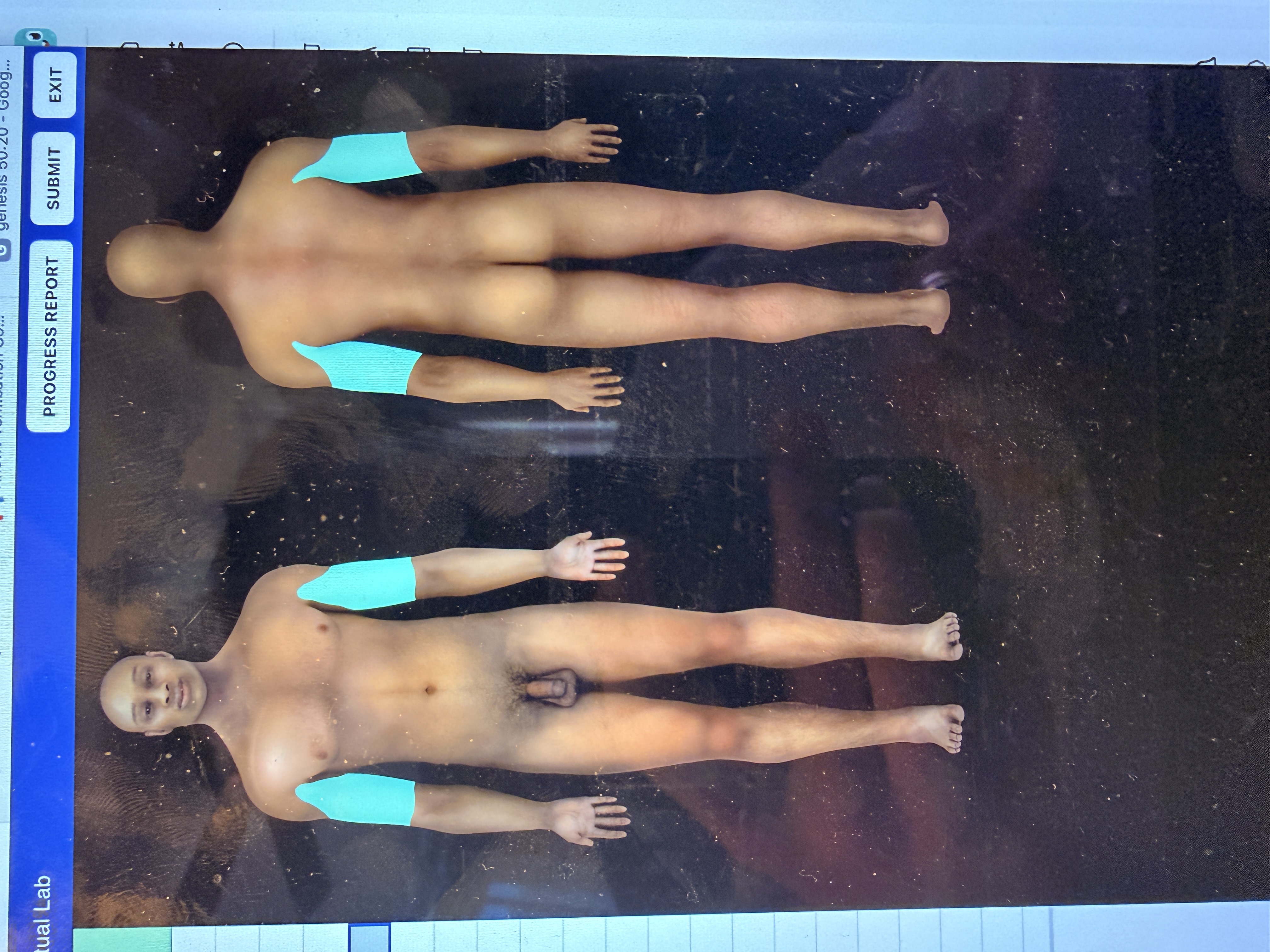
Buccal Region

Carpal Region
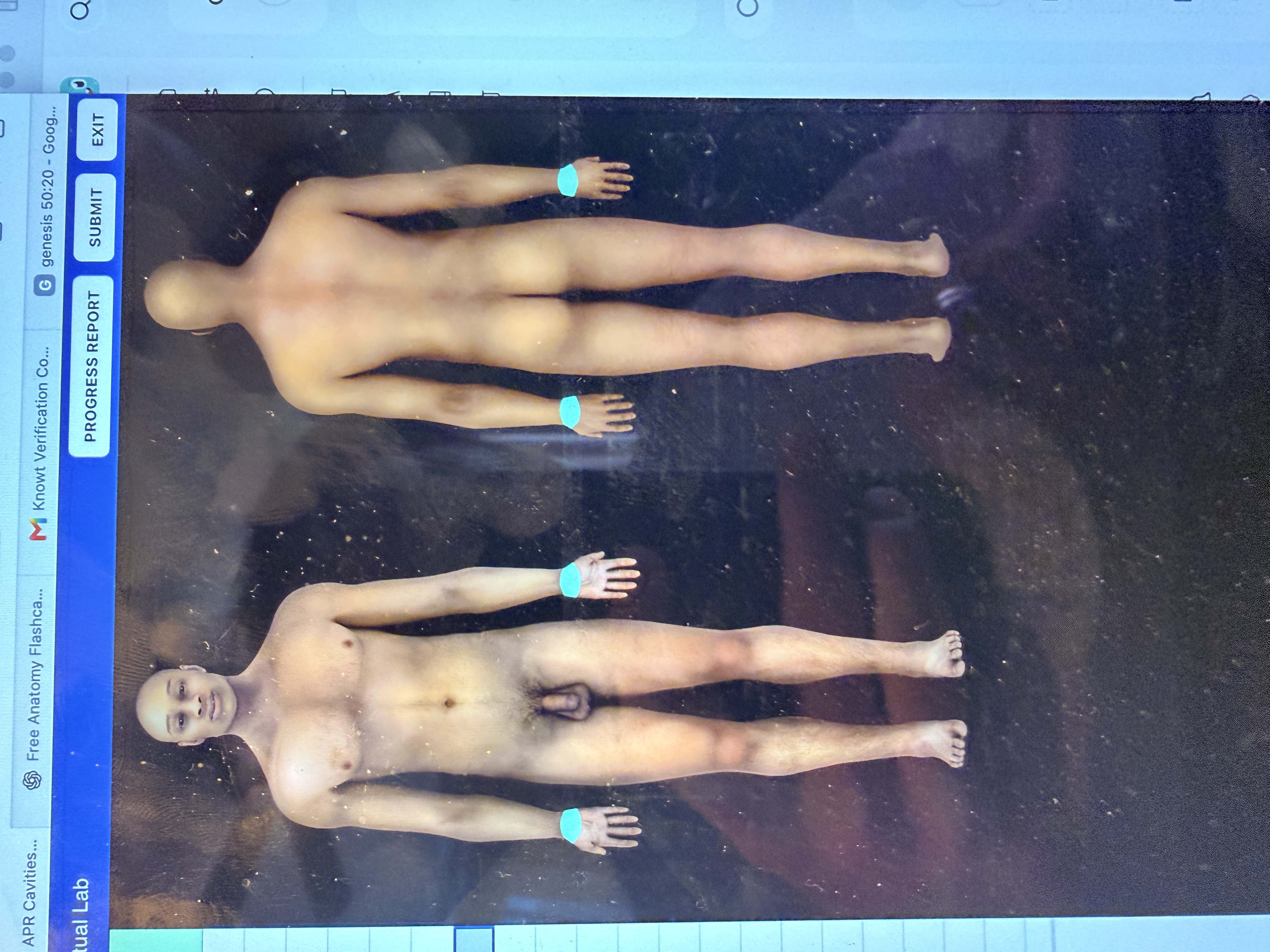
Cubital region

Epigastric Region

Femoral region
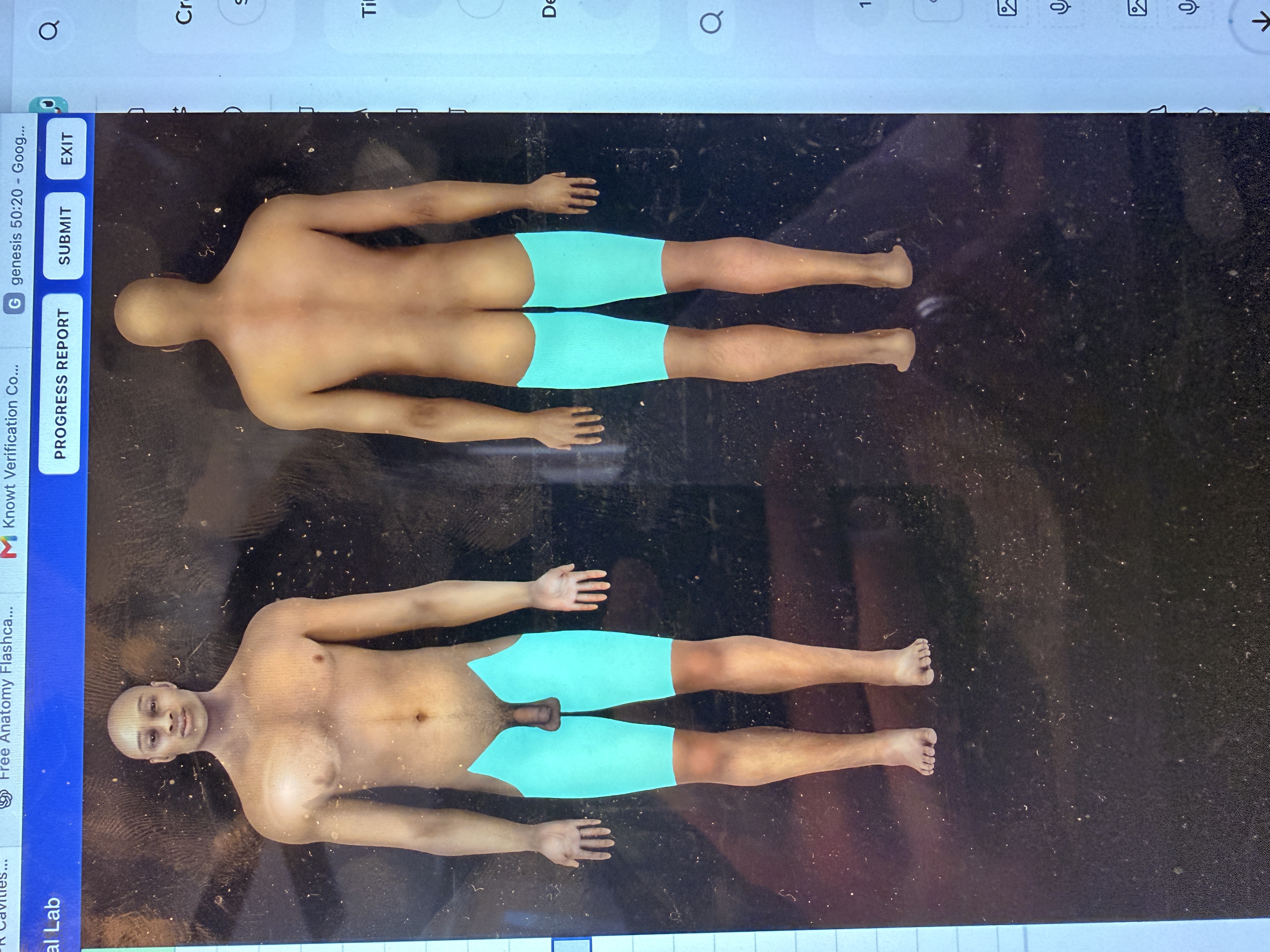
Frontal region

Gluteal region

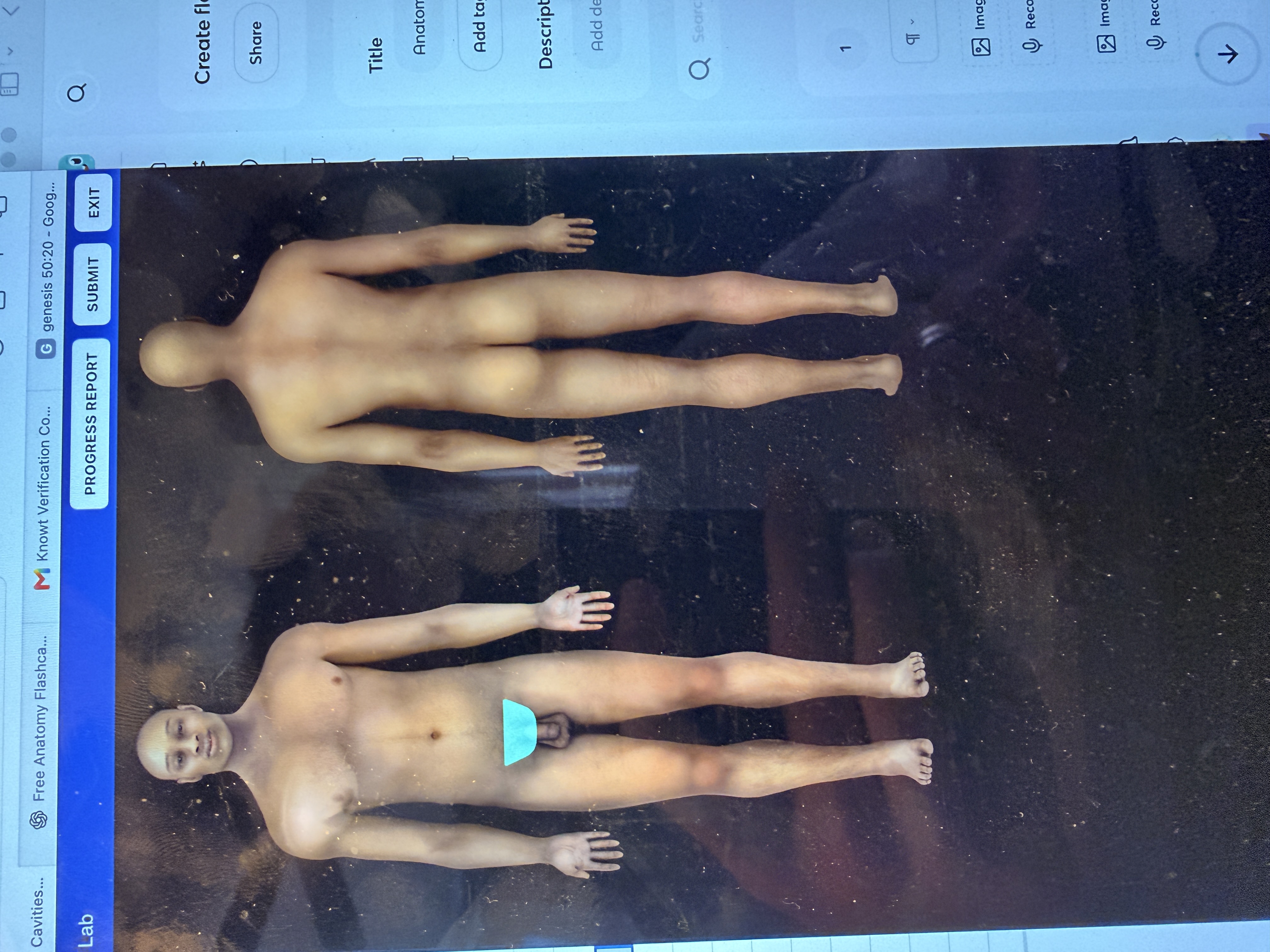
Hypogastric region

Left hypochondriac region
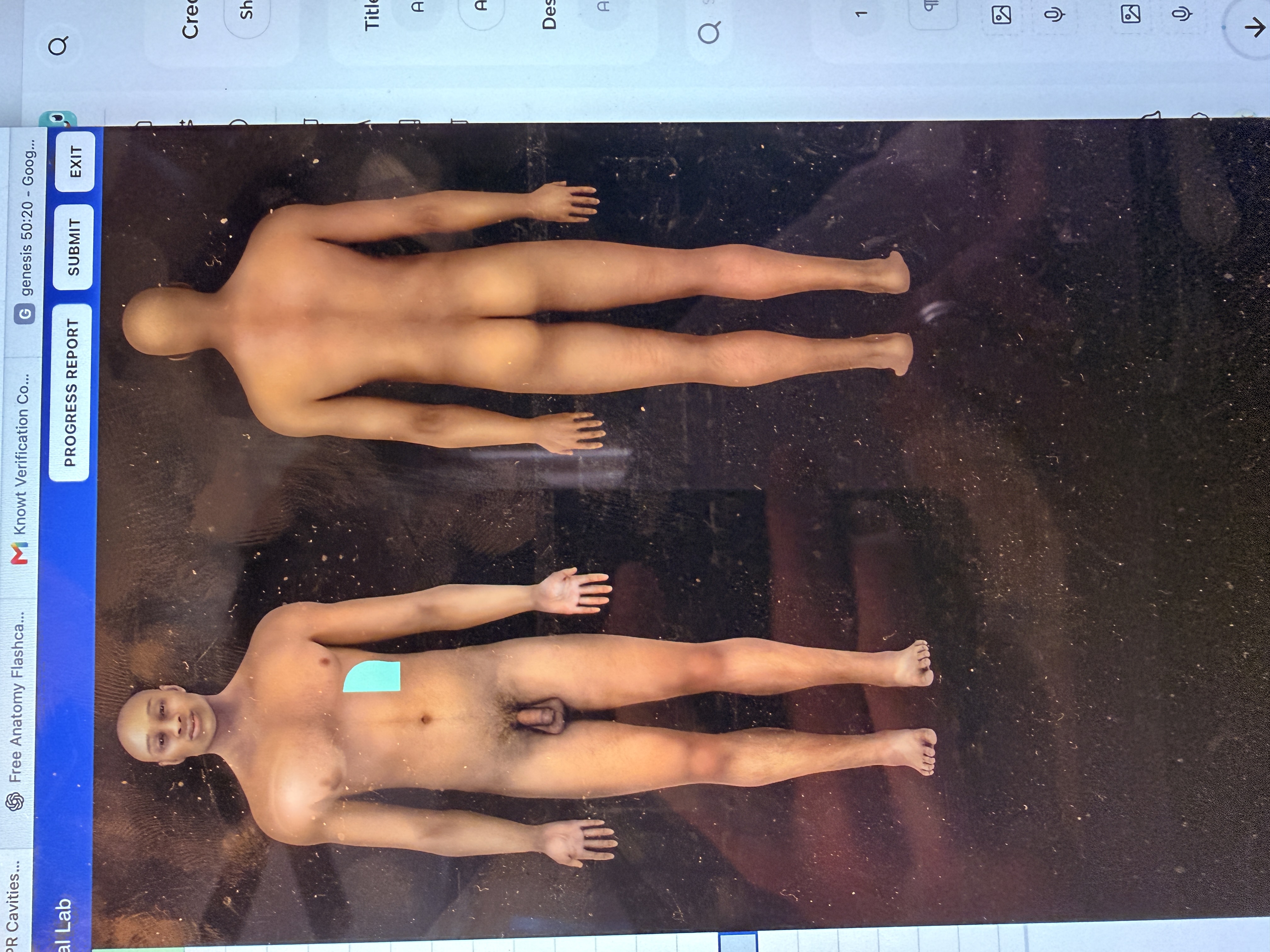
Left inguinal region

Left lower quadrant
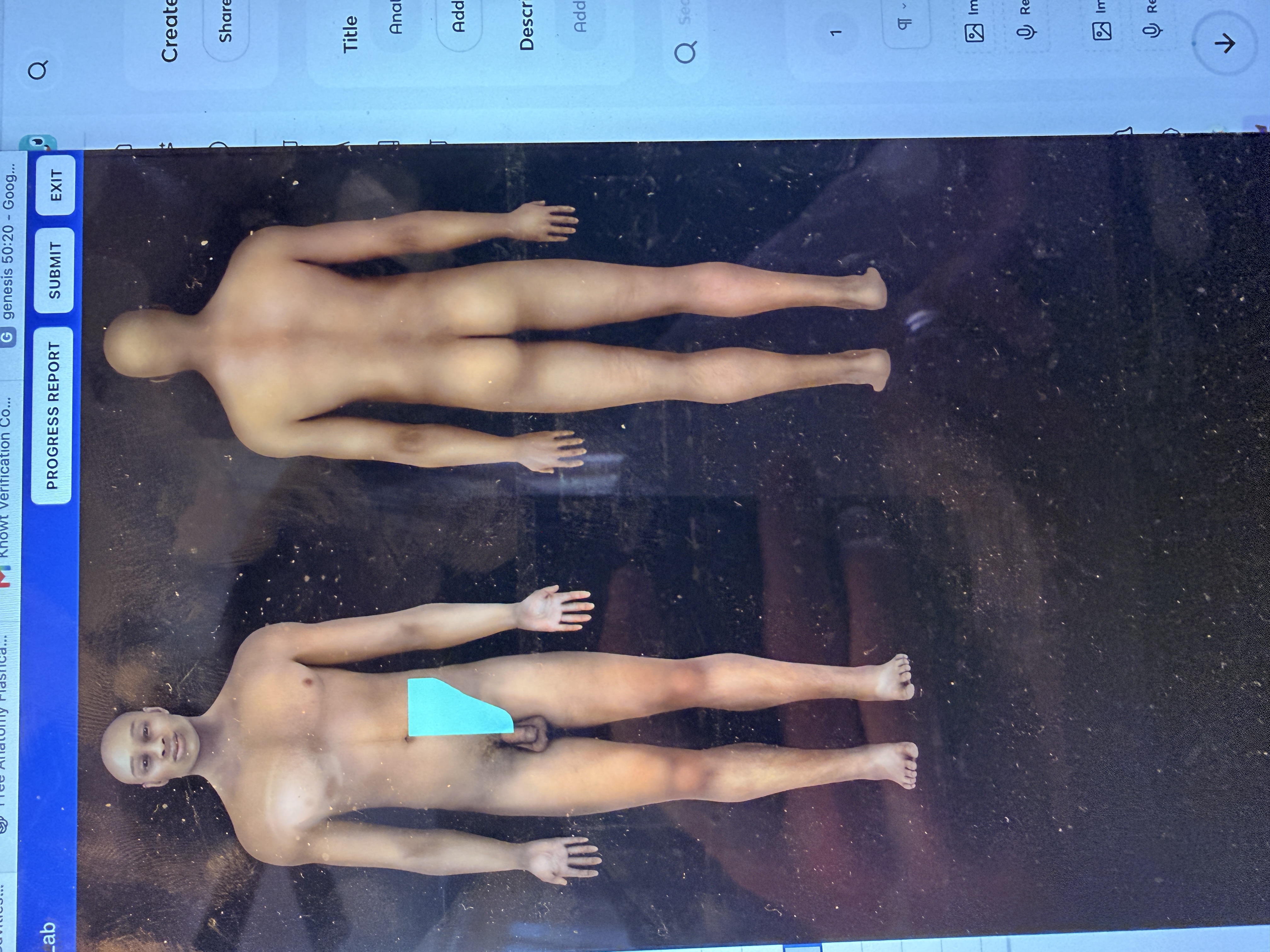
Left upper quadrant

Lumbar region
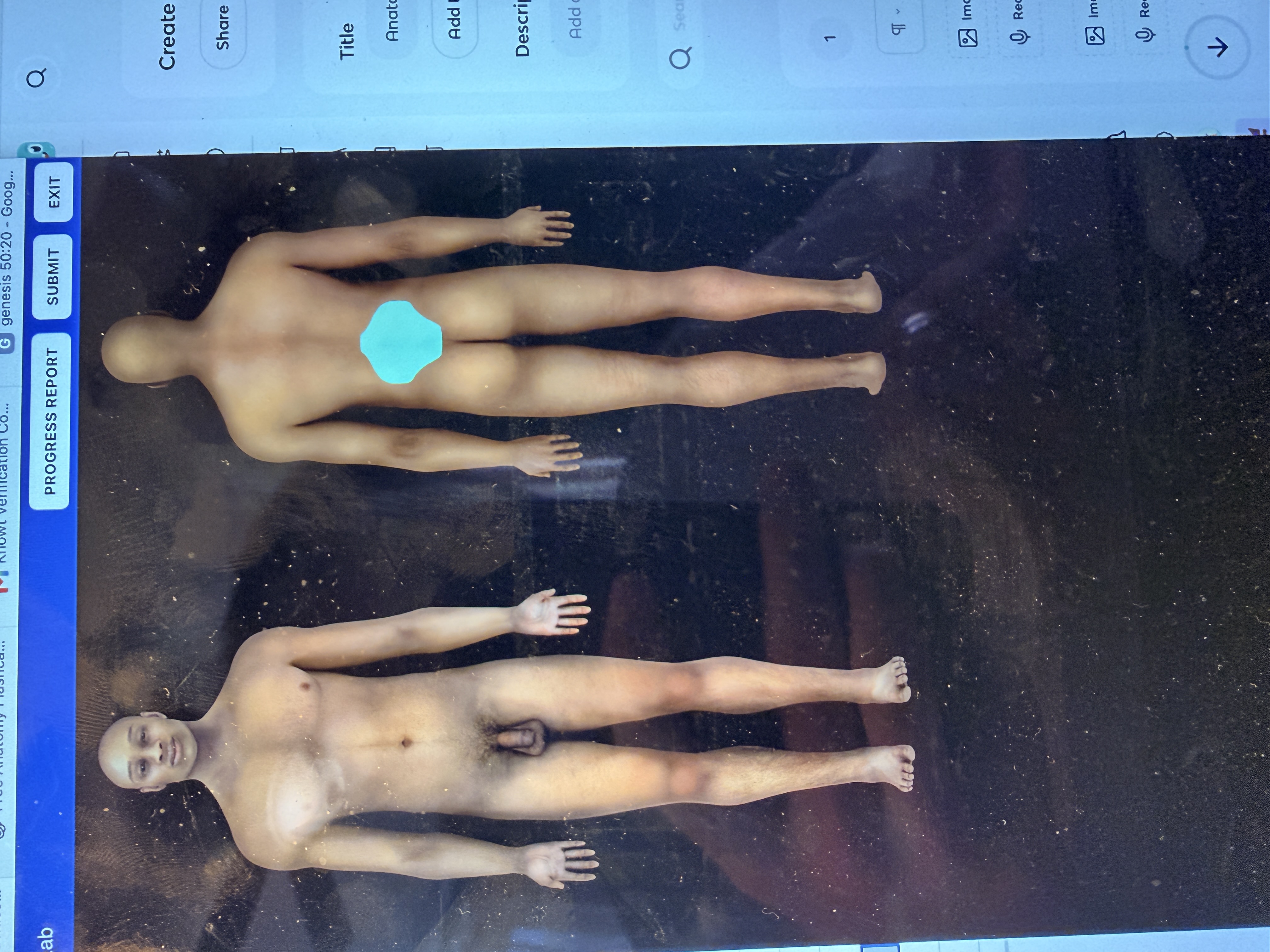
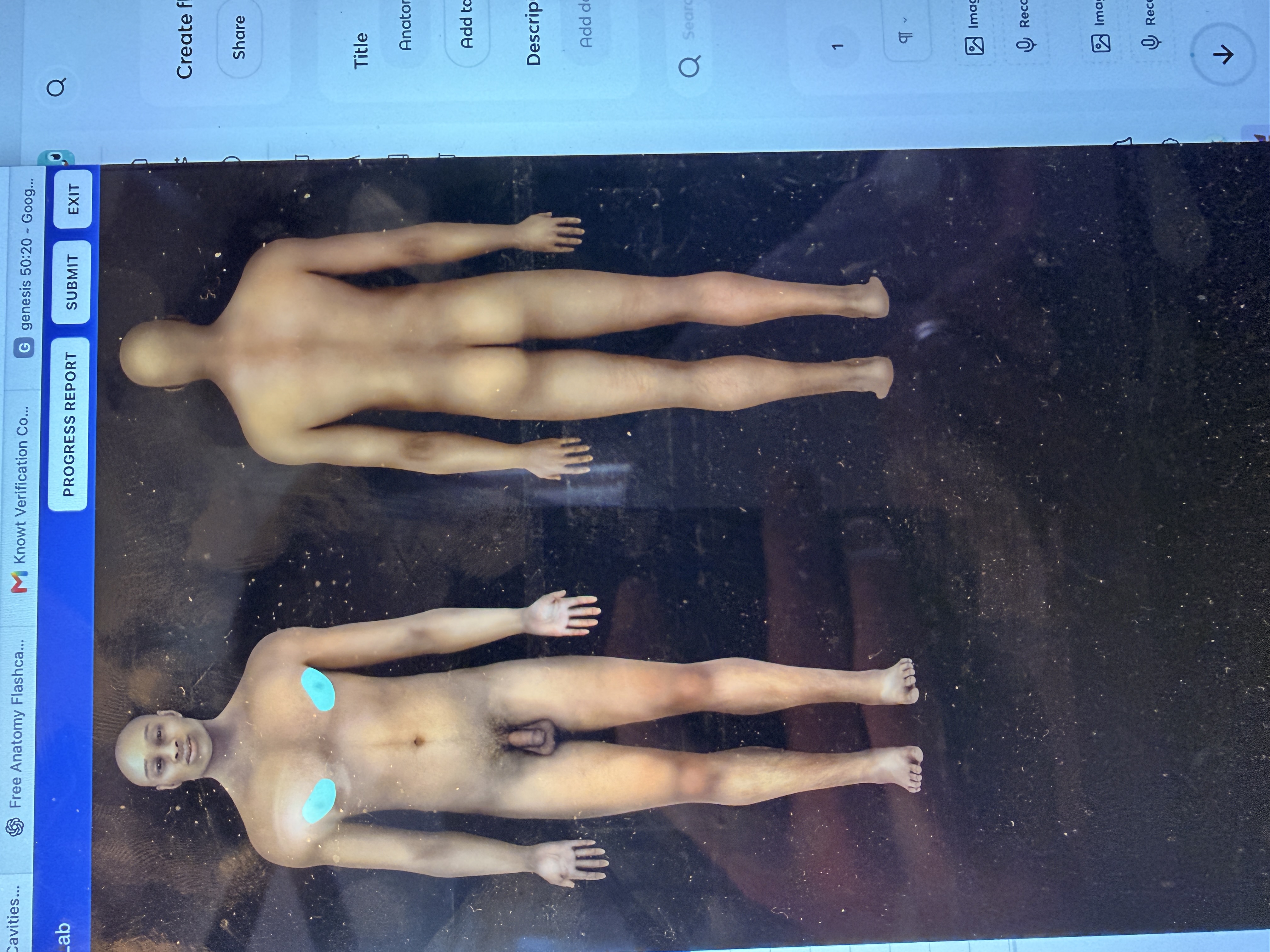
Mammary region
Mental region

Occipital region

Oral region

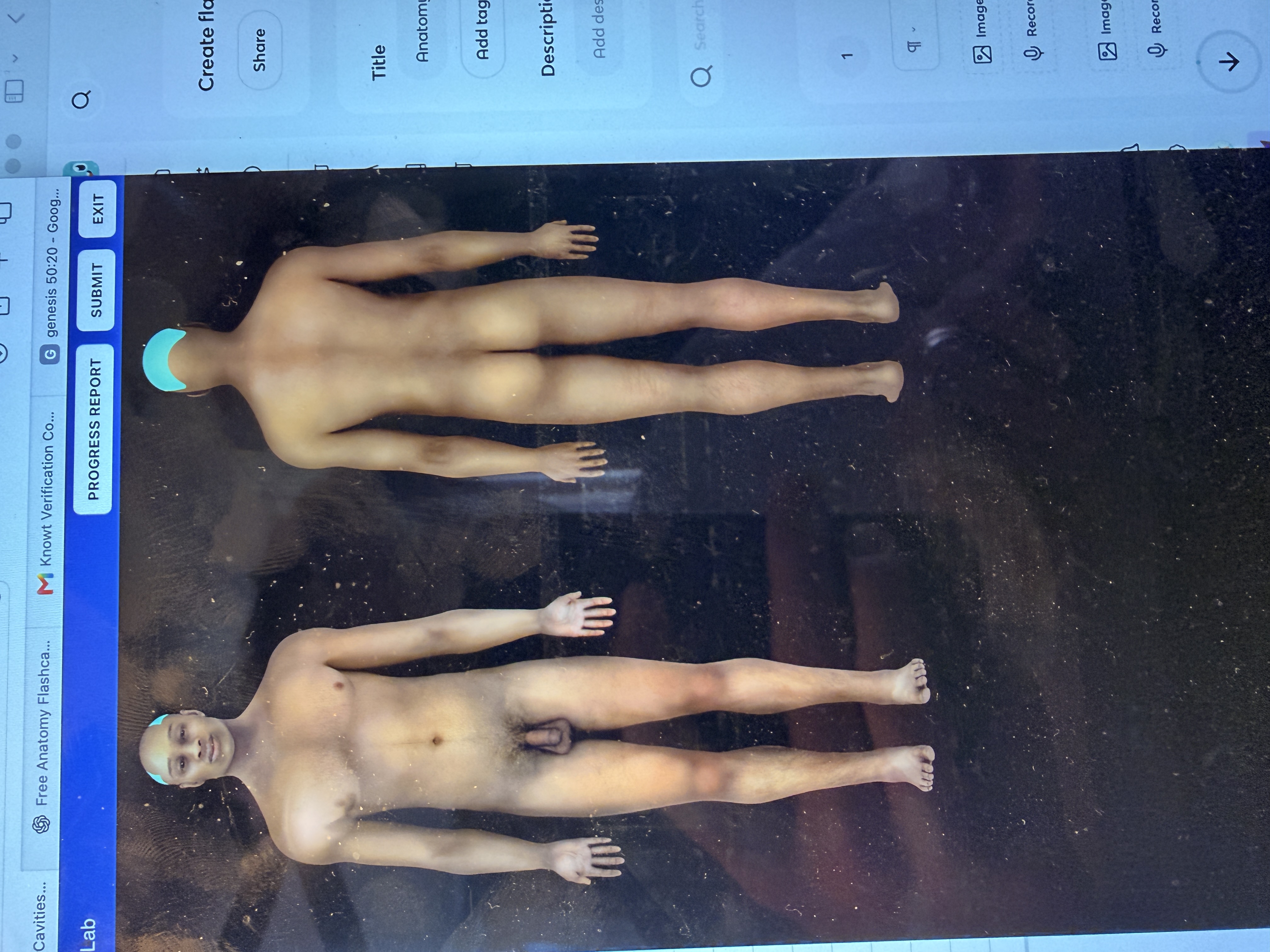
Parietal region
Pelvic cavity
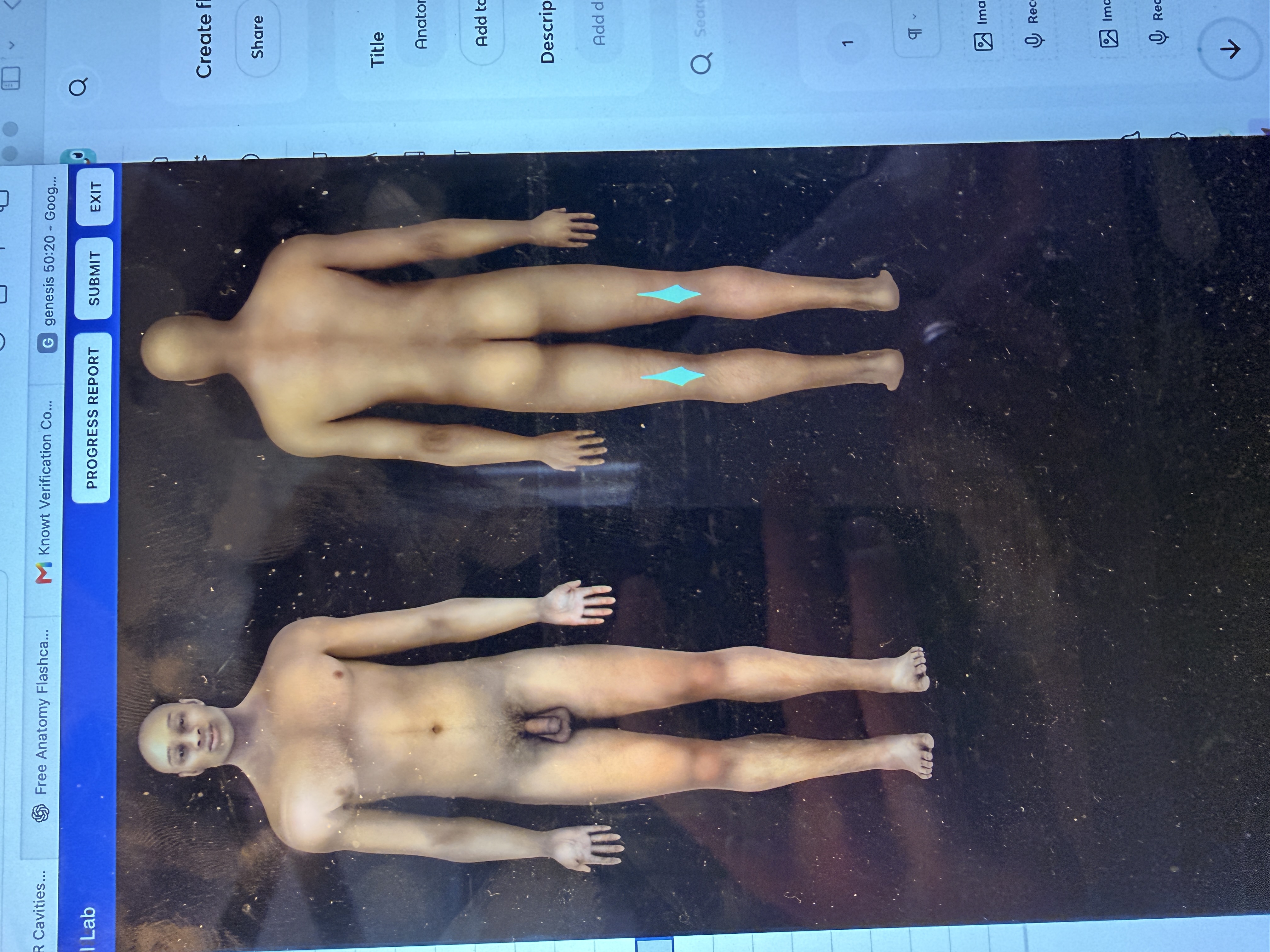
Popliteal Fossa
Right hypochondriac region
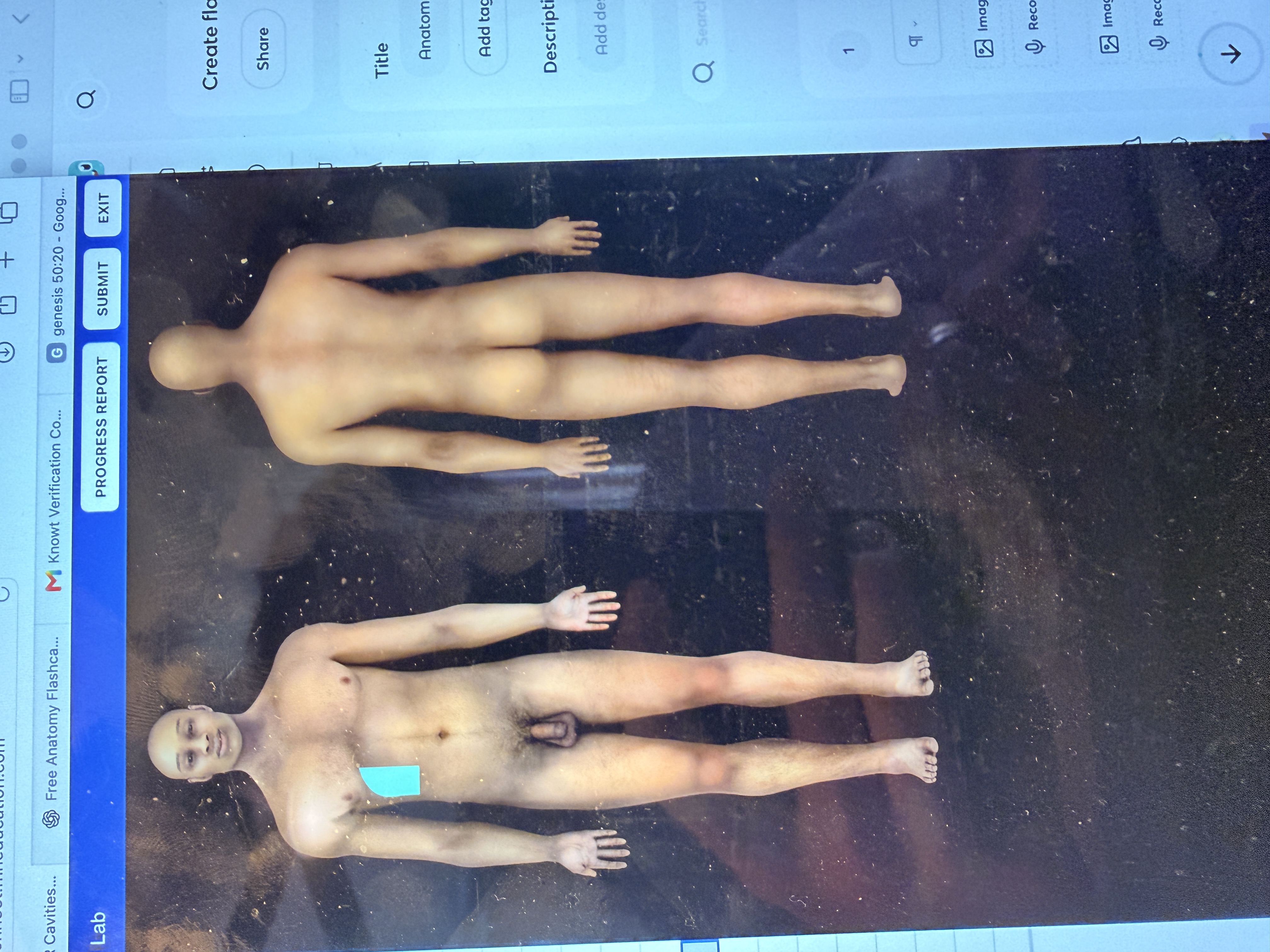
Right inguinal region
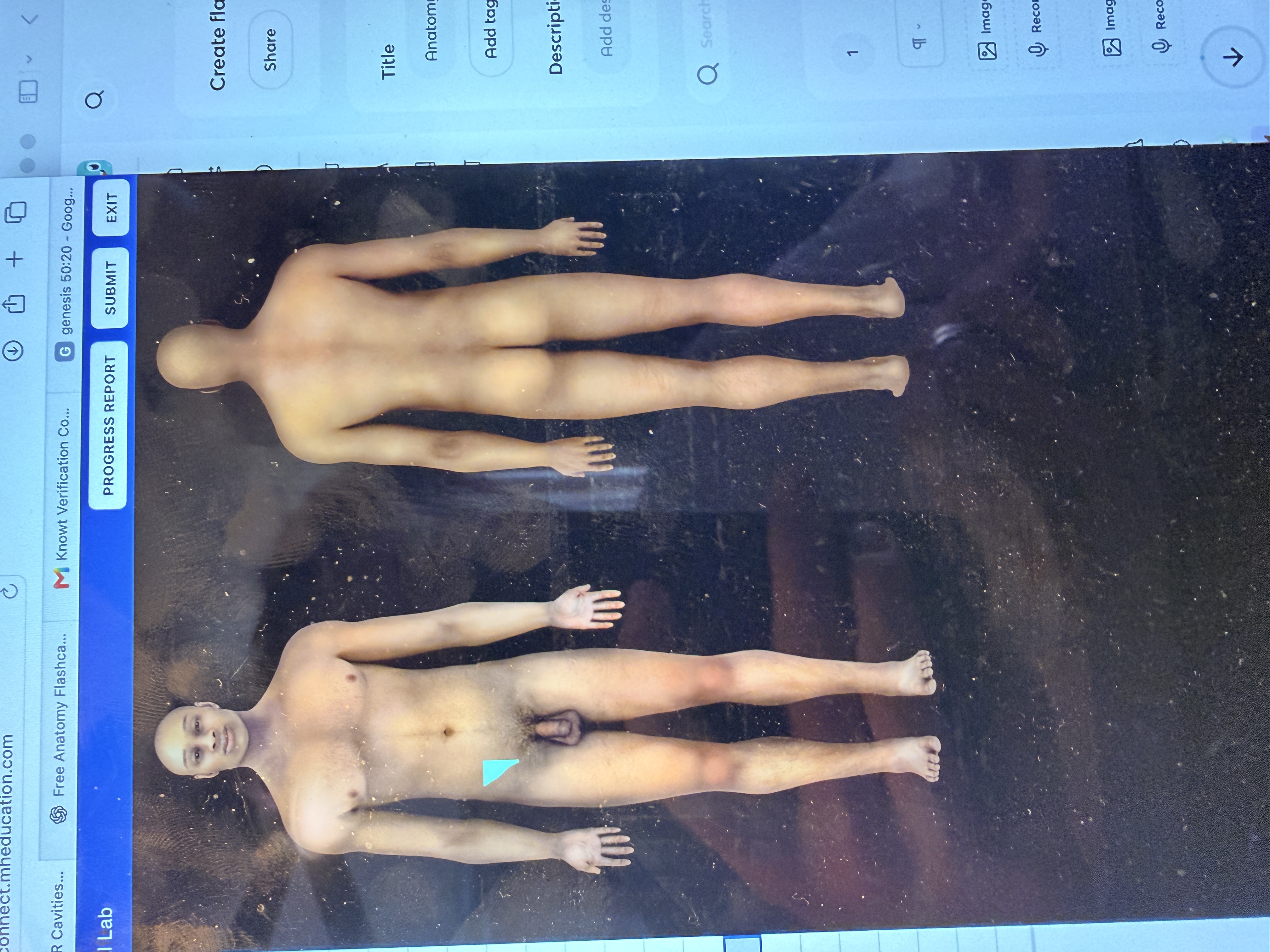
Right lower quadrant
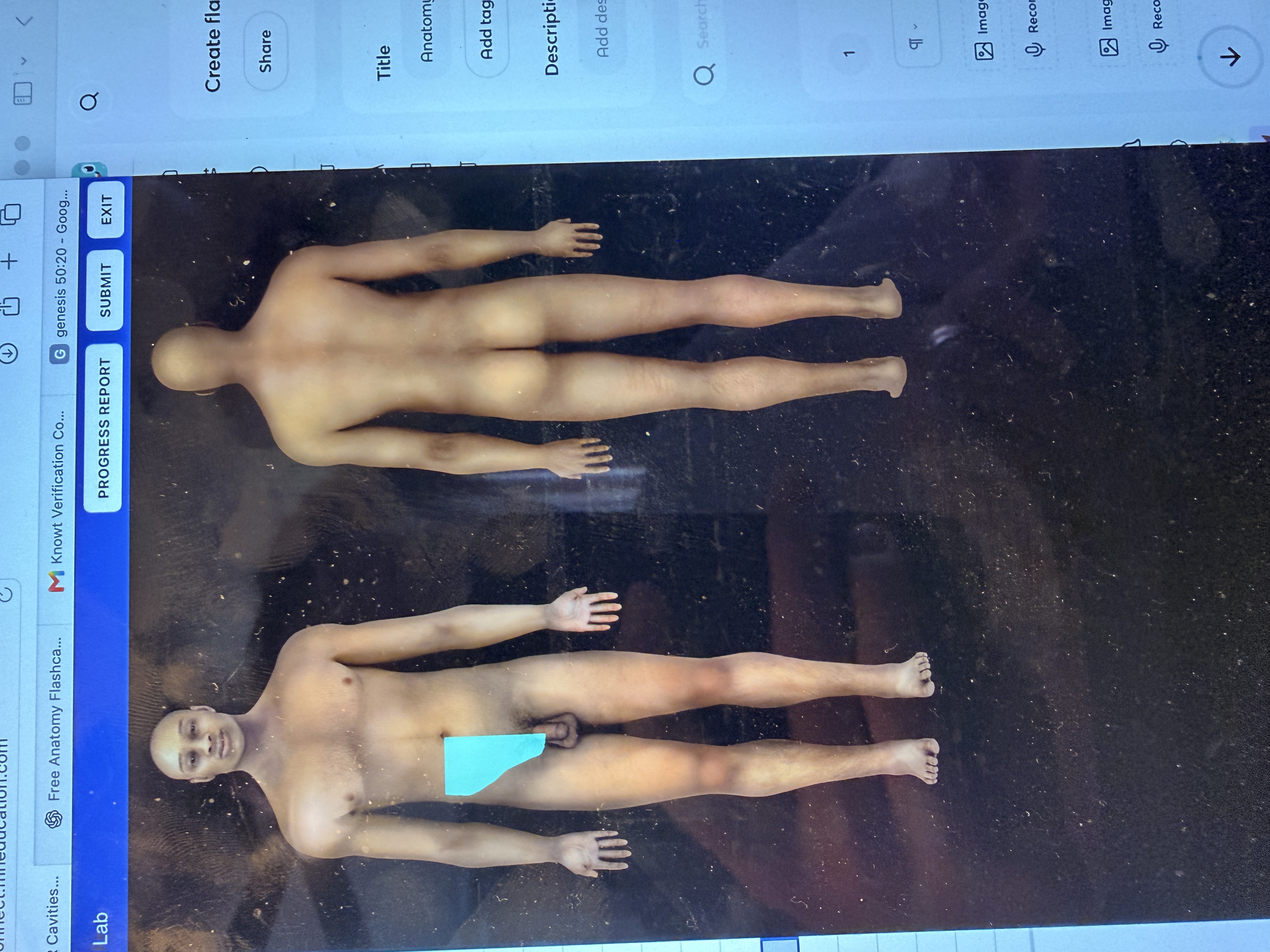
Right upper quadrant
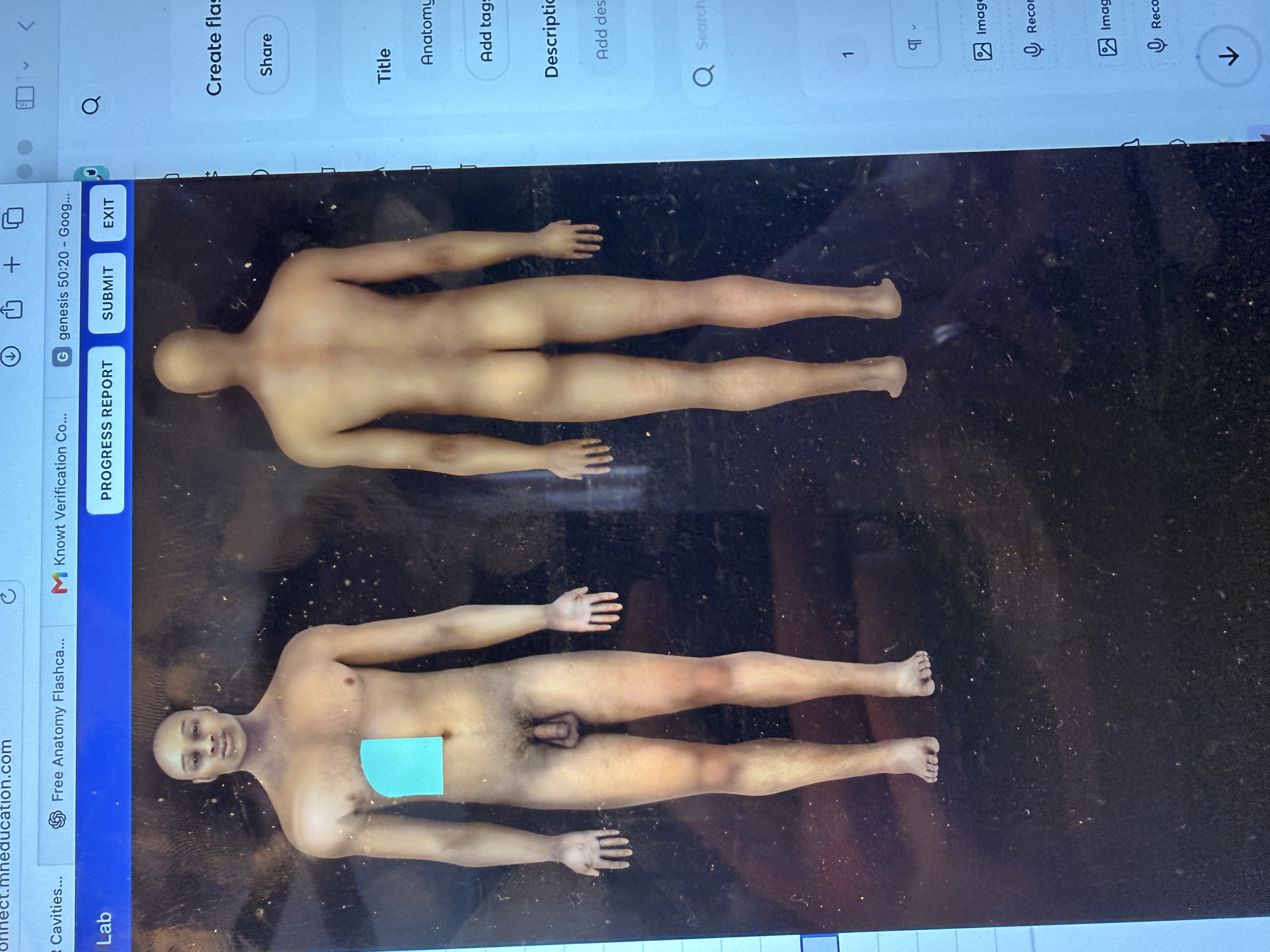
Sacral region
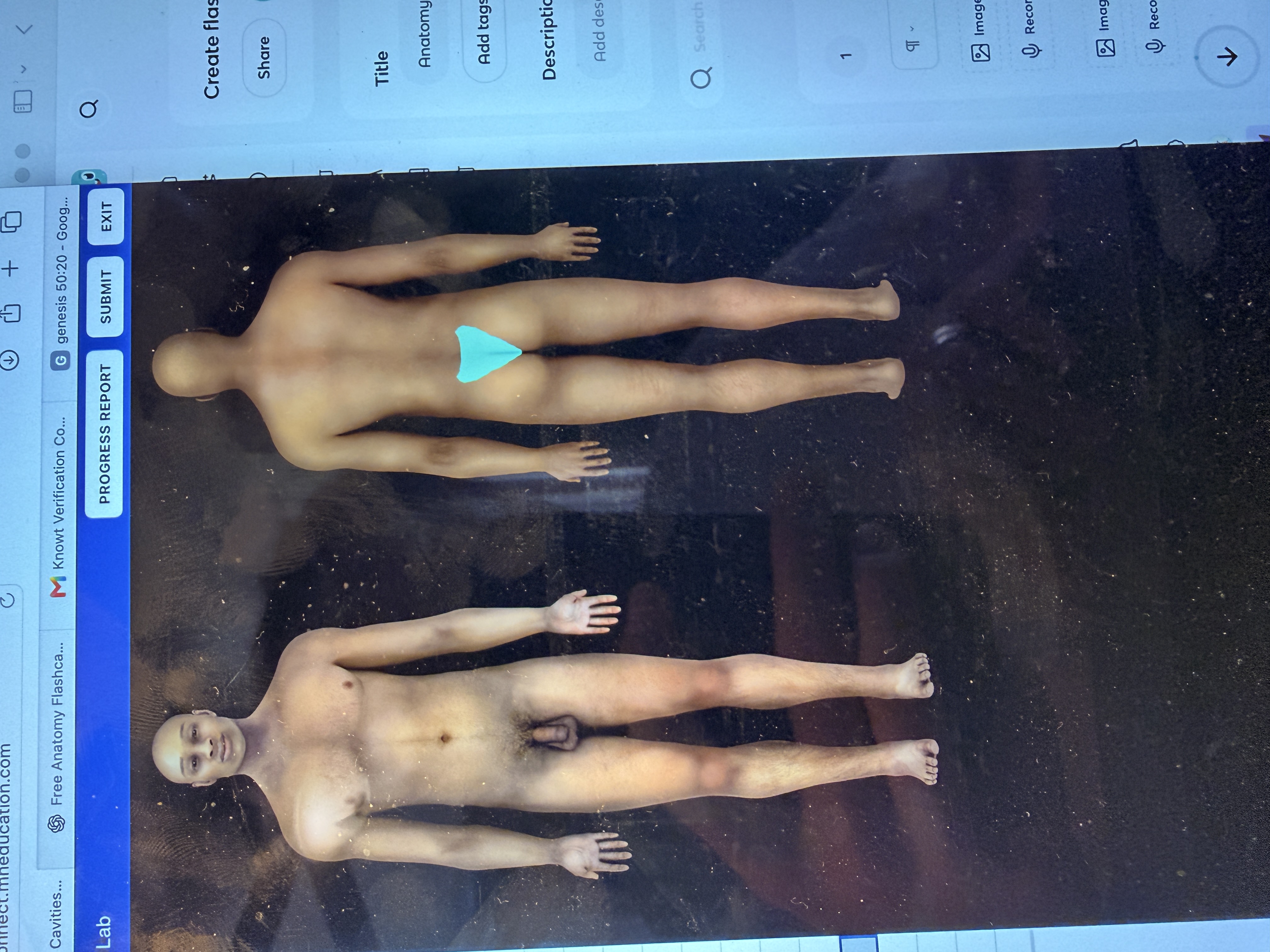
Scapular region
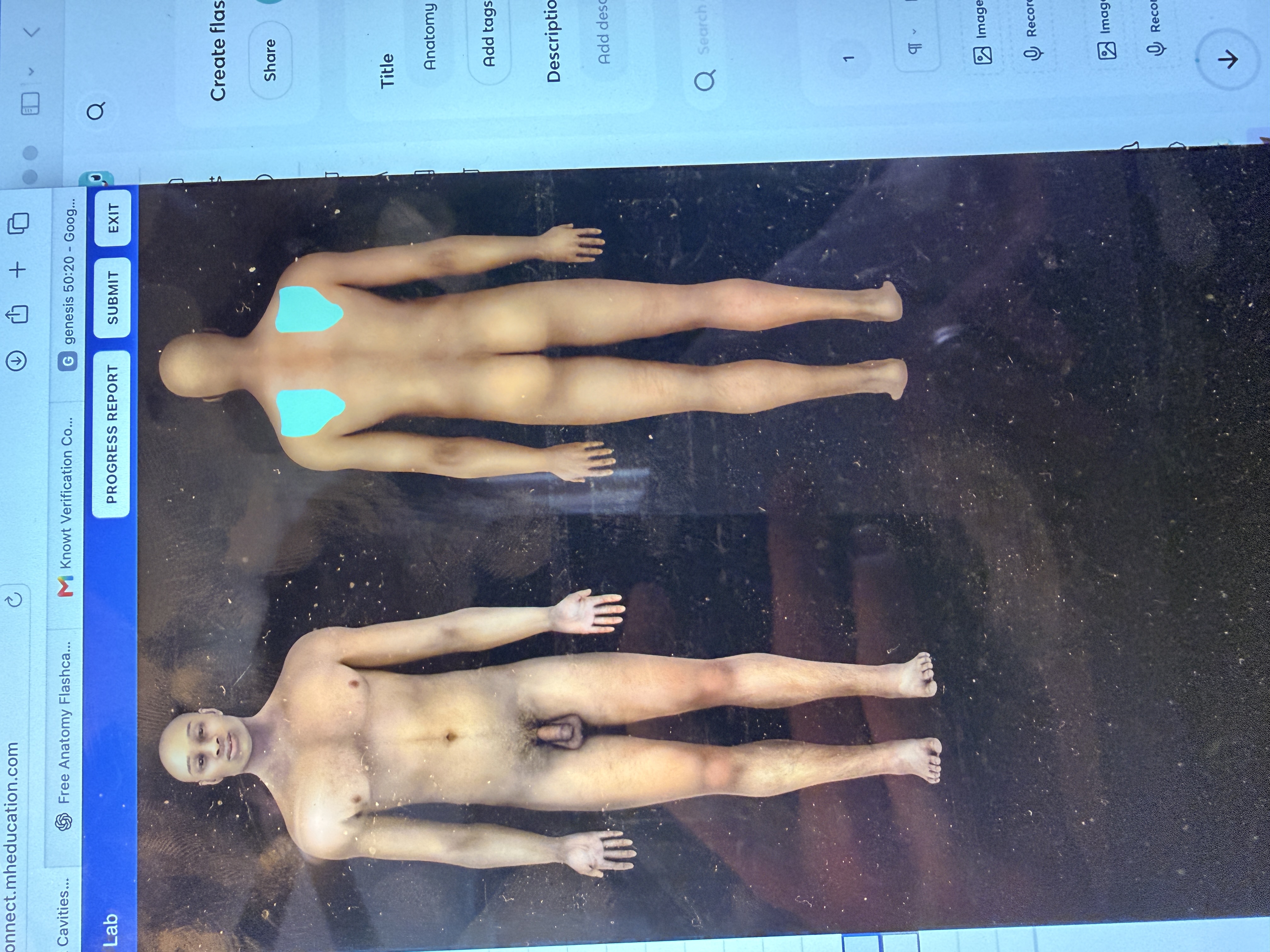
Temporal region