A&P 2 Lab Chapter 5 Images
 Call Kai
 Learn
Learn Practice Test
 Spaced Repetition
 Match
Match Flashcards
 Knowt Play
1/10

There's no tags or description
Looks like no tags are added yet.
Name | Mastery | Learn | Test | Matching | Spaced | Call with Kai | Chat |
|---|
No analytics yet
Send a link to your students to track their progress
11 Terms
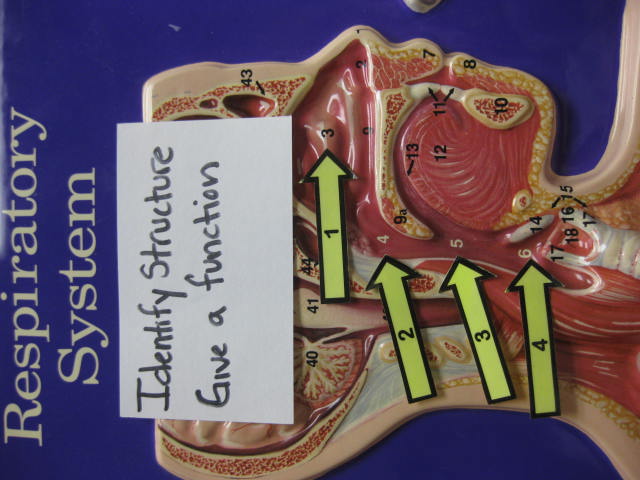
Identify 1, 2, 3 and 4?
Lab Image 5-1
sinus/nasal cavity
tissue = PSCCET
function = warms, moisten air + traps pathogens
nasopharynx
tissue = PSCCET
function = conduct air
Oropharynx
tissue = stratified squamous
function = conduct air
Laryngopharynx
tissue = stratified squamous
function = conduct air
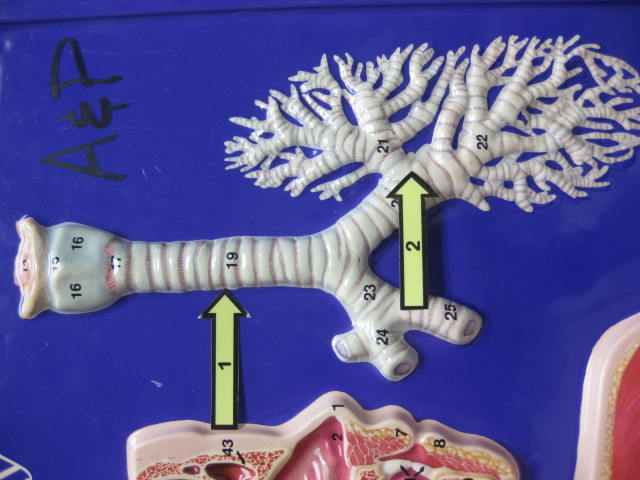
Identify 1, and 2?
Lab Image 5-2
trachea with hyaline cartilage rings
tissue = PSCCET (trachea)
function = prevent collapse (cartilage rings)
function = conduct air
bronchi
tissue = PSCCET
function = conduct air
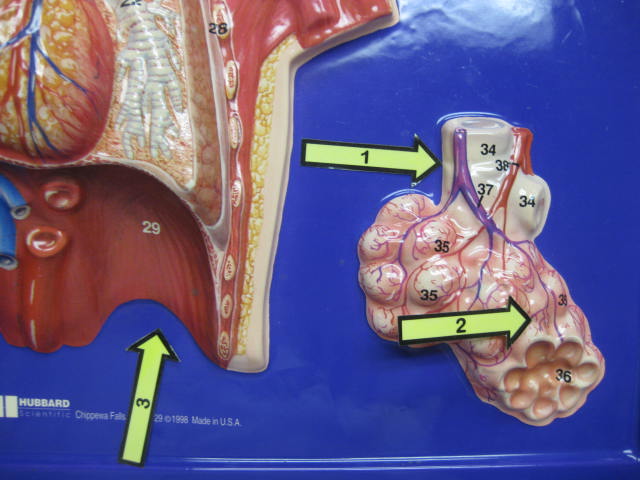
Identify 1, 2 and 3?
Lab Image 5-3
bronchiole
tissue = simple cuboidal
function = conduct air
alveoli
tissue = simple squamous
function = gas exchange
Diaphragm
inhalation (down)
exhalation (up)
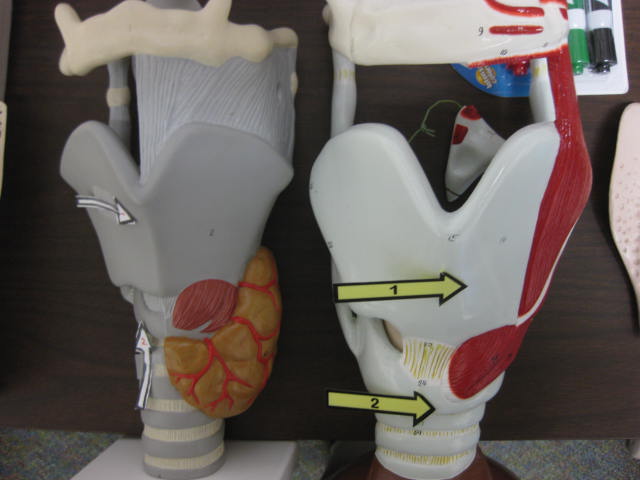
Identify 1, and 2?
Lab Image 5-4
thyroid cartilage with Adams apple
cricoid cartilage
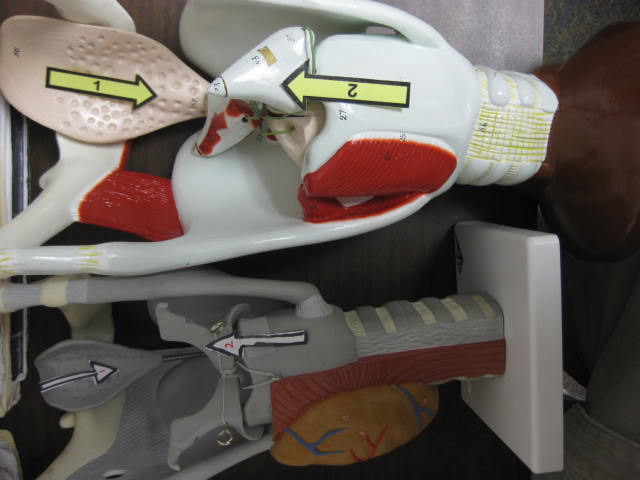
Identify 1, and 2?
Lab Image 5-5
epiglottis
function = regulate food/air
arytenoids
function = anchor vocal folds
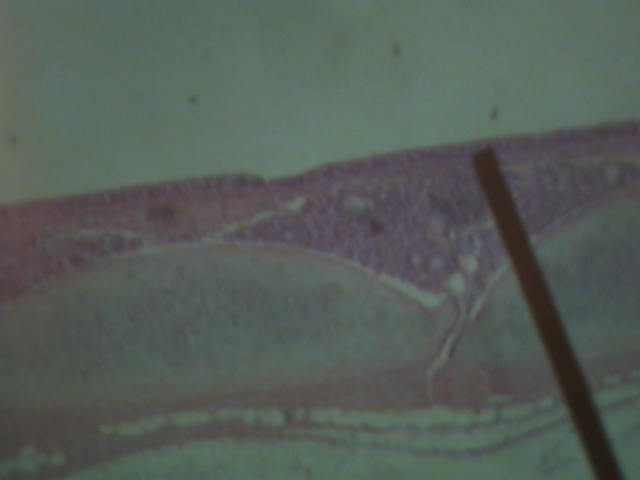
Identify?
Lab Image 5-6
mucosa layer/trachea
tissue = PSCCET (traps pathogens)
clear cell = goblet cell (produces mucous)
third layer = hyaline cartilage
function = prevents collapse
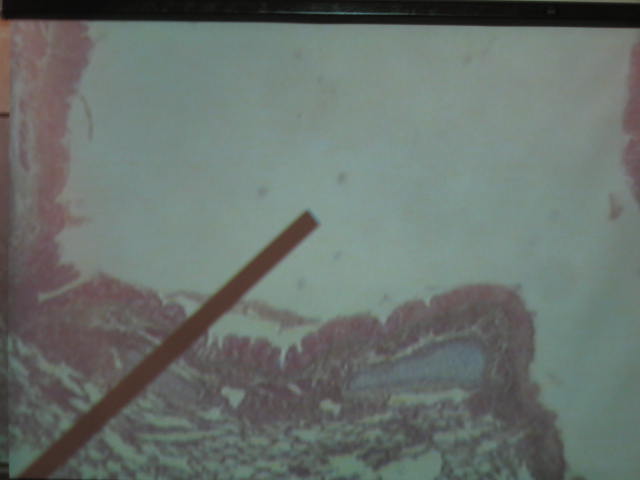
Identify?
Lab Image 5-8
bronchi (notice the hyaline cartilage)
tissue = PSCCET
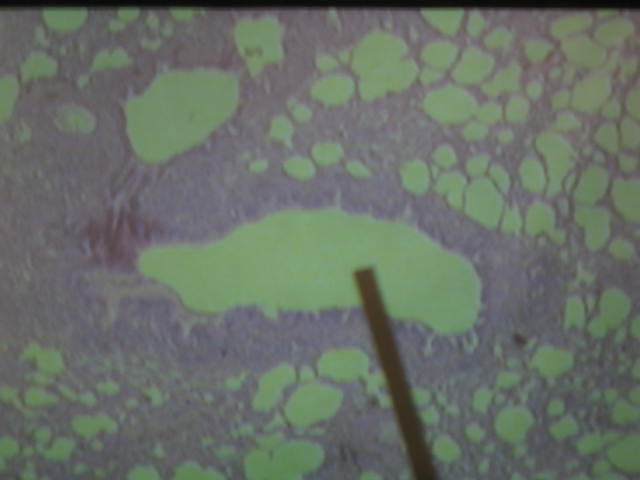
Identify?
Image 5-10
bronchioles
tissue = simple cuboidal epithelial tissue
action of E/NE = bronchodilation
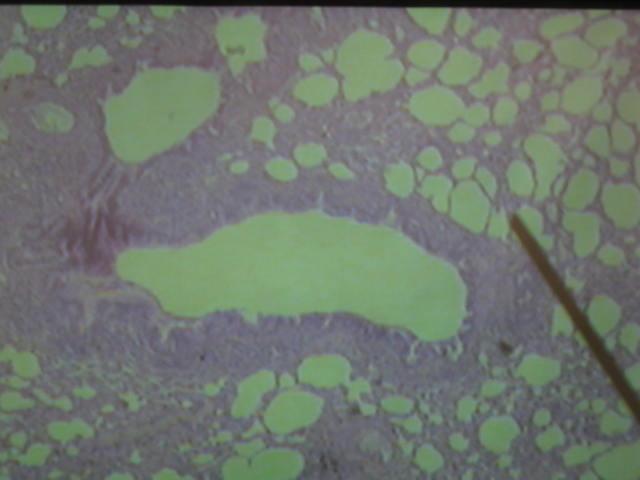
Identify?
Lab Image 5-12
alveoli
tissue = simple squamous epithelial tissue
function = gas exchange
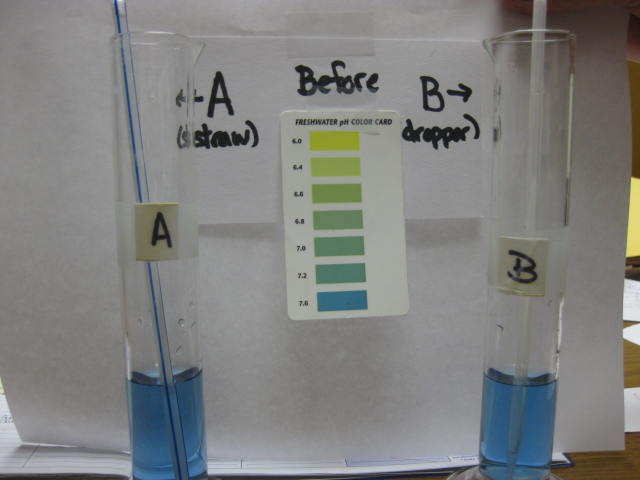
Identify?
Lab Image 5-14
pH indicator = both cylinders are at 7.6 pH
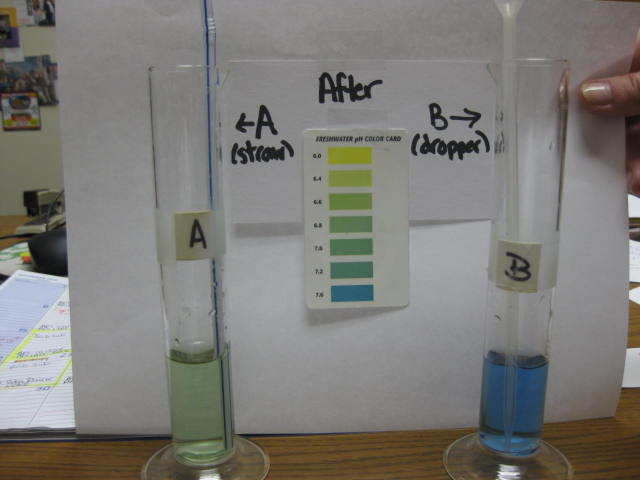
Identify?
Lab Image 5-15
cylinder a reflects what happens when you blow CO2 (exhale through straw), this process drops it to a pH of 6.4
cylinder b reflects just adding air with a pipette, this process makes it remains the same at pH of 7.6
this shows that CO2 and H20 combine to form H2CO3 (carbonic acid)