Human Body Cavities, abdominopelvic devisions, and anatomical planes
 Call Kai
 Learn
Learn Practice Test
 Spaced Repetition
 Match
Match Flashcards
 Knowt Play
1/16

There's no tags or description
Looks like no tags are added yet.
Name | Mastery | Learn | Test | Matching | Spaced | Call with Kai | Chat |
|---|
No analytics yet
Send a link to your students to track their progress
17 Terms
body cavity functions
protect organs (ex. shock from jumping and landing) and permits growth of organs and movement.
dorsal body cavity
contains cranial cavity (brain) and vertebral cavity (spinal cord)
ventral body cavity
contains thoracic cavity and abdominopelvic cavity separated by the diaphragm
visceral membranes vs parietal membranes
visceral = inner lining of a membrane parietal = outside lining of a membrane
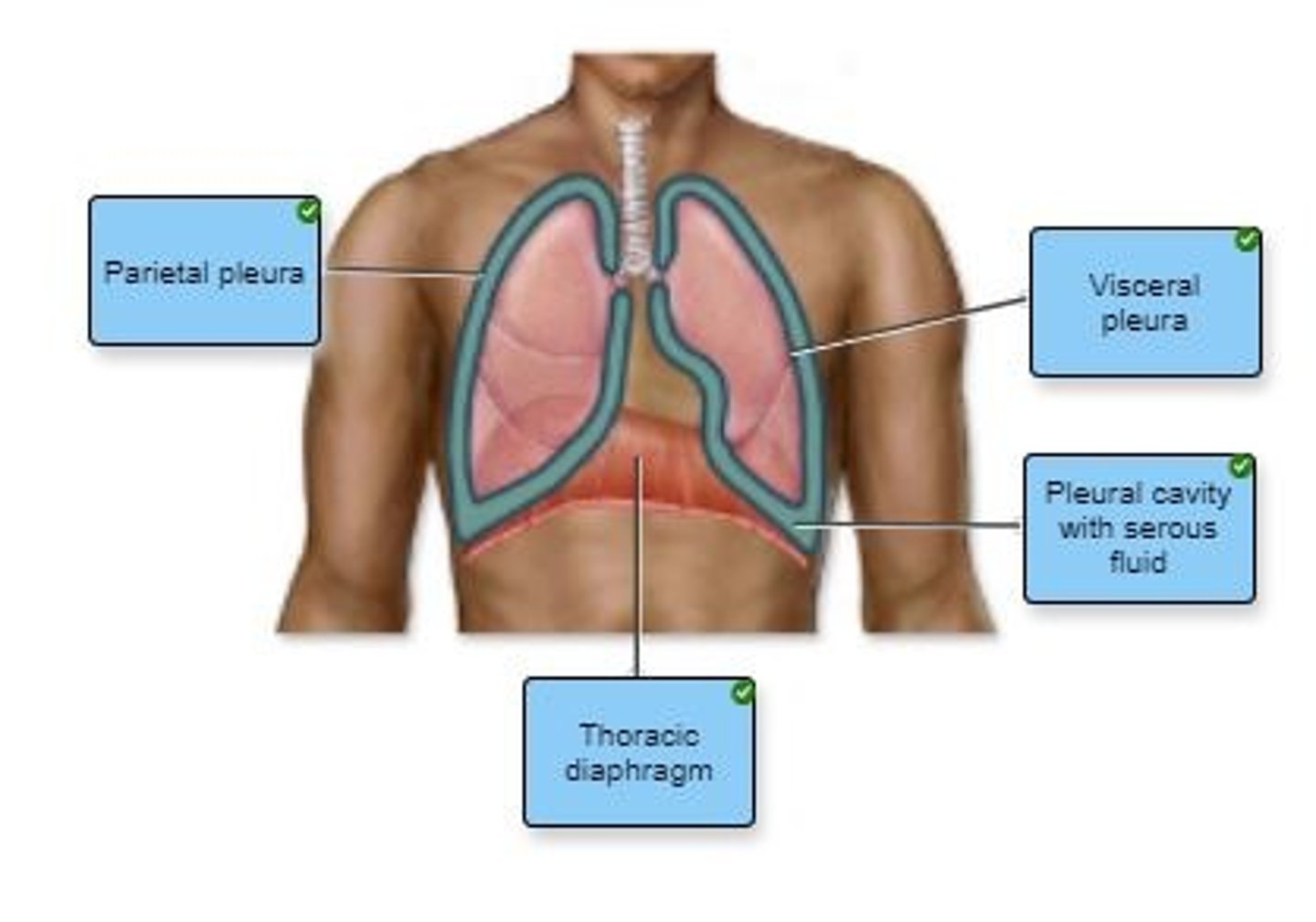
pleurae
surrounds the lungs (pleural space can also be pleural cavity)
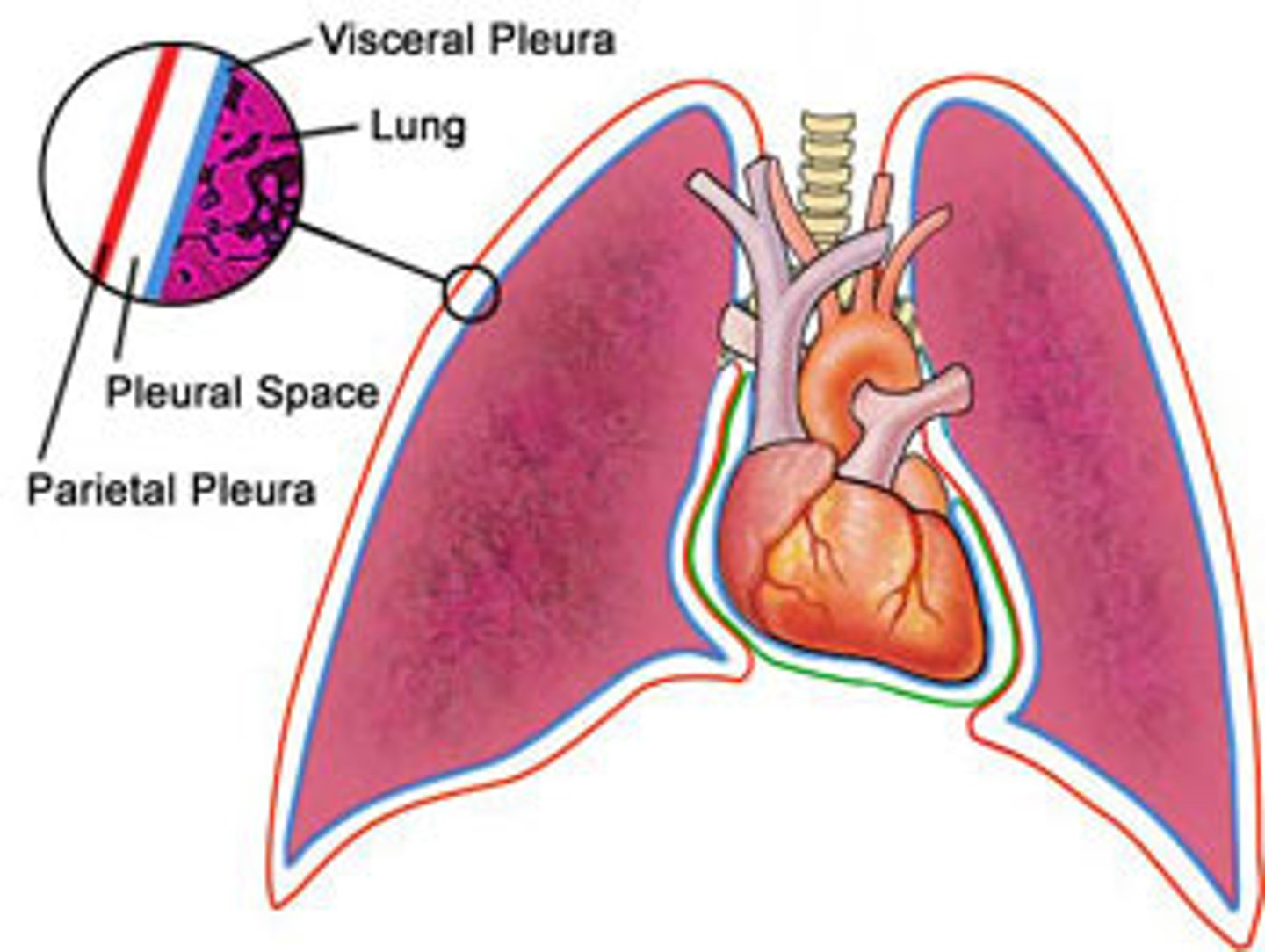
peritoneum
surrounds most abdominal organs/lines abdominal cavity
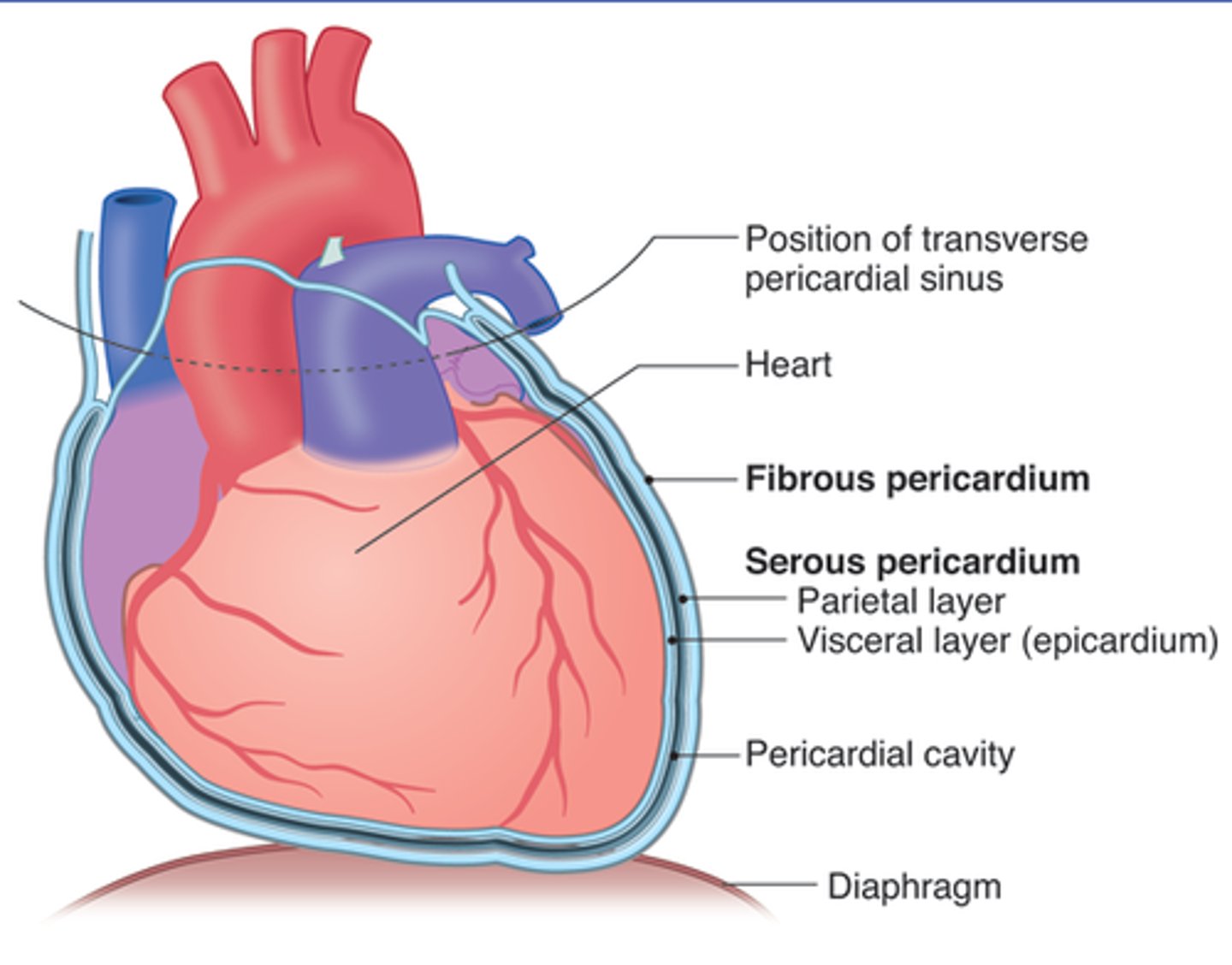
pericardium/pericardial sac
contains the heart and the pericardial cavity/space
what is the name of the cavity that contains the lungs?
thoracic cavity
what are the spaces within the thoracic cavity that surround each lung?
right and left pleural cavities (intrapleural spaces) - to allow the lungs to move with less friction during respiration
what is the name of the cavity containing the space between the lungs?
mediastinum - upper portion containing blood vessels, trachea, esophagus, and thymus lower portion contains the pericardial sac
pelvic cavity
separated from the abdominal cavity by the brim of the pubis
coronal
anterior/posterior
sagital
left/right
transverse
superior/inferior
middle three abdominopelvic regions (top to bottom)
epigastric region, umbilical region, hypogastric/pelvic region
left three abdominopelvic regions (top to bottom)
left hypochondriac region, left lumbar region, left inguinal region
right three abdominopelvic regions (top to bottom)
right hypochondriac region, right lumbar region, left inguinal region