Living world 2:
 Studied by 0 people
 Call Kai
 Learn
Learn Practice Test
 Spaced Repetition
 Match
Match Flashcards
 Knowt Play
1/52

There's no tags or description
Looks like no tags are added yet.
Name | Mastery | Learn | Test | Matching | Spaced | Call with Kai |
|---|
No study sessions yet.
53 Terms
Reintroduction of grey wolves to yellowstone national park in USA
- Elk population from 20k to 10k in 8yrs. Aspen and cotton wood regenerate so more tree cover.
Increased trees stabilises river banks bc less erosion. Aspen attracts beavers.
- Competition from wolves reduces coyote. Increase in voles and mice.
Small scale ecosystem- epping forest
In east of london
History of epping forest
remains of larger forest at the end of the last ice age. Bogs & ponds have 20 kinds of dragonflies, and other unique species. Hunting ground for royalty. Timber resource.
Characteristics of epping forest's food web
Native tree species like oak, ash & beech. Shrub layer of holly & hazel at 5m. 177 species of moss & lichen. 9 amphibian & reptile species, 38 bird species. 700 species of fungi.
How is epping forest interdependent?
- Trees are deciduous( lose leaves in autumn). Trees have broad green leaves to maximise photosynthesis in summer.
- In autumn, forest floor covered with leaves. Decomposers & detrivores break down leaves by spring. Nutrients in leaves converted to humus, for new plant growth.
Characteristics of epping forests nutrient cycle
biomass store is large bc of tall trees. Soil store is large bc there is plenty of humus.
High flow rates between litter, soil and biomass shows cycle of new growth that takes place every year; via leaching (heavy rainfall)
How is epping forest used by people?
- 284km of paths for cycling
- 24 fishing ponds
- up to 60 pitches, car parks, changing rooms and toilets
- 10 trails for walking
How is the forest being managed?
- Historic management= trees cut at head height for pollarding; encourages tree growth, and prolongs lifespan.
- Cattle grazing stopped
- coppicing to cut trees to encourage new growth of wood.
Distribution of rainforests
between 10 degrees N/S of the equator. Temps around 28 degrees. Over 2000mm of rainfall annually. Largest rainforests in south america, africa, congo, indonesia
Why rainforests are near the equator
- most rainfall and sunshine in/near equator.
- mostly near the Tropic of Cancer and Tropic of Capricorn.
Tropical rainforest ecosystems
- warm, wet climate, over 2000mm rainfall annually, 28 degrees, alot of plant growth, lots of vegetation, lots of consumers.
Soil in tropical rainforests
Several m thick; nutrient poor. Red in colour; rich in iron, because rain washes/leeches out nutrients & minerals from soil. Allows vegetation to grow.
As vegetation dies, decomposed by insects, bacteria or fungi. Releases nutrients into the surface of the soil, taken up by the plants.
Nutrient cycling in the tropical rainforest
- Litter: leeching by rainwater= rain can trap nutrients out, soils are nutrient poor. Biomass like dead leaves, fruits, branches from canopy.
- Soil: decomposition of litter quickly due to hot & wet conditions. Input from weathering.
The structure of a rainforest
- soils= high iron content, thick leaf layer
- Shrub layer & ground layer= less than 5m
- Under/Lower tree = 5-15m
- Canopy= 15-30m
- Emergents/top canopy = 30-60m
Emergents/top canopy
Areas that capture sunlight.
Eagles, bats, monkeys, & butterflies can live up here.
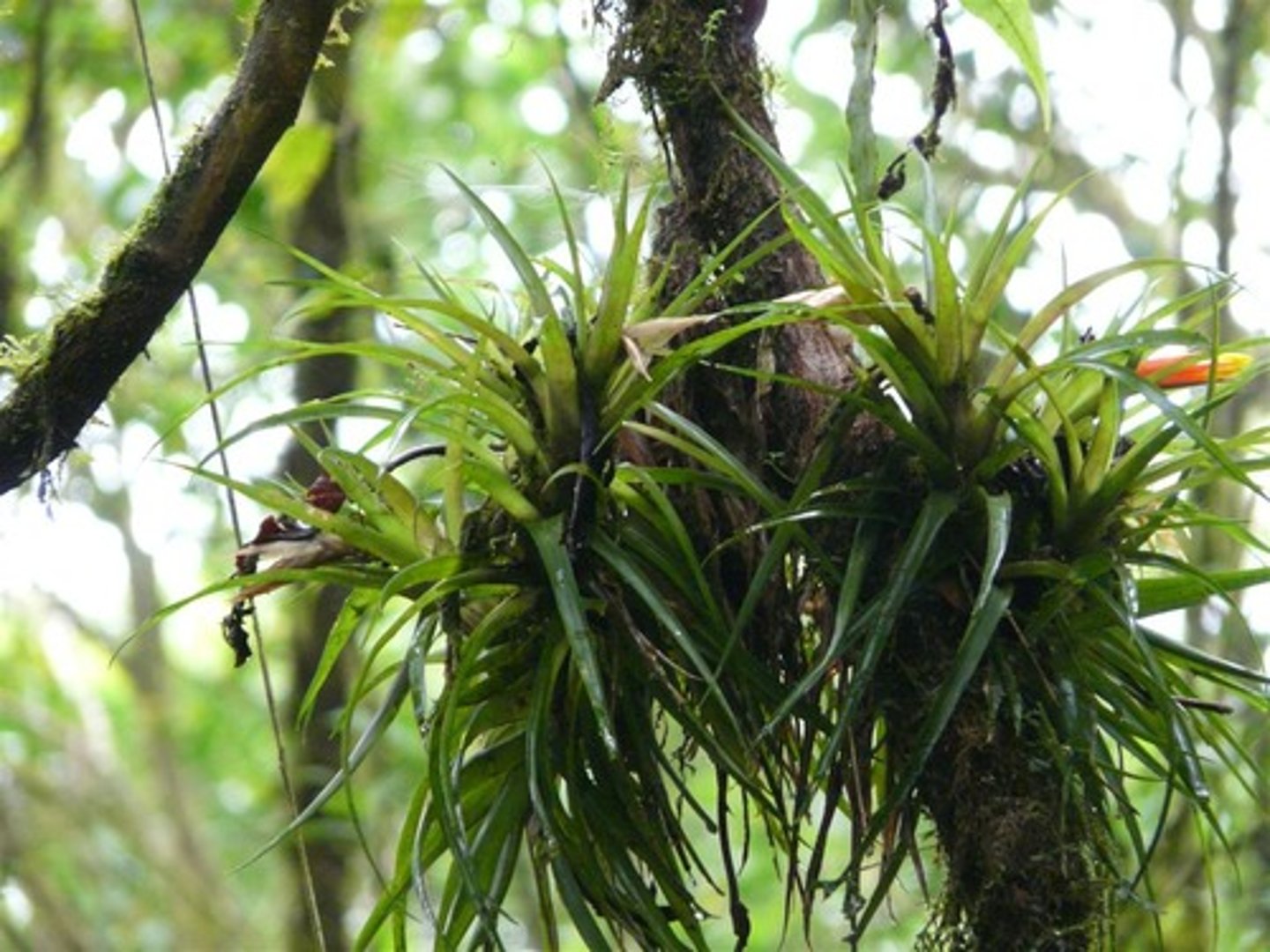
Epiphytes
plants that take root in trees high in the canopy. To get more sunlight
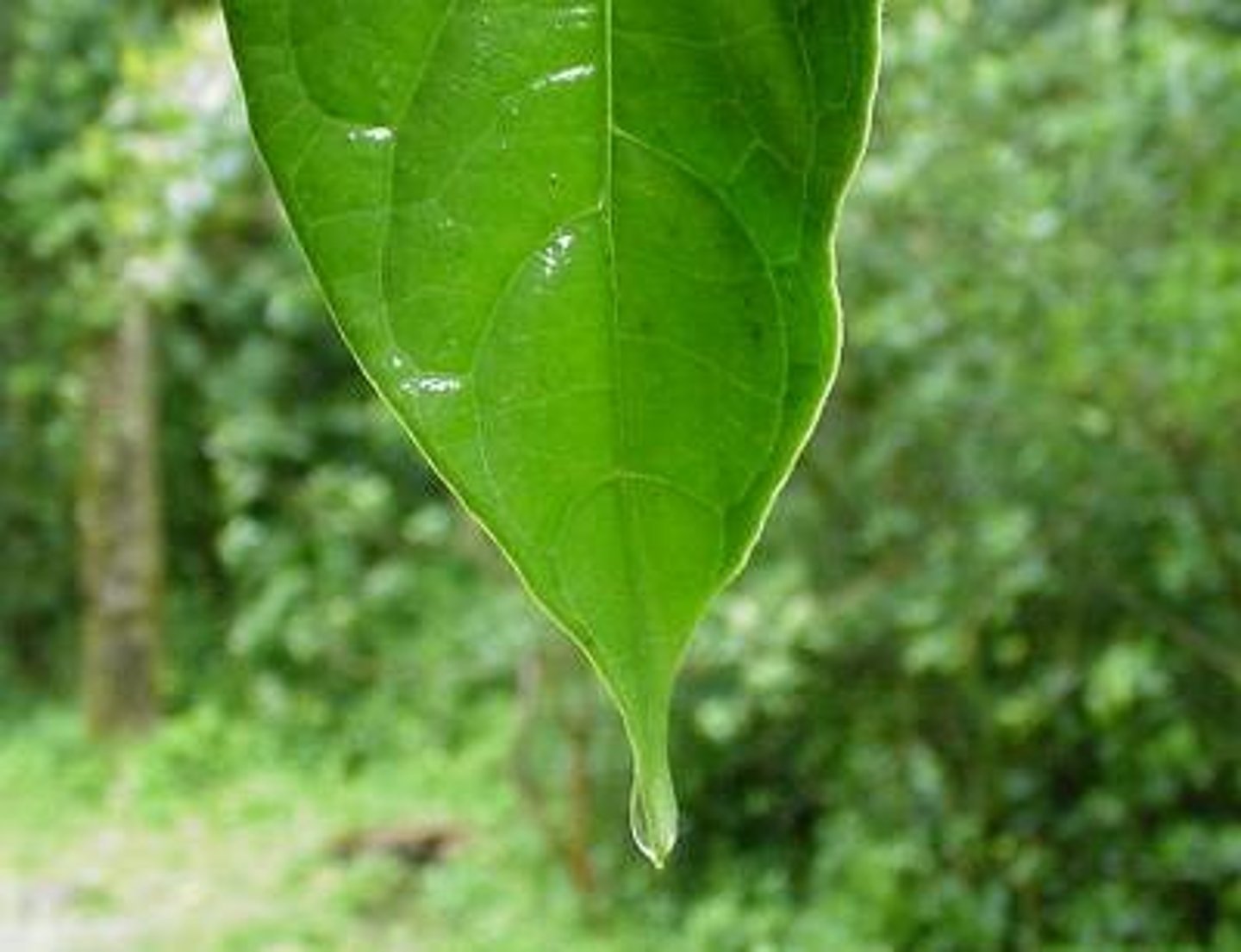
Drip tip leaves
to allow excess water to spill off, prevents leaf damage,
gets water off to prevent mold that can lead to less photosynthesis
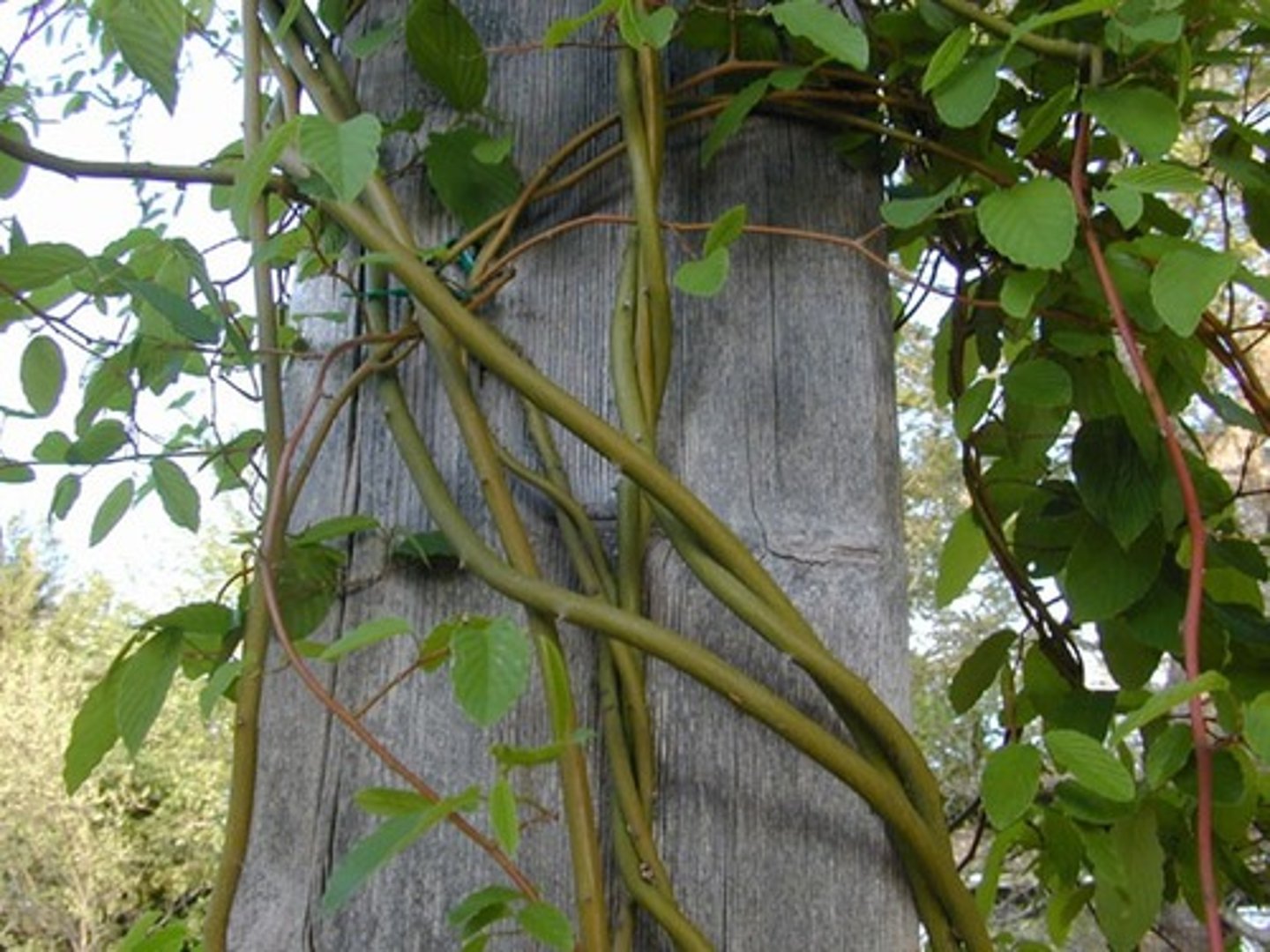
Liana
woody plant that takes root in soil but it supported by trees to grow upwards to get sunlight
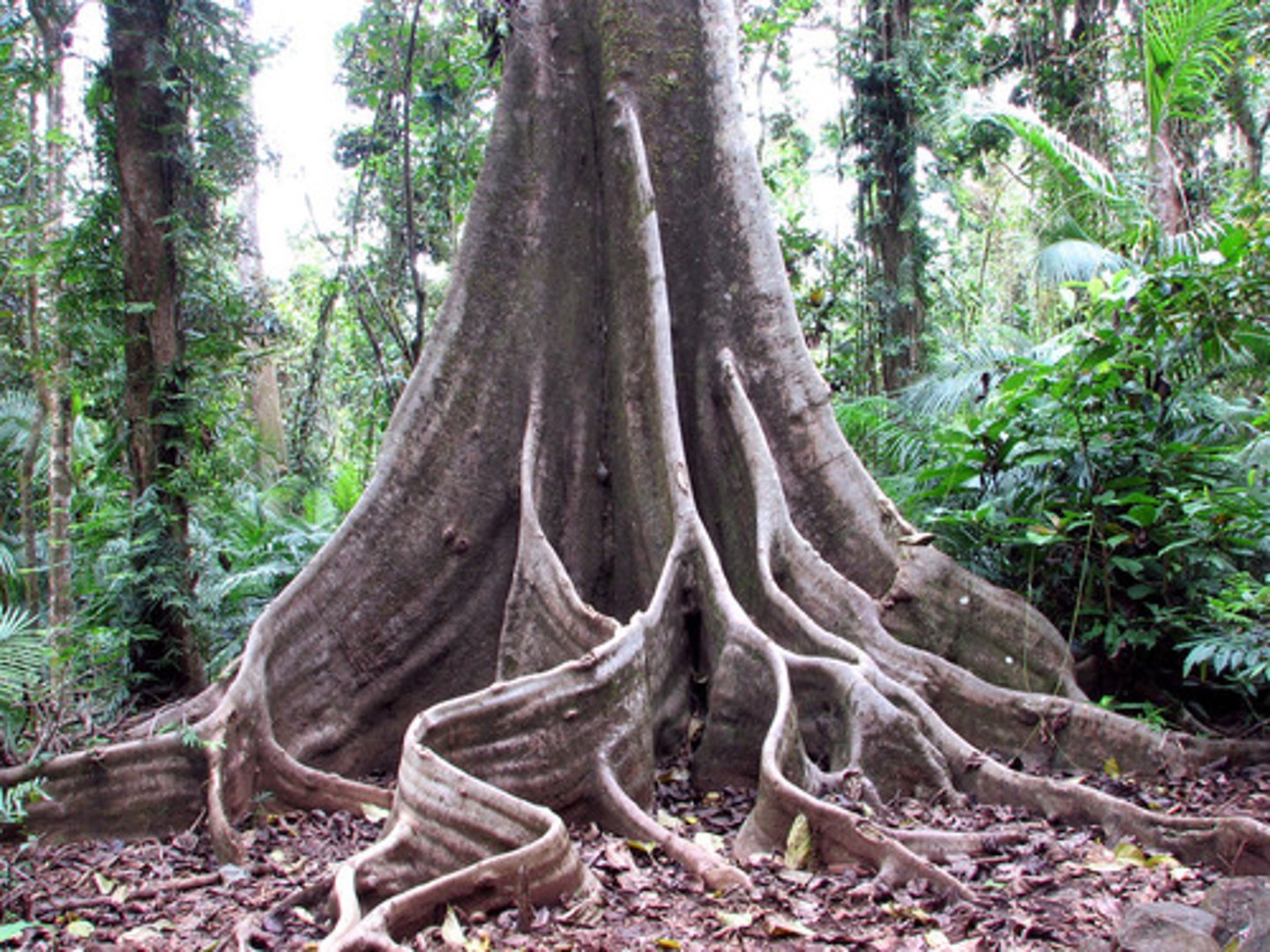
Buttress roots
stabilises tree, increases surface area for O2 and CO2 exchange and help transport water
Types of plant adaptions:
drip tip leaves, buttress roots, smooth bark, large green & waxy leaves epiphytes, lianas
Buttress roots 2
Grows sideways to make base wide to support trees height.
Soil nutrient is poor, nutrients come from decomposition so roots grow on the surface to get nutrients first
Smooth bark
water runs off it faster so it doesn't get moldy
Large green & waxy leaves
large leaves increase photosynthesis, waxy to get rid of water.
Types of animal adaptions
camoflage, large eyes, tree dwelling, poisonous & brightly coloured.
Camoflage
against leaves, trees or the ground. To protect themselves from predators/prey they are hunting.
Large eyes
The forest floor is dark, allows animals to see better; lets in more light into eyes
Tree dwelling
protect themselves from predators that live on the ground/ be close to food sources.
Deforestation in tropical rainforests: The Amazon, Brazil
In North Brazil, 60% of Brazil, 5th largest country
Causes of deforestation
Logging, Energy development, Mineral extraction, Illegal wildlife trade, Commercial farming (cattle and crops), Road building, Settlement and population growth
Logging
Timber companies interested in mahogany & teak (selective logging) . Sold to other countries to make furniture.
Clear felling- areas of rainforest cleared in one go.
Energy development
Unlimited supply of water & ideal river conditions encouraged dams to be built for HEP.
Dams get blocked with soil, submerged areas of forest rots, making water very acidic, corrodes HEP turbines.
Mineral extraction
Found beneath tropical rainforest; gold. 1999, 10k hectares of land used for gold mining, now over 50k.
Illegal wildlife trade
Hunting, poaching & trafficking wildlife & animal parts. Endangering species like jaguar, capuchin and golden lion tamarind.
Commercial farming cattle
Areas cleared for livestock rearing. Accounts for 80% of tropical rainforest destruction. Quality of pasture declines.
Commercial farming crops
cleared for plantations; bananas, palm oil, pineapple, sugar cane, tea, & coffee. Rainforest cleared 2x from 1990-2010.
Road building
great swathes through the rainforest. Trans-Amazonian highway began in 1972, is 4000km long.
Settlement & population growth
houses for workers, clearing forest for settlements.
Global impacts of deforestation
global warming, loss of biodiversity.
global warming
tree canopy absorbs CO2. Carbon stored in wood returns to atmosphere. Contributes to greenhouse effect.
Loss of biodiversity
137 plants/animals/insects species lost everyday.
Possible cures lost as well. 30-45% of main species lost by 2030.
Local impacts of deforestation
soil erosion & fertility, river pollution, decline of indigenous tribes, conflicts
Soil erosion & fertility
forest cover cleared by heavy rainfall. Bare slopes prone to erosion; cant grow plants.
River pollution
Gold mining & mercury used to separate gold from ground enters rivers. Fish poisoned & people living nearby.
Decline of indigenous tribes
only 240 tribes left, 330 in 1900
Conflicts
disputes between indigenous tribes & workers. Conservationists and developers.
Tropical rainforests sustainable management
selective logging, replanting, conservation, ecotourism, international hardware agreements, education, reducing debt.
Selective logging
felling trees when fully grown, letting younger trees mature, protecting ground from erosion. Cycle lasts 30-40 years.
Replanting
Collecting seeds from remaining patches of primary forest, growing into saplings in nurseries and planting them. Recreates forest similar to original forest cover. Long time taken.
Conservation
Natural resources used sustainably. Operates anywhere ecosystems are seriously threatened. Non-gov organisations so they rely on volunteers and donations.
Ecotourism
sustainable actions are the main attractions. Educates. Employs local people; money stays in local community. Minimises consumption of non-renewable resources. Tourists leave litter.
International hardware agreements
agreements between govs to protect biodiversity & rainforest resources.
International tropical timber agreement 2006= restricts trade in hardwoods from TR. has to be marked with a registration no.
high prices for woods leads to illegal felling.
Education
promoting conservation message through education programs
Reducing debts
HIC writes of debts of LIC. LIC may have large debts from overseas aid/loans. Large areas of TR protected, gets rid of debt. HIC may not get money LIC owed them