20 Antimicrobial Medications
 Call Kai
 Learn
Learn Practice Test
 Spaced Repetition
 Match
Match Flashcards
 Knowt Play
1/21

There's no tags or description
Looks like no tags are added yet.
Name | Mastery | Learn | Test | Matching | Spaced | Call with Kai | Chat |
|---|
No analytics yet
Send a link to your students to track their progress
22 Terms
magic bullet
The search of a “[__]” → drug that would kill microbial pathogens without harming human host, led to discovery of antimicrobials drugs
» Salvarsan: first successful antimicrobial drug, discovered by Paul Erlich for treatment of syphilis
» Penicillin: antibiotic. accidentally discovered by Alexander Fleming in Penicillium mushroom; refined and isolated by Emst Chain and Howard Florey
→ 1941 had clinical trials on human subjects with life-threatening S. aureus infection
→ mass produced for soldiers in WWII
→ 1960s drug structure was altered (natural Penicillin isolated from fungi, Penicillin G, originally only affected gram-positive cocci)
created ampicillin: affects other gram-positive and gram-negative bacteria
Penicillin
There are many variations of [__]; all have a beta-lactam ring and differ with their side chains
original: [__] G → given via IV fluids; another natural one is [__] V
methicillin → resistant to penicillinase enzyme
ampicillin → increased spectrum to affect Gram-negative bacteria as well; acid resistant » can be taken orally
amoxicillin → more active form of ampicillin; don’t need as much doses
![<p>There are many variations of [__]; <mark data-color="blue" style="background-color: blue; color: inherit;">all have a </mark><strong><mark data-color="blue" style="background-color: blue; color: inherit;">beta-lactam</mark></strong><mark data-color="blue" style="background-color: blue; color: inherit;"> ring and differ with their side chains</mark></p><p><u>original</u>: <mark data-color="purple" style="background-color: purple; color: inherit;">[__] G</mark> → given via IV fluids; another natural one is <mark data-color="purple" style="background-color: purple; color: inherit;">[__] V</mark></p><ul><li><p><strong><mark data-color="purple" style="background-color: purple; color: inherit;">methicillin</mark></strong> → <mark data-color="yellow" style="background-color: yellow; color: inherit;">resistant to penicillinase enzyme</mark></p></li><li><p><strong><mark data-color="purple" style="background-color: purple; color: inherit;">ampicillin</mark></strong> → increased spectrum to <mark data-color="yellow" style="background-color: yellow; color: inherit;">affect Gram-negative bacteria as well; </mark><span style="color: purple;"><strong><mark data-color="yellow" style="background-color: yellow; color: inherit;">acid resistant</mark></strong></span><mark data-color="yellow" style="background-color: yellow; color: inherit;"> » can be taken orally</mark></p></li><li><p><strong><mark data-color="purple" style="background-color: purple; color: inherit;">amoxicillin </mark>→ </strong>more <mark data-color="yellow" style="background-color: yellow; color: inherit;">active form of ampicillin</mark><strong><mark data-color="yellow" style="background-color: yellow; color: inherit;">; </mark></strong><mark data-color="yellow" style="background-color: yellow; color: inherit;">don’t need as much doses</mark></p></li></ul><p></p>](https://assets.knowt.com/user-attachments/0d89342a-a43a-4e54-8635-c3e1ef351cf8.png)
penicillinase
Bacteria with this enzyme is resistant to penicillin as it breaks down the beta-lactam ring of the compound
soil
Most antibiotics come from [__] microbes
Bacteria: Streptomyces and Bacillus species
Fungi: Penicillium and Cephalosporium
Produces antibiotics (chemical produced by one organism to kill another organism) to rid of competition that is prevalent in the soil
antimicrobial medication
The characteristics of [__] are:
Antimicrobial action
bactericidal → kills bacteria
bacteriostatic → inhibits growth of bacteria
Selective toxicity » inhibits or kills microbial pathogen but has little or no toxic effect on human host
→ drugs target components that are different or absent in human cells (eg. peptidoglycan)
Spectrum of activity » range of microbes affected
narrow spectrum → affect narrow range of bacteria
» requires identification of pathogen, testing for sensitivity
» less disruptive to normal microbiota
broad spectrum → affects wide range of bacteria
» important for treating acute life-threatening diseases, especially when no time to culture for identification
» disrupts normal microbiota
antibiotics must reach area of infection and be excreted
some antibiotics can’t:
be taken orally (Gi tract doesn’t absorb) → IV » vancomycin
cross blood-brain barrier (important for treating meningitis and encephalitis)
enter abscesses or phagocytic cells » important for TB and treating the Mycobacterium tuberculosis that inhabit macrophages in this disease
also varies in time taken by body to eliminate drug
» dictates the frequency of dosage → must maintain conc. of antibiotic
» liver or kidney damage are exceptions as they excrete drugs more slowly
inhibition of cell wall synthesis
Mechanism of action for antibacterial drugs such as:
Beta lactam drugs → inhibits formation of peptide chain between peptidoglycan (PTG) backbone. only effective against actively growing cells
includes Penicillins and cephalosporins
Vancomycin → prevent formation of peptide chain AND break down the PTG backbone
ineffective against Gram-negative bacteria due to its outer membrane
developed as last line of defense against MRSA
given intravenously due to poor absorption from GI tract
Bacitracin → interferes with transport of PTG precursors
PTG made inside cell and then transported out
quite toxic to even humans as it also affects our own transport proteins → limited to topical applications
common ingredient in over-the-counter first aid ointments
» does not affect eukaryotic cell as [__] only affects bacteria that has peptidoglycan
Result: low toxicity, high effectiveness
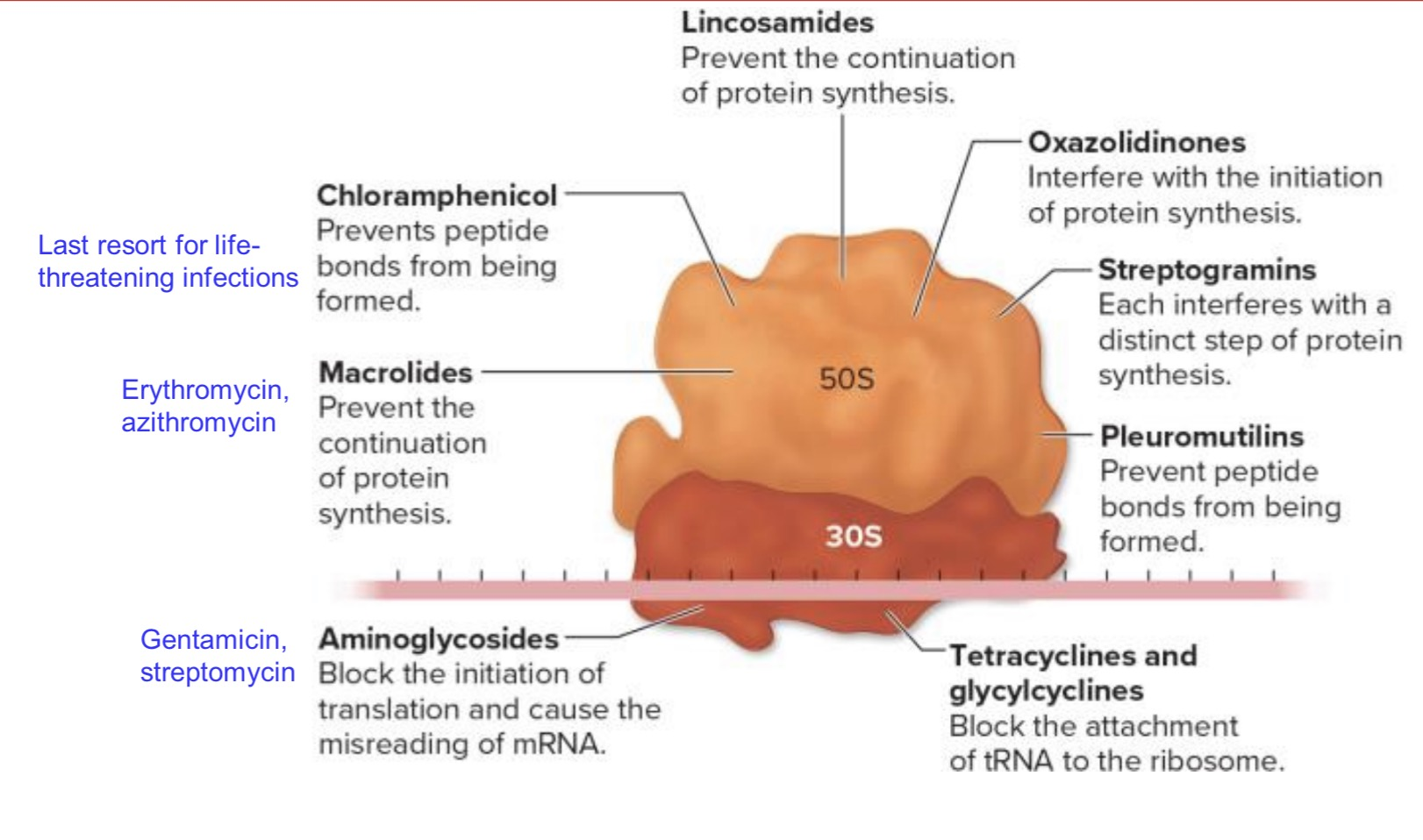
inhibition of protein synthesis
Mechanism of action for antibacterial drugs such as:
Chloramphenicol → targets 50S subunit (rRNA) and prevents formation of peptide bond between proteins
Macrolides → prevent the continuation of protein synthesis by binding to the 50S subunit
includes Erythromycin and azithromycin
Aminoglycosides → binds to 30S (part of ribosome that touches mRNA) and prevents translation
big. causes mRNA to go out and lead to mis-readings
Tetracycline → blocks tRNA from attaching to ribosome
small. can get into phagocytes and tissues
» selective toxicity in its targeting of prokaryotic ribosomes that are 70S; no effect on eukaryotic ribosomes (80S)
» however, our mitochondria is 70S as well → muscle fatigue and tiredness
inhibition of nucleic acid synthesis
Mechanism of action for antibacterial drugs such as:
Fluoroquinolones → inhibits action of DNA gyrase
DNA gyrase relieves supercoiling of DNA as it is replicated
eg. Ciprofloxacin and ofloxacin
Rifamycins → blocks prokaryotic RNA polymerase and initiation of transcription
eg. Rifampin → used to treat TB and Hansen’s disease
also prevents meningitis after exposure to N. meningitidis
» [__] targets DNA or RNA synthesis
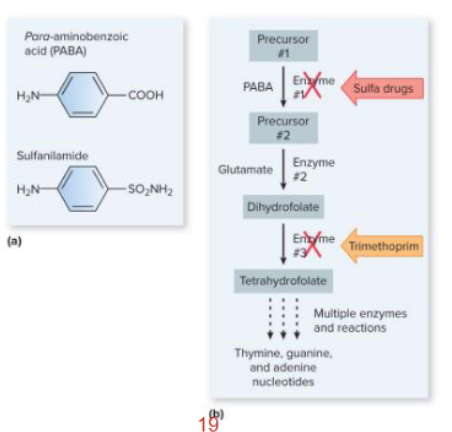
inhibition of metabolic pathways
Mechanism of action for antibacterial drugs such as:
Sulfanamide → inhibits 1st enzyme in pathway
Trimethoprim → inhibits 3rd enzyme in pathway
(both are also known as Sulfur drugs)
» inhibits enzymes by competitively binding with products (metabolites or growth factors) in a folic acid pathway
» selective toxicity as humans lack folic acid pathway
Polymixin B
Drug that damages cell membrane by altering membrane permeability of Gram-negative cells → leakage and cell death
Common in first-aid skin ointments
» not many drugs like [__], as inhibition of cell membrane offers no selective toxicity → applied topically only.
Mycobacterium
Drugs against [__] species have limited range/effect on them due to:
chronic nature of disease and slow growth of bacteria → grows so slowly antibiotics targeting cell growth has no impact
waxy lipids in cell wall → mycolic acid is impervious to many drugs
First-line drugs
Effective drugs used against Mycobacterium. Low toxicity, used in combination with each other to treat TB
Rifampin → inhibits mRNA synthesis
Streptomycin → inhibits protein synthesis
Isoniazid* → inhibits synthesis of mycolic acid
Ethambutol* → inhibit enzyme putting together precursors (like mycolic acid) for cell wall synthesis
Pyrazinamide → interferes with protein synthesis
(*): exclusive to Mycobacterium
Second-line drugs
Drugs treating TB that are less effective and have more toxicity risks. Used for more resistant Mycobacterium strains as second to last resort.
treatment
For [__] we can:
try different drugs until getting favorable response
identify pathogen > determine susceptibility > prescribe drug that acts against target organism only
better approach, but more time-consuming
susceptibility: the inability of a microorganism to grow in the presence of an antimicrobial drug
MIC
[__]: Minimum inhibitory concentration
Found through a quantitative test that determines the lowest conc. of an antimicrobial drug needed to prevent growth of a specific organism
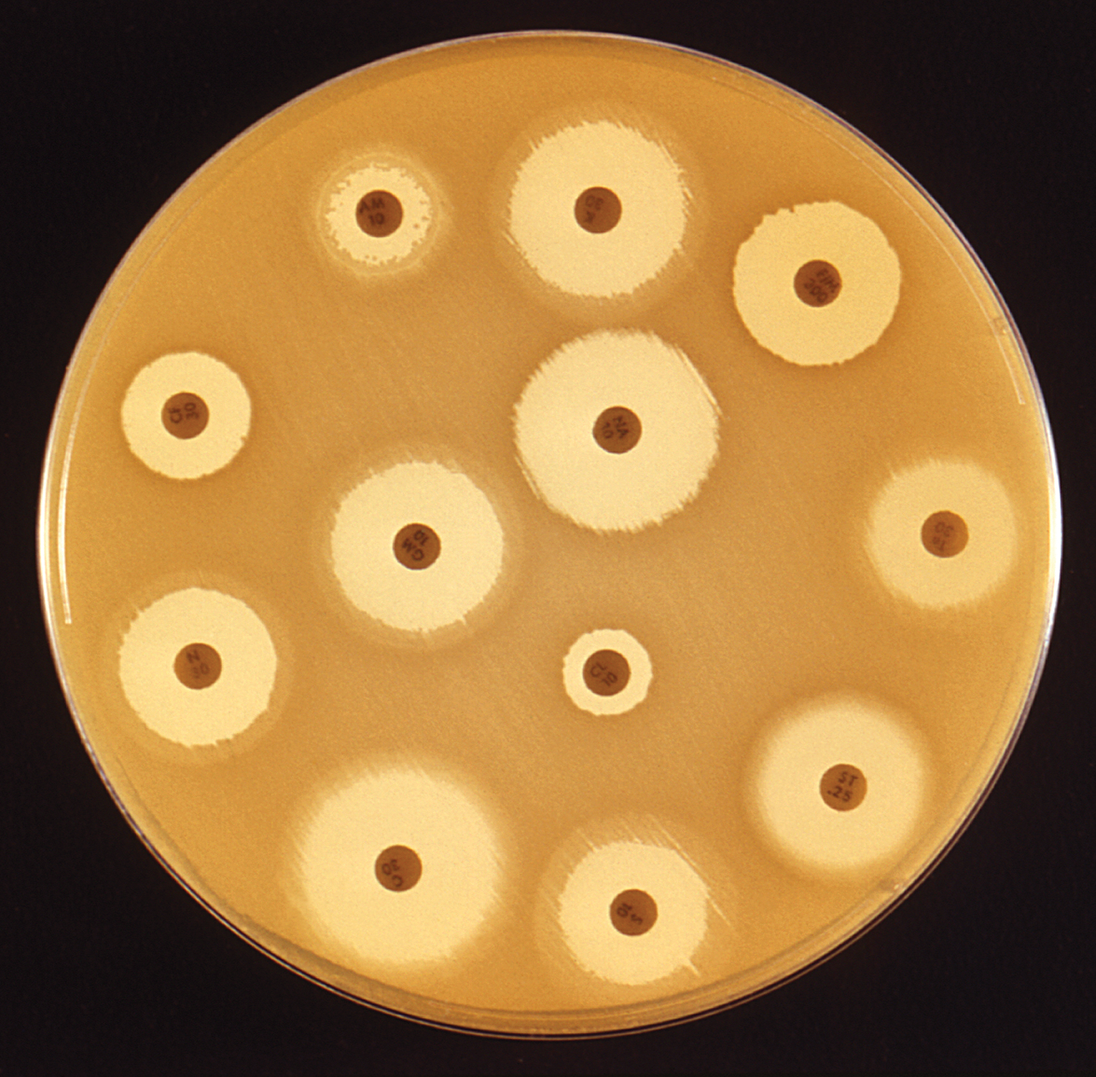
Disk diffusion method
Susceptibility testing, also known as Kirby-Baur disk diffusion
Method: spread bacteria onto plate and plate antibiotic impregnated disks on plate and incubate it
» determines susceptibility of bacterial strain to different antibiotics
» the greater the susceptibility, the greater the zone of inhibition
» zone of inhibition: area of no growth around disc
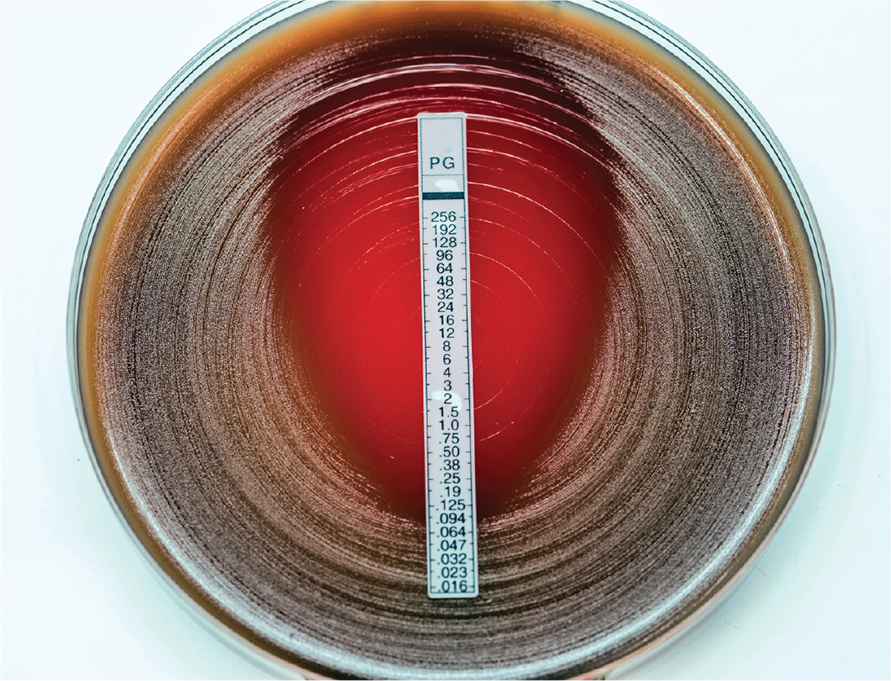
E test
Modification of disk diffusion test that uses filter paper strips with a concentration gradient of the antibiotic
» zone of inhibition is tear-drop shaped (red in image); will line up with the strip at the conc. bacteria no longer grows
» where it ends = MIC
broth dilution method
Susceptibility test where you do a serial dilution of antibiotic and add bacteria
» measures growth (brown in image) by turbidity
» MIC = lowest conc. that prevents growth (yellow tube closest to the brown tube/tube with growth)
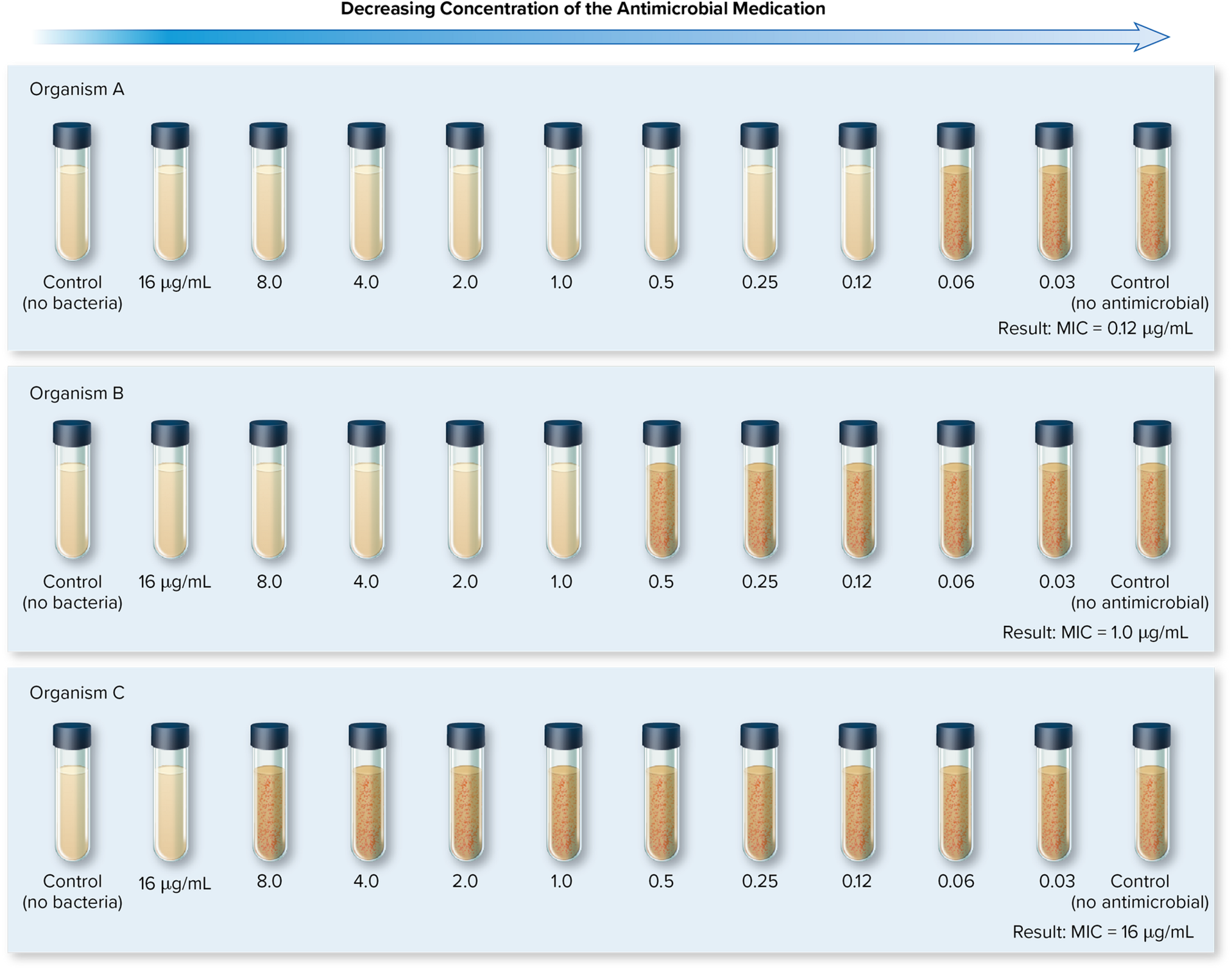
90
Increasing use or misuse of antibiotics selects for resistant microorganisms
» tons to hundreds of used yearly
» originally only 3% of S. aureus resistant to penicillin G
» now >[__]% are resistant
» how will we treat disease when all microbes left are resistant?
combination therapy
Bacteria may have acquired resistance due to:
spontaneous mutations → changes existing genes during replication and passed to next generation (vertical transfer)
horizontal gene transfer between organisms
» resistance genes spread to different strains, species, even genera
» achieved by transfer of R plasmid (resistance plasmid) or transposons that contain resistant genes
[__]: combinations of antibiotics done to prevent resistance
» tries to mitigate possibility of bacteria being resistant to one antibiotic, so has multiple
responsibilities
What can be done to slow emergence and spread of resistance?
[__] of Physicians and Healthcare Workers
prescribe antibiotics for specific organisms
educate patients on proper use of antibiotics
[__] of patients
follow instructions carefully to get rid of the microbe entirely; else it’ll grow resistant
Educate public
concerning appropriateness and limitations of antibiotics
antibiotics have no effect on viral infections
misuse selects antibiotic resistance in normal floar
Be wary of global impacts
overuse of antibiotics lead to increased selection of resistant bacteria
» antimicrobials are readily available without prescription
» antibiotics present in animal feed as well → selects for antimicrobial resistant organisms (resistant Salmonella strains)
transport of resistant strains globally
Superinfection
Overgrowth of normal microbiota that is resistant to antibiotics
eg. S. aureus to penicillin G