Jake Endocrine 4
 Call Kai
 Learn
Learn Practice Test
 Spaced Repetition
 Match
Match Flashcards
 Knowt Play
1/75

Earn XP
Description and Tags
PARATHYROID GLANDS, CALCIUM AND VITAMIN D
Name | Mastery | Learn | Test | Matching | Spaced | Call with Kai | Chat |
|---|
No analytics yet
Send a link to your students to track their progress
76 Terms
Distribution and Functions of Calcium (7)
muscle contraction
exocytosis
blood clotting
formation of cardiac action potentials
enzyme activation
cell signaling (as in second messenger systems like IP3)
bone & tooth structure
Gross Anatomy of the Parathyroid Glands
Humans typically have 4 parathyroid glands, but as few as 2 and as many as 8 have been observed.
Each gland is a flattened ellipsoid measuring about 6 mm in its longest diameter.
The aggregate mass of the adult parathyroid glands is less than 150 mg.
These glands adhere to the posterior surface of the thyroid gland or occasionally are embedded with the thyroid tissue.
They are well vascularized and derive their blood supply mainly from the inferior thyroid arteries.

Histology of the Parathyroid Glands (2 Important Cells)
The principal or Chief cells
Oxyphil cells
The principal or chief cells (Parathyroid)
Are the most predominant cells in the parathyroid glands.
They have 2 main functions:
a.) synthesis & secretion of PTH
b.) sensors of minute fluctuations of ECF Ca+2.
Oxyphil cells
The function of the second cell type, the oxyphil cells, is
unknown.
.
Some recent evidence suggests that they may be degenerated principal cells.
Few oxyphil cells are seen before puberty, but their number increases thereafter with age.
Parathyroid Hormone (PTH)
84 amino acids (Peptide Hormone)
½ life in the blood of 2-3 minutes
Metabolized by its target tissues
Major stimulus for secretion is hypocalcemia
.
a vital chemical made by four small glands in your neck that controls calcium levels in your blood.
Physiological Effects of PTH (3 Organs)
Bone
Kidneys
Intestines
Physiological Effects of PTH on Bones
Stimulates osteoclast activity
Essentially breaks down bones to take calcium and phosphate in the blood

Physiological Effects of PTH on Kidneys (2)
Stimulates the reabsorption of Ca+2 in distal convoluted tubules
.
Stimulates 1-hydroxylation of 25- hydroxycholecalciferol (i.e. -- activation of Vitamin D)

Physiological Effects of PTH on Intestines
Stimulates intestinal uptake of Ca+2 by "active" Vitamin D

Physiological Effects of PTH Diagram

Vitamin D Activation
1- hydroxylation + 25- hydroxycholecalciferol
.
(PTH Synthesizes this in the kidneys)
--
This creates the active form of vitamin D called 1,25 dihydroxycholecalciferol

Vitamin D Deficiency (2)
1) Rickets occurs in children
2) Osteomalacia in adults
Same condition, just progresses
Rickets and Osteomalacia
Bones are inadequately mineralized, so they become soft and weak Weight-bearing bones bend and deform

Calcitonin
Calcitonin is a protein hormone (32-amino acids)
Synthesized and secreted by the parafollicular cells (C- Cells) of the thyroid gland.
.
The stimulus for calcitonin secretion is hypercalcemia.
.
Calcitonin will promptly and dramatically lower the level of ECF Ca+2 by acting on the bone.

Calcitonin Effects
There are no known metabolic
consequences of calcitonin deficiency or excess.
.
In humans, thyroidectomy does not produce a
tendency toward hypercalcemia, and thyroid
tumors that secrete massive amounts of
calcitonin do not cause hypocalcemia.
.
Based on these observations, calcitonin does not appear to be a major factor in calcium homeostasis in humans.
.
Recent evidence has shown that the
importance of calcitonin may be limited to
protection against excessive bone resorption.
Hypercalcemia Causes (5)
1) Primary hyperparathyroidism (single adenomas account for up to 89% of cases)
2) Bone malignancies
3) Prolonged immobilization
4) Excess vitamin D and calcium in the diet
5) Drug-induced (e.g., thiazides, lithium)
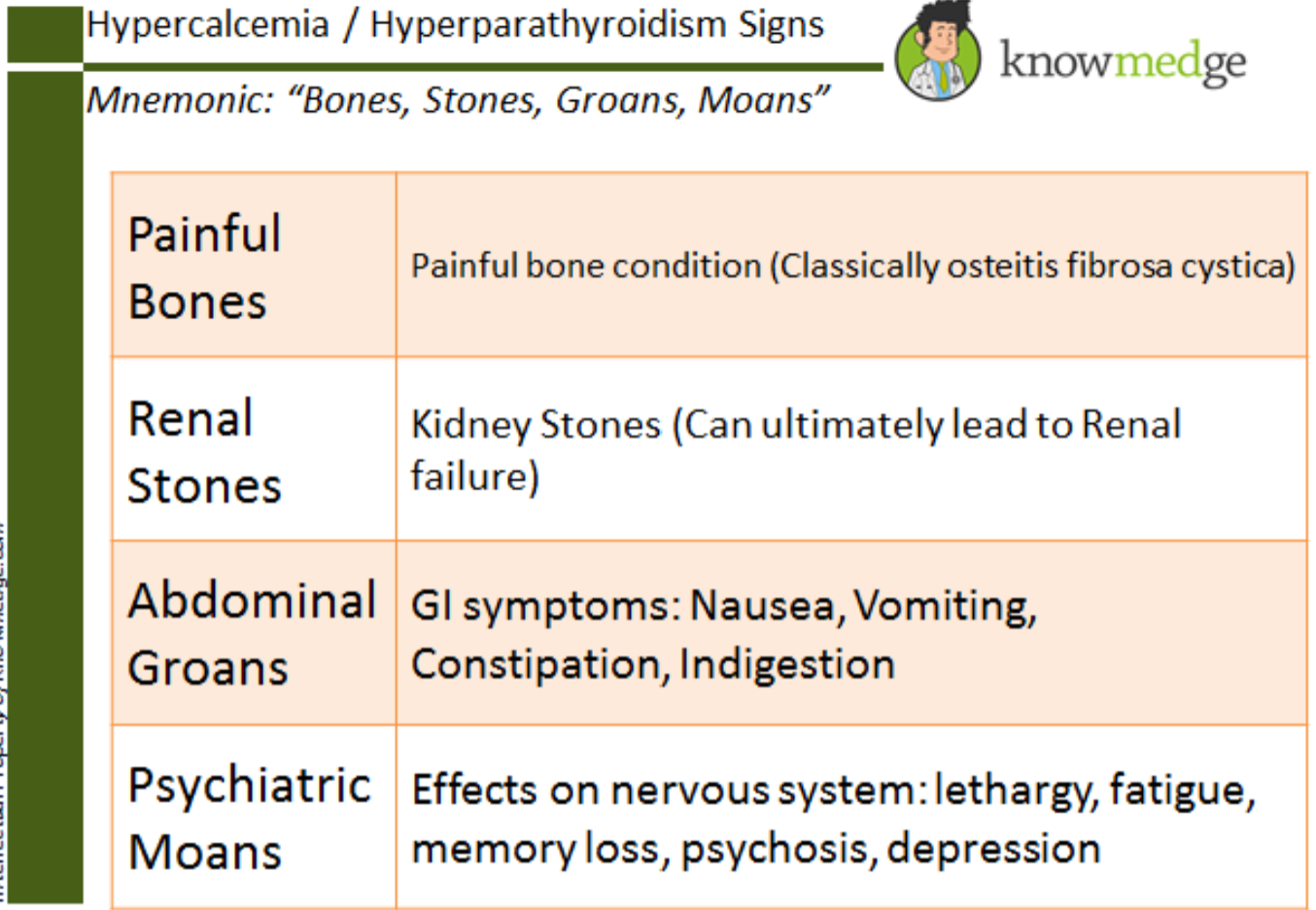
Mnemonic for Hypercalcemia Effects (4)
Bones
Stones
Groans
Moans


DENTAL ASPECTS OF HYPERPARATHYROIDISM
1) Gradual loosening, drifting and loss of teeth, spacing of teeth
2) “brown tumor” lesions (osteolytic, radiolucent lesions) of the bones surrounding oral cavity (e.g., mandible, maxilla) raising the risk for fracture
• malocclusion
• dental pain
• soft tissue calcification
• sialolithiasis (hardened mineral deposits, or salivary stones)

Hypocalcemia
Not retaining/making enough Calcium
.
In hypocalcemia, the nervous system becomes
progressively more excitable because of increased
permeability of neuronal membranes to sodium.
This results in spontaneous, asynchronous & involuntary contractions of skeletal muscles (tetany)
Hypocalcemia Reasons? (4)
1) Surgical removal of parathyroids
2) Primary hypoparathyroidism
3) Vitamin D deficiency
4) Impaired ability to activate vitamin D
Hypocalcemic Tetany (3)
A typical attack of hypocalcemic tetany involves muscular
1) Chvostek’s sign (spasms in the face )
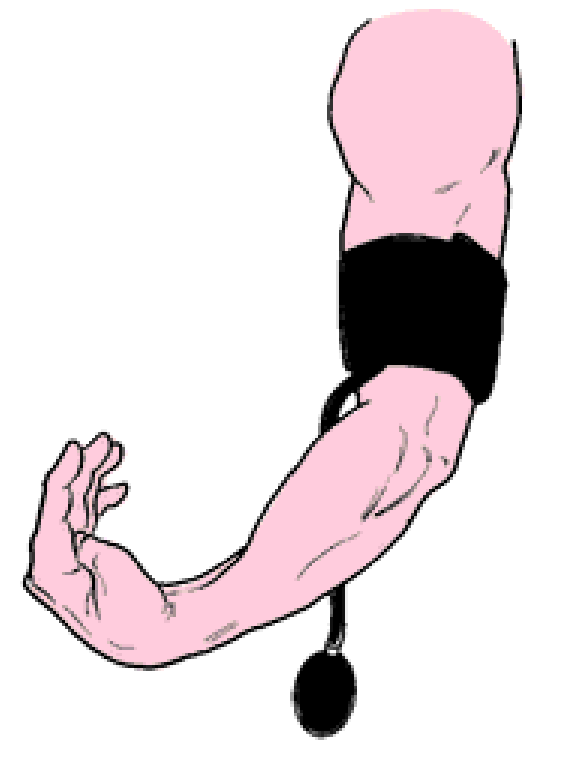
2) Trousseau’s sign (haracteristic contortions of the arms and hands)
3) Laryngeal spasm and contraction of respiratory muscles may compromise breathing.
.
Pronounced hypocalcemia may produce more generalized muscular contractions and convulsions.
Chvostek’s sign

Trousseau’s sign
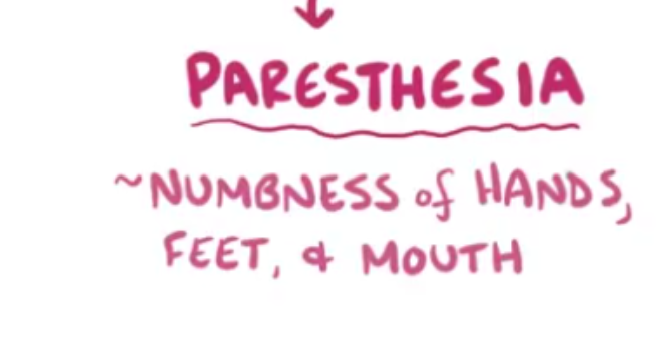
Parethesia
DENTAL ASPECTS OF HYPOPARATHYROIDISM
1) Enamel hypoplasia (underdevelopment)
2) delayed eruption or multiple unerupted teeth (in pediatric patients)
• poorly calcified dentin
• microdontia (small crowns)
• malformed roots (typically short with blunt ends)
• dental caries
• paresthesia (tingling) of the tongue or lips
Treatment for hypoparathyroidism
Treatment for hypoparathyroidism consists of
.
1) Synthetic PTH
2) Oral calcium carbonate tablets
3) Vitamin D
Bone Tissue Types
Compact Bone
Spongy Bone
Bone Composition
The open spaces in living bones are filled with red or yellow bone marrow.
.
Trabeculae align themselves along lines of stress like little struts

Bones without Collagen

Bones without Mineral

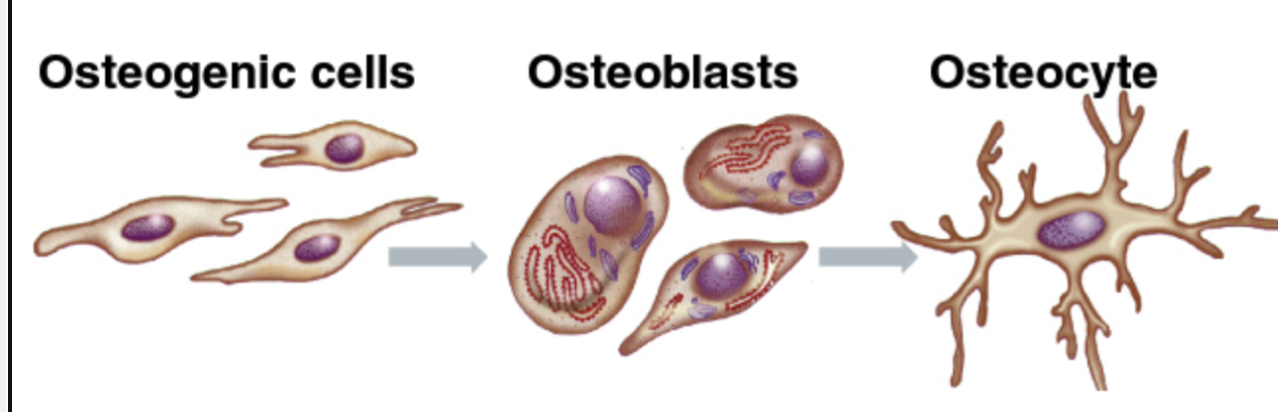
Osteogenic Cells
Found mainly in the periosteum & endosteum
Osteoblasts
1) Derived from osteogenic cells
2) Known as bone-forming cells
3) Synthesis & secrete unmineralized osteoid and collagen
4) Pump calcium & phosphate salts into and out of bone tissue
Osteocytes
Derived from osteoblasts that
have secreted osteoid around
themselves
Osteoid becomes calcified
Referred to as mature bone
cells
Osteoclasts
Derived from monocytes
Known as bone-resorbing (dissolving) cells
Put Phosphate & Calcium back into bone

Microanatomy of Bone

Osteons (Haversian Systems)
Functionally, osteons can be thought of as tiny,
weight-bearing pillars
Lamellae
Concentric rings of compact bone tissue that
help form the osteons
Lacunae
Bony depression in the lamellae in which bone cells are housed
Haversian (Central) Canals
Canals found in the core
of osteons in which blood
vessels and nerves pass
through
Volkmann’s (Perforating)
Canals
Canals that connect osteons together
.
also a passageway for blood vessels and nerves to enter and leave bone
Bone Remodeling
Bone is a very dynamic and active tissue – it is NOT a brick!
Bone architecture continually changes in response to the
surrounding environment.
“Everyday remodeling”
Three facts about Bone Remodeling
1) Remodeling process is not uniform within bones or
between bones
.
2) In healthy adults, bone deposit and bone resorption
occur at equal rates
3) For optimal bone deposit, need a diet of protein,
vitamin C, vitamin A, minerals & vitamin D
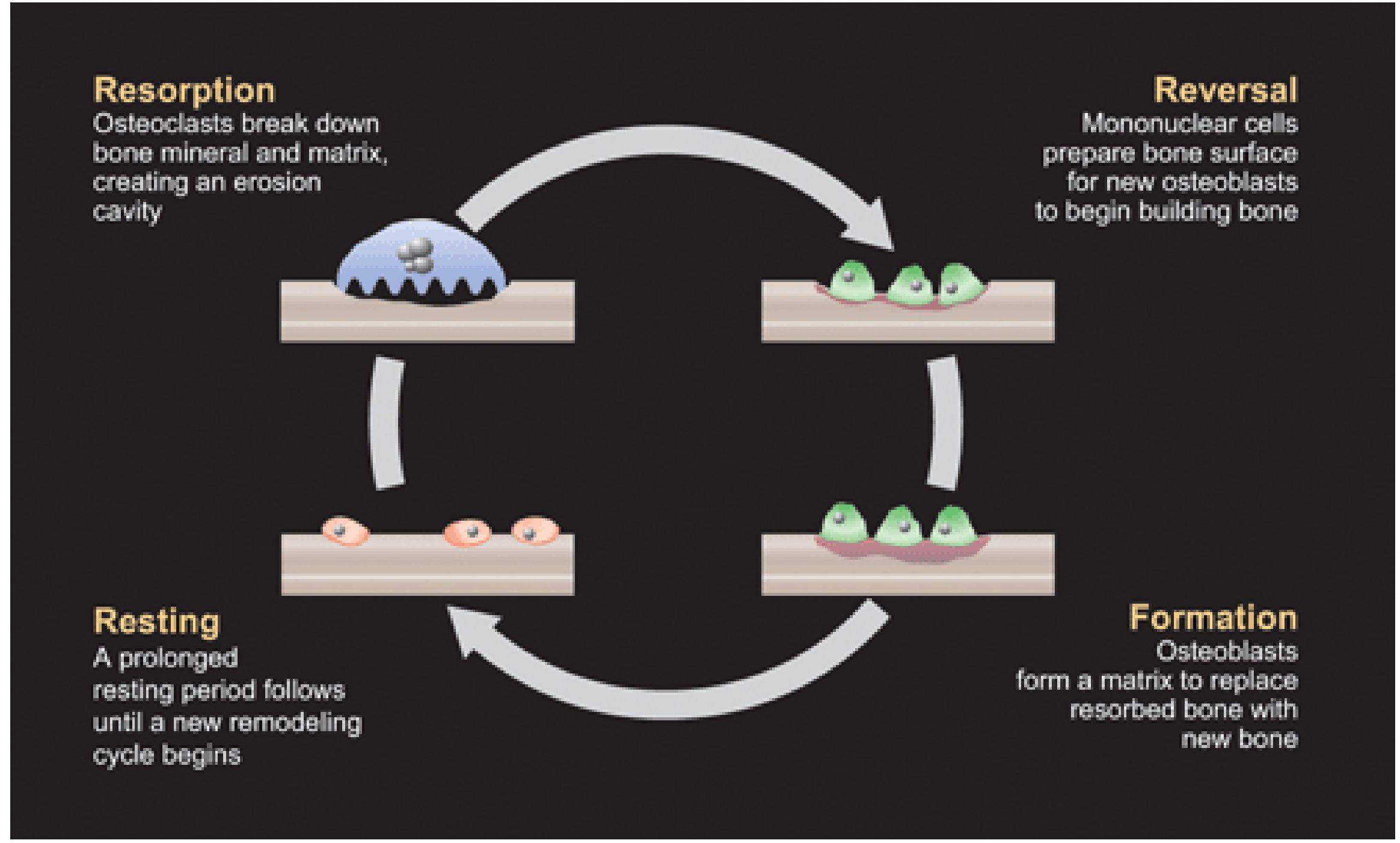
Steps in Bone Remodeling (4)
1) Resorption: Specialized cells called osteoclasts break down and remove old or damaged bone matrix.
2) Reversal: Mononuclear cells prepare the excavated surface of the bone for the next phase.
3) Formation: Cells called osteoblasts deposit new bone matrix (osteoid), which eventually hardens through mineralization.
4) Resting
Osteoporosis
Generalized skeletal disorder characterized by
compromised bone strength and deterioration of
bone quality, often leading to fragility fracture
.
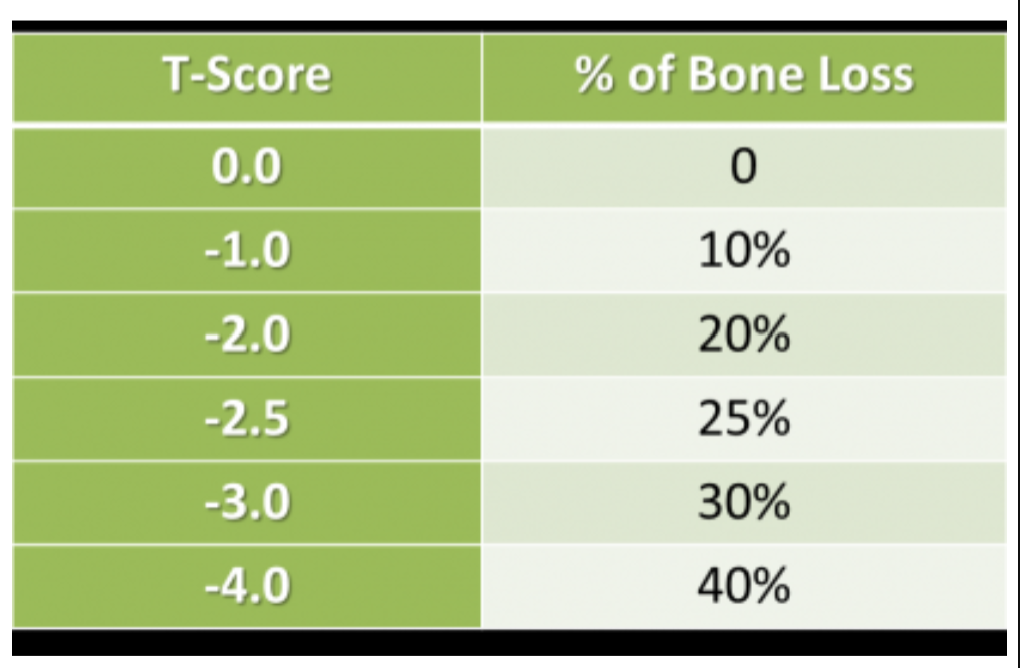
Low bone mass frequently found (with DEXA
scan)
Osteoporosis Who is most affected?
.
• Post-menopausal women
• Persons > 65 years old
• Caucasians and people of Asian decent
• Persons with small body frame
.
Estimated that > 10 million persons over the age
of 50 in the US have osteoporosis
DEXA Scan (For Bone Loss)
Osteoporosis Cause
Process of bone remodeling maintains healthy bone mass
throughout life
.
In healthy bone, bone resorption (osteoclast cells) is balanced by bone formation (osteoblast cells)
Bone loss occurs when bone resorption outpaces bone formation, resulting in decreased bone mass and increased risk of fracture
Fracture results from overloading of weakened bones
Osteoporosis
1) Lifestyle factors - low calcium intake, vitamin D deficiency, excess vitamin A intake, inadequate physical activity, smoking, and alcohol abuse
2) Genetic factors - parental history of hip fracture, many others
3) Medical conditions – hyperparathyroidism, Cushing syndrome, many others
4) Medications – corticosteroids in particular
DENTAL ASPECTS OF OSTEOPOROSIS
1) Loss of bone mass in the mandible can cause loosening of teeth or tooth loss
2) Dentures to become ill-fitting
3) MRONJ: Medication- related osteonecrosis of the jaw
Pharmacologic Options for Treating Osteoporosis (6)
1) Calcium and Vitamin D Supplements
2) Bisphosphonates
3) Hormone Replacement Therapy (HRT; either estrogen alone or estrogen-progestin) – NOT A COMMON OPTION ANYMORE
4) Selective Estrogen Receptor Modulators (SERMs)
5) Calcitonin
6) Denosumab
Calcium & Vitamin D Supplements Disclaimer
It is important for patients with
osteoporosis to be aware the calcium and vitamin D alone are insufficient to prevent bone loss
.
Postmenopausal women who are getting adequate calcium from dietary intake alone (approx. 1200 mg daily) generally do not need to take calcium supplements
Calcium & Vitamin D Supplement Examples (2)
Women with inadequate dietary intake should take supplemental elemental calcium
(generally 500 to 1000 mg/day), in divided doses at mealtime,
Such that their total calcium intake (diet plus supplements) approximates 1200 mg/day
.
The most widely available calcium supplements are:
1) Calcium Carbonate
2) Calcium Citrate
Calcium Carbonate & Calcium Citrate
Is cheapest and therefore often a good first choice
Take these Drugs Orally
.
Calcium carbonate absorption is better when taken with meals
.
Calcium citrate is well absorbed in the fasting state
Calcium carbonate Side Effects
Potential side effects of high calcium intake (>2000 mg/day) include:
Dyspepsia (Indigestion)
Constipation
Calcium supplements interfere with the absorption of iron and thyroid hormone and, therefore, these medications should be taken at different times.
Vitamin D Supplements
Postmenopausal women should ingest a total of 800 international units of vitamin D daily
.
Most postmenopausal women with osteoporosis often require vitamin D supplementation, as it is difficult to achieve goals with diet alone
Bisphosphonates
1) Alendronate → oral & liquid
2) Risedronate → oral
3) Ibandronate oral and IV
4) Zoledronic acid → IV
.
Oral bisphosphonates are usually considered 1st line therapy

Bisphosphonates (Ingestation)
Must be taken in a specific way:
Take in the AM with a full glass of water (6- 8 oz.)
At least 30 min before other food and drink
Remain in an upright position at least 30 minutes afterwards
Why is this the case? (What side effects does this lead to?)
• Only 5% or less of oral bisphosphonates are absorbed when taken on an empty stomach
absorption will be further reduced with food, certain medications and liquids other than water
.
Oral bisphosphonates are known to cause reflux, esophagitis and esophageal erosion
Bisphosphonates (How do they work?) (4 Steps)
1) Bind to calcium on exposed bone surfaces →
2) Imbibed by bone-resorbing osteoclasts →
3) Osteoclasts lose their bone-resorbing capabilities →
4) Eventual osteoclast apoptosis →
.
Bisphosphonates can remain bound in the bone matrix for YEARS.
They do NOT enter or become incorporated into the teeth.

Bisphosphonates What is there effect?
End results:
Increase in BMD (bone mineral density)
Reduction in the incidence of fractures
Bisphosphonates New FDA Classification
The FDA recently changed the product labeling for the bisphosphonate class to include a statement that the optimal duration of use has not been determined.
.
In addition the labeling suggests that for patients at low risk for fractures, consideration can be given for drug discontinuation after 3-5 years of use.
Bisphosphonates Adverse effects
1) Transient hypocalcemia
2) Musculoskeletal pain (rare)
3) Osteonecrosis of the jaw (ONJ; rare)
4) Acute flu-like reaction (IV forms only)
Osteonecrosis of the jaw (ONJ; rare)
Risk factors for developing ONJ include:
Cancer and anti-cancer therapy
invasive dental procedures (dental extractions, dental implants)
poorly fitting dentures
glucocorticoids, smoking, diabetes, and preexisting dental disease.
.
ONJ can also arise spontaneously.
When ONJ occurs in a patient treated with bisphosphonates for osteoporosis, bisphosphonates should be discontinued.
Bisphosphonates Contraindications
1) Patients with esophageal disorders (achalasia, esophageal varices, Barrett’s esophagus)
2) Patients with severe renal impairment
Estrogen-Progestin
In the past, hormone replacement therapy (HRT) was considered the primary therapy for the prevention of postmenopausal osteoporosis → Estrogen had the additional advantage of controlling menopausal symptoms (at low doses)
.
However, data from the Women's Health Initiative (WHI) revealed that estrogen increases the risk of breast cancer, stroke, and venous thromboembolic events
.
Estrogen-progestin (or just estrogen
alone) therapy is no longer a first-line approach for the
treatment of osteoporosis in postmenopausal women
because of these increased risks
How does estrogen affect bone (7)
PTH receptors are found on osteoblasts.
PTH stimulation of osteoblasts increases osteoblast production of Receptor Activator of Nuclear factor Kappa-B Ligand (RANKL).
Hematopoietic cell precursors stimulated by M-CSF give rise to osteoclasts that express the RANK receptor.
The RANKL/RANK receptor interaction stimulates maturation of the osteoclasts so that they can resorb bone.
Osteoblasts also produce a “decoy receptor” called osteoprotegerin (OPG) that binds to RANKL and prevents the RANKL/RANK interaction (thereby causing osteoclastogenesis inhibitory activity).
Estradiol increases production of OPG to diminish bone resorption.
By the way, glucocorticoids stimulate RANKL expression while inhibiting OPG synthesis by osteoblasts to enhance osteoclast proliferation & differentiation, leading to bone resorption.
How does estrogen affect bone Diagram

Selective Estrogen Receptor Modulators (SERMs)
Raloxifene
Is a tissue selective estrogen receptor modulator (SERM) that has been approved by the FDA for the prevention and treatment of osteoporosis
.
Not Estrogen
Selective Estrogen Receptor Modulators (SERMs) vs Bisphosphinate
Still not considered as best a choice
as a bisphosphonate due to adverse
effects (namely increase risk of blood
clots)
Calcitonin (Treating Osteoporosis) (2)
Another treatment for osteoporosis is nasal calcitonin
This form of calcitonin is isolated from salmon.
.
Faced with the relative high Ca+2 concentration in sea water (and therefore in food), calcitonin, secreted in response to a rise in plasma Ca+2, decreases bone resorption, thus returningthe plasma Ca+2 toward normal.
Salmon calcitonin is roughly 10-50X more potent on a molar
basis in inhibiting osteoclast function than is the human
hormone
Calcitonin (Treating Osteoporosis) How it works
In osteoclasts, calcitonin raises cAMP levels which
results in a decrease in resorptive activity
Calcitonin (Treating Osteoporosis) vs bisphosphonates
Not a preferred choice for osteoporosis, as treatment with
bisphosphonates results in greater increases in spine and hip bone density compared with nasal calcitonin
.
An option for those patients who cannot take
bisphosphonates
.
Adverse effects include nausea, flushing and runny nose
.
There is concern is about the long-term use of calcitonin for osteoporosis and an increase in cancer rates (not any specific types or types)
Denosumab (Prolia)
Denosumab
Is a humanized monoclonal antibody against RANKL thereby inhibiting osteoclast formation, decreasing bone resorption, increasing BMD and reducing the risk of fracture
Administered as a Subcutaneous injection every 6 months
Denosumab Side effects & Issues
Most common adverse effects include musculoskeletal (back and extremity) pain, hypercholesterolemia and cystitis; can also cause
ONJ, but the risk appears lower compared to bisphosphonates
Monitor for hypocalcemia; should not be given to
patients with pre-existing hypocalcemia until it is
corrected
.
Expensive: $2000 per year