ch 8 - [CARB METABOLISM ONLY] cellular respiration, energy metabolism
 Call Kai
 Learn
Learn Practice Test
 Spaced Repetition
 Match
Match Flashcards
 Knowt Play
1/18

There's no tags or description
Looks like no tags are added yet.
Name | Mastery | Learn | Test | Matching | Spaced | Call with Kai | Chat |
|---|
No analytics yet
Send a link to your students to track their progress
19 Terms
metabolism: the ____ of all chemical reactions involved in ______ and ______
[sum] [catabolism] [anabolism]
catabolic reactions
break down food to obtain energy
anabolic reactions
synthesizes larger mlcs from smaller ones using energy released by catabolic reactions
[…] drives all bodily functions
[energy gained from ATP]
most common energy source for the body
carbohydrates
most common carb mlc used as fuel for body cells’ ATP production
glucose
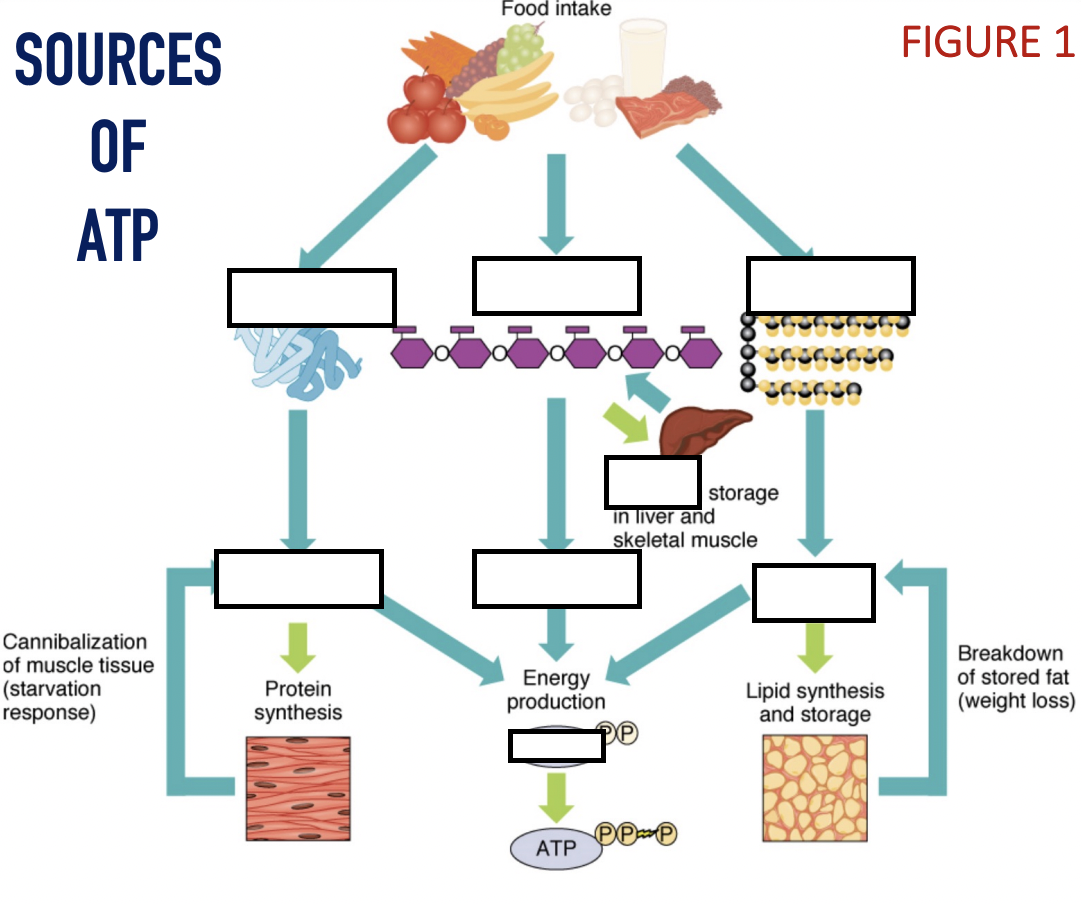
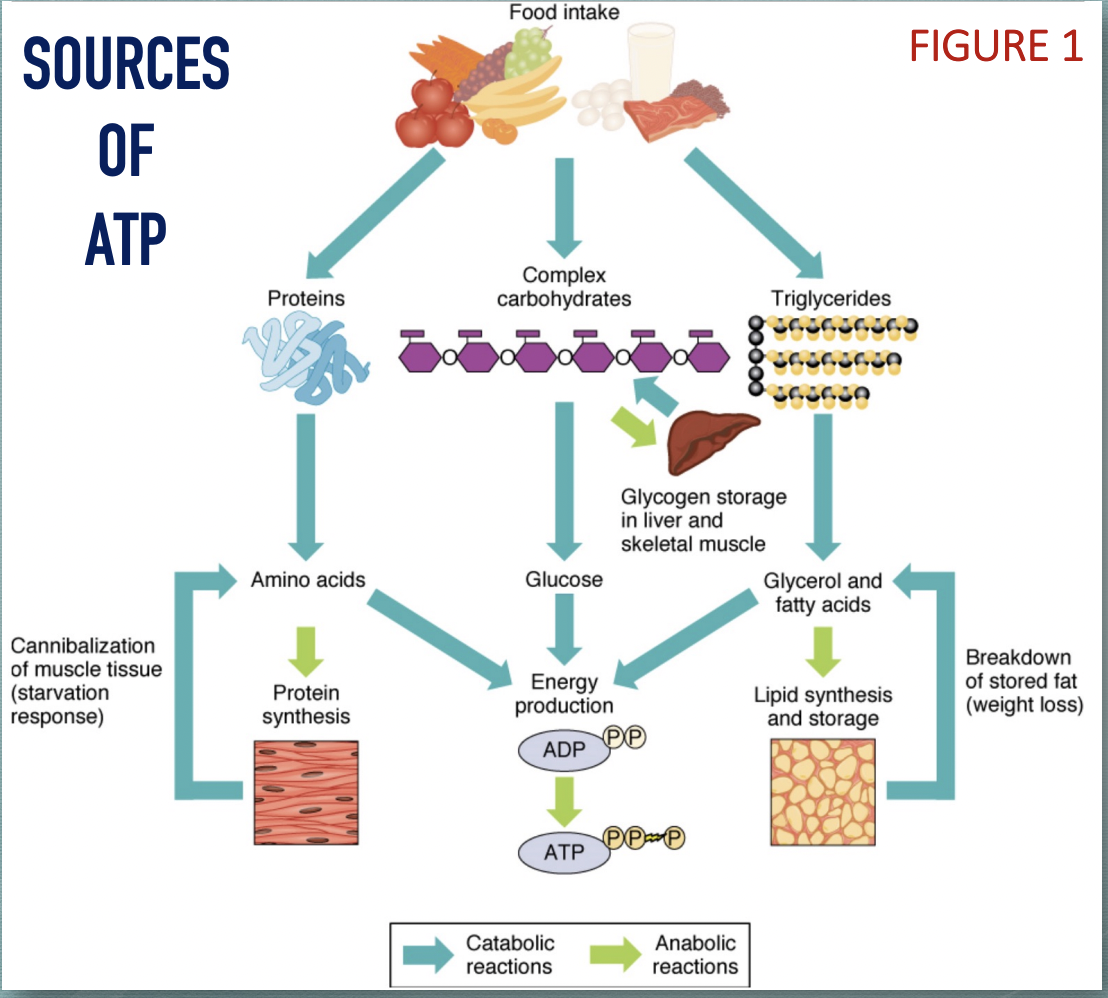
fill in the diagram detailing how ATP is sourced from food intake. also specify which pathways are anabolic and catabolic
monosaccharides
a monomer of carbohydrates absorbed by SI, transported through circulatory system
process of generating ATP in the cytoplasm and mitochondrion, using monosaccharides in body’s tissues
cellular respiration
process of cellular respiration (4)
Glycolysis in cytoplasm: converts 1 glucose mlc to 2 pyruvate mlcs
lactic acid fermentation (pyruvate enters anaerobic pathway)
Conversion in mitochondrial matrix: each pyruvate mlc converted to 1 acetyl co-a mlc
Krebs cycle in mitochondrial matrix: acetyl co-a is processed by krebs cycle
Oxidative phosphorylation in mitochondrial inner membrane: electrons removed from glucose, pyruvate, and acetyl CoA (ELECTRON CARRIERS) are passed through electron transport chain → undergo redox reactions and using energy to make ATP through oxidative phosphorylation
glycolysis (1/4 cellular respiration)
what occurs
what is produced
2 phases
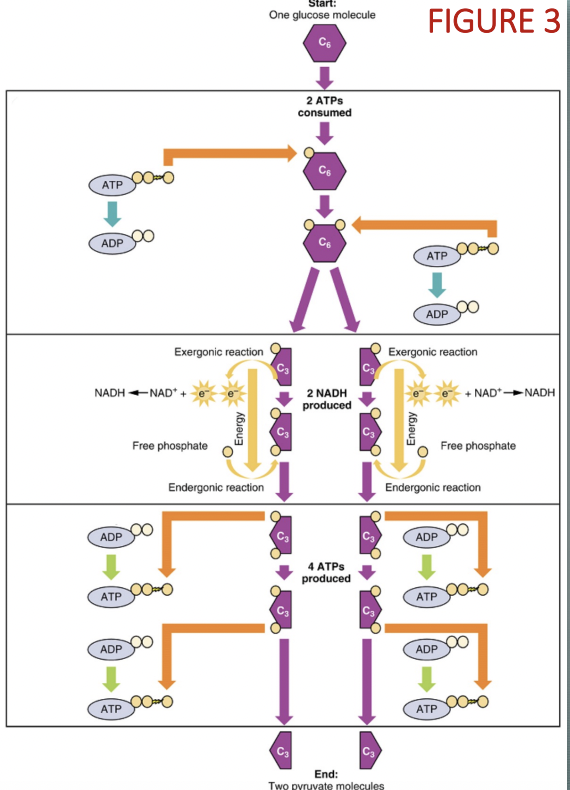
step 1 of cellular respiration in cytoplasm: converts 1 glucose mlc → 2 pyruvate mlcs
glyco = sugar, lysis = break apart
produces ATP (cellular energy)
produced NADH (electron carrier)
phases:
energy-consuming phase
energy-yielding phase
phases of glycolysis
step 1 of cellular respiration in cytoplasm: converts 1 glucose mlc → 2 pyruvate mlcs
energy-consuming phase: 2 ATP used to split glucose into → 2 G3P mlcs
energy-yielding phase: each G3P mlc split into → pyruvate → generating 4 ATP, 2 NADH
= net gain of 2 ATP
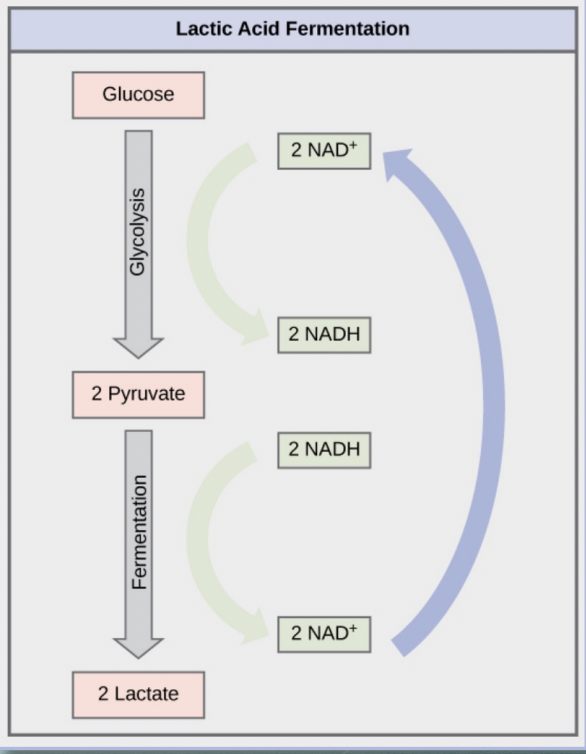
describe what pyruvate does after glycolysis pccurs (2 possible pathways)
with oxygen: enters aerobic pathway, 2 pyruvates travel to mitochondrial matrix to convert to acetyl-CoA
without oxygen: enters anaerobic pathway when oxygen is limited & converts into lactic acid (fermentation, kind of like backup plan b/c without oxygen you can’t have good power efficiency)
lactic acid fermentation
when it occurs
enzyme catalyzing its reaction
what it generates
what happens with lactic acid buildup
occurs after glycolysis when pyruvate converts into lactic acid
occurs with insufficient oxygen supply (anaerobic pathway) in RBC and skeletal muscle so that ATP can continue being produced
pyruvate is converted into lactic acid: enzyme catalyzing reaction = lactate dehydrogenase
lactic acid conversion uses up electron carried by NADH → generating NAD+
NAD+ used again in glycolysis
lactic acid builds up and causes muscle stiffness and fatigue - buildup gets removed from muscle and brought back to liver to be converted back to pyruvate
conversion of pyruvate (2/4 cellular respiration)
what occurs
what is produced, byproducts produced
what happens to the new product after it is formed
(step 2/4 cellular respiration)
pyruvate → converted to acetyl (COCH3 group) → carrier compound coenzyme A (CoA) picks up acetyl group
produces: acetyl CoA
byproducts: 1 CO2, 1 NADH
after conversion: acetyl CoA is delivered to krebs cycle
krebs cycle / citric acid cycle (3/4 cellular respiration)
what occurs
what is produced in the cycle
occurs in mitochondrial matrix
8 step closed loop cycle; last part regenerates compound used in the first step
produces:
2 CO2
3 NADH
1 FADH2
1 ATP
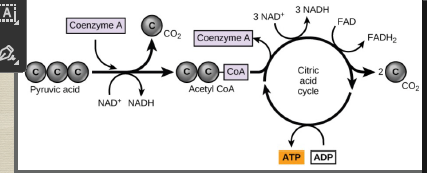
this card is kind of wrong redo it
oxidative phosphorylation (4/4 cellular respiration)
what occurs
where it occurs
byproducts produced
what the product is used for
(step 4/4 cellular respiration)
electrons removed from glucose, pyruvate, and acetyl CoA (ELECTRON CARRIERS) are passed through electron transport chain
undergo redox reactions and using energy to make ATP
occurs in mitochondria’s inner membrane
byproduct: water
gluconeogenesis
what it is
when it occurs
synthesis of glucose (body creating new glucose) from: pyruvate, lactate, glycerol, some amino acids
occurs during fasting, starvation, and low carb diets
what body cells are permitted to use glucose as an energy source?
brain cells
erythrocytes
adrenal medullary cells
sperm cells