A&P 1 Lecture - Ch.1 Human Body Orientation
 Call Kai
 Learn
Learn Practice Test
 Spaced Repetition
 Match
Match Flashcards
 Knowt Play
1/146

There's no tags or description
Looks like no tags are added yet.
Name | Mastery | Learn | Test | Matching | Spaced | Call with Kai | Chat |
|---|
No analytics yet
Send a link to your students to track their progress
147 Terms
Anatomy
the study of the structure of body parts and their relationship to one another
Gross/macroscopic anatomy
study of large visible structures seen with the naked eye
Microscopic anatomy
study of small structures NOT visible with the naked eye
Cytology
study of cells
Histology
study of tissues
Physiology
study of the function of body parts
Human structural organization
1. atom
2. molecule
3. cells
4. tissues
5. organ
6. organ system
7. organism
Atom
Smallest particle of an element that makes up matter
Cell
structural and functional unit of life
Tissue
A group of similar cells that perform the same function.
Organ
group of tissues that work together to perform functions
Organ system
group of organs that work together to perform a specific function
Organism
A living thing
Characteristics of human life
•Organization
•Maintaining Boundaries
•Movement
•Responsiveness
•Digestion
•Metabolism
•Homeostasis
•Excretion
•Reproduction
•Growth & differentiation
Examples of how the body maintains boundaries
•Cell membrane separates the intracellular from the extracellular environment
•The skin provides a protective barrier and the first line of immune defense
Responsiveness
•ability to sense and respond to stimuli
•Stimuli: light, sound, touch, temperature, etc.
•Provided by the nervous system
Metabolism
All of the chemical reactions that occur within an organism
Catabolism
Metabolic pathways that break down molecules, releasing energy.
Anabolism
building up (synthesis) of larger molecules
Examples of excretion
•removal of wastes from the body
•Urea in urine is a waste product from protein breakdown
•Carbon dioxide is a waste product from normal metabolism
•Feces from undigested food
Homeostasis
maintenance of stable internal conditions despite changes in the environment
Negative feedback mechanism
•Stops or reverses a change to maintain internal balance
•Most common feedback mechanism in the body
•Promotes stability and homeostasis
•Example systems:
•Body temperature regulation
•Blood glucose control
•Blood pressure regulation
•Hormone levels
Positive feedback mechanism
•Enhances or amplifies a change
•Less common, used for specific processes
•Temporarily moves the body away from homeostasis
•Example processes:
•Childbirth (oxytocin release)
•Blood clotting

Requirements for human life
1. oxygen
2. nutrients
3. water
4. temperature
5. appropriate atmospheric pressure
Normal body temperature
98.6 F (37 C)
11 human organ systems
1. lymphatic
2. skeletal
3. muscular
4. nervous
5. endocrine
6. cardiovascular
7. lymphatic
8. respiratory
9. digestive
10. urinary
11. reproductive
Integumentary system organs
skin, hair, nails, sweat glands, sebaceous (oil) glands, and sensory receptors.
Integumentary system functions
1. protection
2. temperature regulation
3. sensation
4. excretion
5. vitamin D synthesis
6. water resistance
7. immune defense
Skeletal system organs
bones, cartilage, ligaments, tendons, joints, and bone marrow
Skeletal system - functions
1. support
2. protection
3. movement with muscles
4. mineral storage (calcium & phosphorus)
5. blood cell production
6. lipid storage as yellow marrow
Muscular system organs
skeletal muscles attached to bones responsible for voluntary movement
Muscular system functions
1. locomotion
2. posture and balance
3. heat production
4. joint stabilization
Nervous system organs
brain, spinal cord, nerves, sensory receptors
Nervous system functions
1. sensory input
2. integration
3. motor output
4. homeostasis regulation
5. cognition and memory
6. emotional response
Endocrine organs
hypothalamus, pituitary gland, thyroid gland, parathyroid glands, adrenal glands, pancreas, ovaries, testes, pineal gland, and thymus
Endocrine system function
Produces hormones that regulate nearly all body functions
Cardiovascular system organs
heart and blood vessels which contain blood
Cardiovascular system functions
1. transport oxygen
2. transport waste (carbon dioxide, urea, bilirubin, etc.)
3. nutrient delivery
4. hormone distribution
5. regulate body temp
6. immune response
7. maintain blood pressure
Lymphatic system organs
lymph nodes, lymphatic vessels, thymus, spleen, tonsils, bone marrow
Lymphatic system functions
1. fluid recovery
2. immune defense
3. absorption of fats
4. immune response
5. waste removal
Respiratory system organs
nose, pharynx, larynx, trachea, bronchi, lungs, alveoli
Respiratory system functions
1. oxygen intake
2. carbon dioxide removal
3. gas exchange
4. regulation of blood pH
5. voice production via larynx
Digestive system organs
- mouth
- esophagus
- stomach
- small intestines
- large intestines
- liver
- pancreas
- gallbladder
Digestive system functions
1. ingestion
2. digestion of food
3. absorption of nutrients
4. transport of nutrients
5. secretion of enzymes, bile, stomach acid
6. excretion of indigestible remains as feces
7. immune defense
Urinary system organs
paired kidneys, paired ureters, bladder, and urethra
Urinary system functions
1. Filtration of blood
2. excretion of wastes
3. regulation of fluid and electrolyte balance
4. acid-base balance
5. blood pressure regulation
6. erythropoiesis synthesis
7. detoxification of certain drugs
Male reproductive system organs
testes, epididymis, vas deferens, seminal vesicles, prostate gland, bulbourethral glands, urethra, and penis
Male reproductive system functions
1. sperm production via testes
2. testosterone production via testes
3. sperm transport
4. ejaculation
Female reproductive system organs
ovaries, fallopian tubes, uterus, cervix, vagina, vulva, and mammary glands.
Female reproductive system functions
1. egg production via ovaries
2. hormone production (estrogen & progesterone) via ovaries
3. fertilization of egg and sperm in fallopian tubes
4. pregnancy support via uterus
5. menstrual cycle
6. breastfeeding
Anatomical position
•The body is standing upright.
•The feet are flat on the ground and pointed forward.
•The arms are at the sides of the body.
•The palms are facing forward, with the thumbs pointing outward (laterally).
•The head is facing forward, with the eyes looking straight ahead.
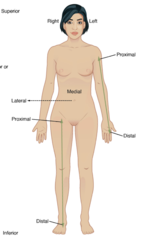
Superior
above
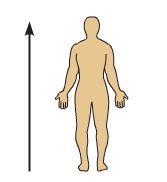
Inferior
below

Cranial
toward the head
Caudal
toward the tail
Rostral
toward the forehead or nose
Anterior/ventral
in front of

Posterior/dorsal
behind

Medial
toward the midline

Lateral
toward the sides

Proximal
closer to point of attachment

Distal
further from point of attachment

Superficial
toward body surface

Deep
away from body surface

The head is __________ to the abdomen.
Superior
The navel (belly button) is __________ to the chin.
Inferior
The sternum is __________ to the spine.
Anterior/ventral
The heart is __________to the sternum.
Deep
The heart is __________ to the arms.
Medial
The arms are __________ to the chest.
Lateral
The skin is __________ to the muscles.
Superficial
The lungs are __________ to the ribs.
Deep
The big toe is on the __________ side of the foot.
medial
The shoulder blade is on the __________ aspect of the body.
Posterior/dorsal
The hand is __________ to the elbow.
distal
The shoulders are __________ to the spine.
lateral
The knee is __________ to the ankle.
proximal
The elbow is __________ to the wrist.
Proximal
Frontal
forehead
Orbital
eyes
Nasal
nose
Buccal
cheek
Oral
mouth
Mental
chin
Cervical
neck
Thoracic
chest
Sternal
sternum/breastbone
Axillary
armpit
Mammary
breast
Umbilical
belly button
Inguinal
groin
Acromial
top of shoulder
Brachial
upper arm
Antecubital
anterior aspect of elbow
Carpal
wrist
Manus
hand
Metacarpal
back of hand
Palmar
palm
Pollex
thumb
Digital
fingers/toes