Lecture Quiz 5 (L12-13)
 Call Kai
 Learn
Learn Practice Test
 Spaced Repetition
 Match
Match Flashcards
 Knowt Play
1/11

There's no tags or description
Looks like no tags are added yet.
Name | Mastery | Learn | Test | Matching | Spaced | Call with Kai | Chat |
|---|
No analytics yet
Send a link to your students to track their progress
12 Terms
Motor control
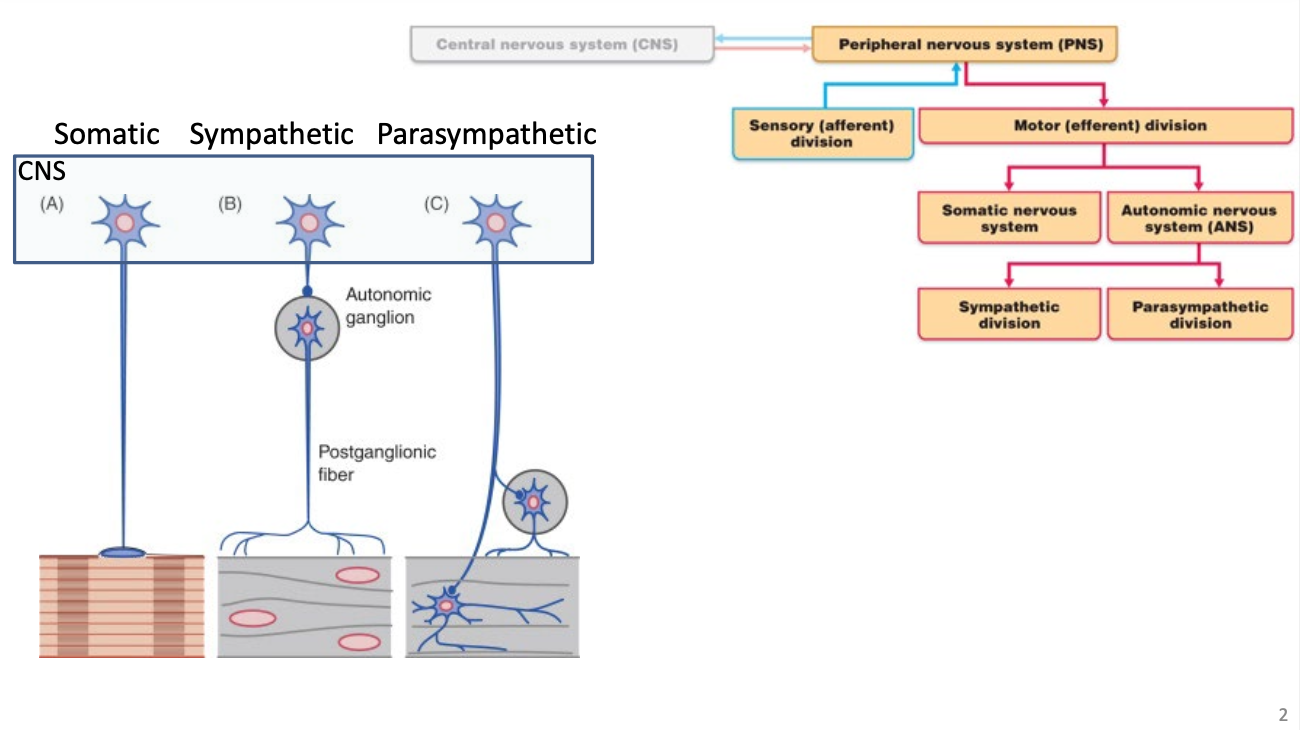
Somatic Nervous System
voluntary
innervates skeletal muscle
1 efferent neuron
Acetylcholine
Neurotransmitter that acts synapse between muscle and neuron
ALWAYS EXCITATORY
Autonomic Nervous System
involuntary
innervates internal organs
example: cardiac muscle, smooth muscle, glands
2 neurons connect CNS
NE / Epinephrine is used as neurotransmitter
OR Acetylcholine for PARASYMPATHETIC
can be excitatory or inhibitory
example:
NE speeds up heart rate (sympathetic)
Acetylcholine lowers heart rate (parasympathetic)
Somatic Motor Control - Initiation
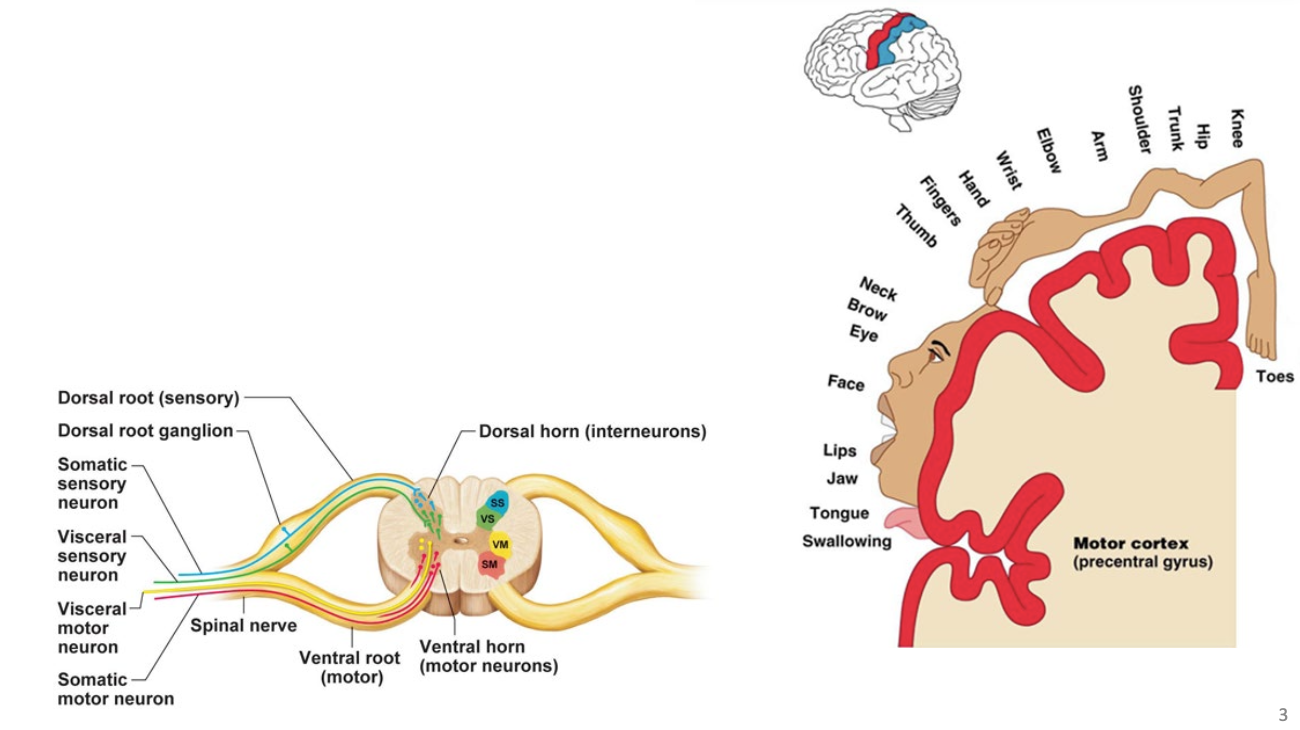
Brain has to be involved
Descending neurons
TWO MOTOR NEURON CHAIN (1 EFFERENT NEURON)
To initiate voluntary movement:
signals are sent to descending neurons from the primary motor cortex and then to the efferent motor neuron in the ventral horn of spinal cord
primary motor cortex → descending neuron → ventral horn → efferent motor neuron → skeletal muscle
Motor (Descending) Pathways for Somatic Motor Control
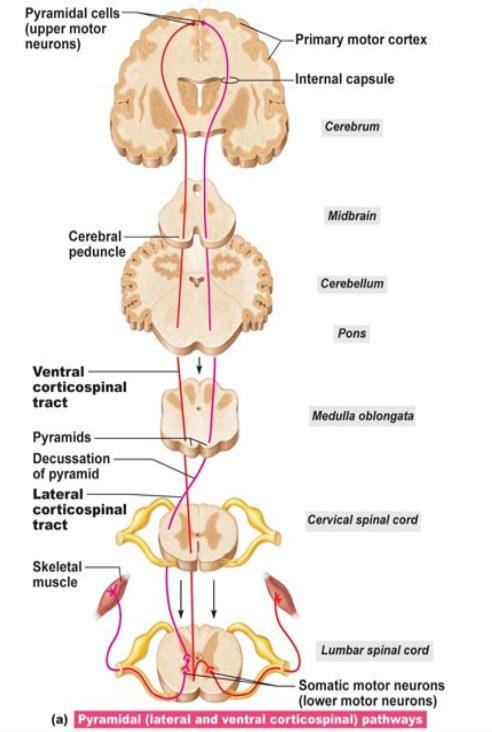
Decussation occurs in the brainstem or spinal cord
Are two-neuron circuits from Primary motor cortex to the muscle
Synapse in the spinal cord
Somatic Motor Control - Pathway
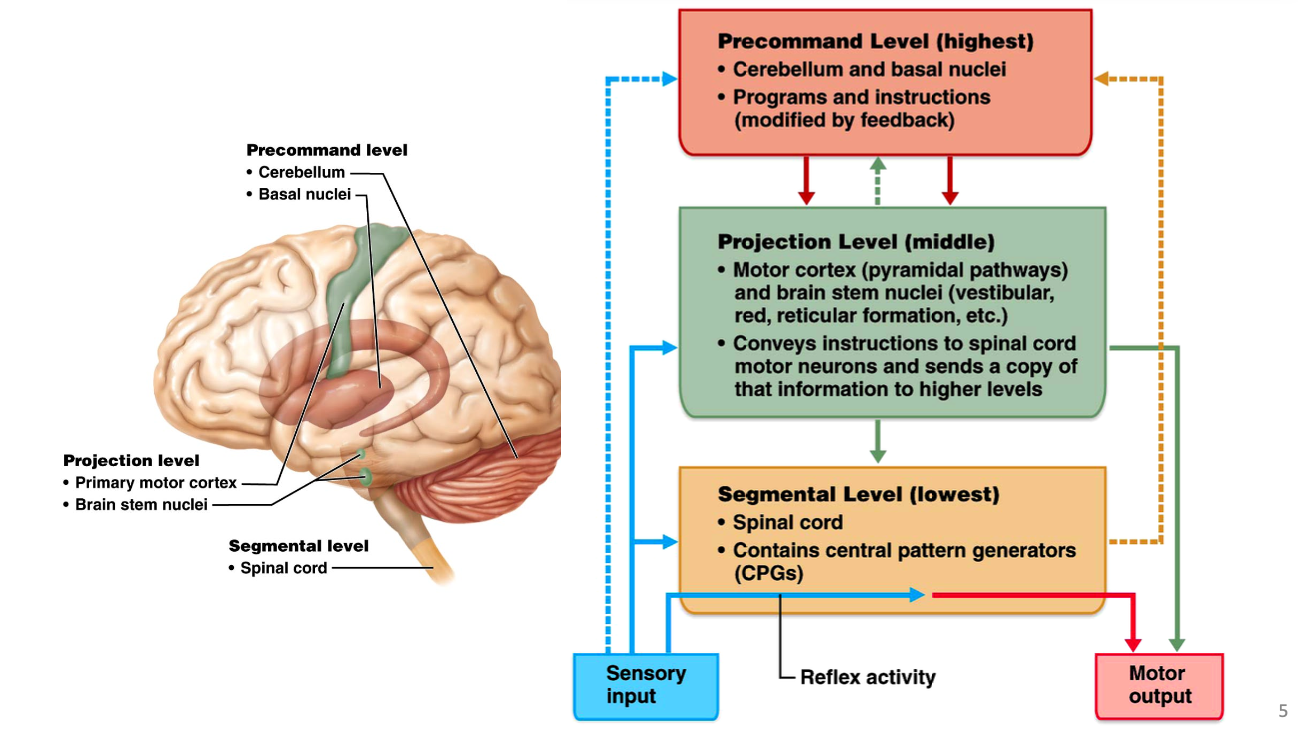
The cerebellum calculates and refines the details of a movement. It then sends this signal to the motor cortex. The motor cortex sends the final command down the spinal cord to the muscle to cause movement.
Somatic reflexes
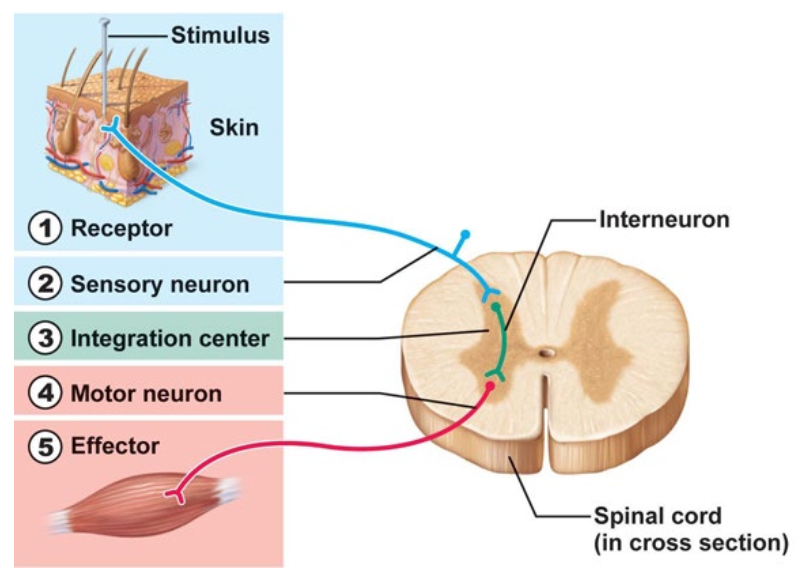
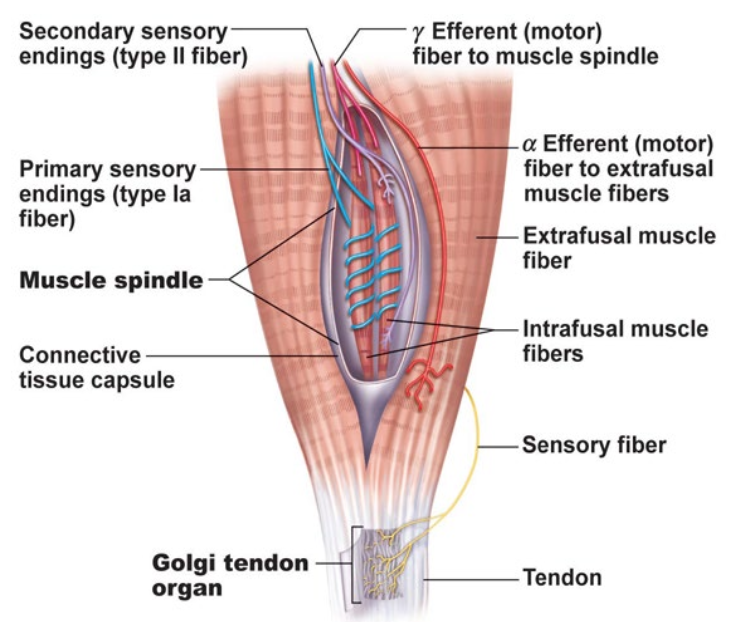
Golgi tendon organ and muscle spindle
Stretch Reflex - Steps
Knee-jerk reflex
Stretch reflex - Maintaining Contractions
Tendon Reflex
Tendon Reflex - Protection
Voluntary movements requre coordination from middle and higher level brain regions