Exam 1 - Shit I do not know
 Call Kai
 Learn
Learn Practice Test
 Spaced Repetition
 Match
Match Flashcards
 Knowt Play
1/27

There's no tags or description
Looks like no tags are added yet.
Name | Mastery | Learn | Test | Matching | Spaced | Call with Kai | Chat |
|---|
No analytics yet
Send a link to your students to track their progress
28 Terms
2 parallel sheets with equal and opposite charges
capacitor
what does a capacitor do
sets up a strong,. uniform electric field in a small region. inside is strong, outside is almost 0

what doesn’t matter for a capacitor?
the distance in between the plates (z)
Q/A
surface charge density (sigma)
Insulator
material where electrons are bound to atoms so charge cannot more freely. atoms turn into dipoles
Insulator examples
plastic, glass, rubber, dry air
z meaning
distance from source to point (“how far am i from the object”)
s meaning
how big is the gap that the objects built wirh
what is an ok ratio to use « for
around 1/10 or 0.1
infinite rods: what is Q/L
lamda = Q/L = linear charge density
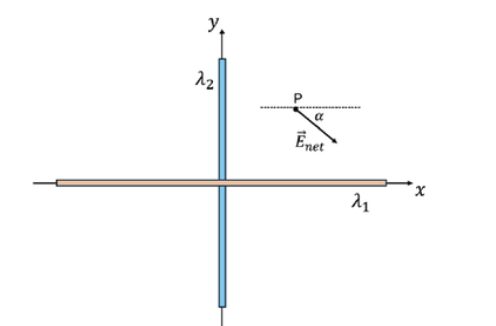
which direction is the rod on x axis pointing
y axis, so up and down
insulator means what
the charge will stay in the same places
in a shell, do you take the distance from the center or from the closest point to the shell
center
what does the “zero charge inside shell” apply to
ONLY its own charge, not external charges
In equilibrium, there is no net flow of mobile charged particles inside a conductor T/F
True
The net electric field at any location inside a block of copper is zero if the copper block is in equilibrium T/F
True
The net electric field inside a block of aluminum is zero under all circumstances - T/F
False, only in eq
If the net electric field at a particular location inside a piece of metal is not zero, the metal is not in equilibrium
True
The electric field from an external charge cannot penetrate to the center of a block of iron. T/F
False,
Conductors - where is the charge in equilibrium
E = 0 everywhere inside regardless of the external charges. All excess charge is on its surface
Conductors - where is the charge NOT in equilibrium
Doesn’t apply, can still be not in EQ
types of conductors
metal
relation between capacitors and conductors
Capacitor plates are conductors in equilibrium, separated by an insulator
how to find the potential energy (U)
sum over EVERY PAIR
When the reference point is at infinity for V, (change in electric potential)
1/ri becomes 0, because initial is infinity
Electric Potential Variable
V, units volts
Potential Energy variable
U (measured in J aka Nm)
volts units
(N*m)/C