PLTW: Human Body Systems: Unit 2
 Studied by 0 people
 Call Kai
 Learn
Learn Practice Test
 Spaced Repetition
 Match
Match Flashcards
 Knowt Play
1/128

There's no tags or description
Looks like no tags are added yet.
Name | Mastery | Learn | Test | Matching | Spaced |
|---|
No study sessions yet.
129 Terms
What is the CNS?
brain/spinal cord
What is the PNS?
nerves spread all over the body (cranial nerves are still PNS)
What is the cerebrum?
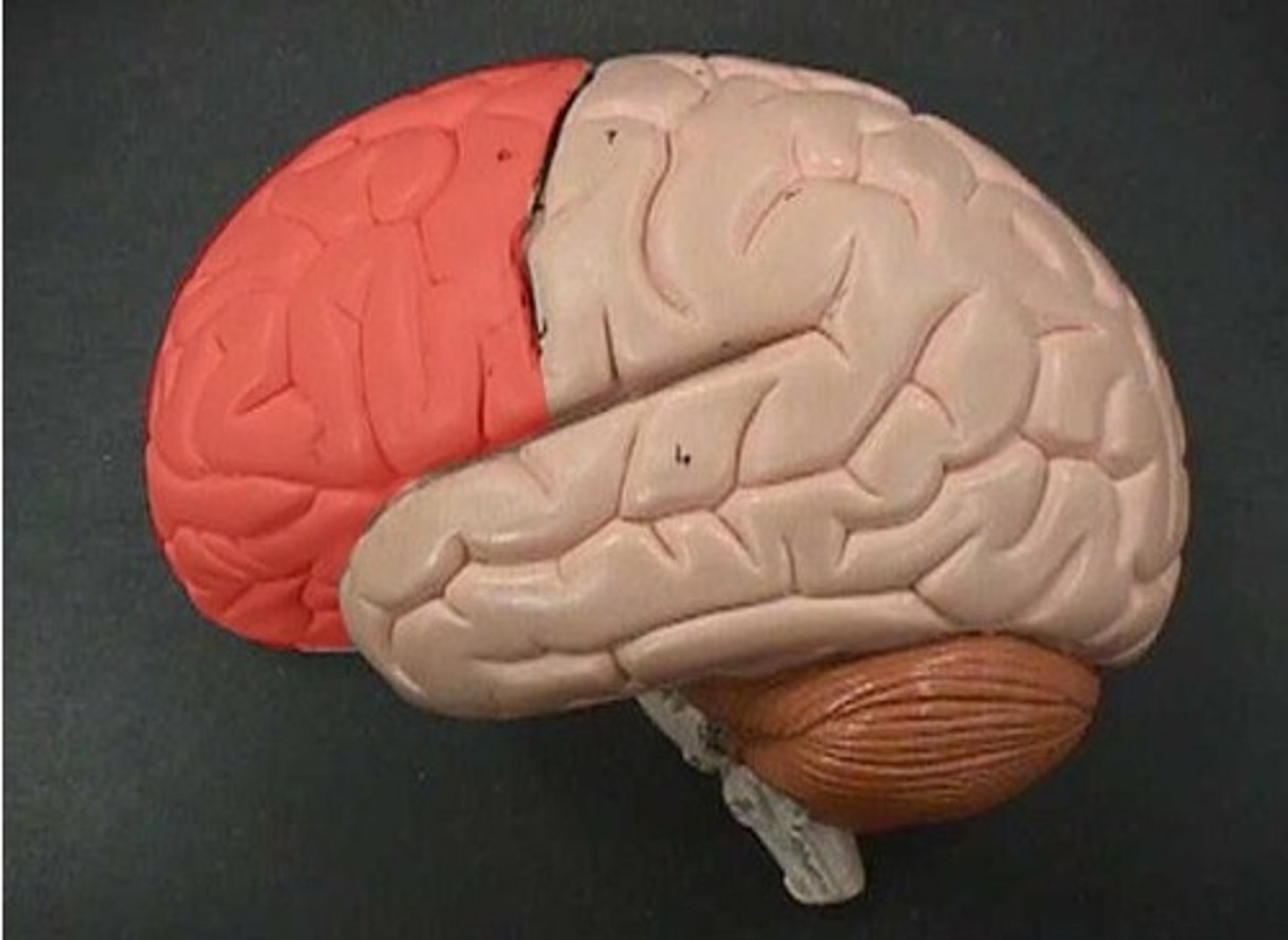
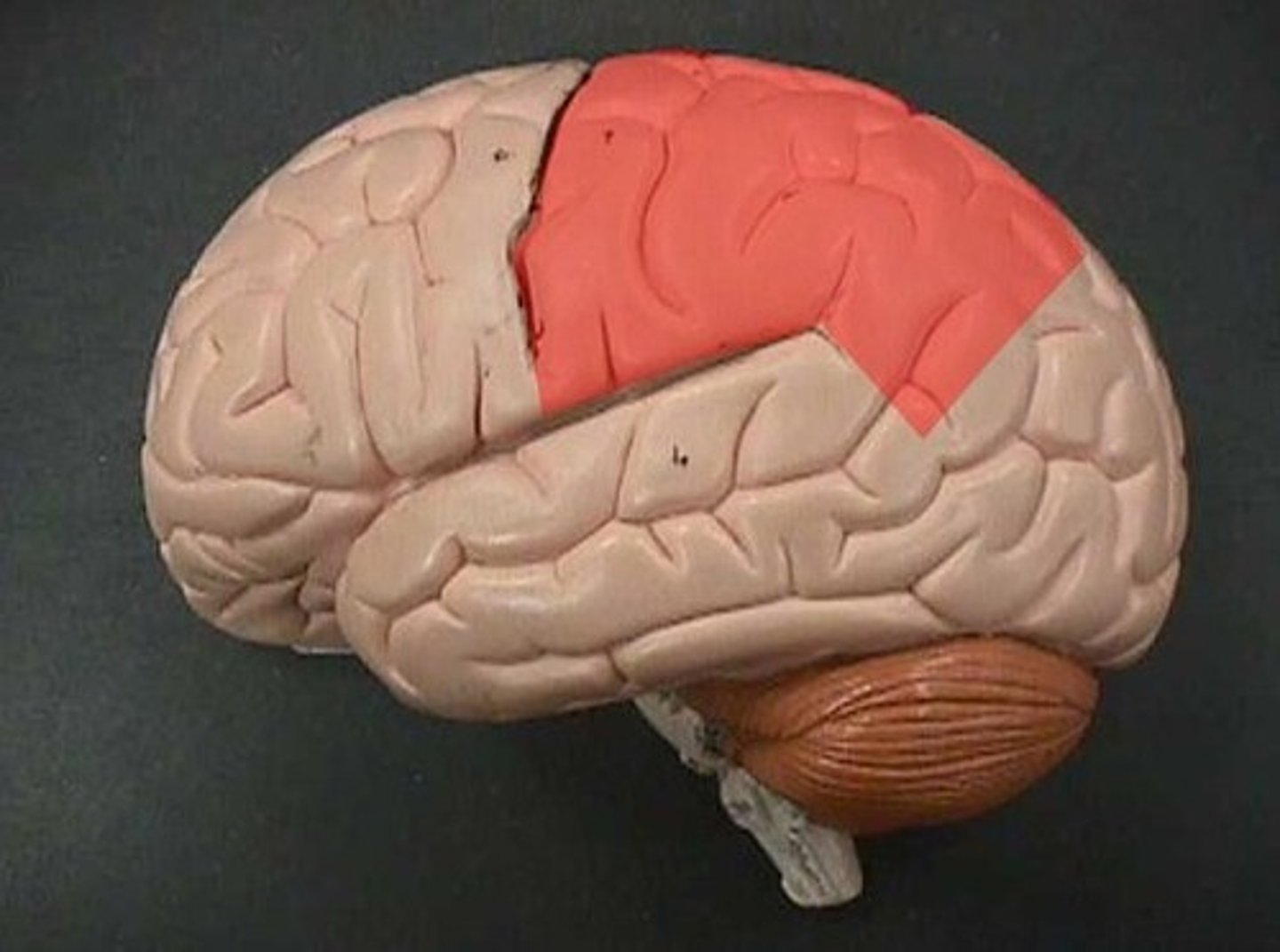
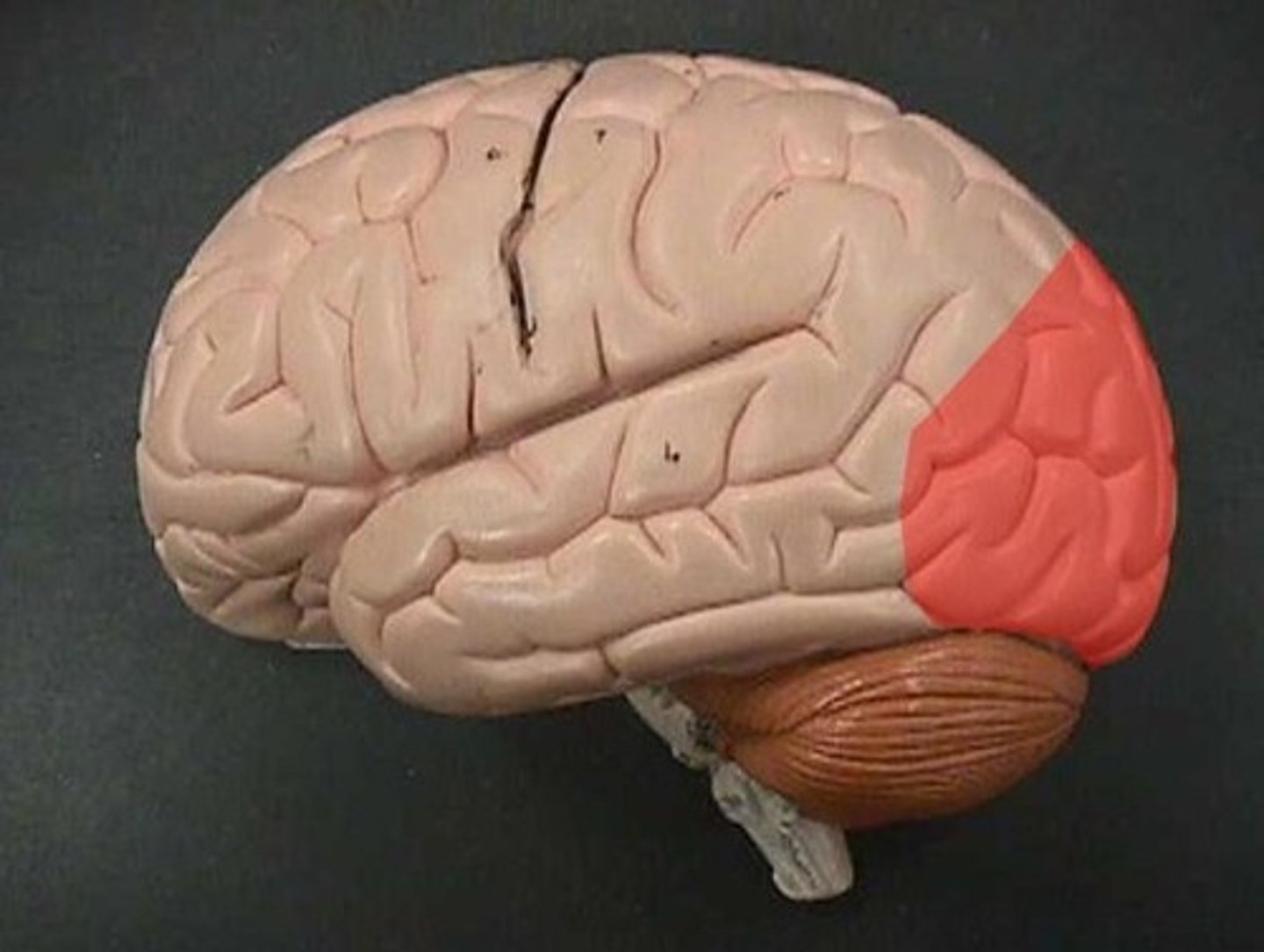
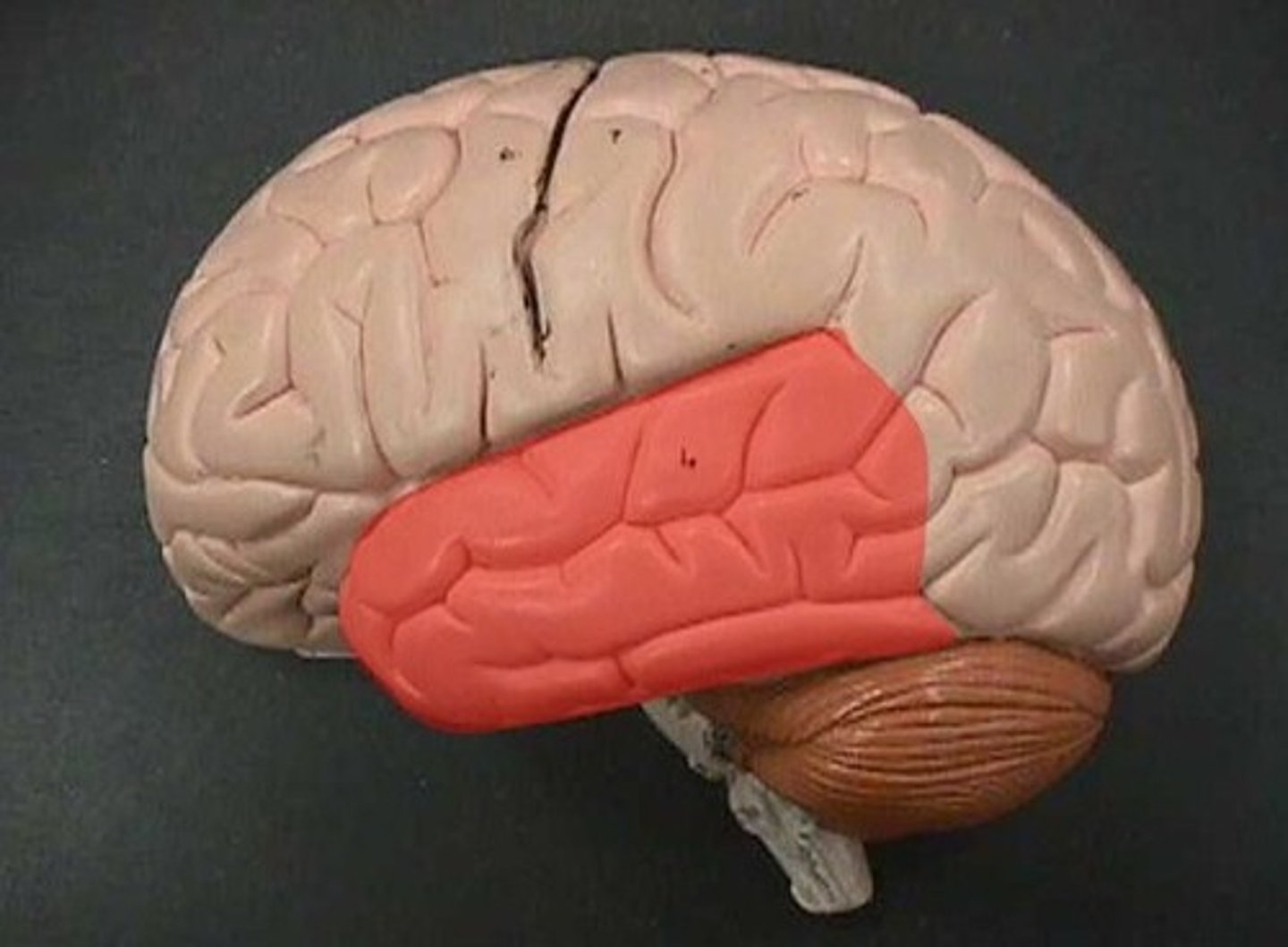
Major 4 lobes of the brain (parietal, frontal, occipital, temporal)
Locate the frontal lobe.
Locate the parietal lobe.
Locate the occipital lobe.
Locate the temporal lobe.
Locate the cerebellum.
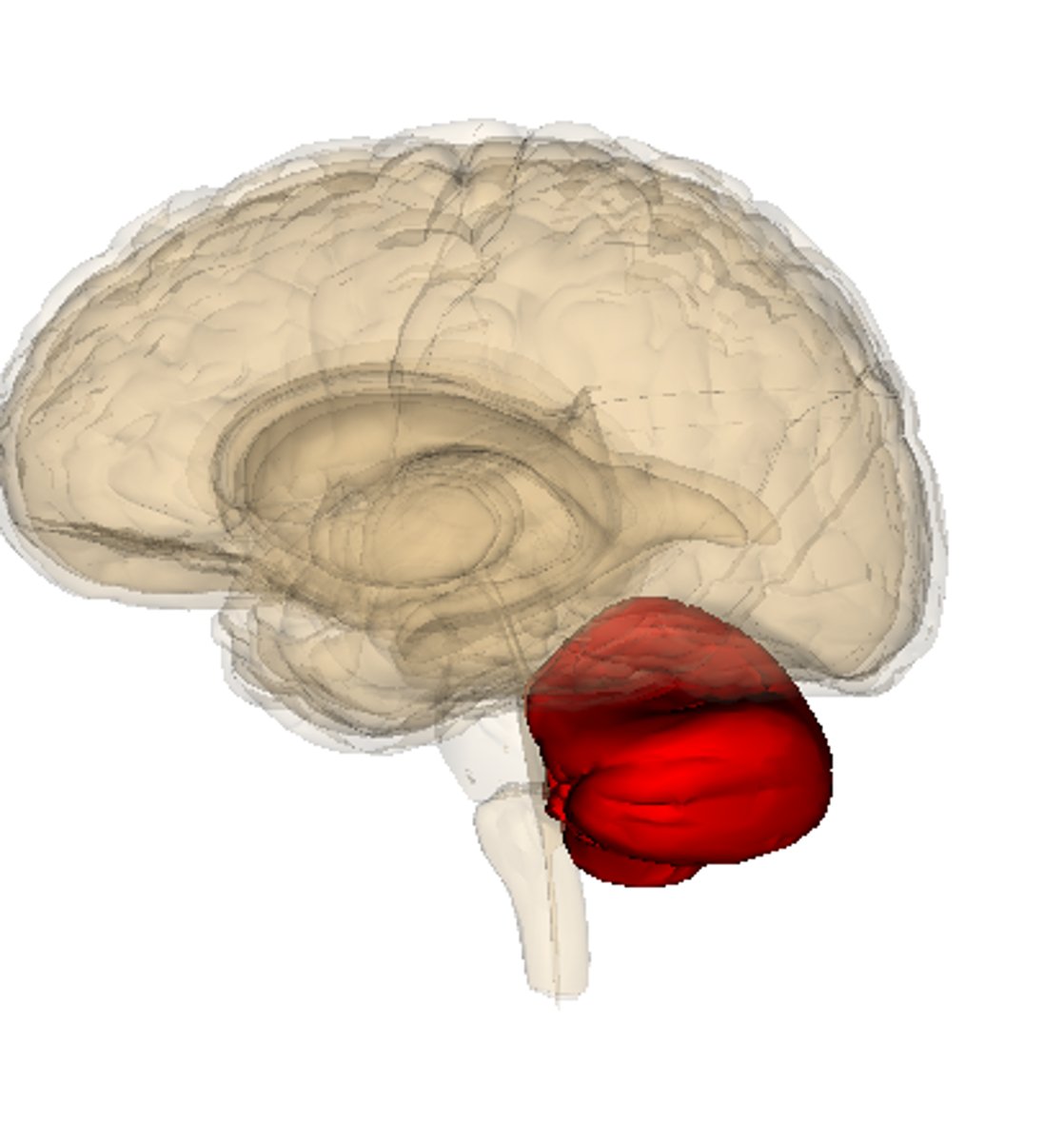
Locate the brain stem.
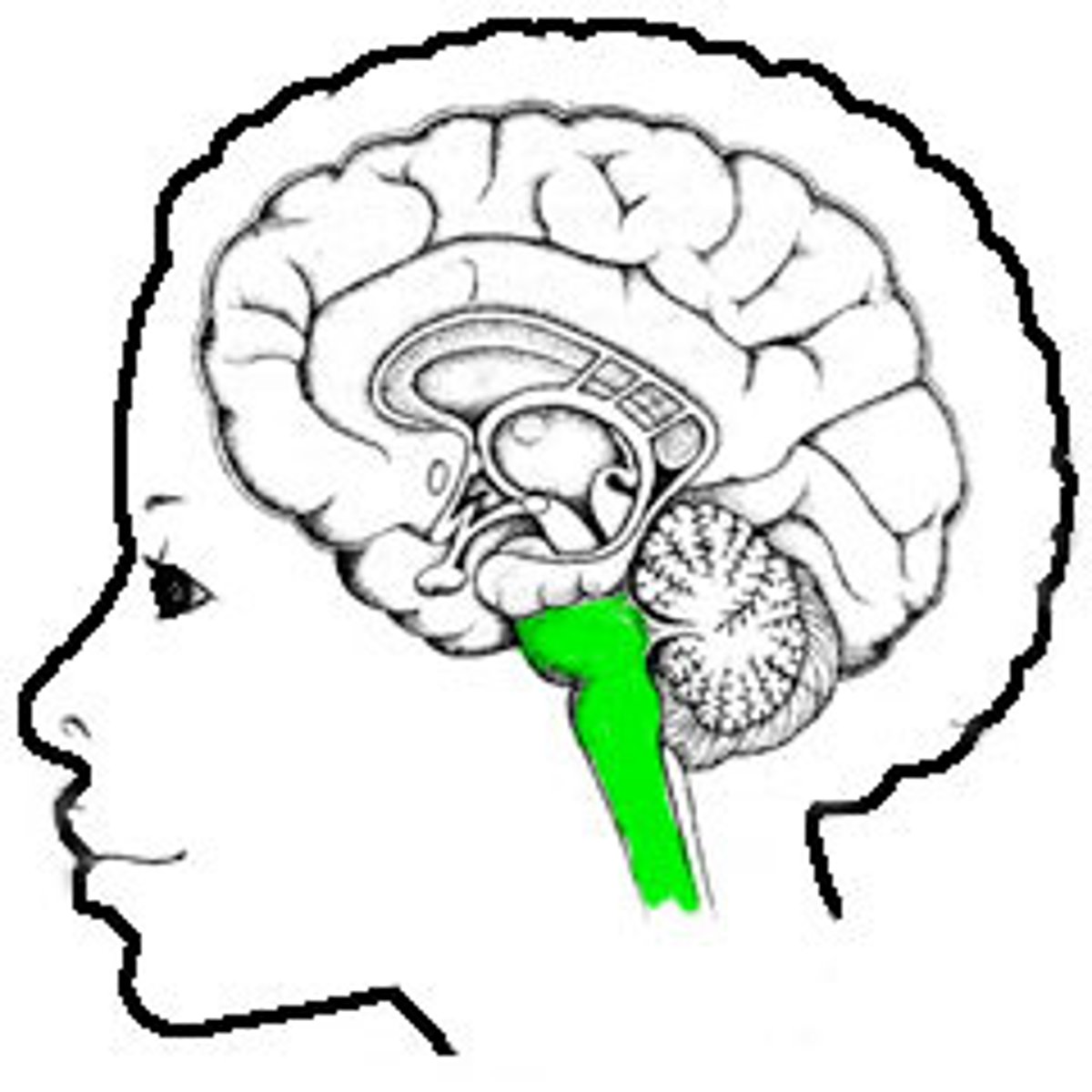
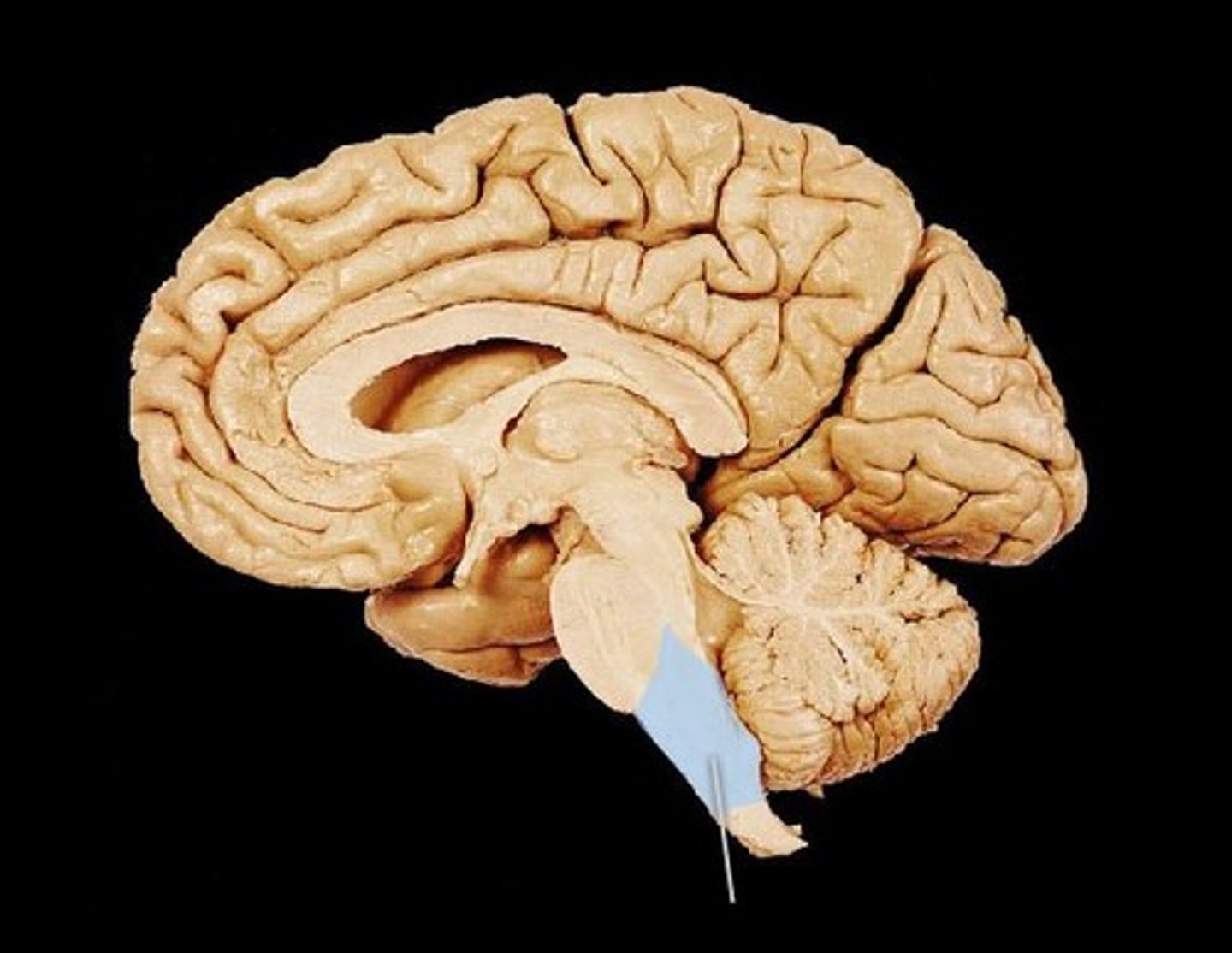
Locate the pons.

Locate the medulla oblongata.
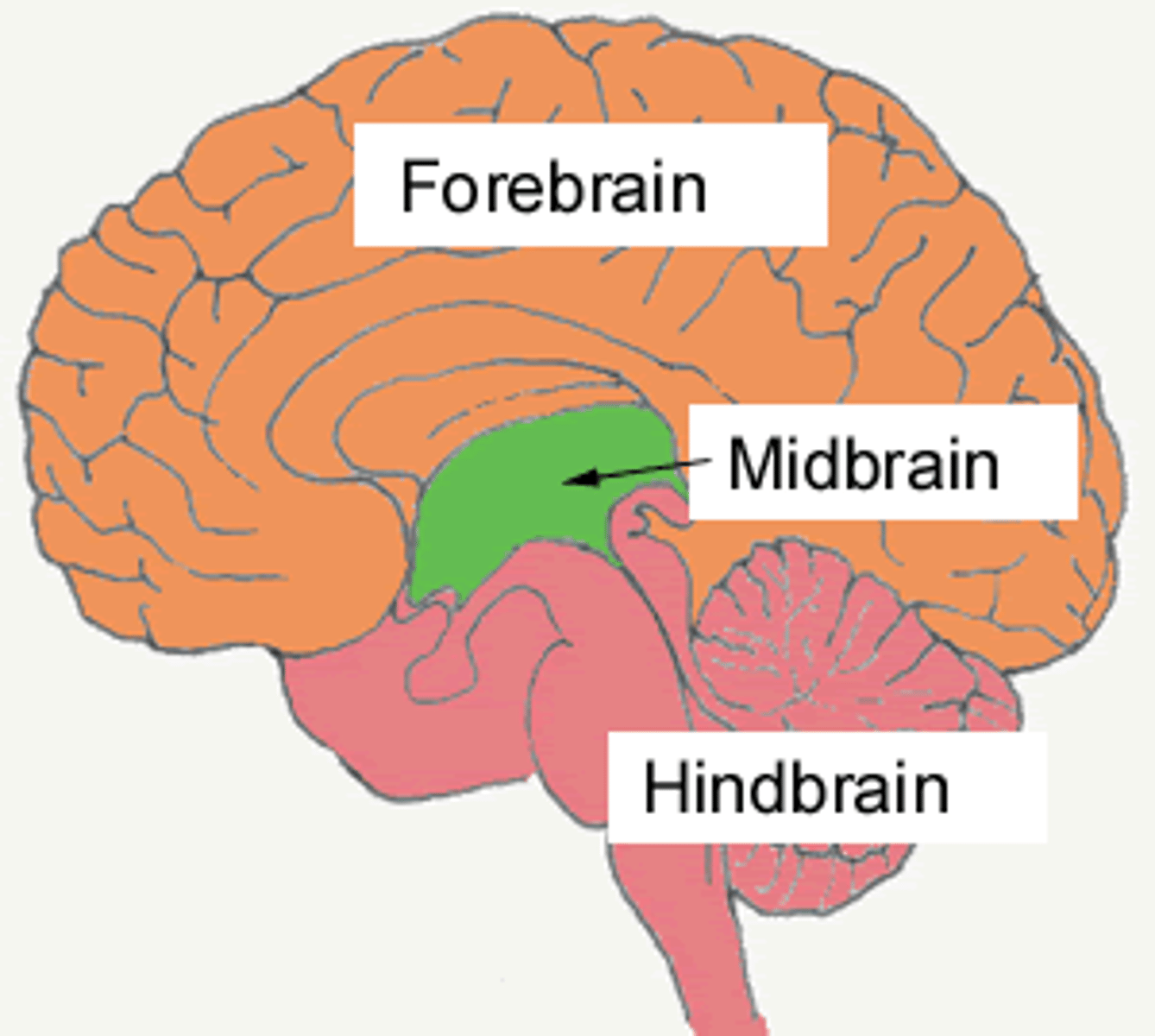
Find the midbrain, hindbrain, and forebrain.
What are the gyri?
"peaks" of the folds that cover the brain
What are the sulci?
"valleys" of the folds that cover the brain
Locate the central sulcus.
Fold between frontal/parietal lobes and motor/sensory cortex
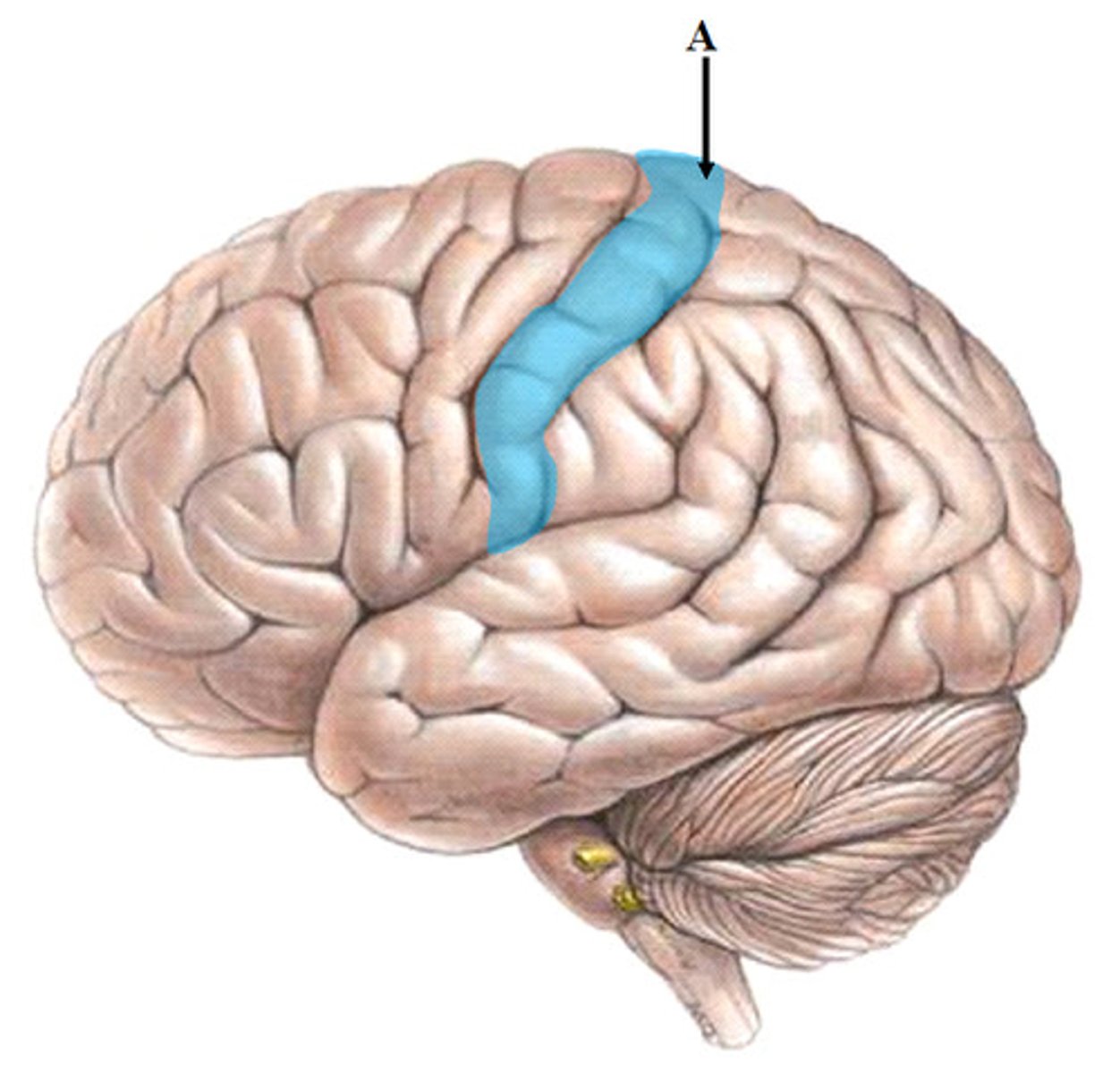
Locate the motor cortex.
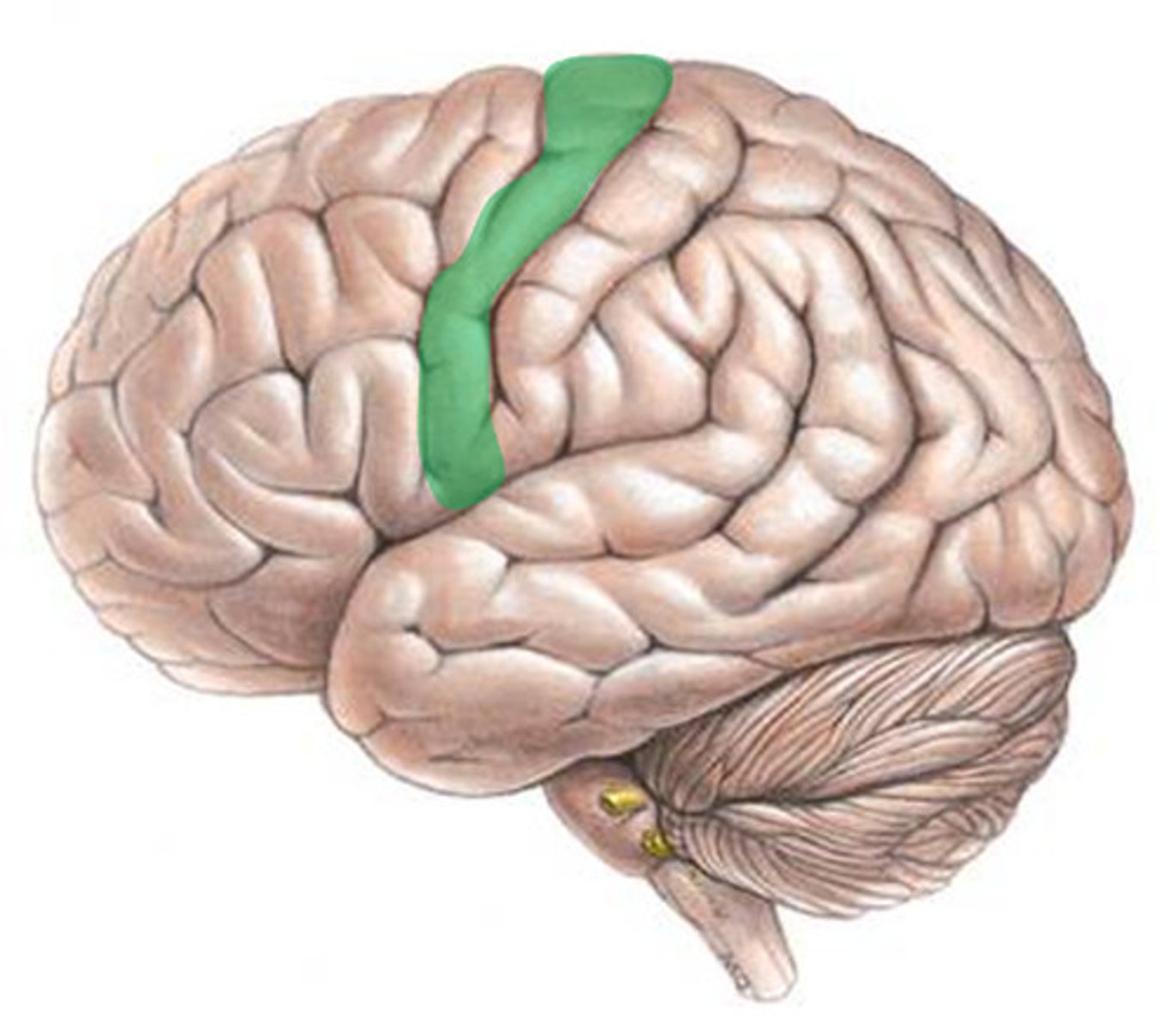
Locate the sensory cortex.
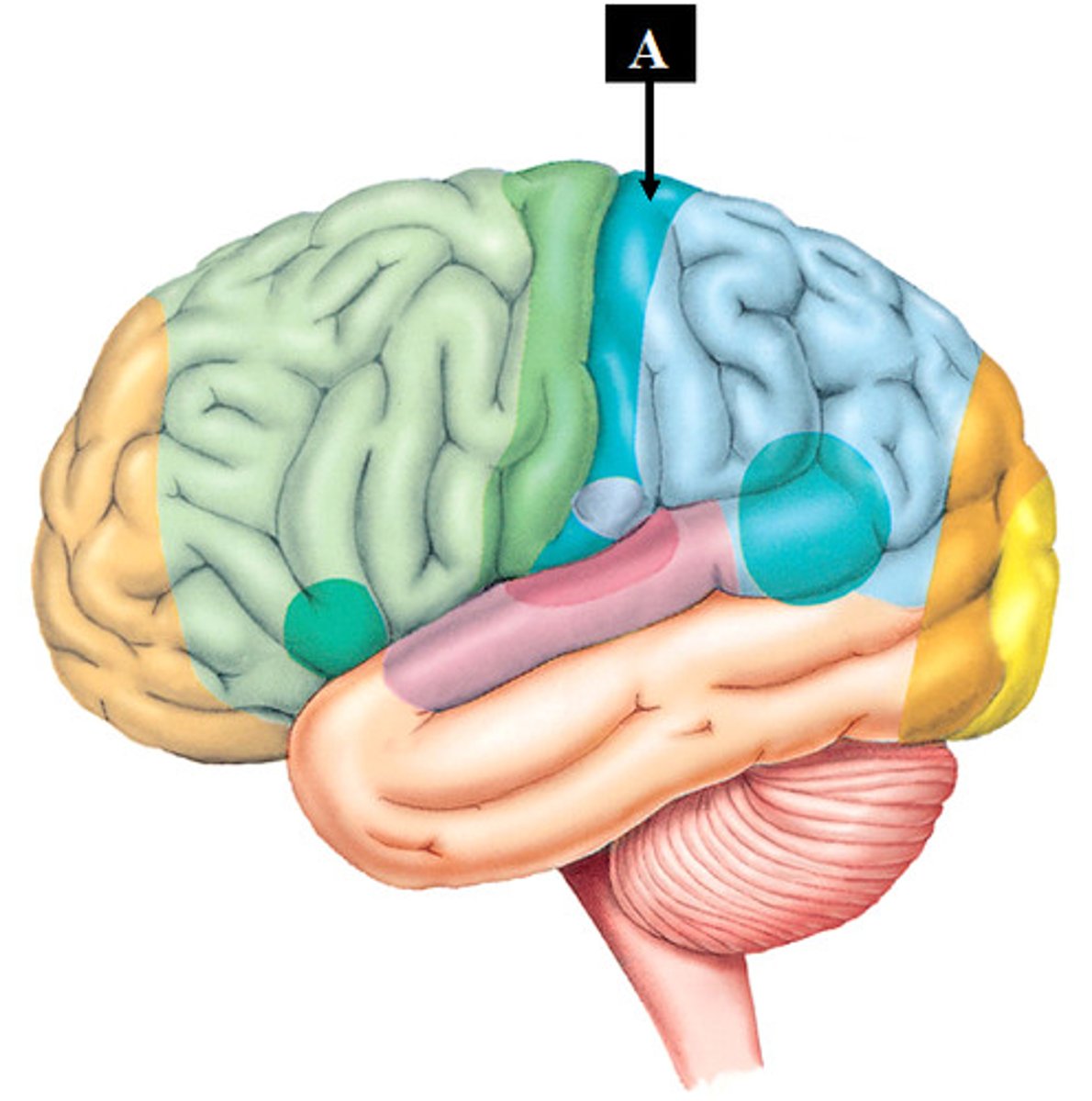
What does the FRONTAL lobe control?
manners
speech production
language understanding
movement
smell
reasoning
problem solving
emotions/personality
happiness
taste
self control
long term memory
What does the PARIETAL lobe control?
short term memory
bodily sensations
What does the OCCIPITAL lobe control?
short term memory
sight
What does the TEMPORAL lobe control?
SMELL, HEARING
short term memory
musical ability
language understanding
What does the CEREBELLUM control?
balance
muscle coordination
What does the BRAIN STEM control?
breathing
heart rate/blood pressure
sleeping/waking
What does the CEREBRAL CORTEX control?
taste
What does the LIMBIC SYSTEM control?
fight or flight
smell
happiness
long term memory
What does the HYPOTHALAMUS control?
thirst/hunger
smell
sleeping/waking
What does the AMYGDALA control?
anger, sadness, intense emotions
survival instinct
memory
fight or flight
What does the HIPPOCAMPUS control?
long term memory
What does the MEDULLA OBLONGATA control?
breathing
blood pressure
heart rate
What does the PONS control?
sleeping/waking
hearing
taste
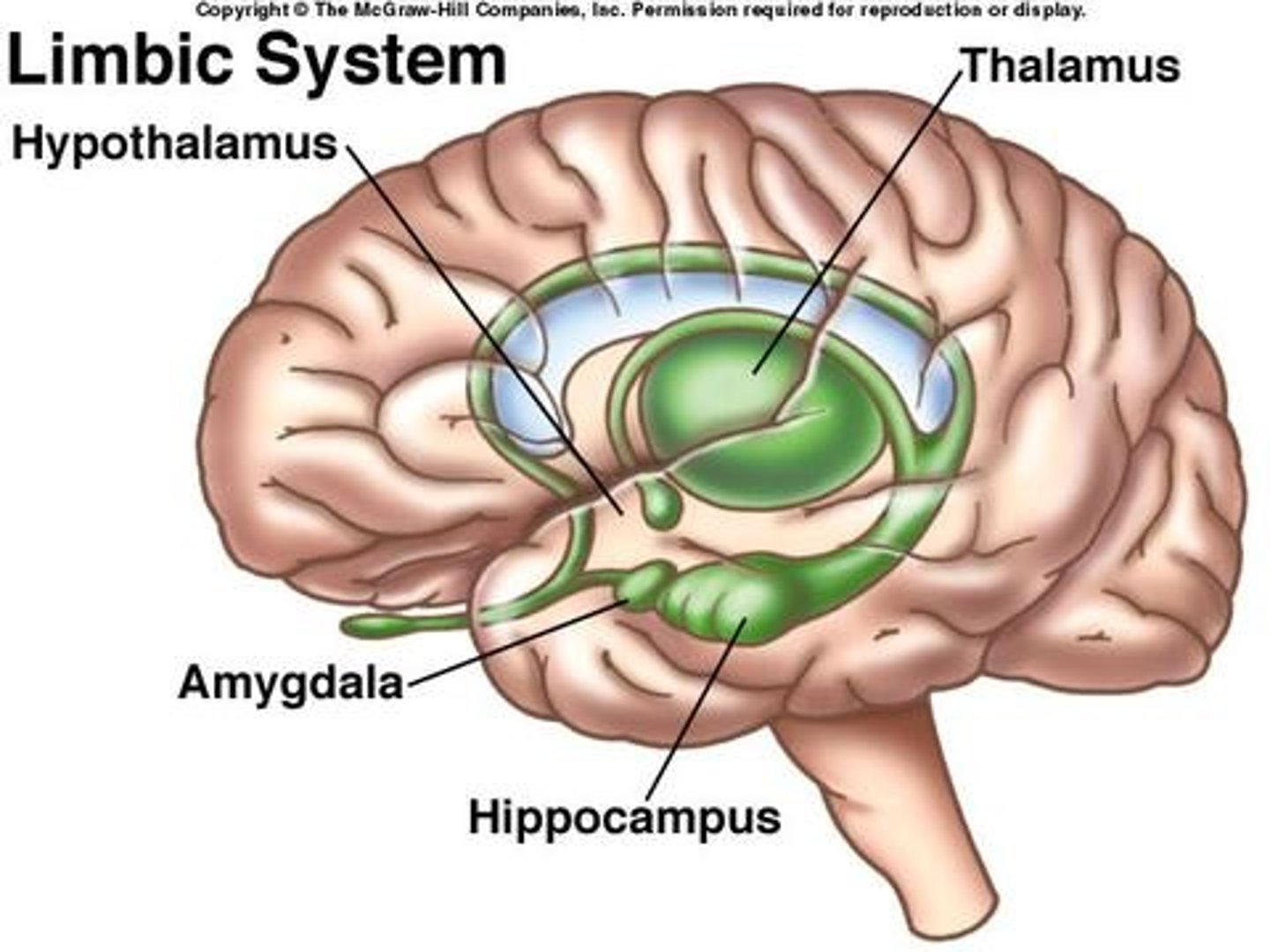
Label the parts of the limbic system (amygdala, hippocampus, thalamus, hypothalamus).
The gyri and sulci of the brain help to increase its ___________________.
surface area
Define phrenology.
The study of the conformation of the skull based on the belief that it is indicative of mental faculties and character.
Define lobe.
A division of a body organ (as the brain, lungs, or liver) marked off by a fissure on the surface.
What does a MOTOR/EFFERENT neuron do?
carries impulses TOWARD a central point from the brain
What is the polarity of a MOTOR neuron?
multipolar
What does a SENSORY/AFFERENT neuron do?
carries impulses FROM receptors to the brain/spinal cord
What is the polarity of a SENSORY neuron?
unipolar or bipolar
What does an INTERNEURON/RELAY neuron do?
relays messages from sensory neurons to motor neurons (makes up CNS)
What is the polarity of an INTERNEURON?
multipolar
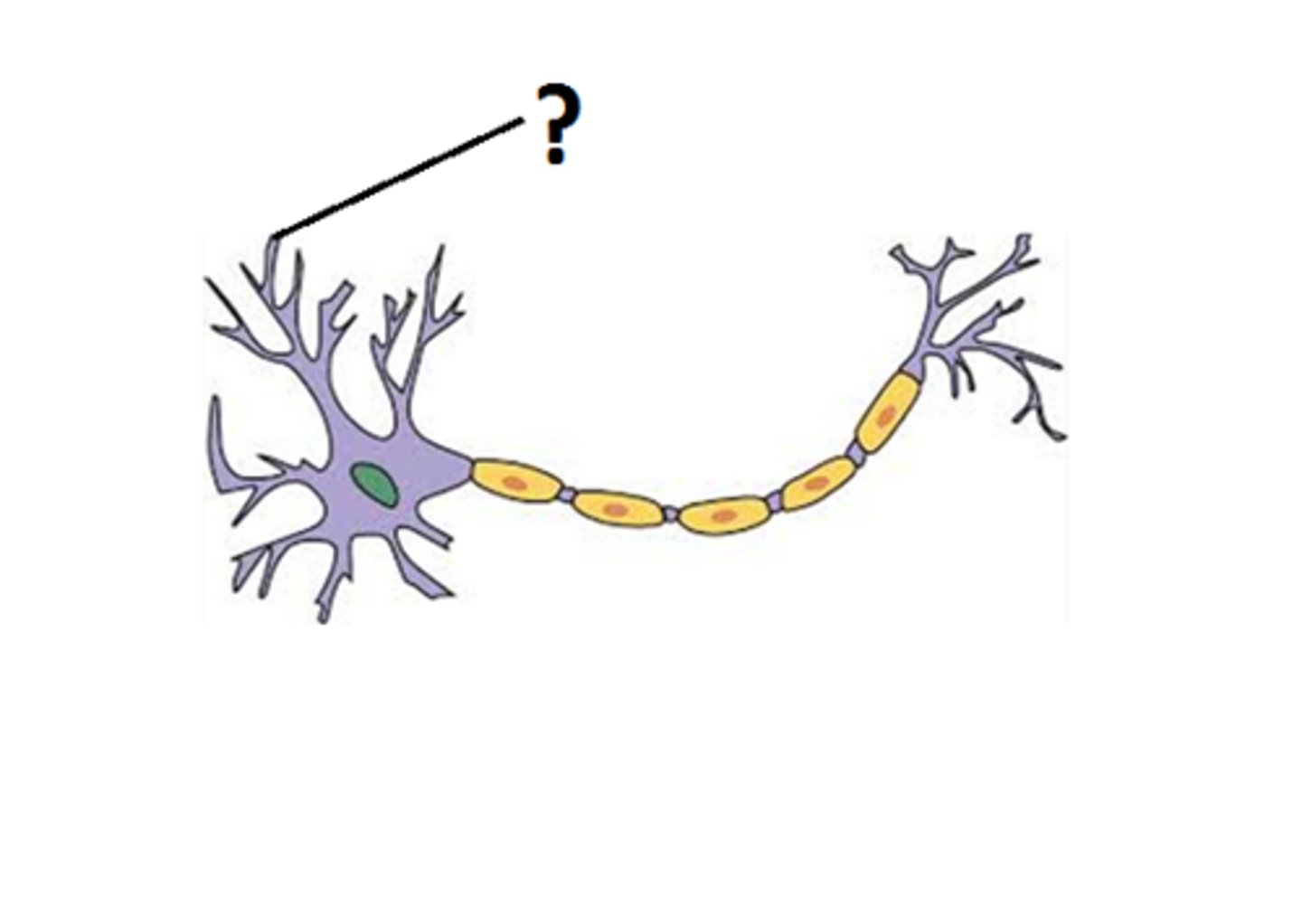
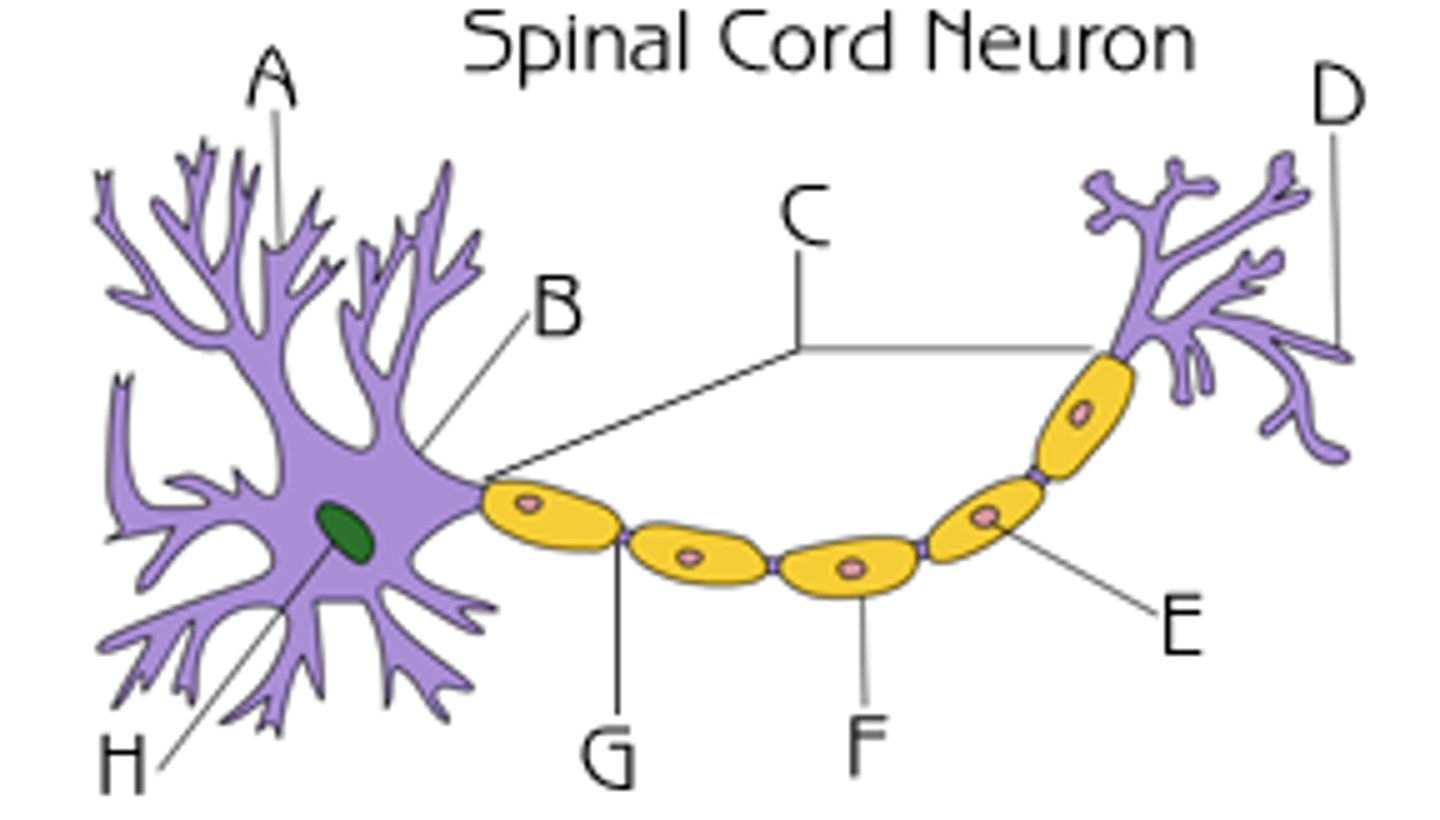
What are dendrites?
receives signals from other neurons, conducts impulses TOWARD the body of a neuron
What is the axon?
conducts impulses from the cell body to other cells; moves impulses AWAY from the cell body
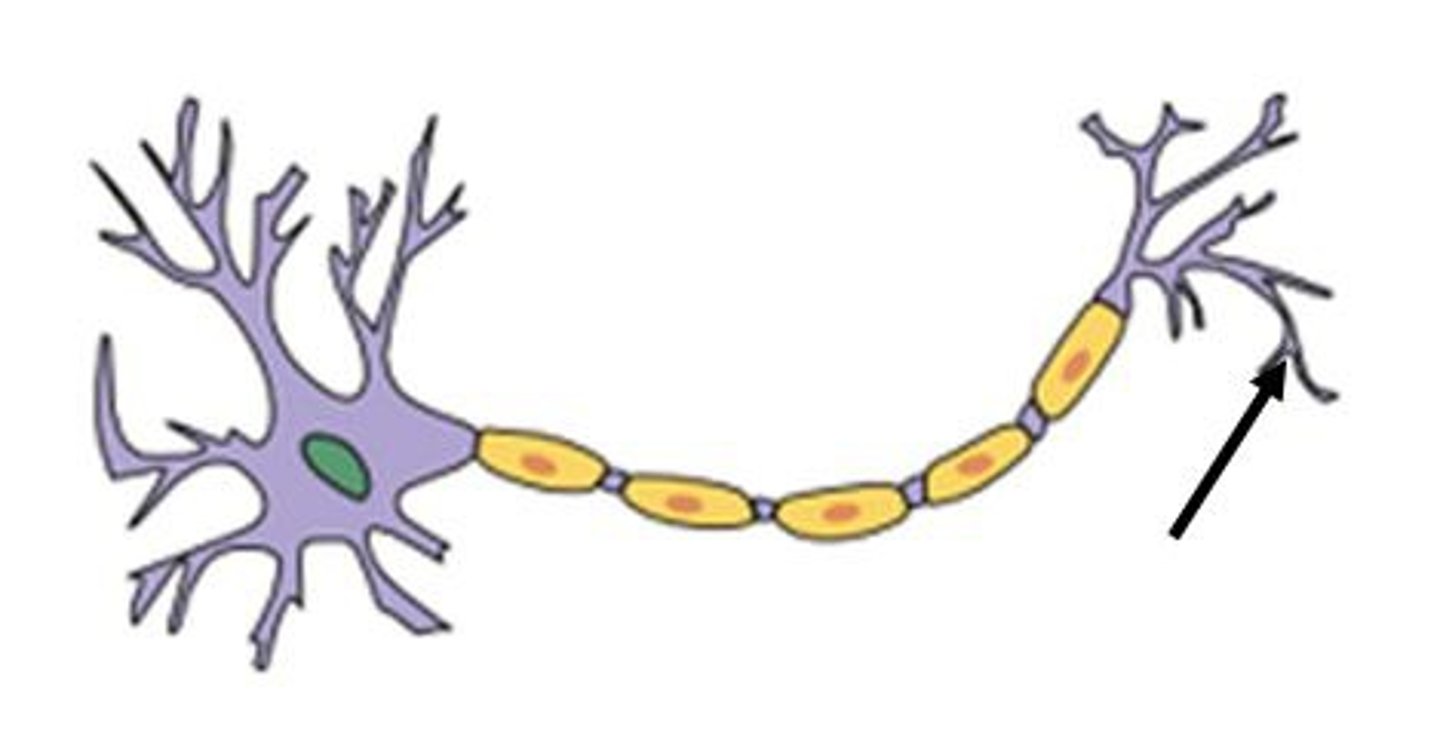
What are axon terminals?
endings where axons make synaptic contact with other nerve or effector cells (ex muscle)
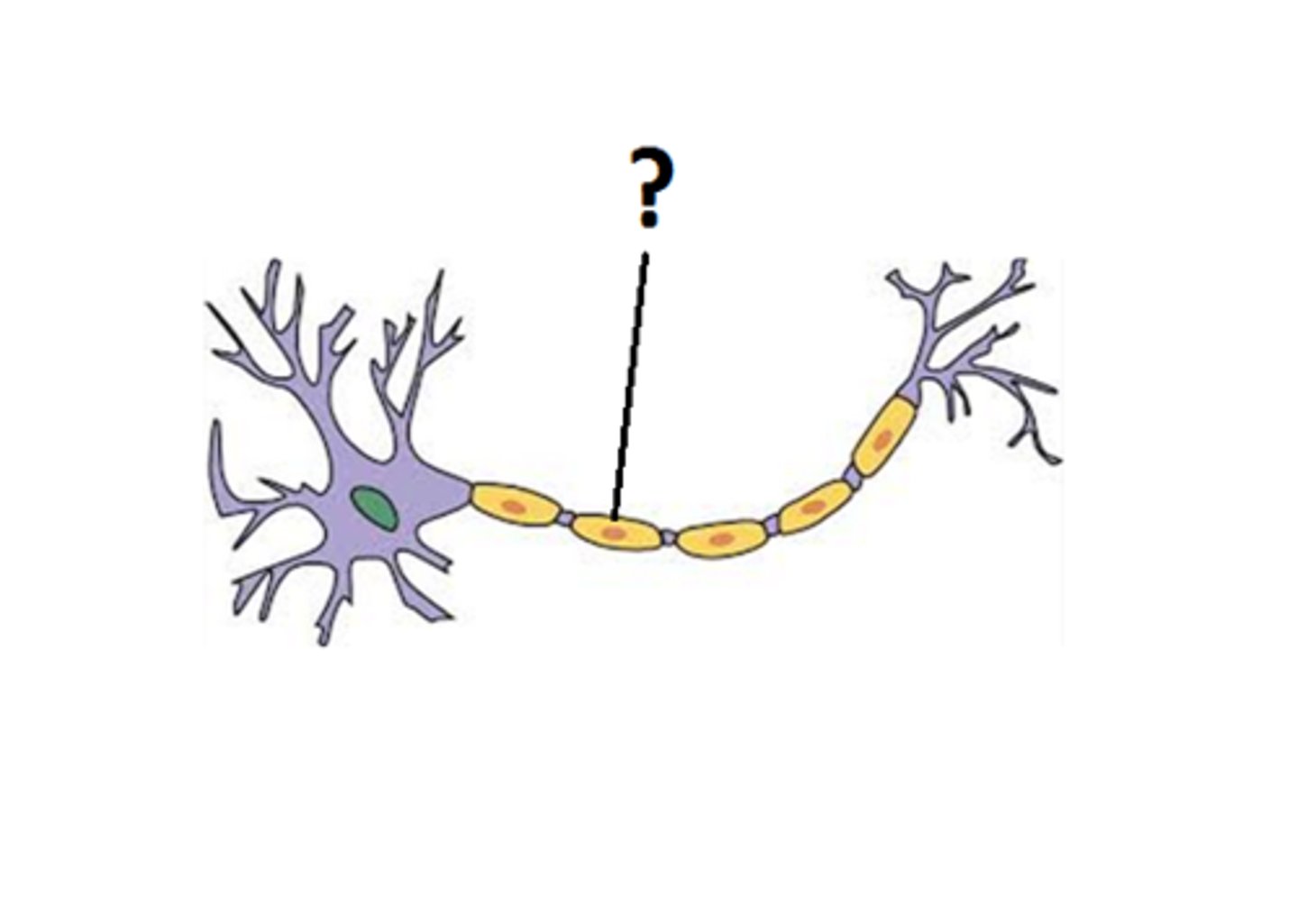
What is the myelin sheath?
insulated covering of an axon; interrupted at nodes of Ranvier; prevents neuron from jumping off course, ensuring that the message reaches it's destination.
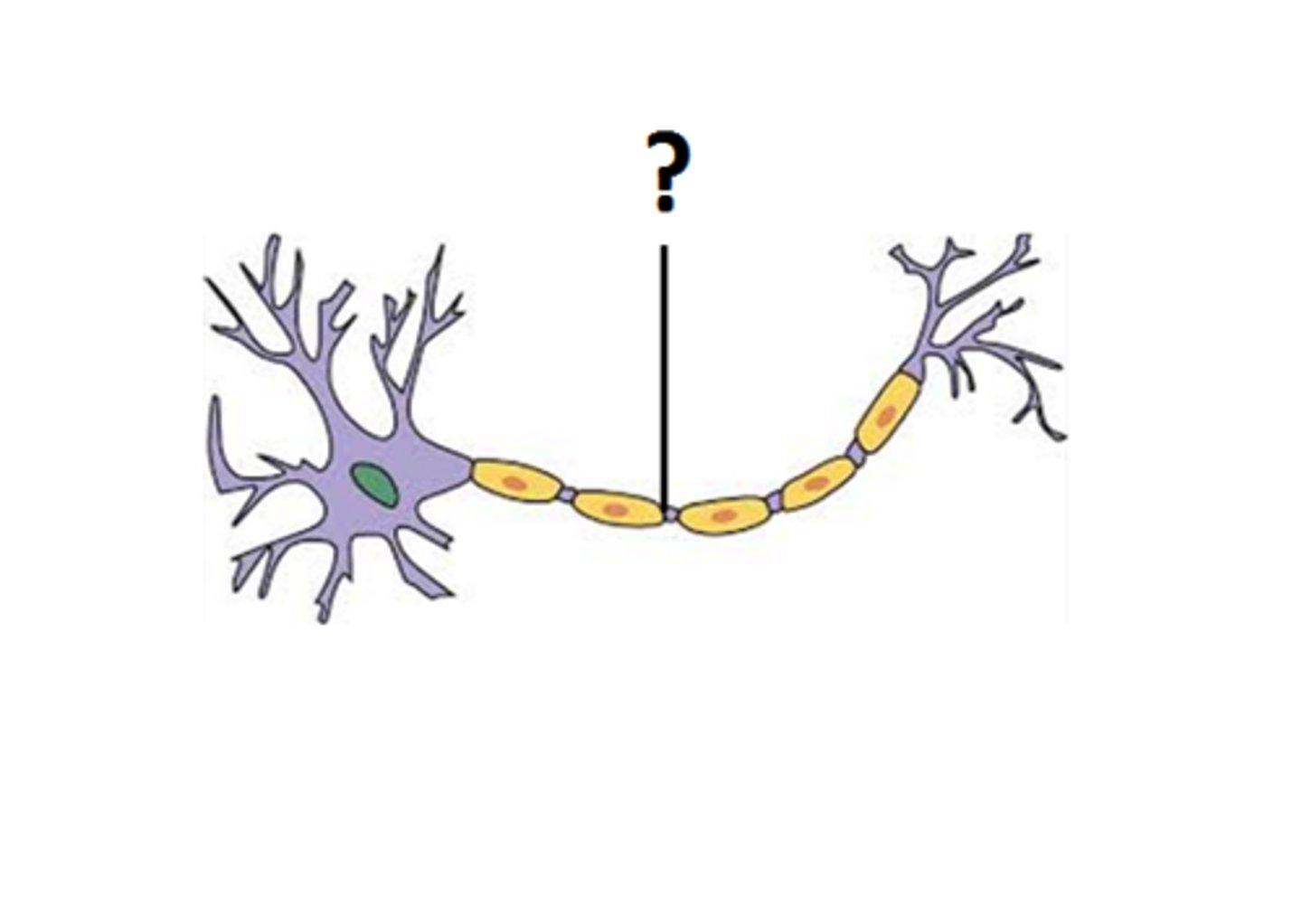
What are the nodes of ranvier?
a gap in the myelin sheath of a nerve; allows for ion flow across the membrane (represented by letter G)
What is the synapse?
junctions formed when nerve cells meet up; neurotransmitters move impulses across this gap
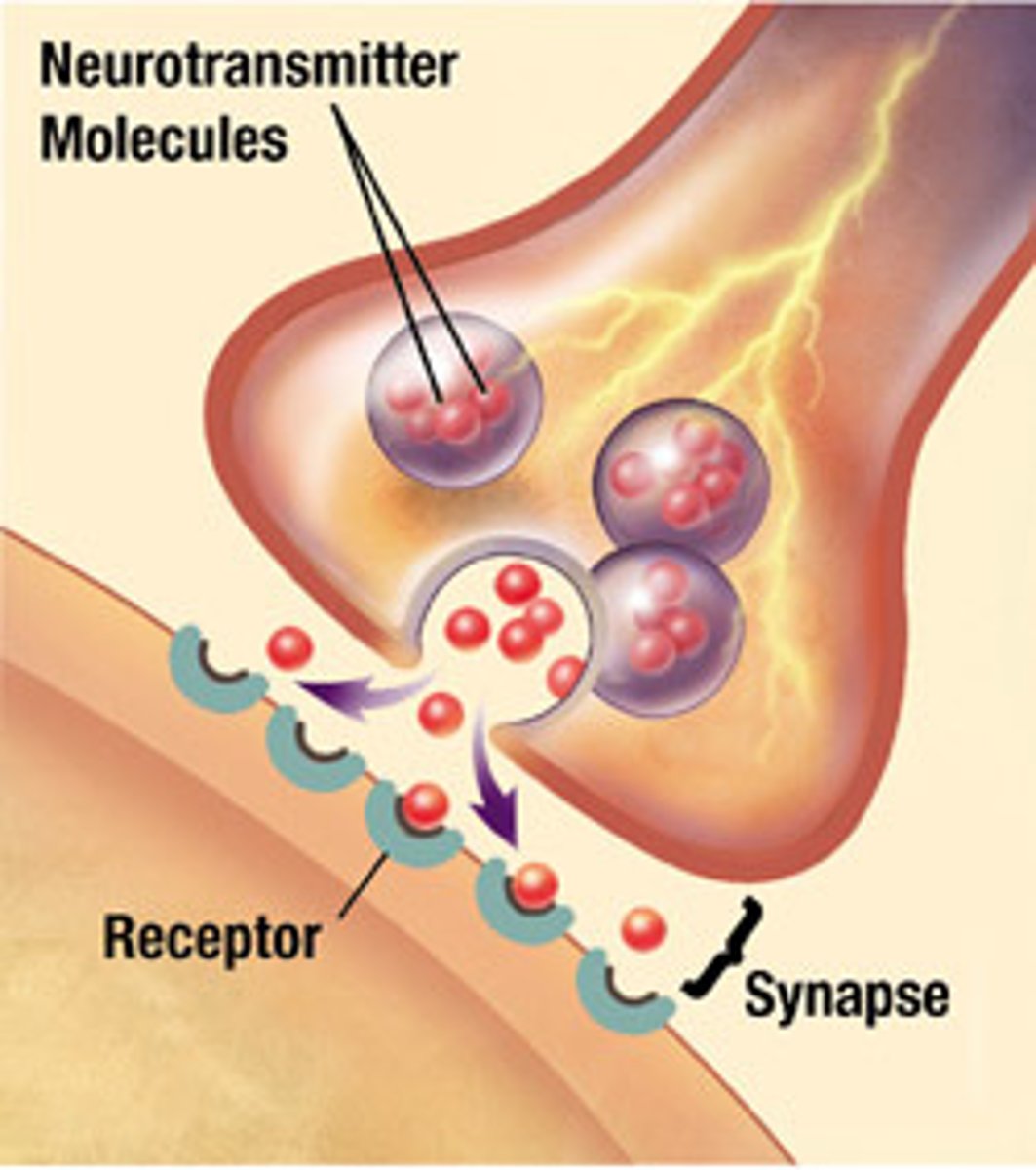
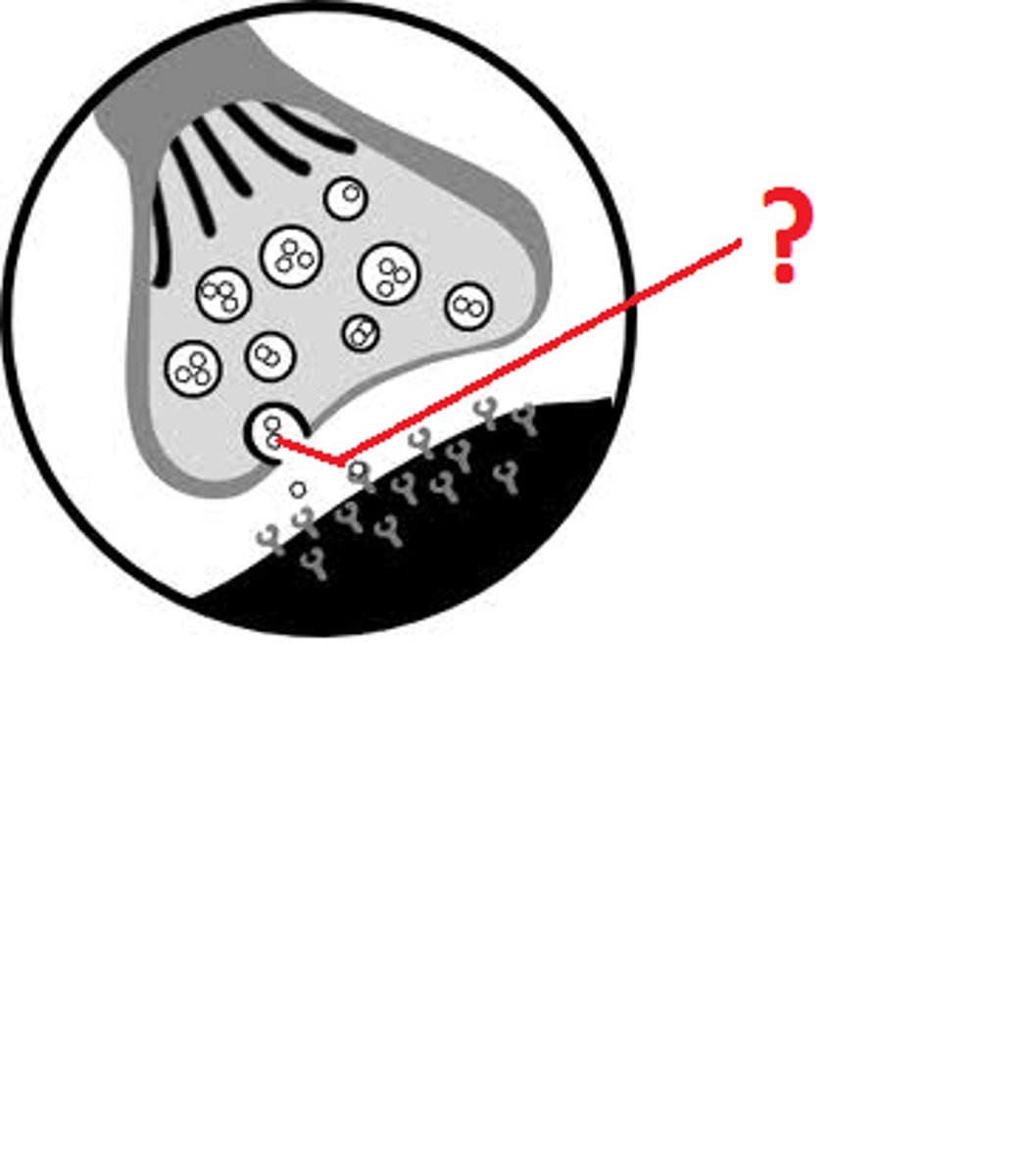
What is a neurotransmitter?
these transfer nerve impulses from one nerve fiber to another within two separate nerve cells
How many neurons are in the brain?
100 billion
What do we call electrical messages that are sent down the axon of a neuron?
action potentials
How is an action potential generated?
a sudden reversal in charge
What is the resting potential in mV?
-70 mV
In a cell at rest, there is more _(Na+/K)_ on the outside of the cell membrane. The outside has a _(+/-)_ charge.
Na+
+
In a cell at rest, there is more _(Na+/K)_ on the inside of the cell membrane. The inside has a _(+/-)_ charge.
K
-
The Na+/K+ pump pumps __ Na+ ions out for every __ K+ ions it brings in.
3
2
Does the Na+/K+ pump work via active or passive transport?
Active-- moving to a level of higher concentration by using energy
What causes the inside of the membrane to reverse charge and begin the action potential?
The potassium channels close and Na+ rushes in which temporarily reverses the charge/depolarizes that area of the membrane.
Action potential is hit at _____ mV
+40
The way up to the peak on an action potential graph is called...?
depolarization
The way back down from a peak on an action potential graph is called...?
repolarization
The small dip below the resting potential at the end of an action potential graph is called...?
refractory period or hyperpolarization
Which membrane protein is responsible for restoring the original concentration of Na+ and K+?
Na+/K+ Pump
Explain how neurons convey information using both electrical and chemical signals.
ELECTRICAL signals move down the axon to the axon terminal where they signal neurotransmitters (which are CHEMICAL signals) to move into the synaptic cleft.
What is the synaptic cleft?
space between two nerve cells that are about to pass on the message

What are the vesicles?
round sacs containing neurotransmitters at the axon terminal
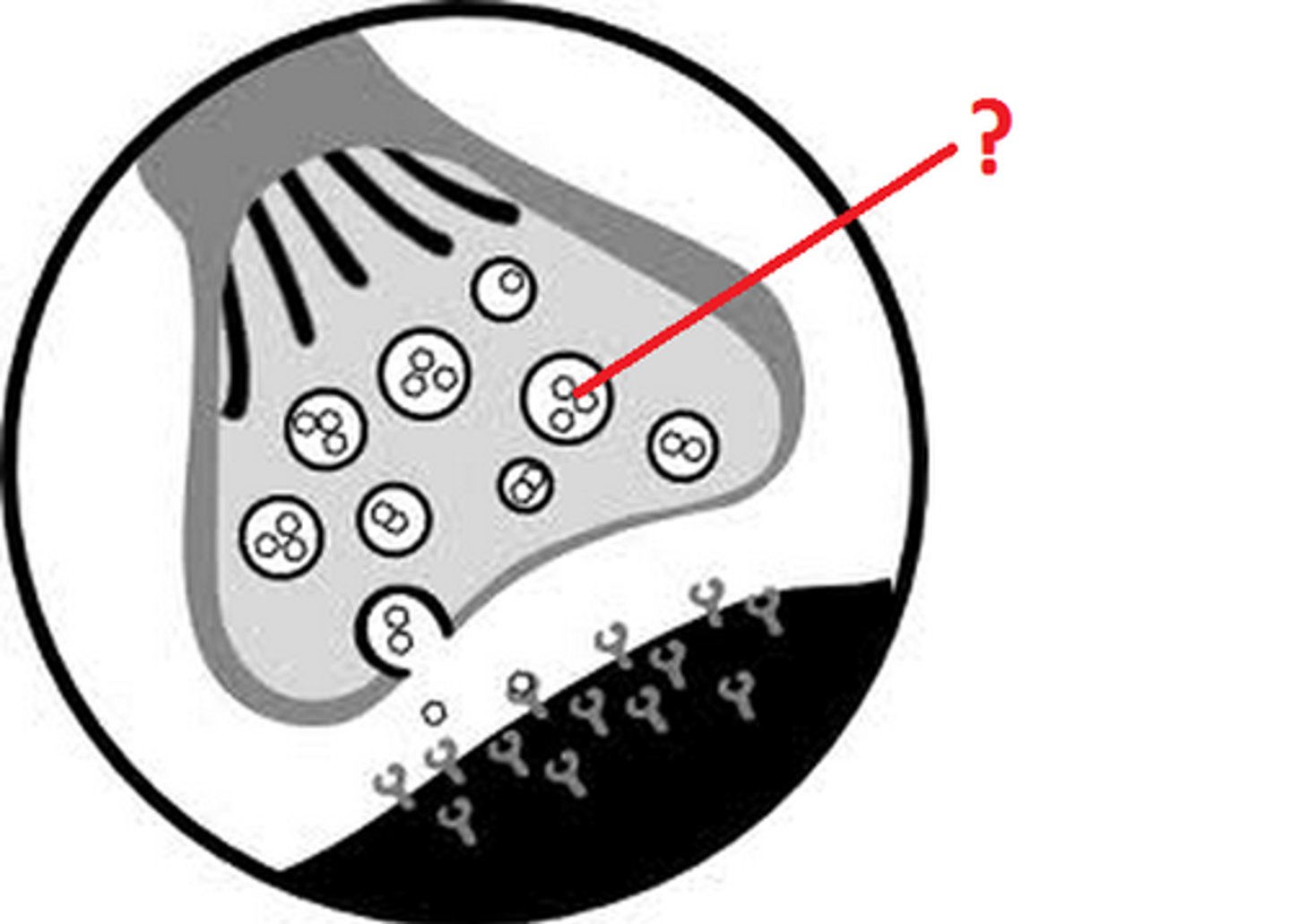
Where are the receptors?
coating the side of the opposite cell, specific to its neurotransmitter
What was the first known neurotransmitter?
acetylcholine
What is dopamine?
a common neurotransmitter in the body
The automatic response of a muscle to a stimulus is called _________________________.
reflex
What is the name for a record of electrical activity in muscles?
electromyogram (EMG)
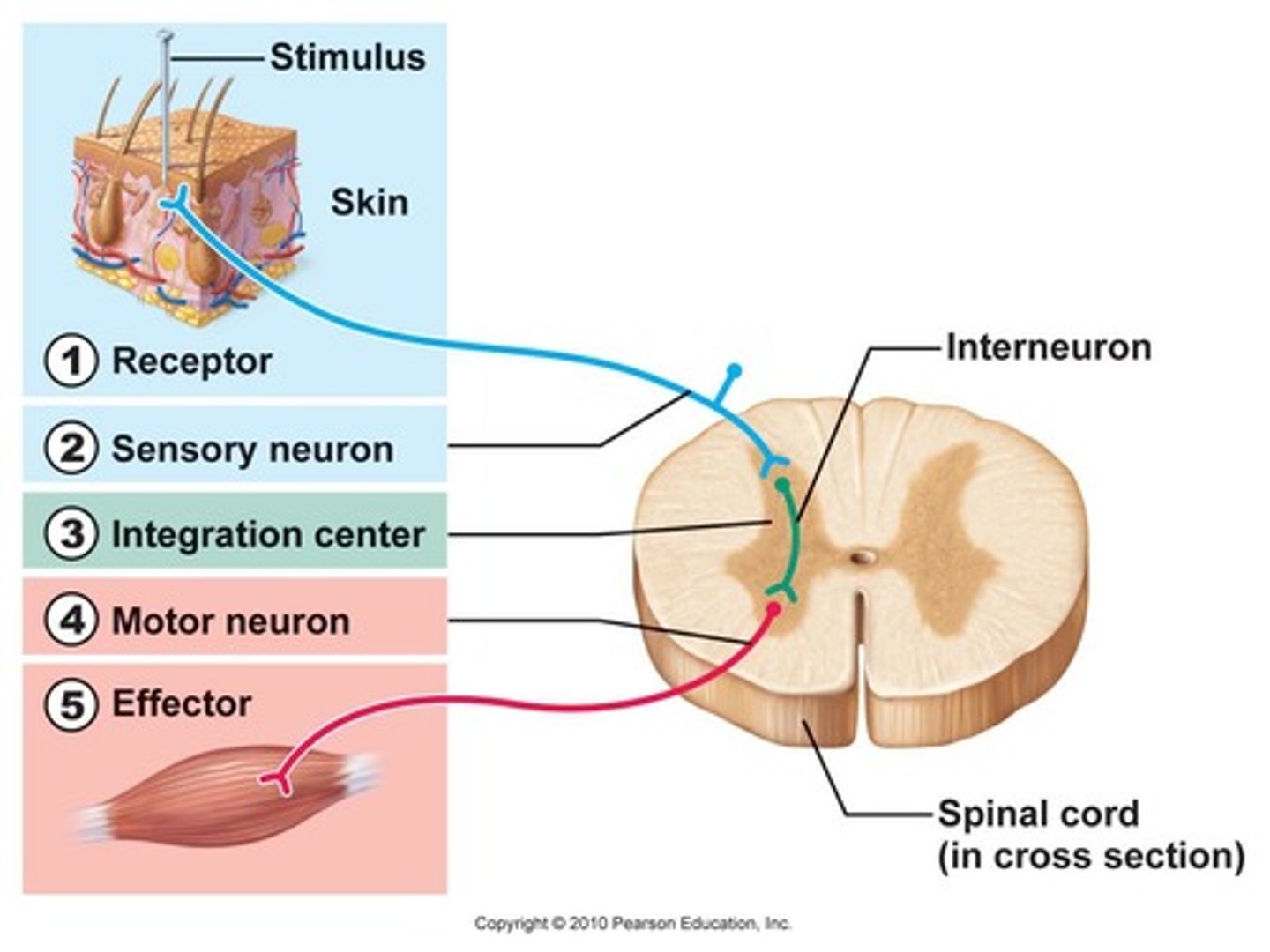
How does the knee jerk response work?
1)tendon just below the knee is tapped
2)quad muscles contract and leg extends
3)stretching of the muscle activates nerve impulses
4)impulses travel to the spinal cord
5)motor neurons are activated
6)motor neurons travel back to the muscle, resulting in contraction
KNOW THIS REFLEX ARC!!! (see reverse)
https://backyardbrains.com/experiments/img/BYB_Exp3_Pic3.png
What did Donders use to measure speed of thought?
Hipp chronoscope
Alzheimers
disrupts the way electrical charges travel within cells and the activity of neurotransmitters
memory loss, confusion, misplacing things, can't remember familiar faces or meanings of words
Epilepsy
abnormal brain impulses send throughout the body
seizures, unpleasant odor smelled, shaking, memory loss, anger
Parkinson's
low dopamine levels = slow body movements
loss of movement, slow mo, muscle spasms, balance issues
ALS
RNA read protein wrong and newly made protein attacks neurons
trouble with lifting/walking/balance, slurred speech, slow, quiet, tingling in fingers
Multiple Sclerosis
immune system attacks myelin sheath
weakness, anxiety, mood swings, slower, fatigue, unsteadiness, "pin needle feeling"
Huntington's
genetic (base pair repeated which massively moves the protein, synapses are blocked which slows movement)
involuntary movement of hands and feet, memory loss, clumsiness, mood swings
What is a hormone?
A chemical signal that is formed in specialized cells, travels in body fluids, and coordinates the various parts of the organism by interacting with target cells.
How do hormones interact with target cells?
Hormones travel through blood looking for their specialized target cells which have receptors that the hormone fits into (like a key).
What is the difference between endocrine and exocrine glands?
Endocrine~ secretes a hormone that will be of use INside of the body
Exocrine~ secretes a fluid OUTside of the body
Examples of endocrine glands?
thyroid
pituitary
pineal
Examples of exocrine glands?
salivary glands
sweat glands
kidneys
Endocrine glands secrete hormones directly into the ___________ while exocrine glands secrete hormones into _________before they reach their destination.
bloodstream; ducts
What are the three types of hormones?
Steroid, peptide, amine
Describe steroid hormones.
Lipids derived from cholesterol.
Ex: testosterone and estradiol
Describe peptide hormones.
Short chains of amino acids.
Make up most hormones.
Ex: growth hormone, follicle stimulating hormone
Describe amine hormones.
Includes drugs and chemicals that stimulate nervous system action.
Ex: dopamine
How do hormones move through the body?
Released by glands > bind to specialized receptors > trigger action in target cells > change shape of cell causing response
What steps does the body take to maintain homeostasis when blood sugar RISES?
1) Blood sugar goes up
2) Pancreas detects it
3) Insulin is released by beta cells of the pancreas
4)Fat cells take in glucose from the blood
What steps does the body take to maintain homeostasis when blood sugar DROPS?
1) Blood sugar goes down
2) Pancreas detects it
3) Glucagon is released by alpha cells of the pancreas
4) Liver releases glucose into the blood
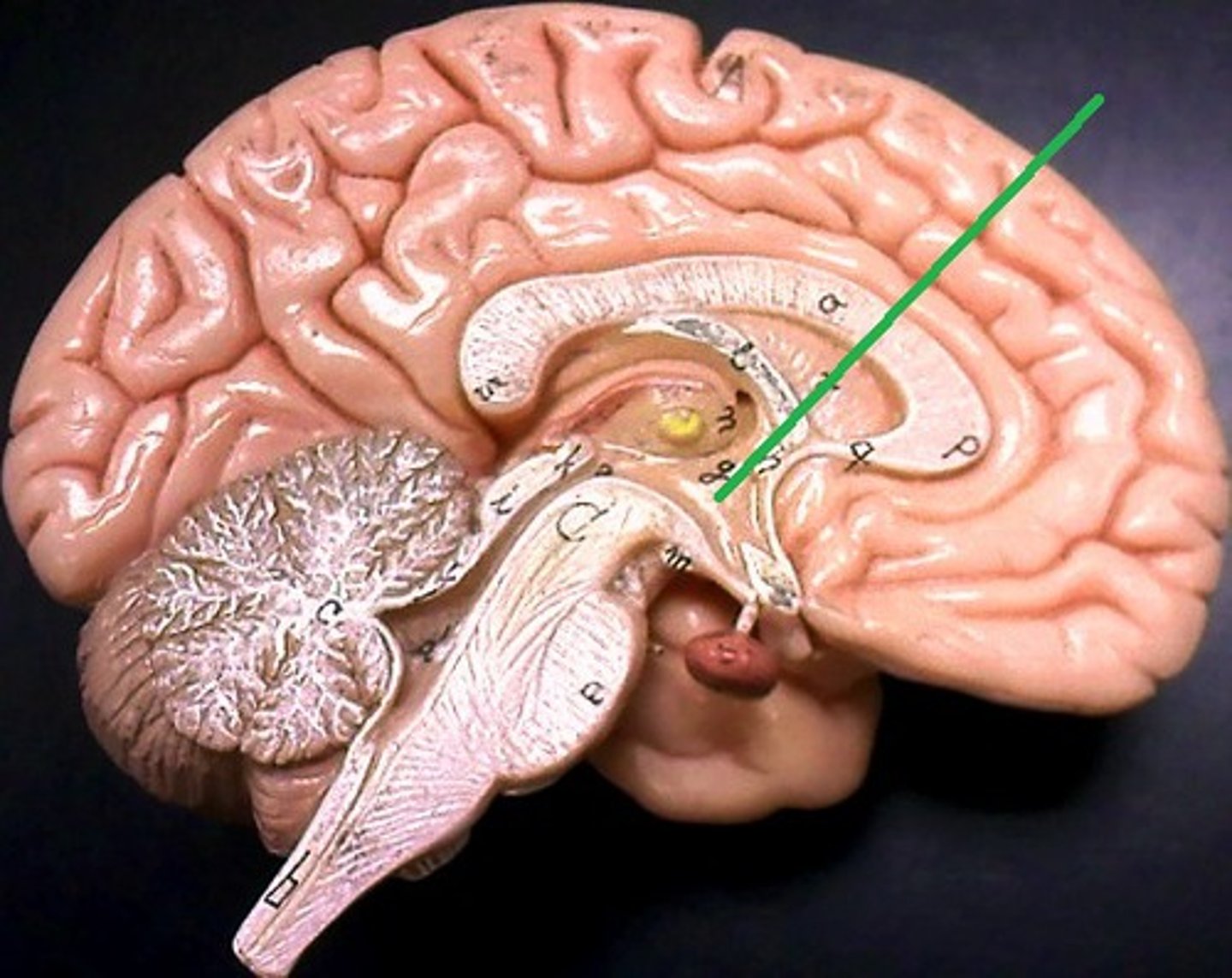
What is the hypothalamus and where is it located?
The ventral part of the vertebrate forebrain; functions in maintaining homeostasis, especially in coordinating the endocrine and nervous systems; secretes hormones of the posterior pituitary and releasing factors, which regulate the anterior pituitary.
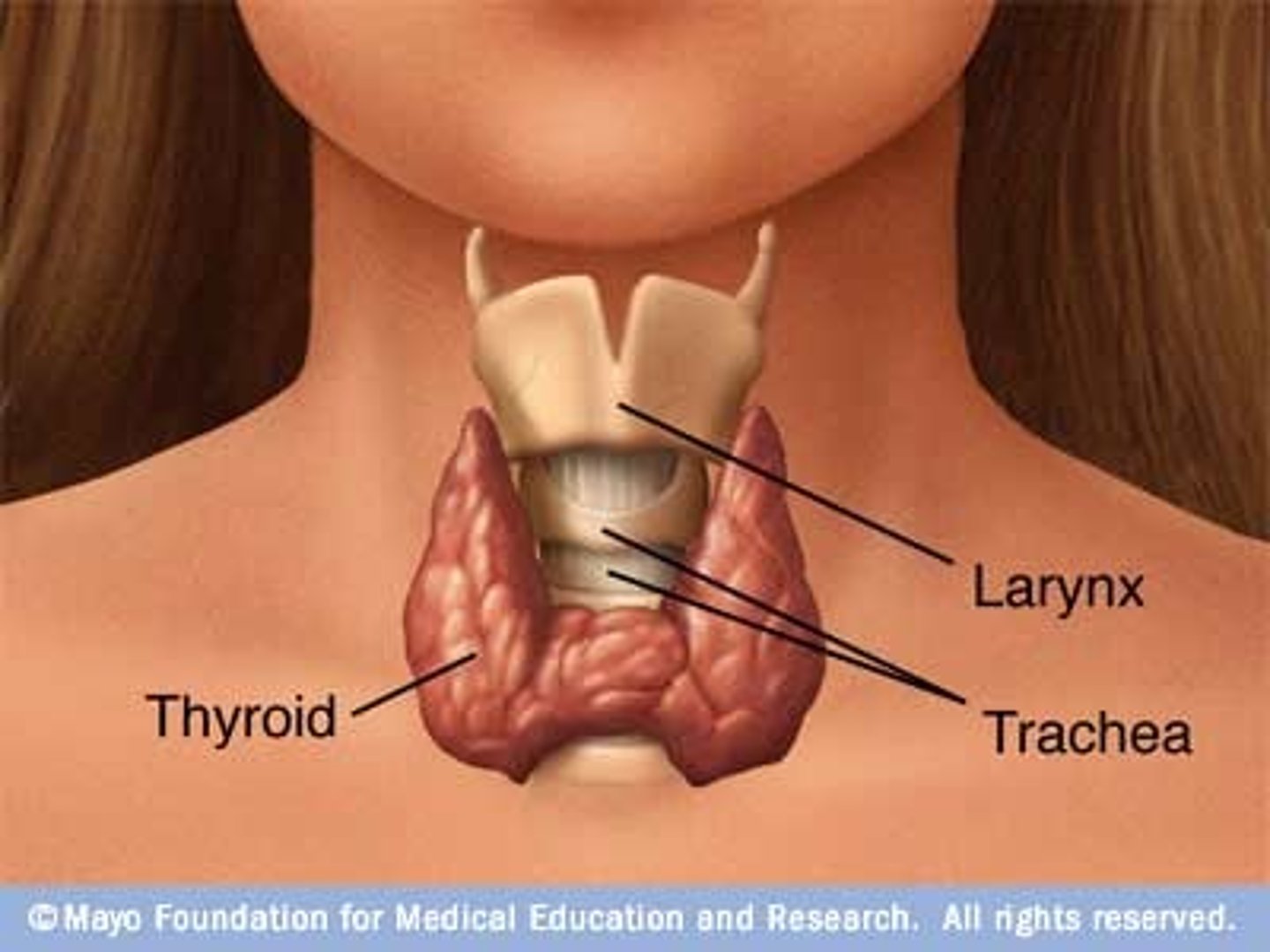
What is the thyroid gland and where is it located?
Endocrine gland that secretes the hormone thyroxine and thyrocalcitonin which regulates metabolic rate.
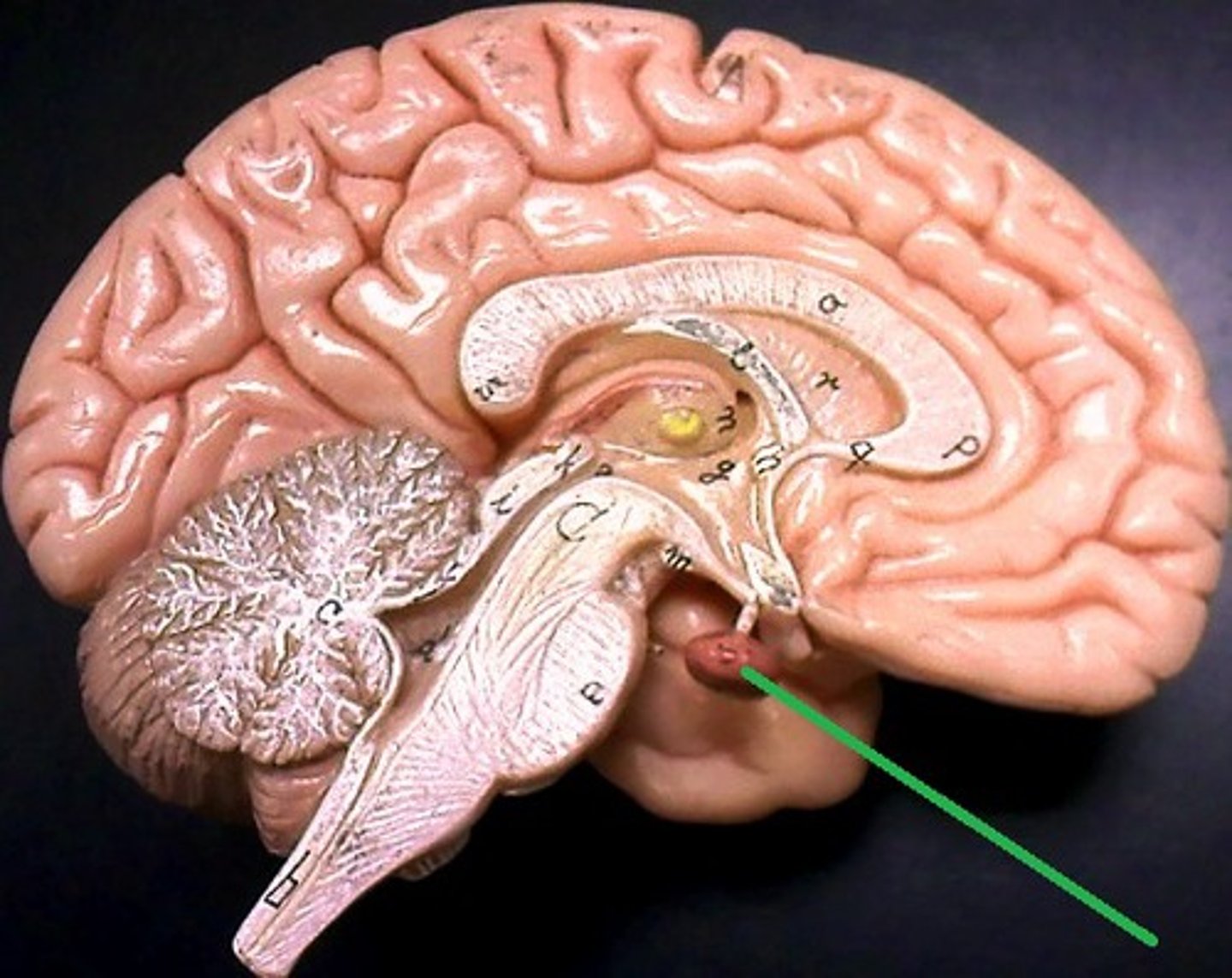
What is the pituitary gland and where is it located?
An endocrine gland at the base of the hypothalamus, stores and releases two hormones produced by the hypothalamus (posterior lobe), and produces and secretes many hormones that regulate diverse body functions (anterior lobe)
Describe 2 ways in which communication in the endocrine and nervous systems are the same and one way in which they are different.
Endocrine makes tangible fluid where nervous system simply produces thoughts and feelings/nervous system responses are more short term than the long term metabolic regulations of the endocrine system.
Both use chemical signals to transmit info (endocrine=hormones, nervous=neurotransmitters).
How do the endocrine system and nervous system work together to control communication in the body?
The hypothalamus is located in the brain yet controls many glands via the pituitary gland. Hormones provide the brain w/ feedback and affect many of its thoughts and emotions so it can properly control other parts of the body,
Does ingesting a large amount of sugar result in a positive or negative feedback?
Negative because the pancreas secretes insulin until the normal blood glucose level (homeostasis) is achieved, then it shuts off automatically.
Compare/contrast hormones and neurotransmitters.
Similar~ both are chemical signals that help control communication within the body
Different~ hormones are transmitted through blood while neurotransmitters are moved through nerve cells at the synapse; hormones control cells and their actions while neurotransmitters control entire systems/muscle groups
What was plaguing Lincoln Grant?
A pituitary tumor
What happens when thyroid levels rise too high?
1) Hypothalamus continues to produce TRH
2) Pituitary gland continues to produce TSH
3) Thyroid gland continues to produce T3 and T4 which act as inhibitors to the pituitary gland once their levels get too high, so once the levels of T3 and T4 get too high they stop the pituitary from producing TSH.
4) Thyroid gland in turn stops producing T3 and T4, restoring normal hormone levels.